
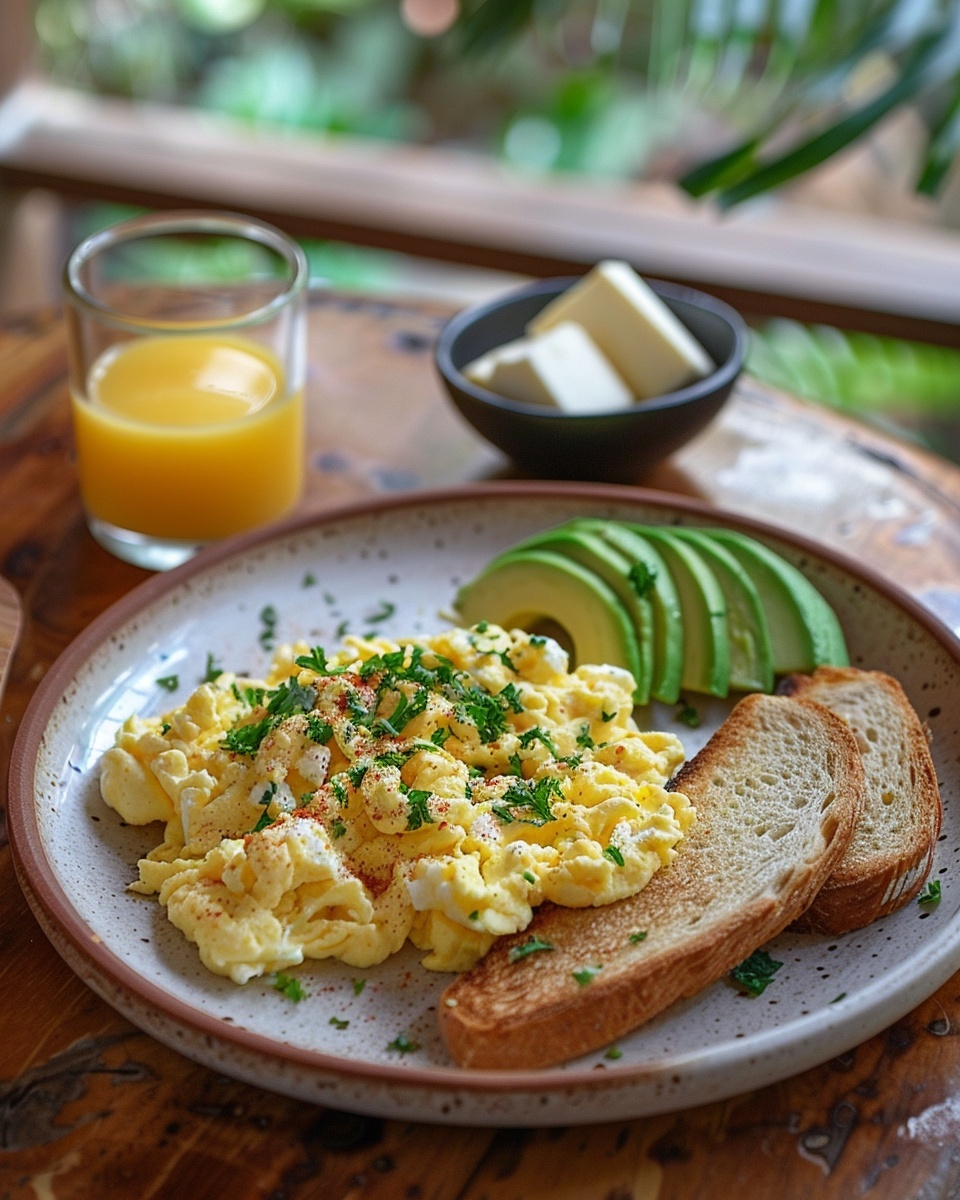
Introduction
I’ll never forget the first time I made scrambled eggs with toast and avocado for my kids on a rushed school morning. I expected complaints. Instead, they cleaned their plates in record time and asked for seconds. That moment changed our breakfast routine forever.
Hi, I’m here to share why scrambled eggs with toast and avocado has become my go-to breakfast solution. This simple combination delivers everything you need to start your day strong. It tastes amazing, fills you up, and gives your body real nutrition that lasts beyond those first few hours.
What makes this meal special is how flexible it is. You can whip it up in under ten minutes on busy mornings. Or take your time on weekends and make it fancy with extra toppings. Kids love it. Adults love it. Even picky eaters usually give it a thumbs up.
This isn’t just another breakfast recipe. It’s a meal that actually works for real life. The kind of food that doesn’t leave you starving by mid-morning or reaching for unhealthy snacks an hour later.
Throughout this guide, I’ll share my best tips for making perfect scrambled eggs every single time. You’ll learn the little tricks that make a big difference. Plus, I’ll answer all those common questions people ask about this dish. Questions like whether it’s actually healthy, if the ingredients work well together, and how to customize it to fit your needs.
Why Scrambled Eggs with Toast and Avocado?
Let me break down why this breakfast combo works so well. Each ingredient brings something valuable to your plate.
Eggs are nutrition powerhouses. One large egg gives you about 6 grams of high-quality protein. Your body uses this protein to build and repair tissues. Eggs also contain all nine essential amino acids your body needs but can’t make on its own. They’re packed with vitamins too. Think vitamin D for strong bones, B vitamins for energy, and choline for brain health.
The cholesterol in eggs? Don’t worry about it. Science has moved past old myths. For most people, eating eggs doesn’t raise bad cholesterol levels. In fact, eggs can boost your good cholesterol.
Whole grain toast adds the carbs your brain needs to function. Not all carbs are created equal though. Whole grain bread contains fiber that slows digestion. This means steady energy instead of a sugar spike and crash. You’ll also get B vitamins, iron, and magnesium from quality whole grain bread.
White bread won’t give you these same benefits. Stick with whole grain, whole wheat, or sourdough for the best nutritional bang.
Avocado brings healthy fats to the table. These monounsaturated fats help your body absorb vitamins from the other ingredients. They also keep you feeling full longer. Half an avocado gives you nearly 5 grams of fiber, plus potassium, vitamin K, and folate.
Your heart loves avocado too. The fats in avocado can help lower bad cholesterol while raising good cholesterol. That’s a win-win for your cardiovascular system.
When you combine these three ingredients, you get a balanced meal with protein, healthy fats, complex carbs, and fiber. This combination stabilizes your blood sugar. It keeps hunger at bay for hours. And it gives your body the fuel it needs without weighing you down.
I’ve noticed something interesting over the years. On mornings when I eat this breakfast, I make better food choices all day long. Starting with real nutrition sets the tone. You’re less likely to grab junk food later when your body is already satisfied.
This dish isn’t just for breakfast either. I make scrambled eggs with toast and avocado for lunch at least twice a week. After a workout, it’s perfect for recovery. Late dinner? It’s light but filling. The versatility makes it valuable for any meal.
Is Scrambled Egg on Toast with Avocado Healthy?
Yes, absolutely. This meal checks all the boxes for a healthy choice.
One serving typically contains around 400-500 calories, depending on how much avocado and butter you use. Those calories come from quality sources though. You’re getting roughly 20-25 grams of protein, 15-20 grams of healthy fats, and 25-30 grams of complex carbs.
The protein from eggs helps build muscle and keeps you full. The fiber from whole grain toast and avocado supports digestive health and steady energy. The healthy fats support brain function and hormone production.
Compare this to a typical fast food breakfast sandwich. You’d get more calories, more unhealthy fats, more sodium, and less actual nutrition. Or compare it to a sugary cereal breakfast. You’d crash hard before lunch and feel hungry again quickly.
Scrambled eggs with toast and avocado gives you sustained energy. It supports your health goals instead of working against them. It provides nutrients your body actually uses.
For people watching their weight, this meal works well. The protein and healthy fats trigger satiety hormones. You feel satisfied on fewer calories than you would with processed foods.
People managing diabetes benefit from the low glycemic load. Your blood sugar stays stable instead of spiking. The fiber and protein slow down how quickly your body processes the carbs from the toast.
Athletes and active people get the protein for muscle recovery plus carbs to refuel glycogen stores. The potassium in avocado helps prevent muscle cramps.
Even picky eaters and kids can enjoy this meal. You’re giving them brain-building nutrients and steady energy for school or activities. It’s so much better than sending them out the door with empty calories from sugary breakfast bars.
The only people who might need to modify this meal are those with egg allergies or avocado sensitivities. But for the vast majority of us, this combination is not just healthy but optimal for daily nutrition.


How to Make Perfect Scrambled Eggs
Now that you understand why this breakfast works so well nutritionally, let me show you how to actually make scrambled eggs that’ll change your morning game.
I spent years making mediocre scrambled eggs. You know the kind. Rubbery. Dry. Sort of yellow and sad-looking on the plate. Then I learned a few key techniques that transformed everything. The difference between okay eggs and amazing eggs comes down to just a few simple choices.
Start with fresh eggs if you can get them. The flavor is noticeably better. Crack two or three eggs per person into a bowl. Here’s the thing about whisking: you don’t need to go crazy. I whisk for about 20 seconds until the yolks and whites are fully combined and you see some bubbles forming on top. No more, no less.
Some people add milk or cream at this stage. I used to do that too. But honestly? I’ve stopped. The eggs come out creamier without any dairy addition if you use the right cooking method. Save your calories for the healthy breakfast toppings instead.
Here’s where most people mess up: the heat. You want low to medium-low heat. Not medium. Definitely not high. I know it’s tempting to crank up the burner when you’re in a rush. Don’t do it. High heat makes rubbery eggs every single time.
Grab a non-stick pan. This is non-negotiable for perfect scrambled eggs. Add about a tablespoon of butter and let it melt completely. The butter should foam slightly but not brown. When you see it starting to foam, pour in your whisked eggs.
Now comes the technique that changed everything for me. Instead of constantly stirring, let the eggs sit for about 20 seconds. Then use a spatula to gently push the cooked edges toward the center. Tilt the pan so the liquid egg flows to the empty spots. Wait another 20 seconds. Push again. Keep doing this patient dance.
The eggs will form soft, pillowy curds. They should look almost wet still when you take them off the heat. This is crucial because they’ll continue cooking from residual heat even after you remove the pan from the burner. I learned this the hard way after years of overcooking.
Season at the right time. I add a pinch of salt and fresh black pepper right when the eggs are about halfway done. Too early and the salt can make the eggs watery. Too late and the seasoning doesn’t incorporate well. Halfway through is the sweet spot I’ve found.
For herbs, I love adding chopped fresh chives or dill. Sometimes I’ll throw in a tiny bit of garlic powder. Other mornings I keep it simple with just salt and pepper. Both approaches work beautifully.
What Does Gordon Ramsay Put in His Scrambled Eggs?
Funny you should ask this because I went down a rabbit hole watching Gordon Ramsay cooking videos one Sunday morning. His technique is interesting and a bit different from mine.
Gordon adds a knob of butter and crème fraîche to his eggs while they’re cooking. He also takes the pan on and off the heat constantly to control the temperature. His method creates incredibly creamy eggs, almost like a custard texture. He finishes them with chopped chives and sometimes smoked salmon.
I’ve tried his way several times. It’s delicious but honestly a bit fussy for a Tuesday morning when I’m also packing lunches and finding lost shoes. His technique works great for a leisurely weekend breakfast though. The constant pan movement does create an amazing texture.
The main lesson I took from watching Gordon? Patience and low heat matter more than any fancy ingredient. You can make phenomenal eggs with just butter, salt, and pepper if you nail the technique.
Do Avocado and Scrambled Egg Go Together?
Absolutely they do. Like peanut butter and jelly level of going together.
The creamy texture of avocado complements the soft, fluffy eggs perfectly. The mild, slightly nutty flavor of avocado doesn’t compete with the eggs. Instead, it enhances them. Plus, the healthy fats in avocado help your body absorb the fat-soluble vitamins in the eggs. It’s a nutritional power couple.
I usually slice my avocado rather than mashing it. Half an avocado per serving is plenty. Sometimes I’ll mash it with a little lime juice and spread it on the toast first, then top with the eggs. Other times I just fan out the sliced avocado on the side. Both ways work depending on my mood.
The combination has been popular in cafes for years now, which tells you something. When I visited Australia a few years back, this exact combination was on literally every brunch menu. They call it “avo and eggs” and consider it a national treasure. They’re not wrong.
Similar to how sweet and savory ingredients work together in certain dishes, the richness of eggs with the fresh taste of avocado creates that perfect balance your taste buds crave.
Choosing the Right Bread and Toppings
Let me tell you about bread because this matters more than you might think.
I used to grab whatever white bread was on sale. The eggs and avocado were healthy, so the bread didn’t matter, right? Wrong. The bread is your foundation. It’s what holds everything together and provides those essential complex carbohydrates.
Whole grain bread is my top choice most days. Look for bread where whole wheat or whole grain is the first ingredient. Real whole grain bread has visible seeds and grains. It’s slightly dense and has a nutty flavor that stands up well to eggs and avocado. The fiber content keeps you full for hours, just like you’d expect from a satisfying hearty breakfast meal.
Sourdough is my weekend splurge bread. The tangy flavor adds another dimension to the dish. Plus, sourdough has a lower glycemic index than regular bread because the fermentation process changes the starch structure. Your body digests it more slowly, which means steadier blood sugar. I love a thick slice of sourdough, toasted until it’s golden and slightly crispy.
Rye bread works wonderfully too, especially if you like a heartier flavor. Sprouted grain bread is another excellent option with extra protein and easier digestibility. Even a good quality multigrain bread can elevate the whole meal.
Here’s what I avoid: fluffy white bread, cheap sandwich bread, anything with high fructose corn syrup in the ingredients. These breads spike your blood sugar fast and leave you hungry again within an hour. They’re basically wasted calories that don’t support your health goals.
Toast your bread properly. I like mine medium-dark, with a good crunch on the outside but still a bit soft in the middle. If your toast is too light, it gets soggy from the eggs. Too dark and it tastes burnt and overpowers everything else.
By the way, I sometimes switch to a toasted English muffin or even a bagel thin when I want to change things up. Variety keeps breakfast interesting, much like trying different morning meal options throughout the week.
Now for toppings. This is where you can get creative and make the dish your own.
Sliced tomatoes are my most frequent addition. The acidity and juiciness cut through the richness of the eggs and avocado. I use Roma tomatoes usually, sliced thin and lightly salted. Cherry tomatoes halved also work great, especially when they’re in season and super sweet.
Fresh herbs transform the whole plate. Chopped cilantro adds brightness. Fresh basil brings an Italian vibe. Dill makes it feel fancy. I keep a little herb garden on my windowsill specifically for morning eggs. Snipping fresh herbs right before serving makes such a difference in flavor.
Red pepper flakes give it a nice kick if you like heat. Just a small pinch is enough. Some mornings I’m in the mood for that little bit of spice to wake me up. Other mornings I skip it.
I’ve also experimented with crumbled feta cheese, which adds a salty tang. A squeeze of fresh lemon juice brightens everything up. Thinly sliced radishes provide a peppery crunch. Microgreens make it look restaurant-fancy without any extra effort.
Sometimes I’ll add a thin schmear of cream cheese to the toast before the eggs. Or a drizzle of hot sauce if I’m feeling spicy. The possibilities really are endless once you master the basic combination.
Is Avocado Toast Good for LDL?
Yes, it actually is. Let me explain the science in simple terms.
LDL is the “bad” cholesterol that can build up in your arteries. The monounsaturated fats in avocado can help lower LDL cholesterol levels. Multiple studies have shown this effect. When you replace saturated fats with the healthy fats found in avocados, your LDL numbers tend to improve.
The fiber in both the avocado and whole grain toast also helps. Fiber binds to cholesterol in your digestive system and helps remove it from your body before it enters your bloodstream. You’re basically getting a double benefit.
Whole grain bread contains beta-glucan, a type of soluble fiber that’s particularly good at lowering cholesterol. Combined with avocado, you’re creating a meal that actively supports heart health.
That said, balance matters. Don’t eat avocado toast three times a day thinking more is better. A reasonable portion of avocado as part of a varied diet works best. Half an avocado per meal is plenty to get the benefits without going overboard on calories.
I think about it this way: every time I choose scrambled eggs with whole grain toast and avocado instead of a bacon and cheese biscuit from a drive-through, I’m making a choice that supports my long-term health. The effects add up over time. Small daily decisions create big health outcomes.


Putting It All Together: Creating Your Perfect Plate
Alright, you’ve got all the individual components down. Now let’s talk about bringing everything together into one beautiful, delicious plate that’ll make your morning feel special.
Here’s my step-by-step process for assembly. I’ve refined this over hundreds of mornings, and trust me, the order matters more than you’d think.
Step 1: Start your toast first. Pop your bread in the toaster while you’re prepping everything else. This way it’ll be perfectly warm and crispy right when you need it. Nothing’s worse than cold toast under hot eggs.
Step 2: Prep your avocado while the toast is toasting. Cut it in half lengthwise, remove the pit, and scoop it out with a spoon. Here’s a trick I learned from a chef friend: score the avocado flesh while it’s still in the skin, making a crosshatch pattern with your knife. Then scoop it out with a spoon and you’ll have perfect little cubes. Or if you want slices for that Instagram look, carefully run your knife along the avocado to create thin, even slices, then fan them out on your cutting board.
For presentation, I usually do thin slices arranged in a slight overlap pattern. It looks fancy but takes literally five seconds once you get the hang of it. My daughter calls it “the peacock tail” because of how it fans out on the plate.
Step 3: Cook your scrambled eggs using the technique I shared earlier. Remember, low heat and patience. While they’re cooking, keep an eye on your toast. When it pops up, butter it lightly if you want, or leave it plain if you’re watching calories. The avocado provides enough richness either way.
Step 4: Now comes the fun part – plating. Place your toast on a plate. I usually angle it slightly rather than laying it flat and boring. Spoon your soft, creamy scrambled eggs either on top of the toast or beside it, depending on your mood. I go back and forth. Sometimes I want the eggs soaking into the toast a bit. Other times I keep them separate so each bite has a distinct texture.
Step 5: Arrange your avocado. If you sliced it, fan it out next to the eggs or lay it across the top. If you cubed it, scatter the pieces over everything. Add a tiny pinch of flaky sea salt on the avocado if you have it. This small detail makes a huge difference in flavor.
Step 6: Final touches make it special. Crack some fresh black pepper over the whole plate. Add your chosen herbs. I keep a little dish of red pepper flakes on my counter and add a pinch when I’m feeling it. A wedge of lemon on the side looks pretty and gives you the option to squeeze some brightness over everything.
Here’s something I started doing last year that changed my whole breakfast game: I serve this with a side of fresh fruit. Not just for looks, though it does make the plate more colorful and appealing. The fruit adds natural sweetness and extra vitamins. My go-to combinations are sliced strawberries in spring, mixed berries in summer, sliced peaches when they’re in season, or orange segments in winter.
Sometimes I’ll do a small green salad on the side instead. Sounds weird for breakfast, I know. But a handful of mixed greens with a light lemon vinaigrette complements the richness of the eggs and avocado perfectly. Plus you’re getting vegetables first thing in the morning, which always makes me feel like I’m winning at life.
The beauty of this meal is how customizable it becomes once you nail the basics. My husband adds hot sauce to his every single time. My teenage son piles on extra avocado and skips the herbs. My youngest likes hers with sliced cherry tomatoes scattered over everything.
I encourage you to experiment. Try different bread types each week. Switch up your herbs. Add a poached egg instead of scrambled sometimes. Throw some sautéed spinach underneath the eggs. Crumble some goat cheese on top. Mix in some pesto with your eggs while they’re cooking.
Last month I added everything bagel seasoning to my avocado and it was a revelation. The week before that, I stirred some cottage cheese into my eggs for extra protein and creaminess. Both variations became regular rotations in my breakfast lineup.
One thing I’ve noticed about making this meal regularly: you develop your own rhythm. After a few weeks, you won’t need to think about the steps. Your hands will just know what to do. You’ll crack eggs while watching your toast, slice avocado without measuring, and plate everything beautifully without conscious effort.
By the way, if you’re making this for guests or want to really impress someone, serve it on a white plate. The colors pop so much better. Add a sprig of fresh herb as garnish. Maybe a light dusting of paprika for color contrast. Suddenly your Tuesday breakfast looks like something from a trendy brunch spot.
I also like using different plates depending on my mood. Wide, shallow bowls work great because everything stays contained but still looks abundant. Rectangle plates give you room to arrange everything in an artful line. Round dinner plates are classic and always work.
Here’s a random tip about reducing food waste that I picked up: if your avocado is getting too ripe, mash it with a little lemon juice and freeze it in ice cube trays. Later you can pop out a cube and let it thaw for toast. The texture changes slightly but it’s still delicious and way better than throwing away brown avocados. According to USDA guidelines on reducing food waste, proper storage and creative uses for aging produce can significantly cut down what ends up in the trash, which saves money and helps the environment.
Same thing with bread that’s getting stale. I cube it up, toss it with olive oil and garlic powder, and toast it for homemade croutons. Then I have something crunchy to add to my green salad sides. Everything gets used, nothing goes to waste.
When I first started making scrambled eggs with toast and avocado regularly, I kept it super simple. Just the three main ingredients and some salt. That’s totally fine and still delicious. But as I got more comfortable, I started playing around. Now I have probably fifteen different variations I rotate through, and I’m still discovering new combinations.
The meal grows with you. It can be as basic or as fancy as you want on any given day. That’s what makes it sustainable as a long-term breakfast solution rather than something you try once and forget about.
I’ve shared this recipe with probably twenty friends at this point. Every single one has come back and told me they’re hooked. Then they share their own twists. One friend adds kimchi on the side for a Korean-inspired version. Another does za’atar spice on the avocado. My sister-in-law makes hers with smoked salmon on special occasions.
The dish is basically a template for you to make your own. Don’t be scared to try weird combinations. The worst that happens is you learn what you don’t like. The best that happens is you discover your new favorite breakfast variation.
If you’re looking for more inspiration to transform your mornings, you’ll find plenty of creative ideas in our complete breakfast recipe collection that’ll keep your taste buds excited week after week.
Take a photo of your creation when you make something you’re proud of. I’m serious about this. Not for social media necessarily, though sure, share it if you want. But for yourself. I have a whole album on my phone of breakfasts I’ve made. On mornings when I’m feeling uninspired or rushed, I scroll through and remind myself that taking ten minutes to make something good is always worth it.
Your Questions Answered
Is scrambled egg on toast with avocado healthy?
Absolutely, this combination is one of the healthiest breakfast choices you can make. You’re getting high-quality protein from eggs, healthy monounsaturated fats from avocado, and complex carbohydrates from whole grain toast. This balance keeps your blood sugar stable and provides sustained energy for hours. The meal typically contains 400-500 calories with about 20-25 grams of protein, 15-20 grams of healthy fats, and plenty of fiber. It’s nutrient-dense rather than calorie-dense, meaning you get maximum nutrition for the calories consumed. For most people following a balanced diet, this meal supports weight management, heart health, and overall wellness.
Is avocado toast good for LDL?
Yes, avocado toast can actually help lower LDL cholesterol, which is the “bad” kind that contributes to heart disease. The monounsaturated fats in avocado have been shown in multiple studies to reduce LDL levels when they replace saturated fats in your diet. Whole grain toast adds soluble fiber, particularly beta-glucan, which binds to cholesterol in your digestive system and helps remove it before it enters your bloodstream. Together, these ingredients create a heart-healthy combination that actively supports better cholesterol levels. Just remember that portion control matters—half an avocado per serving is ideal. Eating avocado toast regularly as part of a balanced diet can contribute to improved cardiovascular health over time.
What does Gordon Ramsay put in his scrambled eggs?
Gordon Ramsay’s famous scrambled eggs include butter and crème fraîche added during cooking, which creates an incredibly creamy, almost custard-like texture. He uses a technique of constantly moving the pan on and off the heat to control temperature precisely, preventing the eggs from overcooking. He seasons with salt and pepper, then finishes with fresh chives. Sometimes he adds smoked salmon or other luxury ingredients. While his method produces restaurant-quality eggs, it’s more involved than necessary for everyday cooking. The key takeaway from his technique is the importance of low heat and patience, which you can apply even without the crème fraîche.
Do avocado and scrambled egg go together?
Yes, avocado and scrambled eggs are a perfect pairing both in terms of flavor and nutrition. The creamy texture of avocado complements the soft, fluffy eggs beautifully. The mild, slightly nutty flavor of avocado enhances rather than competes with the eggs. Nutritionally, the healthy fats in avocado help your body absorb the fat-soluble vitamins found in eggs, making the combination more beneficial than eating either ingredient alone. This pairing has become a staple in cafes and restaurants worldwide, particularly in Australia where “avo and eggs” is considered a breakfast classic. The combination provides balanced macronutrients that keep you satisfied for hours.
Can I meal prep scrambled eggs with toast and avocado?
Scrambled eggs can be meal prepped, but they’re best eaten fresh. If you must prepare ahead, cook the eggs slightly underdone, cool them quickly, and refrigerate for up to three days. Reheat gently in a pan with a tiny bit of butter. However, avocado and toast don’t store well prepared in advance. Avocado browns quickly even with lemon juice, and toast gets soggy. Your best bet is to prep ingredients separately—pre-crack eggs into containers, pre-slice bread, and buy ripe avocados ready to use. Then assembly takes just minutes on busy mornings. I find this semi-prep approach works better than trying to make the complete meal ahead.
How many calories are in scrambled eggs with toast and avocado?
A typical serving contains approximately 400-500 calories, though this varies based on your specific ingredients and portions. Two large eggs provide about 140 calories, one slice of whole grain toast adds roughly 80-100 calories, a tablespoon of butter for cooking contributes about 100 calories, and half an avocado adds around 120 calories. If you use less butter, skip the butter on toast, or use only a third of an avocado, you can bring this down to around 350 calories. Conversely, adding cheese, extra avocado, or multiple slices of toast will increase the total. The important thing is that these are nutrient-rich calories that provide lasting energy and satiety.
What’s the best bread to use for this breakfast?
Whole grain bread is your best choice for maximum nutrition and sustained energy. Look for bread with whole wheat or whole grain as the first ingredient, visible seeds and grains, and at least 3-4 grams of fiber per slice. Sourdough is an excellent alternative because its fermentation process creates a lower glycemic index, meaning slower digestion and steadier blood sugar. Sprouted grain bread, rye bread, and quality multigrain bread also work wonderfully. Avoid fluffy white bread, cheap sandwich bread, and anything with high fructose corn syrup in the ingredients, as these spike blood sugar quickly and provide minimal nutritional value.
Can I use egg whites instead of whole eggs?
You can use egg whites, but you’ll miss out on significant nutrition. The yolk contains most of the vitamins, minerals, and beneficial compounds in eggs, including choline for brain health, vitamin D, and antioxidants like lutein and zeaxanthin. The yolk also provides the fat that helps you absorb vitamins from the avocado and makes the meal more satisfying. If you’re watching cholesterol, know that dietary cholesterol from eggs doesn’t significantly impact blood cholesterol for most people. A better compromise is using two whole eggs and one egg white for extra protein without sacrificing all the nutritional benefits of yolks.
How do I keep my avocado from turning brown?
Avocado browns due to oxidation when exposed to air. To slow this process, squeeze fresh lemon or lime juice over cut avocado immediately. The citric acid helps prevent browning and adds nice flavor. If storing half an avocado, leave the pit in and wrap tightly in plastic wrap, pressing it directly against the flesh to minimize air exposure. Store it in the refrigerator and use within a day. For already-sliced avocado, brush with lemon juice and store in an airtight container with a piece of onion, which releases sulfur compounds that slow oxidation. Honestly though, avocado tastes best when freshly cut, so I try to only prepare what I’ll eat immediately.
Is this breakfast good for weight loss?
Yes, scrambled eggs with toast and avocado can absolutely support weight loss goals when eaten as part of a balanced diet. The high protein content from eggs increases satiety and helps preserve muscle mass while losing fat. The healthy fats from avocado trigger fullness hormones and keep you satisfied for hours, reducing overall calorie intake throughout the day. The fiber from whole grain toast and avocado aids digestion and prevents blood sugar spikes that can lead to cravings. Many people find that eating this balanced breakfast prevents mid-morning snacking and helps them make better food choices all day. Just watch portion sizes, particularly with avocado and butter, and you’ll have a weight-loss-friendly meal that doesn’t leave you feeling deprived.
There you have it. Everything you need to make scrambled eggs with toast and avocado a regular part of your life. This isn’t just about following a recipe—it’s about finding a breakfast that actually works for you, day after day, week after week. Start with the basic version, get comfortable with the technique, then let your creativity run wild with different variations. Your perfect breakfast is waiting, and it’s simpler than you think.
Ingredients
Equipment
Method
- Start toasting the bread while prepping other ingredients.
- Cut the avocado in half, remove the pit, and scoop out the flesh.
- Whisk the eggs in a bowl for about 20 seconds until combined.
- Heat a non-stick pan over low to medium-low heat and melt butter until foamy.
- Pour in the whisked eggs and let them sit for about 20 seconds.
- Push the cooked edges toward the center of the pan and allow liquid egg to fill the empty spots.
- Continue this process until the eggs form soft curds and are still slightly wet when removed from heat.
- Season the eggs with salt and pepper halfway through cooking.
- Plate the toasted bread, add scrambled eggs on top or beside it, and arrange the avocado.
- Finish with any optional toppings like herbs, tomatoes, or a squeeze of lemon juice.