
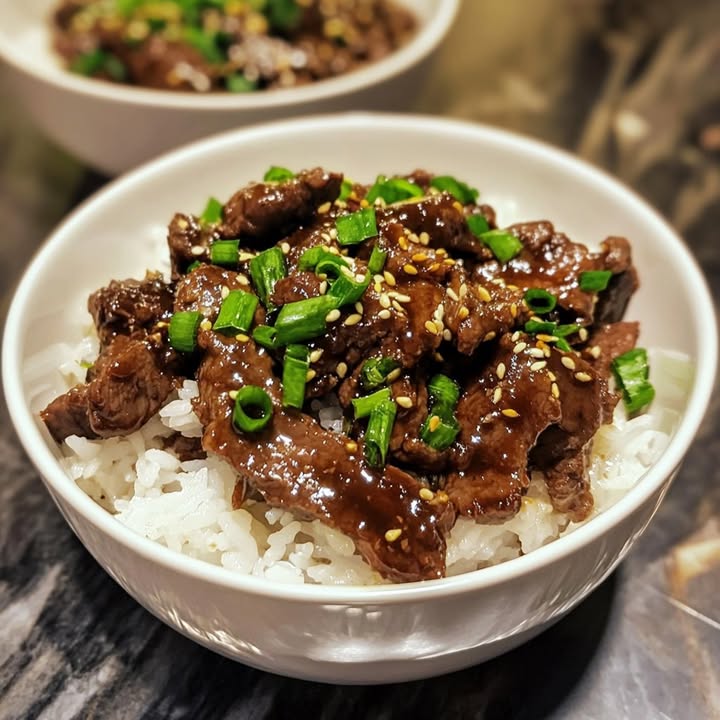
Get Ready to Savor the Flavor with Mongolian Beef Rice Bowls
Last weekend, I whipped up a batch of Mongolian Beef Rice Bowls for my family, and it was an instant hit. The combination of tender beef, savory sauce, and fluffy rice is just too good to resist. This dish is not only delicious but also a crowd-pleaser, making it perfect for any occasion.
A Brief History: From Mongolia to Your Table
While the name suggests a traditional Mongolian origin, Mongolian Beef is actually an American-Chinese creation. It’s a fusion dish that combines the rich flavors of Chinese cuisine with a Western twist. In the 1950s, Chinese-American restaurants started serving this dish, and it quickly became a favorite. Today, it’s a staple in many households, including mine!
Why You’ll Love This Recipe
There are so many reasons to love Mongolian Beef Rice Bowls. The beef is incredibly tender, the sauce is a perfect balance of sweet and savory, and the rice soaks up all the delicious flavors. Plus, it’s super easy to make, even on a busy weeknight. Trust me, your taste buds will thank you.
Perfect Occasions to Prepare This Recipe
Whether you’re hosting a casual dinner party, having a family night, or just craving something comforting, Mongolian Beef Rice Bowls fit the bill. It’s a versatile dish that can be dressed up or down, depending on the occasion. Serve it with some steamed veggies or a simple salad for a complete meal.
Ingredients
- 1 lb flank steak, thinly sliced
- 2 tbsp cornstarch
- 3 tbsp soy sauce
- 1/4 cup water
- 1/4 cup brown sugar
- 1 tbsp minced garlic
- 1 tbsp minced ginger
- 2 tbsp vegetable oil
- 1/4 cup chopped green onions
- 1/4 cup sesame seeds (optional)
- 4 cups cooked white rice
Substitution Options
If you don’t have flank steak, you can use sirloin or ribeye. For a gluten-free version, swap the soy sauce for tamari. If you’re out of brown sugar, honey or maple syrup works well too. And if you prefer a milder flavor, reduce the amount of garlic and ginger.
Preparation Section
Step 1: Marinate the Beef
In a bowl, mix the sliced flank steak with 2 tablespoons of cornstarch until evenly coated. This helps to create a crispy exterior when fried. Set aside and let it rest for about 10 minutes.
Step 2: Make the Sauce
In another bowl, whisk together 3 tablespoons of soy sauce, 1/4 cup of water, 1/4 cup of brown sugar, 1 tablespoon of minced garlic, and 1 tablespoon of minced ginger. The aroma of the garlic and ginger will fill your kitchen, making your mouth water in anticipation.
Step 3: Cook the Beef
Heat 2 tablespoons of vegetable oil in a large skillet over medium-high heat. Add the marinated beef and cook for about 3-4 minutes on each side, or until it’s nicely browned and crispy. The sizzle of the beef in the pan is music to my ears.
Step 4: Add the Sauce
Pour the prepared sauce over the beef in the skillet. Stir everything together and let it simmer for about 2-3 minutes, or until the sauce thickens and coats the beef beautifully. The glossy, sticky sauce is what makes this dish so irresistible.
Step 5: Assemble the Bowls
Divide 4 cups of cooked white rice among four bowls. Top each bowl with the saucy beef, a sprinkle of chopped green onions, and a generous handful of sesame seeds if you like. The colors and textures make these bowls look as good as they taste.
Pro Tip:
For an extra layer of flavor, toast the sesame seeds in a dry pan for a few minutes before adding them to the bowls. The nutty aroma and crunch add a delightful touch.
Timing
– Prep Time: 15 minutes
– Cooking Time: 15 minutes
– Resting Time: 10 minutes
– Total Time: 40 minutes
Chef’s Secret
The key to perfectly tender beef is to slice it against the grain. This breaks up the muscle fibers, making the meat much more tender and easier to chew. Trust me, it makes a huge difference!
Extra Info
Did you know that the original Mongolian Beef was made with lamb? The beef version became popular in the U.S. because beef was more readily available and preferred by many. It’s amazing how recipes evolve and adapt over time.
Necessary Equipment
– Large skillet
– Mixing bowls
– Whisk
– Measuring spoons
– Knife and cutting board
– Spatula
Storage
If you have leftovers, store them in an airtight container in the refrigerator for up to 3 days. Reheat in the microwave or on the stovetop, adding a little water if needed to keep the beef moist. For longer storage, you can freeze the beef and sauce separately from the rice. Just thaw and reheat when you’re ready to enjoy.
Tips and Advice
– Slice the beef as thinly as possible for the best texture.
– Adjust the sweetness and saltiness of the sauce to your liking.
– Use a high-quality soy sauce for the best flavor.
Presentation Tips
– Garnish with extra green onions and sesame seeds for a pop of color.
– Serve the bowls with a side of steamed broccoli or carrots for a balanced meal.
– Consider using a small cookie cutter to shape the rice into fun shapes for a playful touch.
Healthier Alternative Recipes
Here are six variations to make your Mongolian Beef Rice Bowls a bit healthier:
– Vegetable-Packed Version: Add a variety of stir-fried vegetables like bell peppers, zucchini, and snap peas to boost the nutritional value.
– Lean Protein Swap: Use chicken breast or tofu instead of beef for a lower-fat option.
– Brown Rice Substitute: Replace white rice with brown rice for added fiber and nutrients.
– Low-Sugar Sauce: Reduce the brown sugar and add a little more soy sauce or a dash of apple cider vinegar for a tangy, less sweet sauce.
– Quinoa Base: Use quinoa instead of rice for a protein-packed, gluten-free alternative.
– Steamed Cauliflower Rice: For a low-carb option, use steamed cauliflower rice as the base. It’s a great way to sneak in more veggies.
Common Mistakes to Avoid
Mistake 1: Overcooking the Beef
Overcooking the beef can make it tough and chewy. To avoid this, cook the beef in batches if necessary, and don’t overcrowd the pan. This ensures that each piece gets a nice sear without overcooking.
Mistake 2: Not Slicing Against the Grain
Slicing the beef against the grain is crucial for tenderness. Take a moment to identify the direction of the muscle fibers and cut across them. This simple step makes a big difference in the texture of the meat.
Mistake 3: Skipping the Cornstarch Coating
The cornstarch coating helps to create a crispy exterior and a velvety interior. Don’t skip this step! It’s what gives the beef that perfect texture. Make sure the beef is evenly coated before frying.
Mistake 4: Not Letting the Sauce Thicken
Let the sauce simmer and thicken for a few minutes. This allows the flavors to meld and the sauce to coat the beef nicely. If the sauce is too thin, it won’t stick to the beef, and you’ll miss out on that delicious, sticky glaze.
Mistake 5: Using Low-Quality Soy Sauce
The quality of the soy sauce matters. A good soy sauce will have a rich, complex flavor that enhances the dish. Opt for a high-quality, naturally brewed soy sauce for the best results. It’s worth the extra cost for the superior taste.
FAQ
Can I use a different type of meat for Mongolian Beef?
Absolutely! While flank steak is traditional, you can use other cuts like sirloin or even chicken breast. Just make sure to slice the meat thinly and adjust the cooking time accordingly.
Is Mongolian Beef spicy?
Traditional Mongolian Beef is not spicy, but you can add a kick by including red pepper flakes or a dash of hot sauce. Start with a small amount and adjust to your taste.
How do I make the sauce less sweet?
To make the sauce less sweet, reduce the amount of brown sugar and add a little more soy sauce or a splash of apple cider vinegar. This will give the sauce a more balanced, tangy flavor.
Can I make Mongolian Beef ahead of time?
You can prepare the beef and sauce ahead of time and store them separately. When you’re ready to serve, reheat the beef and sauce together and assemble the bowls. This makes it a great option for meal prep.
What are some good side dishes to serve with Mongolian Beef?
Steamed vegetables like broccoli, carrots, and snap peas are excellent sides. You can also serve a simple green salad or a cucumber and tomato salad for a refreshing complement.
Can I make this recipe gluten-free?
Yes, you can make it gluten-free by using tamari instead of soy sauce and ensuring that all other ingredients are gluten-free. Check the labels of any pre-packaged items to be safe.
How do I get the beef to be extra tender?
Slicing the beef against the grain and marinating it in a mixture of cornstarch and a little oil before cooking helps to make it extra tender. Also, don’t overcook the beef; it should be just browned on the outside and still pink in the middle.
Can I use a different type of rice?
Certainly! You can use brown rice, quinoa, or even cauliflower rice for a low-carb option. Each type of rice will give the dish a slightly different texture and flavor, so choose one that suits your preferences.
How do I store leftover Mongolian Beef?
Store leftovers in an airtight container in the refrigerator for up to 3 days. Reheat in the microwave or on the stovetop, adding a little water if needed to keep the beef moist. For longer storage, you can freeze the beef and sauce separately from the rice.
What is the best way to reheat Mongolian Beef?
Reheat the beef and sauce together in a skillet over medium heat, adding a little water if needed to prevent the beef from drying out. Alternatively, you can reheat it in the microwave, stirring halfway through to ensure even heating.
Enjoy Your Delicious Mongolian Beef Rice Bowls
I hope you enjoy making and savoring these Mongolian Beef Rice Bowls as much as I do. They’re a wonderful blend of flavors and textures that will leave everyone asking for seconds. Happy cooking!
Mongolian Beef Bowls
Ingredients
Equipment
Method
- In a bowl, mix the sliced flank steak with 2 tablespoons of cornstarch until evenly coated.
- In another bowl, whisk together 3 tablespoons of soy sauce, 1/4 cup of water, 1/4 cup of brown sugar, 1 tablespoon of minced garlic, and 1 tablespoon of minced ginger.
- Heat 2 tablespoons of vegetable oil in a large skillet over medium-high heat. Add the marinated beef and cook for about 3-4 minutes on each side, or until browned and crispy.
- Pour the prepared sauce over the beef in the skillet. Stir and let it simmer for about 2-3 minutes until the sauce thickens.
- Divide 4 cups of cooked white rice among four bowls. Top each bowl with the saucy beef, chopped green onions, and sesame seeds if desired.