
Introduction
Last Sunday, I walked into my grandmother’s house and caught the most incredible smell. It was her famous meatloaf, and I swear that aroma could make anyone’s mouth water. That’s when I realized I hadn’t made a proper homemade meatloaf with gravy in months. My family used to beg me for it every week, so I decided it was time to bring this classic back to our dinner table.
Welcome to my kitchen! Today, I’m excited to share my favorite recipe for homemade meatloaf with gravy. This classic comfort food is not only delicious but also a hit with the whole family. Let’s dive in and see how you can make this mouthwatering dish at home.
Here’s what I love most about meatloaf. It’s one of those dishes that makes your house smell like home. You know what I mean? That warm, cozy feeling when you walk through the door after a long day. My kids actually race to the kitchen when they catch that scent wafting through the house.
I’ve been making meatloaf for over fifteen years now. I’ve tried fancy versions with exotic spices and simple versions with just the basics. What I’ve learned is that the best meatloaf doesn’t need to be complicated. It just needs to be made with care and a few key techniques that I’m going to share with you.
Why Homemade Meatloaf with Gravy?
There’s something special about a homemade meatloaf. It’s comforting, hearty, and reminds me of cozy family dinners. Adding a rich, savory gravy takes it to the next level. Let me explain why making your own meatloaf with gravy is worth every minute of effort.
First off, you control what goes into your food. No mystery ingredients or preservatives. Just real meat, fresh vegetables, and seasonings you can pronounce. My neighbor once told me she stopped buying frozen meatloaf after trying my recipe. She said she couldn’t believe how different homemade tasted.
The cost savings are real too. A package of ground beef, some breadcrumbs, and a few vegetables can feed a family of six. Compare that to dining out or buying pre-made meals. You’ll save money and get leftovers that taste even better the next day.
Meatloaf is also incredibly forgiving. New to cooking? This is your dish. I’ve seen beginners make beautiful meatloaves on their first try. You don’t need special equipment or fancy skills. Just a bowl, your hands, and a loaf pan.
The gravy is where the magic happens. A dry meatloaf is just okay. But pour that rich, silky gravy over a slice of perfectly cooked meatloaf? That’s a meal people remember. My husband still talks about the first time I served him meatloaf with mushroom gravy. He said it changed his mind about the entire dish.
Here’s another benefit most people don’t think about. Meatloaf brings people together. I can’t count how many times my teenagers have invited friends over on meatloaf night. It’s not fancy or trendy, but it’s the kind of food that makes people feel welcome and cared for.
What Kind of Gravy is Best for Meatloaf?
This is probably the question I get asked most often. The truth is, there’s no single right answer. Different gravies work for different tastes and occasions. Let me break down your options.
Classic Brown Gravy is my go-to choice. It’s made from the drippings of the meatloaf itself, which means it carries all those wonderful flavors from the meat and seasonings. I add a bit of beef broth, some flour to thicken it, and maybe a splash of Worcestershire sauce. This gravy is smooth, rich, and pairs perfectly with mashed potatoes.
The beauty of brown gravy is its simplicity. You’re not masking the meatloaf’s flavor. You’re enhancing it. The drippings contain all the seasoning that cooked out of the meat. When you turn those into gravy, you’re creating a sauce that was meant to be with that specific meatloaf.
Mushroom Gravy adds an earthy depth that some people absolutely love. I sauté sliced mushrooms in butter, then build the gravy around them. The mushrooms soak up the meat juices and create this incredible umami flavor. My father-in-law requests this version every time he visits.
For mushroom gravy, I recommend using a mix of mushrooms. Baby bellas give you a meaty texture. Shiitakes add complexity. Even basic white button mushrooms work great when you cook them until they’re golden brown.
Onion Gravy is another wonderful option. Caramelized onions bring a subtle sweetness that balances the savory meatloaf. This takes a bit more time because you need to cook the onions slowly. But the result is worth it. The onions almost melt into the gravy, creating a thick, flavorful sauce.
Some folks prefer Tomato-Based Gravy. This is closer to what you’d find in an Italian-American kitchen. You use tomato sauce or crushed tomatoes as the base. Add some Italian herbs like basil and oregano. This style works especially well if you’ve added Italian seasonings to your meatloaf.
I’ve even tried Cream Gravy a few times. It’s richer and more indulgent. You make it similar to a white sauce, then add the meat drippings. My kids love this version, though I save it for special occasions because it’s pretty heavy.
Here’s my honest advice. Start with classic brown gravy. Master that first. Once you’re comfortable making a basic gravy, experiment with the others. Each family has different preferences. My family votes for mushroom gravy, but your family might prefer something else.
The key to any great gravy is not rushing it. Let your flavors develop. Taste as you go. Adjust the seasoning. A good gravy should coat the back of a spoon without being too thick or too thin. That perfect consistency comes from patience and attention.
One more tip about gravy. Always make more than you think you need. People will want seconds. They’ll pour it over their mashed potatoes and vegetables too. I usually make at least two cups of gravy for one meatloaf. Sometimes I make three cups if I’m serving a crowd.
The gravy also determines how your leftovers taste. A slice of cold meatloaf is just okay. But warm that slice up and cover it in hot gravy? That’s a lunch worth looking forward to. I’ve eaten many meatloaf sandwiches at my desk, and the ones with gravy are always the best.


Ingredients You’ll Need for Homemade Meatloaf with Gravy
Now that we’ve covered the gravy options, let’s talk about what actually goes into the meatloaf itself. I keep my ingredients simple but strategic. You probably have most of these sitting in your kitchen right now.
For the meatloaf, you’ll need about two pounds of ground beef. I go with 80/20 or 85/15 lean-to-fat ratio. Too lean and your meatloaf gets dry and crumbly. Too much fat and it swims in grease. That middle ground is perfect. Some people mix in ground pork or veal, which is delicious, but I usually stick with beef because that’s what my family prefers.
You’ll also need breadcrumbs. I use about a cup. Plain or Italian-style both work fine. The breadcrumbs act like a sponge, soaking up moisture and helping the meatloaf hold together. One time I ran out of breadcrumbs and crushed up some saltine crackers instead. Worked beautifully. My aunt uses oatmeal sometimes. The point is, you need something to bind everything together.
Eggs are essential. Two large eggs will do the trick. They’re the glue that keeps your meatloaf from falling apart when you slice it. I’ve tried making meatloaf without eggs before when my daughter went through a phase where she thought she was allergic to everything. It didn’t hold together well. The eggs really matter.
For vegetables, I dice up one medium onion and two cloves of garlic. Sometimes I throw in a diced bell pepper or some grated carrot. These add moisture and flavor. The onion sweetens as it cooks, and the garlic brings that savory punch. I always sauté these first in a little butter until they’re soft. Raw onion in meatloaf can be crunchy and harsh.
Milk is my secret weapon. About half a cup. I pour it over the breadcrumbs and let them soak for a few minutes before mixing everything together. This creates what’s called a panade, and it keeps your meatloaf incredibly moist. My mother-in-law taught me this trick, and it changed everything.
For seasonings, I use salt and black pepper generously. About a teaspoon of salt and half a teaspoon of pepper. Then I add a tablespoon of Worcestershire sauce, which gives the meat a deep, savory flavor. Some folks add dried herbs like thyme or parsley. I sometimes toss in a teaspoon of Italian seasoning, especially if I’m planning to serve it with pasta, similar to what I do with my chicken alfredo pasta.
Ketchup or tomato sauce goes on top. I mix about half a cup of ketchup with a tablespoon of brown sugar and a teaspoon of mustard. This creates a glaze that caramelizes beautifully in the oven. The sweet and tangy flavor balances the rich meat perfectly.
For the gravy itself, you’ll need beef broth, about two cups. Flour for thickening, maybe three tablespoons. Butter to start your roux. And the drippings from your meatloaf, which contain all that concentrated flavor.
What is the One Ingredient Upgrade for Better Meatloaf?
Here’s the thing. If I could only upgrade one ingredient to take my meatloaf from good to absolutely amazing, it would be sautéed mushrooms. I know that sounds random, but hear me out.
Finely chopped mushrooms that have been cooked down add incredible moisture and umami flavor. You dice them up really small, cook them until all their water evaporates and they turn golden brown, then mix them into your meat mixture. They essentially disappear into the meatloaf, but the flavor and moisture they add is remarkable.
The mushrooms also add what chefs call “meatiness” without adding more meat. It’s that savory, satisfying taste that makes you want another bite. I started doing this about five years ago after reading about it in a cooking magazine. My family couldn’t figure out what was different. They just kept saying the meatloaf tasted richer.
Another upgrade worth mentioning is using fresh herbs instead of dried. Fresh parsley, thyme, or even basil can brighten up the whole dish. The flavor is cleaner and more vibrant. But if I had to choose just one upgrade, those mushrooms win every time.
Preparing the Meatloaf Mixture
Funny enough, this is where most people either nail it or mess it up completely. The mixing process matters more than you’d think. Let me walk you through exactly how I do it.
First, I soak my breadcrumbs in the milk. Just dump them in a large mixing bowl, pour the milk over them, and let them sit for about five minutes. This softens them up and creates that panade I mentioned earlier. While that’s happening, I sauté my onions and garlic in a little butter until they smell amazing and turn translucent. Then I let them cool down a bit. You don’t want to add hot vegetables directly to raw meat and eggs.
Once everything is ready, I add the ground beef to the bowl with the soaked breadcrumbs. Then go the eggs, the cooled vegetables, all my seasonings, and the Worcestershire sauce. Now comes the important part. Mix it with your hands, but don’t overwork it. This is crucial.
When you mix meatloaf too much, you develop the proteins in the meat too aggressively. That makes it dense and tough, almost like a hockey puck. You want to mix just until everything is evenly distributed. I usually stick my hands in there and gently fold everything together. It takes maybe a minute, two at most.
My grandmother used to say you should mix meatloaf like you’re folding whipped cream. Gentle but thorough. That always stuck with me. The mixture should look uniform, but you don’t need to knead it like bread dough.
What is the Secret to Making a Good Meatloaf?
You know what? The real secret isn’t one thing. It’s a combination of small details that add up to something special. But if I had to pick the most important factor, it’s not overmixing and not overbaking.
Temperature control is everything. Your meatloaf needs to reach 160°F internal temperature to be safe, but if you cook it much beyond that, it dries out fast. I always use a meat thermometer. Always. I stick it right in the center of the loaf about ten minutes before I think it’s done.
Another secret is the glaze on top. That ketchup mixture I mentioned earlier? Don’t just slap it on at the beginning. I brush a thin layer on at the start, then add more about twenty minutes before the meatloaf is done. This creates layers of flavor. The first layer caramelizes into the meat. The second layer stays a bit saucy and fresh-tasting.
The resting period matters too. When your meatloaf comes out of the oven, let it sit for ten minutes before slicing. This lets the juices redistribute throughout the meat. If you cut it immediately, all those juices run out onto your cutting board instead of staying in the meatloaf. Patience pays off here, just like when I’m making grilled steak with roasted veggies and need to let the meat rest.
One more secret that changed my meatloaf game. I shape mine in a free-form loaf on a baking sheet instead of using a loaf pan. This allows the heat to circulate all around it. The edges get a little crispy and caramelized. Plus, the fat drips away from the meat instead of pooling around it. Those drippings are perfect for your gravy, and your meatloaf isn’t sitting in grease.
Baking the Meatloaf to Perfection
Alright, your mixture is ready and shaped. Now we bake. I preheat my oven to 350°F. Some recipes call for higher temperatures, but I find 350°F gives you the most even cooking without drying out the edges.
I line a baking sheet with parchment paper or aluminum foil for easy cleanup. Then I shape my meatloaf mixture into a loaf about nine inches long and four inches wide. I make sure it’s compact but not compressed. You want it to hold together, but you don’t want to squeeze all the air and moisture out.
Before it goes in the oven, I brush on that first layer of glaze. Just a thin coat. Then into the oven it goes. The baking time depends on the size of your loaf, but for a two-pound meatloaf, I usually plan for about an hour to an hour and fifteen minutes.
By the way, your kitchen is going to smell incredible during this time. That’s when my kids start circling like sharks. They know dinner is going to be good.
At the forty-minute mark, I check on it and add the second layer of glaze. This is also when I start checking the internal temperature, even though it’s probably not done yet. I’d rather check early and often than overcook it. Similar to how I approach timing with my stuffed bell peppers, where checking doneness makes all the difference.
When the thermometer reads 160°F in the thickest part of the loaf, it’s done. Pull it out and tent it loosely with foil. Let it rest while you make your gravy from those beautiful drippings on the pan. Scrape up all those brown bits. That’s pure flavor right there.
The texture when you slice into a properly baked meatloaf is something special. It should be firm enough to hold its shape but tender enough to cut with just a fork. Not crumbly, not mushy, but just right. That perfect texture comes from the right balance of ingredients and not overbaking.
If your meatloaf cracks on top while baking, don’t panic. That’s actually normal and doesn’t affect the taste at all. The glaze will cover most of it anyway. Some of the best meatloaves I’ve made had cracks running across the top. They still tasted amazing and looked great once sliced and covered in gravy, much like how presentation matters when serving shrimp scampi with pasta for a special dinner.


Making the Perfect Gravy for Your Homemade Meatloaf
Here’s where things get exciting. The meatloaf is resting, and you’ve got this pan full of drippings that’s basically liquid gold. Making gravy from scratch might sound intimidating, but honestly, it’s easier than you think. I’m going to walk you through it step by step.
First, look at your baking sheet. You should have about a quarter cup of drippings, maybe more depending on how fatty your meat was. I carefully pour these drippings into a measuring cup, leaving behind any burnt bits that look too dark. A little browning is good. Actual black char, not so much.
Now, in a medium saucepan over medium heat, I melt about two tablespoons of butter. Once it’s bubbling, I whisk in three tablespoons of flour. This is your roux, and it’s the foundation of almost every gravy. Keep whisking constantly for about two minutes. You want the flour to cook and turn a light golden color. Raw flour tastes pasty and awful, so this step matters.
The mixture will look like wet sand at first. That’s normal. Just keep stirring. As it cooks, it’ll start to smell nutty and toasted. That’s when you know you’re ready for the next step.
Slowly, and I mean slowly, pour in about two cups of beef broth. I add it maybe a quarter cup at a time, whisking constantly. If you dump it all in at once, you’ll get lumps. Trust me, I learned this the hard way years ago when I was rushing to get dinner on the table. My kids called it lumpy gravy for weeks afterward.
As you add the broth and whisk, the gravy will start to thicken. It’s actually pretty cool to watch. The roux grabs onto the liquid and transforms it into something silky and rich. Once all the broth is incorporated, add those precious meat drippings from your measuring cup.
Now we season. I add a good splash of Worcestershire sauce, maybe a tablespoon. A pinch of black pepper. Taste it before you add salt because the drippings and broth might have enough already. Sometimes I’ll add a tiny bit of soy sauce for extra depth. Just a teaspoon. It doesn’t make the gravy taste Asian or anything. It just amplifies the savory notes.
Let the gravy simmer for about five minutes. It’ll continue to thicken as it cooks. I’m looking for a consistency that coats the back of a spoon but still pours easily. If it gets too thick, add a splash more broth. Too thin? Let it simmer a bit longer, or whisk in a tiny bit more flour mixed with cold water.
By the way, if you want to make mushroom gravy like I mentioned earlier, sauté about eight ounces of sliced mushrooms in butter until they’re golden before you start the roux. Set them aside, then add them back in after your gravy has thickened. The mushrooms soak up all that beefy flavor and become absolutely delicious.
One trick I picked up from a chef friend is adding a tiny pat of cold butter at the very end. Just swirl it in off the heat. It makes the gravy glossy and gives it a silky mouthfeel. Fancy restaurant trick that works at home.
Keep your gravy warm until you’re ready to serve. If it sits too long and gets thick, just whisk in a little hot water or broth to loosen it up. Gravy is forgiving that way.
What Not to Put in Meatloaf?
Okay, let’s talk about mistakes. Over the years, I’ve seen people add some questionable things to meatloaf. Not everything belongs in there, and some ingredients can actually ruin the whole dish.
First on my list is too much filler. Some people go overboard with breadcrumbs or oatmeal thinking it’ll stretch the meat further. But if you use more than a cup of breadcrumbs for two pounds of meat, you’re making meatloaf-flavored bread, not actual meatloaf. The texture gets spongy and weird.
Large vegetable chunks don’t work well either. I see recipes that call for big pieces of bell pepper or whole cherry tomatoes. When you slice the meatloaf, everything falls apart because there’s no structural integrity. Dice your vegetables small. Really small. They should blend into the mixture, not create pockets.
Avoid wet ingredients in excess. I once saw a recipe that called for a whole cup of barbecue sauce mixed into the meat. The meatloaf wouldn’t hold together at all. It was a mushy mess. Keep wet ingredients reasonable. The panade with milk is enough moisture.
Strong cheeses can overpower everything. A little parmesan is fine. But I made the mistake once of adding blue cheese because I had some leftover. My daughter took one bite and said it tasted like feet. She wasn’t wrong. Save the stinky cheeses for other dishes.
Don’t add raw garlic in large amounts. Raw garlic gets harsh and bitter when it bakes for over an hour. Always sauté your garlic first, or use garlic powder if you’re in a rush. The same goes for raw onions, though they’re not quite as offensive as raw garlic.
Too many eggs is another common mistake. More than two eggs for two pounds of meat makes the texture rubbery and dense. Eggs are binders, not a main ingredient. Two is the sweet spot.
Here’s one that surprised me. Don’t add lean ground turkey or chicken if you’re trying to make it healthier without adjusting the recipe. These meats have almost no fat, so your meatloaf will be dry as sawdust. If you want to use poultry, you need to add moisture back in other ways, like extra sautéed vegetables or even a bit of olive oil.
Finally, skip the exotic spices that don’t match the profile. I love cumin and coriander, but they don’t belong in classic meatloaf. You’re making comfort food, not fusion cuisine. Stick with traditional herbs and seasonings unless you’re deliberately going for a different flavor profile.
Serving and Enjoying Your Homemade Meatloaf with Gravy
The moment has arrived. Your kitchen smells amazing, the meatloaf has rested, and the gravy is ready. Let’s talk about serving this beautiful meal in a way that makes everyone happy.
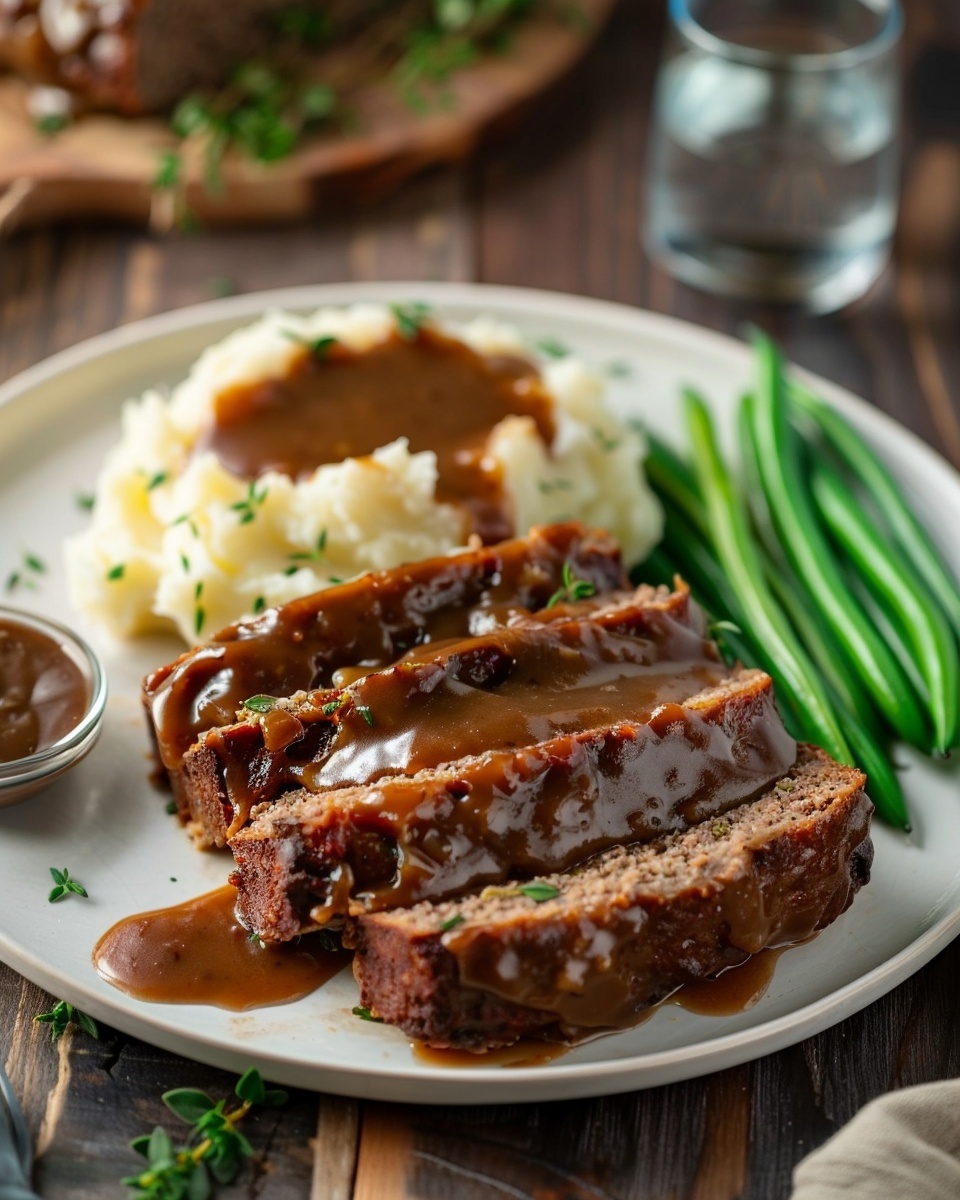
I slice my meatloaf into pieces about three-quarters of an inch thick. Any thinner and they fall apart. Any thicker and they’re awkward to eat. Use a sharp knife and wipe it clean between slices. This keeps each piece looking neat.
I serve each slice with a generous ladle of gravy poured right over the top. Some people like their gravy on the side, but I think meatloaf needs to be smothered. The gravy seeps into all the little nooks and makes every bite perfect.
For side dishes, mashed potatoes are the classic choice. Creamy, buttery mashed potatoes with gravy soaking into them? That’s what comfort food is all about. I make mine with real butter and heavy cream. No apologizing for calories on meatloaf night.
Green beans are my go-to vegetable. I usually do them simple, just steamed with a bit of butter, salt, and pepper. Sometimes I’ll sauté them with garlic and almonds if I’m feeling fancy. The freshness balances out the richness of the meatloaf and gravy.
Roasted carrots work beautifully too. A little natural sweetness plays well with the savory main dish. I toss them with olive oil, salt, and maybe a drizzle of honey before roasting. My kids actually eat their vegetables when I make them this way.
If you’re looking for more variety in your dinner rotation, meatloaf fits perfectly alongside other comfort classics. It’s one of those reliable dishes that everyone asks for again and again.
A simple side salad with vinaigrette adds brightness. I keep it basic with mixed greens, cherry tomatoes, and a tangy dressing. You need something crisp and acidic to cut through all that richness.
Some people serve meatloaf with mac and cheese, and while that’s delicious, it’s a lot of heavy food on one plate. I save that combination for when I’m feeding teenagers or people who’ve been doing physical work all day. They need those calories.
Cornbread on the side is another favorite in my house. Something about that slightly sweet, crumbly texture pairs wonderfully with meatloaf and gravy. Plus, you can use the cornbread to soak up extra gravy. Waste not, want not.
Here’s the thing about leftovers. Meatloaf might actually be better the next day. The flavors have had time to meld together. I make meatloaf sandwiches by slicing it cold and layering it on good bread with lettuce, tomato, and mayo. My husband makes his with the gravy reheated and poured over the sandwich. It’s messy but amazing.
You can crumble leftover meatloaf into pasta sauce for a quick weeknight dinner. Just heat it up with some marinara and toss it with spaghetti. Totally different meal, but it uses up leftovers in a way that doesn’t feel like you’re eating the same thing twice.
I’ve even diced up leftover meatloaf and added it to scrambled eggs for breakfast. Add some cheese and wrap it in a tortilla for a hearty breakfast burrito. My son discovered this combination by accident one Saturday morning, and now it’s a regular thing at our house.
When it comes to nutrition, meatloaf can actually fit into a balanced meal plan. The protein from the beef helps with satiety and muscle maintenance. The vegetables add fiber and vitamins. If you’re concerned about blood sugar balance, serving your meatloaf with plenty of non-starchy vegetables and moderate portions of potato can help maintain steadier glucose levels throughout the evening.
The key is portion control and what you serve alongside it. A reasonable slice of meatloaf with lots of vegetables makes for a satisfying, nutritious dinner. Three slices with a mountain of mashed potatoes is a different story. But hey, sometimes you need that comfort.
Funny enough, meatloaf has become our celebration food. Not fancy enough for most people’s special occasions, but in our house, when someone has a good day or accomplishes something, they get to request dinner. Nine times out of ten, they ask for meatloaf. It’s the ultimate comfort.
I think what makes this meal special is how it brings people to the table. We all sit down together. Phones go away. We talk about our day while passing the green beans and fighting over who gets the last bit of gravy. Those moments are what family dinners are supposed to be about.
Whether you’re making homemade meatloaf with gravy for the first time or the hundredth time, remember that it’s more than just food. It’s tradition. It’s comfort. It’s love on a plate. Every family has their own version, their own special touches. This is mine, and now it can be part of yours too. Take what works, adjust what doesn’t, and make it your own. That’s how recipes become family traditions.
Frequently Asked Questions About Homemade Meatloaf with Gravy
What kind of gravy is best for meatloaf?
Classic brown gravy made from the meatloaf drippings is my top choice because it enhances the natural flavors without masking them. Mushroom gravy adds earthy depth and is perfect if you love umami-rich foods. Onion gravy brings a subtle sweetness that balances the savory meat beautifully. For something different, tomato-based gravy works well with Italian-seasoned meatloaf. Start with brown gravy and experiment from there based on your family’s preferences.
What is the secret to making a good meatloaf?
The real secret is not overmixing your meat mixture and not overbaking the loaf. Mix ingredients just until combined to avoid a dense, tough texture. Use a meat thermometer to pull it out at exactly 160°F so it stays moist and tender. Let it rest for ten minutes after baking so the juices redistribute instead of running out when you slice. The panade technique with milk-soaked breadcrumbs also makes a huge difference in keeping everything moist.
What not to put in meatloaf?
Avoid using too much filler like breadcrumbs or oatmeal, which makes the texture spongy rather than meaty. Don’t add large chunks of vegetables that prevent proper slicing and structural integrity. Stay away from excessive wet ingredients that make the mixture too loose to hold together. Strong cheeses like blue cheese can overpower the dish completely. Raw garlic in large amounts turns bitter during the long baking time, so always sauté it first or use powder.
What is the one ingredient upgrade for better meatloaf?
Finely chopped sautéed mushrooms are my number one upgrade for transforming ordinary meatloaf into something exceptional. Cook them until all their moisture evaporates and they turn golden brown, then mix them into your meat. They add incredible umami flavor and moisture without being detectable as a separate ingredient. The mushrooms essentially disappear into the mixture but make the whole thing taste richer and more complex. Fresh herbs instead of dried would be my second choice for an upgrade.
Can I make meatloaf ahead of time?
Absolutely! You can shape the raw meatloaf, cover it tightly with plastic wrap, and refrigerate it for up to 24 hours before baking. This is actually convenient for busy weeknights because you just pop it in the oven when you get home. You can also freeze the shaped, unbaked meatloaf for up to three months. Thaw it completely in the refrigerator before baking. The glaze should be added fresh right before baking for the best flavor and texture.
How do I know when my meatloaf is done?
The only reliable way is using a meat thermometer inserted into the thickest part of the loaf. It should read 160°F for ground beef to be safely cooked. Visual cues like color aren’t reliable because ingredients like ketchup or Worcestershire sauce can affect how it looks inside. The juices should run clear when you insert the thermometer. If you don’t have a thermometer, invest in one because guessing leads to either undercooked or overcooked meatloaf.
Why does my meatloaf fall apart when I slice it?
This usually happens from not enough binder or not letting it rest properly. Make sure you’re using two eggs for two pounds of meat and about a cup of breadcrumbs. The milk-soaked breadcrumbs create a panade that holds everything together. Always let the meatloaf rest for at least ten minutes after it comes out of the oven. If you slice it immediately, it hasn’t had time to set up and will crumble. Overmixing can also create a texture that doesn’t hold together well.
Can I use ground turkey or chicken instead of beef?
You can, but you’ll need to adjust the recipe because poultry is much leaner than beef. Add extra moisture through sautéed vegetables, a bit of olive oil, or an extra egg. Ground turkey or chicken alone will produce a dry, bland meatloaf without these adjustments. I sometimes do a blend of half beef and half turkey for a lighter version that still has good flavor and moisture. Just remember that the cooking time might be slightly different, so always use a thermometer.
How do I prevent my meatloaf from being greasy?
Use meat that’s 85/15 or 80/20 lean-to-fat ratio rather than anything fattier. Shape your meatloaf on a baking sheet instead of in a loaf pan so the fat can drip away from the meat. You can also place the shaped loaf on a rack set inside the baking sheet for even better drainage. Don’t use meat that’s too fatty like regular ground pork by itself. The drippings are great for gravy, but you don’t want the meatloaf sitting in grease while it cooks.
What’s the best way to reheat leftover meatloaf?
For best results, reheat slices in a covered dish in the oven at 300°F for about 15-20 minutes with a splash of broth or water to keep them moist. You can also microwave individual slices with a damp paper towel over them for about 90 seconds. The gravy reheats beautifully on the stovetop over low heat, though you might need to add a splash of broth to thin it out. I actually prefer eating leftover meatloaf as cold sandwiches, but reheated with gravy is absolutely delicious too.
Making homemade meatloaf with gravy might seem old-fashioned, but there’s a reason this dish has survived generations. It’s honest food that fills your home with warmth and brings people together around the table. Don’t be afraid to make it your own by adjusting seasonings or trying different gravy styles until you find what your family loves most.
Ingredients
Equipment
Method
- Soak breadcrumbs in milk for about 5 minutes.
- Sauté onions and garlic in butter until soft; let cool.
- In a mixing bowl, combine soaked breadcrumbs, ground beef, eggs, cooled vegetables, Worcestershire sauce, salt, and pepper.
- Mix gently with hands until combined; avoid overmixing.
- Shape the mixture into a free-form loaf on a lined baking sheet.
- Brush a thin layer of ketchup glaze on top.
- Preheat the oven to 350°F and bake for 1 to 1.25 hours, checking the internal temperature.
- Once done (160°F), let the meatloaf rest for 10 minutes before slicing.
- For gravy, melt butter in a saucepan, whisk in flour to make a roux, then gradually add beef broth, and finally, add drippings from the meatloaf.
- Season the gravy and simmer to thicken; serve over meatloaf.