
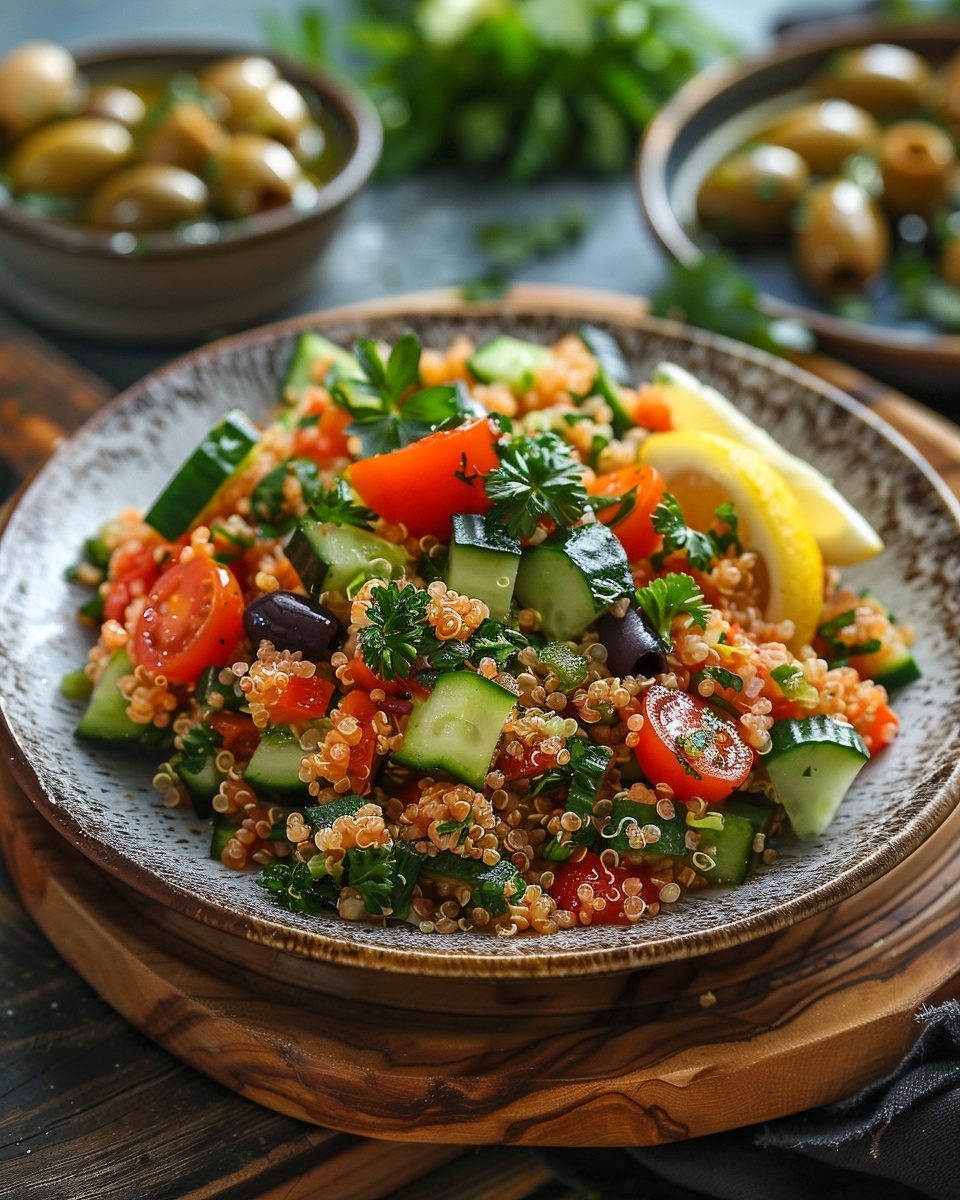
Introduction: My Love for Mediterranean Quinoa Salad
Last summer, I found myself standing in my kitchen on a sweltering Tuesday afternoon. I was tired, hungry, and desperate for something that wouldn’t heat up my already warm house. That’s when I threw together my first Mediterranean quinoa salad. The cool crunch of cucumbers, the tangy bite of feta cheese, and the nutty flavor of quinoa created magic in a bowl. I’ve been hooked ever since.
This salad has become my go-to meal for busy weekdays, potluck dinners, and even meal prep Sundays. It’s refreshing, satisfying, and makes me feel good about what I’m eating. The best part? You can make it in under 30 minutes, and it tastes even better the next day.
Mediterranean quinoa salad has exploded in popularity over the past few years. People love it because it checks all the boxes. It’s healthy, filling, colorful, and packed with flavor. You get protein from the quinoa, healthy fats from olives and olive oil, and tons of vitamins from fresh vegetables. It’s a complete meal that doesn’t leave you feeling heavy or sluggish.
The health benefits are real and impressive. Quinoa is a complete protein, which means it contains all nine essential amino acids your body needs. The Mediterranean ingredients like tomatoes, cucumbers, and olive oil bring antioxidants and heart-healthy fats to your plate. This isn’t just trendy health food. It’s actual nutrition that your body will thank you for.
In this article, I’m going to share everything I’ve learned about making the perfect Mediterranean quinoa salad. We’ll cover different recipes from popular sources, explore creative variations, and I’ll give you my best tips for meal prep and storage. Whether you’re new to quinoa or a seasoned pro, you’ll find something useful here.
The Basics of Mediterranean Quinoa Salad
So what exactly is a Mediterranean quinoa salad? Think of it as a fusion between traditional Mediterranean flavors and the protein-packed goodness of quinoa. Instead of using bulgur wheat like you’d find in tabbouleh, this salad puts quinoa front and center. The result is a gluten-free, nutrient-dense dish that celebrates the bright, fresh flavors of Mediterranean cuisine.
The main ingredients create a perfect balance of textures and tastes. You’ll typically find fluffy quinoa as the base, mixed with crisp cucumbers, juicy tomatoes, and tangy red onions. Kalamata olives add a briny punch, while crumbled feta cheese brings creamy richness. Fresh herbs like parsley and mint make everything taste alive and vibrant.
The dressing is usually simple but powerful. Most recipes call for extra virgin olive oil, fresh lemon juice, garlic, and a touch of red wine vinegar. Some versions include sun dried tomatoes for an extra layer of concentrated flavor. The key is keeping things simple and letting each ingredient shine.
Let me break down the nutritional value because it’s truly impressive. Quinoa is often called a superfood, and it earns that title. One cup of cooked quinoa gives you about 8 grams of protein and 5 grams of fiber. It’s also rich in iron, magnesium, and B vitamins. Your body digests it slowly, which means you stay full longer and avoid energy crashes.
The vegetables add their own nutritional punch. Tomatoes bring lycopene, a powerful antioxidant. Cucumbers keep you hydrated and add vitamin K. Olives provide healthy monounsaturated fats that support heart health. Even the herbs contribute vitamins A and C, plus they help with digestion.
Feta cheese adds calcium and protein, though it’s higher in sodium. If you’re watching your salt intake, you can use less feta or choose a low-sodium version. The olive oil in the dressing provides more healthy fats and helps your body absorb fat-soluble vitamins from the vegetables.
When you add up all these ingredients, you get a meal that’s balanced in protein, healthy fats, and complex carbohydrates. A typical serving of mediterranean quinoa salad calories ranges from 250 to 350, depending on how heavy-handed you are with the olive oil and cheese. That’s a pretty reasonable calorie count for such a satisfying meal.
This dish has become incredibly popular on social media, especially Pinterest. Search for mediterranean quinoa salad pinterest and you’ll find thousands of beautiful photos and recipe variations. People love sharing their versions with different add-ins like chickpeas, roasted red peppers, or artichoke hearts. The visual appeal makes it perfect for food photography, with all those bright colors and fresh ingredients.
Popular Variations of Mediterranean Quinoa Salad
One of my favorite things about this salad is how adaptable it is. Different chefs and food bloggers have put their own spin on the classic recipe. Let me walk you through some popular variations that you might want to try.
The mediterranean quinoa salad skinnytaste version focuses on keeping calories in check while maximizing flavor. Gina’s recipe uses a light hand with the oil and cheese but doesn’t skimp on the vegetables and herbs. She often includes chickpeas for extra protein and fiber. This version is perfect if you’re watching your calorie intake but still want something delicious and filling.
Dr. Oz’s mediterranean quinoa salad emphasizes the health benefits and anti-inflammatory properties of the ingredients. His version often includes additional superfoods like pomegranate seeds or walnuts. He’s big on explaining why each ingredient matters for your health, which I find really helpful when I’m trying to eat better.
The mediterranean quinoa salad delish recipe tends to be more indulgent and flavor-forward. Delish isn’t afraid of a little extra feta or a generous drizzle of olive oil. Their photos are gorgeous, and their recipes are designed to wow at dinner parties. I make their version when I want to impress guests.
Bobby Flay’s mediterranean quinoa salad brings his signature bold flavors to the table. He often adds grilled vegetables or roasted red peppers for a smoky depth. His recipes might include a touch of cumin or smoked paprika in the dressing. If you like your food with a little more punch, his approach is worth trying.
The mediterranean quinoa salad panera inspired versions try to recreate the restaurant’s popular menu item at home. These recipes typically include a red wine vinegar based dressing and a specific ratio of vegetables to quinoa. Many home cooks have reverse-engineered Panera’s version to save money and customize it to their taste.
The mediterranean quinoa salad cookie and kate recipe is one of the most beloved versions online. Kate’s approach is wholesome and straightforward. She uses simple, quality ingredients and gives clear instructions that work every time. Her recipe includes a lemony dressing and plenty of fresh herbs. I’ve made her version dozens of times, and it never disappoints.
Each of these variations has merit. Some days I want the lighter Skinnytaste version. Other times I’m in the mood for Bobby Flay’s bolder flavors. The beauty of this salad is that you can adjust it to match your mood, dietary needs, or what’s in your fridge. There’s no single “right” way to make it.


Step-by-Step Guide to Making the Perfect Mediterranean Quinoa Salad
Now that we’ve explored all these amazing variations, let me show you exactly how to make this salad from scratch. I’m basing this on the mediterranean quinoa salad cookie and kate approach because it’s foolproof and absolutely delicious every single time.
First things first, you need to cook your quinoa properly. This might sound simple, but I’ve learned the hard way that mushy or crunchy quinoa can ruin an otherwise perfect salad. Start by rinsing one cup of dry quinoa under cold water for about 30 seconds. This removes the natural coating called saponin that can make quinoa taste bitter or soapy. I skip this step sometimes when I’m rushed, and I always regret it.
Here’s my method for fluffy quinoa every time. Combine your rinsed quinoa with two cups of water in a medium saucepan. Bring it to a boil over high heat, then immediately reduce the heat to low and cover. Let it simmer for about 15 minutes until all the water is absorbed. The key is to not lift that lid during cooking. I know it’s tempting, but resist.
Once the quinoa is cooked, remove it from heat and let it sit covered for 5 minutes. Then fluff it with a fork and spread it on a baking sheet to cool completely. This cooling step is crucial. If you add warm quinoa to your other ingredients, everything gets soggy and sad. Trust me on this one. I’ve served warm quinoa salad to guests before, and while they were polite about it, I knew it wasn’t right.
While your quinoa cools, prep your vegetables. Dice one large cucumber into small chunks. I like to remove the seeds because they add too much moisture. Halve about two cups of cherry tomatoes, or dice two regular tomatoes. Finely chop half a red onion. If raw onion is too sharp for you, soak the chopped pieces in cold water for ten minutes, then drain. This mellows the bite considerably.
Chop a generous handful of fresh parsley and about a quarter cup of fresh mint. Don’t skip the mint. It transforms this salad from good to spectacular. The first time I made this without mint because I didn’t have any, the salad tasted flat and boring. Mint is that essential. You’ll also want half a cup of kalamata olives and about three quarters of a cup of crumbled feta cheese.
Now for the dressing, which is where the magic really happens. In a small jar with a lid, combine one third cup of extra virgin olive oil, the juice of one large lemon, two tablespoons of red wine vinegar, one minced garlic clove, half a teaspoon of dried oregano, and salt and pepper to taste. Shake it vigorously until everything emulsifies. The mediterranean quinoa salad red wine vinegar addition gives the dressing a tangy complexity that plain lemon juice alone can’t achieve.
Once your quinoa is completely cool, throw everything into a large bowl. Add the quinoa first, then the vegetables, herbs, olives, and most of the feta. Pour the dressing over everything and toss gently but thoroughly. I like to save some feta to sprinkle on top because it looks prettier that way. Let the salad sit for at least 15 minutes before serving so the flavors can mingle and get to know each other.
Creative Variations with Sun-Dried Tomatoes and Beyond
After you’ve mastered the basic recipe, it’s time to get creative. One of my absolute favorite additions is sun dried tomatoes. The mediterranean quinoa salad sun dried tomatoes version adds this incredible concentrated tomato flavor that’s sweet, tangy, and slightly chewy. I use about half a cup of oil-packed sun-dried tomatoes, drained and chopped.
The sun-dried tomatoes bring an intensity that fresh tomatoes simply can’t match. They’re like the difference between fresh grapes and raisins. Both are good, but they serve different purposes. When I add sun-dried tomatoes, I usually reduce the fresh tomatoes slightly so the salad doesn’t become tomato-heavy. Balance is everything.
Another variation I love involves adding chickpeas for extra protein and substance. This turns the salad into an even more complete meal. I drain and rinse a can of chickpeas and toss them in. If you want to get fancy, roast the chickpeas first with a little olive oil and spices. The crispy texture is amazing against the soft quinoa. This heartier version reminds me of the satisfying feeling I get from a veggie pasta bake, but much lighter and fresher.
Sometimes I’ll add roasted red peppers for sweetness and a subtle smoky flavor. You can buy them in a jar or roast your own. I’m usually too lazy to roast my own, so jarred works perfectly fine. The red peppers add another pop of color too, which makes the salad even more Instagram-worthy.
For those watching their intake, the mediterranean quinoa salad calories can be adjusted easily. Use less olive oil in the dressing and go lighter on the feta cheese. You can bulk up the salad with more vegetables instead. Add extra cucumbers, bell peppers, or even some shredded carrots. The calorie count drops while the volume stays satisfying. A lighter version comes in around 200 calories per serving, while a more generous portion might hit 350 calories.
Pro Tips for Quinoa Perfection and Flavor Balance
Let me share some tricks I’ve picked up that really make a difference. First, toast your quinoa before cooking it. After rinsing and draining, add the damp quinoa to a dry saucepan over medium heat. Stir it constantly for about three minutes until it smells nutty and some grains start to pop. Then add your water and cook as usual. This extra step deepens the flavor considerably.
Here’s the thing about flavor balance that took me forever to understand. You need all the taste elements working together: salty from the olives and feta, acidic from the lemon and vinegar, sweet from the tomatoes, bitter from the herbs, and rich from the olive oil. If your salad tastes flat, it’s usually missing acid. Add more lemon juice. If it’s too sharp, add a pinch of sugar or a drizzle more olive oil.
Fresh herbs make all the difference, but dried herbs in the dressing work great too. I keep dried oregano, basil, and thyme on hand for the dressing. They infuse the oil with flavor. But for the salad itself, always use fresh parsley and mint. There’s just no comparison. Dried herbs in the actual salad taste like dusty sadness.
Temperature matters more than you’d think. This salad tastes best at room temperature or slightly chilled. Not ice cold straight from the fridge, though. If you’ve stored it in the refrigerator, take it out about 20 minutes before serving. The flavors open up and become more vibrant. Cold food numbs your taste buds a bit, which is why leftover pizza tastes different than fresh pizza, you know?
When it comes to storing, this salad keeps beautifully for up to four days in an airtight container in the fridge. In fact, it gets better after a day because the quinoa absorbs the dressing. I usually make a big batch on Sunday and eat it throughout the week for lunch. It’s as convenient as grabbing a turkey avocado sandwich, but feels more special.
One trick for meal prep: store the dressed salad separately from extra feta and fresh herbs. Then when you’re ready to eat, add a sprinkle of fresh cheese and herbs on top. This keeps everything tasting fresh and prevents the herbs from getting slimy. Nobody wants slimy herbs.
If you’re packing this for lunch, it holds up great in a container. Unlike leafy salads that wilt and get gross, quinoa salad stays perky. I sometimes pack it alongside some protein like chicken for an even more substantial meal. Or throw it in a whole wheat wrap like you would a caesar wrap for a portable lunch option.
For serving, I like to present it in a shallow bowl or platter rather than a deep bowl. This shows off all the pretty colors and makes it easier for people to serve themselves at gatherings. A sprinkle of extra herbs and a lemon wedge on the side makes it look restaurant-quality.
The texture balance is something to consider too. You want the crunch of cucumbers and onions, the creaminess of feta, the chewiness of quinoa, and maybe something with a bit more bite like the olives or sun-dried tomatoes. If everything’s the same texture, the salad becomes boring to eat. Think about adding toasted pine nuts or slivered almonds for extra crunch if you want.


Making Your Mediterranean Quinoa Salad Work for Your Lifestyle
One question I get asked all the time is about making this salad more substantial. Some people find it filling enough as is, but others need something with more staying power, especially if they’re using it as their main meal after a workout or a long day. Here’s the thing: you can absolutely bulk it up without losing that fresh, light feeling that makes it so appealing.
The easiest way to add protein is throwing in a can of chickpeas. I’ve mentioned this briefly before, but let me tell you why chickpeas work so well here. They have a mild, slightly nutty flavor that doesn’t compete with the Mediterranean ingredients. Plus, they add about 15 grams of protein per cup. When I’m particularly hungry, I’ll add a full can and reduce the quinoa slightly. The texture difference between the creamy chickpeas and the fluffy quinoa is really satisfying.
Grilled chicken is another fantastic addition that transforms this from a side dish into a serious dinner. I usually grill a couple of chicken breasts with lemon, garlic, and oregano, then slice them and arrange them on top of the salad. It’s almost like a deconstructed Greek chicken bowl. My husband prefers it this way because he’s one of those people who thinks a meal isn’t complete without meat. Can’t argue with that on busy weeknights when everyone needs to be satisfied.
If you’re vegetarian or just want to mix things up, try adding white beans, edamame, or even hard-boiled eggs. I’ve done all three at various times. The eggs are particularly good because they add richness and that satisfying quality that keeps you full for hours. Just chop them roughly and scatter them over the top right before serving. Funny enough, my kids will eat this salad without complaint when there are eggs involved, but they turn their noses up at the plain version. Kids are weird.
For people following a vegan diet, this salad is already almost there. Just skip the feta cheese or use a plant-based feta alternative. I’ve tried several brands, and some are surprisingly good. They don’t melt like dairy feta, but they provide that salty, tangy element you want. Add extra olives or a handful of toasted sunflower seeds to make up for the richness you lose by removing the cheese.
Now, about vinegar substitutions, because not everyone keeps red wine vinegar stocked in their pantry. I get it. Apple cider vinegar works beautifully and adds a slightly fruity tang that’s different but equally delicious. Use the same amount you would use for red wine vinegar. The flavor profile shifts just a bit sweeter and less sharp, which some people actually prefer.
Balsamic vinegar is another option, though it changes the character of the salad more dramatically. Balsamic is sweeter and darker, giving the dressing an almost molasses-like quality. I like this variation when I’m adding roasted vegetables because the sweetness complements the caramelized flavors. Just use a bit less than the recipe calls for because balsamic can be overpowering. Start with one tablespoon and taste before adding more.
White wine vinegar or champagne vinegar work too if that’s what you have. They’re lighter and more delicate than red wine vinegar. The salad will taste a bit more subtle, which isn’t necessarily bad. Sometimes I’m in the mood for that gentler flavor. Regular white vinegar, though? Skip it. That stuff is too harsh for a salad like this. Save it for cleaning your coffee maker.
Let me address the sun dried tomatoes situation because I know they’re not everyone’s favorite, and they can be pricey. Roasted red peppers are my go-to substitute. They bring sweetness and a smoky depth without the intense concentrated flavor of sun-dried tomatoes. I buy the jarred ones and chop them up. They’re already soft and ready to go, which fits perfectly with my lazy cooking style.
Marinated artichoke hearts are another excellent swap. They add a tangy, slightly pickled quality that’s really interesting against the fresh vegetables. Just drain them well and chop them into bite-sized pieces. I discovered this substitution by accident when I grabbed the wrong jar from my pantry, and it turned out to be a happy mistake. The artichokes add this Mediterranean sophistication that makes the salad feel fancy.
If you want something with a similar chewy texture to sun-dried tomatoes but a different flavor, try chopped dried apricots or golden raisins. I know this sounds weird, but hear me out. The sweetness plays beautifully against the salty feta and briny olives. It’s like how you’d add dried cranberries to a regular salad. That sweet-savory combination just works on your taste buds in a really pleasing way.
Understanding your cooking workflow helps you figure out when to prep what. I like to cook my quinoa in the morning if I’m planning to serve the salad for lunch or dinner. By the time I need it, it’s completely cool and ready to go. This kind of planning ahead makes the actual assembly ridiculously quick.
Storage is something people worry about more than they need to. This salad is incredibly forgiving. In an airtight container in your refrigerator, it’ll stay fresh and delicious for up to five days. I’ve personally pushed it to six days when I forgot about a container in the back of my fridge, and it was still fine. The quinoa might absorb more dressing over time, so you may want to drizzle a bit more olive oil and lemon juice before serving leftovers.
The vegetables stay surprisingly crisp, unlike what happens with lettuce-based salads that turn into soggy messes after a day. The cucumbers might release a tiny bit of water, but not enough to ruin anything. If you’re really concerned about this, you can store the cucumbers separately and add them fresh each day. That’s probably more trouble than it’s worth for most people, though.
Here’s a meal prep trick that changed my life: make two or three batches on Sunday and store them in individual containers. Grab one on your way out the door each morning. I do this constantly, and it’s saved me from so many sad desk lunches of whatever I could scrounge from the vending machine. When you have something this good waiting for you, you actually look forward to lunch instead of dreading another boring sandwich. Speaking of which, if you’re hunting for more reliable lunch options that’ll keep you excited about midday meals, I’ve got plenty of ideas that work just as well for meal prep.
The beauty of making this salad ahead is that the flavors actually improve as they sit together. The quinoa soaks up the dressing, the onions mellow out, and everything melds into this cohesive, delicious whole. It’s one of those rare dishes that gets better with age, at least for the first few days. After that, you should probably just eat it already.
For people with dietary restrictions, this salad is a dream. It’s naturally gluten-free, which is huge for people with celiac disease or gluten sensitivity. Quinoa is one of those grains that doesn’t make you feel like you’re missing out on anything. It’s not trying to be a sad substitute for something else. It’s genuinely good on its own terms.
Making it dairy-free or vegan is simple, as I mentioned earlier. The main thing you lose is the feta, but there are workarounds. Nutritional yeast gives you that umami, slightly cheesy flavor if you’re into that. Some people swear by it. I’m not totally convinced, but it’s worth trying if you’re vegan and missing that cheese element.
If you’re watching sodium, this is where you need to be a bit careful. The olives, feta, and any added chickpeas from a can all contribute salt. You can use low-sodium versions of everything and skip adding extra salt to the dressing. The lemon juice and herbs provide plenty of flavor on their own. I’ve made low-sodium versions for my dad who has high blood pressure, and he honestly couldn’t tell the difference.
By the way, this salad travels really well for picnics and potlucks. It doesn’t need to stay cold like mayo-based salads, so you’re not risking food poisoning if it sits out for an hour. Just keep it out of direct sunlight and you’re fine. I’ve brought this to summer barbecues dozens of times, and it’s always one of the first things to disappear.
The visual appeal helps too. People see all those bright colors and fresh ingredients, and they want to try it even if they’ve never had quinoa before. I’ve converted several quinoa skeptics this way. They come in thinking it’s going to be some weird health food, and they leave asking for the recipe.
Remember that this salad is endlessly adaptable to whatever you have on hand or whatever dietary needs you’re working with. There’s no single perfect version. The best version is the one you’ll actually make and enjoy eating. Don’t stress about having every single ingredient exactly as written. Work with what you’ve got, adjust to your taste, and have fun with it.
Whether you’re making the lighter mediterranean quinoa salad skinnytaste version for a weekday lunch or going all out with Bobby Flay’s bolder approach for a dinner party, you’re creating something nourishing and delicious. That’s what matters. Good food doesn’t have to be complicated or stressful. Sometimes the best meals are the simple ones that make you feel good inside and out.
Frequently Asked Questions About Mediterranean Quinoa Salad
How can I make my Mediterranean quinoa salad more filling?
Add protein-rich ingredients like chickpeas, grilled chicken, hard-boiled eggs, or white beans to make the salad more substantial. A can of chickpeas adds about 15 grams of protein and makes it feel like a complete meal. Grilled chicken works great if you want something heartier, and hard-boiled eggs add richness that keeps you satisfied longer. You can also increase the quinoa portion slightly or add some toasted nuts like pine nuts or almonds for extra staying power. These additions transform the salad from a light side dish into a serious, filling main course.
Can I use other types of vinegar besides red wine vinegar?
Yes, absolutely! Apple cider vinegar works beautifully and adds a slightly fruity, sweet tang to the dressing. Balsamic vinegar is another option, though it makes the dressing sweeter and darker, so use a bit less. White wine vinegar or champagne vinegar are lighter alternatives that create a more delicate flavor profile. I’d avoid regular distilled white vinegar because it’s too harsh for a fresh salad like this. Start with whatever vinegar you have and adjust to your taste preference.
What are some good substitutes for sun-dried tomatoes?
Roasted red peppers are my favorite substitute because they bring sweetness and a subtle smoky flavor without the intensity of sun-dried tomatoes. Marinated artichoke hearts add a tangy, briny quality that fits the Mediterranean theme perfectly. For something unexpected but delicious, try chopped dried apricots or golden raisins for a sweet-savory contrast. Fresh cherry tomatoes work fine too if you just want to keep things simple. Any of these options will give you interesting flavor and texture without the concentrated punch of sun-dried tomatoes.
Is this salad suitable for people with dietary restrictions?
Yes, this salad is very adaptable to different dietary needs! It’s naturally gluten-free since quinoa doesn’t contain gluten, making it perfect for people with celiac disease. To make it vegan, simply skip the feta cheese or use a plant-based alternative. For dairy-free diets, just omit the cheese and maybe add extra olives or avocado for richness. If you’re watching sodium, use low-sodium olives and skip the added salt. The basic recipe is already vegetarian and can be tweaked to fit almost any eating plan without sacrificing flavor.
How long does the salad last in the fridge?
Stored properly in an airtight container, this salad lasts up to five days in the refrigerator. I’ve even pushed it to six days when I forgot about it, and it was still perfectly fine. The flavors actually improve after a day or two as the quinoa absorbs the dressing. The vegetables stay surprisingly crisp, unlike lettuce-based salads that get soggy. If you notice the salad seems dry after a few days, just drizzle a bit more olive oil and lemon juice before serving. This is one of those rare salads that ages gracefully.
Can I prepare this salad ahead of time?
Absolutely! This salad is actually perfect for meal prep and gets better as it sits. Make it a day ahead for the best flavor as everything melds together beautifully. You can cook the quinoa up to three days in advance and store it separately in the fridge. Some people like to keep extra feta and fresh herbs separate and add them fresh when serving, but it’s not necessary. I regularly make big batches on Sunday and portion them into containers for the entire week. It’s one of the most reliable make-ahead meals I know.
What’s the best way to cool quinoa quickly?
Spread your cooked quinoa on a large baking sheet in a thin, even layer to cool it quickly. This increases the surface area and lets it cool in about 15-20 minutes instead of an hour. You can also stick the baking sheet in the fridge to speed things up even more. Don’t add warm quinoa directly to your salad because it’ll make everything soggy and wilt your fresh herbs. If you’re really in a rush, rinse the cooked quinoa under cold water in a fine-mesh strainer, though this can make it a bit waterlogged. The baking sheet method is better if you have the time.
Can I freeze Mediterranean quinoa salad?
I wouldn’t recommend freezing this salad because the vegetables don’t hold up well when thawed. Cucumbers and tomatoes get mushy and watery after freezing, and the feta cheese changes texture in an unpleasant way. If you want to prep ahead, you can freeze cooked quinoa by itself for up to three months, then thaw it and make fresh salad when you’re ready. The dressed salad with all the fresh ingredients is really meant to be enjoyed within a few days of making it. Stick to refrigerator storage for the best results.
Why does my quinoa salad taste bland?
Bland quinoa salad usually needs more acid, salt, or fresh herbs. Try adding more lemon juice or vinegar first, as that brightens everything up instantly. Make sure you’re using enough salt in both the quinoa cooking water and the dressing. Fresh herbs make a huge difference too, so don’t skimp on the parsley and mint. Also check that your quinoa isn’t the culprit by making sure you didn’t skip rinsing it before cooking. Sometimes adding a pinch of red pepper flakes or extra garlic helps wake up the flavors too.
Can I serve this salad warm instead of cold?
You can serve it at room temperature, which is actually my preferred way, but I wouldn’t serve it hot. Warm quinoa makes the vegetables wilt and the cheese melt in an unappealing way. The salad tastes best when the quinoa is completely cooled but the salad hasn’t been refrigerated for hours. If you’ve stored it in the fridge, take it out about 20-30 minutes before serving so it comes to room temperature. This allows the flavors to open up and taste more vibrant. Cold food numbs your taste buds a bit, so room temperature really is the sweet spot.
I hope these recipes and tips inspire you to make your own version of this incredible salad. There’s something really satisfying about making a meal that’s both healthy and absolutely delicious, something that makes you feel good while you’re eating it and afterward too. Give it a try, experiment with the variations, and don’t be afraid to make it your own. I’d love to hear how your version turns out and what creative additions you discover along the way!
Ingredients
Equipment
Method
- Rinse the quinoa under cold water for about 30 seconds.
- Combine rinsed quinoa with water in a medium saucepan and bring to a boil.
- Reduce heat to low, cover, and simmer for about 15 minutes until water is absorbed.
- Remove from heat, let sit covered for 5 minutes, then fluff with a fork and cool on a baking sheet.
- Dice the cucumber and halved or dice the tomatoes.
- Finely chop the red onion (soak in cold water if desired to reduce sharpness).
- Chop parsley and mint.
- In a small jar, combine olive oil, lemon juice, red wine vinegar, garlic, oregano, salt, and pepper; shake to emulsify.
- Once quinoa is cool, combine it with the vegetables, herbs, olives, and most of the feta in a large bowl.
- Pour the dressing over the salad and toss gently but thoroughly.
- Let sit for at least 15 minutes before serving.