
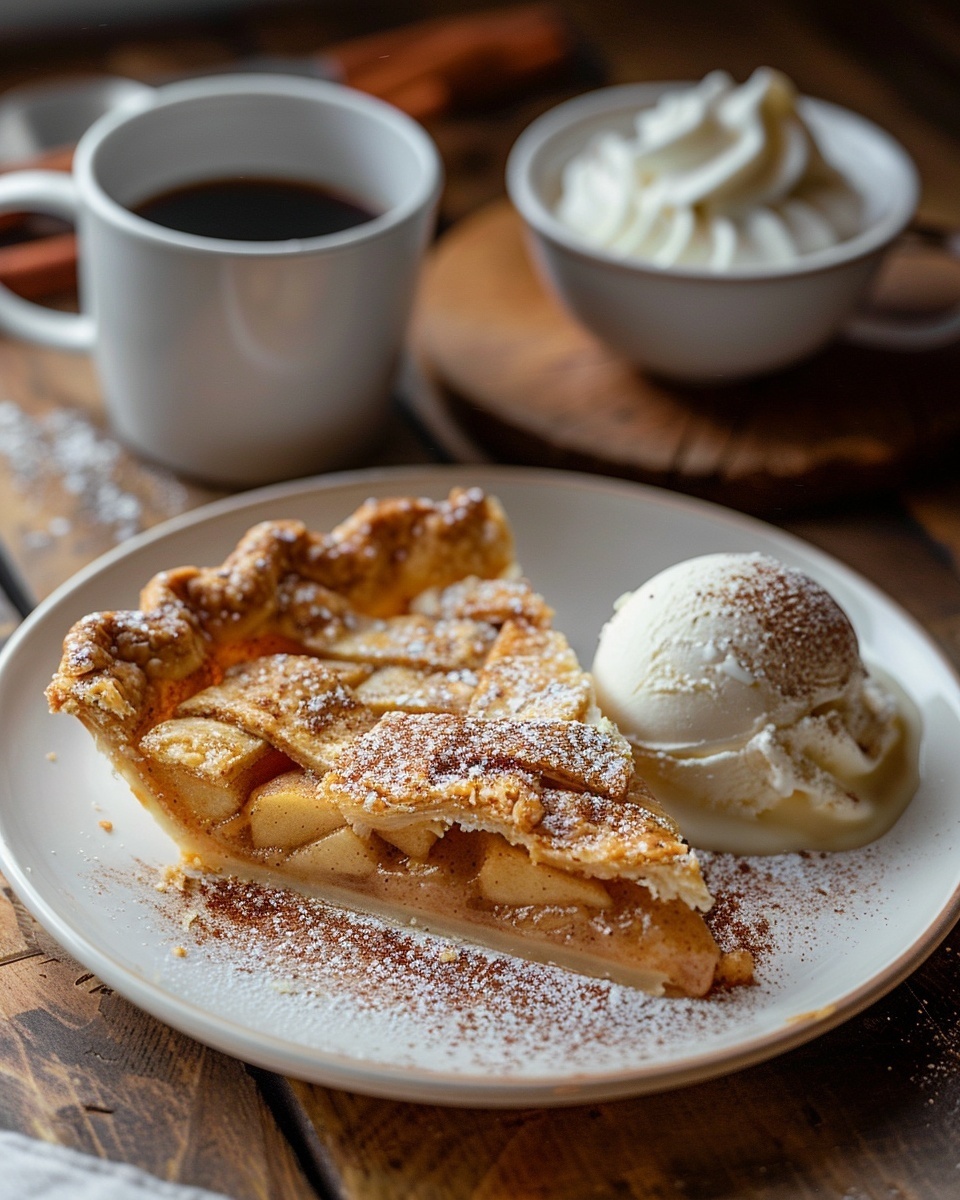
Welcome to My Kitchen: The Magic of Apple Pie with Cinnamon
Last Thanksgiving, my grandmother handed me a worn recipe card with faded handwriting. It was her famous apple pie recipe. She smiled and said, “The secret is never skimping on the cinnamon.” That pie became the talk of our family dinner, and I’ve been hooked ever since.
There’s something magical about pulling a golden apple pie from the oven. The smell fills your entire house with warmth and comfort. Your family gathers in the kitchen, drawn by that irresistible aroma. Apple pie with cinnamon isn’t just a dessert. It’s a memory maker.
I’ve baked this pie dozens of times now. I’ve tried fancy recipes with complicated techniques. I’ve experimented with unusual ingredients. But I always come back to this simple, classic version. The combination of tender apples, flaky crust, and that perfect hint of cinnamon never fails.
What makes this homemade apple pie stand out? It’s the balance. The apples stay tender but not mushy. The crust turns golden and crisp. And the cinnamon ties everything together without overpowering the fruit. You don’t need culinary school to make this. You just need good ingredients and a little patience.
Today, I’m walking you through everything I’ve learned. We’ll talk about why cinnamon makes such a difference. I’ll help you pick the right apples. And I’ll share the tricks that turn a good pie into a great one.
Why Cinnamon is Essential in Apple Pie
I once made an apple pie without cinnamon. My nephew took one bite and asked, “Why does it taste wrong?” He was six years old, and he nailed it. Without cinnamon, apple pie just feels incomplete.
Cinnamon does more than add flavor. It actually makes apples taste more like apples. Scientists call this flavor enhancement. I call it kitchen magic. The warm spice notes wake up your taste buds and make the fruit flavors pop.
When you smell a cinnamon apple pie baking, your brain releases happy chemicals. That’s not an exaggeration. The scent of cinnamon has been shown to reduce stress and improve mood. It’s comfort in spice form.
The warm, slightly sweet taste of cinnamon pairs naturally with apples. They grew up together in culinary history. People have been combining these two ingredients for hundreds of years across different cultures. There’s a reason this pairing became a classic.
I use Ceylon cinnamon when I can find it. It has a sweeter, more delicate flavor than the common cassia cinnamon. But honestly? Both work beautifully. The key is using enough of it. Don’t be shy with your cinnamon. Most recipes call for at least one teaspoon. I usually add a bit extra.
Cinnamon also helps control the sweetness. It adds depth that balances the sugar. Without it, your apple pie recipe might taste flat or one-dimensional. The spice creates layers of flavor that keep each bite interesting.
Here’s another benefit I discovered by accident. Cinnamon helps thicken the pie filling slightly. It works with the natural pectin in apples to create a better texture. Your filling won’t be runny or soupy.
Choosing the Right Apples for Your Cinnamon Apple Pie
My first apple pie was a disaster. I grabbed a bag of Red Delicious apples because they were on sale. The filling turned to mush. The flavor was bland. I learned an expensive lesson that day. Not all apples are created equal when it comes to baking.
The best apples for pie hold their shape when heated. They have enough tartness to balance the sugar. And they release just the right amount of juice. You want apples that can handle an hour in a hot oven without falling apart.
Granny Smith apples are my go-to choice. They’re tart, firm, and reliable. They won’t turn mushy no matter how long you bake them. The tartness cuts through the sweetness beautifully. If I could only use one variety, this would be it.
But here’s where things get interesting. Mixing apple varieties creates a better pie than using just one type. Different apples bring different qualities to the party. Some add sweetness. Others contribute tartness. Some stay firm while others soften slightly and create a nice sauce.
My favorite combination uses three parts Granny Smith to one part Honeycrisp. The Granny Smiths provide structure and tang. The Honeycrisp apples add natural sweetness and a hint of honey flavor. This mix gives you complexity without extra work.
Here are the best apple varieties for pie that I recommend:
- Granny Smith: Tart and firm, they hold shape perfectly
- Honeycrisp: Sweet and juicy with excellent flavor
- Braeburn: Crisp texture with balanced sweet-tart taste
- Jonagold: Honey-sweet with a touch of tartness
- Northern Spy: Traditional pie apple with firm flesh
- Pink Lady: Tart and sweet with great texture
Avoid these apples for your homemade cinnamon apple pie:
- Red Delicious: Turns mealy and flavorless when baked
- McIntosh: Too soft, creates mushy filling
- Gala: Loses shape and flavor in the oven
When you’re at the store or farmers market, pick firm apples. Give them a gentle squeeze. They should feel solid, not soft. Check for bruises or brown spots. You want unblemished fruit for the best results.
Size matters too. Medium apples are easier to work with than huge ones. You’ll get more consistent slices. And they’ll cook more evenly in your classic apple pie.
I like to use about six to eight medium apples for a standard nine-inch pie. That’s roughly three pounds of fruit. It sounds like a lot, but apples shrink when you cook them. You want to start with plenty so your pie doesn’t end up with a gap between the filling and the top crust.
One more tip about apple selection: buy local when possible. Apples that haven’t traveled across the country taste better. They’re crisper and more flavorful. Visit a farmers market in the fall. Talk to the growers. They’ll tell you which varieties they recommend for baking.
The time you spend choosing good apples pays off. The difference between a mediocre pie and an amazing one often comes down to this single decision. Good apples plus cinnamon equals easy apple pie success.


Creating the Perfect Pie Crust from Scratch
Now that you’ve got your apples sorted, let’s talk about what holds everything together. I’ll be honest with you—I used to be terrified of making pie crust. My first attempts looked like they’d been run over by a truck. Cracked edges. Torn dough. A weird gray color that definitely wasn’t appetizing.
Then my neighbor showed me her method. She was 82 years old and had been making pies since the 1950s. She didn’t measure anything. She just felt the dough and knew when it was right. I couldn’t work that way, so I figured out measurements that recreate her magic every single time.
Here’s the thing about pie crust: it’s actually simple. You need four ingredients. That’s it. Flour, butter, salt, and ice water. The trick isn’t the ingredients. It’s how you treat them.
Start with cold butter. I’m talking straight-from-the-fridge cold. Cut it into small cubes before you begin. Some people freeze their butter. I think that’s overkill, but if it makes you feel more confident, go for it. The cold butter creates steam pockets when it hits the hot oven. Those pockets become the flaky layers everyone loves.
For a double-crust apple pie with cinnamon, you’ll need about two and a half cups of all-purpose flour. Add a teaspoon of salt. Mix them together in a big bowl. Then drop in your cold butter cubes—about twelve tablespoons total, which is one and a half sticks if you’re counting.
Now comes the fun part. Use a pastry cutter or two forks to cut the butter into the flour. You’re basically smashing and mixing at the same time. Work quickly. Your warm hands will melt the butter if you take too long. The mixture should look like coarse crumbs when you’re done. Some pieces will be the size of peas. Others will be smaller. That variation is actually good.
Add ice water one tablespoon at a time. I usually need about six to eight tablespoons. The dough should come together but still look a bit shaggy. Don’t add too much water. That’s the number one mistake people make. A slightly dry dough is easier to fix than a wet, sticky mess.
Divide the dough in half. Shape each half into a flat disk. Wrap them in plastic wrap. Stick them in the fridge for at least thirty minutes. This rest time isn’t optional. The gluten needs to relax. Otherwise, your crust will shrink in the oven like a wool sweater in hot water.
When you’re ready to roll, flour your work surface generously. I use a marble pastry board because it stays cool. A regular counter works fine too. Take out one disk. Let it sit for about five minutes if it’s rock hard from the fridge.
Roll from the center outward. Turn the dough a quarter turn after each roll. This keeps it circular and prevents sticking. If it cracks at the edges, that’s okay. Just pinch it back together. You’re aiming for a circle about twelve inches across and roughly an eighth of an inch thick.
Transfer the dough to your pie pan by rolling it loosely around your rolling pin. Unroll it over the pan. Gently press it into the bottom and sides. Don’t stretch it. Stretched dough shrinks during baking. Trim the excess, leaving about an inch of overhang.
Funny enough, making classic chocolate chip cookies taught me a valuable lesson about dough handling that applies to pie crust too. Cold ingredients and a light touch make all the difference in texture.
Mixing Up the Cinnamon Apple Filling
Okay, crust is chilling. Time to prep those apples you carefully selected. This part goes faster than you think. I can peel and slice eight apples in about fifteen minutes now. When I started, it took me forty-five minutes and I had bandaids on three fingers.
Peel your apples completely. Some recipes say you can leave the skins on. Don’t listen to them. The skins get tough and weird during baking. They ruin the texture of your cinnamon apple pie. Use a good vegetable peeler. Those Y-shaped ones work better than the straight kind, at least for me.
Cut each apple into quarters. Remove the core. Then slice each quarter into three or four pieces. You want slices about a quarter inch thick. Thinner slices turn mushy. Thicker ones won’t cook through properly. Put all your slices into the biggest bowl you own.
Now for the magic mixture. Sprinkle half a cup of white sugar over those apples. Add a quarter cup of brown sugar. The brown sugar adds a deeper, almost caramel flavor. Then comes the star of the show—two teaspoons of ground cinnamon. You can add more if you’re a cinnamon fanatic like me. I sometimes go up to a full tablespoon.
Toss in two tablespoons of all-purpose flour. This helps thicken the juices that release from the apples. Some people use cornstarch. I prefer flour because it doesn’t make the filling gummy or translucent looking. Add a pinch of nutmeg if you want. A squeeze of lemon juice brightens everything up. Maybe a quarter teaspoon of vanilla extract.
Mix everything together with your hands. Really get in there and massage the mixture into the apples. Every slice should be coated. The sugar will start pulling moisture from the apples immediately. You’ll see liquid forming in the bottom of the bowl. That’s perfect.
Let this mixture sit for about ten minutes while you roll out your top crust. The apples will soften slightly and release some of their juice. This pre-release means less liquid bubbling over in your oven later.
By the way, this is also the moment where you can get creative with your apple pie recipe. Want to add a handful of raisins? Go ahead. Dried cranberries? Sure. A tablespoon of bourbon? Now you’re talking. I once added chopped pecans and it reminded me of those fancy desserts you get at restaurants.
The basic formula stays the same though. Apples, sugar, cinnamon, thickener. Everything else is optional. Don’t overthink it. I’ve seen people add fifteen different spices and the pie just tastes confused. Keep it simple. Let the cinnamon and apples shine.
When you’re ready to assemble, pile that filling into your bottom crust. Really pile it high. It’ll look like way too much. That’s intentional. The apples will cook down by almost half. If you don’t start with a mountain, you’ll end up with a sad little gap under your top crust.
Dot the top of the filling with about two tablespoons of butter cut into tiny pieces. This adds richness and helps everything meld together. Then roll out your second crust disk. Place it over the filling. Trim the edges so both crusts match up. Fold the top crust under the bottom crust edge. Crimp or flute the edges however you like. I just press with a fork because I’m lazy and it looks fine.
Cut four or five slits in the top crust. These vents let steam escape. Without them, you’ll have filling erupting like a volcano. Trust me on this one. I’ve cleaned that mess off my oven floor. Not fun.
Baking Your Apple Cinnamon Pie to Golden Perfection
This is where everything comes together. Or falls apart if you’re not paying attention. Baking apple pie with cinnamon isn’t difficult, but it requires some strategy.
Preheat your oven to 425 degrees Fahrenheit. That’s hot. Really hot. But you need that initial blast of heat to set the crust and start the filling bubbling. Before the pie goes in, brush the top crust with an egg wash. Beat one egg with a tablespoon of water. Paint it over the entire top crust with a pastry brush. This creates that gorgeous golden color.
Sprinkle a little coarse sugar over the egg wash. It adds a nice crunch and makes your homemade apple pie look professional. Like something from a bakery window.
Here’s something I learned the hard way: put a baking sheet on the rack below your pie. Line it with foil. Even if you’re careful, filling will probably bubble over. That baking sheet catches the drips. Otherwise, you’ll have burnt apple juice smoking up your kitchen and setting off your smoke alarm at 9 PM on a Tuesday. Not that this has happened to me multiple times or anything.
Bake at 425 for twenty minutes. Then reduce the temperature to 350 degrees. Don’t open the oven door during this time. Just turn the dial down. The pie will continue baking at the lower temperature for another forty to fifty minutes.
Watch the edges of your crust. They brown faster than the center. When they start getting dark—usually around the thirty-minute mark—cover them with strips of aluminum foil. Or use a pie crust shield if you have one. I finally bought one last year after burning the edges on approximately one million pies.
The process reminds me a bit of making chocolate brownies, where timing and temperature control are everything. Underbake and you get soup. Overbake and you get leather.
So how do you know when your cinnamon apple pie is actually done? Look for these signs: the crust is deep golden brown all over. The filling is bubbling up through those vents you cut. The juices look thick, not watery. If you have an instant-read thermometer, stick it through a vent into the filling. It should read about 200 degrees.
The smell test works too. When your whole house smells like heaven and your neighbors are texting asking what you’re making, it’s probably done.
Remove the pie from the oven. Resist every urge to cut into it immediately. I know it’s hard. It smells incredible. It looks perfect. But cutting a hot pie is a disaster. The filling needs at least two hours to set up. Preferably four. The juices will thicken as they cool. Cut too soon and you’ll have apple soup running all over your plate.
Set the pie on a wire cooling rack. This allows air to circulate underneath. A pie left to cool on a solid surface can get a soggy bottom. Nobody wants a soggy bottom.
While you’re waiting for it to cool—or pretending to wait while sneaking looks at it every five minutes—you might want to whip up something else. I often make a simple fried rice for dinner so I’m not tempted to eat pie as a main course. Though honestly, I’ve done that too.
One last tip about serving: slightly warm pie is better than hot pie or completely cold pie. If yours has cooled completely, warm individual slices in the microwave for about twenty seconds. Or put the whole thing back in a 300-degree oven for ten minutes. That baked apple pie experience—with the warm filling and the crisp crust—is unbeatable.
Serve it with vanilla ice cream. Or whipped cream. Or a slice of sharp cheddar cheese if you’re from the Midwest. Some people think cheese on apple pie is weird. Those people are wrong. The combination is surprisingly perfect, kind of like how unexpected ingredient combinations work in dishes like a grilled veggie sandwich.


Making Your Apple Pie with Cinnamon Extra Special: Serving Ideas That Wow
So your pie has cooled. It’s sitting there looking absolutely gorgeous. Now comes my favorite part—deciding how to serve it. A plain slice of apple pie with cinnamon is wonderful on its own. But I’m going to let you in on some tricks that take it from “really good” to “people will be texting you for the recipe at midnight.”
The classic pairing is vanilla ice cream. But here’s what most people get wrong—they use ice cream straight from the freezer. It’s rock hard. It doesn’t melt into the pie properly. Instead, let your ice cream sit on the counter for about five minutes before serving. It should be soft enough to scoop easily but not soupy. When you place that scoop next to a warm slice of pie, it starts melting immediately and creates this incredible sauce that mixes with the cinnamon apple juices.
I’m partial to real vanilla bean ice cream. The kind with those little black specks. The flavor is richer and more complex than standard vanilla. It complements the cinnamon instead of competing with it. Last Christmas, I splurged on some local small-batch vanilla ice cream from a nearby creamery. Everyone kept asking what was different about the pie. It was just better ice cream.
Whipped cream is another winner. But please, skip the stuff from a can. Make it yourself. It takes literally three minutes. Pour cold heavy cream into a bowl. Add a tablespoon of sugar and a splash of vanilla extract. Whip it with a hand mixer until soft peaks form. The homemade version tastes like clouds. The canned version tastes like chemicals and regret.
Here’s something I discovered by accident: a drizzle of salted caramel sauce over your apple cinnamon pie. I had some leftover from another dessert. Tried it on a whim. My husband declared it the best pie I’d ever made, even though the pie itself was identical to every other one I’d baked. The salt in the caramel makes the apples taste even more intense. It’s wild how that works.
For presentation, think about your serving plates. White plates make the golden crust and cinnamon-brown filling pop visually. I have these simple white ceramic plates I use specifically for pie. Nothing fancy, just clean and bright. If you’re serving guests, add a small mint leaf on top of the whipped cream. Or dust the whole thing with a tiny bit of powdered sugar. These little touches take thirty seconds and make people feel special.
Want to get really fancy? Serve your pie with a small glass of dessert wine. A late-harvest Riesling or a tawny port both work beautifully. The sweetness matches the pie while adding new flavor dimensions. I’m not a wine expert by any stretch, but even I can tell when something pairs well. Your guests will think you went to finishing school.
When I’m serving pie for breakfast—because yes, pie for breakfast is absolutely acceptable—I add a dollop of Greek yogurt instead of ice cream. Sounds weird, but it works. The tanginess cuts through the sweetness. Plus you can pretend you’re eating something healthy. The protein and probiotics from the yogurt might even count toward your everyday nutrition goals, though I wouldn’t push that argument too hard.
Sprinkle extra cinnamon on top right before serving. Use a small fine-mesh sieve to dust it evenly. This creates an Instagram-worthy moment and intensifies that warm spice aroma. Sometimes I mix a tiny bit of cinnamon with granulated sugar and sprinkle that instead. The sugar crystals catch the light and look like little jewels.
For kids, I’ve found that cutting the pie into smaller pieces works better. Adults can handle a big slice. Kids get overwhelmed and waste half of it. Smaller portions mean they actually finish and enjoy it. Plus you can always give seconds if they want more.
One more serving idea that sounds strange but totally works: a thin slice of sharp cheddar cheese on the side. This is a New England tradition that my wife’s family introduced me to. The salty, tangy cheese against the sweet, cinnamon-spiced apples creates this savory-sweet balance that’s genuinely addictive. Try it once before you judge me.
Keeping Your Cinnamon Apple Pie Fresh: Storage and Reheating Tips
Let’s talk about what happens after everyone’s stuffed and there’s somehow still pie left. This rarely occurs in my house, but when it does, proper storage makes all the difference between enjoying leftovers and throwing away a dried-out mess.
Room temperature storage works fine for the first day or two. Just cover your apple pie loosely with aluminum foil. Don’t wrap it too tightly or you’ll trap moisture and make the crust soggy. The foil protects it from drying out while still allowing some air circulation. Keep it away from direct sunlight and heat sources.
Here’s the thing about refrigerating pie—it extends the life but changes the texture. The cold air dries out the crust a bit. The filling firms up completely. I still refrigerate mine after two days at room temperature because I’d rather have slightly less perfect pie than food poisoning. Cover it with foil or put the whole pie plate in a large plastic bag.
Refrigerated apple pie with cinnamon lasts about four to five days. After that, the apples start tasting weird and the crust gets unpleasantly chewy. If you know you won’t finish it in time, freeze it instead.
Freezing is actually brilliant for apple pie. Wrap individual slices in plastic wrap, then again in foil. Or wrap the whole pie if you prefer. Frozen pie keeps for up to four months. I’ve gone longer and it was still fine, but the quality does decrease over time. Label your wrapped pie with the date. Future you will appreciate it when you’re digging through the freezer.
Reheating is where most people mess up. Microwaving is fast but makes the crust limp and sad. The filling gets volcanic hot while the crust stays cool. It’s just not good. I’ve done it when I’m desperate for a quick fix, but I’m never happy about it.
The right way to reheat baked apple pie is in the oven. Preheat to 350 degrees. Place your slice on a baking sheet. If you’re reheating a whole pie, you can leave it in the pie plate. Cover the top loosely with foil to prevent over-browning. Heat for fifteen to twenty minutes for slices, thirty to forty minutes for a whole pie.
You want the filling to be warm throughout and the crust to crisp up again. Stick a knife into the center and then touch it to your wrist. If it feels warm, you’re good. Remove the foil for the last five minutes to really crisp up that top crust.
Frozen pie slices can go straight from freezer to oven. Just add an extra ten minutes to the heating time. Keep that foil on the whole time though, or the crust will burn before the filling thaws.
By the way, reheated pie works wonderfully when you’re exploring the amazing variety of treats featured in the dessert section of your recipe collection, especially when you want something comforting without starting from scratch.
A trick I learned from a diner cook: if your leftover pie slice has a soggy bottom crust, place it on a preheated cast iron skillet for a couple minutes before moving it to the oven. The direct heat from below crisps up that bottom better than anything else I’ve tried.
One final storage note—never store your cinnamon apple pie next to strong-smelling foods in the fridge. Pie absorbs odors like a sponge. I once stored mine next to leftover curry. Big mistake. Huge. The pie tasted like sad apples with a hint of turmeric. Nobody wanted to eat it.
Frequently Asked Questions About Apple Pie with Cinnamon
What is the best type of cinnamon to use in apple pie?
Ceylon cinnamon is considered the best for baking because it has a sweeter, more delicate flavor profile. However, cassia cinnamon—which is what you’ll find in most grocery stores—works perfectly fine and costs less. The difference is subtle in a pie where you’re balancing multiple flavors. I’ve used both many times and honestly can’t tell much difference in the final product. Use what you can find and afford. The amount of cinnamon matters more than the specific type. Don’t skimp on quantity regardless of which variety you choose.
Can I use store-bought crust for my apple pie with cinnamon?
Absolutely yes. I’m not going to judge you for using store-bought crust. We all have busy lives. The refrigerated pie dough that comes in a rolled sheet works better than the pre-formed crusts in aluminum pans, in my experience. Let the store-bought dough sit at room temperature for a few minutes before unrolling so it doesn’t crack. Brush it with egg wash and sprinkle sugar on top, and most people won’t even realize you didn’t make it from scratch. Your filling is still homemade, and that’s what really matters. Save your energy for the parts of cooking that bring you joy.
How do I prevent my apple pie from being too runny?
The runny pie problem comes from excess moisture in the apples. First, make sure you’re using flour or cornstarch in your filling—two tablespoons minimum for a standard nine-inch pie. Let your sugared and spiced apples sit for ten minutes before filling the pie, then drain off and discard some of that accumulated liquid. Choose firmer apple varieties that release less juice. Most importantly, let your finished pie cool completely before cutting—at least three to four hours. The filling needs that time to set up properly. Cut too soon and even a perfectly made pie will run all over your plate.
Is it better to use fresh or frozen apples for apple pie?
Fresh apples win every single time. Frozen apples become mushy when thawed because ice crystals break down the cell structure. They release way too much liquid and the texture suffers dramatically. If you absolutely must use frozen apples—maybe it’s February and fresh ones look terrible—thaw them completely and drain off all that liquid before using. Add extra thickener to compensate. But really, I recommend waiting until you can get decent fresh apples. The quality difference is enormous and worth the wait.
Can I make an apple pie with cinnamon without sugar?
You can, but it requires some adjustments. Naturally sweet apples like Fuji or Gala help, though they’re softer than ideal pie apples. Artificial sweeteners work but can leave a strange aftertaste—I’ve found monk fruit sweetener works better than most others. Honey or maple syrup add sweetness but also extra liquid, so reduce other liquids slightly. Keep in mind that sugar doesn’t just sweeten—it also helps create the right texture in the filling and promotes browning on the crust. A sugar-free pie will taste and look different, but it’s definitely possible if you have dietary restrictions that require it.
How long does it take to bake an apple pie with cinnamon?
Total baking time is about one hour to one hour and ten minutes. You start at 425 degrees for twenty minutes, then reduce to 350 for another forty to fifty minutes. The range depends on your specific oven, how thick you sliced your apples, and how much filling you packed in. Watch for visual cues rather than relying solely on time. The crust should be deep golden brown and the filling should be bubbling vigorously through the vents. An instant-read thermometer stuck into the filling should read about 200 degrees when it’s done. Every oven behaves a bit differently, so these signs matter more than exact minutes.
What are some common mistakes to avoid when making apple pie with cinnamon?
The biggest mistake is cutting into hot pie before it cools—you’ll have apple soup instead of nice slices. Using the wrong apples is another major issue that ruins texture. Adding too much liquid makes the filling runny, while too much thickener makes it gummy and weird. Overworking your pie dough creates tough, dense crust instead of flaky layers. Not creating vents in the top crust causes filling explosions in your oven. Baking at too low a temperature from the start prevents proper crust development. Finally, under-baking leaves you with raw-tasting filling and pale, doughy crust. Most of these mistakes come from impatience or not understanding why each step matters.
How can I make my apple pie with cinnamon gluten-free?
Replace the all-purpose flour in both the crust and filling with a gluten-free flour blend designed for baking. King Arthur and Bob’s Red Mill both make good ones that work as direct substitutes. The crust will be slightly more crumbly and delicate to work with, so handle it gently and don’t over-mix. Some people add a quarter teaspoon of xanthan gum to the crust if their flour blend doesn’t already include it—this helps bind everything together. For the filling, cornstarch works better than gluten-free flour as a thickener. The taste difference is minimal if you use a quality flour blend. I’ve served gluten-free apple pie to guests who never noticed it wasn’t regular pie.
Can I prepare apple pie filling ahead of time?
Yes, and it actually works out nicely for busy schedules. Mix your sliced apples with sugar, cinnamon, and other ingredients, then store in an airtight container in the refrigerator for up to 24 hours. The apples will release quite a bit of liquid during that time, so drain off most of it before filling your pie crust. You might need slightly less thickener since some moisture has already been removed. The flavors will meld together beautifully during that resting time. Just don’t prepare it more than a day ahead or the apples start browning and getting mushy. You can also freeze prepared filling in freezer bags for up to three months—thaw completely and drain before using.
Why did my pie crust shrink during baking?
Crust shrinkage happens when the dough is stretched during rolling or fitting into the pan, or when it hasn’t rested long enough before baking. When you stretch dough, the gluten gets pulled tight like a rubber band. Heat makes it contract back to its original shape. Always roll from the center outward without stretching, and transfer dough gently to your pan. Press it into place rather than pulling it. Let the assembled pie rest in the refrigerator for at least thirty minutes before baking—this relaxes the gluten. Some shrinkage is normal, but excessive shrinkage means you rushed the process or handled the dough too roughly.
There you have it. Everything I’ve learned from years of making apple pies, including the mistakes and the victories. The beauty of this dessert is that even when things go slightly wrong, it still usually tastes amazing. Don’t stress about perfection. Focus on using good apples and real cinnamon, and you’re already ninety percent of the way there. The rest is just practice and patience.
Ingredients
Equipment
Method
- Preheat your oven to 425°F (220°C).
- Prepare the pie crust by mixing 2 1/2 cups flour and 1 teaspoon salt in a bowl.
- Cut cold butter into small cubes and mix into the flour until it resembles coarse crumbs.
- Add ice water gradually until the dough comes together; do not overwork.
- Divide the dough in half, shape into disks, wrap in plastic, and refrigerate for at least 30 minutes.
- Peel and slice apples into thin quarter-inch slices; combine in a large bowl.
- Sprinkle white sugar, brown sugar, cinnamon, flour, nutmeg, lemon juice, and vanilla over apples and toss to coat.
- Let the apple mixture sit for about 10 minutes.
- Roll out one crust disk and place it in a pie pan, leaving some overhang.
- Pour the apple filling into the crust, mounding it high.
- Dot the apple filling with small pieces of butter.
- Roll out the second crust and place it over the filling; trim and crimp the edges.
- Cut slits into the top crust for steam to escape.
- Brush the top crust with an egg wash and sprinkle with coarse sugar.
- Place a baking sheet on the rack below the pie to catch any drips.
- Bake at 425°F for 20 minutes, then reduce oven temperature to 350°F (175°C) and bake for an additional 40 to 50 minutes.
- Check for doneness; the crust should be golden brown and the filling bubbling.
- Allow cooling for at least 2 hours before slicing.