
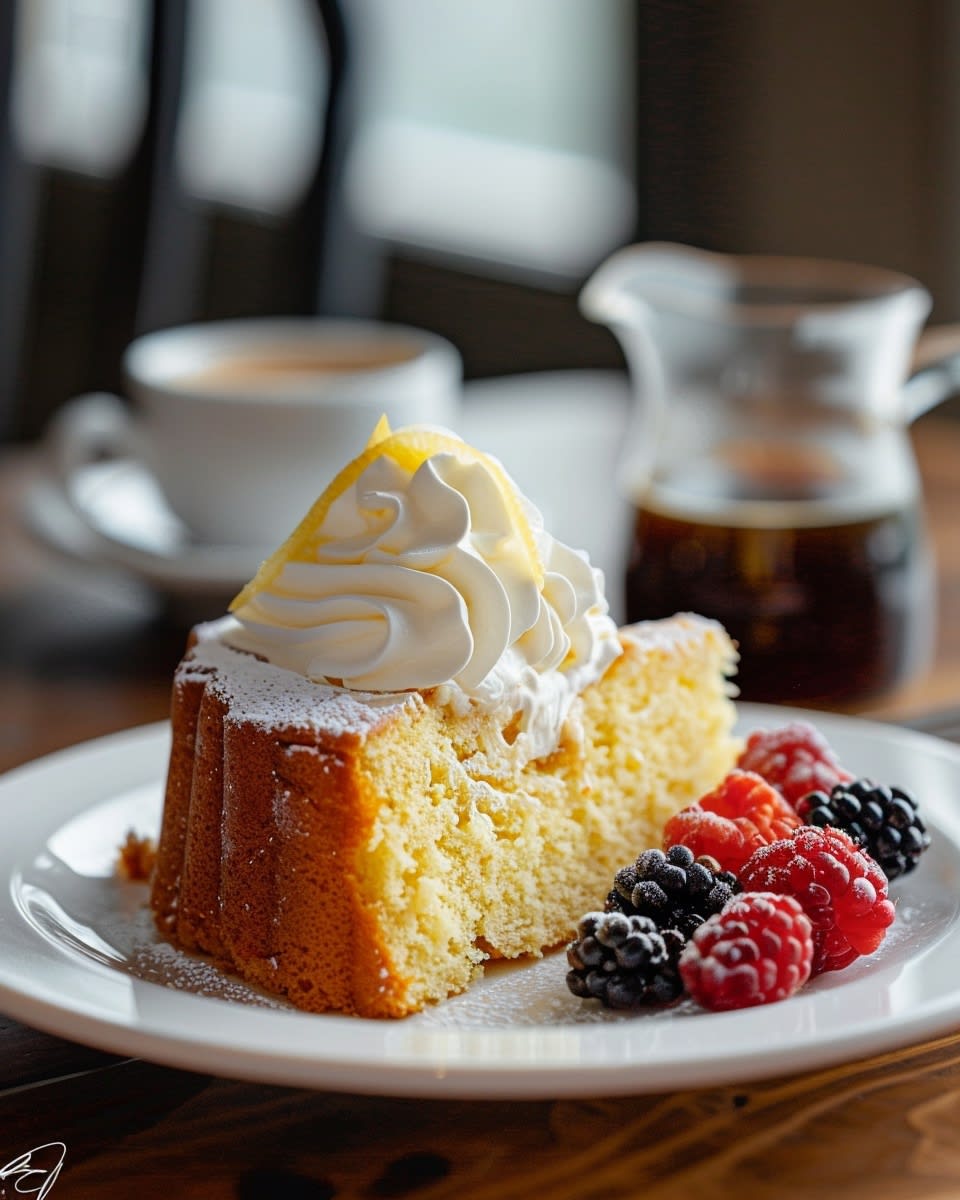
Welcome to the World of Lemon Pound Cake
I still remember the first time I baked a lemon pound cake in my grandmother’s kitchen. The smell of fresh lemon zest mixing with warm butter filled every corner of the house. My grandmother stood beside me, showing me how to cream the butter just right. She told me that a perfect pound cake should be golden on the outside and soft as a cloud inside. That day changed how I thought about baking forever.
Now, I want to share that same joy with you. This article covers everything you need to know about making an amazing lemon pound cake. We’ll explore traditional recipes that have been passed down through generations. You’ll also discover modern twists that make this classic dessert even better. Whether you’re looking for a moist lemon pound cake or a quick version using cake mix, I’ve got you covered.
The best part about lemon pound cake is how it brings people together. I’ve made it for birthday parties, Sunday dinners, and quiet afternoons with tea. Each time, people ask for the recipe. Each time, I’m happy to share it. Today, that includes you.
Why Lemon Pound Cake Is So Popular
Pound cake has been around for centuries. The name comes from the original recipe that called for a pound each of butter, sugar, eggs, and flour. Simple math made it easy to remember. British bakers brought this recipe to America in the 1700s, and it quickly became a household favorite.
Adding lemon to pound cake was a natural evolution. The citrus brightened up the rich, buttery flavor. It cut through the sweetness and made each bite more interesting. By the early 1900s, lemon pound cake had become a staple in American kitchens.
Today, this cake remains popular for good reasons. The refreshing lemon flavor makes it perfect for spring and summer gatherings. When the weather gets warm, people crave something light and tangy. A slice of cold lemon pound cake with iced tea hits the spot every time.
The cake also works beautifully year-round. During fall and winter, it brings a hint of sunshine to gray days. The bright yellow color alone can lift your spirits. Add a lemon pound cake glaze, and you have a dessert that looks as good as it tastes.
Different cultures have put their own spin on this classic. The African American lemon pound cake recipe often includes extra butter and a touch of vanilla extract. This creates an even richer flavor that melts in your mouth. Southern bakers like Paula Deen have made their versions famous with secret ingredients and special techniques.
The Italian lemon pound cake takes a lighter approach. It uses olive oil instead of butter sometimes. Fresh lemon juice soaks into every layer. The result is a cake that tastes like a Mediterranean summer. Bakeries in Italy serve it with espresso or sweet wine.
Big names in the food industry have noticed this cake’s appeal too. Starbucks offers a lemon pound cake that customers line up for. Their version has become so popular that people try to recreate it at home. Food magazines like Bon Appetit feature updated recipes that appeal to modern tastes.
Celebrity chefs have also shared their takes. Ina Garten’s lemon pound cake recipe is famous for good reason. She focuses on using the best ingredients and simple techniques. Her approach makes the process less scary for new bakers. Paula Deen’s lemon pound cake goes in a different direction, with extra richness and Southern charm.
Essential Ingredients for a Perfect Lemon Pound Cake
Making a great lemon pound cake starts with the right ingredients. You don’t need fancy equipment or rare items. Just focus on quality basics, and your cake will turn out amazing.
Fresh lemons are the star of the show. Don’t even think about using bottled lemon juice. Fresh lemons give you the bright, tangy flavor that makes this cake special. You’ll need both the juice and the zest. The zest contains oils that pack serious flavor punch. Plan on using about 3 to 4 medium lemons for most recipes.
When picking lemons at the store, look for ones that feel heavy for their size. These have more juice inside. The skin should be bright yellow without too many brown spots. Give them a gentle squeeze. They should have a little give but not feel mushy.
High-quality butter makes a huge difference. I always use unsalted butter so I can control the salt level myself. European-style butter has a higher fat content, which creates an even richer cake. Let your butter sit at room temperature before you start baking. It should be soft enough to leave a fingerprint but not melted or greasy.
The butter does more than add flavor. It creates the tender crumb that makes pound cake so special. When you cream butter with sugar, tiny air pockets form. These pockets help your cake rise and stay moist. Cheap butter or margarine won’t give you the same results.
Sugar sweetens the cake and balances the tart lemon. Most recipes call for white granulated sugar. Some bakers add a bit of powdered sugar for extra smoothness. The sugar also helps create that beautiful golden crust on the outside.
Eggs provide structure and richness. Use large eggs at room temperature. Cold eggs don’t mix as well with the other ingredients. This can lead to a dense, heavy cake instead of a light one. I usually take my eggs out of the fridge about an hour before I start baking.
All-purpose flour works best for most recipes. Some bakers use cake flour for an extra-tender crumb. Measure your flour correctly by spooning it into the measuring cup and leveling it off. Scooping directly from the bag packs in too much flour. This makes your cake dry and tough.
Baking powder gives the cake a little lift. Traditional pound cake relied only on the air beaten into the butter. Modern recipes add a small amount of baking powder. This creates a lighter texture while keeping that classic pound cake density.
Salt might seem small, but it’s important. A pinch of salt enhances all the other flavors. It makes the lemon taste brighter and the butter taste richer. Don’t skip it.
Vanilla extract adds depth to the flavor. Use pure vanilla extract, not imitation. The real thing costs more but tastes so much better. Just a teaspoon makes a difference.
Some recipes include sour cream or buttermilk. These dairy products add moisture and a slight tang. They help create that perfect moist lemon pound cake texture everyone loves. The acid in these ingredients also reacts with baking powder to help the cake rise.
For a lemon pound cake with cake mix, you’ll start with a boxed mix as your base. Then you’ll add fresh lemon juice, zest, and sometimes pudding mix. This shortcut method still requires fresh lemons for the best flavor. The mix just makes the process faster and more foolproof.
The quality of your ingredients directly affects your final cake. Spend a little extra on real butter and fresh lemons. Your taste buds will thank you. These simple ingredients come together to create something much greater than the sum of their parts.


How to Make a Moist Lemon Pound Cake
Now that you’ve got your ingredients lined up on the counter, it’s time to put them to work. Making a moist lemon pound cake isn’t hard, but the techniques matter more than you might think. I learned this the hard way when my first attempt came out dry as sawdust. My grandmother laughed and showed me where I went wrong. Let me save you from that same disappointment.
Start by preheating your oven to 325 degrees Fahrenheit. This lower temperature is key. Many people crank their oven to 350 or higher, which browns the outside too fast. Your cake ends up burnt on the edges and raw in the middle. Trust me on the 325. Grease your loaf pan or bundt pan really well. I use butter and then dust it with flour. Some folks swear by baking spray with flour already in it. Either way works fine.
The creaming step comes first, and this is where magic happens. Put your softened butter in a large mixing bowl. Add your sugar. Now here’s what most recipes won’t tell you clearly enough: you need to beat this mixture for at least five minutes. Maybe even seven. I know that sounds like forever. Your arm might get tired if you’re doing it by hand. But this is how you get that light, fluffy texture.
When you cream butter and sugar properly, the mixture turns pale yellow and almost doubles in size. Those tiny sugar crystals cut into the butter and create thousands of little air pockets. These pockets expand in the oven and give your cake its structure. If you only beat for a minute or two, you’ll end up with a dense brick instead of a tender cake.
Here’s the thing about adding eggs. You want to add them one at a time. Crack an egg into a small bowl first to make sure it’s fresh. Then pour it into your butter mixture. Beat until it’s completely mixed in before adding the next one. This takes patience. If you dump all the eggs in at once, the batter can break and look curdled. That’s not the end of the world, but it’s not ideal either.
Between eggs, scrape down the sides of your bowl with a rubber spatula. Little bits of butter and sugar hide up there. If you don’t scrape them down, they won’t get mixed in properly. My grandmother used to say that scraping the bowl was just as important as the mixing itself.
Now comes the lemon zest. I like to add it after the eggs. Use a microplane or the smallest holes on your box grater. You want just the yellow part of the peel, not the white pith underneath. The pith tastes bitter and will ruin your cake. Roll your lemons on the counter with your palm before zesting. This breaks up the cells inside and makes the oils flow more easily. You’ll get more flavor this way.
The zest smells incredible as you add it to the batter. Mix it in gently but thoroughly. Those little flecks of yellow should spread throughout the mixture. This is what gives your cake those bright bursts of lemon flavor in every bite.
For the dry ingredients, whisk your flour, baking powder, and salt together in a separate bowl. This distributes everything evenly. Then add the flour mixture to your batter in three parts. Alternate with whatever liquid you’re using, whether that’s milk, buttermilk, or sour cream. Start and end with flour. So it goes: flour, liquid, flour, liquid, flour.
Mix each addition just until you can’t see any more white streaks. Stop immediately. This is crucial. Overmixing develops the gluten in the flour, which makes your cake tough and chewy. You want tender, not tough. I usually switch to a wooden spoon or spatula for this part instead of using my electric mixer. It gives me more control and makes it harder to overmix by accident.
Pour your batter into the prepared pan. It should be thick and luxurious, not runny. Smooth the top with your spatula. Give the pan a couple of firm taps on the counter to release any big air bubbles. Then into the oven it goes.
The baking time depends on your pan size. A standard 9×5 inch loaf pan usually takes about 60 to 75 minutes. A bundt pan might need 50 to 60 minutes. Start checking around the 50-minute mark. The top should be golden brown and spring back when you touch it lightly. A toothpick inserted in the center should come out clean or with just a few moist crumbs.
While your cake bakes, make a lemon pound cake glaze. This is super simple but adds so much. Mix fresh lemon juice with powdered sugar until it’s smooth and pourable. I use about two tablespoons of juice to one cup of sugar. If it’s too thick, add more juice a teaspoon at a time. Too thin? Add more sugar.
Some people like to poke holes in the warm cake and let the glaze soak in. Others prefer to pour it over the cooled cake so it sets into a shiny coating. Both methods work beautifully. The soaked version gives you more intense lemon flavor throughout. The coating method looks prettier and adds a nice crunch. I’ve done it both ways depending on my mood. If you want that professional bakery look, go with the coating method.
By the way, if you love glazed desserts as much as I do, you might enjoy trying that technique on other treats like vanilla cupcakes, which also take beautifully to a lemon glaze.
Variations and Twists on the Classic Recipe
Once you’ve mastered the basic recipe, the fun really begins. There are so many ways to put your own spin on lemon pound cake.
The easiest shortcut is making a lemon pound cake with cake mix. I’ll admit, I was skeptical about this at first. It felt like cheating. But then I tried it for a last-minute potluck and got just as many compliments as my from-scratch version. Start with a box of yellow or white cake mix. Add a package of instant lemon pudding mix, four eggs, half a cup of oil, and half a cup of water. Then stir in the zest and juice of two fresh lemons. The pudding mix adds moisture and a silky texture. The fresh citrus makes it taste homemade. Nobody will know you took a shortcut unless you tell them.
The African American lemon pound cake recipe deserves special attention. This version often uses extra butter compared to traditional recipes. Some family recipes I’ve seen call for two full sticks of butter plus half a cup of shortening. The combination creates an incredibly rich, tender crumb. Many of these recipes also include a splash of almond extract alongside the vanilla. This adds a subtle depth that makes people wonder what your secret ingredient is. The cakes tend to be taller and more golden than other versions. They’re often served at church gatherings and family reunions, where they disappear faster than you’d believe.
Speaking of famous recipes, Ina Garten’s lemon pound cake has earned its reputation. She calls for a full cup of buttermilk, which keeps the cake incredibly moist for days. She also adds both lemon zest and lemon extract for maximum flavor. One unique touch is that she makes a lemon syrup by boiling lemon juice with sugar. She brushes this onto the warm cake before adding the glaze. This triple lemon approach means you get bright citrus flavor in every single bite. Her recipe also uses a bundt pan, which creates more surface area for that beautiful golden crust.
Paula Deen’s lemon pound cake takes a different route. She’s all about butter, as you might expect. Her recipe often includes cream cheese along with the butter. This creates an even richer, denser cake that’s almost like combining pound cake with cheesecake. She also loves a good cream cheese frosting instead of a simple glaze. It’s definitely more indulgent and less traditional, but it tastes amazing.
The Starbucks lemon pound cake has developed quite a following. People have tried for years to recreate that exact taste at home. The lemon pound cake loaf cake they sell has a distinctive texture that’s more cake-like than traditional pound cake. It’s lighter and fluffier. The secret seems to be using both baking powder and baking soda for extra lift. They also add poppy seeds sometimes, which gives it a nice crunch. The glaze on top is thick and sweet with a strong lemon punch. To get close to their version at home, use cake flour instead of all-purpose. Add an extra egg white for lightness. Make your glaze extra thick so it sits on top rather than soaking in.
Funny enough, the Italian lemon pound cake goes in yet another direction. Italians sometimes use olive oil instead of butter, which creates a different but equally delicious texture. The cake stays moist for longer because oil doesn’t solidify like butter does. They also love to add limoncello, that sweet lemon liqueur, to both the batter and the glaze. If you’re making this version, look for good quality extra virgin olive oil that’s mild and fruity rather than bitter or peppery. The cake will taste slightly different but in a really interesting way. It’s less rich than the butter version but somehow feels lighter and more refreshing.
One variation I particularly love involves adding fresh blueberries or raspberries to the batter. Toss about a cup of berries with a tablespoon of flour before folding them in gently at the end. This keeps them from sinking to the bottom. The tartness of the berries plays beautifully with the lemon. It reminds me a bit of the fruit combinations you find in traditional apple pie with cinnamon, where the flavors just work together naturally.
Tips for Baking the Perfect Lemon Pound Cake
Let me share some practical wisdom I’ve picked up over the years. These little tips can mean the difference between a good cake and a great one.
First, invest in an oven thermometer. I can’t stress this enough. Most ovens run hot or cold by at least 25 degrees. Mine runs about 30 degrees hot, which I only discovered after several baking disasters. For five dollars, an oven thermometer will save you from heartbreak. Check it every time you bake until you know your oven’s personality.
Always rotate your pan halfway through baking. Most ovens have hot spots. Even if yours seems fine, rotating ensures even browning. I set a timer for 30 minutes so I don’t forget. Just open the door quickly, spin the pan 180 degrees, and close it again. Don’t leave the door open and gawk at your cake. That drops the temperature and can cause problems.
If the top of your cake starts browning too fast, tent it with aluminum foil. This happens sometimes with pound cakes because they take so long to bake. Just lay a sheet of foil loosely over the top. Don’t wrap it tightly or press it down onto the cake. You’re just creating a little shield from direct heat.
Cooling is just as important as baking. Let your cake sit in the pan for about 15 minutes after it comes out of the oven. This lets it set up and makes it easier to remove. After 15 minutes, run a knife around the edges to loosen it. Then flip it onto a wire cooling rack. If you’re using a bundt pan, sometimes the cake sticks despite your best greasing efforts. Don’t panic. Let it cool for a few extra minutes, then try tapping the pan firmly on the counter. Usually it will release.
For storing, wait until your cake is completely cool before wrapping it. Warm cake creates condensation in plastic wrap, which makes the crust soggy. Once it’s cool, wrap it tightly in plastic wrap or keep it in an airtight container. Pound cake actually tastes better the day after you bake it. The flavors meld together and the texture becomes even more tender. It will stay fresh at room temperature for about three days. In the fridge, it lasts a week. You can also freeze it for up to three months.
When you’re ready to serve, bring the cake to room temperature if you’ve refrigerated it. Cold pound cake is good, but room temperature pound cake is heavenly. The butter softens up and the flavors bloom. Cut thick slices with a serrated knife using a gentle sawing motion. A regular knife will compress the cake and make it look messy.
Pound cake tastes wonderful on its own, but it’s also fantastic with additions. A dollop of whipped cream, some fresh berries, or a scoop of vanilla ice cream turns it into a real dessert. I sometimes serve it with lemon curd on the side for people who want extra lemon intensity. It pairs well with tea or coffee for an afternoon treat. The versatility reminds me of simpler desserts like chocolate brownies, which also work for any occasion.
One last tip: keep notes. Write down what you did, what worked, and what you’d change next time. I have a little notebook full of scribbles from years of baking. It helps me remember which pan worked best or how much zest I preferred. Your future self will thank you when you’re trying to recreate that perfect cake you made six months ago.


Famous Lemon Pound Cake Recipes Worth Trying
After you’ve gotten comfortable with the basics, exploring famous recipes opens up a whole new world. Each well-known chef or publication brings something unique to the table. I’ve spent countless weekends testing these different versions, and honestly, it’s been the best kind of homework.
The lemon pound cake bon appetit recipe stands out for its refined approach. Bon Appetit’s test kitchen isn’t messing around when they develop recipes. Their version uses crème fraîche instead of sour cream or buttermilk. This French ingredient costs a bit more, but it adds a subtle tanginess and incredible richness. The texture comes out smoother and more sophisticated than traditional versions. They also call for beating the batter longer than most recipes suggest, which creates an almost velvet-like crumb.
What I love about their recipe is the restraint. They don’t go overboard with the lemon. Instead, they balance it perfectly so you taste butter, sugar, and citrus in equal measure. The glaze is thinner than what you might be used to, more of a soaking syrup than a thick coating. It seeps into the cake and creates little pockets of concentrated sweetness. When I served this at a dinner party, people kept asking what made it taste so elegant. That’s the Bon Appetit magic right there.
Now let’s compare these famous recipes side by side. Ina Garten’s lemon pound cake uses buttermilk and that triple lemon approach I mentioned earlier. The result is bold and unapologetically lemony. If you want citrus to punch you in the face in the best way possible, this is your recipe. She’s not subtle about it, and that’s exactly the point.
Paula Deen’s lemon pound cake, on the other hand, leans into richness over brightness. With cream cheese in the batter and sometimes in the frosting too, you get something almost decadent. It’s heavier, denser, more of a special occasion cake than an everyday treat. The lemon flavor plays second fiddle to all that buttery goodness. Some people love this approach. Others find it a bit too much. I fall somewhere in the middle, appreciating it but not making it as often as lighter versions.
The Italian lemon pound cake recipe you’ll find in authentic Italian cookbooks goes minimalist. Olive oil instead of butter. Just enough sugar to balance the tart lemons. Maybe a splash of limoncello if you’re feeling fancy. The texture is tighter and more compact than American versions, but it stays moist for days. Italians often eat this for breakfast with espresso, which tells you something about how they view it. It’s not overly sweet or rich. It’s just good cake.
Here’s something interesting I discovered while testing these recipes. The pan you use changes the outcome more than you’d think. Ina’s recipe works best in a bundt pan because all that surface area allows the syrup to soak in properly. Paula’s cream cheese version needs a loaf pan or it might collapse under its own weight. The Bon Appetit recipe works in either, but I prefer it in a loaf pan where you get nice thick slices that show off that perfect crumb.
The baking temperatures vary too. Ina bakes at 350 degrees, which is higher than the traditional 325 I usually recommend. Her cake has more moisture from the buttermilk, so it can handle the extra heat without drying out. Paula sometimes goes even lower, around 300 degrees, because her batter is so rich it needs gentle, slow baking. The Bon Appetit version splits the difference at 325.
I encourage you to try at least two or three of these famous recipes back to back. Take notes on what you notice. Does the buttermilk in Ina’s version make a difference you can taste? Do you prefer the sophisticated subtlety of Bon Appetit or the bold flavors of other versions? There’s no wrong answer here. It’s all about finding what makes your taste buds happy.
One weekend last spring, I hosted what I called a pound cake tasting. I made four different versions and invited friends over to sample them blind. We had scorecards and everything. Funny enough, everyone’s favorite was different. My friend Sarah loved the Bon Appetit version. My neighbor Dave went crazy for Paula’s rich recipe. My sister picked Ina’s triple lemon as her winner. This taught me something valuable. The best recipe is the one that speaks to you and the people you’re baking for.
By the way, choosing quality ingredients becomes even more important with these refined recipes. When you’re making something as simple as pound cake, there’s nowhere for subpar ingredients to hide. This connects to the broader idea of mindful eating and really tasting what you’re consuming. Fresh lemons, real butter, quality vanilla extract, these choices matter. You’ll taste the difference in every bite.
Don’t be afraid to mix and match techniques from different recipes either. Maybe you love Ina’s triple lemon approach but prefer Paula’s cream cheese addition. Try combining them. Perhaps the Bon Appetit crème fraîche would work beautifully with the Italian olive oil method. Baking isn’t chemistry where everything has to be exact. Well, it is chemistry, but it’s forgiving chemistry. Experimenting leads to happy accidents and sometimes your new signature recipe.
After you’ve tried these famous versions, share them with people. Bring slices to work. Take a loaf to your next gathering. Ask for honest feedback. I’ve learned so much from watching people’s faces as they taste my cakes. You can tell immediately if something hits right. The eyes close, the head tilts back slightly, and there’s this little moment of pure enjoyment. That’s what you’re aiming for.
If you’re feeling ambitious, exploring these detailed recipes will give you skills that transfer to all kinds of baking. The techniques you learn making pound cake apply to so many other dessert recipes. Proper creaming method, knowing when to stop mixing, understanding how different fats affect texture, these fundamentals make you a better baker overall.
Final Thoughts on Your Lemon Pound Cake Journey
The beautiful thing about baking is that it’s never really finished. There’s always something new to try, some small adjustment to make, another person to share with. Your journey with lemon pound cake doesn’t end with one perfect loaf. It continues with every cake you bake, every technique you master, every smile you see on someone’s face when they taste what you’ve made. So grab those lemons, soften that butter, and get baking. Your kitchen is about to smell amazing.
Frequently Asked Questions
What makes a lemon pound cake moist?
Several factors work together to create moisture in pound cake. The fat content from butter or oil is crucial. Adding sour cream, buttermilk, or crème fraîche introduces extra moisture and tenderness. Not overbaking is probably the most important factor, as even a few extra minutes can dry out your cake. Proper creaming of butter and sugar creates air pockets that hold moisture. Finally, wrapping your cooled cake tightly helps it retain moisture for days.
How do you make a lemon pound cake glaze?
Making a basic glaze couldn’t be easier. Mix about two tablespoons of fresh lemon juice with one cup of powdered sugar. Whisk until smooth and lump-free. If it’s too thick to pour, add more juice one teaspoon at a time. Too thin? Add more powdered sugar. Some people add a tablespoon of melted butter for richness or a pinch of lemon zest for extra flavor. Pour it over your cooled cake and let it set for about 15 minutes before serving.
Can I use a cake mix to make a lemon pound cake?
Absolutely, and the results can be surprisingly good. Start with a yellow or white cake mix and add instant lemon pudding mix for moisture. Use four eggs instead of what the box calls for. Replace the water with milk or buttermilk. Then add fresh lemon zest and juice, which is the key to making it taste homemade. The texture won’t be exactly like traditional pound cake, but it’ll be delicious and much faster to make.
What are some popular variations of lemon pound cake?
You can add blueberries or raspberries for a fruity twist. Poppy seeds create a classic combination with nice texture. Lavender buds add a floral note that’s surprisingly lovely with lemon. Some people swirl in raspberry or blueberry jam for pockets of fruit flavor. Coconut flakes mixed into the batter create a tropical version. You can also substitute other citrus like lime or orange, or use a combination of all three.
How do I store a lemon pound cake to keep it fresh?
Let your cake cool completely before wrapping. Store it tightly wrapped in plastic wrap or in an airtight container at room temperature for up to three days. In the refrigerator, it will last about a week. For longer storage, wrap it in plastic wrap and then aluminum foil before freezing for up to three months. Thaw frozen cake overnight in the refrigerator, still wrapped. Bring it to room temperature before serving for the best flavor and texture.
Is there a difference between a lemon pound cake and a lemon loaf cake?
Yes, there are subtle differences. Traditional pound cake uses equal weights of butter, sugar, eggs, and flour, creating a dense, rich texture. Lemon loaf cake typically has more leavening agents like baking powder and baking soda, making it lighter and fluffier. Loaf cakes often contain more liquid ingredients and less fat. The Starbucks version is technically more of a loaf cake than a true pound cake. Both are delicious, just with different textures and densities.
What are some tips for baking the perfect lemon pound cake?
Use room temperature ingredients so everything mixes smoothly. Cream your butter and sugar for at least five minutes until pale and fluffy. Don’t overmix once you add the flour, or you’ll develop too much gluten and end up with a tough cake. Check your oven temperature with an oven thermometer. Use fresh lemons rather than bottled juice for the best flavor. Finally, resist cutting into your cake until it’s completely cool, as it continues to set up during cooling.
How can I make a lemon pound cake similar to the one at Starbucks?
The Starbucks version is lighter than traditional pound cake, so use cake flour instead of all-purpose flour. Add both baking powder and baking soda for extra lift. Use an extra egg white to lighten the texture. Make a thick glaze with extra powdered sugar so it sits on top rather than soaking in. Some copycat recipes suggest adding a touch of almond extract alongside the lemon. Bake it in a standard loaf pan and let that glaze get nice and thick on top.
Are there any famous chefs with their own lemon pound cake recipes?
Yes, several celebrity chefs have shared their versions. Ina Garten’s recipe is famous for using buttermilk and a triple lemon approach with zest, juice, and extract. Paula Deen often adds cream cheese to her batter for extra richness. Bon Appetit’s test kitchen created a refined version using crème fraîche. Martha Stewart has a classic version that stays close to traditional methods. Each chef brings their own style and techniques to this versatile cake.
What are some cultural variations of lemon pound cake, like the African American and Italian versions?
The African American lemon pound cake recipe traditionally uses extra butter and sometimes shortening for incredible richness and height. Many family recipes include almond extract alongside vanilla for depth. These cakes are often served at church gatherings and family celebrations. Italian lemon pound cake takes a lighter approach, sometimes using olive oil instead of butter. Italians add limoncello to the batter and glaze for authentic lemon flavor. Their version is less sweet and more suitable for breakfast with coffee.
Ingredients
Equipment
Method
- Preheat your oven to 325°F (163°C).
- Grease a loaf pan or bundt pan with butter and dust with flour.
- In a large mixing bowl, cream together softened butter and sugar for at least 5 minutes until pale and fluffy.
- Add eggs one at a time, mixing thoroughly after each addition.
- Mix in lemon zest.
- In a separate bowl, whisk together flour, baking powder, and salt.
- Gradually add the flour mixture to the creamed mixture, alternating with milk or buttermilk, starting and ending with flour.
- Pour batter into the prepared pan and smooth the top.
- Bake for 60 to 75 minutes (check doneness with a toothpick).
- While the cake is baking, prepare the glaze by mixing fresh lemon juice with powdered sugar until smooth.
- Allow the cake to cool in the pan for 15 minutes, then remove to a wire rack.
- Drizzle glaze over the cooled cake or poke holes for it to soak in.