
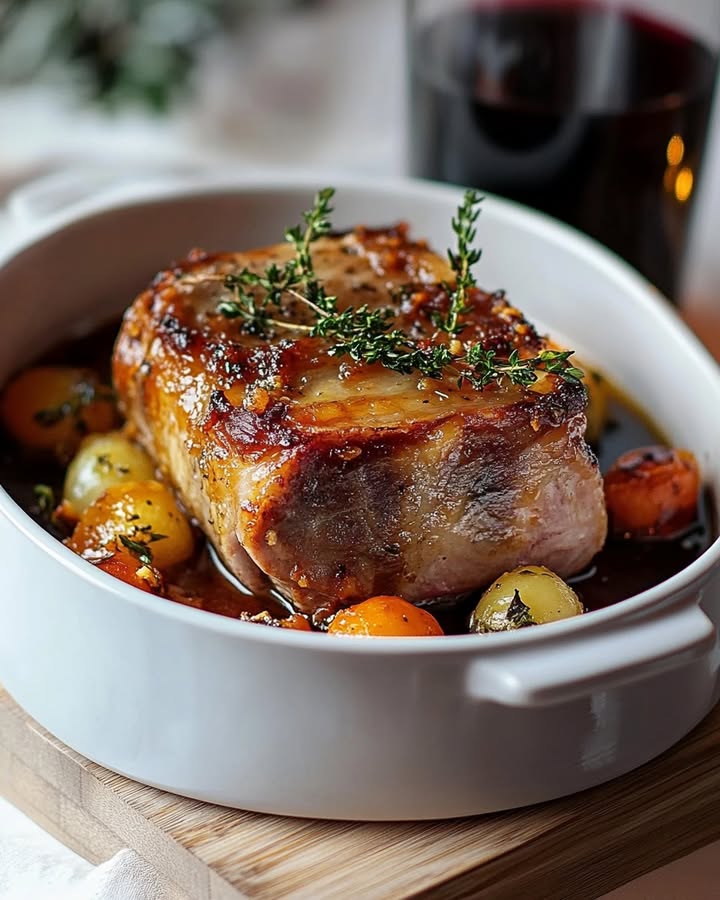
You know that feeling when you walk into a house and the air is filled with the smell of something amazing simmering away? That’s the magic of this dish. Braised Pork Medallions in White Wine is more than just dinner. It’s a hug in a bowl. It’s the kind of meal that makes busy weeknights feel special and turns Sunday supper into a celebration. I first made this for my book club, and let me tell you, they stopped talking about the book! Now it’s my go-to when I want to impress without stress.
The Cozy Story Behind Braised Pork Medallions
This recipe is a beautiful slice of French country cooking. In many rural areas, families would use a tougher, flavorful cut of pork and cook it slowly in whatever local wine they had. The long, gentle braise turns simple ingredients into something luxurious. My version sticks to that rustic heart. It’s the traditional method I learned, but I’ve added my own little tweaks over the years. The white wine doesn’t just add flavor. It tenderizes the meat and creates the most incredible sauce. It’s a timeless technique that works just as well in a modern kitchen.
Why You’ll Fall in Love With This Recipe
If you love meals that practically cook themselves, you’re in the right place. The hardest part is browning the meat. After that, the pot does all the work! The result is fork-tender pork in a rich, savory sauce with sweet carrots. It’s elegant enough for guests but simple enough for a Tuesday night. Plus, your kitchen will smell absolutely incredible. It’s the definition of comfort food that makes everyone feel cared for.
Perfect Occasions for This Hearty Dish
- Family Sunday Dinner: It’s a crowd-pleaser that creates lasting memories.
- Meal Prep Hero: It tastes even better the next day, making lunches a dream.
- Impress-Your-In-Laws Dinner: Looks and tastes like you spent all day, but you didn’t!
- Cozy Fall or Winter Evening: Nothing beats a simmering pot on a cold night.
Gathering Your Ingredients for Braised Pork
Here’s everything you’ll need for this simple, flavorful braise. Quality matters, so use a dry white wine you’d actually enjoy drinking!
- 1 kg (about 2.2 lbs) pork shoulder medallions (rouelle de porc)
- 500 ml (about 2 cups) dry white wine
- 3 carrots
- 2 onions
- 2 cloves of garlic
- 1 bouquet garni (thyme, bay leaf, parsley)
- 2 tbsp olive oil
- Salt and black pepper to taste
Smart Ingredient Substitutions
Don’t have everything on hand? No problem! Cooking is about creativity.
- No White Wine? Use an equal amount of chicken or vegetable broth, plus a tablespoon of white wine vinegar or lemon juice for acidity.
- No Bouquet Garni? Use 1/2 tsp dried thyme and one bay leaf.
- Other Veggies: Add celery sticks, parsnips, or mushrooms along with the carrots.
- Different Cut: Pork shoulder roast cut into chunks works perfectly. You can also use pork loin, but reduce the braising time as it’s leaner.
How to Make Incredible Braised Pork Medallions
Let’s get cooking! This is where the magic happens. Put on some music, pour yourself a little glass of that wine, and enjoy the process.
Step 1: Prep and Season the Pork
Pat your pork medallions dry with a paper towel. This is the secret to a good sear! Cut them into large, 3-inch chunks. Season them generously on all sides with salt and pepper. You want to build flavor from the very start. Let them sit for a few minutes while you heat your pot. Pro tip: Seasoning the meat well before cooking is non-negotiable for a tasty dish.
Step 2: Sear the Meat to Perfection
Heat the olive oil in a large, heavy-bottomed pot or Dutch oven over medium-high heat. Add the pork pieces in a single layer. Don’t crowd the pot! Work in batches if needed. Let them cook undisturbed for a few minutes until a beautiful golden-brown crust forms. Turn them to brown all sides. This step locks in the juices and creates those delicious browned bits at the bottom of the pot. That’s pure flavor gold!
Step 3: Sauté the Aromatics
Remove the browned pork and set it aside on a plate. In the same pot, with all those tasty pork drippings, add your thinly sliced onions and chopped garlic. The sizzle and smell are heavenly! Cook them, stirring often, until the onions become soft and translucent. They should smell sweet and fragrant. This forms the flavor base for your entire sauce.
Step 4: Add the Carrots and Wine
Add your sliced carrots to the pot and stir them with the onions. Let them cook for just a minute. Now, pour in the dry white wine. It will bubble and steam wonderfully! Use your spoon to scrape up all those browned bits from the bottom of the pot. This is called deglazing, and it’s the trick to a deep, rich sauce. Tuck the bouquet garni into the liquid.
Step 5: The Gentle Braise
Return the seared pork and any juices from the plate back to the pot. The liquid should come about halfway up the meat. Bring everything to a gentle boil. Then, reduce the heat to the lowest setting. Cover the pot with a tight-fitting lid. Now, let time do its work. The gentle simmer will break down the tough fibers in the pork, making it incredibly tender.
Step 6: Final Seasoning and Serve
After about 1 hour and 45 minutes, check the pork. It should be tender enough to cut with a spoon. Taste the sauce. Does it need a pinch more salt or pepper? Adjust it now. For a thicker sauce, you can remove the lid and let it simmer for another 10-15 minutes. Chef’s tip: Let the braised pork rest off the heat for 10 minutes before serving. This allows the meat to reabsorb the juices, making every bite moist.
Your Braised Pork Timeline
Good things take time, but most of it is hands-off!
- Prep Time: 15 minutes (chopping and searing)
- Cooking Time: 2 hours (mostly unattended simmering)
- Resting Time: 10 minutes (crucial for juicy meat)
- Total Time: Approximately 2 hours 25 minutes
My Secret for the Best Braise
Don’t rush the sear! Getting a deep, brown crust on the pork is the single most important step for flavor. If the meat is pale when you add the wine, your sauce will be pale in taste too. Be patient and get that color. It makes all the difference between a good dish and a “wow!” dish.
A Little Extra Food for Thought
Did you know the acid in the white wine is a natural tenderizer? It works with the slow, moist heat to break down the meat’s collagen, turning it into gelatin. That’s what gives you that luscious, silky mouthfeel and rich sauce. It’s kitchen science making delicious magic!
Kitchen Tools You’ll Need
You don’t need fancy gear! Just a few basics:
- A large Dutch oven or heavy-bottomed pot with a tight lid
- A sharp chef’s knife and cutting board
- Wooden spoon or spatula
- Tongs for turning the meat
- Measuring cup and spoons
Storing Your Braised Pork Masterpiece
Let the dish cool completely to room temperature before storing. Do not leave it out for more than two hours. Transfer it to an airtight container. The flavors blend and improve overnight, making it a fantastic make-ahead meal.
You can keep it in the refrigerator for up to 3-4 days. To reheat, place it in a pot over low heat, adding a splash of water or broth if the sauce seems too thick. Stir gently until heated through.
This braise freezes beautifully for up to 3 months. Freeze it in portion-sized containers for easy future meals. Thaw it overnight in the fridge before reheating.
Helpful Tips for Success
- Don’t Boil, Simmer: After adding the wine, ensure the liquid is just bubbling gently. A hard boil can make the meat tough.
- Fat is Flavor: Don’t trim all the fat from the pork before cooking. It will render and add incredible richness to the sauce.
- Test for Doneness: The pork is ready when it easily pulls apart with a fork. If it’s still resistant, give it another 15 minutes.
Making Your Dish Look Stunning
We eat with our eyes first! Here are some simple ideas:
- Serve it in a shallow bowl over creamy mashed potatoes or buttery egg noodles.
- Garnish with a sprinkle of fresh, chopped parsley for a pop of color.
- Offer a basket of crusty bread on the side for sopping up every last drop of sauce.
- For a family-style look, bring the whole Dutch oven to the table.
6 Tasty Variations to Try
Love this method? Mix it up with these delicious ideas:
- Braised Pork with Mushrooms: Add a cup of sliced cremini mushrooms with the carrots for an earthy twist.
- Mustard & Herb Sauce: Stir in 2 tablespoons of whole-grain mustard and a handful of fresh tarragon at the end of cooking.
- Apple & Cider Version: Replace half the white wine with apple cider and add a sliced apple with the onions.
- Spicy Tomato Braise: Add a can of crushed tomatoes and a pinch of red pepper flakes for a hearty, Italian-inspired dish.
- Greek-Inspired: Use oregano in your bouquet garni and add a handful of Kalamata olives at the end.
- Simple Bourbon Glaze: For a quicker version, try a pan sauce like the one on these hamburger steaks with onion gravy, but use bourbon instead of broth for a sweet, rich finish.
Mixing Up Your Meal Plan
If you’re looking for other comforting ideas for your weekly rotation, check out our full collection of satisfying dinner recipes. From cozy pastas to hearty beef dishes, there’s something for every night. For example, if you love the creamy element in this braise, you might adore a creamy lemon garlic chicken pasta. Or, for a completely different but equally indulgent experience, a plate of fully loaded ultimate beef nachos makes for a fun Friday night treat. And for another fantastic pasta night, this creamy garlic butter beef linguine is always a winner.
Common Mistakes to Avoid
Avoiding these simple pitfalls will guarantee perfect Braised Pork Medallions every single time.
Mistake 1: Skipping the Sear
Adding the pork directly to the wine without browning it first is a major flavor miss. The Maillard reaction (that fancy term for browning) creates hundreds of new flavor compounds. Without it, your dish will taste boiled and flat. How to avoid it: Be patient. Heat your pot properly, don’t crowd the meat, and let it develop that deep, golden crust on all sides.
Mistake 2: Using the Wrong Wine
Never cook with a wine you wouldn’t drink. If it tastes sour or unpleasant in the glass, it will taste worse in your food. Avoid “cooking wine” from the supermarket, as it’s often loaded with salt and additives. How to avoid it: Choose a dry, crisp white wine like Sauvignon Blanc, Pinot Grigio, or an unoaked Chardonnay. The wine’s flavor concentrates, so make it a good one.
Mistake 3: Boiling Instead of Simmering
Once you cover the pot, the heat should be very low. A rolling boil will tighten the meat’s proteins and make it tough and stringy. Braising is a gentle, slow cooking process. How to avoid it: After bringing it to an initial boil, reduce the heat until you see just a few small bubbles breaking the surface. A slow cooker on low setting is also a great option here.
Mistake 4: Not Reducing the Sauce
If you serve it straight from the braising pot, your sauce might be a little thin. A perfect braised dish has a sauce that coats the back of a spoon. How to avoid it: Once the meat is tender, remove it to a plate. Turn the heat up to medium and let the sauce bubble for 5-10 minutes until it thickens slightly. Then, return the meat to the pot to warm through.
Your Braised Pork Questions Answered
Can I make this recipe in a slow cooker?
Absolutely! This dish is a perfect candidate for the slow cooker. Follow steps 1 through 4 to sear the pork and sauté the vegetables in a skillet on the stove. This step is crucial for flavor, so don’t skip it. Then, transfer everything from the skillet into your slow cooker. Cook on LOW for 6-8 hours or on HIGH for 3-4 hours. The pork is done when it’s fall-apart tender. The long, slow cook will make your kitchen smell amazing all day.
What is the best cut of pork to use for braising?
You want a cut with a good amount of marbling and connective tissue. Pork shoulder (also called pork butt or Boston butt) is the absolute best. It’s sold as a large roast or often pre-cut into medallions, which are labeled “rouelle de porc.” This cut becomes incredibly tender and juicy after slow cooking. Leaner cuts like pork tenderloin or loin chops will dry out and become tough with this long braise, so it’s best to avoid them for this particular recipe.
Can I use red wine instead of white wine?
Yes, but it will create a different, though equally delicious, dish. Red wine will give the sauce a deeper, richer color and a more robust flavor. It pairs beautifully with heartier herbs like rosemary. If you use red wine, you might also consider adding some tomato paste for extra depth. The cooking method remains exactly the same. It’s a great way to use up an open bottle and change up the flavor profile.
How do I know when the pork is properly cooked?
For braised dishes, we don’t use a thermometer. We test for tenderness. After about 1 hour and 45 minutes, take a fork and try to pull apart a piece of pork. If it offers little resistance and shreds easily, it’s done. If it still feels firm or rubbery, it needs more time. Continue cooking in 15-minute increments, checking each time, until it reaches that perfect, pull-apart texture. Proper cooking is key for both safety and quality, much like paying attention to your daily water intake and overall nutrition is key for health.
My sauce is too thin. How can I thicken it?
There are two easy ways. First, you can simply remove the lid for the last 10-15 minutes of cooking and let the liquid reduce and concentrate. Second, you can make a “slurry.” Mix one tablespoon of cornstarch or all-purpose flour with two tablespoons of cold water until smooth. Remove the pork and vegetables from the pot. Bring the sauce to a simmer and whisk in the slurry. Cook for 1-2 minutes until the sauce thickens, then return everything to the pot.
Can I prepare this dish ahead of time?
Not only can you, but you should! Braised dishes almost always taste better the next day. The flavors have more time to mingle and develop. Let the cooked dish cool completely, then store it covered in the refrigerator. When you’re ready to serve, reheat it gently on the stove over low heat. You may need to add a small splash of water or broth to loosen the sauce if it has thickened too much in the fridge.
What should I serve with Braised Pork Medallions?
The goal is something to soak up that amazing sauce! Creamy mashed potatoes are a classic and perfect pairing. Buttered egg noodles or soft polenta also work wonderfully. For a lighter option, try mashed cauliflower or a simple risotto. Don’t forget a crusty baguette or sourdough bread on the side. A simple green salad with a sharp vinaigrette helps cut through the richness of the dish.
Is it okay to use low-sodium broth if I substitute it for wine?
Yes, using low-sodium broth is a smart choice. It gives you complete control over the saltiness of your final dish. Remember, when you reduce a liquid (cook it down), the flavors concentrate, including salt. Starting with a low-sodium base allows you to season to your exact taste at the end. You can always add more salt, but you can’t take it out.
Can I add other vegetables to the braise?
Definitely! Root vegetables are perfect because they hold up to long cooking. Try adding peeled and chopped parsnips, turnips, or rutabaga with the carrots. Pearl onions added whole are a lovely touch. If you want to add softer veggies like peas, zucchini, or green beans, stir them in during the last 10-15 minutes of cooking so they don’t turn to mush.
How long can I store leftovers?
Once cooled, store leftovers in an airtight container in the refrigerator. They will keep well for 3 to 4 days. For longer storage, you can freeze the braised pork for up to 3 months. Use freezer-safe containers or heavy-duty bags, and try to remove as much air as possible to prevent freezer burn. Thaw overnight in the refrigerator before reheating.
And there you have it! Your new favorite cozy meal. This Braised Pork Medallions in White Wine recipe proves that the most satisfying dishes are often the simplest. They just need a little time and a lot of love. It’s the kind of recipe you’ll come back to again and again, each time filling your home with warmth and wonderful smells. So grab your pot, invite some friends over, and get ready for the compliments to roll in. Happy cooking!
Braised Pork Medallions
Ingredients
Equipment
Method
- Pat the pork medallions dry with a paper towel and season generously with salt and pepper.
- Heat olive oil in a large pot or Dutch oven over medium-high heat and sear the pork in batches until golden brown on all sides.
- Remove the browned pork and set aside. Add sliced onions and chopped garlic to the pot and sauté until translucent.
- Add sliced carrots and stir with the onions before pouring in the white wine, scraping up browned bits from the pot.
- Return the pork and any juices to the pot, bringing the liquid to a gentle boil before reducing heat to a low simmer.
- Cover the pot and let the pork braise for about 1 hour and 45 minutes until tender, checking for seasoning.
- Adjust the sauce if needed, letting it simmer uncovered for 10-15 minutes to thicken before serving.