
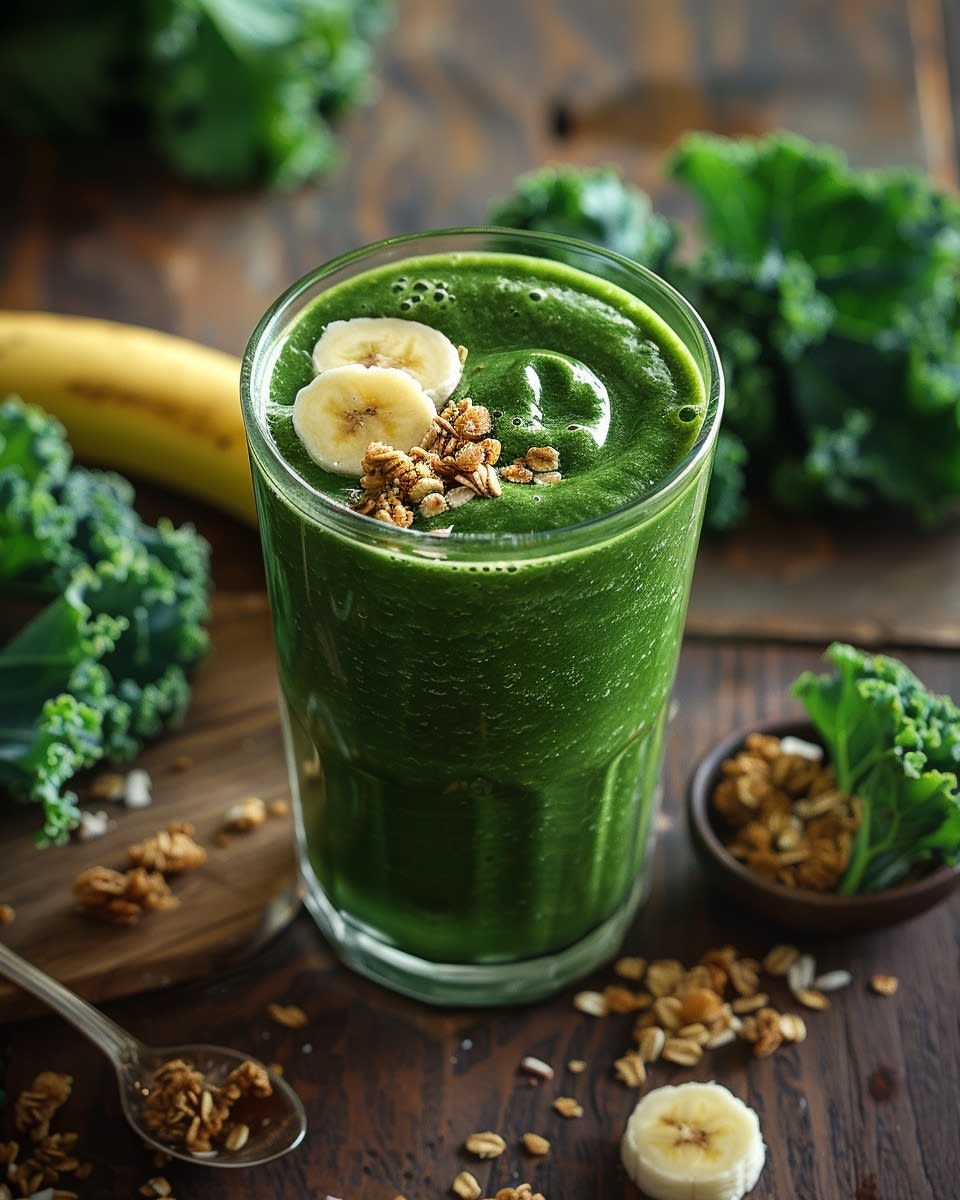
I’ll never forget the first time I made a green smoothie. I stared at the blender filled with dark leafy greens and thought, “There’s no way this will taste good.” But after one sip, I was hooked. That vibrant green drink didn’t just taste amazing—it made me feel incredible too. If you’ve been curious about joining the green smoothie trend, a green smoothie with banana and kale is the perfect place to start.
This simple combination packs a serious nutritional punch while tasting surprisingly sweet and refreshing. The banana adds natural sweetness that completely masks the earthy taste of kale. You won’t feel like you’re drinking a salad, I promise. Instead, you’ll enjoy a creamy, smooth drink that actually makes you excited about eating your greens.
Adding a banana kale smoothie to your daily routine can transform how you feel. Many people notice increased energy within days of drinking green smoothies regularly. Your digestion often improves too, thanks to all that fiber and nutrients working together. I noticed I stopped reaching for that second cup of coffee in the afternoon once I started drinking these smoothies for breakfast.
The ingredients in this smoothie aren’t just thrown together randomly. Each one serves a purpose. Bananas bring potassium, natural sugars, and a creamy texture. Kale delivers vitamins A, C, and K along with powerful antioxidants. Together, they create something greater than the sum of their parts—a true superfood drink that your body will thank you for.
Welcome to your new favorite healthy habit. This article will show you exactly how to make the best green smoothie with banana and kale, plus tips to customize it to your taste. Whether you’re a smoothie veteran or a complete beginner, you’ll find everything you need to make this drink a regular part of your life.
Why You Should Try a Green Smoothie with Banana and Kale
Let’s talk about bananas first. These yellow fruits are nutritional powerhouses that most of us already love. One medium banana contains about 422 milligrams of potassium, which is roughly 12% of your daily needs. Potassium helps regulate blood pressure and supports proper muscle function. That’s why athletes often grab a banana before or after workouts.
Bananas also provide quick energy without the crash you get from coffee or energy drinks. The natural sugars—fructose, glucose, and sucrose—release into your bloodstream at different rates. This means you get both immediate energy and sustained fuel for hours. I’ve noticed that my morning healthy green smoothie keeps me full and focused until lunchtime, which never happened with my old breakfast of toast and jam.
The fiber in bananas aids digestion and helps you feel satisfied. One banana gives you about 3 grams of fiber, which supports healthy gut bacteria. This fiber also slows down sugar absorption, preventing those energy spikes and crashes. Plus, bananas are one of the few foods that can help both constipation and diarrhea, making them gentle on your digestive system.
Now let’s discuss kale, the true star of this smoothie. This leafy green has earned its superfood status through sheer nutritional density. One cup of raw kale contains only 33 calories but delivers 206% of your daily vitamin A needs, 134% of vitamin C, and a whopping 684% of vitamin K. Those numbers aren’t typos—kale really is that nutrient-packed.
Vitamin K in kale plays a critical role in blood clotting and bone health. Vitamin A supports eye health and immune function. Vitamin C acts as a powerful antioxidant that protects your cells from damage. When you drink a kale banana smoothie, you’re essentially giving your body a concentrated dose of wellness in a glass.
Kale contains antioxidants called flavonoids and carotenoids. These compounds fight inflammation and may reduce your risk of chronic diseases. Studies have shown that the antioxidants in kale can help lower cholesterol levels and support heart health. The chlorophyll that gives kale its deep green color may also help your body detoxify naturally.
The combination of banana and kale creates something special. The sweetness of banana balances the slight bitterness of kale perfectly. The creamy texture of banana makes the smoothie thick and satisfying, not watery or thin. You get the benefits of both ingredients without any of the downsides.
This pairing also addresses different nutritional needs at once. Bananas provide carbohydrates for energy, while kale supplies vitamins and minerals. The fiber from both ingredients works together to support digestive health. The natural sugars in banana help your body absorb the fat-soluble vitamins in kale more effectively.
I love that this green smoothie with banana and kale works for multiple occasions. It makes an excellent breakfast when you’re rushing out the door. Just blend, pour into a travel cup, and go. You’ll get a complete meal that keeps you energized all morning. I’ve replaced my old grab-and-go breakfast sandwich with this smoothie and feel so much better.
After a workout, this smoothie helps your muscles recover. The potassium in bananas prevents cramping and replaces electrolytes lost through sweat. The protein in kale (yes, kale has protein!) supports muscle repair. The natural sugars replenish your glycogen stores quickly. I drink one within 30 minutes of finishing my morning run, and it speeds up my recovery noticeably.
As a snack, this smoothie satisfies cravings without derailing your healthy eating. When that 3 PM slump hits, a small banana kale smoothie provides steady energy without the sugar crash from candy or cookies. The fiber and nutrients actually nourish your body instead of just filling your stomach.
The versatility extends to customization too. You can add protein powder for extra muscle support. Throw in some frozen mango for tropical sweetness. Use almond milk instead of regular milk for a dairy-free version. Add a tablespoon of chia seeds for omega-3 fatty acids. The basic banana-kale combination serves as a blank canvas for your nutritional needs and taste preferences.
Making this smoothie takes less than five minutes from start to finish. You don’t need fancy equipment or hard-to-find ingredients. A basic blender, some fresh or frozen kale, a ripe banana, and your choice of liquid are all you need. This simplicity means you’re more likely to stick with it as a daily habit.
The cost is another huge advantage. Bananas are one of the most affordable fruits year-round. Kale costs less than most other superfoods. Making your own healthy green smoothie at home costs a fraction of what you’d pay at a juice bar. You can enjoy premium nutrition on a regular grocery budget.


Ingredients and Equipment Needed for Your Green Smoothie
Alright, so you’re ready to make this smoothie—but what exactly do you need? Here’s the thing: I love that this recipe doesn’t require a shopping trip to some fancy health food store. Most of what you need is probably already in your kitchen.
The star ingredients are simple. You’ll need one ripe banana and about two cups of fresh kale. That’s it for the basics. But I usually add a few more things to make my smoothie even better. A cup of liquid—whether that’s water, almond milk, regular milk, or even coconut water—helps everything blend smoothly. I personally prefer unsweetened almond milk because it adds a subtle nutty flavor without extra calories.
For optional additions, spinach works beautifully if you want to boost the green power without changing the taste much. Spinach has a milder flavor than kale, so sometimes I’ll do one cup of each. A tablespoon of chia seeds adds omega-3s and makes the smoothie more filling. They also create this slightly thicker texture that I’ve grown to love, especially when I’m using it as a Sweet Potato Breakfast Hash alternative on busy mornings.
Fresh ginger is another game-changer. Just a small piece—maybe half an inch—adds this zingy freshness that wakes up your taste buds. It also helps with digestion and adds an anti-inflammatory boost. The first time I added ginger, I was worried it would overpower everything, but it actually just brightened the whole flavor profile.
A squeeze of fresh lemon juice does wonders too. It cuts through the sweetness and adds vitamin C. Plus, it helps your body absorb the iron in kale more effectively. I learned that trick from a nutritionist friend, and now I almost always add a tablespoon of lemon juice to my morning smoothie.
Protein powder turns this smoothie into a complete meal replacement. I use vanilla-flavored plant-based protein, but any kind works. Just one scoop adds about 20 grams of protein, which keeps you satisfied for hours. On days when I skip my usual Egg White Scramble with Zucchini, adding protein powder to my smoothie ensures I still get enough protein to start my day right.
As for equipment, you really don’t need much. A decent blender is essential—and by decent, I don’t mean you need a $400 high-powered machine. I used a basic $30 blender for years before upgrading. The key is that it needs to handle leafy greens without leaving chunks. If your blender struggles with kale, just blend it with the liquid first before adding the banana.
A measuring cup helps if you’re following the recipe exactly, especially when you’re starting out. Once you’ve made this smoothie a few times, you’ll probably eyeball everything like I do now. A sharp knife for chopping the kale stems makes prep faster, though honestly, you can just tear the leaves off with your hands if you prefer.
When it comes to selecting ingredients, quality matters more than you might think. Choose bananas that are ripe but not overly spotty. You want them yellow with just a few brown speckles. Too green and they won’t blend smoothly or taste sweet enough. Too brown and they can make your smoothie taste almost fermented. I usually buy a bunch and use them throughout the week as they ripen to different stages.
For kale, look for leaves that are deep green and crisp, not wilted or yellowing. The stems should snap easily when you bend them. Baby kale works great too—it’s more tender and doesn’t need as much blending. I actually prefer baby kale when I can find it because it’s already pre-washed and requires zero prep work.
Here’s something I wish someone had told me earlier: frozen banana works even better than fresh. Seriously. It makes your smoothie thick and almost ice cream-like without needing to add ice, which can water down the flavor. I always peel ripe bananas, break them into chunks, and freeze them in a container. Then they’re ready whenever I want to make a smoothie.
Step-by-Step Guide to Making Your Green Smoothie
Now for the fun part—actually making this delicious drink. The process is straightforward, but there are some tricks that’ll help you get the perfect consistency every time.
Start by washing your kale thoroughly. Even if it says pre-washed, I still give it a quick rinse. Kale can be gritty, and nobody wants sand in their smoothie. After washing, remove the tough stems by holding the bottom of the stem with one hand and stripping the leaves off with the other. The stems are edible but can be bitter and fibrous, so I usually toss them in my compost bin.
Tear or roughly chop the kale leaves into smaller pieces. This isn’t crucial, but it helps your blender work more efficiently. I used to throw whole leaves in and wonder why my smoothie had stringy bits—smaller pieces solved that problem immediately.
Peel your banana and break it into a few chunks. If you’re using frozen banana like I suggested, you can skip the peeling step since you already did that before freezing. Frozen chunks blend up beautifully and give you that thick, frosty texture that makes this smoothie feel like a treat rather than a health drink.
Here’s where technique matters: always add your liquid to the blender first. Pour in about a cup of your chosen liquid—almond milk, regular milk, water, whatever you prefer. Adding liquid first prevents the blender blades from spinning uselessly above dry ingredients. This was a rookie mistake I made many times before figuring it out.
Next, add your kale to the liquid. If you’re adding spinach or any other greens, they go in now too. Pulse the blender a few times to start breaking down the leaves. This pre-blending step is the secret to avoiding chunks. Give it about 15-20 seconds until the kale is broken down into tiny pieces.
Now add your banana chunks on top of the blended greens. If you’re including any extras—chia seeds, protein powder, ginger, lemon juice—add them now. The banana and other ingredients will blend much more easily now that the greens are already broken down.
Blend everything on high speed for about 30-45 seconds. You’ll see the mixture transform from chunky to smooth. The color will shift to this beautiful bright green. If your blender has a tamper (that stick thing that pushes ingredients down), use it to help everything incorporate evenly.
Check the consistency by stopping the blender and looking at what you’ve got. If it’s too thick—like, your blender is struggling or the mixture isn’t moving—add more liquid, a quarter cup at a time. If it’s too thin and watery, add another half banana or a handful of ice cubes. Getting the texture right is personal preference. I like mine thick enough to eat with a spoon, almost like a smoothie bowl, but my partner prefers his thin enough to drink through a straw.
Taste your creation before calling it done. This is where you can adjust flavors. Too bitter? Add another banana half or a teaspoon of honey. Not sweet enough? A couple of pitted dates blend in beautifully and add natural sweetness. Too bland? That squeeze of lemon or chunk of ginger will brighten everything up. Not green enough? Throw in more kale—you can hardly taste it anyway.
By the way, here’s a variation I absolutely love: add a tablespoon of peanut butter or almond butter for a creamy, nutty flavor. It makes the smoothie more filling and adds healthy fats that help you absorb all those fat-soluble vitamins in the kale. The combination of banana and peanut butter is classic for a reason—it just works.
Another variation I discovered on a hot summer day: freeze the smoothie in popsicle molds. My kids devour these “green popsicles” without realizing they’re eating kale. It’s become my secret weapon for getting vegetables into picky eaters.
You can also switch up your milk base completely. Coconut milk makes it tropical and rich. Oat milk adds a subtle sweetness and creamy texture. Even orange juice works, though it changes the flavor profile significantly—more like a green citrus drink than a creamy smoothie.
For a breakfast that’s even more substantial, try adding a quarter cup of rolled oats before blending. This creates an incredibly filling smoothie that sticks with you through even the busiest mornings. The oats blend up completely, adding fiber and making the texture wonderfully thick.
One last tip: clean your blender immediately after pouring your smoothie. Dried kale and banana turn into cement if you let them sit. I just fill the blender halfway with warm water, add a drop of dish soap, and blend for 10 seconds. Then rinse. Takes 30 seconds and saves you from scrubbing later.


Tips for Perfecting Your Green Smoothie
Okay, so you’ve made your first green smoothie with banana and kale—maybe you loved it, or maybe it was just okay. Either way, let me share some tricks I’ve learned over the years that’ll take your smoothie game from basic to absolutely amazing.
Temperature matters way more than you’d think. Room temperature ingredients blend faster, but frozen ingredients create that thick, almost milkshake-like texture that makes drinking greens feel like dessert. I keep a stash of frozen banana chunks and even frozen kale cubes (yeah, I freeze kale too) in my freezer. When you use frozen bananas, you don’t need ice, which is great because ice can dilute the flavor and make everything taste watery.
Here’s something that changed my smoothies completely: the order you add ingredients affects the final result. I mentioned adding liquid first earlier, but there’s more to it. After the liquid and greens, I add heavy items like frozen banana last. This creates a vortex in the blender that pulls everything down toward the blades. Your blender won’t struggle as much, and you’ll get a smoother consistency faster.
Sweetness is totally adjustable without reaching for sugar. If you’re finding your banana kale smoothie too earthy or bitter, try using an overripe banana instead of a perfectly yellow one. Those brown-spotted bananas that everyone ignores? They’re sweeter and blend more smoothly. I also keep frozen mango chunks on hand—just a handful adds tropical sweetness without any added sugars. Pitted dates are another secret weapon. Two or three Medjool dates blended in add a caramel-like sweetness that’s completely natural.
The greens-to-fruit ratio can be tweaked based on your tolerance. When I first started, I used one cup of kale to two bananas. Now I’m up to three cups of kale with one banana, and I genuinely enjoy it. Start where you’re comfortable and gradually increase the greens over a few weeks. Your taste buds actually adapt—what seemed too “green” at first will taste normal after a while.
Texture troubleshooting is something everyone deals with. Too foamy? That usually happens when you blend too long on high speed, incorporating too much air. Blend for shorter bursts instead. Too gritty? Your blender might not be powerful enough for raw kale, so try blanching it for 30 seconds in boiling water first, then cooling it. This softens the fibers without losing nutrients. Too watery? Add more frozen fruit or even a few ice cubes of frozen coconut milk.
Storage is where most people mess up. Ideally, you drink your smoothie immediately after making it. The nutrients start degrading as soon as you blend, and the smoothie begins separating after about 15 minutes. But let’s be realistic—sometimes you need to make it ahead. I get it. When I meal prep on Sundays, I make three days’ worth of smoothie ingredients and portion them into freezer bags. Each bag has the kale, banana chunks, and any add-ins already measured out. In the morning, I just dump one bag into the blender with liquid and blend.
If you must store a finished smoothie, pour it into an airtight container and fill it to the very top to minimize air exposure. This prevents oxidation, which turns your beautiful green smoothie into a brownish color. It’ll keep in the fridge for about 24 hours, though it might separate. Just shake it up or give it a quick re-blend before drinking. Funny enough, I’ve found that adding a squeeze of lemon juice helps preserve both the color and freshness.
Freezing leftover smoothie is actually brilliant for certain situations. Pour it into ice cube trays or popsicle molds. The frozen cubes can be blended into your next smoothie as a base, or the popsicles become a healthy snack. My kids call them “superhero popsicles” and have no idea they’re eating kale. Works every single time.
Now let’s talk about incorporating this into your actual daily life, not just in theory. I’ve found that pairing my morning healthy green smoothie with something that has healthy fats makes me feel satisfied way longer. Sometimes I’ll have a handful of raw almonds on the side, or I’ll spread almond butter on a piece of whole grain toast. The fat helps your body absorb those fat-soluble vitamins in kale—specifically vitamins A, D, E, and K. According to FDA guidelines on daily value, getting these vitamins alongside dietary fat significantly improves absorption.
Timing matters for different goals. I drink mine for breakfast most days, but when I’m training for a race, I’ll have one about 90 minutes before a long run. The natural sugars provide energy without weighing me down like a heavy breakfast would. Post-workout, the same smoothie helps with recovery—the potassium prevents cramping, and the quick-digesting carbs replenish glycogen stores. On rest days, it makes a perfect afternoon snack around 3 PM when my energy usually dips.
Experimenting keeps things from getting boring. Once you’ve mastered the basic recipe, branch out. I go through phases where I’m obsessed with different variations. My “tropical phase” involved adding pineapple and coconut water. Then I had a “chocolate phase” where I added cacao powder and made what tasted like a chocolate-banana milkshake (but green!). Currently, I’m in my “berry phase,” throwing in frozen mixed berries which turn the smoothie a purple-ish color but still taste amazing.
Seasonal variations make sense too. In summer, I add cucumber and mint for a refreshing twist. Winter calls for warming spices like cinnamon and a pinch of nutmeg, which pair surprisingly well with banana and kale. Fall means adding pumpkin puree and pie spice—yes, really. It sounds weird but tastes like pumpkin pie in smoothie form.
Here’s the thing about keeping it interesting: rotate your greens. While kale is fantastic, drinking the exact same thing every single day for months can lead to something called “green smoothie fatigue.” I alternate between kale, spinach, Swiss chard, and even beet greens. Each brings slightly different nutrients and flavors. Your body benefits from the variety, and your taste buds stay engaged.
One trick I learned from a nutritionist friend: prep your add-ins in small containers. I have little jars with different combinations—one with chia seeds and flax, another with hemp hearts and cacao nibs, another with matcha powder and vanilla protein. Depending on my mood or what my body needs that day, I grab one jar and add a spoonful. It’s like a smoothie bar in my own kitchen.
Balance is key when making this a long-term habit. A green smoothie with banana and kale is incredibly nutritious, but it shouldn’t be your only meal every day. I view it as part of my overall healthy eating pattern. Some mornings I want eggs. Other days I crave oatmeal. And many days, I want my green smoothie. Listening to what your body actually wants—instead of forcing a rigid routine—makes healthy eating sustainable. If you’re looking for more variety in your morning routine, you might enjoy exploring other healthy breakfast recipes that complement your smoothie habit perfectly.
Don’t be afraid to get weird with it. I’ve added everything from leftover cooked sweet potato (sounds crazy, but it works) to fresh basil (makes it taste almost like a dessert), to even a tiny pinch of sea salt (enhances all the other flavors). Some experiments fail miserably—I once added raw broccoli and instantly regretted it—but that’s part of the fun.
Keep a smoothie journal if you’re serious about this. I use a notes app on my phone where I record what I added and how I felt afterward. After a few weeks, patterns emerge. I noticed that smoothies with ginger give me more sustained energy, while ones with lots of berries satisfy my sweet tooth better. This personal data helps you customize the perfect smoothie for your body and goals.
The journey with green smoothies isn’t about perfection—it’s about finding what works for you and sticking with it. Some days your smoothie will be Instagram-worthy and taste like heaven. Other days it’ll be just okay, and that’s fine too. What matters is that you’re nourishing your body with whole foods, vegetables, and fruits in an easy, convenient way. That consistency, over weeks and months, is what creates real change in how you look and feel. Trust me on this—I’m three years into my green smoothie habit, and I’ve never felt better.
Frequently Asked Questions About Green Smoothies with Banana and Kale
How often should I drink a green smoothie with banana and kale?
Most people do great with one green smoothie daily, typically for breakfast or as a snack. I drink mine 5-6 days a week and take a break on weekends when I prefer hot breakfasts. Listen to your body—if you feel energized and satisfied, that’s your answer. Some folks drink them twice daily, while others do 3-4 times per week. There’s no magic number, but consistency matters more than frequency. Just make sure you’re eating other whole foods throughout the day to get a complete range of nutrients.
Can I use other greens instead of kale?
Absolutely! Spinach is the most popular kale substitute because it’s milder and blends super smoothly. Swiss chard, collard greens, romaine lettuce, and even arugula all work beautifully. I actually recommend rotating your greens every few days to get different nutrient profiles and prevent building up too much of any one compound. Mixing greens is great too—try half kale and half spinach if you’re transitioning. Each green brings its own nutritional benefits, so variety helps you get the most comprehensive nutrition possible.
Is it okay to add protein powder to my green smoothie?
Yes, adding protein powder is a fantastic way to make your smoothie more filling and balanced. I add a scoop most mornings, especially on workout days. Choose a protein powder that doesn’t have a ton of added sugars or artificial ingredients. Plant-based proteins like pea, hemp, or brown rice work wonderfully and don’t overpower the flavor. Whey protein is fine too if you’re not dairy-free. The protein helps stabilize your blood sugar and keeps you satisfied for hours, transforming your smoothie from a snack into a complete meal.
What if I don’t like the taste of kale?
Start small and work your way up gradually. Begin with just half a cup of kale and a full banana, then slowly increase the kale over several weeks as your taste buds adjust. Using frozen banana instead of fresh makes everything sweeter and masks the kale flavor better. Adding strong flavors like fresh ginger, cacao powder, or peanut butter also helps cover any bitterness. Baby kale is milder than regular kale, so try that first. And honestly, once you blend kale with banana and liquid properly, you barely taste it anyway—the banana dominates the flavor profile completely.
Can I make this smoothie ahead of time?
You can prep ingredients ahead, which is what I recommend most. Portion out your kale and banana chunks into freezer bags with any other add-ins you want. In the morning, dump one bag into the blender with liquid and blend fresh. If you must make the finished smoothie ahead, it’ll last about 24 hours in an airtight container in the fridge, though it will separate and might turn brownish due to oxidation. Give it a good shake or quick re-blend before drinking. Adding lemon juice helps preserve the color and freshness longer.
Are there any alternatives to using bananas in the smoothie?
Sure! Mango creates a similar creamy texture with tropical sweetness. Avocado makes it incredibly smooth and thick without adding much flavor, though you’ll need another sweetener. Frozen cauliflower might sound weird but works amazingly well—it’s neutral-tasting and creates a creamy texture just like banana does. Cooked and cooled sweet potato adds natural sweetness and thickness. You could also use a combination of frozen berries with a tablespoon of nut butter for creaminess. Each alternative changes the flavor profile, so experiment to find what you love.
How can I make the smoothie sweeter without adding sugar?
The easiest way is using very ripe bananas—those with lots of brown spots are significantly sweeter than yellow ones. Pitted Medjool dates blend in smoothly and add caramel-like sweetness with fiber and nutrients. Frozen mango or pineapple chunks boost sweetness naturally. A tiny bit of pure vanilla extract enhances the perception of sweetness without adding calories. Raw honey or pure maple syrup work if you need just a touch more, though most people find the ripe banana provides plenty of natural sweetness once they adjust to less sugary foods overall.
Is this smoothie suitable for people with dietary restrictions?
This smoothie is naturally vegan, gluten-free, dairy-free, and nut-free if you use water or oat milk as your liquid. It’s also paleo-friendly since it’s just fruit and vegetables. For low-carb or keto diets, you’d need to skip the banana and use avocado instead, plus add more fat like coconut oil. People with diabetes should monitor their response since bananas do contain natural sugars, though the fiber helps regulate absorption. If you have specific allergies, just avoid any add-ins that trigger your allergies—the basic recipe of kale, banana, and water is one of the most allergen-friendly drinks you can make.
Will this smoothie help me lose weight?
Green smoothies can support weight loss as part of an overall healthy eating pattern, but they’re not magic. If you’re replacing a high-calorie breakfast like donuts or fast food with a nutrient-dense smoothie, you’ll likely see results. The fiber helps you feel full, which can reduce overall calorie intake throughout the day. However, if you’re adding smoothies on top of your regular meals without adjusting anything else, you’re just adding calories. I’ve found that using a smoothie as a meal replacement for breakfast, combined with balanced meals the rest of the day and regular activity, helps maintain a healthy weight naturally without feeling deprived.
Can kids drink green smoothies with banana and kale?
Absolutely—kids love them once you get past the green color! I call them “superhero smoothies” or “dinosaur juice” to make them more appealing. Start with more banana and less kale for young kids, gradually increasing the greens as they get used to it. Let them help make the smoothie—kids are more likely to drink something they helped create. You can even freeze them into popsicles for a healthy treat. The natural sweetness from banana makes these smoothies kid-friendly without needing any added sugar. My nephew drinks one almost every morning now and doesn’t even realize he’s getting a full serving of vegetables before school.
Starting your day with a green smoothie with banana and kale is one of those small changes that creates ripples throughout your entire life. You’ll have more energy, better digestion, and the satisfaction of knowing you’re nourishing your body with real, whole foods. Give it a try for just one week and see how you feel—I think you’ll be pleasantly surprised at the difference it makes.
Ingredients
Equipment
Method
- Wash the kale thoroughly and remove tough stems.
- Tear or chop kale leaves into smaller pieces.
- Peel the banana and break it into chunks.
- Add the liquid (almond milk, water, etc.) to a blender first.
- Add the kale to the liquid and pulse a few times to break it down.
- Add the banana chunks and any optional ingredients.
- Blend on high speed for 30-45 seconds until smooth.
- Check the consistency and adjust by adding more liquid or banana as needed.
- Taste and adjust flavors if necessary before serving.