
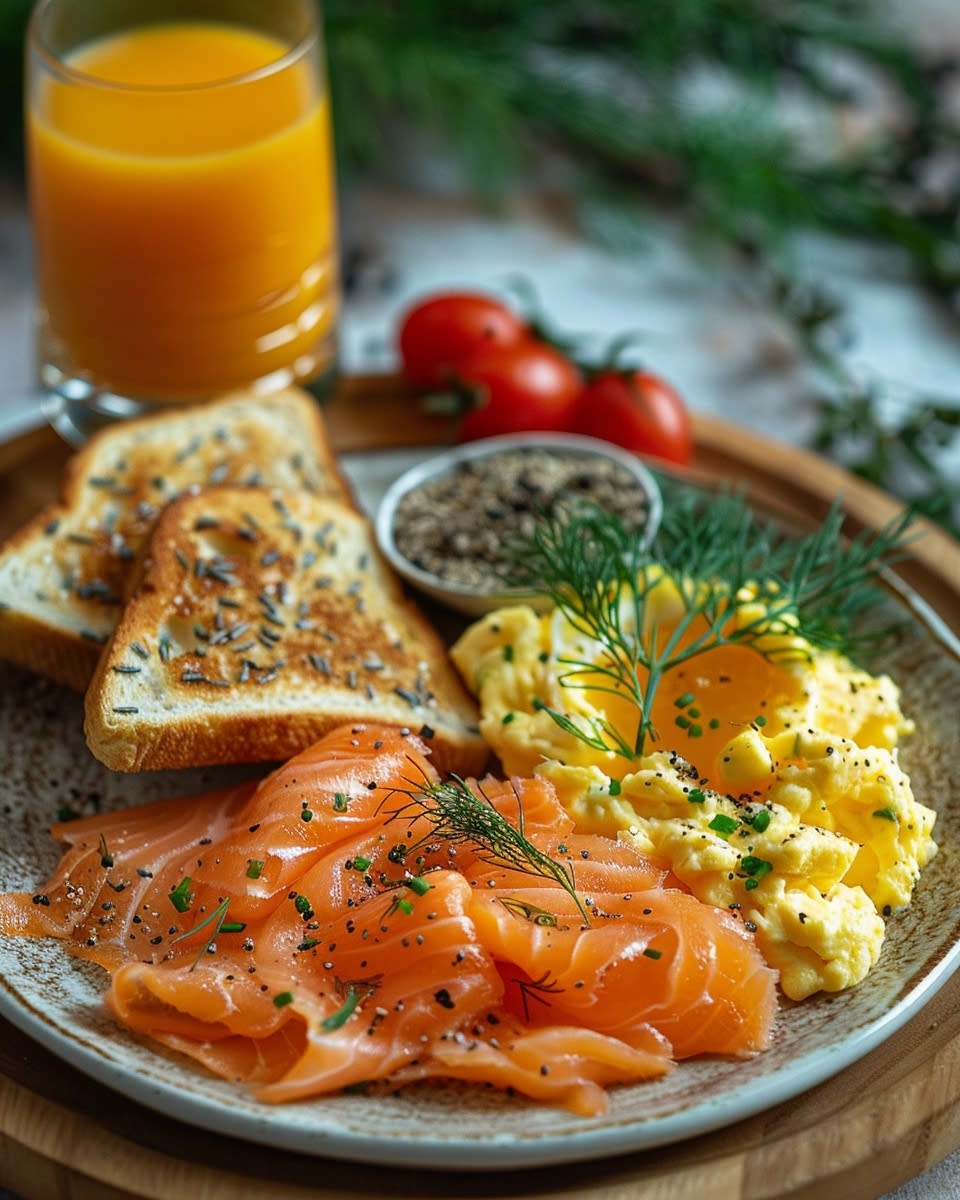
Why I Love My Smoked Salmon and Egg Breakfast Plate
Last Tuesday morning, I woke up tired and grumpy. My alarm had gone off three times already. I dragged myself to the kitchen and stared into my fridge. Then I spotted it—a beautiful piece of smoked salmon sitting next to a carton of fresh eggs. Twenty minutes later, I was sitting down to the most satisfying breakfast I’d had in weeks. That meal completely changed my morning and gave me the energy boost I desperately needed.
The Smoked Salmon and Egg Breakfast Plate has become my go-to meal when I need something special but don’t have hours to spend in the kitchen. It looks fancy enough to serve to guests but takes less time than making pancakes from scratch. I make this dish at least twice a week now, and it never gets old.
What makes this breakfast so great is how it combines simple ingredients into something that feels luxurious. You get the rich, smoky flavor of salmon paired with perfectly cooked eggs. Add some fresh vegetables and maybe a slice of good bread, and you have a complete meal that covers all your nutritional bases.
The Health Benefits of a Smoked Salmon and Egg Breakfast
I used to grab a bagel or cereal for breakfast and wonder why I felt hungry again by 10 AM. Then I learned about the power of protein and healthy fats in the morning. This breakfast plate changed everything for me.
Smoked salmon is packed with omega-3 fatty acids that your body needs but can’t make on its own. These fats support your heart health and help reduce inflammation throughout your body. A three-ounce serving of smoked salmon gives you about 15 grams of protein and barely any carbs. That protein keeps you full for hours.
The salmon also provides vitamin D, which many of us don’t get enough of. This vitamin helps your bones stay strong and supports your immune system. You also get B vitamins that help convert food into energy your body can actually use.
Eggs bring their own nutritional power to the plate. One large egg has about 6 grams of high-quality protein and contains all nine essential amino acids. Your body uses these amino acids to build and repair tissues. Eggs also contain choline, which supports brain function and memory.
I love that eggs are one of the few foods that naturally contain vitamin D. They also have lutein and zeaxanthin, two antioxidants that protect your eyes. The yolk holds most of these nutrients, so don’t skip it if you can help it.
How These Flavors Work Together
The first time I tried this combination, I was skeptical. Would the fish taste weird with eggs? But one bite proved me wrong. The rich, buttery eggs complement the salty, smoky salmon perfectly. Neither flavor overpowers the other.
I like to add fresh ingredients that bring brightness to the plate. A handful of arugula or spinach adds a peppery bite. Cherry tomatoes give you a burst of sweetness and acidity. Sliced avocado brings creaminess that ties everything together.
A squeeze of fresh lemon juice over the whole plate makes the flavors pop. The acid cuts through the richness and wakes up your taste buds. Sometimes I add a sprinkle of fresh dill or chives for an extra layer of flavor.
Fitting This Breakfast Into Your Healthy Eating Plan
This meal works for almost any eating style. If you’re watching your carbs, skip the toast and load up on vegetables instead. Following a Mediterranean diet? This breakfast fits right in with its focus on fish, eggs, and fresh produce.
The protein and fat content means this meal keeps your blood sugar stable. You won’t get that mid-morning crash that comes from sugary breakfast foods. I used to reach for cookies or chips before lunch, but now I barely think about snacking.
For weight management, this breakfast helps you feel satisfied without overdoing calories. A typical serving gives you around 350 to 450 calories, depending on how you prepare it. That’s enough to fuel your morning without making you feel stuffed.
If you’re building muscle or staying active, the high protein content supports your goals. I started eating this before my morning workouts and noticed I had more energy and better recovery.
Choosing Quality Ingredients Makes a Difference
Not all smoked salmon tastes the same. I learned this the hard way after buying the cheapest package at the store. It was overly salty and had a weird texture. Now I look for wild-caught salmon when possible because it has a cleaner taste and better texture.
Check the ingredient list on the package. The best smoked salmon contains only salmon, salt, and maybe some wood smoke. Avoid products with artificial colors or tons of preservatives. Cold-smoked salmon tends to have a silkier texture, while hot-smoked salmon is flakier and more intense in flavor.
For eggs, I buy from local farms when I can. The yolks are brighter and the flavor is noticeably better. But regular store-bought eggs work fine too. Just check the date to make sure they’re fresh.
Fresh vegetables make a huge difference in this dish. Limp lettuce or mushy tomatoes bring down the whole meal. I shop for produce twice a week to keep things crisp and flavorful.
Why Starting Your Day Right Matters
Breakfast sets the tone for your whole day. When I skip it or grab something quick and junky, I feel sluggish until afternoon. But when I take twenty minutes to make a proper meal, I feel sharp and focused for hours.
The nutrients in this breakfast plate fuel your brain and body from the moment you wake up. Your metabolism gets a boost, and you make better food choices throughout the day. I stopped craving junk food in the afternoon once I started eating better breakfasts.
This meal also creates a moment of calm before the day gets busy. Sitting down to eat something you prepared with care feels good. It’s a small act of self-care that costs less than a coffee shop breakfast and tastes way better.
I encourage you to try this Smoked Salmon and Egg Breakfast Plate for yourself. Start with basic ingredients and adjust based on what you like. You might find, like I did, that this simple meal becomes your new favorite way to start the day.


Preparing Your Smoked Salmon and Egg Breakfast Plate
Now that you know why this breakfast is so good for you, let’s get into the fun part—actually making it.
Gathering the Ingredients
The beauty of this breakfast is that you don’t need a mile-long shopping list. I can walk into my kitchen at 7 AM and have everything ready in minutes because the ingredient list is short and simple.
For one serving, you need about three ounces of smoked salmon. That’s roughly the size of a deck of cards. Two large eggs are my sweet spot, though some mornings I’ll go for three if I’m extra hungry. Beyond that, you’re looking at whatever fresh vegetables you enjoy and maybe some bread if you want it.
Finding quality smoked salmon doesn’t have to be complicated. I used to think I had to go to fancy specialty stores, but most regular grocery stores carry decent options now. Look in the refrigerated section near the deli or seafood counter. You’ll usually find it in vacuum-sealed packages. I prefer buying from stores with high turnover because the salmon stays fresher.
Here’s what I look for when I’m standing in front of that salmon display: The color should be deep orange or pink, not pale or grayish. The package shouldn’t have excess liquid pooling at the bottom. Check the sell-by date and grab the freshest one you can find. If your store has a seafood counter with staff who actually know their stuff, ask them what came in recently. I’ve discovered some great products just by asking.
When it comes to eggs, I have strong opinions after years of experimentation. Free-range or pasture-raised eggs taste noticeably better to me. The yolks are richer and more orange rather than pale yellow. But honestly, if budget is tight, regular large eggs work perfectly fine. Just make sure they’re fresh—fill a bowl with water and drop an egg in. Fresh eggs sink, old ones float.
The extras are where you can really make this breakfast your own. I keep baby spinach or arugula on hand because greens add freshness and nutrients without much effort. Cherry tomatoes cut in half bring color and a sweet-tart punch. Sliced avocado makes everything more luxurious and adds healthy fats that keep you full longer.
Fresh herbs transform this dish from good to amazing. Dill is the classic pairing with salmon—its bright, slightly anise-like flavor just works. Chives give you a mild onion taste without overpowering anything. Even flat-leaf parsley adds a fresh note. I buy herbs once a week and store them wrapped in damp paper towels inside plastic bags. They last way longer that way.
A good lemon is non-negotiable in my kitchen. That squeeze of citrus at the end wakes up every flavor on the plate. I also keep capers around for when I want something briny and punchy. A tiny sprinkle of flaky sea salt and fresh black pepper round things out.
By the way, if you’re someone who likes variety in your breakfast protein bowls, you might also enjoy my cottage cheese breakfast bowl on days when you want something cold and quick.
Cooking Techniques
Let me tell you about the three egg-cooking methods I rotate through, depending on my mood and how much time I have.
Poached eggs are my fancy choice when I want that Instagram-worthy runny yolk breaking over the salmon. I used to be terrified of poaching because it seemed so complicated. Then I learned the trick: Fill a medium pot with about four inches of water and bring it to a gentle simmer—you want small bubbles, not a rolling boil. Add a splash of white vinegar (this helps the whites stay together). Crack your egg into a small bowl first. Create a gentle whirlpool in the water with a spoon, then slide the egg into the center. The swirling water wraps the whites around the yolk. Let it cook for three to four minutes, then lift it out with a slotted spoon. Perfect every single time now.
Scrambled eggs are my weekday go-to because they’re fast and forgiving. I crack the eggs into a bowl, add a tiny splash of milk or water, and whisk with a fork until the yolks and whites are completely combined. Here’s what changed my scrambled egg game: low heat and patience. I melt a small pat of butter in a nonstick pan over medium-low heat, pour in the eggs, and let them sit for about twenty seconds. Then I gently push them around with a rubber spatula, creating soft curds. I take them off the heat when they still look slightly wet because they’ll keep cooking on the plate. This method gives you creamy, fluffy eggs instead of rubbery ones.
Over-easy eggs are what I make when I want something in between. I heat a nonstick pan over medium heat with a bit of butter or olive oil. Crack the eggs directly into the pan, being careful not to break the yolks. Let them cook undisturbed for about two minutes until the whites are set on the bottom but still a bit runny on top. Then comes the flip—slide a thin spatula under the egg and quickly but gently turn it over. Cook for just thirty seconds more. You get set whites with a yolk that’s still runny inside.
Funny enough, preparing the salmon is the easiest part of this whole meal. It’s already cooked through the smoking process, so you just need to handle it gently. I take it out of the package and pat it dry with a paper towel if it seems wet. If it came in a large piece, I’ll slice or tear it into smaller portions. Some people like neat slices, but I actually prefer tearing it into irregular pieces because it looks more rustic and mixes better with the eggs.
Cold salmon straight from the fridge works fine, but I sometimes let it sit at room temperature for about ten minutes while I’m cooking the eggs. Room-temperature salmon has more flavor and a better texture than super-cold salmon. Just don’t leave it out for hours—food safety matters.
Here’s the thing about plating: It doesn’t have to be complicated, but a little thought makes a difference. I start with the greens—a handful of arugula or spinach spread across half the plate creates a bed for everything else. The eggs go down next, right on top of or next to the greens. Then I arrange the salmon pieces around or over the eggs, creating some height rather than laying everything flat.
Cherry tomatoes get scattered around for pops of color. Avocado slices fan out on one side. If I’m using bread, it gets toasted until golden and placed alongside rather than under everything (soggy toast is sad toast).
The garnishes are the final touch that make this breakfast plate look like it came from a restaurant. I tear fresh herbs with my hands rather than chopping them—it looks more natural and releases more oils. A few capers scattered here and there add visual interest and bursts of flavor. That squeeze of lemon juice goes everywhere, and I mean everywhere. Sometimes I’ll leave a lemon wedge on the plate so people can add more if they want.
A crack of fresh black pepper over the whole thing adds visual contrast. If I have everything bagel seasoning (which is basically my favorite thing ever), a small sprinkle adds texture and flavor complexity. A drizzle of good olive oil makes everything shine and ties the flavors together.
One more tip I picked up from a chef friend: Create levels on your plate. Don’t make everything the same height. Stack some salmon on the eggs, let some spill onto the plate. Place the avocado at an angle. This creates visual interest and makes the dish look more appealing.
If you’re looking for other high-protein breakfast ideas that are equally satisfying, my high protein oatmeal with peanut butter is another morning favorite that keeps me full for hours.
The whole process from gathering ingredients to sitting down with a beautiful plate takes me about twenty minutes now. It used to take longer when I was learning, but repetition builds speed. Some mornings I’m slower and more meditative about it, enjoying the process. Other mornings I’m rushing and still manage to pull it together quickly because the technique is so simple once you know it.
What I love most about this preparation is how flexible it is. You can make it exactly the same way every time, or you can switch things up based on what’s in your fridge. Got leftover roasted vegetables? Throw them on. Found some microgreens at the farmers market? Perfect addition. The smoked salmon and eggs breakfast serves as a template you can customize endlessly. Similar to how I play around with my breakfast burrito with eggs and black beans, the basic structure stays the same but the variations keep it interesting.


Creative Sides and Perfect Pairings for Your Smoked Salmon Breakfast
After making this breakfast dozens of times, I’ve discovered that the right sides and additions can take it from great to absolutely incredible. Sometimes I keep it minimal with just the salmon and eggs. Other times I build out a whole spread depending on who I’m feeding or how hungry I am.
Whole-grain toast is my most frequent addition. I love a thick slice of seedy multigrain bread, toasted until it’s golden and just starting to get crispy at the edges. Sometimes I’ll spread a thin layer of cream cheese on it before piling on some salmon. Other days I go for a smear of mashed avocado with a pinch of salt. Sourdough is another fantastic option—that tangy flavor works beautifully with the richness of the eggs and salmon. If I’m feeling fancy, I’ll do a dark rye bread which has an earthy flavor that complements the smokiness.
Fresh fruit brings a completely different energy to the plate. I’ll often set out a small bowl of mixed berries on the side. The sweetness and slight tartness cut through all that richness and cleanse your palate between bites. Sliced melon works great too, especially in summer when it’s super juicy and refreshing. Sometimes I’ll do orange segments—they’re a bit of work to prepare, but the bright citrus flavor is worth it. One morning I had leftover grilled pineapple from dinner the night before and threw that on the side. Sounds weird maybe, but the caramelized sweetness was surprisingly good with the salmon.
Greek yogurt makes an appearance when I want extra protein or when I’m serving this to my teenage nephew who seems to have a bottomless stomach. A small bowl of plain Greek yogurt with a drizzle of honey and some granola sprinkled on top adds substance without making the meal feel heavy. Sometimes I’ll mix in some cucumber and dill to make a quick tzatziki-style sauce that you can dollop onto the eggs or salmon.
Here’s the thing about making this meal more filling: you have so many options. If I’ve got a long day ahead or I’m about to work out, I’ll add roasted potatoes. I usually make a batch on Sunday and keep them in the fridge all week. Just crisp them up in a hot pan before serving. Sweet potato cubes work too and they add a subtle sweetness. Another trick is adding a small side of quinoa or farro—these grains soak up the runny yolk beautifully and add a nutty flavor plus extra fiber.
On the flip side, if you want to keep things lighter, skip the toast entirely and double up on the vegetables. I’ll make a bigger bed of mixed greens, add sliced cucumber, some radishes for crunch, and maybe some bell pepper strips. Cherry tomatoes can go from a garnish to a proper side—just halve a whole pint of them and toss with a bit of olive oil, salt, and fresh basil. You still get a full plate but with fewer calories and carbs.
Beverage pairings matter more than I used to think. For years I just had coffee with everything, but I’ve learned that different drinks can really enhance this meal. Green tea is my current favorite—its subtle grassiness doesn’t compete with the salmon, and the gentle caffeine boost feels cleaner than the jolt from coffee. If I’m having this on a weekend morning when I can relax, I’ll make a pot of jasmine tea. That floral note is lovely.
Freshly squeezed orange juice is the classic choice for a reason. That bright acidity and natural sweetness work perfectly with this breakfast. I squeeze it myself when I have time because store-bought just doesn’t compare—the flavor is brighter and you don’t get all that sugar some brands add. Grapefruit juice is another option if you like something more tart. By the way, if you’re trying to maintain a balanced approach to your morning meal and want to understand how protein, fats, and carbs work together, checking out resources about macronutrient balance can help you customize your plate based on your specific goals.
Sometimes I’ll make a simple green smoothie to go alongside—just spinach, banana, a bit of almond milk, and maybe some protein powder. It sounds like overkill with all the food already on the plate, but I’ll sip it slowly over the course of the morning. Keeps me hydrated and adds more nutrients without making me feel stuffed.
Fun Variations to Keep Things Interesting
After eating this breakfast regularly for months, I started experimenting with additions that change up the flavor profile completely. Capers were my first discovery. Those little briny bursts are a classic pairing with smoked salmon for good reason. I’ll scatter a teaspoon or so across the plate. They add a salty, tangy punch that wakes everything up.
Cheese can take this in interesting directions. I was skeptical at first because the salmon is already so flavorful, but a small amount of the right cheese works beautifully. Crumbled goat cheese or feta adds creaminess and tang without overwhelming anything. I’ll dot little pieces around the plate. Cream cheese is the obvious choice—you can spread it on toast or dollop it directly on the eggs. Sometimes I’ll mix fresh herbs into softened cream cheese before adding it to the plate.
One morning I had some grated Parmesan left over from making pasta, and I sprinkled a tiny bit over the scrambled eggs right before serving. That nutty, salty flavor was excellent. Just use a light hand—a little goes a long way.
Different toppings completely change the experience. Everything bagel seasoning has become my obsession lately. That mix of sesame seeds, poppy seeds, garlic, onion, and salt adds amazing texture and flavor complexity. Red pepper flakes give you heat if you want it. I’m not usually a spicy breakfast person, but a small pinch adds a nice kick that plays well with the salmon’s smokiness.
Pickled red onions are another game-changer I discovered at a brunch spot. The sweet-tart-tangy flavor cuts through the richness and adds a beautiful pop of color. I keep a jar in my fridge now—they last for weeks and work on so many things. Thinly sliced regular red onion works too if you don’t mind the sharper bite.
Seasonal ingredients keep this breakfast feeling fresh year-round. In spring, I’ll add asparagus spears. I snap off the woody ends, toss them with olive oil and salt, and roast them at 400°F for about twelve minutes until they’re tender and starting to brown. Laid across the plate, they look elegant and taste amazing with the eggs.
Summer brings tomatoes at their absolute peak. This is when I’ll use thick slices of heirloom tomatoes instead of cherry tomatoes. Just a sprinkle of flaky salt and they’re perfect. Fresh corn cut off the cob and quickly sautéed adds sweetness and crunch. Zucchini ribbons made with a vegetable peeler look pretty and add freshness without much flavor interference.
Fall means I start incorporating roasted vegetables more heavily. Brussels sprouts halved and roasted until crispy are incredible with this breakfast. They add an earthy bitterness that balances the rich salmon. Butternut squash cubes roasted with a bit of cinnamon bring warmth and comfort. I’ll even throw some sautéed mushrooms on there—their umami depth works surprisingly well.
Winter is when I lean into heartier additions. Sautéed kale or Swiss chard wilts down and provides substance. I’ll sometimes add a spoonful of sauerkraut on the side—sounds weird maybe, but that fermented tang is delicious with salmon and adds probiotics. Roasted beets, either golden or red, add earthiness and gorgeous color.
International flavor twists have been fun to explore too. For a Mediterranean vibe, I’ll add olives, sun-dried tomatoes, and a drizzle of balsamic glaze. A Middle Eastern version might include za’atar seasoning, cucumber, and a spoonful of hummus on the side. Asian-inspired variations work with a sprinkle of sesame seeds, some thinly sliced scallions, and a tiny drizzle of soy sauce mixed with sesame oil.
One variation that surprised me was adding some cooked grains directly into scrambled eggs before they finish cooking. Leftover rice or quinoa stirred in makes the eggs more substantial and adds interesting texture. It’s a great way to use up leftovers and make the meal more filling without adding meat.
For anyone exploring different ways to boost their morning protein intake, my collection of high protein breakfast recipes offers plenty of other satisfying options that follow similar preparation principles but with completely different flavor profiles.
The beauty of this smoked salmon and egg breakfast plate is that it serves as a framework you can build on infinitely. Start with the basics, then add whatever sounds good to you. Trust your instincts. If something seems like it might work, try it. The worst that happens is you learn what you don’t like. More often, you’ll discover new favorite combinations that make this breakfast even more enjoyable.
Remember, there’s no single “correct” way to serve this meal. What matters is that you’re eating something nutritious that you actually enjoy. Food should bring pleasure, not stress. So experiment, have fun, and make this breakfast your own.
Frequently Asked Questions
How do I store leftover smoked salmon and eggs?
Store them separately for best results. Keep unused smoked salmon in its original vacuum-sealed package if unopened, or wrap opened salmon tightly in plastic wrap and use within three days. Cooked eggs should be refrigerated in an airtight container and eaten within two days—though honestly, they never taste quite as good reheated. The texture changes and they can get rubbery. If you have leftover components, I’d suggest using the cold salmon in a salad and making fresh eggs next time.
Can I make this breakfast plate ahead of time?
You can prep some components ahead, but I wouldn’t assemble the whole thing in advance. Wash and prep your vegetables the night before and store them in containers. You can even portion out your salmon so it’s ready to go. But cook the eggs fresh—they only take a few minutes and taste infinitely better hot and freshly made. If you’re meal-prepping for the week, consider making egg muffins or frittatas instead, which hold up better. You can reheat those and add fresh salmon when you’re ready to eat.
What are some substitutes for smoked salmon if I don’t eat fish?
Smoked turkey or chicken slices work well and give you that smoky flavor with plenty of protein. Prosciutto or other cured meats bring a similar salty, savory element. For a plant-based option, try smoked tofu—it’s got that smoky taste and a firm texture that works on the plate. Marinated and roasted portobello mushrooms also provide an umami-rich, meaty quality. You could even use tempeh bacon if you want something with crispy texture and smoke flavor.
Are there any vegetarian options for this dish?
Absolutely, just swap the salmon for plant-based proteins or vegetables. Sautéed mushrooms with smoked paprika give you that smoky depth. Roasted red peppers add sweetness and color. Grilled halloumi cheese provides protein and a meaty texture. You could also use seasoned chickpeas or white beans for protein and fiber. The eggs remain the star, and you build around them with whatever vegetables and plant proteins you enjoy. Add some nutritional yeast for a cheesy, umami flavor that complements the eggs beautifully.
How can I make this dish suitable for a gluten-free diet?
This breakfast is naturally gluten-free as long as you skip the toast or use certified gluten-free bread. Check your smoked salmon label to ensure it doesn’t contain any gluten-containing additives—most plain smoked salmon is fine, but some flavored varieties might have issues. Make sure any seasonings or spice blends you use are certified gluten-free if you have celiac disease. Everything else—eggs, vegetables, herbs, and most garnishes—is naturally gluten-free. It’s actually one of the easier breakfasts to keep gluten-free without much modification.
What are the best ways to reheat the smoked salmon and eggs without losing flavor?
Here’s the truth: reheating this breakfast doesn’t work great. Smoked salmon is best served cold or at room temperature—heating it makes the texture rubbery and the flavor harsh. If you must reheat eggs, do it gently in a microwave at 50% power in short bursts, stirring between intervals. Or warm them in a pan over very low heat with a bit of butter. Better strategy? Keep the salmon cold and only reheat the eggs if necessary, then assemble fresh. Or better yet, just cook fresh eggs—they take five minutes and taste so much better.
Is this breakfast plate suitable for a low-carb or keto diet?
This meal is perfect for low-carb and keto diets when you skip the toast and any starchy sides. Smoked salmon and eggs are both high in protein and healthy fats with minimal carbs. Load up on non-starchy vegetables like spinach, arugula, avocado, and tomatoes. Add extra olive oil or butter to increase the fat content if you’re strictly keto. The whole plate without bread contains maybe five to eight grams of carbs depending on what vegetables you include. It’s one of the easiest keto breakfasts to make and actually enjoy.
Can I use different types of eggs, like duck or quail eggs, in this recipe?
Duck eggs work wonderfully—they’re richer and creamier than chicken eggs with larger yolks. Use one or two duck eggs instead of two or three chicken eggs. They take slightly longer to cook due to their size. Quail eggs are adorable and work well for an elegant presentation, though you’d need four to six of them to equal two chicken eggs. They cook very quickly, so watch them carefully. The flavor is similar to chicken eggs but slightly more delicate. Both options make the breakfast feel more special and gourmet.
What’s the best way to prevent my poached eggs from falling apart?
Use the freshest eggs possible—fresh eggs have tighter whites that hold together better. Add a splash of white vinegar to the simmering water, which helps the whites coagulate faster. Create a gentle whirlpool in the water before adding the egg, which wraps the whites around the yolk. Don’t let the water boil—keep it at a gentle simmer with small bubbles. Crack the egg into a small bowl first, then gently slide it into the water rather than dropping it from a height. With practice, it becomes second nature.
How can I reduce the sodium content in this breakfast?
Smoked salmon is naturally high in sodium due to the curing process, so portion control helps—stick to two or three ounces instead of going overboard. Look for low-sodium varieties of smoked salmon, which some brands offer. Skip adding extra salt to your eggs and vegetables, letting the salmon provide all the saltiness. Avoid salty additions like capers or olives. Load up on fresh vegetables and use lots of lemon juice and herbs for flavor instead of salt. You can also balance one high-sodium meal with lower-sodium choices the rest of the day.
This smoked salmon and egg breakfast plate has become more than just a meal for me—it’s a reliable source of morning energy and satisfaction that never gets boring. Give it a try this week and see how this simple combination of quality ingredients can transform your mornings into something you actually look forward to.
Ingredients
Equipment
Method
- Gather all ingredients and kitchen tools.
- Prepare the vegetables by washing and cutting as necessary.
- Choose your egg-cooking method: poach, scramble, or fry.
- Cook the eggs according to your selected method.
- While the eggs are cooking, prepare the smoked salmon. If it’s a larger piece, slice or tear it into pieces.
- Plate the arugula or spinach as a bed on one half of the plate.
- Add the cooked eggs on top or next to the greens.
- Arrange the smoked salmon around or on top of the eggs.
- Scatter the cherry tomatoes and avocado slices on the plate.
- Squeeze fresh lemon juice over the entire plate.
- Garnish with fresh herbs, capers, and a sprinkle of salt and pepper.
- Serve with toasted bread if desired.