
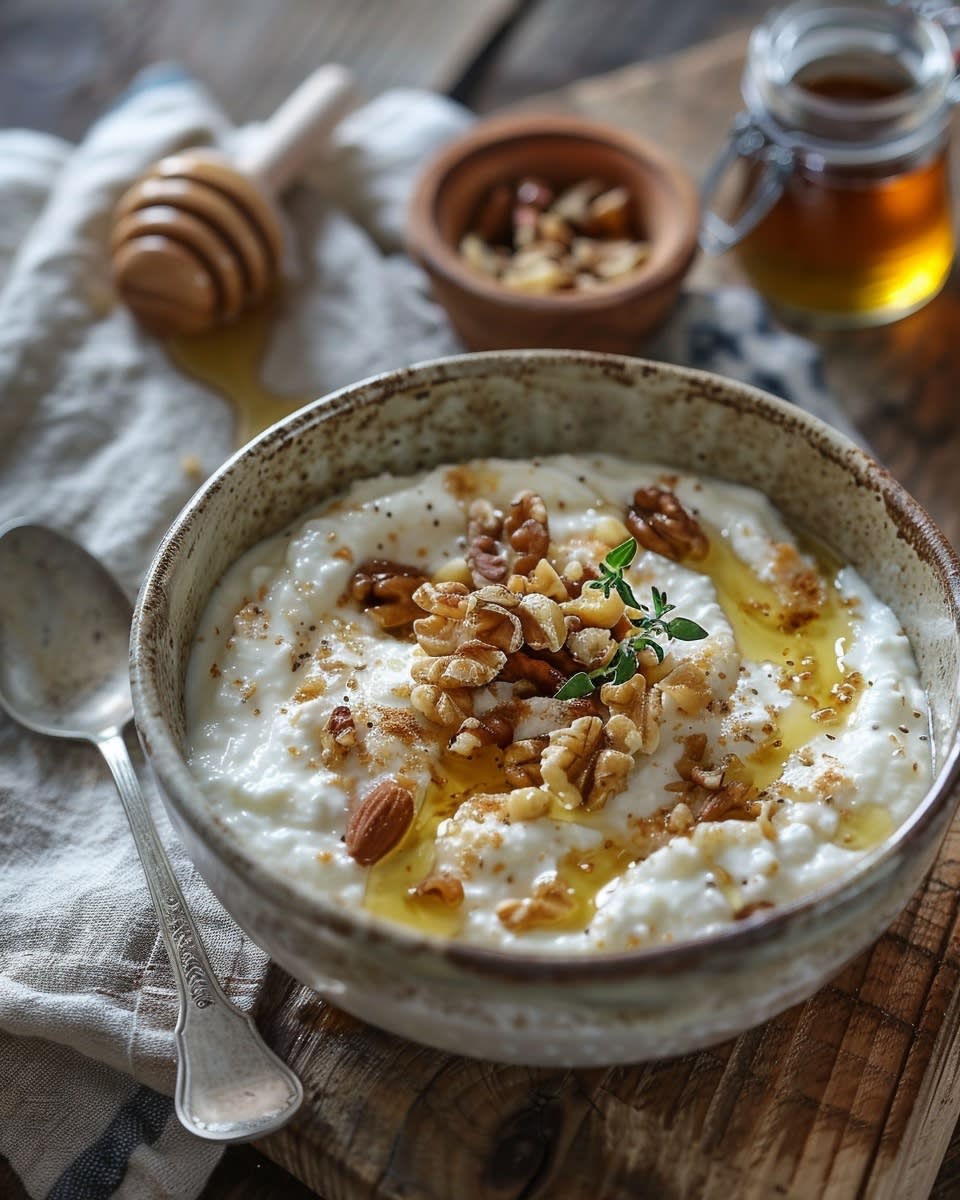
Welcome to My Kitchen: The Magic of Yogurt with Honey and Nuts
Picture this: It’s 6:30 AM, and I’m fumbling around my kitchen, barely awake. My kids need breakfast in ten minutes, and I haven’t even had my coffee yet. Sound familiar? This used to be my daily struggle until I discovered the perfect solution sitting right in my fridge. A bowl of yogurt with honey and nuts saved my mornings and quickly became my family’s favorite go-to meal.
I still remember the first time I threw together this simple combination. I was rushing between meetings and grabbed whatever I could find. A spoonful of creamy yogurt, a drizzle of golden honey, and a handful of crunchy almonds. That first bite stopped me in my tracks. It was creamy, sweet, and satisfying in a way that kept me full until lunch. My nine-year-old daughter watched me eat it and asked for her own bowl. Now, three years later, she makes it herself almost every morning.
Today, I want to share everything I’ve learned about this incredible dish. Trust me, once you understand how easy and beneficial it is, you’ll wonder why you didn’t start making it sooner.
Why Choose Yogurt with Honey and Nuts?
Let me be honest with you. I’m not a morning person. I need something quick, tasty, and filling that doesn’t require following a complicated recipe or dirtying every pot in my kitchen. This combination checks all those boxes and then some.
The beauty of this dish lies in its simplicity. You need just three basic ingredients that most of us already have at home. No special equipment required. No cooking skills needed. You literally mix everything in a bowl and eat. My six-year-old son can prepare it himself, which tells you everything about how simple it really is.
But don’t let the simplicity fool you. This isn’t just any random food combination. Each ingredient plays a specific role in creating a balanced, nutritious meal.
The Power Trio: Understanding Each Ingredient
Let me break down what makes this combination so special. When I first started eating yogurt with honey and nuts, I didn’t think much about the nutritional side. I just knew it tasted good and kept me satisfied. Then my doctor mentioned I needed more protein and calcium in my diet. Turns out, I’d been eating the perfect solution all along.
Yogurt forms the creamy base that holds everything together. It’s packed with protein, which keeps your muscles strong and your stomach full for hours. I learned this the hard way after years of eating sugary cereals that left me hungry by 10 AM. Greek yogurt works especially well because it contains almost twice the protein of regular yogurt.
The calcium in yogurt supports your bones and teeth. As someone in her thirties who wants to stay active and healthy for decades to come, this matters to me. My grandmother struggled with bone issues later in life, and I’m determined to take better care of myself now.
Yogurt also contains probiotics, which are helpful bacteria that support your digestive system. I used to deal with stomach discomfort pretty often. After eating yogurt regularly for a few months, those issues became much less frequent. It might sound too good to be true, but many people experience similar improvements.
Honey brings natural sweetness without the guilt of refined sugar. I used to dump white sugar on everything, thinking it didn’t matter. Then I switched to honey and noticed a real difference. The sweetness feels more balanced and doesn’t give me that awful sugar crash an hour later.
Honey contains antioxidants that help protect your body from damage. It also has antibacterial properties. When my kids have sore throats, a spoonful of honey often soothes their discomfort better than anything else. Plus, buying local honey from farmers markets supports small businesses in my community.
Nuts add the perfect crunch and a whole lot of nutrition. Whether you choose almonds, walnuts, pecans, or cashews, you’re getting healthy fats that your brain and heart need to function properly. I rotate between different nuts to keep things interesting and get a variety of nutrients.
Nuts also provide fiber, which helps with digestion and keeps you feeling full. The combination of protein from yogurt and healthy fats from nuts creates a meal that actually sustains you. No more mid-morning snack attacks or vending machine temptations.
The Versatility That Changed My Routine
Here’s what really won me over. This isn’t just a breakfast food. I eat yogurt with honey and nuts at different times throughout the day, depending on what I need.
On busy weekday mornings, it’s my quick breakfast that I can eat at my desk if necessary. The portable nature means I can prepare it in a mason jar and take it with me. No more skipping breakfast or grabbing fast food on the way to work.
In the afternoon when that 3 PM slump hits, I make a small bowl as a snack. It gives me energy without making me feel sluggish. Way better than the candy bars I used to rely on.
After evening workouts, I enjoy it as a recovery snack. The protein helps my muscles repair themselves, and the natural sugars replenish my energy. My personal trainer actually suggested this combination years ago, and it’s become part of my fitness routine.
Sometimes I even serve it as a light dessert when we want something sweet but not too heavy. My husband appreciates having a healthier option that still satisfies his sweet tooth. He used to eat ice cream every night, but now he reaches for this instead at least half the time.
Perfect for Every Lifestyle and Diet
One reason this dish works for so many people is its adaptability. I have friends with different dietary needs and preferences, and almost everyone can enjoy some version of this combination.
If you’re watching calories, you can use low-fat yogurt and measure your honey and nuts carefully. A little goes a long way with both ingredients. You still get all the flavor and satisfaction without overdoing it.
For my vegetarian friends, this provides an excellent protein source that doesn’t come from meat. Getting enough protein can be challenging on a plant-based diet, and this helps fill that gap.
My neighbor follows a gluten-free diet due to celiac disease. She loves that yogurt with honey and nuts is naturally gluten-free. No need to check labels or worry about cross-contamination.
Athletes and active people appreciate the balance of carbohydrates, protein, and healthy fats. My brother runs marathons, and he often eats this before his long training runs. The combination gives him sustained energy without upsetting his stomach.
Even picky eaters often enjoy it. Remember my daughter? She used to refuse breakfast entirely. Now she actually looks forward to her morning bowl. The mild flavor of yogurt paired with sweet honey appeals to young taste buds.


The Real Health Benefits That Made Me a Believer
Now that you understand why this combination works so well for different lifestyles, let me get into the specific health benefits that actually made a difference in my life. I’m not going to throw a bunch of scientific jargon at you. Instead, I’ll share what I’ve personally experienced and what research actually backs up.
When I first started eating yogurt with honey and nuts regularly, I wasn’t tracking anything. I just knew I felt better. After about six weeks, I realized my afternoon energy crashes had practically disappeared. You know that feeling around 2 or 3 PM when your brain turns to mush and you’d give anything for a nap? Yeah, that stopped happening as often. My coworker noticed I wasn’t dragging myself to the coffee machine every hour and asked what changed. I honestly hadn’t connected it to my breakfast routine until she pointed it out.
The probiotics in yogurt deserve their own paragraph because they’ve been game-changing for me. These are living microorganisms that set up shop in your gut and help keep things running smoothly. Before I understood gut health, I dealt with bloating, irregular digestion, and general discomfort. My doctor suggested I try eating more probiotic-rich foods instead of jumping straight to supplements. Within a month of daily yogurt consumption, things improved noticeably.
Here’s something interesting I learned from my nutritionist friend. Your gut health affects way more than just digestion. It influences your immune system, your mood, and even your skin. I used to get sick constantly during winter months. Last year, I made it through cold and flu season with just one minor cold. Could be coincidence, but I’m not the only one who’s noticed this connection.
The antioxidants in honey work quietly behind the scenes, protecting your cells from damage. I know that sounds vague, but think of it like maintenance work on a house. You don’t see it happening, but it prevents bigger problems down the road. Honey contains compounds called polyphenols that help reduce inflammation throughout your body. My knees used to ache after my morning runs, and while I can’t prove it was the honey, the discomfort lessened significantly after I started eating it daily.
Speaking of anti-inflammatory benefits, the nuts bring their own set of advantages. Walnuts especially contain omega-3 fatty acids that support heart health. My dad had a heart attack five years ago, which scared our entire family into taking cardiovascular health more seriously. Small dietary changes like adding walnuts to my breakfast felt like a manageable way to take control.
Funny enough, the healthy fats in nuts also help your body absorb certain vitamins better. Fat-soluble vitamins like A, D, E, and K need fat to be absorbed properly. So when you eat yogurt fortified with vitamin D alongside nuts, you’re actually getting more benefit than eating them separately. I love when food works smarter, not harder.
The protein content keeps your blood sugar more stable compared to carb-heavy breakfasts. I used to eat toast with jam, similar to toast with peanut butter and banana, and while delicious, it sent my energy on a rollercoaster. The combination of protein and healthy fats in yogurt with nuts creates a much steadier experience. No dramatic spikes and crashes.
By the way, if you’re trying to build or maintain muscle, the protein in Greek yogurt is particularly valuable. It contains all nine essential amino acids your body can’t make on its own. My husband started lifting weights last year, and his trainer recommended eating protein within an hour of waking up. This breakfast became his go-to because it’s quick and effective.
One benefit I wasn’t expecting involves bone health. The calcium and vitamin D in yogurt work together to strengthen bones. At my last checkup, my doctor mentioned my bone density results looked great for my age. She asked what I was doing differently, and I realized I’d been eating yogurt almost daily for three years. Sure, I also exercise and take walks outside, but the consistent calcium intake probably contributed.
Making Your Perfect Bowl: The Simple Process
Alright, let’s talk about actually preparing this. I promised you it’s easy, and I meant it. You don’t need a recipe card or measuring cups unless you want them. After making this hundreds of times, I’ve developed a system that works perfectly every time.
First, choose your yogurt. I keep both Greek and regular yogurt in my fridge because different family members prefer different textures. Greek yogurt is thicker and tangier with more protein, while regular yogurt is lighter and milder. Some weeks I’m in a Greek yogurt mood, other weeks I want something less dense. Listen to what sounds good to you.
For one serving, I start with about three-quarters to one cup of yogurt in a bowl. Not a tiny bowl either—give yourself room to mix everything without making a mess. I learned this lesson after flinging yogurt across my counter one too many times.
Next comes the honey. Here’s where personal preference really matters. I use about one tablespoon, which gives a noticeable sweetness without being candy-like. My husband uses two tablespoons because he has a serious sweet tooth. My daughter uses barely half a tablespoon. Start with less than you think you need because you can always add more, but you can’t take it back.
The quality of honey makes a difference. I’m not saying you need expensive gourmet honey, but the stuff from local beekeepers or farmers markets tastes noticeably better than the generic squeeze bottles. It’s richer and more complex. Plus, supporting local producers feels good.
Now for the nuts. I typically use a small handful, which is roughly two tablespoons or about an ounce. This gives you plenty of crunch and nutrition without overwhelming the dish. I chop larger nuts like pecans or walnuts into smaller pieces so they distribute evenly and are easier to eat. Almonds I often leave whole because I like the shape and they’re already bite-sized.
Here’s the thing about nut selection. Each type brings different flavors and benefits. Almonds taste mild and pair well with any yogurt flavor. Walnuts have that slightly bitter, earthy quality that contrasts nicely with honey’s sweetness. Pecans feel more indulgent and buttery. Cashews are creamy and mild. I keep several varieties in my pantry and grab whatever calls to me that morning.
Mix everything together thoroughly. I use a regular spoon and stir for about ten seconds. You want the honey distributed throughout so every bite has balanced sweetness instead of one super sweet pocket.
That’s honestly the basic version, and it’s delicious exactly as is. But once you’ve got that down, the variations become endless. This is where things get fun and creative.
Adding fresh fruit transforms the dish completely. Sliced strawberries make it feel like dessert. Blueberries add little bursts of tartness. Banana slices make it more filling and add natural sweetness so you might use less honey. During summer when berries are in season, I pile them on generously. In winter, I use frozen berries that I let thaw for a few minutes.
A sprinkle of cinnamon or vanilla extract adds warmth and complexity without any calories. Just a quarter teaspoon of cinnamon makes the whole bowl smell amazing. If you enjoy warm spices, you might also like oatmeal with cinnamon and honey for another cozy breakfast option.
Some mornings I add a tablespoon of chia seeds or ground flaxseed for extra fiber and omega-3s. They don’t change the flavor much but boost the nutritional value. Fair warning though—chia seeds get gelatinous if they sit too long, so add them right before eating.
Granola adds extra crunch if you’re really hungry or want more texture. I go light on granola though because it can be high in sugar and calories. Maybe a tablespoon sprinkled on top rather than stirred throughout.
For chocolate lovers, a few dark chocolate chips or cacao nibs satisfy that craving while adding antioxidants. My son dumps in chocolate chips like it’s going out of style, which defeats some of the health benefits, but at least he’s eating yogurt instead of sugary cereal.
Different yogurt flavors change the entire experience too. Vanilla yogurt needs less honey because it’s already sweetened. Fruit-flavored yogurts pair with complementary nuts—strawberry yogurt with slivered almonds, peach yogurt with pecans. Plain yogurt gives you the most control over sweetness and works as a blank canvas.
The temperature matters more than you’d think. I prefer cold yogurt straight from the fridge, but my husband lets his sit out for ten minutes so it’s not quite as cold. Room temperature yogurt feels creamier and the flavors come through stronger. Try both ways and see what you prefer.
Presentation even counts when you’re just eating at home. Sometimes I layer everything in a glass jar instead of mixing it—yogurt on bottom, drizzle of honey, layer of nuts, maybe some fruit on top. It looks pretty enough to photograph and somehow tastes better when it’s visually appealing. Maybe that’s just me being weird, but I don’t think so.
If you’re meal prepping for the week, you can portion yogurt into containers ahead of time and keep the nuts and honey separate until you’re ready to eat. This prevents the nuts from getting soggy. I tried making five jars on Sunday night once, and by Wednesday the nuts were disappointingly soft. Now I pack the components separately. Similar to how you might prep components for breakfast wraps with egg and cheese, keeping some ingredients separate maintains freshness.
The whole process from grabbing ingredients to eating takes maybe two minutes. That’s faster than toasting bread for quick scrambled eggs and toast, and there’s basically no cleanup. Just rinse your bowl and spoon. Done.


Creative Variations to Keep Your Yogurt with Honey and Nuts Exciting
Here’s where things get really interesting. After eating yogurt with honey and nuts for months, you might think it would get boring. Honestly, that’s what I expected too. But the opposite happened. Once I started playing around with different combinations, I realized this dish has more potential than I ever imagined.
Think of the basic version as your foundation. Now you get to build whatever you want on top of it. Some days I keep it simple. Other days I go wild with add-ins and turn it into something completely different.
Let’s start with yogurt varieties because they set the stage for everything else. Beyond regular and Greek, there’s Icelandic yogurt, which is even thicker and higher in protein than Greek. It has this amazing creamy texture that feels almost luxurious. Australian-style yogurt is smoother and sweeter, made from whole milk. I discovered it at a specialty grocery store and now I grab it as an occasional treat.
Then there’s plant-based options if dairy doesn’t work for you. Coconut yogurt brings a tropical vibe that pairs beautifully with macadamia nuts and a light drizzle of honey. Almond milk yogurt tastes mild and works well as a neutral base. Cashew yogurt is incredibly creamy. My lactose-intolerant friend swears by oat milk yogurt because the texture mimics dairy yogurt better than other alternatives.
Skyr, the Icelandic cultured dairy product, technically isn’t yogurt but works perfectly in this dish. It’s super thick, almost like soft cheese, and packed with protein. My cousin visited from Iceland and introduced me to it. Now I can find it at regular supermarkets, which is pretty cool.
Moving on to honey variations, because not all honey tastes the same. Wildflower honey is my everyday choice—it’s mild and versatile. But buckwheat honey has this dark, molasses-like intensity that transforms the whole dish into something earthy and sophisticated. Orange blossom honey adds delicate floral notes. Manuka honey from New Zealand costs more but supposedly has extra antibacterial properties. I save it for when I feel a cold coming on.
Raw honey versus processed honey matters too. Raw honey hasn’t been heated or filtered, so it retains more beneficial compounds and enzymes. It crystallizes faster and has a grainier texture, but many people prefer it for health reasons. I keep both types around depending on my mood.
The nut combinations deserve their own discussion because mixing different nuts creates complex flavor profiles. My current favorite is half almonds, half walnuts. The mild sweetness of almonds balances the slight bitterness of walnuts perfectly. Pecans and cashews together feel indulgent and rich. Hazelnuts and pistachios make it feel fancy, like something you’d order at a cafe.
Toasting your nuts changes everything. I discovered this by accident when I had leftover toasted almonds from another recipe. The deeper, nuttier flavor they brought to my yogurt bowl was incredible. Now I toast a batch of mixed nuts every couple weeks and keep them in an airtight container. Just spread them on a baking sheet and toast at 350 degrees for about eight minutes, watching carefully so they don’t burn.
Candied nuts take it in a dessert direction. I make these occasionally as a special treat—toss nuts with a tiny bit of honey and cinnamon, then bake until they’re crispy. They add sweetness and crunch, though obviously they’re not as healthy as plain nuts. Everything in moderation, right?
Nut butters open up another whole category. A spoonful of almond butter stirred into yogurt creates this smooth, rich consistency that’s completely different from chopped nuts. Cashew butter makes it even creamier. Peanut butter might seem weird with honey, but it actually works beautifully—the combination reminds me of toast with peanut butter and banana, which has that same satisfying sweet-and-nutty thing going on.
Seasonal variations keep things interesting throughout the year. In fall, I add pumpkin pie spice, diced apples, and pecans. It tastes like autumn in a bowl. Winter calls for pomegranate seeds, which add these bright, tart pops of flavor and look gorgeous against white yogurt. Spring means fresh berries and sliced almonds. Summer is all about peaches, blueberries, and any fruit I can get my hands on.
Here’s a combination I stumbled upon that sounds strange but totally works: yogurt with honey, walnuts, and a pinch of sea salt. The salt enhances the sweetness and brings out the nuttiness in a way I can’t quite explain. Just a tiny pinch though—you’re not making it salty, just highlighting the other flavors.
Coffee-flavored yogurt with hazelnuts and a drizzle of honey tastes like a fancy dessert. My sister serves this at brunch parties and people always ask for the recipe. She finds it hilarious because there isn’t really a recipe, just those three ingredients.
For texture variations, try different preparation methods. Freeze your yogurt mixture in popsicle molds for a healthy frozen treat. Layer it parfait-style in a tall glass with granola between each layer. Blend it smooth with extra milk and turn it into a drinkable smoothie bowl, then top with chopped nuts and a honey drizzle.
If you’re checking nutrition facts to track your intake more carefully, remember that most containers provide detailed information about yogurt content, but you’ll need to account for your add-ins separately. I learned to estimate my portions after a few weeks of measuring everything.
Savory versions exist too, believe it or not. Mediterranean-style uses plain yogurt, a drizzle of honey, pine nuts, and a sprinkle of za’atar spice. It’s less of a breakfast and more of a side dish or appetizer, but it shows how versatile this combination really is. Middle Eastern cuisine has been pairing yogurt with honey and nuts for centuries, long before it became trendy in Western countries.
Kids love getting involved with customization. I set up a yogurt bar on weekend mornings with different toppings in small bowls. My children build their own combinations and feel proud of their creations. It’s gotten them to try new ingredients they’d normally refuse. My son discovered he actually likes walnuts this way, after claiming for years he hated them.
For people who love meal prepping, you can create variety packs for the week. Monday gets strawberries and almonds, Tuesday gets blueberries and walnuts, Wednesday gets bananas and pecans, and so on. This prevents boredom and ensures you’re getting different nutrients throughout the week.
Chocolate additions turn it into dessert territory. Dark chocolate chunks, cacao nibs, or even a tiny bit of cocoa powder mixed in satisfy chocolate cravings while keeping things relatively healthy. My friend who’s trying to quit eating candy bars in the afternoon switched to chocolate-enhanced yogurt bowls and says it’s been a game-changer.
Dried fruit is controversial in my house. I like it because it adds concentrated sweetness and chewiness—dried cherries, cranberries, or apricots all work well. But dried fruit is high in sugar and calories, so I use it sparingly. My husband dumps in handfuls and I have to remind him it’s not the same as fresh fruit nutritionally.
Exploring easy breakfast ideas helped me realize how much simpler my mornings became once I embraced customizable options like this. Having a flexible base recipe that adapts to whatever I have on hand removes so much stress from meal planning.
The point is, you never have to eat the same bowl twice if you don’t want to. The basic formula stays the same, but the combinations are literally endless. Don’t be afraid to try weird pairings. The worst that happens is you don’t like it and you eat it anyway because it’s still yogurt with honey and nuts at its core.
Frequently Asked Questions About Yogurt with Honey and Nuts
What are the best types of nuts to use with yogurt and honey?
Almonds are probably the most popular choice because they’re mild and widely available. Walnuts bring omega-3 fatty acids and a slightly earthy flavor. Pecans taste rich and buttery, while cashews add creaminess. Honestly, the best nut is whichever one you enjoy eating. I rotate between different types to keep things interesting and get a variety of nutrients. You can also mix multiple nuts together for more complex flavor and texture.
Can I use plant-based yogurt for this recipe?
Absolutely, and I have several friends who do exactly that. Coconut yogurt, almond yogurt, oat yogurt, and cashew yogurt all work beautifully with honey and nuts. The texture and tanginess vary depending on which plant-based option you choose. Coconut yogurt has the strongest distinct flavor, while oat and cashew versions taste more neutral. Keep in mind that plant-based yogurts often have different protein content than dairy yogurt, so check the nutrition label if that matters to you. Some brands fortify their products with extra protein and probiotics.
How do I store leftover yogurt with honey and nuts?
Once you’ve mixed everything together, you should eat it within a few hours or the nuts will get soggy. If you want to prep ahead, store the components separately in the refrigerator. Keep your yogurt in its original container, honey in a jar at room temperature, and nuts in an airtight container. Then assemble everything when you’re ready to eat. This keeps the nuts crunchy and fresh. I’ve successfully stored unmixed components for up to a week without any issues. Just give everything a quick stir before serving since yogurt can separate slightly.
Is this dish suitable for people with dietary restrictions?
It depends on the specific restriction, but this dish is pretty adaptable. For lactose intolerance, use lactose-free or plant-based yogurt. For vegans, plant-based yogurt works great, but you’ll need to replace honey with maple syrup or agave nectar since honey comes from bees. For nut allergies, obviously skip the nuts and try seeds instead—sunflower seeds or pumpkin seeds add similar crunch. For diabetes, watch your portions of honey and choose plain yogurt to control sugar content. It’s naturally gluten-free, which helps people with celiac disease. Always double-check ingredient labels to be sure.
Can I add other fruits to this dish?
Definitely, and I highly recommend it. Fresh berries, sliced bananas, diced apples, peaches, mango, kiwi, or whatever fruit you enjoy all work wonderfully. Fruit adds natural sweetness, vitamins, fiber, and makes the dish more filling. I add fruit almost every time I make this. Frozen fruit works too, especially berries—just let them thaw for a few minutes first or they’ll make your yogurt icy cold. Dried fruit is another option, though it’s more concentrated in sugar and calories. Mix and match based on what’s in season for the best flavor and value.
How many calories are in a serving of yogurt with honey and nuts?
This varies quite a bit depending on your specific ingredients and portions, but I’ll give you a general estimate. One cup of plain low-fat yogurt has about 150 calories. One tablespoon of honey adds roughly 60 calories. An ounce of mixed nuts contributes about 160-180 calories. So a basic serving totals somewhere around 370-390 calories. That’s a pretty substantial breakfast or snack. Using Greek yogurt increases protein but also slightly increases calories. Adding fruit, granola, or other toppings changes the total. If you’re tracking calories closely, measure your portions for the first few times until you get a feel for your typical serving size.
Are there any substitutes for honey in this recipe?
Yes, several options work well. Pure maple syrup is probably the closest substitute in terms of flavor and consistency. Agave nectar is sweeter than honey, so use slightly less. Date syrup brings a deep, caramel-like sweetness. Brown rice syrup is less sweet but still works. For a sugar-free option, stevia or monk fruit sweetener can replace honey, though the taste is different and you lose some of honey’s beneficial properties. Some people use fruit preserves or jam for sweetness plus fruit flavor. My aunt who avoids all added sugars relies on the natural sweetness of very ripe banana mashed into her yogurt instead.
What are the benefits of adding nuts to yogurt?
Nuts bring healthy unsaturated fats that support heart and brain health. They provide plant-based protein that complements the protein in yogurt, making the meal more satisfying and keeping you full longer. Nuts contain important minerals like magnesium, zinc, and selenium. They add fiber for digestive health. The healthy fats help your body absorb fat-soluble vitamins better. Plus, the crunch factor makes eating yogurt more interesting and enjoyable texturally. Each type of nut offers slightly different nutrients—walnuts have omega-3s, almonds are high in vitamin E, Brazil nuts provide selenium. Adding nuts transforms yogurt from a simple snack into a more complete, balanced meal.
Can I eat this every day or will I get tired of it?
I’ve been eating some version of this almost daily for three years now, and I’m not bored yet. The key is varying your combinations so you’re not eating the exact same thing every single day. Change up your yogurt type, rotate between different nuts, add seasonal fruits, experiment with spices. Some people do get tired of repetitive foods no matter what, and that’s totally normal. If you find yourself dreading your yogurt bowl, take a break and come back to it later. There’s no rule saying you have to eat it constantly. Listen to your body and your taste buds.
Is it better to eat this before or after a workout?
Both times work, actually, just for different reasons. Before a workout, especially if it’s light or moderate exercise, this provides sustained energy from the carbs in honey and yogurt, plus the protein and healthy fats help prevent hunger. I eat it about an hour before my morning yoga class and feel great. After a workout, the protein helps your muscles recover and rebuild, while the natural sugars replenish your energy stores. Many athletes eat protein within 30 minutes to an hour after exercise for optimal recovery. My personal preference is after workouts because I don’t like exercising on a full stomach, but everyone’s different. Experiment and see what timing works best for your body.
Give yourself permission to make this dish your own. There’s no wrong way to combine yogurt, honey, and nuts. Start with the basic version, then let your creativity and preferences guide you. Some of my best combinations came from throwing together whatever I had in the pantry on a random Tuesday morning. Trust your instincts, have fun with it, and enjoy every delicious bite.
Ingredients
Equipment
Method
- Choose your yogurt and place 1 cup in a bowl.
- Add 1 tablespoon of honey to the yogurt.
- Sprinkle approximately 2 tablespoons of your chosen nuts on top.
- Mix everything together until well combined.
- Enjoy immediately or store components separately for later.