
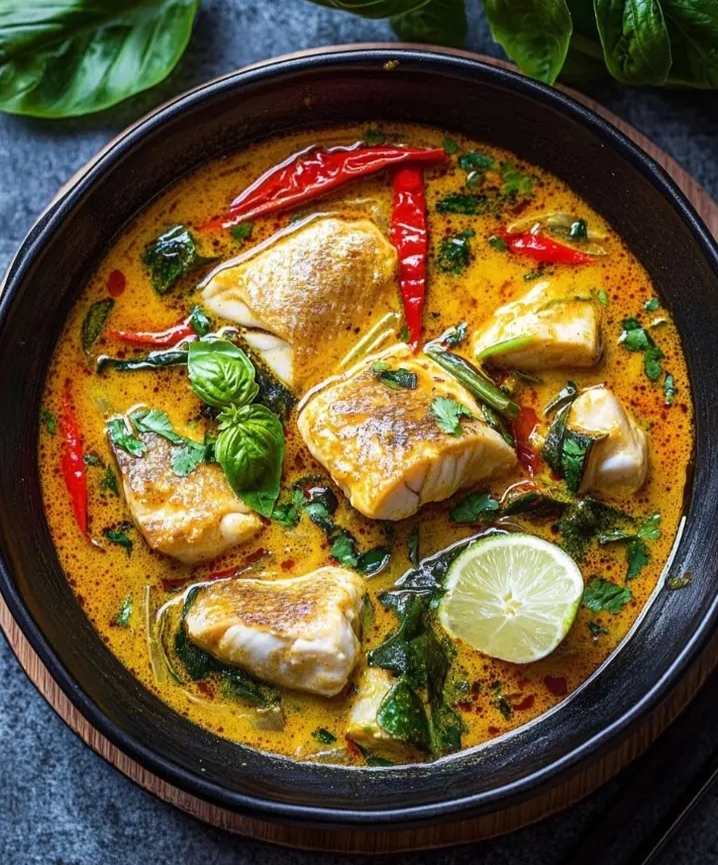
Why This Thai Fish Curry Will Win Your Heart
There’s something magical about a dish that smells like a tropical vacation while simmering on your stovetop. A few weeks ago, I decided to surprise my family with this Thai Fish Curry, and let me tell you—it was a hit! The creamy coconut milk, the fiery kick of curry paste, and tender chunks of fish came together in a symphony of flavors. My kids even asked for seconds, which is always a good sign. If you’re looking for a dish that’s comforting yet exotic, this recipe is your golden ticket.
A Little History Behind Thai Fish Curry
Thai cuisine is famous for balancing bold flavors—spicy, sour, sweet, and salty—all in one dish. Thai Fish Curry is no exception. Traditionally, this dish hails from Southern Thailand, where seafood is abundant and spices are used generously. Back in the day, families would use whatever fresh catch was available, paired with local vegetables and herbs. Over time, the recipe evolved, making its way into modern kitchens worldwide. I love how this dish connects us to Thailand’s rich culinary heritage while still feeling approachable for home cooks.
Why You’ll Love This Recipe
This Thai Fish Curry is a flavor powerhouse. It’s creamy, spicy, and tangy all at once, with tender fish and crisp veggies swimming in a fragrant sauce. Plus, it’s surprisingly easy to make! You don’t need fancy tools or hours of prep time. Just toss everything into a pot, let it simmer, and voilà—you’ve got dinner ready in under an hour. Whether you’re new to Thai cooking or a seasoned pro, this recipe will become a staple in your kitchen.
Perfect Occasions to Make This Dish
Looking for a cozy weeknight meal? This curry fits the bill. Hosting a dinner party? Impress your guests with its vibrant colors and exotic aroma. It’s also perfect for date night or a casual get-together with friends. Serve it alongside steamed rice or noodles, and watch everyone rave about your cooking skills.
Ingredients You’ll Need
- 500 g of white fish fillets (like cod, pollock, or tilapia), cut into bite-sized pieces
- 2 tablespoons of red Thai curry paste
- 400 ml can of coconut milk
- 2 tablespoons of vegetable oil
- 1 onion, thinly sliced
- 2 garlic cloves, minced
- 3 cm piece of fresh ginger, grated
- 1 red bell pepper, sliced into strips
- 1 carrot, thinly sliced
- 100 g green beans, cut into small pieces
- 1 tablespoon fish sauce
- 1 teaspoon cane sugar
- Juice of 1 lime
- Fresh cilantro leaves for garnish
- Jasmine rice for serving
Substitution Options
If you can’t find white fish, shrimp or chicken works beautifully. Swap coconut milk with almond milk for a lighter version, though the creaminess won’t be quite the same. Don’t have fresh ginger? Ground ginger can step in, but use half the amount. For vegetarians, tofu or chickpeas are great alternatives to fish. And if red curry paste isn’t available, green curry paste offers a slightly milder flavor.
Step 1: Prepare the Base of the Curry
Heat the oil in a large skillet or pot over medium heat. Add the onions, garlic, and ginger, stirring occasionally until they turn golden and release their heavenly aroma. This step is crucial because these aromatics form the foundation of your curry’s flavor. Pro tip: Don’t rush this part; take your time to let the onions caramelize slightly for extra sweetness.
Step 2: Incorporate the Curry Paste
Stir in the red curry paste and cook for 1-2 minutes. You’ll notice the paste darkening and becoming more fragrant as it sizzles in the pan. This process intensifies the spices, giving your curry a deeper, richer taste. Keep stirring to prevent burning—it only takes a moment for the paste to stick!
Step 3: Add Coconut Milk and Vegetables
Pour in the coconut milk, scraping the bottom of the pan to lift any stuck bits of curry paste. These little bits pack tons of flavor. Next, add the bell pepper, carrots, and green beans. Let everything simmer gently for 5-7 minutes until the veggies soften but retain a bit of crunch. The sauce should thicken slightly, coating the vegetables in a velvety embrace.
Step 4: Cook the Fish
Gently place the fish pieces into the simmering curry. Cover the pot and let the fish cook for 5-7 minutes. You’ll know it’s done when the flesh turns opaque and flakes easily with a fork. Be careful not to stir too vigorously—fish is delicate, and we want those lovely chunks intact. Chef’s tip: Adding the fish last ensures it stays tender and doesn’t overcook.
Step 5: Season to Perfection
Finish by stirring in the fish sauce, sugar, and lime juice. Taste and adjust the seasoning as needed. The fish sauce adds umami depth, the sugar balances the spice, and the lime brightens the whole dish. Give it a final gentle stir, and you’re ready to serve!
Timing Breakdown
- Prep Time: 15 minutes
- Cooking Time: 30 minutes
- Total Time: 45 minutes
No resting time required—this curry is best enjoyed fresh and piping hot!
Chef’s Secret
For an authentic touch, toast your curry paste briefly in the pan before adding liquids. This trick enhances the spices’ aroma and gives your curry an extra layer of complexity. Trust me, it makes a world of difference!
Fun Fact About Thai Fish Curry
Did you know that red curry paste gets its fiery red hue from dried chilies? While it might look intimidating, most store-bought pastes are mild enough for everyday cooking. Adjust the quantity based on your heat tolerance—I usually start with 2 tablespoons and go from there.
Necessary Equipment
You don’t need anything fancy to whip up this curry. A sturdy skillet or pot, a wooden spoon, a sharp knife for chopping, and measuring spoons are all you need. If you have a grater for the ginger, even better!
Storage Tips
Leftover Thai Fish Curry keeps well in the fridge for up to 3 days. Store it in an airtight container to preserve the flavors. Reheat gently on the stovetop, adding a splash of water or coconut milk to loosen the sauce. Avoid microwaving, as it can make the fish rubbery.
Freezing isn’t recommended due to the delicate nature of fish. However, you can freeze the curry base (without the fish) for up to 3 months. Simply thaw and reheat, then add fresh fish when reheating.
To keep ingredients fresh longer, store curry paste, coconut milk, and fish sauce in a cool, dark pantry. Fresh produce like ginger and limes should be kept in the fridge.
Tips and Advice
- Use fresh ingredients whenever possible—they truly elevate the dish.
- Don’t skip the lime juice; it ties all the flavors together.
- If you’re unsure about spice levels, start with less curry paste and adjust later.
Presentation Ideas
Serve your curry in shallow bowls over fluffy jasmine rice. Garnish with fresh cilantro sprigs and lime wedges for a pop of color. For a fancy touch, sprinkle some toasted coconut flakes or crushed peanuts on top. Pair with a side of cucumber salad or steamed broccoli for added freshness.
Healthier Alternatives
Here are six variations to suit different dietary needs:
- Low-Carb Version: Skip the rice and serve the curry over cauliflower rice instead.
- Vegan Option: Replace fish with tofu and use soy sauce instead of fish sauce.
- Gluten-Free Twist: Ensure your curry paste and fish sauce are gluten-free brands.
- Lighter Sauce: Use light coconut milk or mix half coconut milk with vegetable broth.
- Spice-Free: Omit the curry paste entirely and rely on ginger and garlic for flavor.
- Seafood Medley: Combine shrimp, scallops, and mussels for a seafood feast.
Mistake 1: Using Stale Curry Paste
Curry paste loses potency over time, especially if stored improperly. Always check the expiration date and store it in the fridge after opening. To avoid bland curries, give the paste a quick sniff—if it smells weak, it’s time to replace it. Practical tip: Buy smaller jars to ensure freshness.
Mistake 2: Overcooking the Fish
Fish cooks quickly, so leaving it in the pot too long can result in dry, tough pieces. Add the fish during the last 5-7 minutes of cooking and remove the pot from heat as soon as it’s opaque. Practical tip: Cut fish into evenly sized chunks for consistent cooking.
Mistake 3: Skipping the Lime Juice
The acidity of lime juice is essential for balancing the richness of coconut milk. Without it, the curry may taste flat. Always add lime juice at the end to preserve its zesty punch. Practical tip: Roll the lime on the counter before juicing to extract more liquid.
FAQs About Thai Fish Curry
What type of fish works best?
Firm white fish like cod, tilapia, or pollock holds up well in curries. Avoid delicate varieties like flounder, as they tend to fall apart during cooking.
Can I make this ahead of time?
Yes, but prepare the curry base separately and add the fish just before serving to maintain texture.
Is this dish spicy?
It depends on the curry paste. Most store-bought pastes are mild, but you can reduce the amount or omit chili altogether if preferred.
How do I thicken the sauce?
Simmer the curry uncovered for a few extra minutes to reduce the liquid. Alternatively, mix cornstarch with water and stir it in for instant thickening.
Can I use frozen vegetables?
Absolutely! Frozen peas, carrots, or green beans work fine—just add them directly without thawing.
What if I don’t have fish sauce?
Worcestershire sauce is a decent substitute, though it lacks the distinct umami of fish sauce.
Why does my curry taste bitter?
Burning the curry paste or using old spices could cause bitterness. Toast the paste gently and buy fresh ingredients.
Can I double the recipe?
Of course! Just ensure your pot is large enough to accommodate the increased volume.
How do I pick the right curry paste?
Look for brands labeled “authentic” or “traditional.” Mae Ploy and Thai Kitchen are reliable options.
What sides pair well with this dish?
Steamed jasmine rice, crusty bread, or a simple green salad complement the curry beautifully.
I hope this guide inspires you to try your hand at making Thai Fish Curry. With its vibrant flavors and ease of preparation, it’s sure to become a favorite in your household. Happy cooking!
Thai Fish Curry
Ingredients
Equipment
Method
- Heat the oil in a large skillet or pot over medium heat.
- Add the onions, garlic, and ginger, stirring occasionally until golden and aromatic.
- Stir in the red curry paste and cook for 1-2 minutes until fragrant.
- Pour in the coconut milk, scraping the bottom of the pan to lift any stuck bits.
- Add the bell pepper, carrots, and green beans, and let simmer for 5-7 minutes until vegetables soften slightly.
- Gently place fish pieces into the simmering curry, cover, and cook for 5-7 minutes until the fish is opaque.
- Stir in the fish sauce, sugar, and lime juice. Taste and adjust seasoning as needed.