
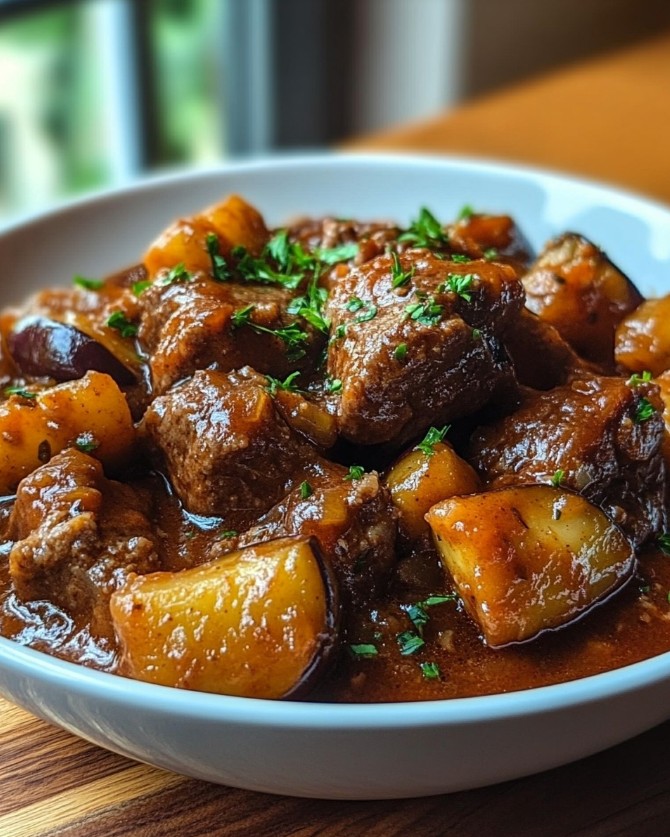
Why This Beef Eggplant Stew Will Become Your New Favorite
There’s something magical about a dish that brings warmth to your home and joy to your taste buds. I remember the first time I made Beef Eggplant Stew. It was a chilly Sunday afternoon, and my kitchen smelled like a cozy hug—rich with garlic, herbs, and slow-cooked beef. My family couldn’t stop raving about it! This stew is hearty, comforting, and packed with flavor. Whether you’re cooking for a crowd or just want leftovers for the week, this recipe is a winner.
A Little History Behind Beef Eggplant Stew
This dish has roots in French and Mediterranean cuisines, where slow-cooked stews are a staple. Traditionally, Ragoût de Bœuf à l’Aubergine combines tender beef and creamy eggplant in a rich tomato sauce. Over time, home cooks have added their own twists, like using different herbs or spices. I love how versatile it is—you can tweak it to suit your family’s tastes. Once, I even swapped out some ingredients to make it vegetarian-friendly, and it was still a hit!
Why You’ll Love This Recipe
First off, the flavors are incredible. The beef becomes melt-in-your-mouth tender, while the eggplant adds a velvety texture. Plus, it’s easy to make! You don’t need fancy techniques or expensive tools—just a good pot and some patience. The aroma alone will make your kitchen feel like a five-star restaurant. And let’s not forget how satisfying it is to serve a homemade meal that everyone loves.
Perfect Occasions to Make Beef Eggplant Stew
This stew is perfect for casual dinners, family gatherings, or even potlucks. Serve it on a cold winter night with crusty bread and a glass of red wine. It’s also great for meal prep since it tastes even better the next day. I once made it for a friend recovering from surgery, and she said it was the ultimate comfort food. If you’re looking to impress guests without spending hours in the kitchen, this dish is your secret weapon.
Ingredients You’ll Need
- 1 kg of boneless beef shoulder or ribs, cut into large cubes
- 3 medium eggplants, cubed
- ½ cup extra virgin olive oil
- 2 medium onions, diced
- 4–6 garlic cloves, finely chopped
- 2 tablespoons tomato paste
- 2 cups ripe tomatoes, blended or canned
- 3 bay leaves
- 5–6 whole allspice berries
- Salt and pepper to taste
- About 2 cups of hot water
- ½ cup finely chopped parsley
Substitution Options
If you can’t find allspice berries, use ground allspice sparingly (about ¼ teaspoon). For a lighter version, swap half the olive oil with vegetable broth. Don’t have fresh tomatoes? Canned crushed tomatoes work just as well. Vegetarians can replace the beef with mushrooms or lentils. Feel free to adjust the seasoning to match your preferences.
Step 1: Preparing the Eggplant
Start by seasoning the cubed eggplant with salt. Let it sit for 10 minutes to draw out excess moisture, which prevents sogginess. Heat a portion of olive oil in a large pot over medium-high heat. Add the eggplant and cook until golden brown on all sides. Remove with a slotted spoon and set aside. Pro tip: Pat the eggplant dry with paper towels before frying to reduce oil absorption.
Step 2: Browning the Beef
Season the beef cubes generously with salt and pepper. In the same pot, add more oil if needed and sear the beef until deeply browned on all sides. This step builds the foundation of flavor, so don’t rush it. The caramelized edges will give your stew depth and richness.
Step 3: Sautéing Aromatics
Push the beef to one side of the pot and add the onions and garlic to the empty space. Sauté for 5–6 minutes until fragrant and translucent. Stir in the tomato paste and let it toast for a couple of minutes. This enhances the umami notes in the dish. Imagine the smell—it’s heavenly!
Step 4: Simmering the Stew
Add the bay leaves, allspice berries, blended tomatoes, remaining olive oil, and enough hot water to almost cover the beef. Season with salt and pepper, then cover and simmer for an hour. Keep the heat low to avoid burning the bottom. Chef’s tip: Skim off any foam that rises to the surface for a cleaner broth.
Step 5: Checking Tenderness
After an hour and 15 minutes, check the beef with a fork. If it’s still tough, add more water if necessary and continue cooking in 15-minute intervals. Patience is key here—the longer it simmers, the tastier it gets.
Step 6: Adding the Eggplant
Once the beef is tender, stir in the reserved eggplant. Cover and cook for another 10 minutes. Finally, mix in the parsley for a burst of freshness. Your kitchen will smell amazing, and your stew will look vibrant and inviting.
Timing Breakdown
- Prep Time: 20 minutes
- Cooking Time: 1 hour 30 minutes
- Total Time: 1 hour 50 minutes
Chef’s Secret
To elevate the flavors, toast the allspice berries lightly in a dry pan before adding them to the stew. This releases their essential oils and intensifies their aroma.
An Interesting Fact About Eggplant
Eggplants belong to the nightshade family, along with tomatoes and potatoes. Despite its name, the “eggplant” isn’t related to eggs—it got its name because early varieties were small and white, resembling eggs!
Necessary Equipment
- Large heavy-bottomed pot or Dutch oven
- Wooden spoon or spatula
- Sharp knife and cutting board
- Measuring cups and spoons
Storage Tips
Let the stew cool completely before storing it in an airtight container. It keeps well in the fridge for up to 4 days. Reheat gently on the stovetop, adding a splash of water if needed. For longer storage, freeze portions in freezer-safe bags for up to 3 months.
Freezing is a lifesaver during busy weeks. Label each bag with the date so you know when to use it. Thaw overnight in the fridge before reheating.
Never store leftovers in aluminum containers, as the acidity from the tomatoes can react with the metal, affecting the taste.
Tips and Advice
- Use high-quality olive oil for the best flavor.
- Don’t overcrowd the pot when browning the beef; do it in batches if necessary.
- Taste and adjust seasonings at every stage of cooking.
Presentation Ideas
- Garnish with extra parsley for a pop of color.
- Serve in individual cast-iron skillets for a rustic touch.
- Add a dollop of crumbled feta cheese for creaminess.
Healthier Alternatives
Here are six variations to make this stew healthier:
- Leaner Protein: Use lean beef or substitute with turkey or chicken thighs.
- Vegan Version: Replace beef with chickpeas or tofu.
- Low-Sodium Option: Skip the salt and use low-sodium broth instead of water.
- Gluten-Free Twist: Serve with quinoa or gluten-free bread.
- Spicy Kick: Add chili flakes or cayenne pepper for heat.
- Herbaceous Boost: Mix in fresh basil or thyme for extra flavor.
Mistake 1: Skipping the Browning Step
Browning the beef might seem optional, but it’s crucial for developing deep flavors. Without it, your stew may taste bland. To avoid this, take the time to sear each piece properly. Tip: Work in small batches to ensure even browning.
Mistake 2: Overcooking the Eggplant
Eggplant can turn mushy if cooked too long. Add it towards the end of the process to maintain its texture. Tip: Cut the eggplant into uniform pieces for consistent cooking.
Mistake 3: Not Adjusting Seasonings
Seasoning is an ongoing process. Many people forget to taste and adjust throughout cooking. Remember to add salt gradually and taste often to achieve balanced flavors.
Frequently Asked Questions
Can I make this stew ahead of time?
Absolutely! In fact, letting it sit overnight allows the flavors to meld beautifully. Store it in the fridge and reheat gently before serving.
What can I serve with Beef Eggplant Stew?
Crusty bread, rice, or mashed potatoes pair wonderfully. For a lighter option, try serving it with a side salad.
Is this recipe kid-friendly?
Yes! Kids usually love the mild, savory flavors. You can omit the allspice if they’re sensitive to strong spices.
Can I use dried herbs instead of fresh?
Of course. Use ⅓ of the amount called for fresh herbs. For example, if the recipe calls for 1 tablespoon of fresh parsley, use 1 teaspoon of dried parsley.
How do I prevent the stew from being too oily?
Pat the eggplant dry before frying and use only enough oil to coat the pot. Skimming the surface after simmering also helps.
Can I double the recipe?
Definitely. Just make sure your pot is large enough to accommodate everything comfortably.
What type of beef works best?
Choose cuts like chuck, shoulder, or brisket, which become tender when slow-cooked.
Can I add other vegetables?
Yes! Carrots, zucchini, or bell peppers would complement the dish nicely.
How do I know when the stew is done?
The beef should be fork-tender, and the sauce should have thickened slightly. If unsure, taste a piece of meat to confirm.
Can I freeze leftovers?
Yes, this stew freezes beautifully. Portion it into smaller containers for easy reheating later.
Final Thoughts
There’s nothing quite like a bowl of Beef Eggplant Stew to bring people together. Whether you’re cooking for loved ones or simply treating yourself, this recipe promises warmth, flavor, and satisfaction. So grab your apron, gather your ingredients, and get ready to create something truly special. Bon appétit!
Beef Eggplant Stew
Ingredients
Equipment
Method
- Season cubed eggplant with salt and let sit for 10 minutes to draw out excess moisture.
- Heat olive oil in a large pot over medium-high heat, add eggplant, and cook until golden brown on all sides. Remove and set aside.
- Season the beef cubes with salt and pepper, sear in the same pot until browned on all sides.
- Push beef to one side, add onions and garlic, sauté until fragrant and translucent, then stir in tomato paste and toast for a couple of minutes.
- Add bay leaves, allspice berries, blended tomatoes, remaining olive oil, and enough hot water to almost cover the beef. Season with salt and pepper, cover, and let simmer for an hour.
- Check the beef's tenderness after an hour and 15 minutes. If needed, add more water and continue cooking in 15-minute intervals.
- Once the beef is tender, stir in the reserved eggplant, cover, and cook for another 10 minutes. Mix in parsley before serving.