
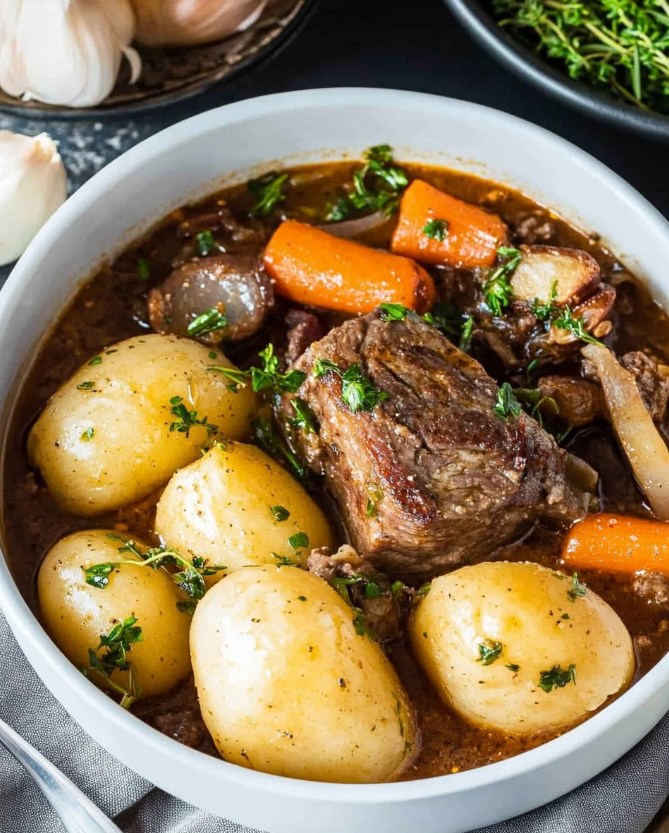
A Hearty Bowl of Comfort: Discover the Magic of Beef Stew Delight
There’s something magical about a simmering pot of stew on a chilly evening. I remember the first time I made this Beef Stew Delight for my family. The aroma of tender beef, sweet carrots, and earthy herbs filled the house, and by the time it was ready, everyone was gathered around the table with eager eyes. It’s not just food—it’s comfort in a bowl. This classic French dish, known as Pot-au-feu, is simple yet deeply satisfying. Whether you’re cooking for two or hosting a cozy dinner, this recipe will win hearts.
The Roots of Pot-au-feu: A Dish Steeped in Tradition
Pot-au-feu, which translates to “pot on the fire,” has been a staple in French households for centuries. Originally, it was a humble peasant dish designed to stretch ingredients and feed large families. Over time, it evolved into a symbol of French culinary tradition, often served during festive gatherings. When I first tried making it, I was amazed at how such basic ingredients could transform into something so rich and flavorful. The slow cooking process allows the flavors to meld beautifully, creating a dish that feels both rustic and refined.
Why You’ll Love This Recipe
This Beef Stew Delight is all about simplicity and flavor. The tender beef falls apart at the touch of a fork, while the vegetables soak up the savory broth. It’s perfect for busy weeknights because once everything is in the pot, you can relax while it simmers. Plus, the aroma alone is enough to make your home feel inviting. Whether you’re a seasoned cook or a beginner, this recipe is foolproof and rewarding.
Perfect Occasions to Prepare This Recipe
This stew shines during cold weather, making it ideal for winter dinners or holiday gatherings. Serve it as a centerpiece at a casual family meal or impress your friends with its rustic charm at a dinner party. It’s also a great dish to bring to potlucks or share with neighbors. Everyone loves a warm, comforting meal, and this Beef Stew Delight delivers just that.
Ingredients
- 560 g of beef shank with bone
- 1/2 large onion, chopped
- 2 garlic cloves, sliced
- 1.5 tablespoons olive oil
- 3/4 teaspoon salt
- 1/4 teaspoon ground black pepper
- 2 carrots, cut into chunks
- 2 bay leaves
- 2 small potatoes, peeled and cut into pieces
- 1 tablespoon tomato paste
- A splash of lemon juice
Substitution Options
- Beef: Use chuck roast or brisket if shank isn’t available.
- Vegetables: Swap carrots for parsnips or add celery for extra depth.
- Potatoes: Sweet potatoes work well for a slightly sweeter twist.
- Herbs: Replace bay leaves with thyme or rosemary for a different flavor profile.
Step 1: Sauté the Aromatics
Heat the olive oil in a medium-sized pot over medium heat. Add the chopped onion and sliced garlic, stirring occasionally until they turn translucent. The kitchen will start to smell amazing as the onions soften and the garlic releases its fragrance. This step builds the flavor base for your stew. Pro tip: Don’t rush this part—let the aromatics cook slowly to avoid burning.
Step 2: Brown the Beef
Place the beef shank in the pot, ensuring it’s coated with the onion and garlic mixture. Pour in enough water to cover the meat (about 3 cups). Season with salt and pepper, then cover the pot. Bring the liquid to a boil before reducing the heat to a gentle simmer. The beef will begin to release its juices, creating a rich broth. Chef’s tip: Skim off any foam that rises to the surface for a clearer stew.
Step 3: Add the Carrots and Bay Leaves
After 30 minutes of simmering, toss in the carrot chunks and bay leaves. The vibrant orange of the carrots adds a pop of color to the pot. Let them cook alongside the beef for an hour, allowing their sweetness to infuse the broth. Pro tip: Stir gently to prevent the carrots from breaking apart.
Step 4: Check the Beef’s Tenderness
After another hour, test the beef with a fork. If it’s still tough, continue simmering, checking every 10 minutes. Patience is key here—the longer it cooks, the more tender and flavorful it becomes. Imagine the beef practically melting in your mouth when it’s done!
Step 5: Finish with Potatoes and Tomato Paste
Once the beef is tender, add the potatoes, tomato paste, and a splash of lemon juice. Cook for 20 more minutes, or until the potatoes are fork-tender. The tomato paste adds a subtle richness, while the lemon brightens the entire dish. Remove the bay leaves before serving.
Timing
- Prep time: 15 minutes
- Cooking time: 1 hour 50 minutes
- Total time: 2 hours 5 minutes
Chef’s Secret
To elevate your Beef Stew Delight, toast the spices lightly before adding them to the pot. This enhances their aroma and adds an extra layer of flavor. Trust me, it makes a world of difference!
Extra Info
Did you know that Pot-au-feu was traditionally served in two courses? The broth was enjoyed as a soup starter, followed by the meat and vegetables as the main course. While we now serve it all together, it’s fun to imagine dining like French aristocrats!
Necessary Equipment
- Medium-sized pot with a lid
- Wooden spoon or spatula
- Sharp knife for chopping
- Cutting board
- Measuring spoons
Storage
This stew tastes even better the next day as the flavors deepen. Store leftovers in an airtight container in the fridge for up to 3 days. For longer storage, freeze portions in freezer-safe bags. Reheat gently on the stove, adding a splash of water if needed to loosen the broth.
If freezing, label the bags with the date to keep track of freshness. Thaw overnight in the fridge before reheating. Pro tip: Freeze individual servings for quick weekday lunches.
When reheating, taste and adjust seasoning as needed. Sometimes a pinch of salt or a squeeze of lemon can revive the flavors.
Tips and Advice
- Use fresh herbs for a brighter taste.
- Don’t overcrowd the pot—this ensures even cooking.
- Let the stew rest for 10 minutes before serving to allow flavors to settle.
Presentation Tips
- Serve with crusty French bread for dipping.
- Garnish with fresh parsley for a pop of color.
- Use a deep bowl to showcase the hearty ingredients.
Healthier Alternative Recipes
Here are six variations to make this stew healthier:
- Lean Protein: Substitute beef with turkey or chicken thighs for a lower-fat option.
- Low-Sodium: Use no-salt-added broth and season sparingly.
- Vegan Twist: Replace meat with mushrooms and use vegetable broth.
- Gluten-Free: Ensure all ingredients, especially the stock, are gluten-free.
- Keto-Friendly: Skip the potatoes and add cauliflower instead.
- Spicy Kick: Add red pepper flakes or a dash of hot sauce for heat.
Mistake 1: Overcooking the Vegetables
One common error is adding all the vegetables at once, which can lead to mushy results. To avoid this, add hardier veggies like carrots earlier and save softer ones like potatoes for later. Pro tip: Cut vegetables into uniform sizes for even cooking.
Mistake 2: Skipping the Browning Step
Browning the beef might seem optional, but it’s crucial for developing depth of flavor. Skipping this step can leave your stew tasting bland. Take the extra few minutes to sear the meat properly—it’s worth it!
Mistake 3: Using Too Much Water
Adding too much liquid dilutes the stew’s flavor. Stick to just enough water to cover the ingredients. If the liquid reduces too much during cooking, simply add a little more broth or water.
Mistake 4: Rushing the Cooking Process
Patience is essential for a good stew. Turning up the heat to speed things along can result in tough meat and undercooked vegetables. Keep the heat low and steady for the best results.
Mistake 5: Neglecting Seasoning Adjustments
Seasoning should be adjusted after cooking since flavors concentrate over time. Taste your stew before serving and tweak the salt, pepper, or acidity levels as needed.
FAQ: Can I Use a Slow Cooker?
Absolutely! Transfer browned beef and sautéed aromatics to a slow cooker, add remaining ingredients except potatoes, and cook on low for 6-8 hours. Add potatoes in the last 2 hours to prevent them from becoming too soft.
FAQ: How Do I Make the Broth Richer?
For a richer broth, use beef stock instead of water and stir in a teaspoon of butter or cream at the end. This adds a luxurious texture without overpowering the other flavors.
FAQ: What Can I Serve With This Stew?
Crusty bread, rice, or mashed potatoes pair beautifully with this stew. A side salad with a tangy vinaigrette can balance the richness of the dish.
FAQ: Can I Double the Recipe?
Yes! Simply double all ingredients and use a larger pot. Increase cooking time slightly to ensure the beef becomes tender. This is a great way to meal prep for the week.
FAQ: Is This Recipe Kid-Friendly?
Definitely! Kids love the mild flavors and tender textures of this stew. You can omit the black pepper or reduce the amount to suit their tastes.
FAQ: How Do I Know When the Beef Is Done?
The beef is ready when it easily shreds with a fork. If it feels tough or chewy, continue simmering and check every 10 minutes. Properly cooked beef should melt in your mouth.
FAQ: Can I Add Wine to the Stew?
Yes, adding a splash of red wine can enhance the flavor. Pour it in after browning the beef and let it reduce slightly before adding water or broth.
FAQ: What If I Don’t Have Bay Leaves?
No problem! Substitute with dried thyme or oregano for a similar herbal note. Fresh herbs work too but may require larger quantities.
FAQ: How Do I Prevent the Stew From Burning?
Keep the heat low and stir occasionally to prevent sticking. If using a stovetop, ensure the pot has a heavy bottom for even heat distribution.
FAQ: Can I Prep Ingredients Ahead of Time?
Absolutely! Chop vegetables and measure spices the night before to save time. Store prepped ingredients in separate containers in the fridge until ready to use.
This Beef Stew Delight is more than just a recipe—it’s a celebration of warmth, flavor, and togetherness. Whether you’re cooking for loved ones or treating yourself, this dish promises to satisfy. So grab your pot, gather your ingredients, and let the magic unfold. Bon appétit!
Beef Stew Delight
Ingredients
Equipment
Method
- Heat the olive oil in a medium-sized pot over medium heat.
- Add the chopped onion and sliced garlic, stirring until they are translucent.
- Place the beef shank in the pot, ensuring it’s coated with the onion and garlic mixture.
- Pour in enough water to cover the meat (about 3 cups), and season with salt and pepper.
- Cover the pot, bring to a boil, then reduce the heat to a gentle simmer.
- After 30 minutes of simmering, add the carrot chunks and bay leaves.
- Let them cook alongside the beef for an hour.
- Test the beef for tenderness after another hour; continue simmering if necessary.
- Once the beef is tender, add the potatoes, tomato paste, and a splash of lemon juice.
- Cook for an additional 20 minutes until the potatoes are fork-tender. Remove bay leaves before serving.