
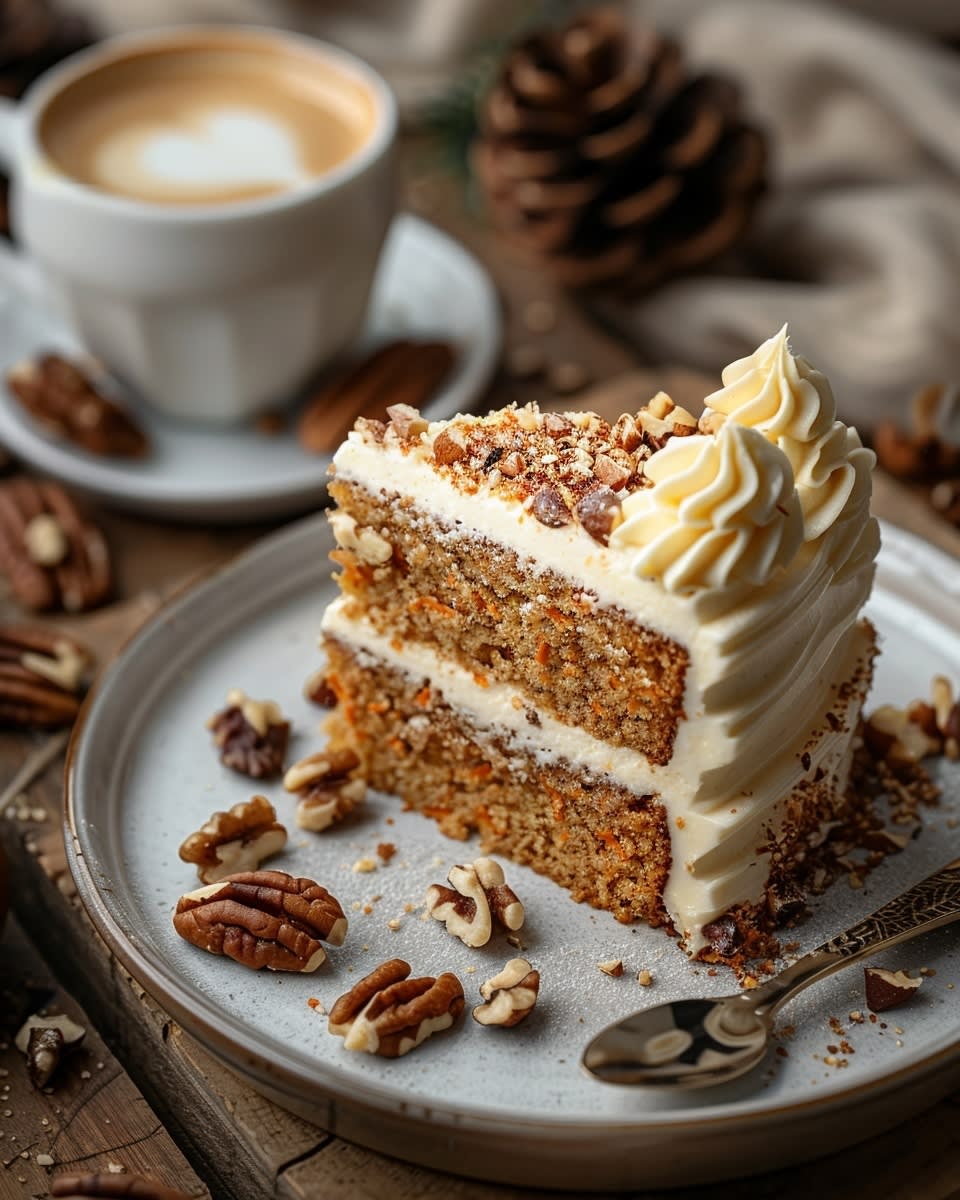
Last Tuesday, I watched my neighbor’s eyes light up as she took her first bite of my carrot cake. She grabbed my arm and said, “This is the best thing I’ve eaten all year!” That moment reminded me why I fell in love with baking in the first place. There’s something magical about a slice of perfectly moist carrot cake topped with silky cream cheese frosting. The warm spices, the tender crumb, and that sweet-tangy frosting create pure comfort on a plate.
I’ve been baking for over fifteen years, and carrot cake holds a special spot in my heart. My grandmother taught me my first recipe when I was twelve years old. We spent an entire Saturday afternoon grating carrots by hand and mixing batter in her old ceramic bowl. That cake turned out lumpy and dense, but I was hooked. Since then, I’ve tested dozens of recipes and tweaked ingredients countless times to create what friends and family now call my award winning carrot cake recipe.
A great carrot cake with frosting isn’t just about throwing carrots into cake batter. It needs the right balance of moisture, spice, and texture. The cake should be tender enough to melt in your mouth but sturdy enough to hold up under a thick layer of frosting. The spices need to warm you without overwhelming the subtle sweetness of the carrots. And that cream cheese frosting? It should be tangy enough to cut through the richness but sweet enough to satisfy your dessert cravings.
I’m sharing this recipe because it works every single time. I’ve made it for birthday parties, church bake sales, and quiet Sunday afternoons. Each time, people ask for the recipe. Each time, they can’t believe how simple it is to make. This isn’t one of those complicated recipes that requires special equipment or hard-to-find ingredients. You probably have most of what you need in your pantry right now.
Why Choose This Carrot Cake Recipe?
This moist carrot cake stands out for several good reasons. First, the texture is absolutely perfect. The cake stays moist for days without becoming soggy or falling apart. I’ve kept slices on the counter for five days, and they taste just as good as the first day. The secret lies in the combination of oil and crushed pineapple, which keeps every bite tender and flavorful.
The flavor profile hits all the right notes. Cinnamon and nutmeg provide warmth without overpowering the natural sweetness of fresh carrots. A hint of vanilla rounds out the spices. The crushed pineapple adds moisture and a subtle tropical note that makes this carrot cake with pineapple recipe truly special. You won’t taste distinct pineapple flavor, but you’ll notice something extra delicious that you can’t quite put your finger on.
I call this my award winning recipe because it actually won a blue ribbon at our county fair three years ago. I entered it on a whim, competing against bakers who had decades more experience than me. The judges praised its “exceptional moisture content” and “well-balanced spice profile.” That blue ribbon still hangs in my kitchen as a reminder that simple recipes made with care can beat fancy, complicated ones.
What makes this recipe different from other easy carrot cake recipes you’ll find online? Many recipes produce dry, crumbly cakes that need milk to wash them down. Others turn out dense and heavy, sitting like a brick in your stomach. Some rely too much on spices and end up tasting more like spice cake than carrot cake. This simple carrot cake recipe avoids all those pitfalls.
The batter comes together in about fifteen minutes. You don’t need a stand mixer or any fancy equipment. A large bowl, a whisk, and a wooden spoon are all you need. The ingredients are straightforward and affordable. No exotic extracts or specialty flours required. This is one of those carrot cake recipes from scratch that proves homemade doesn’t have to mean complicated.
The cream cheese frosting for carrot cake in this recipe is equally foolproof. It spreads smoothly without tearing the cake. It holds its shape without sliding off. And the tangy richness perfectly complements the sweet, spiced cake. I’ve tried various carrot cake frosting alternatives over the years, including buttercream and whipped cream, but nothing beats classic cream cheese frosting.
Ingredients You’ll Need
Let me walk you through what you’ll need for this carrot cake recipe best suited for any occasion. The ingredient list might look long, but don’t let that scare you. Most items are basic pantry staples.
For the cake:
- 2 cups all-purpose flour
- 2 cups granulated sugar
- 1 teaspoon baking powder
- 1 teaspoon baking soda
- 1 teaspoon salt
- 2 teaspoons ground cinnamon
- 1/2 teaspoon ground nutmeg
- 1 cup vegetable oil
- 4 large eggs
- 2 teaspoons vanilla extract
- 3 cups grated carrots (about 4-5 medium carrots)
- 1 cup crushed pineapple, drained
- 1 cup chopped walnuts or pecans (optional)
For the frosting:
- 8 ounces cream cheese, softened
- 1/2 cup butter, softened
- 4 cups powdered sugar
- 1 teaspoon vanilla extract
- Pinch of salt
Selecting the right carrots makes a real difference. Choose firm, bright orange carrots without any soft spots or wilting. Medium-sized carrots work better than those giant ones you sometimes see. The smaller carrots are sweeter and less woody. I prefer buying whole carrots and grating them myself rather than using pre-shredded bags. Fresh-grated carrots release more moisture and flavor into the batter.
When you grate the carrots, use the medium holes on your box grater. Pieces that are too large won’t distribute evenly. Pieces that are too fine turn to mush and disappear. You want visible flecks of carrot throughout each slice.
For the pineapple, grab a can of crushed pineapple packed in juice, not syrup. Drain it well before adding it to your batter. I usually put the crushed pineapple in a fine-mesh strainer and press it with a spoon to remove excess liquid. Too much liquid will make your cake soggy.
Fresh ingredients really matter in baking. Check the expiration date on your baking powder and baking soda. These lose potency over time, and old leavening agents won’t give you the rise you need. Your eggs should be at room temperature for better mixing. Take them out of the fridge about thirty minutes before you start baking.
The cream cheese and butter for the frosting must be truly softened, not melted. They should give easily when you press them with your finger but still hold their shape. If they’re too cold, you’ll end up with lumpy frosting. If they’re too warm, the frosting will be runny and won’t hold up on the cake.
I always use pure vanilla extract, never imitation. The flavor difference is noticeable, especially in the frosting where vanilla plays a starring role. A small bottle costs more upfront but lasts for months and elevates every recipe you make.


The Baking Process
Now that you’ve got everything measured and ready, let’s dive into the actual baking process. I’m going to walk you through each step exactly as I do it in my own kitchen, no skipping the little details that actually matter.
Start by preheating your oven to 350°F. Don’t rush this step. An oven that hasn’t reached the right temperature will throw off your baking time and mess with your cake’s texture. I learned this the hard way years ago when I got impatient and ended up with a sunken middle that looked like a crater.
While the oven heats up, prepare your pans. I use two 9-inch round cake pans for a classic two-layer cake. You could also use a 9×13 inch pan if you prefer a sheet cake format. Grease the pans generously with butter or cooking spray, then dust them with flour. Tap out the excess flour. This double coating ensures your cake will release cleanly after baking. Trust me on this because nothing breaks a baker’s heart quite like a beautiful cake stuck to the pan.
Here’s how I mix the batter for this carrot cake recipe best suited for beginners and experienced bakers alike. In your large mixing bowl, whisk together the flour, sugar, baking powder, baking soda, salt, cinnamon, and nutmeg. Make sure these dry ingredients are really well combined. I spend about thirty seconds whisking vigorously to break up any clumps and distribute the spices evenly.
In a separate bowl, whisk the oil, eggs, and vanilla extract until they’re smooth and slightly thickened. The mixture should look pale yellow and cohesive. This takes maybe a minute of steady whisking. You’re incorporating a bit of air here, which helps with the cake’s texture.
Pour the wet ingredients into the dry ingredients. This is where some people go wrong with easy carrot cake recipes. They either overmix or undermix. Stir gently with a wooden spoon or rubber spatula until you see no more streaks of flour. The batter will look thick and slightly grainy at this point, and that’s exactly what you want.
Add your grated carrots and drained crushed pineapple to the batter. Fold them in gently but thoroughly. I use a folding motion, scooping from the bottom of the bowl and turning the batter over on itself. This technique keeps the batter light while ensuring everything gets distributed evenly. If you’re adding nuts, fold those in at the same time.
The finished batter should be thick but pourable. It won’t look like a typical cake batter because of all the add-ins. Those shreds of carrot and bits of pineapple make it look chunky, almost more like a muffin batter. That’s perfectly normal for this moist carrot cake.
Divide the batter evenly between your prepared pans. I eyeball it most of the time, but if you want to be precise, use a kitchen scale. Each pan should get roughly the same amount so your layers bake evenly. Smooth the tops with your spatula and give each pan a gentle tap on the counter to release any air bubbles trapped in the batter.
Slide the pans into your preheated oven on the middle rack. Set your timer for 30 minutes. At the 30-minute mark, check your cakes. Insert a toothpick or wooden skewer into the center of each cake. If it comes out clean or with just a few moist crumbs clinging to it, they’re done. If you see wet batter, give them another 5 minutes and check again. My cakes usually take between 30 and 35 minutes total.
By the way, don’t open the oven door during the first 25 minutes of baking. That blast of cool air can cause your cakes to sink in the middle. I know it’s tempting to peek, but resist the urge. The oven light is your friend here.
When your cakes are done, remove them from the oven and let them cool in the pans for about 10 minutes. This cooling period lets the structure set up so the cakes won’t fall apart when you turn them out. After 10 minutes, run a thin knife around the edges of each pan to loosen any stuck spots. Place a wire cooling rack on top of the pan, flip the whole thing over, and give the bottom of the pan a firm tap. The cake should release cleanly onto the rack.
Let the cake layers cool completely before frosting them. I usually wait at least an hour. Warm cake will melt your frosting and turn the whole thing into a sliding mess. Sometimes I bake the cakes the night before I need them and let them cool overnight. This actually makes frosting easier because the cakes firm up slightly and handle better. Similar to how I approach my lemon pound cake, giving baked goods time to rest improves their texture.
One trick I picked up from a bakery where I used to work is to wrap the cooled cake layers in plastic wrap and refrigerate them for an hour before frosting. This firms them up even more and practically eliminates crumbs when you spread the frosting. Professional bakers call these refrigerated cakes “cold cakes,” and they’re much easier to work with than room temperature ones.
Perfecting the Cream Cheese Frosting
Funny enough, I’ve had more questions about the frosting than the cake itself. People worry about getting the right consistency, and I understand why. Cream cheese frosting can be tricky if you don’t know the secrets.
Make sure your cream cheese and butter are at the same temperature and properly softened. I cannot stress this enough. Cold cream cheese will give you a lumpy frosting no matter how long you beat it. Butter that’s too soft will make the frosting runny. Both should be at cool room temperature, soft enough to leave an indent when you press them but not greasy or shiny.
In your mixing bowl, beat the cream cheese and butter together until they’re completely smooth and fluffy. This takes about 2 minutes with an electric mixer on medium speed. You can do it by hand with a wooden spoon if you’re feeling ambitious, but it’ll take longer and require some serious arm strength. The mixture should look pale and creamy with no lumps visible.
Add the vanilla extract and pinch of salt. These small additions make a huge difference in balancing the sweetness. The salt especially helps cut through the richness and keeps the frosting from tasting one-dimensional.
Now add the powdered sugar gradually, about one cup at a time. Beat on low speed after each addition until the sugar is incorporated, then increase to medium speed and beat until fluffy. Adding all the sugar at once creates a snowstorm in your kitchen and leads to a grainy texture. Taking your time here pays off with silky smooth frosting.
After all the sugar is mixed in, beat the frosting on medium-high speed for about 3 minutes. This whips air into it and makes it light and spreadable. The finished cream cheese frosting for carrot cake should hold soft peaks when you lift your beater out of the bowl. It should spread easily but not run off your spatula.
If your frosting seems too thick, add a teaspoon of milk or cream and beat again. If it’s too thin, add more powdered sugar a quarter cup at a time. The consistency is easier to adjust than you might think. I’ve rescued supposedly ruined frosting more times than I can count.
Here’s the thing about frosting temperature: it matters almost as much as ingredient temperature. If your kitchen is warm and the frosting starts to soften too much while you’re working with it, pop the bowl in the refrigerator for 15 minutes. This firms it back up and makes spreading easier. During summer months, I often frost my cakes in stages, chilling between the crumb coat and final layer.
Speaking of which, let me explain the crumb coat technique. This changed my cake decorating game completely. Spread a thin layer of frosting over the entire cake first, just enough to seal in any loose crumbs. Don’t worry about how it looks at this stage. Refrigerate the cake for 20 minutes to let this layer set. Then apply your final, thick layer of frosting over the crumb coat. The result looks professional and clean, like something from a bakery. I use this same approach when I make my vanilla cupcakes for special occasions.
To assemble your two-layer cake, place one layer on your serving plate. Spread about a third of the frosting on top, leaving a small border around the edge. Place the second layer on top, pressing gently to secure it. Spread the remaining frosting over the top and sides of the cake. I like a rustic look with visible swirls, but you can smooth it out completely if you prefer a more polished appearance.
Now, about carrot cake frosting alternatives. While cream cheese frosting is traditional and absolutely delicious, I’ve experimented with other options over the years. A brown butter frosting adds nutty depth that complements the spices beautifully. Maple cream cheese frosting brings an extra layer of warmth that’s perfect for fall gatherings. For something lighter, try a whipped cream cheese frosting made by folding whipped cream into softened cream cheese with powdered sugar.
I once made this cake with a dulce de leche frosting for a friend who doesn’t love cream cheese. She still talks about it years later. The caramel notes played gorgeously with the cinnamon and nutmeg. If you’re feeling adventurous, that combination is worth trying. It’s as unexpected as pairing chocolate mousse with sea salt caramel, but it absolutely works.
Some people skip frosting altogether and dust the cake with powdered sugar or serve it with a dollop of whipped cream. While I think that’s missing out on the best part, I understand that not everyone loves super sweet desserts. The cake stands well on its own and doesn’t need frosting to be delicious. Kind of like how a plain cheesecake with berry topping is perfect in its simplicity.
Store your frosted carrot cake in the refrigerator because of the cream cheese. Take it out about 30 minutes before serving to let it come to room temperature. Cold cake is fine, but room temperature cake has better texture and more pronounced flavors. The cake keeps well for up to five days covered in the fridge, though it rarely lasts that long in my house.


Decorating Your Carrot Cake
Here’s where you can really have some fun and make this carrot cake with frosting uniquely yours. I’ve seen people get intimidated by cake decorating, thinking they need fancy piping tips and years of practice. The truth is, some of the most beautiful cakes I’ve ever made used the simplest decoration techniques.
Let me share my favorite no-fuss decorating ideas that always get compliments. The easiest approach is to embrace the “rustic elegant” look. After you’ve frosted your cake with that cream cheese frosting, use the back of a spoon or your offset spatula to create swirls and peaks in the frosting. These catch the light beautifully and give the cake texture without requiring any special skills. I literally just move my spatula in circular motions and let the frosting naturally form little waves.
Chopped pecans or walnuts pressed gently around the bottom edge of the cake create a professional-looking border. I usually take about half a cup of chopped nuts and press them into the frosting while it’s still soft, working my way around the base. This not only looks intentional and pretty, but it also hides any imperfections where the cake meets the serving plate.
For the top, I love creating a simple pattern with whole pecan halves or walnut pieces. Arrange them in a circle around the outer edge, spacing them evenly. You could also place them in the center in a little cluster. Last month, I arranged twelve pecan halves in a clock pattern for my niece’s birthday, and she thought I’d spent hours on it. Took me maybe three minutes.
Carrot curls make gorgeous garnishes that tell people exactly what kind of cake they’re about to enjoy. Use a vegetable peeler to create thin ribbons from a fresh carrot. I usually peel off about six to eight ribbons, then curl them loosely and arrange them on top of the frosted cake. Sometimes I tuck a few small mint leaves around the carrot curls for a pop of green. The color contrast is stunning, and the whole presentation looks like something from a fancy bakery.
Another technique I picked up from my friend who runs a small café is the “naked cake” style. Instead of covering the entire cake with frosting, she spreads frosting only between the layers and on top, leaving the sides bare so you can see the cake layers peeking through. This works especially well with this moist carrot cake because the texture of the cake itself is so beautiful with all those carrot shreds visible. It’s become trendy in recent years, but more importantly, it’s genuinely easier than trying to get perfectly smooth sides.
If you want to add a touch of elegance without much effort, a light dusting of cinnamon over the frosted cake creates a lovely finish. I put about a teaspoon of cinnamon in a small fine-mesh strainer and tap it gently over the cake, letting the spice fall like a delicate veil. The warm brown color complements the cream cheese frosting perfectly.
For special occasions, edible flowers take this simple carrot cake recipe to another level. I use pansies, violas, or nasturtiums from my garden in the spring and summer. Make sure any flowers you use are pesticide-free and actually edible. I arrange them across the top of the cake in a scattered pattern, like they’ve just fallen there naturally. The bright colors against the pale frosting create such a cheerful presentation.
Here’s something I did for Easter one year that people still ask me to repeat: I tinted a small amount of the cream cheese frosting with green food coloring and piped it around the base of the cake to look like grass. Then I placed chocolate eggs on top. It was adorable and took maybe ten extra minutes. Kids especially loved it, and it made the whole table feel festive.
By the way, don’t underestimate the power of a beautiful cake stand or serving plate. I collect vintage cake stands from thrift stores, and presenting even a simply decorated cake on a pretty pedestal makes it look special. The height also makes cutting and serving easier. One of my favorite stands is a milk glass one I found for five dollars that makes every cake look like it belongs at a wedding.
For those of you who want to try piping but don’t have fancy equipment, here’s a trick. Put some frosting in a plastic zip-top bag, seal it, and snip off a tiny corner. You can pipe simple dots, lines, or even write messages with this makeshift piping bag. I’ve written “Happy Birthday” on dozens of cakes this way, and no one ever knew I didn’t use proper piping equipment.
Speaking of personalization, I always think about who I’m making the cake for when I decorate. My mom loves understated elegance, so for her birthday I keep decorations minimal with just a few candied orange slices on top. My best friend adores anything sparkly, so her cakes always get edible gold leaf or pearl dust. My neighbor’s son is obsessed with dinosaurs, so yes, I’ve topped this award winning carrot cake recipe with plastic dinosaurs before. The cake itself doesn’t change, but that personal touch makes it memorable.
Something else worth mentioning is that carrots themselves provide valuable vitamins and minerals like vitamin A, which is essential for eye health and immune function. While we’re making dessert here, it’s nice to know there’s at least some nutritional benefit hiding in that delicious cake. I always joke that the carrots make it practically a health food, though I don’t think anyone actually believes me.
For those following easy carrot cake recipes for the first time, don’t stress about making your decorations perfect. Some of my favorite cakes have been the ones where I just went with the flow and let things happen naturally. That slightly messy, homemade look tells people you made it yourself with love, and there’s something really appealing about that authenticity.
One final decoration idea that’s become my signature: I save a small amount of unwhipped cream and mix it with a tablespoon of caramel sauce, then drizzle it over the top of the frosted cake just before serving. The sauce runs down the sides in these gorgeous amber streaks that look elaborate but take about thirty seconds to create. People always assume it’s some complicated technique.
The beauty of working with this carrot cake recipes from scratch approach is that you control everything, including how it looks. There’s no right or wrong way to decorate. I’ve seen people cover the entire cake in shredded coconut to look like a snowball. I’ve seen others press crystallized ginger pieces into the frosting for adults who appreciate that spicy-sweet kick. Someone once told me they topped theirs with candied bacon, and you know what? I bet it was delicious.
Whether you’re making this for a quiet afternoon treat or a celebration, the decoration should reflect the occasion and your personality. That’s what transforms a recipe into your own creation. Over the years, I’ve made countless cakes, and honestly, some of my simplest decorated ones have gotten the most praise. When you’re exploring other dessert options and sweet treats, you’ll find the same principle applies across the board.
So there you have it. Everything I know about decorating this carrot cake with pineapple in ways that look impressive without requiring culinary school training. Start simple, have fun with it, and don’t be afraid to try something different. The worst that happens is you eat a slightly funny-looking but absolutely delicious cake.
Making this award winning carrot cake recipe and decorating it your own way is one of those small joys that makes baking so rewarding. Every time I pull a finished cake from the oven and start thinking about how to make it beautiful, I feel that same excitement I did as a kid helping my grandmother. That’s the magic of baking, and I hope you feel it too when you make this recipe.
FAQs
What makes this carrot cake recipe the best?
This recipe stands out because of its exceptional moisture and perfect spice balance. The combination of oil and crushed pineapple keeps the cake tender for days without becoming soggy. The ratios have been tested and refined over fifteen years to create a cake that’s neither too dense nor too light. It’s also incredibly reliable and works every single time, which isn’t something you can say about every recipe. Finally, it uses simple ingredients you likely already have, making it accessible for any baker.
Can I use canned pineapple instead of fresh pineapple?
Absolutely, and I actually recommend canned crushed pineapple over fresh for this recipe. Canned pineapple is already broken down and distributes more evenly throughout the batter. Look for pineapple packed in juice rather than syrup to avoid extra sweetness. Just make sure to drain it thoroughly by pressing it in a strainer before adding it to your batter. Fresh pineapple contains enzymes that can sometimes affect the cake’s texture, so canned is actually the better choice here.
Are there any substitutes for cream cheese in the frosting?
If you can’t use cream cheese, mascarpone makes an excellent substitute with a slightly milder flavor and equally smooth texture. Greek yogurt cream cheese works well too, though it’s a bit tangier. For a dairy-free option, vegan cream cheese brands like Kite Hill or Miyoko’s work surprisingly well when combined with vegan butter. You could also try a simple buttercream made with butter, powdered sugar, milk, and vanilla, though you’ll lose that characteristic tangy flavor. Brown butter frosting is another delicious alternative that complements the spices beautifully.
How do I store the carrot cake to keep it fresh?
Store your frosted carrot cake covered in the refrigerator because of the cream cheese frosting. I usually place it in a cake carrier or cover it loosely with plastic wrap to prevent it from absorbing fridge odors. It keeps well for up to five days this way. Take it out about thirty minutes before serving to let it come to room temperature for the best flavor and texture. If you’ve baked the cake but haven’t frosted it yet, you can wrap the layers tightly in plastic wrap and freeze them for up to three months.
Is this carrot cake suitable for people with dietary restrictions?
The basic recipe contains gluten, dairy, and eggs, so it’s not suitable for people with those restrictions without modifications. However, you can make substitutions to accommodate different needs. For gluten-free, use a 1:1 gluten-free flour blend. For dairy-free, use vegan cream cheese and butter in the frosting. For egg-free, try using flax eggs (1 tablespoon ground flaxseed mixed with 3 tablespoons water per egg, let sit for 5 minutes). I haven’t tested all these modifications personally, so you may need to adjust baking times slightly.
Can I make this carrot cake ahead of time?
Yes, this cake actually benefits from being made ahead. The flavors meld and improve after a day in the refrigerator. I often bake the layers a day or two before I need them, wrap them tightly in plastic wrap, and refrigerate until I’m ready to frost. You can frost the cake up to two days before serving and keep it refrigerated. For longer storage, freeze the unfrosted cake layers for up to three months. Just thaw them in the refrigerator overnight before frosting.
Why did my carrot cake turn out dense?
A dense carrot cake usually results from one of three issues: overmixing the batter, using too many add-ins, or inaccurate measurements. Make sure you’re measuring flour correctly by spooning it into the measuring cup and leveling it off rather than scooping directly from the bag. Mix the batter just until the ingredients are combined, as overmixing develops too much gluten and creates a tough texture. Also check that your baking powder and baking soda are fresh and haven’t expired.
Can I make cupcakes instead of a layer cake with this recipe?
Definitely! This batter makes excellent carrot cake cupcakes. Line a muffin tin with paper liners and fill each cup about two-thirds full. Bake at 350°F for 18-22 minutes, checking with a toothpick at the 18-minute mark. The recipe yields approximately 24 standard cupcakes. Let them cool completely before frosting. I use the same cream cheese frosting and pipe it on with a large star tip for a bakery-style look, or just spread it on with a knife for something more casual.
What can I do if my cream cheese frosting is too runny?
Runny frosting usually means the cream cheese or butter was too warm when you mixed it. Refrigerate the frosting for 20-30 minutes to firm it up. If it’s still too soft after chilling, beat in additional powdered sugar a quarter cup at a time until you reach the right consistency. Another option is to add a tablespoon or two of cornstarch, which will thicken it without adding much sweetness. In the future, make sure your cream cheese and butter are softened but still cool to prevent this issue.
Do I have to use pineapple in this carrot cake recipe?
While the pineapple adds wonderful moisture and a subtle flavor depth, you can omit it if you prefer. Replace it with an equal amount of applesauce or an extra cup of grated carrots. The cake will still be delicious and moist, just slightly different in texture. Some people don’t like any hint of pineapple flavor in their carrot cake, and that’s perfectly fine. I’ve made it both ways many times, and both versions have their fans. The pineapple version stays moister for longer, but the version without is more traditionally spiced and carrot-forward.
There’s nothing quite like slicing into a homemade carrot cake and seeing faces light up around your table. Whether you stick to the classic recipe or add your own creative touches, remember that baking is as much about the joy of creating as it is about the final result. So grab those carrots, preheat that oven, and get ready to make something truly special.
Ingredients
Equipment
Method
- Preheat your oven to 350°F (175°C).
- Grease two 9-inch round cake pans with butter and dust with flour.
- In a large mixing bowl, whisk together flour, sugar, baking powder, baking soda, salt, cinnamon, and nutmeg.
- In a separate bowl, whisk the oil, eggs, and vanilla extract until smooth and slightly thickened.
- Pour the wet ingredients into the dry ingredients and stir gently until combined.
- Add grated carrots and drained crushed pineapple to the batter, folding gently until well mixed.
- Divide the batter evenly between the prepared pans and smooth the tops.
- Bake for 30-35 minutes, checking for doneness with a toothpick.
- Let the cakes cool in the pans for 10 minutes before transferring them to a wire rack to cool completely.
- While the cakes cool, prepare the cream cheese frosting by mixing cream cheese and butter until smooth.
- Add vanilla extract and salt, then gradually incorporate powdered sugar until fluffy.
- Once cakes are cooled, frost the top of one layer, place the second layer on top, and frost the top and sides of the cake.