
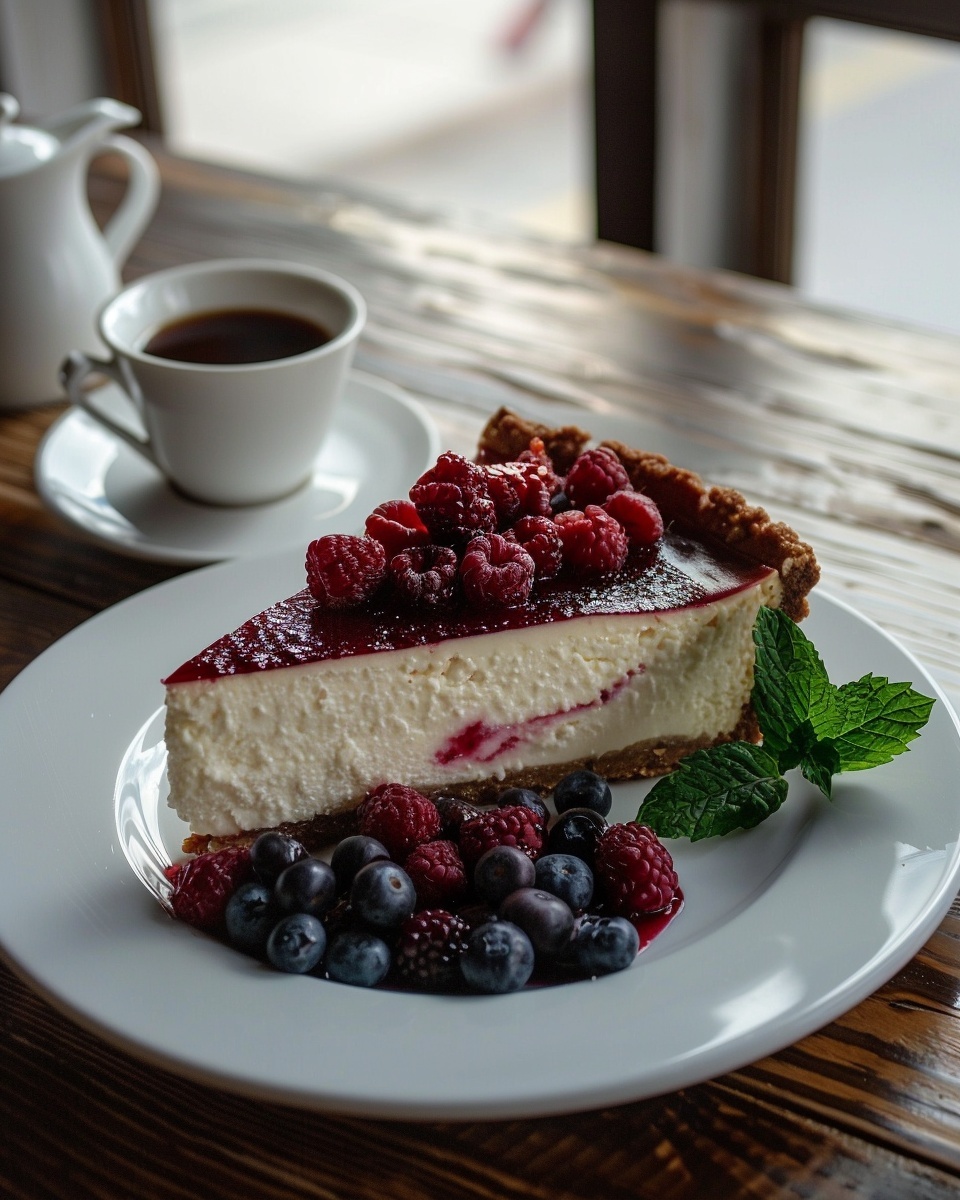
Why I Fell in Love with Cheesecake and Berries
Last summer, I showed up to my sister’s birthday party with a store-bought cake. Everyone was polite, but I could tell it didn’t impress anyone. The next month, I decided to try something different. I made my first cheesecake with berry topping, and everything changed. My nephew asked for thirds. My mother-in-law requested the recipe. Even my picky brother-in-law cleaned his plate.
That moment taught me something important. A homemade dessert carries weight that no store-bought option ever will. The creamy texture of cheesecake paired with fresh berries creates magic on your taste buds. The best part? It’s easier to make than most people think.
I’ve been making this dessert for three years now. I’ve served it at holiday dinners, backyard barbecues, and quiet Sunday evenings at home. Each time, it disappears faster than I expect. There’s something about the contrast between smooth cheesecake and bright, tangy berries that makes people come back for more.
What Makes This Cheesecake with Berry Topping Special
You might wonder why this recipe stands out from other desserts. I’ve tried my share of cakes, pies, and puddings over the years. Nothing gets the same reaction as a well-made cheesecake topped with fresh berries.
The texture alone sets it apart. The filling is dense but somehow light at the same time. It melts on your tongue without feeling heavy. The graham cracker crust adds a satisfying crunch that balances everything perfectly. Then you add those berries on top, and suddenly you have layers of flavor and texture working together.
Here’s what I love most about this dessert:
- It looks impressive but doesn’t require advanced baking skills
- You can make it a day ahead, which saves time during busy occasions
- The berry topping can change with the seasons or your personal taste
- It works for both casual dinners and fancy celebrations
- Leftovers taste just as good as the first slice (if you have any left)
I also appreciate how forgiving this recipe is. My first attempt had a small crack on top. I panicked until I realized the berry topping would cover it completely. No one ever knew about my mistake.
The Berry Topping That Changes Everything
The topping is where you can really make this dessert your own. I’ve experimented with strawberries, blueberries, raspberries, blackberries, and even mixed combinations. Each type of berry brings something different to the table.
Strawberries are my go-to choice for spring and early summer. They’re sweet, familiar, and everyone loves them. I slice them into quarters so each bite includes a piece of berry with the cheesecake.
Blueberries work beautifully if you want something slightly less sweet. They hold their shape well and create a gorgeous purple-blue color when you cook them down with a little sugar. My kids call this the “purple cheesecake,” and they request it for their birthdays.
Raspberries add a tart punch that cuts through the richness of the cream cheese. They’re perfect if you prefer desserts that aren’t too sweet. The seeds don’t bother me, but if they bother you, you can strain them out.
I usually pick whatever berries look best at the farmers market or grocery store. Fresh berries always taste better than frozen ones for the topping. That said, I’ve used frozen berries in the winter when fresh ones cost too much or look sad and pale.
Planning Your Cheesecake Success
Timing matters when you make this dessert. You can’t bake a cheesecake an hour before guests arrive. It needs time to cool and set properly. I learned this lesson the hard way when I tried to rush the process for a dinner party. The center was still wobbly, and I ended up serving ice cream instead.
Now I always bake my cheesecake the day before I need it. This gives it plenty of time to chill in the refrigerator. The flavors also improve overnight. Something about letting it rest makes the whole dessert taste more balanced and smooth.
The berry topping can be made ahead too. I often prepare it the morning of the event and keep it in a container in the fridge. Then I spoon it over the cheesecake about an hour before serving. This keeps the crust from getting soggy and makes everything look fresh.
Gathering Everything You Need
Before you start baking, take ten minutes to gather all your ingredients. This simple step prevents those annoying moments when you realize you’re out of vanilla extract halfway through the recipe.
For the cheesecake itself, you’ll need cream cheese as your main ingredient. I buy the full-fat blocks, not the spreadable kind in a tub. The block cream cheese has the right texture and firmness for cheesecake. Make sure it’s at room temperature before you start. Cold cream cheese creates lumps that are hard to mix out.
You’ll also need sugar to sweeten the filling, eggs to bind everything together, and vanilla extract for flavor. The vanilla adds depth without overpowering the cream cheese taste. I use pure vanilla extract, not the imitation stuff. The difference is noticeable.
The crust requires graham crackers and butter. You can buy pre-made graham cracker crumbs if you want to save time. I prefer crushing whole crackers myself because the texture turns out better. Plus, it’s satisfying to smash things when you’ve had a stressful day.
For the berry topping, you need fresh berries, a bit more sugar, and lemon juice. The lemon juice brightens up the berry flavor and keeps everything from tasting flat. Don’t skip it. That small squeeze of lemon makes a bigger difference than you’d expect.
Here’s a quick checklist for your shopping trip:
- 32 ounces cream cheese (four 8-ounce packages)
- Granulated sugar
- Four large eggs
- Pure vanilla extract
- Graham crackers or crumbs
- Butter
- Fresh berries (about 2 cups)
- One lemon
I keep these basic ingredients on hand during berry season. That way, I can make this dessert whenever the mood strikes or when unexpected guests drop by.
Setting Up Your Kitchen
Your tools matter almost as much as your ingredients. You don’t need fancy equipment, but a few key items will make your life easier.
A springform pan is essential for cheesecake. This pan has removable sides that let you release the cake without flipping it over. I use a 9-inch pan for this recipe. If you only have an 8-inch pan, the cheesecake will be taller and need a bit more baking time.
You’ll want an electric mixer for beating the cream cheese. I’ve tried mixing by hand, and it’s exhausting. The mixer creates a smooth, lump-free filling in a fraction of the time.
A roasting pan large enough to hold your springform pan comes in handy for the water bath. The water bath keeps the cheesecake from cracking and drying out. I’ll explain more about this technique when we get to the baking section.
Finally, grab a medium saucepan for cooking the berry topping. You’ll simmer the berries with sugar and lemon juice until they break down into a thick, syrupy sauce.
Now that you understand why this dessert works so well and what you need to make it, you’re ready to start baking. The process is straightforward, and the results will make you look like a professional pastry chef. Trust me on this.


Mixing the Perfect Cheesecake Filling
With everything laid out in front of you, it’s time to get your hands dirty and start bringing this dessert to life. First things first, turn your oven to 325°F. I know it seems early to preheat when you haven’t even mixed anything yet, but ovens take longer to heat than you think. Mine takes a solid fifteen minutes, and I’ve learned not to rush this part.
Before you touch anything else, make absolutely sure your cream cheese is sitting at room temperature. I mean it. This isn’t one of those suggestions you can ignore. Cold cream cheese straight from the fridge will create lumps that no amount of mixing can fix. I leave mine on the counter for at least an hour before I start. If you forgot to take it out early, you can unwrap it and microwave each block for about ten seconds. Just don’t overdo it or you’ll end up with melted cream cheese, which creates a whole different problem.
Grab your large mixing bowl and dump in all four blocks of cream cheese. Using your electric mixer on medium speed, beat it until it looks completely smooth. This usually takes me about two minutes. You want zero lumps. Run your spatula around the edges of the bowl a few times because cream cheese loves to hide in corners where the beaters can’t reach it.
Once your cream cheese looks silky and smooth, start adding the sugar gradually. I add mine in three or four batches, beating well between each addition. The mixture will get lighter and fluffier as you go. This process incorporates air into the filling, which helps create that perfect creamy texture everyone loves. By the way, this is the same technique I use when I make vanilla cupcakes, and it works just as well for cheesecake.
Now comes the egg portion, and this is where some people get nervous. Here’s the thing about adding eggs to cheesecake filling. You need to add them one at a time and mix gently. Crack the first egg into a small bowl first, just to make sure there are no shell pieces. Then add it to your cream cheese mixture. Beat on low speed until it’s just combined. Don’t overbeat once the eggs go in. Too much mixing at this stage creates air bubbles that can cause cracks later.
Repeat this process with the remaining three eggs. After the last egg is mixed in, add your vanilla extract. I use about two teaspoons, though I’ve been known to add an extra splash when no one’s looking. The vanilla smell at this point is incredible. It reminds me of my grandmother’s kitchen on Sunday mornings.
Your filling should now look smooth, creamy, and pourable. If you see any lumps floating around, mix for another thirty seconds on low speed. Pour this beautiful mixture into your prepared graham cracker crust. Use a spatula to smooth the top, making it as even as you can. Don’t stress about getting it perfectly flat. The baking process will level it out somewhat, and remember, the berry topping covers everything anyway.
The Water Bath Technique That Saves Your Cheesecake
I need to talk about something that changed my cheesecake game completely. The water bath. When I first heard about this technique, I thought it sounded unnecessarily complicated. Why would I put my cheesecake pan inside another pan filled with water? Seems weird, right?
Then I tried it, and I understood. The water bath creates a humid environment in your oven that prevents the cheesecake from drying out and cracking. The gentle, moist heat cooks the filling evenly from edge to center. Without it, the edges can overcook while the middle stays raw. I learned this lesson after several cracked cheesecakes that looked more like earthquake maps than desserts.
Here’s how I do it. Take your springform pan with the filled cheesecake and wrap the entire bottom and sides with heavy-duty aluminum foil. Use two layers if your foil is thin. This prevents water from seeping into your pan and creating a soggy crust. I’ve had water leak in before, and trust me, soggy graham cracker crust is nobody’s friend.
Place your wrapped springform pan inside a larger roasting pan. Put both pans on your oven rack while it’s still pulled out. Now fill the roasting pan with hot water until it comes about halfway up the sides of the springform pan. I boil water in my kettle and carefully pour it into the roasting pan. Careful is the key word here. Hot water and sudden movements don’t mix well.
Slide the whole setup into your preheated oven and close the door gently. The cheesecake will bake for fifty to sixty minutes. My oven usually takes the full sixty minutes, but yours might be different. The cheesecake is done when the edges look set and slightly puffed, but the center still jiggles a little when you gently shake the pan. That jiggle freaks people out. They think it means the cheesecake is raw. It’s not. That wobble in the middle will firm up as the cheesecake cools.
Cooling Without Rushing
This is where patience becomes your best friend. When your timer goes off and your cheesecake looks done, turn off the oven but don’t open the door yet. Let the cheesecake sit in the closed oven for about an hour. This gradual temperature change prevents sudden cooling, which can cause cracks. I usually crack the oven door open just a tiny bit after thirty minutes to let the temperature drop even more slowly.
After an hour of hanging out in the cooling oven, carefully remove the roasting pan. Watch out for that hot water still sitting in there. I’ve almost dumped it on myself more times than I’d like to admit. Remove the springform pan from the water bath and place it on a wire cooling rack. Peel off the aluminum foil. Let the cheesecake cool to room temperature on your counter.
This cooling process takes another hour or two. I know it feels like forever. Funny enough, the waiting is actually harder than the actual baking. My kids always hover around the kitchen asking when they can try it. I have to remind them that patience makes better dessert, which is something my mother always told me when I wanted to eat cookies straight from the oven.
Once the cheesecake reaches room temperature, cover it loosely with plastic wrap and stick it in the refrigerator. It needs at least four hours to set completely, but overnight is even better. I always make mine the night before I need it. The texture improves dramatically with a full night of chilling. It becomes firmer, sliceable, and somehow even more flavorful.
Creating the Berry Topping That Makes People Ask for Seconds
While your cheesecake is doing its thing in the fridge, you can make the berry topping. This part is quick and easy, which is a nice change after all that careful measuring and mixing. I usually make the topping the same day I plan to serve the cheesecake, though you can make it up to two days ahead if you want.
Rinse your berries under cold water and let them drain well. If you’re using strawberries, remove the green tops and slice them into quarters. Other berries can go in whole. Toss them into a medium saucepan along with about half a cup of sugar. The exact amount depends on how sweet your berries are and your personal taste. I sometimes use a bit less sugar if my berries are super ripe and sweet.
Squeeze in the juice from half a lemon. That’s roughly two tablespoons if you want to measure it, but I usually just eyeball it. The lemon juice does something magical to the berries. It brightens the flavor and keeps the topping from tasting one-dimensional. This is similar to how a bit of cinnamon transforms an apple pie from good to unforgettable.
Turn your burner to medium heat and let the mixture come to a gentle simmer. Stir it occasionally with a wooden spoon. The berries will start releasing their juice, and the sugar will dissolve. After about ten minutes, the berries will break down and the liquid will thicken into a syrupy consistency. If you want a thicker topping, let it cook a few minutes longer. For a looser, more sauce-like topping, take it off the heat sooner.
Some berries break down faster than others. Raspberries practically dissolve into sauce. Blueberries hold their shape better but still soften nicely. Strawberries fall somewhere in the middle. I sometimes mash them lightly with my spoon to help them along, especially if I want a smoother topping without distinct berry pieces.
Once your topping reaches the consistency you like, remove it from the heat and let it cool completely. I transfer mine to a glass container and pop it in the fridge. Cold berry topping on cold cheesecake just tastes right. Room temperature topping works too, but I prefer everything chilled.
The beauty of making your own berry topping is the control you have over texture and sweetness. Store-bought toppings often taste artificial and way too sweet. When you make it yourself, you can adjust everything to match your preferences. Plus, your kitchen will smell amazing while those berries simmer. It’s the same comforting feeling I get when making brownies and the chocolate scent fills the whole house.
When you’re ready to serve your cheesecake, spoon the berry topping over the top. I usually do this about an hour before guests arrive so it looks fresh but has time for the flavors to mingle slightly. Some people prefer to slice the cheesecake first and add topping to individual pieces. That works too, especially if you’re serving different toppings for picky eaters.


Serving Your Cheesecake Like a Pro
The moment has finally arrived. Your cheesecake has been chilling overnight, the berry topping is ready, and you’re about to slice into your creation. I still get a little nervous during this part, even after making dozens of these desserts. There’s something about that first cut that feels important, like you’re revealing what you’ve worked so hard to create.
Before you slice anything, run a thin knife under hot water and dry it off. Make your first cut with this warm knife. The heat helps it glide through the dense filling without dragging or creating a mess. After each slice, wipe the knife clean and run it under hot water again. This might seem fussy, but it makes a huge difference in how clean your slices look. My slices used to come out all smushed and jagged until my neighbor showed me this trick.
To remove the springform pan sides, carefully unlatch the clasp and gently lift the metal ring straight up. If the cheesecake sticks to the sides, run a knife around the edge first. The cheesecake should stay on the bottom of the pan, which becomes your serving plate. Some people like to transfer it to a fancy cake stand, but I’m always too scared I’ll drop it halfway through the move.
When cutting portions, I usually get about twelve slices from a 9-inch cheesecake. Rich desserts like this don’t need to be served in massive pieces. A modest slice is plenty, especially after a big meal. I’ve noticed people appreciate smaller portions because they can always go back for seconds without feeling guilty about taking a huge piece the first time around.
Spoon your berry topping over the entire cheesecake right before serving, or add it to individual slices as you plate them. I prefer the second method because it keeps the crust crispy longer and lets people control how much topping they want. My father-in-law likes tons of berries. My daughter prefers just a small spoonful. Plating individually keeps everyone happy.
Here’s where you can get creative with presentation. A dollop of freshly whipped cream on the side looks elegant and adds another layer of texture. I make mine by beating heavy cream with a tiny bit of sugar and vanilla until soft peaks form. Takes maybe three minutes, but it elevates the whole dessert. A light dusting of powdered sugar through a fine-mesh sieve adds a professional bakery look. Fresh mint leaves tucked next to the berry topping bring a pop of color and a subtle freshness.
By the way, the contrast between the cold, creamy cheesecake and the slightly tart berry topping is what makes each bite interesting. If you really want to impress people, serve it on chilled plates. I stick mine in the freezer for ten minutes before plating dessert. Seems like a small detail, but cold plates keep the cheesecake from softening too quickly at the table, especially during warm weather.
Storing Leftovers the Right Way
If you somehow have leftovers, and that’s a big if in my house, proper storage keeps your cheesecake tasting fresh for days. I cover my springform pan base with plastic wrap, making sure it’s sealed tight against the surface of the cheesecake. Air is the enemy here. It dries out the filling and can make it absorb weird refrigerator smells. Nobody wants their cheesecake tasting like leftover onions.
Another option is transferring individual slices to airtight containers. This works great if different people in your family eat dessert at different times. My kids love finding a slice waiting for them in the fridge after school. I stack slices between layers of parchment paper to keep them from sticking together. The berry topping stores separately in its own container, and I add it fresh to each slice when serving. This prevents the crust from getting soggy over time.
Properly stored cheesecake lasts about five days in the refrigerator. Honestly, I’ve never had one sit around that long. It usually disappears within two or three days. The texture stays remarkably consistent throughout that time. Day three cheesecake tastes just as good as day one cheesecake, which is more than I can say for most desserts.
Freezing cheesecake is absolutely possible, and I do it whenever I want to make dessert way ahead of time. Wrap individual slices or the whole cheesecake tightly in two layers of plastic wrap, then cover that with aluminum foil. This double protection prevents freezer burn. Frozen cheesecake keeps for up to three months. I write the date on the foil with a marker because I’ve definitely found mystery desserts in my freezer before and had no idea how long they’d been there.
When you’re ready to eat frozen cheesecake, move it to the refrigerator and let it thaw slowly overnight. Don’t try to speed up the process by leaving it on the counter or using the microwave. Gradual thawing maintains the texture. I learned this after microwaving a frozen slice once and ending up with a weird, separated mess. Add fresh berry topping after thawing rather than freezing the cheesecake with topping already on it. The berries get mushy when frozen and thawed.
Common Mistakes and How I Fixed Them
I’ve messed up cheesecakes in just about every way possible, which means I can save you from making the same mistakes. Let me share the problems I’ve encountered and what actually worked to fix them.
The biggest issue I dealt with was cracking. My first several cheesecakes looked like the Grand Canyon had opened up across the top. Turns out I was overbaking them and not using a water bath. Once I started pulling the cheesecake out when the center still jiggled and letting it cool gradually, the cracking stopped. Temperature shock causes cracks more than anything else. Slow and steady wins the race with cheesecake.
Another problem was a grainy texture instead of smooth and creamy. This happened because I didn’t bring my cream cheese to room temperature and tried to mix cold ingredients. The lumps never fully worked themselves out. Now I’m religious about letting everything sit on the counter first. Room temperature ingredients blend together seamlessly and create that silky texture everyone expects from cheesecake.
I also struggled with soggy crusts until I started wrapping my springform pan really well before the water bath. Water seeping in ruins all your hard work on that graham cracker base. Two layers of heavy-duty foil solved the problem completely. Some people use special silicone pans designed for water baths, but the foil method works just fine for me.
One time I tried to slice my cheesecake while it was still warm because I was in a hurry. The knife dragged through the soft filling and created an absolute disaster. The slices looked terrible, and the filling kind of oozed everywhere. That taught me to respect the chilling time. Patience isn’t optional with cheesecake. It’s a required ingredient.
Customizing Your Berry Topping Throughout the Year
The versatility of this dessert keeps it from getting boring. I rotate my berry choices based on what’s in season and what my family is craving. Summer brings incredible strawberries and raspberries at the farmers market. Fall means I switch to a mixed berry combination using whatever looks good at the store. Winter sometimes forces me to use frozen berries, and that’s okay too.
I’ve also experimented with adding other flavors to the berry topping. A tiny pinch of cinnamon in with blueberries creates a more complex taste. A splash of orange juice instead of lemon juice gives strawberries a different twist. Fresh basil chopped into raspberry topping sounds weird but tastes amazing. Don’t be afraid to play around once you’ve made the basic version a few times.
For holidays, I match the berries to the occasion. Red strawberries and white whipped cream look festive for Fourth of July. Mixed berries in red and blue work for patriotic celebrations. Raspberries feel fancy enough for New Year’s Eve. Strawberries seem romantic for Valentine’s Day. These small touches make the dessert feel special and intentional rather than just something you threw together.
While we usually think of desserts as indulgent treats, choosing fresh berries does add nutritional value compared to other toppings. Berries provide antioxidants, vitamins, and fiber, making them a smarter choice than something like chocolate sauce or caramel. If you’re interested in balancing treats with nutritious meals throughout your week, fresh fruit toppings let you enjoy dessert with a bit less guilt.
Making This Recipe Your Own
Once you’ve mastered the basic recipe, you can start tweaking things to match your taste. I know people who add lemon zest to the filling for a citrus note. Others swirl in some chocolate for a marble effect. A tablespoon of sour cream mixed into the filling creates an even tangier flavor that some folks prefer.
The crust offers room for creativity too. Chocolate graham crackers instead of regular ones add richness. Vanilla wafer cookies crushed up make a sweeter base. Gingersnap cookies create a spicy kick that pairs surprisingly well with berries. I tried a pretzel crust once that brought a salty-sweet thing to the table. It wasn’t my favorite, but my brother loved it.
You can also play with the sweetness level. If you prefer less sweet desserts, reduce the sugar in both the filling and the berry topping. Add more lemon juice to increase the tartness. I’ve made versions with half the sugar that still tasted great, especially when using super ripe, naturally sweet berries. Everyone’s taste is different, and that’s what makes cooking personal.
If you enjoy experimenting with desserts and trying different flavor combinations, you might want to explore more options in our collection of dessert recipes where you’ll find plenty of inspiration for your next baking adventure. There’s something satisfying about building a repertoire of desserts you can make confidently whenever the occasion calls for it.
Final Thoughts on Making This Dessert Your Go-To
This cheesecake has earned its place as my most-requested dessert for good reason. It delivers impressive results without requiring professional skills or exotic ingredients. The combination of creamy filling, crunchy crust, and bright berry topping hits all the right notes. After you make it once or twice, the process becomes second nature. You’ll stop checking the recipe and just know what comes next.
The real magic happens when you see people’s faces light up after that first bite. That moment makes all the mixing, baking, and waiting worth it. Whether you’re making this for a special celebration or just because Tuesday feels like cheesecake day, you’re creating something that brings people together and makes memories. And honestly, that’s what good food is supposed to do.
Frequently Asked Questions About Cheesecake with Berry Topping
Can I make this cheesecake without a springform pan?
You technically can use a regular cake pan, but getting the cheesecake out becomes really tricky. I tried this once using a regular pan lined with parchment paper, and while it worked, the presentation suffered. The springform pan makes life so much easier because you can remove the sides without disturbing the delicate filling. If you bake regularly, a springform pan is worth the investment. They’re not expensive, and you’ll use it more than you think.
Why did my cheesecake sink in the middle after cooling?
A sunken center usually means the cheesecake was overbaked or the oven temperature was too high. When the filling gets too hot, it puffs up dramatically in the oven, then collapses as it cools. This happened to me when my oven was running hot and I didn’t realize it. An oven thermometer helps ensure your temperature is accurate. Also, remember that slight jiggle in the center when you pull it out. That jiggle is your friend, not something to fear.
Can I use a different type of crust besides graham crackers?
Absolutely! Graham crackers are traditional, but plenty of alternatives work beautifully. Oreo cookies crushed up make a chocolate crust that my kids go crazy for. Vanilla wafers create a sweeter, more delicate base. Digestive biscuits work if you can find them. Even crushed nuts mixed with butter and a little sugar can form a crust, though it’s a bit more crumbly. The ratio stays the same regardless of what you use.
How do I know when my cheesecake is actually done baking?
This confused me for ages until I figured out what to look for. The edges should be set and slightly puffed, with just a bit of browning. The center should still wobble when you gently shake the pan, kind of like Jello. It won’t look fully set, and that’s correct. An instant-read thermometer should read about 150°F in the center if you want to be precise. The cheesecake continues cooking as it cools, so pulling it out while it still jiggles prevents overcooking.
What should I do if my cheesecake cracks despite my best efforts?
First, don’t panic. Cracks happen even to experienced bakers. The berry topping covers most imperfections perfectly. I’ve also spread a thin layer of sour cream mixed with a bit of sugar over the top while the cheesecake is still warm, then returned it to the oven for five minutes. This creates a smooth surface that hides cracks. Whipped cream spread over the top works too. Nobody needs to know what’s hiding underneath.
Can I make mini cheesecakes instead of one large one?
Yes, and they’re actually adorable. Use a muffin tin lined with paper liners. Put a small amount of crust in each cup, add filling about three-quarters full, and bake at the same temperature for about twenty minutes. Mini cheesecakes are perfect for parties because everyone gets their own portion. They also cool and set much faster than a full-size cheesecake. I make these when I’m short on time or when I want to offer multiple topping choices.
Is it necessary to use full-fat cream cheese, or can I substitute low-fat?
I strongly recommend sticking with full-fat cream cheese for the best texture and flavor. Low-fat versions have more water content and less fat, which affects how the cheesecake sets. I tried reduced-fat cream cheese once to cut calories, and the texture came out kind of rubbery and strange. The taste wasn’t as rich either. Cheesecake is already an indulgent dessert, so you might as well make it with ingredients that deliver the best results. Save the calorie-cutting for another day.
How far in advance can I make the berry topping?
The berry topping keeps well in the refrigerator for about three days. I usually make it a day or two before I need it, which actually improves the flavor as the berries macerate and the flavors blend together. Store it in an airtight container and give it a stir before using. If liquid separates from the berries, that’s normal. Just stir it back together. You can also freeze berry topping for up to two months if you want to make a big batch when berries are cheap and in season.
What’s the best way to transport a cheesecake to someone else’s house?
I’ve transported many cheesecakes to parties and family gatherings, and the key is keeping it cold and stable. Leave the cheesecake on the springform pan base and place it inside a cake carrier if you have one. If not, put it on a flat tray or cutting board. Keep it in a cooler with ice packs during transport, especially in warm weather. Bring the berry topping separately and add it right before serving. This prevents the topping from sliding around during the drive and keeps everything looking fresh.
Can I add alcohol to the berry topping for an adult version?
Definitely! A splash of liqueur takes the berry topping to another level for adult gatherings. Grand Marnier works beautifully with strawberries. Chambord enhances raspberries. A bit of amaretto complements mixed berries nicely. Add about two tablespoons toward the end of cooking and let it simmer for a minute so the alcohol cooks off slightly but the flavor remains. I make both an adult version and a kid-friendly version when I’m serving mixed company. Just label them clearly so nobody gets confused about which is which.
Ingredients
Equipment
Method
- Preheat the oven to 325°F (163°C).
- Allow cream cheese to sit at room temperature for at least an hour.
- In a large mixing bowl, beat the cream cheese until smooth using an electric mixer.
- Gradually add sugar in three or four batches, beating well after each addition.
- Add eggs one at a time, mixing gently on low speed after each addition.
- Beat in vanilla extract until well combined.
- Prepare the graham cracker crust by mixing crumbs and melted butter, then press into the bottom of a springform pan.
- Pour the cheesecake filling into the prepared crust and smooth the top.
- Wrap the springform pan in heavy-duty aluminum foil to prevent water seeping in.
- Place the springform pan into a larger roasting pan and fill the roasting pan with hot water halfway up the sides of the springform.
- Bake the cheesecake for 50 to 60 minutes until the edges are set but the center jiggles slightly.
- Turn off the oven and let the cheesecake cool in the closed oven for an hour.
- Remove the springform pan from the water bath and let it cool to room temperature.
- Cover cheesecake with plastic wrap and refrigerate for at least 4 hours or overnight.
- Rinse the fresh berries and prepare the topping by simmering them in a medium saucepan with sugar and lemon juice until syrupy.
- Cool the berry topping to room temperature, then refrigerate until ready to serve.
- When ready to serve, spoon the berry topping over the cheesecake or individual slices.