
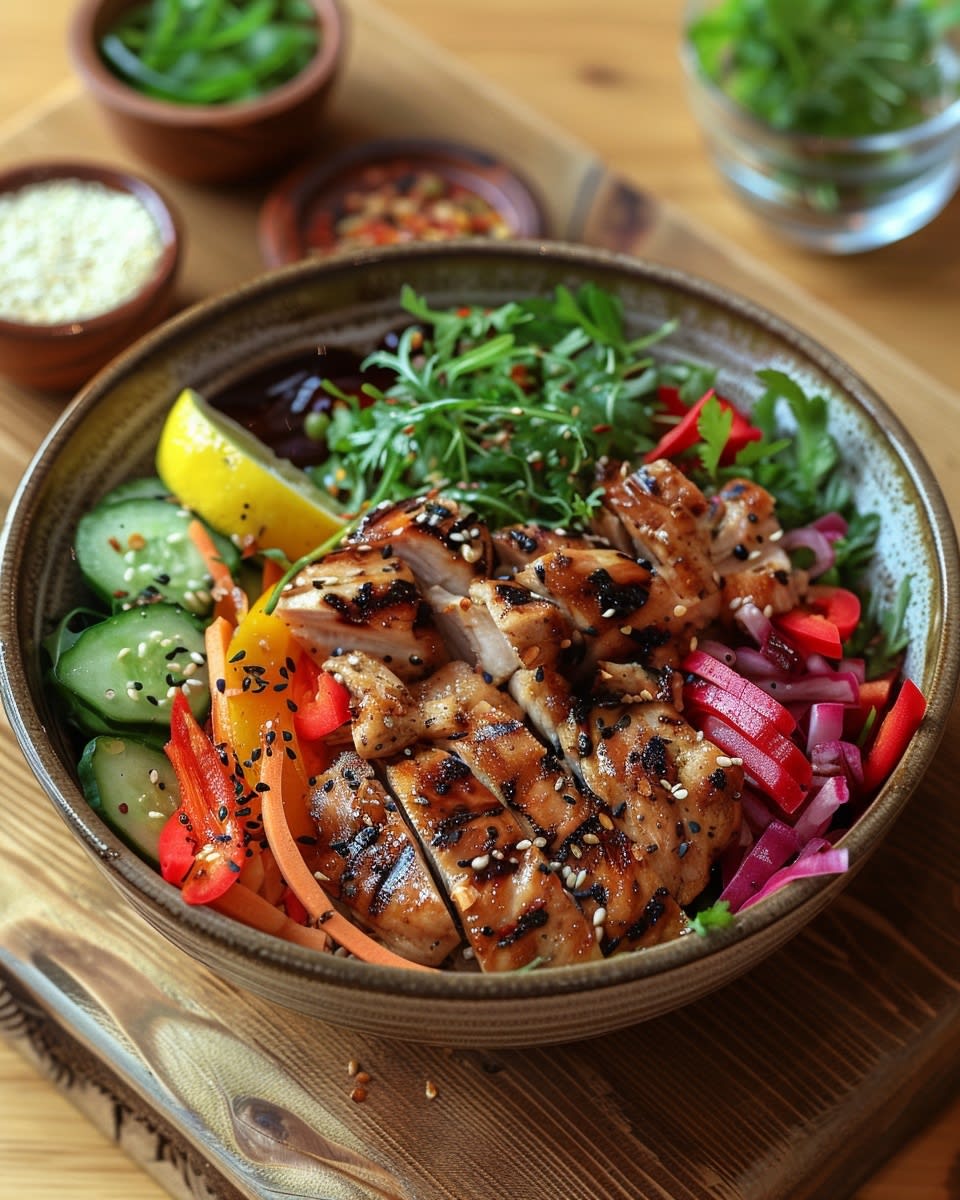
Why I’m Obsessed with My Chicken Buddha Bowl with Veggies
Last Tuesday, I stood in front of my open fridge at 6 PM with zero energy and even less motivation to cook. You know that feeling, right? I almost reached for my phone to order takeout. But then I remembered my go-to savior: the Chicken Buddha Bowl with Veggies. Within 30 minutes, I had a colorful, filling meal that made me feel amazing instead of sluggish. That’s the magic of this dish.
I’ve been making Buddha bowls for about three years now. They started as my Sunday meal prep ritual and quickly became something I genuinely looked forward to eating. No joke, my coworkers used to gather around during lunch just to see what combination I’d created that week. The best part? These bowls never get boring because you can mix and match ingredients based on what you have or what sounds good.
A Chicken Buddha Bowl with Veggies solves so many mealtime problems at once. It’s quick to throw together. It uses simple ingredients you probably already have. It satisfies your hunger for hours. And it actually tastes good, which seems obvious but you’d be surprised how many healthy meals fail this basic test.
What makes this meal special is the balance. You get protein, fiber, healthy fats, and carbs all in one bowl. Your body gets everything it needs without you having to think too hard about nutrition rules or calorie counting. I love that I can eat until I’m satisfied and still feel light and energized afterward.
What Exactly Is a Chicken Buddha Bowl with Veggies?
Let me break down what we’re actually talking about here. A Buddha bowl gets its name from its rounded, overflowing appearance. Some people say it looks like Buddha’s belly. Others think it resembles the rounded shape associated with Buddhist monks’ bowls. Either way, the name stuck.
At its core, a Buddha bowl is a one-bowl meal that combines different food groups in a balanced way. Think of it as a deconstructed, super flexible meal where everything lives together in harmony. There’s no strict recipe. The concept is more like a formula you can adapt to your tastes and dietary needs.
The basic structure includes:
- A base layer of grains or greens
- A quality protein source
- A variety of colorful vegetables
- Healthy fats like avocado or nuts
- A flavorful sauce or dressing to tie it all together
For our Chicken Buddha Bowl with Veggies, the star protein is obviously chicken. I usually use grilled or baked chicken breast, but leftover rotisserie chicken works perfectly too. The chicken provides lean protein that keeps you full and helps maintain muscle mass.
The veggie component is where you can really have fun. I rotate through whatever looks fresh at the market. Roasted sweet potatoes, crispy broccoli, raw shredded carrots, cucumber slices, cherry tomatoes, and red cabbage are my usual suspects. Each vegetable brings its own nutritional superpowers to the bowl.
Here’s what I love about the individual components and why they work so well together:
Chicken delivers high-quality protein without excess fat. A four-ounce serving gives you about 35 grams of protein. That’s huge for muscle repair, keeping your metabolism active, and staying satisfied between meals. Chicken also contains B vitamins that help convert food into energy. When I skip protein at lunch, I’m hungry again by 3 PM. With chicken in my bowl, I easily make it to dinner.
Leafy greens like spinach or kale form a nutrient-dense base. They’re loaded with vitamins A, C, and K, plus minerals like iron and calcium. The fiber content helps with digestion and keeps your gut happy. I used to think salads were boring until I started treating greens as a foundation rather than the whole meal.
Colorful vegetables each bring unique benefits. Orange and red veggies like carrots and bell peppers pack antioxidants. Cruciferous vegetables like broccoli support your body’s natural detox processes. Purple cabbage contains compounds that fight inflammation. When I see a rainbow of colors in my bowl, I know I’m feeding my body well.
Whole grains like brown rice, quinoa, or farro provide complex carbohydrates. Your brain runs on carbs, so don’t let anyone tell you they’re the enemy. These grains release energy slowly, preventing the blood sugar spike and crash you get from refined carbs. Plus, they add a satisfying, hearty element that makes the bowl feel like a complete meal.
Healthy fats from avocado, nuts, or seeds help your body absorb fat-soluble vitamins from all those vegetables. They also make the meal more satisfying and add great texture. Half an avocado or a tablespoon of tahini in your dressing makes a big difference in how full you feel.
The magic happens when you combine all these components. Each ingredient has a job to do. The chicken rebuilds and repairs. The vegetables provide vitamins and minerals. The grains give you lasting energy. The fats help everything work together. It’s like assembling a sports team where every player has a specific role.
I remember the first time I really understood this concept. I’d been eating “healthy” meals that were basically plain chicken and steamed broccoli. I felt deprived and hungry all the time. Then I discovered Buddha bowls and realized healthy eating doesn’t mean suffering through bland food. It means bringing together ingredients that both nourish your body and make your taste buds happy.
The Chicken Buddha Bowl with Veggies fits perfectly into any eating style too. You can make it paleo by skipping grains and adding more veggies. You can go low-carb by using cauliflower rice. You can make it dairy-free, gluten-free, or whatever-free you need. The flexibility means you’ll never get tired of it.
What really sells me on this meal is how good I feel after eating it. There’s no food coma, no regret, no wishing I’d chosen something else. Just steady energy and satisfaction. That’s exactly what a meal should do.


Gathering Your Ingredients for the Perfect Chicken Buddha Bowl
Now that you understand why this bowl works so well, let’s get into the actual fun part: building your own. I’m going to walk you through exactly what you need, but remember, this isn’t one of those recipes where you fail if you don’t have the exact ingredient. Think of these as guidelines rather than commandments.
Here’s the thing about Buddha bowls that took me way too long to figure out. You don’t need to run to three different specialty stores. Most of what you need is probably sitting in your kitchen right now. And if it’s not? You can swap it out. I once made an amazing version using leftover chicken from Monday’s dinner and whatever random vegetables were hiding in my crisper drawer. It turned out better than some of my carefully planned versions.
For the chicken portion, I typically grab about one pound of boneless, skinless chicken breasts. That usually feeds two people generously or gives me leftovers for the next day. Sometimes I use chicken thighs instead because they’re more forgiving if you accidentally overcook them. Thighs have more fat, which means more flavor and moisture. Your choice really depends on your preference and what’s on sale.
The marinade is where the chicken goes from boring to crave-worthy. I mix together three tablespoons of olive oil, two tablespoons of lemon juice, three minced garlic cloves, a teaspoon of paprika, half a teaspoon of cumin, and salt and pepper to taste. Sometimes I throw in a tablespoon of soy sauce for extra depth. My neighbor once asked why my apartment always smells so good on meal prep Sundays. It’s definitely the garlic and spices working their magic.
As for vegetables, this is truly where your personality can shine through. I usually pick about five different types to keep things interesting. Broccoli florets are almost always in my bowl because they roast up so nicely with crispy edges. One large crown gives you plenty. Red and yellow bell peppers add sweetness and crunch. I use one of each, sliced into strips. They’re also gorgeous, which matters more than people think. We eat with our eyes first.
Shredded carrots bring that natural sweetness and bright orange color. Two medium carrots, either julienned or run through a grater, work perfectly. Cherry tomatoes, about a cup’s worth, add juicy bursts of flavor. I leave them whole because I’m lazy, but also because they look like little jewels scattered across the bowl. Purple cabbage, thinly sliced, gives you that satisfying crunch and gorgeous color. A quarter of a small head is plenty.
By the way, if you’re the type who likes things super organized, similar to how people approach their morning toast routine, you can prep all these vegetables on Sunday and store them in separate containers. Then assembling your bowl during the week takes literally five minutes.
For the base layer, I rotate between brown rice, quinoa, and sometimes cauliflower rice when I’m feeling virtuous. About three-quarters of a cup of cooked grains per bowl hits the sweet spot. Brown rice is my comfort choice. Quinoa feels fancier and cooks faster. I prepare whichever one sounds good that week, usually making a big batch because cooked grains keep for days in the fridge.
The toppings section is where things get really personal. Half a ripe avocado, sliced, adds creaminess that makes everything taste richer. A quarter cup of toasted nuts works beautifully. I alternate between sliced almonds, chopped walnuts, and cashews. They add crunch and healthy fats. Sesame seeds, both white and black, look fancy sprinkled on top and taste slightly nutty. A tablespoon is enough to make a difference.
Fresh herbs shouldn’t be overlooked either. Cilantro, parsley, or even fresh basil can transform the whole vibe of your bowl. I tear up a small handful and scatter it over everything right before eating. The brightness they bring is unmatched. Sometimes I add a squeeze of lime juice too, especially if I’m going for more of an Asian-inspired flavor profile.
For the dressing, I keep three variations in rotation. My everyday go-to is a simple tahini-lemon dressing. I whisk together three tablespoons of tahini, juice from one lemon, one minced garlic clove, two tablespoons of water to thin it out, and salt to taste. It’s creamy, tangy, and goes with absolutely everything. When I want something with more kick, I make a ginger-miso dressing using two tablespoons of white miso paste, one tablespoon of rice vinegar, one teaspoon of grated fresh ginger, one tablespoon of sesame oil, and a splash of water. The umami factor is off the charts.
My third option is a honey-mustard vinaigrette that feels more familiar if you’re new to Buddha bowls. Two tablespoons of Dijon mustard, one tablespoon of honey, three tablespoons of olive oil, one tablespoon of apple cider vinegar, and a pinch of salt. Shake it all up in a jar and you’re done. It reminds me of dressings from childhood, but grown up.
Putting It All Together: Step-by-Step Preparation
Okay, ingredients assembled. Now comes the actual cooking, which is honestly simpler than you’d think. I’ve streamlined this process over countless attempts, including several memorable failures that taught me what not to do.
Start with the chicken because it needs time to marinate. Place your chicken breasts in a shallow dish or a zip-top bag. Pour that marinade over them, making sure every surface gets coated. I usually massage the marinade into the meat a bit because I’m hands-on like that. Let it sit for at least thirty minutes at room temperature, or up to four hours in the fridge if you’re planning ahead. Funny enough, I used to think marinating was optional until I did a side-by-side test. The marinated version won by a landslide.
While the chicken marinates, you can prep your vegetables. This overlapping of tasks is exactly how I manage to pull together a seemingly complex meal without losing my mind. For roasting vegetables, I heat my oven to 425°F. That high heat is crucial for getting those caramelized edges that make roasted vegetables addictive instead of sad.
Toss your broccoli and bell peppers with about two tablespoons of olive oil, salt, and pepper on a large baking sheet. Spread everything out in a single layer. Crowding is the enemy of crispiness. I learned this the hard way after steaming vegetables in the oven multiple times because I’d piled them too close together. Roast for about twenty to twenty-five minutes, flipping halfway through. You want some charred spots and tender-crisp texture.
Here’s a trick I picked up from a cooking show I was watching while folding laundry one night. If you want your vegetables to have different textures, add them to the pan at different times. Broccoli can handle the full roasting time, but if you prefer your bell peppers less soft, add them ten minutes in. Cherry tomatoes only need about ten minutes total, or they’ll burst and get mushy. I sometimes roast them separately on a small pan.
For cooking the chicken, I have two preferred methods depending on my mood and the weather. Grilling gives you those beautiful char marks and a slightly smoky flavor. Heat your grill to medium-high, about 375°F. Oil the grates so nothing sticks. Grill the chicken for about six to seven minutes per side. The internal temperature should hit 165°F when you check it with a meat thermometer. Let it rest for five minutes before slicing. This resting period lets the juices redistribute instead of running all over your cutting board.
The indoor method involves baking, which I honestly use more often because I can’t always be bothered to fire up the grill. Preheat your oven to 400°F. Place the marinated chicken on a lined baking sheet. Bake for about twenty to twenty-five minutes until it reaches that magic 165°F. The exact time depends on how thick your chicken breasts are. I sometimes pound them to an even thickness with a meat mallet, which sounds aggressive but really helps with even cooking.
Once the chicken rests, slice it against the grain into strips. This makes it way easier to eat mixed into your bowl. Nobody wants to saw through a whole chicken breast with a fork while trying to catch runaway quinoa.
If you went with raw vegetables like shredded carrots, cucumber, or cabbage, just prep those while everything’s cooking. A sharp knife or a mandoline slicer makes quick work of it. I find this kind of repetitive chopping weirdly meditative, almost like how some people find comfort in their simple morning cereal ritual. There’s something grounding about it.
Now for the assembly, which is honestly my favorite part. I use wide, shallow bowls that give me plenty of real estate to arrange everything prettily. Start with your base. Spoon about three-quarters of a cup of your chosen grain into the bottom of the bowl. I spread it out a bit rather than leaving it in a mound.
Next, arrange your vegetables in sections around the bowl. I place the roasted broccoli in one section, bell peppers in another, shredded carrots in a third, and so on. This creates that Instagram-worthy segmented look, but it’s not just for show. When you dig in, your fork can grab different combinations with each bite, which keeps things interesting. Some bites might be chicken with avocado and tahini. Others might be broccoli with sesame seeds and rice. Every forkful is a new experience.
Place your sliced chicken right in the center or in its own section. I sometimes fan it out because I’ve watched too many food styling videos and can’t help myself. Add your avocado slices, scatter your nuts and seeds, and finish with those fresh herbs.
The dressing goes on right before eating, not before storing. This keeps everything from getting soggy if you’re meal prepping. I usually pour mine in a small container on the side, then drizzle it over the bowl when I’m ready to eat. Some people like to toss everything together. Others prefer keeping sections separate and mixing as they go. Neither approach is wrong.
One last thing I’ll mention because it changed my Buddha bowl game completely. Temperature contrast matters more than I realized. Having some warm components like the chicken and roasted vegetables combined with cool elements like raw vegetables and avocado makes each bite more dynamic. It’s similar to how a well-built breakfast wrap balances different temperatures and textures. Your mouth stays interested instead of getting bored halfway through.
If you’re meal prepping these for the week, store the components separately in airtight containers. Cooked chicken keeps for three to four days. Roasted vegetables stay good for about four days. Grains last even longer, up to five days. Raw vegetables keep their crunch for about three days. Assemble fresh each day for the best experience. It takes maybe three minutes to throw together when everything’s already cooked.
The beauty of having this system down is that you can apply it to so many other meals. Once you understand the formula, you start seeing possibilities everywhere. Leftover grilled salmon with quinoa from dinner? That’s basically a Buddha bowl waiting to happen. Add some vegetables and dressing, and boom, you’ve got lunch.
I make these bowls at least twice a week now. They’ve become such a staple that my partner knows if I’m roasting vegetables on Sunday, we’re eating well all week. There’s something deeply satisfying about opening your fridge and seeing organized containers of colorful, healthy food ready to go. It feels like you’re taking care of your future self, which honestly, you are.


Endless Ways to Customize Your Chicken Buddha Bowl with Veggies
Here’s what I love most about the whole Buddha bowl concept. Once you nail the basic formula, you can twist it in about a million different directions without ever feeling like you’re eating the same thing twice. I get bored easily with food, which is probably why meal plans with identical meals every day never worked for me. But Buddha bowls? They’re like a choose-your-own-adventure book where every chapter is delicious.
Let’s talk protein swaps first because chicken isn’t everyone’s favorite, and honestly, sometimes I just need a break from it. Tofu is my go-to alternative when I want something lighter. I use extra-firm tofu, press out the water for about twenty minutes between paper towels, then cube it and marinate it just like I would chicken. The texture gets crispy on the outside when you pan-fry it in a little oil over medium-high heat. My trick is to leave it alone once it hits the pan. Don’t fiddle with it constantly or it’ll never develop that golden crust. About four minutes per side does the job.
Shrimp works beautifully when I’m craving something that cooks in under five minutes. I toss them with garlic, paprika, and a squeeze of lime, then sauté them until they turn pink and curl up. The whole process takes maybe four minutes total. Shrimp makes the bowl feel fancy without any extra effort. My mom used to say shrimp was for special occasions, but I’ve decided Tuesday night counts as special enough.
Salmon brings those omega-3 fatty acids everyone’s always talking about. I usually buy a filet, season it simply with salt, pepper, and dill, then bake it at 400°F for about twelve minutes. It flakes apart perfectly over the bowl and adds this richness that pairs especially well with Asian-inspired dressings. Sometimes I’ll use canned salmon when I’m being budget-conscious. Nobody needs to know, and it tastes great mixed with a good sauce.
For my vegetarian friends, chickpeas are seriously underrated as a protein source. I drain and dry a can of chickpeas, toss them with cumin, chili powder, and olive oil, then roast them at 400°F for about thirty minutes until they’re crunchy. They’re like little flavor bombs scattered throughout the bowl. You can also use black beans, kidney beans, or lentils. Lentils especially have this earthy, satisfying quality that makes the bowl feel grounding.
Steak turns your Buddha bowl into something you’d happily serve to guests. I use flank steak or sirloin, season it liberally, and either grill it or pan-sear it to medium-rare. Let it rest, slice it thin against the grain, and fan it over your bowl. Suddenly your healthy lunch feels like a celebration. I did this once when my brother visited, and he couldn’t believe something this good for you could taste this indulgent.
Now, seasonal vegetables are where you can really have fun and keep your bowls aligned with what’s fresh and affordable. In spring, I load up on asparagus, snap peas, radishes, and baby spinach. Asparagus gets roasted until the tips are crispy. Snap peas stay raw for that sweet crunch. Radishes, sliced thin, add a peppery bite that wakes up your palate. Everything feels light and energizing, which matches how I want to feel as the weather warms up.
Summer brings tomatoes, zucchini, corn, cucumbers, and all the peppers you could want. I grill zucchini in thick slices, cut fresh corn off the cob, and let tomatoes shine in their peak ripeness. Cherry tomatoes basically taste like candy in July. Sometimes I’ll add fresh peaches or strawberries to summer bowls because fruit in savory dishes is underrated. The sweetness against tangy dressing and grilled chicken is something you need to experience.
When fall arrives, I shift to heartier vegetables like butternut squash, Brussels sprouts, beets, and kale. I cube butternut squash and roast it with a touch of cinnamon and maple syrup. Brussels sprouts get halved and roasted until the edges are almost burnt, which is when they taste best. Beets, either roasted or bought pre-cooked because I’m not always ambitious, add earthiness and that gorgeous deep red color. Fall bowls feel more substantial, like they’re preparing you for cooler weather.
Winter Buddha bowls feature sweet potatoes, cauliflower, cabbage, and hardy greens like chard. Sweet potatoes become the star, roasted until caramelized and almost creamy inside. Cauliflower florets roast up with curry powder for warmth. Red cabbage provides crunch when everything else is soft and roasted. These bowls comfort me on dark January evenings when I need food that feels like a hug.
Let’s address dietary modifications because Buddha bowls accommodate basically everyone. For gluten-free eaters, just stick with naturally gluten-free grains like rice, quinoa, or millet. Check your soy sauce and use tamari instead, which delivers the same umami without wheat. Most Buddha bowl components are already gluten-free anyway, so you’re mostly just watching your sauce ingredients.
Dairy-free is even easier since traditional Buddha bowls don’t typically include dairy. Your dressings might have yogurt, so swap in coconut yogurt or stick with oil-based dressings. I actually prefer dairy-free versions because they feel lighter and don’t leave that heavy feeling some creamy dressings cause.
For low-carb or keto approaches, replace grains with cauliflower rice or just double up on leafy greens. Add extra healthy fats through avocado, nuts, seeds, and oil-rich dressings. Use fattier proteins like salmon or chicken thighs. You still get that complete meal feeling without the carbs if that’s your thing. I’ve done this when I felt like my energy was dragging, and honestly, it worked.
Paleo followers can skip grains entirely and load up on sweet potatoes, vegetables, and compliant proteins. Use paleo-friendly dressings made with olive oil, lemon, and herbs. It’s basically a meat and vegetable plate arranged beautifully in a bowl, which sounds simple but tastes anything but boring.
If you’re vegan, obviously skip the chicken and double down on plant proteins like tofu, tempeh, beans, or lentils. Add nutritional yeast to dressings for a cheesy flavor. Tahini becomes your best friend. I’ve made vegan versions for friends that even my meat-loving partner devoured without complaint. The key is making sure you have enough protein and fat so the bowl stays satisfying.
Dressing variations deserve their own spotlight because the sauce really does make or break the bowl. Beyond the three I mentioned earlier, here are some others I rotate through. My creamy avocado-lime dressing uses half an avocado, juice from one lime, a handful of cilantro, one garlic clove, two tablespoons of olive oil, and enough water to blend it smooth. It’s green, gorgeous, and tastes like liquid guacamole. Drizzle it over everything.
For an Asian peanut sauce, I whisk together three tablespoons of natural peanut butter, two tablespoons of rice vinegar, one tablespoon of soy sauce, one teaspoon of sesame oil, one teaspoon of honey, and a pinch of red pepper flakes. Add water until it reaches drizzle consistency. This one’s dangerously good. I’ve been known to eat it with a spoon straight from the jar, which I’m not proud of but also not sorry about.
A cilantro-lime vinaigrette brings brightness that cuts through richer ingredients. Blend together a big handful of cilantro, juice from two limes, one garlic clove, quarter cup of olive oil, a teaspoon of honey, and salt to taste. It’s herby, tangy, and makes everything taste fresher. This one’s especially good with shrimp or fish bowls.
My mango-ginger dressing comes out during summer when mangoes are everywhere. Blend half a ripe mango with one tablespoon of grated ginger, two tablespoons of rice vinegar, one tablespoon of olive oil, and a squeeze of lime. It’s sweet, spicy, and tropical. Completely different vibe from any other dressing I make, which keeps things exciting.
For something Mediterranean-inspired, I make a lemon-herb tahini sauce with three tablespoons of tahini, juice from one lemon, one tablespoon of fresh dill, one tablespoon of fresh parsley, one minced garlic clove, and water to thin. It reminds me of a vacation I took to Greece where everything tasted like sunshine and herbs. Adding it to my bowl kind of transports me back there, which sounds dramatic but it’s true.
A spicy sriracha mayo works when you want something creamy with heat. Mix together three tablespoons of mayo (or vegan mayo), one to two tablespoons of sriracha depending on your tolerance, a squeeze of lime, and a tiny bit of honey to balance the heat. It’s got that spicy-sweet-tangy thing happening that’s completely addictive. My husband won’t eat Buddha bowls without this sauce now, which has created a minor dependency situation.
Here’s something I learned the hard way about meal variety. You can’t just keep making the exact same bowl week after week, no matter how good it is. Your brain craves novelty. So I started keeping a little note in my phone where I track combinations I’ve tried. “Brown rice + chicken + tahini + roasted veggies” on one line. “Quinoa + shrimp + peanut sauce + raw veggies” on another. Now when I’m planning my week, I look back and choose something I haven’t made in a while. This tiny system has completely eliminated food boredom.
Another trick is theme nights. Monday might be Mediterranean with chicken, cucumbers, tomatoes, olives, and lemon-herb dressing. Wednesday goes Asian with tofu, edamame, cabbage, and peanut sauce. Friday is Mexican-inspired with chicken, black beans, corn, avocado, and cilantro-lime dressing. Giving each bowl an identity makes the whole process more fun and helps with grocery shopping since you know what flavor profiles you’re building toward.
By the way, if you’re really getting into Buddha bowls and want to explore more ways to upgrade your midday meals, checking out various healthy lunch ideas can give you even more inspiration for keeping your routine fresh and exciting.
The investment in good storage containers changed my Buddha bowl game too. I use glass containers with compartments that keep ingredients separate until I’m ready to eat. This prevents sogginess and keeps textures distinct. Following proper food storage guidelines ensures everything stays safe and fresh throughout the week, which means less waste and better-tasting meals.
One more thing I’ll throw out there. Don’t be afraid to use convenience items when you need them. Pre-cooked rotisserie chicken, pre-washed greens, pre-cut vegetables, frozen brown rice that microwaves in three minutes. Yes, doing everything from scratch is lovely when you have time. But when you don’t? These shortcuts mean you still eat well instead of ordering pizza. There’s no prize for making everything harder than it needs to be.
I think what keeps me coming back to Buddha bowls isn’t just that they’re healthy or convenient or customizable, though all that’s true. It’s that they respect both my time and my body. They don’t demand perfection. They work with whatever I have. They taste good without requiring culinary school techniques. And somehow, every single time I make one, I finish eating and think, “Yeah, that was exactly what I needed.” That’s a pretty special feeling to get from a bowl of food.
Your Questions About Buddha Bowls Answered
What are the best vegetables to use in a Buddha bowl?
Honestly, the best vegetables are whatever’s fresh and appeals to you right now. That said, I find a mix of textures works best. Include something crunchy like raw carrots or cabbage, something roasted like broccoli or sweet potatoes for depth, and something fresh like cucumbers or tomatoes. Aim for color variety since different colors mean different nutrients. My standard rotation includes broccoli, bell peppers, carrots, cabbage, and leafy greens, but I swap based on seasons and what looks good at the store.
Can I make a Buddha bowl ahead of time?
Absolutely, and I do this constantly. The key is keeping components separate until you’re ready to eat. Store your cooked protein, grains, roasted vegetables, and raw vegetables in individual containers. They’ll keep for three to four days in the fridge. Assemble your bowl fresh each day and add dressing right before eating. This prevents everything from getting soggy and maintains the textures that make Buddha bowls so satisfying. It takes maybe three minutes to throw together when everything’s prepped.
Are there any substitutes for chicken in a Buddha bowl?
So many options here. Tofu and tempeh work great for plant-based protein. Shrimp cooks quickly and feels light. Salmon or other fish add healthy fats. Steak makes it feel indulgent. For vegetarian options, try chickpeas, black beans, lentils, or hard-boiled eggs. I’ve even used leftover pulled pork or ground turkey. The bowl structure works with basically any protein you enjoy. The important thing is including enough protein to keep you satisfied for hours.
How can I make my Buddha bowl more filling?
If you’re finishing your bowl and still feeling hungry, you probably need more protein, healthy fats, or complex carbs. Increase your protein portion to six ounces instead of four. Add a whole avocado instead of half. Include a full cup of grains rather than three-quarters. Nuts and seeds add calories and satisfaction without much volume. Also make sure you’re eating slowly enough for your fullness signals to kick in. Sometimes we rush through meals and don’t give our bodies time to register that we’ve eaten enough.
What are some good sauces for a Buddha bowl?
My everyday favorite is tahini-lemon dressing because it’s creamy and tangy without dairy. Peanut sauce brings an Asian-inspired flavor that’s rich and satisfying. For something lighter, try a simple olive oil and lemon vinaigrette with herbs. Miso-ginger dressing adds umami depth. Avocado-lime sauce is creamy and fresh. The sauce really defines the flavor profile of your bowl, so this is where you can get creative and completely change the vibe. I make different sauces each week to keep things interesting.
Is a Buddha bowl suitable for a diet plan?
Buddha bowls work with pretty much any eating approach. They’re naturally balanced with protein, vegetables, healthy fats, and carbs. For low-carb diets, skip grains and add more vegetables. For paleo, use sweet potatoes instead of grains. They’re easily made vegan, vegetarian, gluten-free, or dairy-free. The portion control is built in since everything’s in one bowl. You’re getting nutrients from whole foods rather than processed stuff. I don’t really believe in restrictive dieting, but if you’re following a plan, Buddha bowls probably fit into it.
How do I store leftovers from a Buddha bowl?
If you’ve already assembled your bowl and can’t finish it, transfer everything to an airtight container and refrigerate. It’ll keep for one to two days, though the texture won’t be as good as fresh assembly. If you haven’t mixed everything together yet, store components separately and they’ll last three to four days. Keep dressing separate always. Cooked proteins and grains keep well. Raw vegetables stay crunchier than roasted ones. I label containers with dates so I know what needs eating first. This prevents the sad discovery of forgotten food in the back of the fridge.
Can I use raw vegetables in a Buddha bowl?
Definitely, and I almost always include some. Raw vegetables add crunch and freshness that contrast nicely with cooked components. Shredded carrots, sliced cucumbers, cherry tomatoes, radishes, and cabbage all work perfectly raw. Leafy greens obviously stay raw as your base. The mix of raw and cooked vegetables creates texture variety that keeps every bite interesting. Some vegetables like broccoli and cauliflower can go either way depending on your preference. I usually do a combination of both in the same bowl.
How long does it take to prepare a Buddha bowl from start to finish?
If you’re starting completely from scratch with raw ingredients, plan on about forty-five minutes to an hour. This includes marinating and cooking protein, roasting vegetables, cooking grains, and prepping everything. However, if you’re using meal prep components you’ve already made, assembly takes literally five minutes. That’s the beauty of batch cooking on weekends. You do the work once and benefit all week. Even starting from scratch isn’t terrible since a lot of the time is hands-off cooking while you do other things.
What’s the best way to reheat a Buddha bowl?
I usually don’t reheat the entire assembled bowl since that makes everything the same temperature and texture. Instead, I reheat just the protein and grains separately, either in the microwave for about ninety seconds or in a skillet over medium heat. Then I add them to my bowl with cold or room temperature vegetables and fresh toppings. This maintains the temperature contrast and texture variety that makes Buddha bowls so good. If you must reheat everything together, use medium power in the microwave and add a splash of water to prevent drying out.
Give yourself permission to experiment with your Buddha bowls. Maybe your first attempt won’t be Instagram-perfect, and that’s completely fine. Mine certainly weren’t. What matters is that you’re feeding yourself real food that makes you feel good. Start with the basic formula I’ve laid out, then gradually make it your own. Before you know it, you’ll be throwing together amazing bowls without even thinking about it, and people will be asking you for the recipe.
Ingredients
Equipment
Method
- Marinate the chicken by combining olive oil, lemon juice, garlic, paprika, cumin, salt, and pepper in a shallow dish or zip-top bag. Ensure chicken is coated and let sit for at least 30 minutes at room temperature.
- Preheat your oven to 425°F (220°C) for roasting vegetables.
- Toss broccoli and bell peppers with olive oil, salt, and pepper on a baking sheet and spread in a single layer.
- Roast vegetables for about 20-25 minutes, flipping halfway through for even cooking.
- Grill or bake the marinated chicken. If grilling, cook on medium-high heat for 6-7 minutes per side until it reaches 165°F internally. If baking, place on a lined baking sheet and bake at 400°F for 20-25 minutes.
- Allow chicken to rest for 5 minutes after cooking, then slice against the grain into strips.
- Prepare any raw vegetables like carrots, cucumber, or cabbage while chicken and veggies cook.
- Assemble the bowl: start with the base of grains, arrange sliced chicken, roasted vegetables, raw vegetables, avocado, nuts, and fresh herbs.
- Drizzle your chosen dressing over the bowl just before eating.