
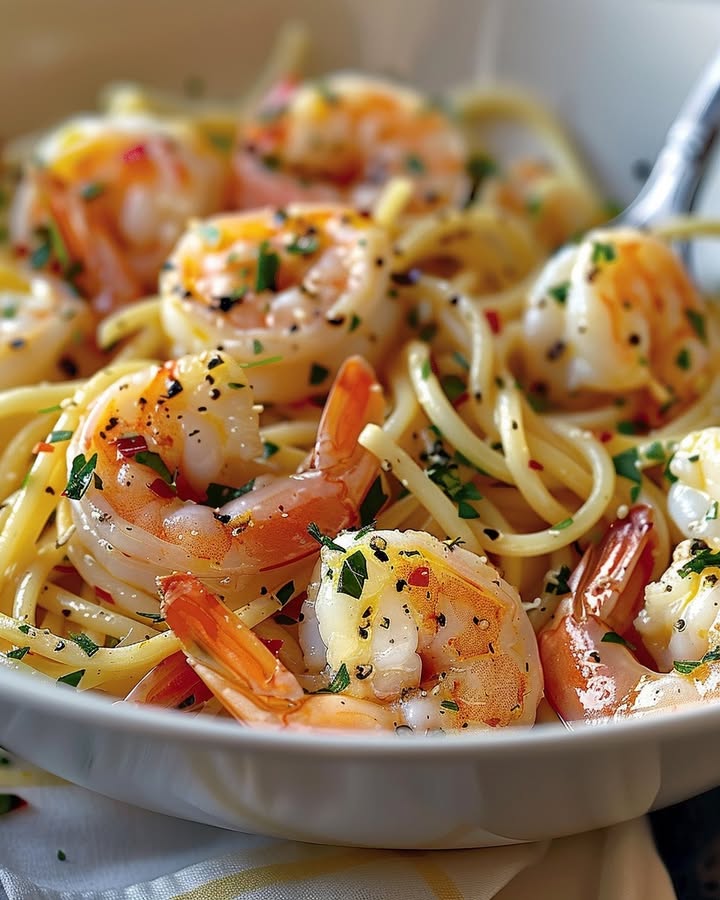
There’s a dish that always saves my dinner party sanity. It’s Garlicky Shrimp Scampi with Linguine. The minute that fragrant garlic hits the butter in the pan, my kitchen transforms. Everyone starts leaning in, sniffing the air, asking “what’s that amazing smell?” That’s the magic of this recipe. It feels fancy but cooks faster than a sitcom episode.
The Story Behind Garlicky Shrimp Linguine
Shrimp Scampi is a classic, but my version is extra garlicky. That’s the secret. The word “scampi” itself originally referred to a kind of small lobster. In America, we’ve made it all about shrimp bathed in garlic butter. My family roots are Italian-American, and this dish was a Sunday staple. My grandma used a whole lot more garlic than anyone dared to admit. I’ve kept that tradition alive. The modern twist is the bright lemon zest and a splash of good white wine. It lifts the whole dish.
Why You’ll Absolutely Love This Garlic Shrimp Recipe
You’ll love it for three big reasons. First, the flavor is huge but clean. Garlic, lemon, and sweet shrimp sing together. Second, it’s incredibly simple. It’s a 25-minute meal from start to finish. Third, it looks gorgeous on the plate. The glossy pasta, pink shrimp, and green parsley make it a feast for the eyes. It’s a foolproof way to feel like a gourmet chef without the stress.
Perfect Occasions for This Easy Shrimp Linguine
This dish is your versatile best friend. It’s perfect for a romantic date night at home. It’s also ideal for a last-minute dinner with friends. Just grab some fresh shrimp and pasta. I often make it for a special family weekend lunch. It feels celebratory. You can even scale it up for a bigger gathering. Just use a bigger pan! It works for almost any event where you want delicious food fast.
Ingredients for Garlicky Shrimp Linguine
- 8 ounces linguine pasta
- 1 pound large shrimp, peeled and deveined
- 4 tablespoons unsalted butter
- 4 cloves garlic, minced
- 1/4 teaspoon red pepper flakes (optional)
- 1/4 cup white wine (like Pinot Grigio or Sauvignon Blanc)
- 1/4 cup fresh lemon juice
- Zest of 1 lemon
- Salt and pepper to taste
- 2 tablespoons fresh parsley, chopped
- Lemon slices for garnish
- Grated Parmesan cheese for serving
Smart Substitution Options
Don’t panic if you’re missing something! Here are easy swaps. If you don’t have white wine, use an extra splash of chicken broth and lemon juice. No linguine? Fettuccine or spaghetti works perfectly. For a dairy-free version, use a good olive oil instead of butter. If fresh parsley isn’t handy, a pinch of dried works, or use fresh basil for a different herbal note. The goal is a tasty meal, not a rigid rulebook.
How to Make Garlicky Shrimp Scampi with Linguine
Step 1: Cook the Linguine
Start by cooking your linguine pasta. Follow the package directions for al dente. That means “to the tooth” in Italian. It should be tender but still have a slight firmness. This texture is key. It holds up better when tossed in the rich sauce later. Drain the pasta but keep a tiny bit of water clinging to it. Pro tip: Don’t rinse the pasta! The starch helps the sauce cling beautifully. Set it aside while you work on the star of the show.
Step 2: Prepare the Shrimp Butter Base
Place a large skillet over medium heat. Add the unsalted butter. Let it melt and begin to foam slightly. This is your flavor foundation. Now add the minced garlic. If you’re using red pepper flakes, add them now too. Sauté this for just 1-2 minutes. You want the garlic to become fragrant and golden, not brown and bitter. The smell will fill your kitchen. It’s the signal that good things are coming.
Step 3: Cook the Shrimp Perfectly
Add your peeled shrimp to the fragrant butter. Lay them out in a single layer if you can. Cook for about 2-3 minutes on one side. You’ll see them start to curl and turn pink around the edges. Then flip them and cook another 2-3 minutes. They should be fully pink and opaque. Be careful not to overcook! Shrimp go from perfect to rubbery very fast. Remove them from the pan quickly once done. Pro tip: They will cook a tiny bit more in the sauce later, so err on the side of just-under-done here.
Step 4: Build the Flavory Sauce
This step is where the magic sauce comes together. Pour in your white wine and fresh lemon juice. Add the lemon zest too. The wine will sizzle and steam. It reduces slightly and cooks off the alcohol, leaving just flavor. The lemon juice adds that bright, tangy punch. Season with salt and pepper to taste. Let this simmer for 2-3 minutes. It creates a simple, powerful sauce that’s the heart of the dish.
Step 5: Combine Pasta and Shrimp
Now, bring everything together. Add your cooked linguine pasta to the skillet with the sauce. Use tongs to toss it all. Get every strand coated in that garlicky, lemony butter. Then, add the shrimp back into the pan. Toss again gently to combine. The pasta will soak up the sauce and the shrimp will finish warming through. The colors mix—yellow pasta, pink shrimp, flecks of garlic and parsley. It’s ready to serve.
Step 6: Garnish and Serve Immediately
Take the skillet off the heat. Sprinkle the chopped fresh parsley all over the top. It adds a fresh color and flavor burst. Arrange a few lemon slices on top or around the plates for garnish. Serve the dish hot right from the skillet. Offer grated Parmesan cheese on the side for people to sprinkle over their portion. The key is to serve it right away for the best texture and warmth.
Timing Breakdown
Prep Time: 10 minutes. This includes peeling shrimp, mincing garlic, and zesting lemon.
Cooking Time: 15 minutes. This covers pasta boiling and the main skillet action.
Total Time: 25 minutes. From start to a glorious finished dinner.
Chef’s Secret Tip
My secret is in the garlic preparation. I don’t just mince it finely. I press one clove through a garlic press and mince the others. The pressed garlic melts into the butter, creating a deep garlic base flavor. The minced garlic gives you those delightful little bursts of texture and taste. This two-way method gives you the best of both worlds.
A Little Extra Info
Using fresh lemon juice and zest is non-negotiable in my house. Bottled juice just doesn’t have the same vibrant punch. The zest contains aromatic oils that add another layer of citrus flavor without more acidity. It’s like getting two lemon flavors from one fruit. It makes the dish taste fresher and more complex.
Necessary Equipment
- A large skillet or sauté pan
- A pot for boiling pasta
- A good chef’s knife or garlic press
- Tongs for tossing pasta
- A citrus zester or microplane
How to Store Your Garlicky Shrimp Linguine
This dish is best served fresh. But if you have leftovers, cool them completely. Store them in an airtight container in the refrigerator. They will keep for up to 2 days. The pasta may absorb more sauce and become softer.
Reheat leftovers gently. Use a skillet over medium-low heat. Add a tiny splash of water or broth to loosen the sauce. Stir gently until warmed through. Avoid the microwave. It can make the shrimp tough and the pasta mushy.
Freezing is not recommended. The shrimp can become watery and lose texture. The pasta also doesn’t freeze well in a creamy sauce. Enjoy it fresh, or plan to eat leftovers within a couple days.
Practical Tips and Advice
- Use the best shrimp you can get. Fresh or frozen both work, but avoid pre-cooked shrimp.
- Don’t skimp on the garlic. Four cloves is a minimum for true “garlicky” flavor.
- If you want a richer sauce, add one more tablespoon of butter at the end.
- For a spicy kick, increase the red pepper flakes to ½ teaspoon.
- Always taste before serving. Adjust salt, pepper, or lemon to your liking.
Presentation Tips
- Serve it directly from the skillet at the table for a rustic, shareable feel.
- Twirl the linguine neatly into the center of each plate. Arrange shrimp around it.
- Garnish with a whole parsley sprig and a lemon wedge for a restaurant look.
- Use a white plate to let the colors of the dish pop beautifully.
- Offer a small bowl of extra Parmesan and lemon slices on the side.
Healthier Alternative Recipes
Want to lighten up this classic? Here are six tasty twists.
1. Olive Oil Garlic Shrimp Linguine: Replace butter entirely with extra virgin olive oil. It adds a fruity flavor and reduces saturated fat.
2. Zucchini Noodle Shrimp Scampi: Swap linguine for spiralized zucchini noodles. Cook them briefly in the sauce for a low-carb meal.
3. Whole Wheat Linguine Version: Use whole wheat linguine for extra fiber and nutrients. The nutty flavor pairs well with garlic.
4. Added Veggie Power: Throw in a handful of spinach or cherry tomatoes at the end. It boosts vitamins and color.
5. Herb-Forward Light Scampi: Increase parsley and add fresh basil. Use less butter and more lemon for a brighter, herb-packed dish.
6. Spicy Garlic Shrimp with Broccoli: Add steamed broccoli florets to the pasta. Increase red pepper flakes for a metabolism-boosting kick.
Common Mistakes to Avoid
Mistake 1: Overcooking the Shrimp
This is the biggest error. Shrimp cook very, very fast. They go from translucent to pink and opaque in minutes. If you leave them in the pan too long, they become tough and rubbery. They lose their sweet, delicate texture. To avoid this, watch them closely. Cook just until they curl and turn pink. Remove them from the heat immediately. Remember, they’ll warm up again when tossed with the hot pasta and sauce.
Mistake 2: Burning the Garlic
Garlic burns easily and turns bitter. It ruins the whole sauce base. This happens if the heat is too high or you sauté it too long. To prevent it, use medium heat, not high. Add the garlic to the melted butter and stir constantly. Cook only until fragrant, about 1-2 minutes. It should be golden, not brown. If it starts browning fast, remove the pan from heat for a moment.
Mistake 3: Using Bottled Lemon Juice
Fresh lemon juice makes a world of difference. Bottled juice often has preservatives and a flat, sometimes metallic taste. It doesn’t provide the bright, clean acidity you need. Fresh lemons give vibrant flavor and aroma. Squeezing them yourself is easy. Pro tip: Roll the whole lemon on the counter before cutting to get more juice out. Always use fresh for this recipe.
Mistake 4: Not Reserving Pasta Water
When you drain your linguine, don’t let all that starchy water go. Keep a little bit. The starch in pasta water is a magic sauce helper. It helps bind the sauce to the pasta, making it glossy and cohesive. If your sauce looks a little thin or separate after combining, add a tablespoon of this pasta water. It will bring everything together smoothly.
Mistake 5: Rinsing the Cooked Pasta
Never rinse your pasta after cooking unless you’re making a cold pasta salad. Rinsing washes away the starch. That starch is what helps the sauce cling to every strand. Without it, your garlic butter sauce will slide off and pool at the bottom of the plate. Just drain the pasta well and add it straight to the skillet. That’s the way to a perfectly coated dish.
Inspiration for More Dinner Ideas
If you loved the garlic butter combo here, you might adore our Garlic Butter Cajun Steak with Cheesy Twisted Pasta. It uses similar flavors for a hearty steak dish. For another fast pasta winner, try our Cajun Steak Penne with a creamy Ranch Honey Cheese Sauce. For hands-off cooking, my Slow Cooker BBQ Baby Back Ribs are a weekend favorite. And for a cozy, cheesy bake, the French-inspired Gratin of Hard-Boiled Eggs with Ham and Cheese Béchamel is pure comfort food.
Choosing quality ingredients matters for both taste and health. For guidance on understanding food labels and making informed choices, you can refer to the FDA’s resources on nutrition labeling. It’s a helpful tool for any home cook.
Frequently Asked Questions
Can I make shrimp scampi without wine?
Absolutely. You can substitute the white wine with an equal amount of low-sodium chicken broth or vegetable broth. Add a tablespoon of extra lemon juice to keep the brightness. The broth provides a savory depth that works well. Some cooks also use a splash of dry vermouth if they have it. The goal is to replace the liquid and flavor component. Your sauce will still be delicious. Just taste and adjust seasoning at the end.
What’s the best type of shrimp to use for scampi?
For the best texture and flavor, use raw, fresh or frozen large shrimp. They are often labeled “large” or “jumbo.” Avoid pre-cooked shrimp. They won’t absorb the sauce flavors properly and can overcook easily. Look for shrimp that are peeled and deveined for convenience. Wild-caught shrimp often have a firmer texture and sweeter taste. If using frozen shrimp, thaw them completely in cold water before cooking. Pat them dry to help them sear nicely in the butter.
Can I use a different pasta besides linguine?
Yes, many pastas work well. Linguine is traditional because its flat shape holds the sauce nicely. Fettuccine is a great alternative. Its wider ribbons are perfect for clinging to the garlic butter. Spaghetti works too, though the sauce distribution is slightly different. For a fun twist, try angel hair pasta. It cooks very fast and offers a delicate bite. Avoid very thick or tubular pastas like rigatoni. They don’t pair as well with this light, clingy sauce.
How do I prevent the pasta from sticking while I make the sauce?
After draining the pasta, toss it with a tiny bit of olive oil if you need to hold it for several minutes. This creates a light coating to prevent clumping. A better method is to time your cooking so the sauce is nearly done when the pasta finishes. Then you can combine them immediately. If you must wait, keep the pasta in the pot with a lid on, off the heat. The residual warmth and steam will keep it loose. Adding it straight to the sauce skillet is always the best plan.
Is shrimp scampi a healthy dish?
It can be part of a balanced diet. Shrimp are a great source of protein and are low in fat. The main sources of fat and calories come from the butter and pasta. To make it healthier, use whole wheat linguine for more fiber. You can reduce the butter by half and supplement with a heart-healthy olive oil. Add more vegetables like spinach or asparagus to the dish. This increases vitamins and minerals. Being mindful of portions is also key. It’s a rich dish, so enjoy a sensible serving.
Can I add vegetables to this shrimp linguine recipe?
Yes, adding vegetables is a wonderful idea. It makes the meal more complete and nutritious. Quick-cooking veggies are best. Add chopped asparagus spears or broccoli florets to the skillet after the garlic. Sauté for 3-4 minutes before adding the shrimp. Thinly sliced zucchini or bell peppers also work well. Frozen peas can be tossed in with the shrimp at the end. Spinach or cherry tomatoes can be added right before combining with pasta. They wilt or warm up quickly. It creates a more colorful and nutrient-packed plate.
Why is my sauce sometimes too thin or watery?
A thin sauce usually happens from two things. First, you might have added too much liquid (wine or lemon). Second, the pasta wasn’t hot enough or starchy enough to bind the sauce. To fix it, let the sauce simmer a minute longer to reduce. If it’s still thin, add a tablespoon of the starchy pasta water you saved. Toss everything vigorously. The starch will thicken the sauce naturally. Also, make sure your shrimp are dry before adding. Excess water from thawing can dilute the sauce.
Can I make this dish ahead of time for a party?
It’s best made fresh, but you can do some prep ahead. You can peel and devein the shrimp earlier. Keep them chilled. You can mince the garlic and chop the parsley. You can even zest the lemon. Cook the pasta just before serving, however. The final cooking of the shrimp and sauce should be done about 10 minutes before you plan to eat. This ensures the shrimp are tender and the pasta is perfectly al dente. Combining everything last-minute gives the best results.
What can I serve alongside garlic shrimp linguine?
This dish is quite rich, so lighter sides pair well. A simple green salad with a vinaigrette dressing is perfect. Garlic bread or a crusty baguette is classic for soaking up extra sauce. For a vegetable side, roasted asparagus or steamed green beans work nicely. If you want a fuller meal, start with a light soup like a tomato basil. A glass of the same white wine used in the recipe makes a great drink pairing. Keep sides simple to let the main dish shine.
How do I know when the shrimp are cooked perfectly?
Perfectly cooked shrimp turn from gray/translucent to a pinkish white color. Their shape changes. They curl into a loose “C” shape. If they curl into a tight “O,” they are likely overcooked. The flesh should feel firm but still slightly springy when pressed. Cut one open if you’re unsure. It should be opaque all the way through with no translucent gray parts. Timing is about 2-3 minutes per side for large shrimp over medium heat. Trust your eyes and a quick touch test.
For more fantastic ideas to round out your weekly menu, explore our full collection of satisfying dinner recipes.
Your New Go-To Dinner Hero
Garlicky Shrimp Scampi with Linguine is more than a recipe. It’s a dinner solution. It’s a way to create something impressive with ordinary ingredients. The process is simple, but the result feels special. That garlic butter sauce, the sweet shrimp, the tangy lemon—they create a harmony on a plate. Next time you need a meal that promises happy faces around the table, make this. It turns a regular evening into a little celebration. And celebration is what good food is all about.
Garlicky Shrimp Linguine
Ingredients
Equipment
Method
- Cook the linguine pasta according to package directions for al dente; drain and set aside without rinsing.
- In a large skillet over medium heat, melt the butter until it foams, then add minced garlic and red pepper flakes, sautéing for 1-2 minutes.
- Add the shrimp in a single layer to the skillet and cook for 2-3 minutes on one side until pink, then flip and cook another 2-3 minutes until fully cooked.
- Pour in white wine and fresh lemon juice, add lemon zest, and simmer for 2-3 minutes while seasoning with salt and pepper.
- Add the cooked linguine to the skillet, tossing to coat in the sauce, and then add the shrimp back in gently to combine.
- Garnish with fresh parsley and lemon slices; serve immediately with grated Parmesan cheese on the side.