
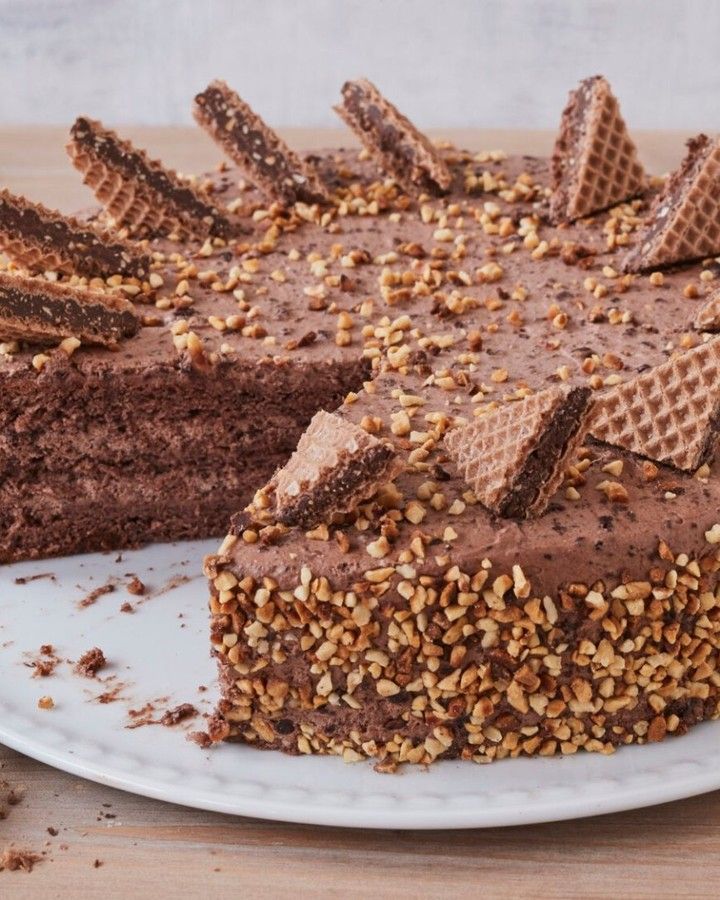
You know that moment when you taste something so nostalgically good, it feels like a warm hug? For me, that taste came in a little foil-wrapped square: the iconic chocolate and hazelnut wafer. I’ve always wanted to turn that pocket-sized joy into a proper, show-stopping cake. After many delightful (and a few messy) kitchen tests, I’ve perfected this Hanuta Delight Cake. It’s a dreamy combination of fluffy cocoa biscuit, a rich cream packed with the real wafers, and a generous sprinkle of toasted hazelnuts. It’s not just a dessert; it’s a trip down memory lane, served on a cake plate.
From Pocket Treat to Celebration Cake
The original Hanuta is a beloved German snack, a sandwich of hazelnut cream between two crispy wafers. It’s the kind of treat you’d find in school lunchboxes. My mission was to capture that same magical flavor in a dessert worthy of a special occasion. This recipe is my “grown-up” homage to that childhood classic. The beauty is in the layers: we’re not just using hazelnut flavoring; we’re blitzing the actual chocolate nut wafers right into the cream! This modern take on a traditional favorite brings a whole new level of texture and depth that will have everyone asking for seconds.
Why You’ll Adore This Hanuta Delight Cake
First, it’s a guaranteed crowd-pleaser. The familiar taste wins over kids and adults instantly. Second, while it looks impressive, the steps are straightforward—no fancy pastry skills required. It’s also wonderfully forgiving. The biscuit is sturdy, and the cream comes together easily. Finally, it’s a make-ahead marvel. Honestly, it tastes even better the next day after the flavors have fully mingled in the fridge. You can relax and enjoy your own party instead of being stuck in the kitchen.
Perfect Occasions for Your Masterpiece
This cake is your secret weapon for any gathering that calls for a memorable dessert. It’s perfect for birthday celebrations where you want a unique twist. It shines at cozy coffee afternoons with friends—pair it with a good cup of coffee and watch the smiles appear. Bring it to a potluck and be the undisputed dessert champion. It’s also a wonderful weekend baking project to treat your family. Any day you want to make someone feel special, this cake delivers.
Ingredients for Hanuta Delight Cake
Gather these simple ingredients to create something extraordinary. I recommend having everything at room temperature for the best results.
For the Cocoa Biscuit:
- 6 large eggs
- 180 g (about 3/4 cup + 2 tbsp) granulated sugar
- 1 pinch of salt
- 140 g (about 1 cup + 1 tbsp) all-purpose flour (German Type 405 is similar to cake flour)
- 2 tablespoons unsweetened cocoa powder
For the Chocolate Hazelnut Cream:
- 5 pieces (approx. 120g) chocolate nut wafers (like Hanuta)
- 50 ml (about 3 1/2 tbsp) milk
- 200 g (about 1 cup) sour cream
- 3 tablespoons unsweetened cocoa powder
- 70 g (about 1/3 cup) granulated sugar
- 400 ml (about 1 2/3 cups) heavy whipping cream, cold
- 2 packets (or about 2 tbsp) cream stabilizer (like Whip It)
For Assembly:
- 100 g (about 3/4 cup) chopped hazelnuts
- 8 mini chocolate nut wafers, for garnish
Ingredient Substitutions: Make It Your Own
Don’t have a specific item? No worries! Here’s how you can adapt:
- Chocolate Nut Wafers: If you can’t find the exact brand, any chocolate-hazelnut wafer cookie will work. In a pinch, you could use about 3/4 cup of a chocolate hazelnut spread and add an extra crispy wafer crumbled in for texture.
- Sour Cream: Full-fat plain Greek yogurt is a great substitute that adds a similar tang.
- Cream Stabilizer: This helps the cream hold up for days. You can omit it, but your cake will need to be served sooner. A teaspoon of cornstarch mixed with the sugar before adding to the cream can also help.
- Hazelnuts: Almonds or pecans would also toast up beautifully for a different but delicious crunch.
Step-by-Step Guide to Your Hanuta Delight Cake
Step 1: Prep and Mix the Biscuit Base
Start by heating your oven to 180°C (350°F) for top/bottom heat, or 160°C (320°F) if using a convection setting. Line the bottom of a springform pan with parchment paper—this is your insurance policy for a perfect release later. Now, for the fun part: in a large bowl, combine the eggs, sugar, and that tiny pinch of salt. Using a hand mixer or stand mixer, beat this on the highest speed for at least 4 minutes. You’re looking for a pale, thick, and beautifully voluminous mixture that leaves a visible “ribbon” trail when you lift the beaters. This air is the key to your cake’s lift.
Step to 2: Gently Fold and Bake
In a separate bowl, whisk together the flour and cocoa powder. Sift this dry mixture, a little at a time, over your fluffy eggs. Here’s the crucial move: use a spatula and fold gently, cutting down through the center and scooping up from the bottom. You want to incorporate the flour while keeping as much of that precious air as possible. The batter will be gorgeous and billowy. Pour it into your prepared pan, smooth the top, and bake it on the lower third rack for about 45 minutes. A toothpick inserted in the center should come out clean. Pro tip: Resist the urge to open the oven door early, or your cake might sink!
Step 3: Create the Dreamy Wafer Cream
While the biscuit cools completely on a rack, make your star filling. Roughly break your chocolate nut wafers into a tall container or blender, add the milk, and blitz until you get a thick, grainy paste. In a mixing bowl, whisk the sour cream, sugar, and cocoa powder together until smooth. Stir in that wonderful wafer paste. Now, in another chilled bowl, whip the heavy cream with the stabilizer until it forms stiff peaks. Add about a third of the whipped cream to the sour cream mixture and stir to lighten it. Then, gently fold in the remaining whipped cream until no white streaks remain. You’ll have a cloud of hazelnut-chocolate bliss.
Step 4: Assemble and Decorate
Place your cooled biscuit on a serving plate. If it domed slightly, you can slice the top flat for an even layer. Spread the entire bowl of creamy filling over the biscuit. Now, toast your chopped hazelnuts in a dry pan over medium heat until they are fragrant and lightly golden—watch them closely, as they burn quickly! Let them cool completely before sprinkling generously over the top of the cake. Press a few extra around the sides for a rustic look. Finally, take your mini wafers, slice them in half on an angle, and artfully arrange them on top. Chef’s tip: For the cleanest slices, dip your knife in hot water and wipe it dry between each cut.
Timing Your Hanuta Cake Creation
Here’s a quick breakdown so you can plan your baking session:
- Prep Time: 30 minutes
- Baking Time: 45 minutes
- Cooling Time: 1 hour (essential!)
- Chilling Time: At least 2 hours, but overnight is best.
- Total Time (hands-off included): About 4 hours 15 minutes.
- Servings: 12 generous slices.
Chef’s Secret for Ultimate Flavor
The secret is in the toasting! Don’t skip toasting the hazelnuts. That dry heat awakens their natural oils and transforms their flavor from mild and soft to deep, rich, and nutty. This one extra step adds a crucial layer of sophistication and crunch that makes the cake truly unforgettable. It’s the difference between a good cake and a great one.
Extra Info: The Magic of Stabilized Cream
Using a cream stabilizer might seem like a special item, but it’s a game-changer for cakes like this that need to last. It works by reinforcing the protein structure in the cream, so it doesn’t weep or deflate over time. This means your beautiful, fluffy topping will look just as perfect on day two or three as it did when you made it. No more soggy cake layers!
Necessary Equipment
You likely have most of this in your kitchen already:
- 9-inch (23 cm) springform pan
- Hand mixer or stand mixer
- Mixing bowls (various sizes)
- Fine-mesh sieve or sifter
- Spatula
- Blender or tall container for immersion blender
- Cooling rack
- Small skillet for toasting nuts
Storing Your Hanuta Delight Cake
This cake is a champion in the fridge. Because of the creamy filling, it must be stored in the refrigerator. Cover it loosely with plastic wrap or place it under a cake dome.
It will happily keep for 3 to 4 days. In fact, I strongly recommend making it a day ahead. This resting time allows the biscuit to soften slightly and absorb the flavors of the cream, creating a more harmonious and moist bite throughout.
I do not recommend freezing the assembled cake, as the cream texture can become grainy upon thawing. However, you can freeze the plain baked biscuit layer, well-wrapped, for up to a month. Thaw it in the fridge before assembling.
Tips and Advice for Cake Success
- Ensure your eggs are truly at room temperature for maximum volume when beating.
- When folding flour into eggs, stop as soon as you see no dry streaks. A few small lumps are better than a deflated batter.
- Chill your mixing bowl and beaters before whipping the cream. Cold tools are the first step to perfect whipped cream.
- Let the toasted hazelnuts cool completely before adding them to the cream, or they will melt it.
Presentation Tips to Wow Your Guests
Make your cake a centerpiece! Serve it on a beautiful cake stand. Dust the very edge with a little more cocoa powder. For a dinner party, place a halved mini wafer on each individual plate next to the slice. If you love decadent dessert mash-ups, you must explore our recipe for a Cinnamon Roll Cheesecake, which is another fantastic showstopper. A drizzle of melted chocolate over the nuts adds extra glamour. Pair slices with fresh berries to cut the richness.
Healthier & Fun Recipe Variations
Love the idea but want to mix it up? Here are six delicious spins on the Hanuta Delight Cake:
- Gluten-Free Hanuta Cake: Substitute the all-purpose flour with a 1:1 gluten-free baking blend. Check that your wafers are also gluten-free.
- Dairy-Free Version: Use plant-based milk and a thick coconut cream (chilled) for the whipped component. Look for dairy-free chocolate wafers.
- Mini Hanuta Cupcakes: Bake the biscuit batter in a muffin tin for about 20 minutes. Pipe the cream on top for individual treats.
- Chocolate Ganache Drizzle: Add a layer of shiny dark chocolate ganache over the biscuit before adding the cream for double chocolate impact.
- Berry Addition: Add a thin layer of raspberry jam between the biscuit and cream for a chocolate-hazelnut-berry trio.
- Mocha Twist: Dissolve a teaspoon of instant espresso powder into the milk before blending with the wafers for a coffee-kicked cream.
Common Mistakes to Avoid
Mistake 1: Not Beating the Eggs Long Enough
This is the foundation of your biscuit. If you stop beating the eggs and sugar too soon, you won’t incorporate enough air. This results in a dense, flat cake instead of a light and fluffy one. Set a timer for a full 4-5 minutes on high speed. The mixture should be very pale, thick, and leave a trail that holds for a few seconds before sinking back.
Mistake 2: Deflating the Batter When Folding
After all that work whipping air into the eggs, stirring too vigorously or with a whisk will knock it all right out. Always use a flexible spatula and a gentle folding motion. Practical tip: Think of it as turning the batter over onto itself from the bottom of the bowl. It’s okay if a few tiny flour streaks remain; they will incorporate in the oven.
Mistake 3: Adding Warm Nuts to the Cream
The excitement of toasted nuts is real, but patience is key. If you sprinkle those warm, toasted hazelnuts directly onto the cool cream, they will start to melt it, creating oily spots and causing the cream to slump. Always spread the nuts on a plate to cool completely to room temperature before decorating.
Mistake 4: Skipping the Chilling Time
You’ve waited so long, it’s tempting to slice in right away. But this cake needs time to set! The chilling time allows the cream to firm up and the flavors to marry. Cutting it too early will result in a messy slice and loose cream. Plan ahead and let it chill for at least 2 hours, ideally overnight.
Mistake 5: Overbaking the Biscuit
A dry biscuit is a sad biscuit. Ovens vary, so start checking at the 40-minute mark with a toothpick. It should come out with a few moist crumbs attached, not bone dry. Overbaking leads to a crumbly base that’s hard to slice. Remember, the cake will continue to cook a little from residual heat as it cools.
Frequently Asked Questions
Can I make this cake without a springform pan?
It’s possible but trickier. A regular cake pan lined with parchment paper will work for baking the biscuit. However, getting the cake out cleanly to assemble it will require you to very carefully run a knife around the edges and invert it, which can be risky with a fragile sponge. The springform pan is highly recommended because the sides simply unlock and fall away, leaving your perfect cake intact on the base for easy decorating.
What can I use instead of cream stabilizer?
If you can’t find it, you have a couple of options. You can simply omit it, but be aware that your whipped cream will be softer and may not hold its peak as well after a day. For a more stable cream without a special product, you can add a tablespoon of instant pudding powder (vanilla or chocolate) to the cold cream before whipping. This helps to thicken and stabilize it naturally.
My biscuit sunk in the middle. What went wrong?
A sunken center usually points to two issues: either the eggs weren’t beaten to full volume (see Mistake 1!), or the oven door was opened too early during baking. The sudden rush of cool air can cause the delicate structure to collapse. Make sure your oven is fully preheated and try not to open the door until at least the 35-minute mark. Also, ensure your baking powder or flour is fresh.
How far in advance can I prepare this cake?
This is one of its best features! You can fully assemble the cake 1-2 days before you need to serve it. The flavors improve, and the texture becomes even more delightful as the biscuit softens slightly. Just keep it covered in the refrigerator. You can even bake the biscuit layer a day ahead, wrap it well, and assemble it the next morning.
Can I use Nutella instead of the wafers in the cream?
You can, but the texture and flavor will be different. Nutella will give a smooth, very rich cream, but you’ll lose the delightful crispy bits from the actual wafer cookies. If you do substitute, use about 3/4 cup of Nutella and blend it directly with the sour cream and cocoa mixture, skipping the milk step. You might want to add a handful of crushed toasted hazelnuts to the cream to bring back some crunch.
Is there a way to make the cake less sweet?
Absolutely. You can reduce the sugar in the biscuit by 20-30 grams without affecting the structure too much. For the cream, choose a darker cocoa powder (which is less sweet) and consider using a slightly less sweet chocolate-hazelnut wafer if available. Topping with unsweetened toasted hazelnuts also balances the sweetness.
Can I freeze the finished cake?
I don’t recommend freezing the fully assembled cake. The cream filling can separate and become grainy when thawed, and the biscuit may become soggy. However, you can freeze the baked and cooled biscuit layer very successfully. Wrap it tightly in plastic wrap and then foil. Thaw it in the refrigerator overnight before assembling with fresh cream.
Why did my whipped cream turn grainy or buttery?
This is a sign of over-whipping. Once heavy cream passes the stiff peak stage, it begins to separate into butterfat and buttermilk. To avoid this, whip on medium-high speed and stop as soon as the cream holds a firm peak when you lift the beater. If it happens, unfortunately, you can’t fix it—you’ll need to start over with new cold cream.
Are the hazelnuts necessary? I have a nut allergy.
For a nut-free version, you must omit the hazelnuts entirely. The primary flavor will then come from the chocolate nut wafers—please double-check their ingredient label carefully, as they often contain hazelnuts. For garnish, you could use chocolate shavings, sprinkles, or extra wafer pieces. For more nut-free dessert ideas, browse our collection of favorite dessert recipes.
Where can I learn more about the nutritional content of ingredients?
Being informed about what we eat is empowering! For reliable, science-based information on food composition and labeling standards, a great resource is the U.S. Food and Drug Administration (FDA) food information page. It offers clear guidance on topics like nutrient labeling, which can help you make informed choices in the kitchen.
Serving Up Sweet Memories
There you have it—your guide to creating a truly special Hanuta Delight Cake. It’s more than a recipe; it’s a way to bring a little playful joy to the table. The combination of fluffy cake, that nostalgic wafer cream, and the satisfying crunch of nuts is pure happiness on a plate. Whether for a big celebration or a simple Sunday treat, this cake is sure to create its own delicious memories. Now, go preheat that oven and get ready for the compliments to roll in! And remember, if you’re looking for other quick and satisfying treats, our guides for perfect Scrambled Eggs in 5 Minutes, classic Toast with Butter and Jam, or a refreshing Smoothie with Frozen Berries are just a click away for your everyday cooking adventures.
Hanuta Delight Cake
Ingredients
Equipment
Method
- Preheat the oven to 180°C (350°F) and line a springform pan with parchment paper.
- In a large bowl, combine the eggs, sugar, and salt. Beat on high speed for at least 4 minutes until thick and pale.
- In a separate bowl, whisk together the flour and cocoa powder, sift over the egg mixture, and gently fold in without deflating.
- Pour the mixture into the prepared pan and bake for 45 minutes, until a toothpick comes out clean.
- Allow the biscuit to cool completely on a rack.
- Break the chocolate wafers into a container, add the milk, and blend into a thick paste.
- In a mixing bowl, whisk the sour cream, sugar, and cocoa until smooth. Stir in the wafer paste.
- In another bowl, whip the heavy cream with the stabilizer until stiff peaks form, then fold into the sour cream mixture.
- Place the cooled biscuit on a serving plate, spread the cream mixture on top.
- Toast the hazelnuts, let them cool, and sprinkle them over the cream.
- Garnish with halved mini wafers and refrigerate for at least 2 hours before serving.