
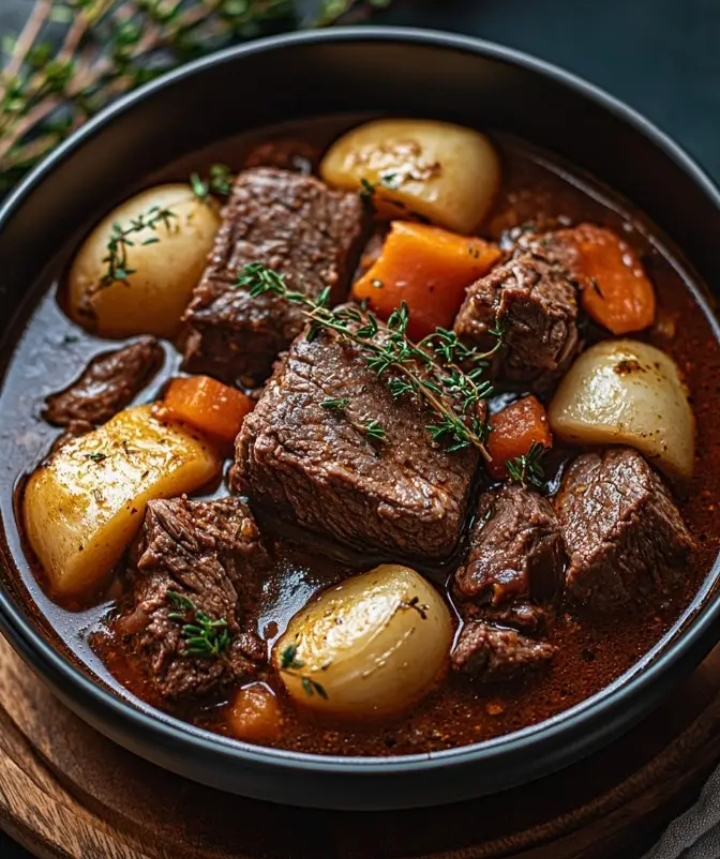
A Hearty Dish That Brings Everyone to the Table
There’s something magical about a dish that fills your home with mouthwatering aromas while it simmers away. Italian Beef Stew, or as some might call it, Pot-au-feu Italien Stracotto, is one of those dishes. I remember the first time I made this recipe—it was for a family gathering where everyone brought their signature dish. My stew turned out to be the star of the table, and my uncle even asked for seconds (and thirds!). The tender beef, rich tomato sauce, and fragrant herbs create a comforting meal that feels like a warm hug in a bowl.
The Roots of Italian Beef Stew
This hearty stew has its roots in Italian tradition, where slow-cooked meals are a staple. In Italy, stracotto translates to “overcooked,” but don’t let that fool you—this method transforms tough cuts of meat into melt-in-your-mouth goodness. Historically, this dish was a way to make use of inexpensive cuts of beef, turning them into something extraordinary with patience and love. Over time, variations emerged, incorporating ingredients like pancetta, red wine, and fresh herbs. Today, it’s a go-to comfort food for special occasions or cozy family dinners.
Why You’ll Fall in Love with This Recipe
If you’re looking for a dish that’s packed with flavor but doesn’t require hours of hands-on work, this Italian Beef Stew is perfect. The combination of tender beef, sweet carrots, and savory herbs creates layers of taste that will have everyone asking for the recipe. Plus, it’s versatile—you can tweak it to suit your preferences or dietary needs. Whether you’re cooking for two or feeding a crowd, this stew delivers big on flavor without much fuss.
Perfect Occasions to Whip Up This Dish
Italian Beef Stew shines during chilly evenings when you want something warm and filling. It’s also a lifesaver for busy weekends because you can toss everything in the pot and let it cook while you relax. Hosting a dinner party? Serve this stew alongside crusty bread or creamy polenta, and watch your guests rave about your culinary skills. It’s equally great for casual weeknight meals or holiday feasts.
What You’ll Need
- 4 oz (115 g) turkey bacon or pancetta, diced (optional)
- 3 lb (1.4 kg) beef chuck or brisket, cut into large chunks
- Salt and pepper to taste
- 1 cup diced onion
- 1 cup diced carrots
- 1 cup diced celery
- 1 tbsp minced garlic
- ½ tsp red pepper flakes (optional)
- 2 cups beef broth
- 1 can (14.5 oz) crushed tomatoes
- 1 sprig fresh thyme or 1 tsp dried thyme
- 1 sprig fresh rosemary or 1 tsp dried rosemary
- 1 tsp Italian seasoning
- 2 bay leaves
Substitution Options
No pancetta? No problem! Use regular bacon or skip it altogether if you prefer. If you’re avoiding beef, try substituting with lamb or pork shoulder. For a vegetarian twist, swap the meat for mushrooms or lentils. Instead of beef broth, vegetable broth works beautifully. And if you don’t have fresh herbs, dried ones are just fine—just use half the amount called for.
Step 1: Preparing the Turkey Bacon
Start by crisping up the turkey bacon or pancetta in a large oven-safe pot over medium heat. As it cooks, the fat renders out, creating a flavorful base for the stew. Once golden and crispy, remove it from the pot and set aside. The aroma alone will make your kitchen smell amazing. Pro tip: Don’t skip this step—it adds a smoky depth to the dish!
Step 2: Browning the Beef
Season the beef generously with salt and pepper. Increase the heat to medium-high and sear the meat in batches until browned on all sides. This step locks in the juices and builds a rich flavor foundation. Be patient; rushing this process won’t give you the same results. Chef’s tip: Pat the beef dry with paper towels before browning—it helps achieve a better sear.
Step 3: Cooking the Vegetables
Add the onions, carrots, and celery to the pot. Cook them until they soften and develop a slight caramelization, which usually takes about 7–10 minutes. These veggies form the backbone of the stew’s sweetness and texture. Stir occasionally to prevent sticking, and enjoy the vibrant colors as they cook down.
Step 4: Adding Garlic and Spice
Toss in the garlic and red pepper flakes, stirring constantly for about a minute until fragrant. The garlic should sizzle gently without burning, releasing its nutty aroma. If you’re sensitive to spice, feel free to omit the red pepper flakes—they’re optional but add a nice kick.
Step 5: Combining Liquids and Herbs
Pour in the beef broth and crushed tomatoes, scraping the bottom of the pot to release any stuck bits. Add the thyme, rosemary, Italian seasoning, bay leaves, and reserved turkey bacon. Nestle the beef back into the pot, ensuring it’s mostly submerged. This step brings all the flavors together, creating a harmonious blend of savory and aromatic notes.
Step 6: Choosing Your Cooking Method
You have three options here. Option 1: Simmer on the stovetop over low heat for 2–4 hours. Option 2: Transfer the covered pot to a preheated oven at 275°F (140°C) for the same duration. Option 3: Use a slow cooker on low for 8–10 hours or high for 4–6 hours. Each method yields tender, fall-apart beef, so pick what suits your schedule best.
Step 7: Finishing Touches
Once the stew is ready, season with additional salt and pepper if needed. Remove the herb stems and bay leaves before serving. Garnish with grated Parmesan for an extra layer of umami. This final touch ties everything together, making each bite unforgettable.
Timing Breakdown
Prep time: 20 minutes
Cooking time: 2–4 hours (depending on the method)
Total time: Approximately 3–5 hours
Chef’s Secret
To elevate the stew, add a splash of balsamic vinegar or Worcestershire sauce during the last 30 minutes of cooking. These ingredients enhance the richness of the sauce and balance the acidity of the tomatoes.
An Interesting Tidbit
Did you know that slow-cooking tough cuts of meat dates back centuries? Before modern appliances, people relied on hearths and clay pots to break down fibrous proteins. Today, we carry on this tradition with recipes like Italian Beef Stew, proving that good food stands the test of time.
Necessary Equipment
You’ll need a heavy-bottomed pot or Dutch oven, a wooden spoon, a sharp knife for chopping, and measuring spoons. A slow cooker or oven-safe pot is handy depending on your chosen cooking method.
Storage Tips
Leftovers store beautifully in the fridge for up to 4 days. Let the stew cool completely before transferring it to an airtight container. Reheat portions gently on the stovetop or in the microwave, adding a splash of broth if needed to loosen the sauce.
For longer storage, freeze the stew in freezer-safe bags or containers for up to 3 months. Label them with the date so you know how long they’ve been stored. Thaw overnight in the fridge before reheating.
Proper storage ensures you always have a delicious meal ready to go. Just imagine coming home to a comforting bowl of stew after a long day!
Tips and Advice
Use a mix of vegetables like parsnips or fennel for added complexity. Keep an eye on the liquid level while cooking—if it reduces too much, add a bit more broth. Taste as you go, adjusting seasonings gradually for the perfect balance.
Presentation Ideas
- Serve in shallow bowls with a sprinkle of fresh parsley.
- Garnish with grated Parmesan and a drizzle of olive oil.
- Pair with crusty bread or creamy mashed potatoes.
Healthier Alternatives
1. Leaner Meat: Swap beef for leaner cuts like sirloin or turkey thighs.
2. Low-Sodium Broth: Reduce sodium intake by using low-sodium broth.
4. Whole Grain Side: Serve with whole grain pasta or quinoa.
5. Dairy-Free Option: Skip the Parmesan or use nutritional yeast instead.
6. Herb-Infused Oil: Drizzle with basil-infused olive oil for added freshness.
Mistake 1: Skipping the Searing Step
Some folks rush through the searing process, thinking it’s unnecessary. But trust me, this step is crucial for building flavor. Without a proper sear, the beef won’t develop that deep, caramelized crust that makes the stew so irresistible. Take your time and do it right!
Mistake 2: Overcrowding the Pot
When browning the beef, resist the urge to cram all the pieces into the pot at once. Overcrowding leads to steaming instead of searing, resulting in gray, soggy meat. Work in batches to ensure each piece gets the attention it deserves.
Mistake 3: Neglecting Seasoning Adjustments
Seasoning is key to a well-balanced stew. Don’t assume the initial salt and pepper will suffice—taste and adjust throughout the cooking process. Remember, flavors concentrate as the liquid reduces.
Mistake 4: Using Old Spices
Spices lose potency over time, so check their expiration dates. Fresh herbs and spices make a world of difference in enhancing the overall taste of your Italian Beef Stew.
Mistake 5: Rushing the Cooking Time
Patience pays off with slow-cooked dishes. Cutting corners on cooking time can leave you with tough meat and underdeveloped flavors. Stick to the recommended timeline for the best results.
FAQ: Can I Make This Recipe Ahead?
Absolutely! In fact, many believe stews taste even better the next day as the flavors meld further. Store it in the fridge overnight and reheat gently before serving.
FAQ: What Cut of Beef Works Best?
Chuck roast or brisket are ideal choices due to their marbling, which breaks down during cooking to create tender, juicy meat. Avoid lean cuts like sirloin, as they may dry out.
FAQ: Is Red Wine Necessary?
While not mandatory, red wine adds depth and complexity to the sauce. If you choose to include it, opt for a dry variety like Cabernet Sauvignon or Merlot. Otherwise, stick with broth for a non-alcoholic version.
FAQ: Can I Freeze Leftovers?
Yes, freezing is a great way to extend the life of your stew. Portion it into individual servings for easy reheating later. Just thaw in the fridge before warming it up.
FAQ: How Do I Know When the Beef Is Done?
The beef should be fork-tender and easily pull apart. If it still feels tough, continue cooking in 30-minute increments until it reaches the desired tenderness.
FAQ: Can I Use a Slow Cooker?
Definitely! A slow cooker is perfect for hands-off cooking. Follow the recipe steps up to combining the ingredients, then transfer everything to the slow cooker and let it do its magic.
FAQ: What Should I Serve With This Stew?
Crusty bread, mashed potatoes, or polenta pair wonderfully with Italian Beef Stew. They soak up the flavorful sauce and complement the hearty meat and veggies.
FAQ: Can I Add Other Vegetables?
Of course! Feel free to toss in mushrooms, zucchini, or bell peppers for extra nutrition and variety. Just add them towards the end of cooking to prevent overcooking.
FAQ: Why Does My Sauce Taste Bland?
If your sauce lacks punch, try adjusting the seasoning with more salt, pepper, or herbs. A splash of balsamic vinegar or Worcestershire sauce can also boost the flavor profile.
FAQ: Can I Use Ground Meat Instead?
Ground meat won’t yield the same texture, but it can work in a pinch. Brown it thoroughly before adding the other ingredients, and reduce the cooking time accordingly.
FAQ: What Makes This Stew Italian?
The Italian flair comes from ingredients like pancetta, herbs such as thyme and rosemary, and the use of crushed tomatoes. These elements give the stew its distinctive Mediterranean twist.
There you have it—a complete guide to mastering Italian Beef Stew. Whether you’re a seasoned cook or a beginner, this recipe promises satisfaction and smiles around the table. So grab your apron, gather your ingredients, and get ready to create a dish that’s sure to become a family favorite.
Italian Beef Stew
Ingredients
Equipment
Method
- Crisp up the turkey bacon or pancetta in a large oven-safe pot over medium heat, then remove and set aside.
- Season the beef with salt and pepper, then sear in batches over medium-high heat until browned on all sides.
- Add the onions, carrots, and celery to the pot, cooking until softened and slightly caramelized, about 7–10 minutes.
- Toss in the garlic and red pepper flakes, stirring for about a minute until fragrant.
- Pour in the beef broth and crushed tomatoes, scraping the bottom of the pot, then add herbs and the reserved bacon. Nestle the beef back into the pot.
- Cook by one of three methods: simmer on low heat for 2–4 hours, transfer to a 275°F (140°C) oven for 2–4 hours, or use a slow cooker on low for 8–10 hours or high for 4–6 hours.
- Season with additional salt and pepper before serving, and remove herb stems and bay leaves. Garnish with grated Parmesan if desired.