
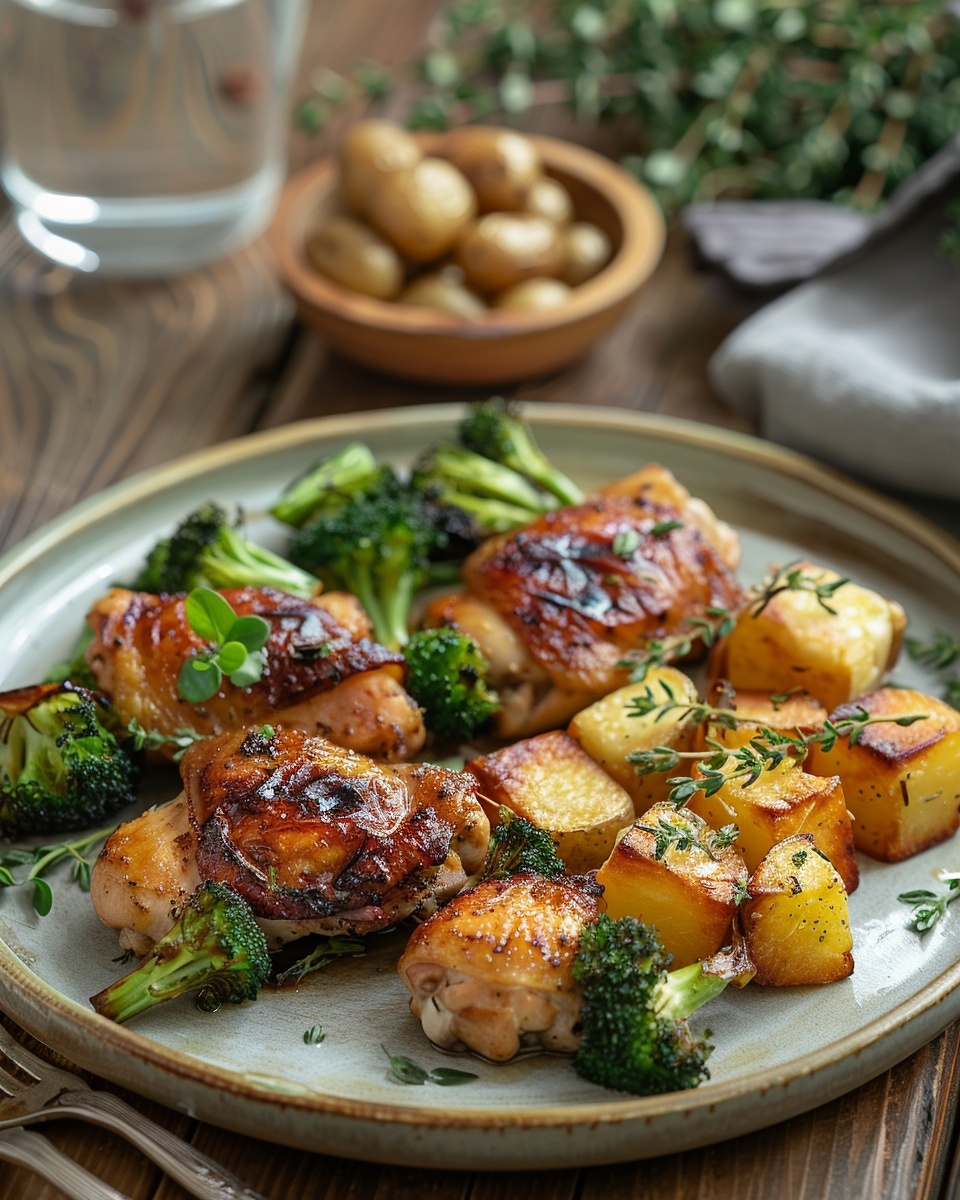
Introduction: My Love Affair with Oven Roasted Chicken Thighs
Last Tuesday night, I opened my fridge at 6 PM and realized I forgot to plan dinner. Again. My family would be home in an hour, and I needed something quick that didn’t taste like a last-minute panic meal. I grabbed a package of chicken thighs from the freezer, cranked up my oven, and thirty minutes later, we were eating one of the best dinners of the week. That’s the beauty of oven roasted chicken thighs – they save you when life gets busy, and they taste like you actually tried.
Welcome to my kitchen! Today, I’m excited to share with you my favorite way to make oven roasted chicken thighs. This recipe is not only delicious but also incredibly easy to prepare. I’ve been making these for over a decade, and they’ve never let me down. Not once.
Whether you’re a seasoned chef or just starting out, this guide will help you create perfectly juicy and flavorful chicken thighs that your family and friends will love. I promise you don’t need fancy equipment or a culinary degree. Just an oven, some chicken, and a little bit of patience.
Why Oven Roasted Chicken Thighs Are My Go-To Dinner
Here’s something most people don’t realize: chicken thighs are actually harder to mess up than chicken breasts. I spent years trying to perfect juicy chicken breasts, but they always came out dry and boring. Then I switched to thighs, and everything changed.
Oven roasted chicken thighs are a versatile and budget-friendly option for any meal. They are packed with flavor and can be customized in countless ways. I’ve made them with Italian herbs, Asian-inspired glazes, Mexican spices, and plain old salt and pepper. Every version works.
The dark meat in chicken thighs contains more fat than white meat. Before you panic about that, let me explain why this is actually great news. That extra fat keeps the meat moist and tender during cooking. It also carries flavor better than lean meat does. When you bite into a properly cooked chicken thigh, you get this rich, satisfying taste that chicken breast just can’t match.
Let me share some real talk about cost. At my local grocery store, chicken thighs cost about half the price of chicken breasts. I can feed my family of four for under ten dollars with thighs, and we always have leftovers for lunch the next day. That’s a win in my book.
What Makes Baked Chicken Thigh Recipes So Foolproof
I remember the first time I tried a baked boneless skinless chicken thigh recipe. My mother-in-law was coming for dinner, and I wanted to impress her. I seasoned the thighs with garlic, paprika, and thyme, then threw them in the oven. Twenty-five minutes later, I had this gorgeous golden-brown chicken that looked like it came from a restaurant. She asked for the recipe, and I felt like a cooking genius.
The secret is that baking chicken thighs is almost impossible to ruin. Even if you cook them a few minutes too long, they stay moist. Try that with chicken breast, and you’ll be chewing on shoe leather.
Boneless skinless chicken thigh recipes oven methods work particularly well for busy weeknights. You don’t have to deal with bones on your plate or pulling off skin. Just season, bake, and eat. My kids actually prefer boneless thighs because they can cut them easily and focus on eating instead of wrestling with bones.
But here’s where it gets interesting. Bone-in, skin-on thighs have their place too. The skin crisps up beautifully in the oven and protects the meat from drying out. The bones add extra flavor and help the meat cook more evenly. I alternate between boneless and bone-in depending on my mood and how much time I have.
Common Questions About Cooking Chicken Thighs in the Oven
Should I bake chicken thighs at 350 or 400? I get asked this question at least once a week. Here’s my honest answer: both temperatures work, but they give you different results. At 400 degrees, you get crispier skin and faster cooking time. At 350 degrees, the meat stays slightly more tender but takes longer. I usually bake at 400 degrees because I’m impatient and I love crispy skin.
How long to bake chicken thighs at 425? This is another common question. At 425 degrees, boneless thighs take about 20 to 25 minutes. Bone-in thighs need 30 to 35 minutes. The higher heat creates an amazing crust on the outside while keeping the inside juicy.
If you’re wondering how long to cook chicken thighs in oven at 180 degrees Celsius (that’s about 350 Fahrenheit for my American friends), plan for 35 to 40 minutes for boneless and 45 to 50 minutes for bone-in. The lower temperature is gentler and works great if you’re multitasking in the kitchen.
How long to bake chicken thigh 450? At this high temperature, you’re looking at 18 to 22 minutes for boneless and 25 to 30 minutes for bone-in. I only use this temperature when I’m really rushed or when I want extra crispy skin.
The real key is checking the internal temperature. Chicken thighs are safe to eat at 165 degrees Fahrenheit, but I actually cook mine to 175 degrees. At this slightly higher temperature, the connective tissue breaks down more completely, and you get incredibly tender meat that practically falls apart.
Are Chicken Thighs Actually Healthy?
Are chicken thighs good for diabetics? Yes, they absolutely can be. Chicken thighs are high in protein and have zero carbohydrates, which makes them a solid choice for managing blood sugar. The fat content is higher than chicken breast, but it’s mostly unsaturated fat. Just skip sugary sauces and marinades, and you’re good to go.
I won’t pretend that chicken thighs are a low-fat food. They’re not. But fat isn’t the enemy it was made out to be in the 1990s. Your body needs fat for hormone production, vitamin absorption, and feeling satisfied after meals. When I eat chicken thighs for dinner, I stay full for hours. When I eat chicken breast, I’m raiding the pantry an hour later.
The protein content in chicken thighs is impressive. A four-ounce serving gives you about 28 grams of protein. That’s more than enough to keep your muscles happy and your appetite under control.
Why This Baked Chicken Thighs Recipe Works Every Time
I’ve tested dozens of chicken thigh recipes over the years. Some were too complicated with fifteen ingredients. Others were too bland and boring. The recipe I’m sharing with you hits the sweet spot – flavorful enough to be interesting but simple enough to make on a random Wednesday night.
This baked chicken thighs recipe works because it focuses on technique rather than fancy ingredients. Good seasoning, proper temperature, and correct timing create amazing results. You don’t need truffle oil or exotic spices. Just solid cooking fundamentals.
The versatility of this recipe still surprises me. Last month, I made the basic version on Monday, added barbecue sauce on Wednesday, used curry spices on Friday, and created a lemon-herb version on Sunday. Same technique, completely different flavors. My family thought I was working way harder than I actually was.
Whether you’re looking for chicken thigh casserole recipes or simple roast chicken thighs, the oven method I use works as your foundation. Master this basic technique, and you can adapt it to any flavor profile you want. That’s real cooking freedom right there.


How to Prepare Oven Roasted Chicken Thighs
Now that you understand why chicken thighs are so amazing, let’s get into the actual process of making them perfect every single time.
Choosing the Right Chicken Thighs
Standing in front of the meat counter can feel overwhelming. You’ve got bone-in, boneless, skin-on, skinless, organic, free-range, air-chilled… it’s enough to make your head spin. Let me simplify this for you based on what I’ve learned through years of trial and error.
Boneless vs. Bone-in
Here’s what nobody tells you at the grocery store: boneless and bone-in thighs cook completely differently, and each has its moment to shine.
I reach for boneless thighs when I’m meal prepping or making something like a stir-fry where I’ll slice the meat afterward. They cook faster, usually in about twenty-five minutes at 400 degrees. My kids prefer boneless because they can just cut and eat without navigating around bones. When I’m pressed for time on a weeknight, boneless is my default choice. They’re also fantastic for recipes where you want to stuff or roll the meat, which I do sometimes with spinach and feta cheese.
On the flip side, bone-in thighs deliver deeper flavor and stay even more moist during cooking. The bone conducts heat differently and protects the meat from overcooking. When I’m making Sunday dinner or want leftovers that taste amazing the next day, I always choose bone-in. They take longer – about thirty-five to forty minutes at 400 degrees – but the payoff is worth it. The meat around the bone gets incredibly tender and almost falls off when you touch it with a fork.
My honest recommendation? Keep both types in your freezer. Use boneless for quick weeknight dinners and bone-in when you have a bit more time.
Skinless vs. Skin-on
This choice comes down to texture preference and how many calories you’re watching. I’m going to be straight with you about both options.
For years, I only bought skinless thighs because I thought the skin was unhealthy and unnecessary. Then one day, I accidentally grabbed skin-on thighs and didn’t feel like returning to the store. I roasted them at 425 degrees, and when I pulled them out of the oven, the skin had transformed into this golden, crispy layer that shattered when I bit into it. My whole perspective changed that night.
Skin-on thighs create their own protection during baking. The fat renders out, bastes the meat, and creates a barrier against dry heat. Even if you cook them a few minutes too long, the meat underneath stays juicy. Plus, crispy chicken skin might be one of the best things you can pull from an oven. My husband, who claims he doesn’t care about food, will fight the kids for the crispiest pieces.
That said, boneless skinless chicken thighs recipe variations are incredibly popular for good reason. Without skin, the seasonings penetrate the meat directly. You save calories and fat, which matters if you’re watching your intake. They’re also less messy to eat and work better in certain dishes. When I make a lemon chicken with rice, I almost always use skinless thighs because I want the lemon flavor to soak into the meat, not just coat the skin.
Here’s my system: skin-on for roasting by themselves, skinless for casseroles and dishes with sauce.
Preparing the Chicken Thighs
Preparation makes the difference between okay chicken and incredible chicken. This part takes maybe five minutes, but it impacts the entire meal.
Seasoning and Marinating
I used to think marinating was this complicated process that required planning a day ahead. Turns out, chicken thighs are so flavorful that even a quick fifteen-minute seasoning session works beautifully.
My basic approach starts with patting the thighs dry with paper towels. This seems pointless, but moisture on the surface prevents browning. Dry chicken browns. Wet chicken steams. You want browning.
For a simple weeknight dinner, I use what I call my “pantry trio” – salt, black pepper, and garlic powder. That’s it. I’m generous with the salt because chicken thighs have enough meat to handle it. About three-quarters of a teaspoon per pound of chicken, plus half a teaspoon of pepper and a full teaspoon of garlic powder. I rub it all over both sides and let it sit while the oven preheats.
When I want something fancier, I add paprika for color and a touch of sweetness, dried thyme for earthiness, or cayenne pepper if I’m feeling spicy. Last week, I mixed brown sugar with chili powder and smoked paprika, and it tasted like barbecue without any sauce.
Funny enough, I’ve found that baked boneless skinless chicken thigh recipes benefit from wet marinades more than skin-on versions. Without that protective skin layer, a marinade with oil, acid, and spices really penetrates the meat. I’ll throw boneless thighs in a bag with olive oil, lemon juice, minced garlic, and Italian herbs for thirty minutes before baking. The acid tenderizes the meat even further, though honestly, thighs are already pretty tender.
One trick I learned from my neighbor who grew up in Morocco: she uses yogurt-based marinades. The yogurt tenderizes the meat and creates this amazing crust when baked. I tried it with Greek yogurt, cumin, and coriander, and now it’s in my regular rotation.
Preheating the Oven
I know preheating seems boring and obvious, but hear me out because this matters more than you think.
When you put chicken into a cold oven, the meat temperature rises slowly and unevenly. The outside overcooks while waiting for the inside to catch up. When you put chicken into a properly preheated oven, the outside starts browning immediately while the inside cooks at the perfect pace.
Should I bake chicken thighs at 350 or 400? I’ve already mentioned I prefer 400, but let me break down exactly why for this preparation stage. At 400 degrees, the oven is hot enough to brown the exterior quickly while rendering fat from under the skin. At 350 degrees, the chicken cooks more gently but doesn’t develop that gorgeous golden color without some help.
I preheat to 400 degrees about ninety percent of the time. My oven takes twelve minutes to reach temperature, so I turn it on, then season my chicken. By the time I’m done prepping, the oven is ready. Perfect timing.
The only time I use 350 degrees is when I’m baking chicken thighs alongside vegetables that might burn at higher heat, or when I’m making a casserole that needs longer, gentler cooking. For example, when I make something similar to stuffed zucchini boats but with chicken thighs instead, the lower temperature ensures everything cooks evenly without the edges burning.
Baking Times and Temperatures
This section is what everyone really wants to know. How long, what temperature, and how do I know when they’re done?
How Long to Bake Chicken Thighs at 425
At 425 degrees, you’re working with high heat that creates beautiful browning and crispy skin fast. This is my go-to temperature when I’m running late but still want dinner to look impressive.
For boneless, skinless thighs, set your timer for twenty minutes, then check. They’re usually done between twenty and twenty-three minutes. For boneless with skin, add three to five minutes because that skin layer needs time to render and crisp up.
Bone-in, skin-on thighs at 425 degrees need about twenty-eight to thirty-two minutes. The bone slows down heat transfer to the center of the meat, so patience is required. I usually check at twenty-eight minutes, and if they need more time, I give them another three or four minutes.
Here’s something I discovered by accident: if you flip the thighs halfway through cooking at 425, both sides get equally crispy. I don’t always do this because I’m lazy, but when I remember, the results are noticeably better.
How Long to Cook Chicken Thighs in Oven at 180
For my international readers using Celsius, 180 degrees (about 350 Fahrenheit) is a moderate temperature that works wonderfully for gentler cooking.
At this temperature, boneless thighs take thirty-five to forty minutes. Bone-in thighs need forty-five to fifty minutes. The slower cooking means more time for flavors to develop and for the meat to become fall-apart tender.
I use 180 degrees when I’m making chicken thigh casserole recipes where the meat bakes in liquid or sauce. The gentle heat prevents the sauce from reducing too quickly or burning around the edges. It’s also great when I’m multitasking – maybe making a beef rice skillet on the stove while chicken bakes in the oven.
The key with lower temperatures is not opening the oven door repeatedly. Every time you peek, you drop the temperature by about twenty-five degrees, and it takes several minutes to recover. I set my timer and trust the process.
Variations and Additions
Once you master the basic technique, the whole world of chicken possibilities opens up. I’ve tried probably fifty different variations over the years, and these are my favorites.
Chicken Thigh Casserole Recipes
Casseroles get a bad reputation as boring church potluck food, but a well-made chicken thigh casserole is pure comfort in a dish.
My favorite version layers boneless thighs with sliced potatoes, onions, and cream. I season everything with thyme and a bit of nutmeg, then bake at 350 degrees for an hour. The chicken fat renders into the cream and potatoes, creating this rich, satisfying meal that needs nothing else except maybe a simple salad.
Another version I make regularly combines thighs with white beans, tomatoes, and kale. It’s basically Italian comfort food that happens to be pretty healthy. The thighs cook right in the sauce, which absorbs all their flavor while keeping them incredibly moist.
The beauty of casseroles is that they’re forgiving. You can use bone-in or boneless thighs, adjust cooking times slightly, and add whatever vegetables are in your fridge. It’s hard to mess up.
Tasty Chicken Thigh Recipes
When I want to shake things up, I turn to international flavors that transform basic chicken into something special.
My Asian-inspired version uses soy sauce, ginger, garlic, and a touch of honey. I bake the thighs at 400 degrees until they’re almost done, then brush them with the glaze and return them to the oven for five more minutes. The glaze caramelizes and creates this sweet-savory coating that my kids devour. It pairs perfectly with something like shrimp rice stir fry for a complete Asian-themed dinner.
Mediterranean flavors work incredibly well too. I’ll coat thighs in olive oil, lemon zest, oregano, and garlic, then roast them with cherry tomatoes and olives scattered around. The tomatoes burst and create a sauce right in the pan.
For roast chicken thighs uk style, I keep it simple with just salt, pepper, and fresh rosemary. British roasts are all about letting the meat shine without over-seasoning, and this approach really highlights the natural flavor of good-quality chicken thighs.
The point is, once you understand the basic technique, you can take these thighs anywhere you want flavor-wise. That’s what makes them so valuable in your cooking routine.


Are Chicken Thighs Good for Diabetics?
I get this question surprisingly often, especially from my aunt who was diagnosed with Type 2 diabetes three years ago. She called me worried that she’d have to give up all her favorite foods, including chicken thighs. I did some research and talked to her nutritionist, and here’s what I learned.
Chicken thighs are actually an excellent choice for diabetics when prepared properly. The key lies in understanding what happens when you eat them. Unlike carbohydrate-rich foods that spike blood sugar quickly, chicken thighs contain virtually zero carbohydrates. This means they don’t cause those dangerous glucose spikes that diabetics need to avoid.
A four-ounce serving of chicken thigh delivers about twenty-eight grams of protein with zero grams of carbs. That protein helps stabilize blood sugar levels and keeps you feeling full longer. My aunt noticed that when she ate chicken thighs for dinner, she didn’t experience the late-night cravings that used to send her to the kitchen looking for snacks.
The fat content in chicken thighs used to worry me on her behalf. After all, diabetics need to watch their overall health, and isn’t fat bad? Here’s what the research actually shows: the fat in chicken thighs is mostly unsaturated, which is the heart-healthy kind. Plus, dietary fat doesn’t raise blood sugar and actually slows down digestion, which helps prevent glucose spikes after meals.
That said, preparation method matters enormously. A plain roasted chicken thigh is diabetes-friendly. A chicken thigh breaded and fried, then smothered in sugary barbecue sauce? Not so much. I taught my aunt to make baked chicken thighs recipe versions with herbs and spices instead of sugar-heavy sauces, and she’s thriving.
The American Diabetes Association emphasizes lean proteins, and while chicken breast is leaner, thighs absolutely have their place in a diabetic diet. The extra satisfaction you get from thighs means you’re less likely to overeat or reach for unhealthy snacks later. For my aunt, this has been life-changing.
One practical tip: pair your chicken thighs with non-starchy vegetables and a moderate portion of complex carbs like quinoa or brown rice. This creates a balanced plate that manages blood sugar beautifully while still tasting delicious.
Tips for Perfectly Crispy Skin (if using skin-on thighs)
Nothing compares to biting into chicken with skin so crispy it shatters like glass. I’m not exaggerating. When done right, crispy chicken skin is borderline addictive. Here’s how I get it perfect every single time.
Patting Dry and Seasoning
This might sound overly simple, but moisture is the enemy of crispy skin. Water creates steam, and steam makes things soggy. Before seasoning my chicken, I take paper towels and pat every single thigh completely dry. I mean really dry – I’ll use three or four paper towels per pound of chicken.
Here’s a trick I learned from a chef at a restaurant where I used to work: after patting the chicken dry, leave it uncovered in the refrigerator for an hour or even overnight. The cold air circulates around the skin and dries it out even more. When you roast it, that super-dry skin crisps up immediately. I know this requires planning ahead, which isn’t always realistic on a Tuesday night, but when I remember to do it, the results are restaurant-quality.
For seasoning, I rub salt directly into the skin. Salt draws out moisture and helps with browning. I use about half a teaspoon of kosher salt per thigh, along with black pepper and whatever other spices I’m in the mood for. The salt penetrates the skin and seasons the meat underneath too.
One mistake I made for years was using too much oil. You’d think oil would help with crisping, but chicken thighs already have plenty of fat under that skin. Extra oil just makes them greasy. Now I use maybe half a teaspoon of oil per thigh, just enough to help the seasonings stick.
High Heat and Finishing Touches
High heat is non-negotiable for crispy skin. I typically start my oven at 425 degrees, though sometimes I’ll go even higher to 450 for the first ten minutes, then reduce to 400 for the remaining cooking time.
Placement in the oven matters more than most people realize. I always put my chicken on the middle rack where heat circulates evenly. Too close to the bottom and the skin burns before crisping. Too close to the top and the same thing happens.
Here’s my secret weapon: I finish the chicken under the broiler for two to three minutes. After the thighs are fully cooked (internal temp of 175 degrees), I switch the oven to broil and watch them like a hawk. The intense direct heat from above transforms good crispy skin into exceptional crispy skin. But seriously, don’t walk away during this step. The difference between perfectly crisped and burnt is about forty-five seconds.
Another technique I use sometimes is elevating the chicken on a wire rack set inside the baking sheet. This allows hot air to circulate underneath the thighs, crisping the skin on all sides instead of just the top. The bottom doesn’t sit in rendered fat and get soggy. When I’m feeling fancy or making chicken for guests, I always use this method.
After pulling the chicken from the oven, resist the urge to cover it with foil. That traps steam and ruins all your hard work. Just let the thighs rest uncovered for five minutes before serving. The skin stays crispy, and the juices redistribute through the meat.
Frequently Asked Questions (FAQs)
How long to bake chicken thigh 450?
At 450 degrees, boneless skinless thighs need eighteen to twenty-two minutes, while bone-in, skin-on thighs take twenty-five to thirty minutes. The high temperature creates excellent browning and crispy skin quickly, but you need to watch carefully to avoid burning. I recommend checking the internal temperature at the lower end of the time range. Once it hits 165 degrees (or 175 for maximum tenderness), they’re done. This temperature works great when you’re short on time or want extra crispy results.
Should I bake chicken thighs at 350 or 400?
Both temperatures work well, but they deliver different results. At 400 degrees, you get crispier skin, better browning, and faster cooking – usually twenty-five to thirty minutes for boneless and thirty-five to forty for bone-in. At 350 degrees, the meat cooks more gently and stays slightly more tender, but takes longer – about thirty-five minutes for boneless and forty-five for bone-in. I personally choose 400 degrees ninety percent of the time because I prefer crispy skin and I’m usually in a hurry. If you’re making a casserole or cooking alongside delicate vegetables, go with 350.
How long to oven cook chicken thighs?
Cooking time depends on temperature and whether your thighs are boneless or bone-in. At 400 degrees (my standard temperature), boneless thighs take twenty to twenty-five minutes, while bone-in need thirty-five to forty minutes. At 350 degrees, add about ten minutes to each. At 425 degrees, subtract about five minutes. The most reliable method is using a meat thermometer – chicken is safe at 165 degrees internal temperature, but I cook thighs to 175 degrees for the best texture. Thickness also matters; unusually large thighs need a few extra minutes regardless of temperature.
Are chicken thighs good for diabetics?
Yes, chicken thighs can be an excellent choice for diabetics. They contain zero carbohydrates, which means they don’t spike blood sugar levels. The high protein content (about twenty-eight grams per four-ounce serving) helps stabilize glucose and keeps you feeling satisfied longer, reducing cravings for unhealthy snacks. While thighs have more fat than chicken breast, it’s mostly unsaturated fat that doesn’t negatively impact blood sugar. The key is preparation – stick with roasted, baked, or grilled thighs with minimal added sugar in marinades or sauces. Pair them with non-starchy vegetables and moderate portions of complex carbs for a balanced diabetic-friendly meal.
Can I cook frozen chicken thighs directly in the oven?
Technically yes, but I don’t recommend it for quality reasons. Frozen chicken thighs take about fifty percent longer to cook and won’t brown properly because they release so much moisture. The texture ends up rubbery, and you can’t season them properly when they’re frozen solid. I’ve done it in emergencies, and while it’s safe (just cook to 165 degrees internal temperature), it’s never as good as thawed chicken. If you forgot to defrost, try running the frozen thighs under cold water for twenty to thirty minutes. They’ll thaw enough to season and will cook much better. For best results, always plan ahead and thaw overnight in the refrigerator.
What vegetables go well with roasted chicken thighs?
Almost any vegetable works, but my favorites are ones that roast at similar temperatures. I love adding Brussels sprouts, baby potatoes, carrots, and red onions directly to the baking sheet with the chicken. They absorb the rendered chicken fat and become incredibly flavorful. Bell peppers, zucchini, and cherry tomatoes work beautifully too. Heartier vegetables like potatoes and carrots can go in at the same time as the chicken, while quicker-cooking vegetables like asparagus or green beans should be added halfway through. Just toss everything in olive oil and season well. You end up with a complete one-pan meal that requires minimal cleanup.
How do I store and reheat leftover chicken thighs?
I store leftover thighs in an airtight container in the refrigerator for up to four days. They actually taste great cold – I’ll often slice them and add to salads or grain bowls. For reheating, the oven works better than the microwave if you want to maintain texture. I heat them at 350 degrees for about twelve to fifteen minutes until warmed through. If the thighs had crispy skin, you can revive it somewhat by finishing under the broiler for a minute or two. The microwave makes them rubbery and soggy, though it works in a pinch. For meal prep, I’ll deliberately make extra thighs on Sunday and use them throughout the week in different ways.
Can I marinate chicken thighs too long?
Yes, especially with acidic marinades. Ingredients like lemon juice, vinegar, or yogurt contain acids that break down protein. After about four hours, the texture starts getting mushy rather than tender. I learned this the hard way when I left thighs in a lemon-herb marinade overnight, and they turned into mush. For acidic marinades, two to four hours is plenty. For oil-based marinades without much acid, you can go longer – even overnight – without problems. If I’m marinating overnight, I use mostly oil and herbs with just a splash of acid added in the last hour before cooking. This gives flavor without compromising texture.
What’s the white stuff that comes out of chicken thighs when cooking?
That white substance is called albumin, and it’s completely harmless. It’s a protein that gets squeezed out of the muscle fibers when they contract during cooking. You’ll see it more often when cooking at high temperatures or when the chicken wasn’t fully thawed. While it’s safe and flavorless, I get that it doesn’t look appetizing. To minimize it, brine your chicken for thirty minutes before cooking (quarter cup salt per quart of water), cook at moderate rather than super high temperatures, and make sure chicken is fully thawed. Wiping it off with a paper towel during cooking helps too, though it will keep appearing until the chicken is done.
Do I need to flip chicken thighs while baking?
For bone-in, skin-on thighs, I don’t flip them. I start them skin-side up and leave them that way so the skin gets maximum exposure to direct heat and becomes crispy. Flipping would make the skin soggy from sitting in rendered fat. For boneless, skinless thighs, flipping halfway through creates more even browning on both sides, though it’s not absolutely necessary. I flip when I remember or when I’m trying to impress someone, but honestly, they turn out fine either way. The key is placing them in a single layer with space between each piece so hot air can circulate. Crowded chicken steams instead of roasts, and no amount of flipping will fix that.
By the way, if you’re building out your weekly meal rotation and want more reliable options beyond chicken, you might want to explore other dinner ideas that use similar straightforward techniques. The same principles that make chicken thighs foolproof – proper temperature, good seasoning, and patience – apply to countless other dishes. Once you master one reliable recipe, the rest start falling into place much more easily than you’d expect.
Interestingly, while we’re focusing on oven methods here, chicken thighs are also incredibly forgiving when using gentler cooking methods like slow cooking, which can be perfect when you want fall-apart tender meat without monitoring the oven. But for weeknight speed and crispy skin, nothing beats the oven approach we’ve covered.
Look, I know I’ve thrown a lot of information at you in this article. Temperature charts, timing guidelines, seasoning suggestions, technique tips – it might feel overwhelming if you’re just starting out. But here’s what I want you to remember: chicken thighs are genuinely hard to ruin. Start with the basic baked chicken thighs recipe approach – season generously, bake at 400 degrees until they hit 165 to 175 degrees internally, and let them rest before serving. That’s it. Everything else is just refinement. Your first batch might not be perfect, and that’s completely okay. They’ll still taste good, and you’ll learn something for next time. Before you know it, you’ll be making these without even thinking about it, and your family will be asking what’s for dinner hoping you’ll say chicken thighs again.
Ingredients
Equipment
Method
- Preheat the oven to 400°F (or 425°F for crispier results).
- Pat the chicken thighs dry with paper towels to remove moisture.
- Season the thighs liberally with salt, pepper, and garlic powder.
- Optionally, add any additional spices or marinades for flavor.
- Place the seasoned thighs on a baking sheet, skin-side up if using skin-on.
- Bake in the preheated oven: about 20-25 minutes for boneless, skinless thighs or 30-35 minutes for bone-in, skin-on thighs.
- Check the internal temperature; thighs are done when they reach 165°F (preferably 175°F for tenderness).
- Let the thighs rest for 5 minutes before serving to allow juices to redistribute.