
Let’s Make Some Magic in a Jar!
Have you ever opened your fridge and seen a lonely carton of hard-boiled eggs? I have, more times than I can count. That’s exactly how my Ultimate Pickled Eggs with Sausage & Onions recipe was born! I wanted to transform that simple staple into a star of the snack platter or a hearty lunch. This recipe is my family’s favorite new discovery. It’s a beautiful dance of tangy, savory, and sweet flavors that come together so easily. Let me show you how to make these delightful pickled eggs a hit in your home too!
The Story Behind These Pickled Eggs
Pickling eggs is a tradition found in pubs across the UK and picnic tables in the American South. It’s a wonderfully old-fashioned way to preserve food and add incredible flavor. My version is a bit of a modern mash-up. I’ve taken that classic tangy pickled egg and paired it with caramelized onions and smoky turkey sausage for a complete, satisfying dish. It’s like a deconstructed, gourmet pub snack you can feel great about serving. This recipe honors the past while being absolutely perfect for today’s busy cooks who crave big flavor.
Why You’ll Fall in Love With This Recipe
First, the taste is unbelievable. The vinegar gives the eggs a wonderful zing, the onions become sweet and soft, and the sausage adds a hearty, smoky bite. Second, it’s incredibly versatile. Serve it warm for dinner, cold for lunch, or as a standout appetizer. Third, it’s a make-ahead dream! The eggs need time to pickle, which means you can do the work ahead of time. When you’re ready, just sauté the onions and sausage for a meal that looks and tastes like you spent hours. It’s a true Pickled Eggs Delight that’s simple, satisfying, and always a conversation starter.
Perfect Occasions for Pickled Eggs Delight
This dish is your secret weapon for so many events! It’s a fantastic, protein-packed option for weekend brunches alongside some crusty bread. Take it to your next potluck or game-day party—it always disappears fast. I love packing it for a hearty and unique lunch that beats a sad sandwich any day. It’s also a brilliant picnic dish because it travels so well and tastes great at room temperature. Honestly, any time you need something impressive but easy, this is your recipe.
Gathering Your Ingredients
Here’s everything you’ll need to create this flavorful masterpiece. This list is your roadmap to success!
- 6 hard-boiled eggs, peeled
- 1 cup pickling vinegar
- 1 cup water
- 1 tablespoon sugar
- 1 teaspoon salt
- 1 teaspoon mustard seeds
- 1/2 teaspoon black peppercorns
- 1/2 teaspoon red pepper flakes (optional, for heat)
- 1/2 pound smoked turkey sausage, sliced
- 1 large onion, thinly sliced
- 2 tablespoons olive oil
- Fresh parsley, chopped, for garnish
Flexible Substitutions for Your Kitchen
No pickling vinegar? Use regular white vinegar or apple cider vinegar for a slightly fruitier tang. Out of turkey sausage? Any pre-cooked smoked sausage like chicken or pork will work beautifully. If you don’t have mustard seeds or peppercorns, you can use 1/2 teaspoon of dry mustard and a few cracks of ground black pepper. The red pepper flakes are optional but highly recommended for a little warmth. Feel free to get creative with fresh herbs like dill or thyme in the pickle brine!
Crafting Your Ultimate Pickled Eggs: Step-by-Step
Follow these simple steps for a foolproof and delicious result every single time.
Step 1: Create the Pickling Brine
Grab a medium saucepan and combine the vinegar, water, sugar, salt, mustard seeds, peppercorns, and red pepper flakes. As you heat it, the kitchen will fill with a sharp, aromatic scent that promises great flavor. Stir it until the sugar and salt completely dissolve into the liquid. Bring the mixture to a lively boil, then immediately take it off the heat. Let it sit and cool for about 10-15 minutes. This step is crucial—you don’t want to pour boiling liquid over your eggs! Pro tip: Give the brine a quick taste. It should be boldly tangy, salty, and a little spicy. This is the flavor foundation for your eggs.
Step 2: Pickle the Eggs
Carefully place your peeled, hard-boiled eggs into a very clean, large jar or glass container with a lid. Slowly pour the warm pickling brine over the eggs, making sure they are completely covered by the liquid. You might hear a gentle sizzle as the vinegar hits the eggs. Seal the jar tightly with its lid. Now, for the hardest part: the wait! Place the jar in the refrigerator for at least 24 hours. This gives the eggs time to soak up all those wonderful flavors. The longer they sit, the more flavorful and colorful they become. Pro tip: Gently rotate the jar once or twice during the first few hours to ensure even color and flavor on all sides of the eggs.
Step 3: Caramelize the Onions & Sausage
When you’re ready to serve, heat the olive oil in a large skillet over medium heat. Add your thinly sliced onions. They’ll sizzle as they hit the pan. Cook them slowly, stirring occasionally. Watch as they turn from crisp and white to soft, golden, and beautifully caramelized—this takes about 10-15 minutes. The smell is absolutely heavenly. Then, add your sliced smoked turkey sausage to the skillet. Cook everything together for another 4-5 minutes, just until the sausage is heated through and gets a slight sear from the pan. The onions and sausage will become best friends in that skillet.
Step 4: Assemble and Serve
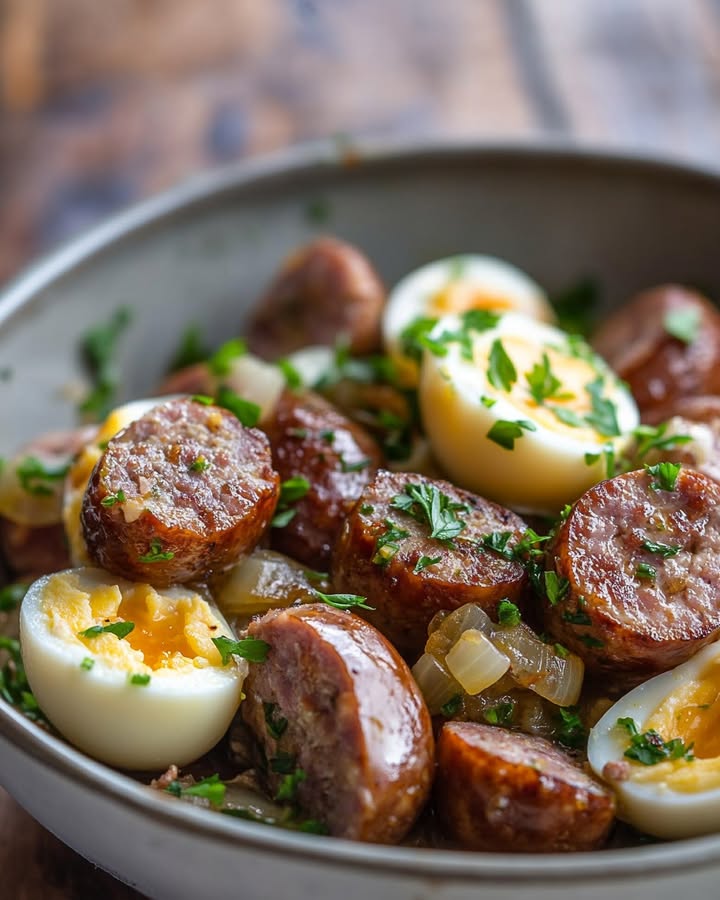
Carefully remove your pickled eggs from the brine. Using a sharp knife, slice each egg in half lengthwise. You’ll see a beautiful, subtle ring of purple or tan color from the pickling process just under the surface of the yolk. Arrange the egg halves on a serving platter or individual plates. Spoon the warm, savory mixture of caramelized onions and sausage right alongside them. Finish with a generous sprinkle of fresh, green parsley for a pop of color and freshness. The contrast of the cool, tangy eggs with the warm, sweet, and smoky onions and sausage is simply magical.
Chef’s Tip: For an extra flavor boost, deglaze the onion and sausage skillet with a tablespoon of the leftover pickling brine. It lifts all the tasty browned bits from the pan and creates a fantastic, light sauce to drizzle over everything.
Your Recipe Timetable
Here’s a quick breakdown of the time investment for this Pickled Eggs Delight.
- Prep Time: 15 minutes
- Pickling Time (Resting): 24 hours minimum
- Cooking Time: 20 minutes
- Total Time (Active): 35 minutes
- Servings: 4
Remember, the pickling happens hands-off in the fridge, so plan ahead!
My Secret for Pickling Perfection
My number one secret is to use very fresh, properly hard-boiled eggs. Eggs that are a week or two old peel much easier than brand-new ones. To hard-boil, place eggs in a saucepan, cover with cold water by an inch, and bring to a boil. Once boiling, cover the pan, remove it from the heat, and let it sit for exactly 12 minutes. Then, transfer them to an ice bath. This method gives you creamy, yellow yolks with no green ring every single time.
A Little Egg-cellent Trivia
Did you know pickling is one of the oldest forms of food preservation? Before modern refrigeration, pickling eggs in a vinegar brine was a common way to keep them edible for months. Sailors and travelers often relied on pickled foods. Our recipe is a tasty nod to that history, but we get to enjoy ours from the comfort of our fridge! The addition of sausage and onions turns this historical preservation method into a complete, modern meal.
Tools You’ll Need
You don’t need any fancy equipment for this recipe! Here’s your simple toolkit:
- A medium saucepan
- A clean 1-quart (or larger) glass jar with a tight-fitting lid
- A large skillet
- A sharp knife and cutting board
- A slotted spoon or tongs
- Measuring cups and spoons
Storing Your Pickled Eggs Delight
The pickled eggs, kept in their brine in a sealed jar, will last beautifully in the refrigerator for up to 3-4 weeks. Make sure the eggs always remain completely submerged in the liquid. This keeps them safe and flavorful. If you notice the brine becoming cloudy, it’s still usually fine, but trust your nose—if it smells off, discard it.
The cooked onions and sausage are best stored separately from the pickled eggs. Keep them in an airtight container in the fridge for 3-4 days. When you’re ready to eat, you can reheat the onion and sausage mixture gently in a skillet or enjoy it cold.
I do not recommend freezing any component of this dish. Freezing will ruin the texture of the eggs, making them rubbery and watery when thawed. The onions and sausage will also become mushy. This is a fresh refrigerator recipe meant to be enjoyed within a few weeks.
Tips for the Best Results
- For uniform flavor, try to use eggs that are all roughly the same size.
- Slice your onions evenly so they caramelize at the same rate.
- Don’t rush the caramelization! Low and slow cooking is key for sweet, soft onions.
- If your eggs float in the brine, wedge a clean, small piece of parchment paper on top to keep them submerged.
- Always use a non-reactive container (like glass) for pickling. Metal can react with the vinegar.
Presentation Ideas to Impress
How you serve this dish can make it even more special! Here are a few of my favorite ways:
- Serve it on a large wooden board for a rustic, shareable feel.
- For individual lunches, layer the warm sausage and onions in a bowl and top with halved pickled eggs.
- Skewer a half egg, a slice of sausage, and a curl of onion on small appetizer picks for a fun party bite.
- Chop the pickled eggs and mix them with the onions and sausage for a unique, chunky salad served on a bed of greens.
Delicious Variations to Try
Love this concept? Here are six tasty ways to mix it up and keep your meals exciting.
- Beet-Pickled Eggs: Add 1/2 cup of beet juice to the brine for stunning pink eggs and a sweet, earthy flavor.
- Spicy Devil’s Delight: Mash the pickled egg yolks with a little mayo, mustard, and diced jalapeño, then pipe back into the whites for a deviled egg twist.
- Mediterranean Twist: Use kielbasa sausage and add a pinch of oregano to the onions. Serve with olives and feta cheese.
- Pickled Egg Salad: Chop the pickled eggs and mix with celery, onion, and a light Greek yogurt dressing for a tangy egg salad.
- Breakfast Hash Style: Dice the pickled eggs and add them to the skillet with the onions, sausage, and some diced potatoes for a hearty hash.
- Sweet & Sour Version: Add a couple of tablespoons of maple syrup or brown sugar to the onions as they caramelize for a deeper sweetness.
Linking to More Kitchen Inspiration
If you loved the hearty, savory flavors in this recipe, you’ll absolutely adore our Southwest Steak Rice Bowls for another protein-packed meal. For a fantastic side dish or lighter main, my vibrant Garden Tortellini Pasta Salad is always a crowd-pleaser. And if you’re a fan of bold, zesty flavors, you must try the incredible Jalapeño Popper Roasted Potato Salad—it has the perfect spicy kick! For a classic French bistro experience at home, our elegant Salade Lyonnaise is a must-make.
Common Mistakes to Avoid
Steer clear of these simple pitfalls to ensure your pickled eggs turn out perfectly every time.
Mistake 1: Using Fresh-Out-of-The-Carton Eggs
This is the biggest hurdle to easy peeling! Very fresh eggs have a pH level that makes the membrane stick tightly to the shell. Using eggs that are at least 7-10 days old makes a world of difference. If you only have fresh eggs, try steaming them for 12-13 minutes instead of boiling. The quick steam shock helps separate the membrane. Always shock your cooked eggs in an ice bath immediately to stop the cooking and further loosen the shell.
Mistake 2: Pouring Boiling Brine Over the Eggs
It’s very tempting to pour the hot brine right from the stove onto the eggs. Don’t do it! The intense heat can start to “cook” the eggs further, making the whites rubbery and tough. It can also cause the glass jar to crack from thermal shock. Always let the brine cool slightly for 10-15 minutes after boiling. It should still be warm, but not scalding hot. This warm temperature is ideal for starting the infusion process without damaging your eggs or your container.
Mistake 3: Not Fully Submerging the Eggs
Any part of an egg sticking out above the brine is a playground for bacteria and won’t pickle properly. It will remain bland and could spoil. After adding the brine, gently tap the jar on the counter to release air bubbles. If the eggs still float, create a “pickle weight” by placing a small, clean piece of cabbage leaf or a dedicated glass fermentation weight on top. The key is to ensure every single egg is completely covered by that flavorful vinegar solution for safety and even flavor.
Mistake 4: Rushing the Pickling Process
Impatience is the enemy of good pickled eggs! Pulling them out of the fridge after just a few hours means they’ll only be flavored on the very surface. The beautiful tang and color need time to penetrate deep into the egg white. A full 24 hours is the absolute minimum. For the best results, I recommend waiting 2-3 days. The flavor becomes richer, more complex, and the yolk takes on a wonderful pickled note. Plan ahead—this recipe rewards patience.
A Note on Healthy Eating
This recipe is a great example of how homemade food lets you control quality and nutrition. Using lean smoked turkey sausage and heart-healthy olive oil are smart choices. For more fantastic guidance on balancing your meals, the CDC offers excellent resources on building healthy eating habits that can last a lifetime.
Your Pickled Eggs Questions Answered
Can I use regular vinegar instead of pickling vinegar?
Yes, you absolutely can! Pickling vinegar is simply white vinegar with a consistent acid level (usually 5% acidity), which is perfect for reliable results. If you use regular white vinegar, check the label to ensure it’s also 5% acidity. Apple cider vinegar is another popular choice and will give your eggs a slightly fruitier, milder tang. Avoid using wine vinegars or balsamic for this basic pickle brine, as their flavors can be too strong and their acid levels can vary.
How long do homemade pickled eggs last in the fridge?
When stored properly in a clean, sealed jar with the eggs fully covered in brine, homemade pickled eggs will keep well for 3 to 4 weeks in the refrigerator. Always use clean utensils to remove eggs from the jar to prevent contaminating the brine. If the brine becomes cloudy or develops an off smell, or if the eggs develop a slimy texture, it’s time to discard them. Safety first! The onions and sausage, stored separately, are best eaten within 3-4 days.
Why did my pickled eggs turn out rubbery?
Rubbery eggs are usually caused by one of two things. First, the eggs themselves were overcooked when you hard-boiled them. Following the “bring to a boil, cover, remove from heat, wait 12 minutes” method helps prevent this. Second, the pickling brine was too hot when poured over the eggs. The heat can essentially continue to cook the proteins in the egg whites, making them tough. Always let your brine cool to warm before pouring it over the peeled eggs to keep their texture pleasant and creamy.
Can I pickle eggs with the shells on?
No, you should never pickle eggs with their shells on. The vinegar brine cannot penetrate the shell to flavor or preserve the egg inside. You must always peel the eggs first. The peeling process can be tricky, which is why using slightly older eggs and an ice bath is so helpful. The goal is to have smooth, intact egg whites ready to soak up all that delicious pickling flavor once they go into the jar.
What’s the best way to slice the eggs for serving?
Use a very sharp, clean knife. A dull knife will crush and tear the firm white of the pickled egg. For clean halves, slice straight down through the center in one firm motion. You can also slice them into rounds for a different presentation on salads. If you’re making deviled-style eggs, slice them in half lengthwise and pop the yolks out. Wiping your knife with a damp cloth between cuts helps keep the slices looking neat and pristine.
Is the red pepper flakes necessary?
Not at all! The red pepper flakes are completely optional and are there to add a subtle background heat and complexity to the brine. If you’re serving people who dislike spice or children, feel free to leave them out. The pickled eggs will still be wonderfully tangy and flavorful from the mustard seeds and peppercorns. You could also replace them with a bay leaf or a sprig of fresh dill for a different herbal note.
Can I reuse the pickling brine?
I do not recommend reusing the brine for a new batch of eggs. Once used, the brine’s acid level decreases, and it can contain bacteria from the first batch of eggs. Reusing it could lead to unsafe food and poorly pickled new eggs. For safety and the best flavor, always make a fresh batch of brine. However, you can absolutely use the leftover brine from your jar as a fantastic vinegar for salad dressings or to deglaze a pan—it’s packed with flavor!
My eggs have a blue/gray ring around the yolk. Are they safe?
Yes, they are perfectly safe to eat! That ring is a visual reaction that sometimes happens when eggs are pickled, especially if they were very fresh or the brine was particularly acidic. It does not mean they have spoiled. It’s simply a harmless chemical reaction between the iron in the yolk and sulfur in the white, intensified by the acidic environment. The flavor and safety are not affected. Some people actually seek out this “cured” look!
What can I serve with these pickled eggs and sausage?
This dish is wonderfully versatile! It’s fantastic on its own as a low-carb meal. For a heartier spread, serve it with crusty bread, butter, and a simple green salad. It pairs beautifully with sharp cheeses like cheddar or gouda. For a picnic, add some potato chips, fresh vegetable sticks, and pickles. It also makes an outstanding addition to a charcuterie or antipasto board. The tangy eggs cut through rich cheeses and fatty meats perfectly.
Can I make a larger batch for a crowd?
Absolutely! This recipe scales up very easily. Just maintain the same ratio of brine ingredients to eggs. Use a very large glass container or multiple jars. Ensure all eggs are submerged. The pickling time remains the same. This is a fantastic make-ahead dish for parties because the eggs only get better with time. Just cook the onions and sausage fresh before your event for the best texture and warmth. It’s a surefire hit that feeds a crowd without last-minute stress.
If you’re always on the lookout for hearty, satisfying meals, explore our entire collection of easy and delicious lunch recipes for more everyday inspiration.
Time to Get Pickling!
I hope you’re as excited to try these Ultimate Pickled Eggs with Sausage & Onions as I am to share them. This recipe has brought so much joy to my own kitchen, from the fun of watching the eggs transform in the jar to the happy faces around my table. It’s proof that with a little planning, you can create something truly special and delicious. So grab those eggs, fire up the stove, and get ready for a Pickled Eggs Delight that will have everyone asking for your secret. Happy cooking, and don’t forget to share your creations!
Pickled Eggs Delight
Ingredients
Equipment
Method
- Combine vinegar, water, sugar, salt, mustard seeds, peppercorns, and red pepper flakes in a medium saucepan and heat until boiling, then let cool for 10-15 minutes.
- Place peeled eggs in a clean jar and pour the warm pickling brine over the eggs, ensuring they are completely covered.
- Seal the jar and refrigerate for at least 24 hours.
- In a large skillet, heat olive oil and add sliced onions; cook slowly until caramelized (10-15 minutes).
- Add sliced smoked turkey sausage to the skillet and cook for another 4-5 minutes.
- Remove pickled eggs from brine, slice them in half lengthwise, and arrange on a serving platter.
- Spoon the caramelized onions and sausage alongside the egg halves and garnish with fresh parsley.