
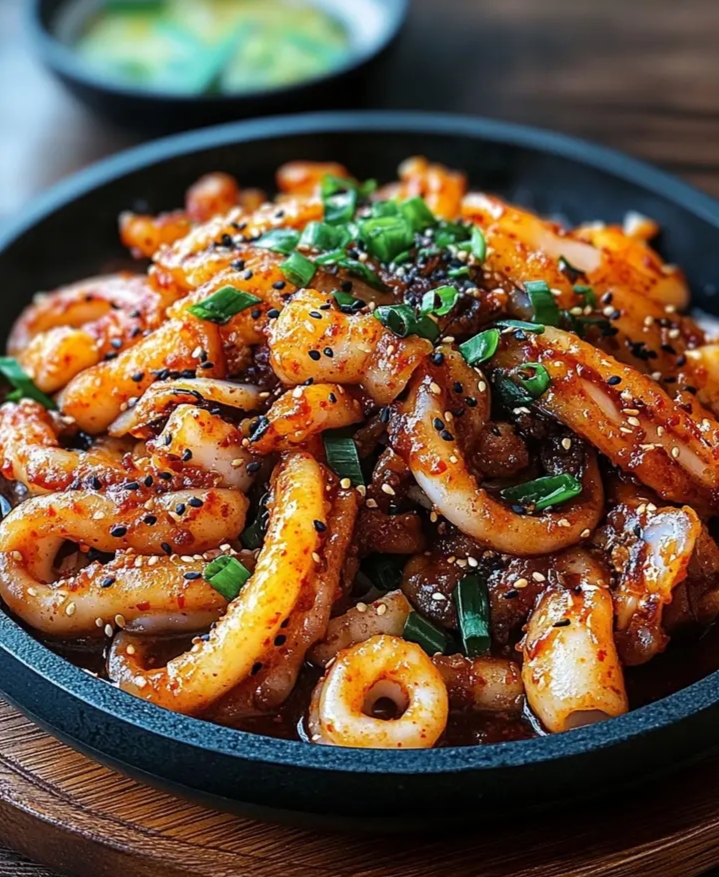
Spicy Korean Octopus: A Fiery Seafood Delight
There’s nothing quite like the thrill of biting into a dish that dances on your taste buds with bold flavors. One evening, while experimenting in my kitchen, I stumbled upon Nakji-bokkeum, or Spicy Korean Octopus. This dish is a symphony of heat, sweetness, and umami, all wrapped up in tender morsels of octopus and vibrant veggies. Let me tell you—it was love at first bite! Whether you’re new to Korean cuisine or already a fan, this recipe will leave you craving more.
A Little History Behind Nakji-Bokkeum
Spicy Korean Octopus, or Nakji-bokkeum, hails from Korea’s bustling street food scene. It’s often served sizzling hot in small pans, still crackling as it hits the table. Traditionally, nakji refers to small octopus, but larger varieties work just fine too. The star of the show is gochujang, a fermented chili paste that gives the dish its signature kick. Growing up, I remember hearing stories about how fishermen would whip up similar dishes right by the shore using freshly caught seafood. Today, it’s become a beloved comfort food enjoyed worldwide.
Why You’ll Love This Recipe
This dish isn’t just delicious; it’s also surprisingly easy to make. The combination of spicy, sweet, and savory flavors creates an addictive experience. Plus, it comes together in under 30 minutes—perfect for busy weeknights. If you enjoy bold, fiery dishes, you’ll find yourself reaching for seconds (and maybe thirds!). And trust me, serving this at dinner parties always earns rave reviews.
Perfect Occasions to Make Spicy Korean Octopus
Looking to impress guests? This dish shines during casual get-togethers or themed dinners like “Korean Night.” Pair it with cold beer or soju for an authentic vibe. It’s also great for date nights when you want something exotic yet comforting. Even solo cooks can enjoy it—it reheats beautifully, making leftovers a joy rather than a chore.
Ingredients You’ll Need
- For the octopus:
- 500 g fresh or frozen octopus, cleaned and cut into bite-sized pieces
- 1 tablespoon white vinegar
- 1 teaspoon salt
- For the spicy sauce:
- 2 tablespoons gochujang (Korean chili paste)
- 1 tablespoon gochugaru (Korean chili powder, optional for extra heat)
- 2 tablespoons soy sauce
- 1 tablespoon sugar
- 1 tablespoon sesame oil
- 1 tablespoon grated garlic
- 1 teaspoon grated ginger
- 1 tablespoon mirin (optional)
- For the stir-fry:
- 2 tablespoons vegetable oil
- 1 onion, sliced thinly
- 1 carrot, julienned
- 100 g shredded cabbage
- 1 green onion, chopped
- Sesame seeds for garnish
Substitution Options
If you can’t find octopus, squid rings are a great alternative. Swap gochujang with sriracha mixed with a bit of miso paste if needed. For vegetarians, mushrooms or tofu can replace the seafood. Use honey instead of sugar for a natural sweetener, and regular cooking oil works if sesame oil isn’t available.
Step 1: Preparing the Octopus
Start by giving your octopus some TLC. If it’s fresh, massage it with salt and vinegar to remove any slime and tenderize it. Rinse thoroughly under cold water before cutting it into bite-sized chunks. Frozen octopus? Simply thaw it according to package instructions. Pro tip: Don’t skip the vinegar step—it makes all the difference in texture!
Step 2: Mixing the Spicy Sauce
In a small bowl, whisk together the gochujang, soy sauce, sugar, sesame oil, garlic, ginger, and mirin. This glossy red sauce smells incredible and packs a punch. Adjust the spice level by adding more or less gochugaru based on your preference. Chef’s tip: Taste the sauce before cooking—if it needs a touch more sweetness, add a drizzle of honey.
Step 3: Stir-Frying the Vegetables
Heat vegetable oil in a large skillet or wok over medium heat. Toss in the onions, carrots, and cabbage, letting them soften slightly while retaining their crunch. The aroma of caramelizing onions mingling with crisp veggies is pure magic. Keep stirring to prevent burning, and imagine how colorful everything looks!
Step 4: Adding the Octopus and Sauce
Now comes the exciting part—adding the star ingredient! Throw in the prepped octopus and cook it quickly over high heat for 2-3 minutes. Overcooking turns octopus rubbery, so keep an eye on it. Pour the spicy sauce over the mix, tossing everything until well-coated. Watch as the glossy sauce clings to each piece, creating a mouthwatering sight.
Step 5: Final Touches
Just before turning off the heat, sprinkle chopped green onions for freshness. Give it one last toss, then transfer to a serving plate. Sprinkle sesame seeds generously—they add a nutty crunch that elevates the entire dish. Serve piping hot alongside steamed rice for a complete meal.
Timing Breakdown
- Preparation Time: 15 minutes
- Cooking Time: 10 minutes
- Total Time: 25 minutes
Chef’s Secret
To take your Spicy Korean Octopus to the next level, marinate the octopus in a little sake or rice wine for 10 minutes before cooking. This step enhances tenderness and infuses subtle flavor without overpowering the dish.
An Interesting Fact About Octopus
Did you know octopuses have three hearts? Two pump blood to the gills, while the third pumps it to the rest of the body. No wonder they’re such fascinating creatures—and delicious ones too!
Necessary Equipment
- Large skillet or wok
- Sharp knife
- Cutting board
- Mixing bowls
- Wooden spoon or spatula
Storage Tips
Leftovers? Lucky you! Store cooled Spicy Korean Octopus in an airtight container in the fridge for up to two days. Reheat gently in a pan to retain texture.
Avoid freezing this dish, as the vegetables may become soggy upon thawing. Instead, prep ingredients ahead of time and assemble fresh when ready to eat.
When reheating, sprinkle a few drops of water to prevent the sauce from drying out. A quick zap in the microwave works too, but stovetop reheating keeps the flavors intact.
Tips and Advice
- Use kitchen shears to cut octopus easily.
- Don’t overcrowd the pan—cook in batches if necessary.
- Balance spiciness with a side of creamy kimchi or pickled radishes.
Presentation Ideas
- Garnish with extra sesame seeds and chopped scallions.
- Serve in individual cast-iron skillets for a rustic touch.
- Add edible flowers for a pop of color.
Healthier Alternatives
Here are six variations to lighten up your Spicy Korean Octopus:
- Low-Sodium Version: Replace soy sauce with coconut aminos.
- Vegan Option: Substitute octopus with king oyster mushrooms.
- Gluten-Free Twist: Use tamari instead of regular soy sauce.
- Less Spicy: Skip gochugaru entirely and reduce gochujang.
- Protein Boost: Add tofu cubes for extra protein.
- Vegetable Medley: Include zucchini or bell peppers for variety.
Mistake 1: Overcooking the Octopus
Octopus becomes tough and chewy if cooked too long. To avoid this, sauté it briefly over high heat. Remember, it continues to cook slightly even after removing it from the pan.
Mistake 2: Skipping the Vinegar Step
The vinegar not only cleans the octopus but also tenderizes it. Skipping this step might result in a slimier texture. Always take the time to do it properly.
Mistake 3: Using Old Gochujang
Gochujang loses potency over time. Check the expiration date and store it in the fridge after opening. Fresh paste ensures maximum flavor impact.
Frequently Asked Questions
Can I use frozen octopus?
Absolutely! Frozen octopus is widely available and convenient. Just ensure it’s fully thawed and drained before use.
Is this dish very spicy?
It depends on your tolerance. Adjust the amount of gochugaru to control the heat. Start with half the recommended amount if you’re unsure.
What can I serve with Nakji-bokkeum?
Steamed white rice pairs perfectly. For a fuller meal, include side dishes like kimchi, seaweed salad, or pickled vegetables.
How do I clean fresh octopus?
Rinse it thoroughly, then rub with salt and vinegar. Remove the beak and eyes if present. Cut into manageable pieces once cleaned.
Can I make this ahead of time?
While best served fresh, you can prep ingredients earlier. Cook just before serving to maintain texture and flavor.
What does gochujang taste like?
Gochujang has a rich, umami flavor with moderate heat and slight sweetness. Think of it as a thicker, spicier cousin of tomato paste.
Where can I buy gochujang?
Most Asian grocery stores carry it. Many mainstream supermarkets now stock it in the international aisle.
Can I substitute gochujang?
For a similar effect, mix sriracha with a bit of miso paste. However, the unique depth of gochujang is hard to replicate.
Why is my sauce too salty?
Reduce the soy sauce next time or balance with a bit of sugar or mirin. Taste as you go to adjust seasoning.
Can kids enjoy this dish?
Yes, if they tolerate mild spice. Omit gochugaru and reduce gochujang for a kid-friendly version.
Final Thoughts
Creating Spicy Korean Octopus at home is easier than you think, and the results are absolutely worth it. With its vibrant flavors and satisfying textures, this dish promises to become a favorite in your repertoire. So grab your apron, gather your ingredients, and let’s bring a taste of Korea to your kitchen tonight!
Spicy Korean Octopus
Ingredients
Equipment
Method
- Massage the fresh octopus with salt and vinegar to remove any slime and tenderize it; rinse thoroughly under cold water and cut into bite-sized chunks.
- In a small bowl, whisk together the gochujang, soy sauce, sugar, sesame oil, garlic, ginger, and mirin.
- Heat vegetable oil in a large skillet or wok over medium heat; add the onions, carrots, and cabbage, stirring until they soften slightly.
- Add the octopus to the skillet and cook quickly over high heat for 2-3 minutes, then pour the spicy sauce over it, tossing to coat.
- Sprinkle chopped green onions and sesame seeds before serving; transfer to a plate and serve hot with steamed rice.
Nutrition
Notes
Marinate the octopus in sake or rice wine for 10 minutes before cooking to enhance tenderness.
Leftovers can be stored in an airtight container in the fridge for up to two days; reheat gently to maintain texture.