
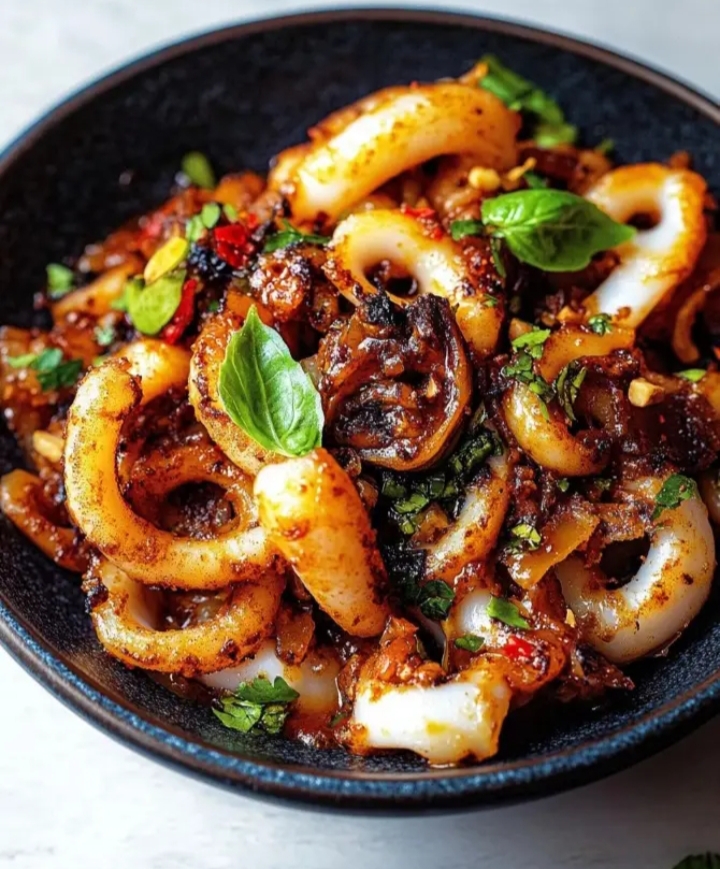
Spicy Thai Squid: A Flavorful Journey to Your Plate
Picture this: it’s a busy Tuesday night, and you’re craving something quick yet exotic. Enter Spicy Thai Squid, a dish that’s as easy to whip up as it is delicious. I first stumbled upon this recipe during a trip to Thailand, where street vendors serve it sizzling hot with fragrant basil leaves. Back home, I tweaked it to suit my family’s taste buds, and now it’s a staple in my kitchen. With tender squid, fiery chilies, and aromatic Thai basil, this dish delivers bold flavors in under 30 minutes. Let’s dive into what makes this recipe so special!
A Taste of Thailand: The Story Behind Spicy Thai Squid
This dish hails from the vibrant streets of Thailand, where fresh seafood meets bold spices. Traditionally, Thai cooks use whatever seafood is freshest that day—often shrimp or fish—but squid adds a unique texture that pairs beautifully with the heat of chilies and the sweetness of soy sauce. I remember watching a local chef toss squid into a blazing wok, his movements so fast they seemed choreographed. He explained that the secret lies in cooking quickly over high heat to lock in flavor and tenderness. This recipe stays true to its roots while being simple enough for any home cook.
Why You’ll Love This Recipe
There are three big reasons why Spicy Thai Squid should be on your menu. First, it’s packed with flavor—garlicky, spicy, savory, and slightly sweet all at once. Second, it’s ready in just half an hour, making it perfect for weeknight dinners. Finally, it’s versatile! Serve it over rice, noodles, or even as a standalone appetizer. Plus, the aroma alone will have everyone rushing to the table.
Perfect Occasions for Spicy Thai Squid
Whether you’re hosting a casual dinner party or looking for a quick meal after work, this dish fits the bill. It’s great for impressing guests who love bold flavors or introducing kids to new tastes (just go easy on the chilies!). Pair it with a crisp white wine or a cold beer for a fun weekend treat.
Ingredients
- 2–3 tablespoons neutral cooking oil (add more if needed)
- 2 shallots, peeled and thinly sliced
- 6 garlic cloves, peeled and minced
- 3 Thai chilies, stemmed and finely chopped (reduce for less heat)
- 100g maitake mushrooms, torn into pieces (or substitute shiitake or button mushrooms)
- 450g cleaned squid, bodies cut into rings and tentacles left whole or halved
- 2 teaspoons quality fish sauce
- 2 tablespoons soy sauce
- 1 tablespoon brown sugar
- 1 teaspoon toasted sesame oil
- 60ml water
- 1 cup fresh Thai basil leaves
Substitution Options
If you can’t find Thai basil, regular sweet basil works fine, though the flavor will differ slightly. For those avoiding soy, coconut aminos make a great alternative to soy sauce. And if squid isn’t available, shrimp or chicken can stand in for a similar stir-fry experience.
Step 1: Preparing the Aromatics
Start by heating 1 tablespoon of oil in a large skillet over medium-high heat. Add the shallots and sauté for about 3–4 minutes until golden. Next, toss in the garlic and chilies, letting them cook for another minute until their fragrance fills the air. Transfer this mixture to a bowl and set aside. Pro tip: Don’t rush this step; caramelized shallots add depth to the dish.
Step 2: Cooking the Mushrooms
In the same skillet, add a splash more oil if needed and crank up the heat to high. Throw in the mushrooms and stir-fry for 3–4 minutes until crispy and golden. Remove them and add them to the bowl with the aromatics. The mushrooms soak up the flavors later, so don’t skip this step!
Step 3: Searing the Squid
Return the skillet to high heat and add a drizzle of oil. Lay the squid rings in a single layer—don’t overcrowd the pan—and sear for about 3 minutes until lightly browned. Transfer them to the bowl with the other ingredients. Repeat with the tentacles if necessary. Remember, squid cooks fast, so keep an eye on it to prevent rubberiness.
Step 4: Making the Sauce
Lower the heat to medium and pour in the fish sauce, soy sauce, brown sugar, sesame oil, and water. Stir everything together and let it simmer for 2 minutes until the sauce thickens slightly. Imagine the rich umami scent mingling with the sweetness—it’s pure magic!
Step 5: Assembling the Dish
Now comes the fun part! Return the squid, mushrooms, and aromatics to the skillet. Toss everything in the sauce until well-coated. Finally, throw in the Thai basil leaves and stir-fry for 1–2 minutes until wilted but still vibrant green. Chef’s tip: Adding the basil last preserves its delicate aroma.
Step 6: Serving
Serve your Spicy Thai Squid piping hot over steamed jasmine rice. Garnish with extra basil leaves or a sprinkle of chili flakes for flair. Dig in while it’s fresh—the flavors are unbeatable!
Timing
Prep time takes about 10 minutes, mostly chopping veggies and prepping the squid. Cooking time clocks in at around 20 minutes, thanks to the quick stir-frying method. There’s no resting time required, so the total time from start to finish is roughly 30 minutes.
Chef’s Secret
Here’s a little trick: Toast your sesame oil briefly before adding it to the sauce. This enhances its nutty aroma and elevates the entire dish.
Extra Info
Did you know that squid is not only delicious but also super nutritious? It’s low in fat and high in protein, making it a guilt-free indulgence. Plus, Thai basil has a distinct licorice-like flavor that sets it apart from other herbs.
Necessary Equipment
You’ll need a large skillet or wok, a sharp knife for slicing, a cutting board, and measuring spoons. A wooden spoon or spatula works best for stirring without scratching your cookware.
Storage
To store leftovers, transfer the dish to an airtight container and refrigerate within two hours of cooking. It keeps well for up to three days. Reheat gently in a skillet to preserve the squid’s texture.
Freezing isn’t recommended, as squid can become mushy when thawed. However, you can prep ingredients like chopped shallots and garlic ahead of time and freeze them separately.
For optimal freshness, always reheat only the portion you plan to eat. This prevents repeated heating and cooling cycles that can dull the flavors.
Tips and Advice
Use the freshest squid you can find—it makes a world of difference. If buying frozen squid, thaw it overnight in the fridge rather than microwaving. Also, pat the squid dry before cooking to ensure a good sear.
Presentation Tips
Serve your Spicy Thai Squid in a colorful bowl surrounded by lime wedges and fresh herbs. Drizzle a bit of extra sesame oil on top for shine, and garnish with red chili slices for contrast.
Healthier Alternative Recipes
Looking to lighten things up? Try these variations:
- Low-Sodium Version: Swap regular soy sauce for low-sodium or tamari.
- Vegan Twist: Replace squid with tofu or tempeh.
- Keto-Friendly: Serve over cauliflower rice instead of regular rice.
- Gluten-Free Option: Use gluten-free soy sauce or coconut aminos.
- Vegetarian Delight: Omit seafood entirely and double up on mushrooms.
- Spice-Lovers Special: Add extra chilies or a dash of sriracha.
Common Mistakes to Avoid
Mistake 1: Overcooking the Squid
Overcooked squid turns rubbery, ruining the dish’s texture. To avoid this, cook the squid quickly over high heat and remove it as soon as it browns. Pro tip: Set a timer to remind yourself when to take it off the heat.
Mistake 2: Skipping Fresh Ingredients
Fresh garlic, shallots, and basil are key to authentic flavor. Using dried or pre-minced versions won’t give you the same punch. Always opt for fresh whenever possible.
Mistake 3: Overloading the Pan
Cooking too many ingredients at once lowers the pan’s temperature, leading to soggy results. Work in batches if needed to maintain high heat.
FAQ
What is Thai basil?
Thai basil has a unique anise-like flavor compared to sweet basil. It’s commonly used in Southeast Asian cuisines and adds a distinctive touch to dishes like Spicy Thai Squid.
Can I use frozen squid?
Yes, but thaw it properly in the fridge overnight. Pat it dry before cooking to prevent excess moisture in the pan.
How do I adjust the spice level?
Reduce the number of chilies or remove their seeds before chopping. Alternatively, omit the chilies entirely and serve with chili sauce on the side.
Is this dish kid-friendly?
Absolutely! Just tone down the heat and serve it with mild sides like plain rice or steamed veggies.
Where can I buy Thai basil?
Check your local Asian grocery store or farmers’ market. Some larger supermarkets may carry it in the fresh herb section.
Can I make this dish ahead?
It’s best served fresh, but you can prep ingredients like chopped shallots and garlic ahead of time to save effort.
What pairs well with this dish?
Jasmine rice, noodles, or even crusty bread work wonderfully. A side salad with citrus dressing balances the richness.
Why does my squid taste chewy?
Chewy squid usually means it was overcooked. Stick to short cooking times and high heat for tender results.
Do I need a wok to make this?
No, a large skillet works just as well. The key is maintaining high heat for proper searing.
Can I add vegetables?
Definitely! Bell peppers, snap peas, or baby corn would complement the dish nicely.
With its bold flavors and quick prep time, Spicy Thai Squid is sure to become a favorite in your household. Whether you’re cooking for one or feeding a crowd, this dish never disappoints. So grab your skillet, fire up the stove, and bring a taste of Thailand to your dinner table tonight!
Spicy Thai Squid
Ingredients
Equipment
Method
- Heat 1 tablespoon of oil in a large skillet over medium-high heat, then add shallots and sauté for 3–4 minutes until golden.
- Toss in the garlic and chilies, and cook for another minute until fragrant; transfer to a bowl and set aside.
- In the same skillet, add more oil if needed, increase heat to high, and stir-fry the mushrooms for 3–4 minutes until crispy and golden; add to the bowl with the aromatics.
- Return the skillet to high heat with a drizzle of oil, lay the squid rings in a single layer, and sear for about 3 minutes until lightly browned; add to the bowl with other ingredients.
- Lower heat to medium, pour in fish sauce, soy sauce, brown sugar, sesame oil, and water; stir and simmer for 2 minutes until thinned.
- Return squid, mushrooms, and aromatics to the skillet; toss in sauce until well-coated, then add Thai basil leaves and stir-fry for 1–2 minutes until wilted.
- Serve piping hot over steamed jasmine rice, garnished with extra basil leaves or a sprinkle of chili flakes.