
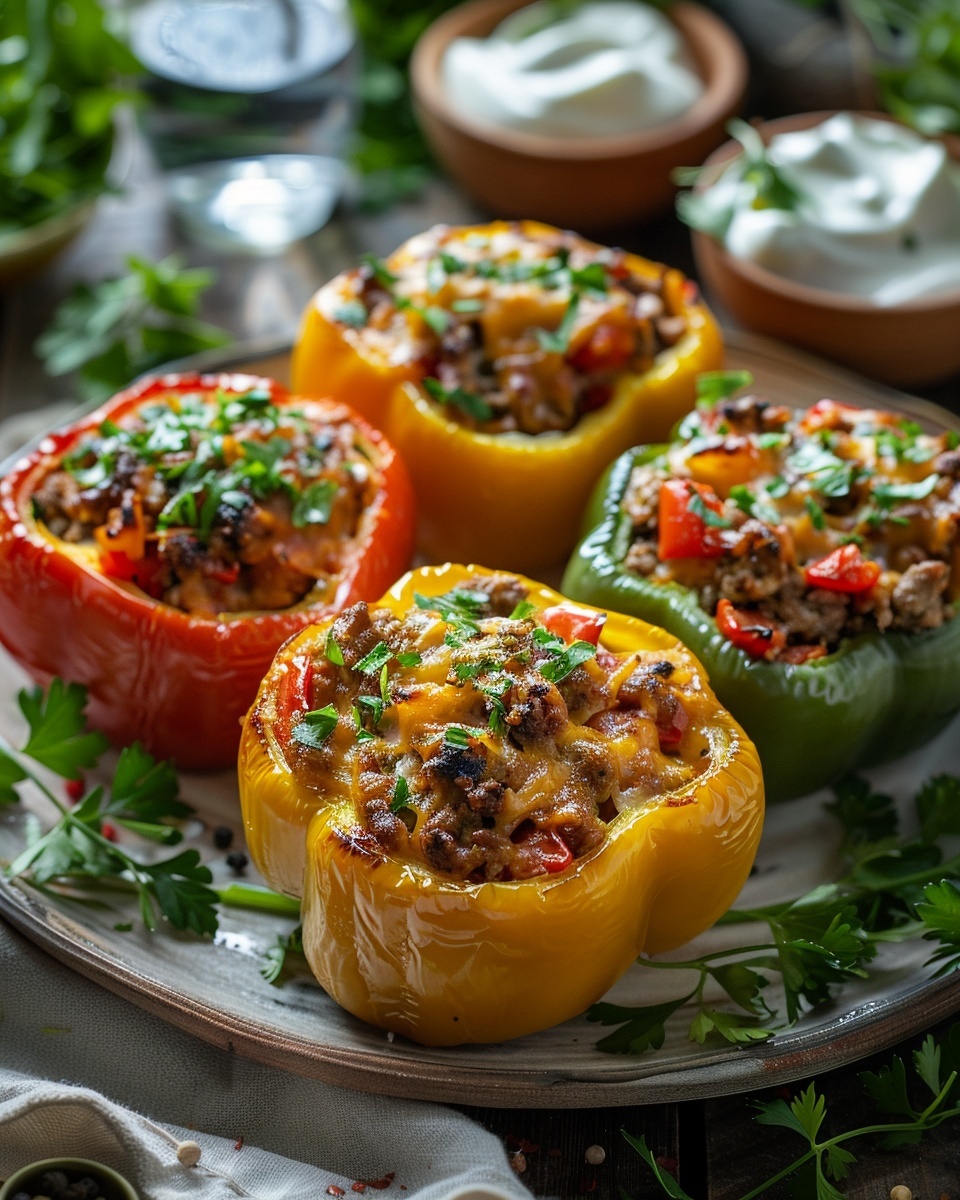
Last Tuesday night, I opened my fridge to find six beautiful bell peppers staring back at me. My neighbor had dropped them off from her garden, and I knew exactly what I wanted to make. Within an hour, my kitchen smelled amazing, and my family couldn’t wait to dig into perfectly baked stuffed bell peppers. That’s the magic of this dish – it turns simple ingredients into something special.
Welcome to my kitchen! Today, I’m excited to share everything I know about stuffed bell peppers. This versatile dish has saved my weeknight dinners countless times. It works for meal prep, family gatherings, and even those nights when you need to use up random ingredients in your pantry. Whether you’re trying to eat healthier, following a specific diet plan, or just want to try something new, this guide covers it all. We’ll explore the basics, talk about variations, and I’ll share tips I’ve learned from making these peppers dozens of times.
Why Stuffed Bell Peppers Are So Popular
Stuffed bell peppers have been around for generations, and there’s a good reason they’ve stood the test of time. They’re like edible bowls that you can fill with almost anything. I love that each pepper becomes its own individual serving. No fighting over portions at the dinner table!
The beauty of this dish lies in its flexibility. You can make healthy stuffed bell peppers with lean proteins and vegetables. You can create stuffed bell peppers keto style by skipping the rice and loading up on cheese and meat. Vegetarians in your family? Try stuffed bell peppers vegetarian versions with quinoa, beans, and tons of veggies. The options are endless.
These colorful peppers look impressive on the plate. When I serve them to guests, people always think I spent hours in the kitchen. The truth? They’re actually pretty simple to make. The peppers themselves provide the presentation. You just fill them up and let the oven do most of the work.
My mom used to make southern stuffed bell peppers when I was growing up. She’d stuff them with seasoned ground beef, rice, and top them with a tangy tomato sauce. The smell alone brings back memories. Now I make my own versions, sometimes swapping ingredients based on what I have available or what my family is craving that week.
They’re also practical. You can prep them ahead of time and refrigerate them until you’re ready to bake. On busy Sundays, I’ll make a big batch and freeze half for those hectic weeknights. Just pop them in the oven straight from the freezer, add a few extra minutes to the baking time, and dinner is served.
The Basics of Making Stuffed Bell Peppers
Let’s break down what you actually need to make great stuffed bell peppers. Don’t worry – this isn’t complicated. I promise if you can boil water and use an oven, you can make these.
First, you need the peppers themselves. Choose bell peppers that can stand upright on their own. I like medium to large ones because they hold more filling. Pick peppers that feel firm and heavy for their size. Any color works – red, yellow, orange, or green. Green peppers have a slightly bitter taste, while the others are sweeter. I usually grab a mix of colors because they look beautiful together in the baking dish.
Next comes the filling. This is where you get creative. The most traditional version uses ground beef mixed with cooked rice, onions, and seasonings. But I’ve made incredible stuffed bell peppers with ground turkey, shredded chicken, Italian sausage, and even plant-based crumbles. For stuffed bell peppers without rice, try cauliflower rice, quinoa, or just add extra vegetables and protein.
Here are some filling combinations I rotate through:
- Ground beef, rice, diced tomatoes, and Italian seasonings
- Ground turkey with black beans, corn, and taco spices
- Shredded chicken mixed with cream cheese and buffalo sauce
- Quinoa, chickpeas, spinach, and feta cheese for a vegetarian option
- Italian sausage, marinara sauce, and mozzarella cheese
You’ll also need liquid or sauce. Many recipes call for tomato sauce poured over or around the peppers. I love stuffed bell peppers with tomato sauce because it keeps everything moist and adds flavor. Sometimes I use beef broth, chicken stock, or even just water with some seasonings. The liquid creates steam in the oven, which helps cook the peppers perfectly.
Finally, the baking method matters. You’ll need a baking dish that fits your peppers snugly. If they tip over during baking, they’ll spill their filling everywhere. I learned this the hard way during my first attempt. Now I use a dish where the peppers fit close together so they support each other.
Should I cook my bell peppers before stuffing them? This is one of the most common questions I get. The answer depends on how you like your peppers. If you want them softer and more tender, blanch them in boiling water for 3-4 minutes before stuffing. I do this when I’m making best stuffed bell peppers for my dad because he prefers them really soft. If you like a bit of crunch and texture, stuff them raw. They’ll soften during baking but still have some firmness. I usually skip the blanching step because I’m lazy and I actually prefer the texture of peppers that were stuffed raw.
The basic process is simple. Cut the tops off your peppers and remove the seeds and membranes. Some people cut peppers in half lengthwise instead, which works great too. Fill each pepper with your chosen mixture. Place them in your baking dish. Add your sauce or liquid around the base. Cover with foil and bake until everything is hot and bubbly.
That’s really all there is to it. The preparation takes maybe 20 minutes, and then the oven does the rest. You can make four peppers or a dozen at once. The recipe scales easily, which is perfect for feeding a crowd or preparing meals for the week ahead.


Choosing the Right Filling
Now that we’ve covered the basics, let’s talk about what actually goes inside those peppers. This is honestly my favorite part because there’s no wrong answer here.
The classic approach uses ground beef mixed with white rice, but I’ve strayed so far from that original recipe over the years. Last month, I made stuffed bell peppers with ground turkey because it was on sale, and my husband actually preferred them to the beef version. Turkey is leaner, cooks faster, and soaks up seasonings beautifully. I brown it with diced onions, garlic, and a good sprinkle of cumin and paprika. Sometimes I’ll add a packet of taco seasoning if I’m feeling extra lazy.
What can you stuff bell peppers with? Honestly, almost anything you’d put in a burrito, casserole, or pasta dish works great. I’ve experimented with shredded rotisserie chicken mixed with salsa and black beans. That version takes maybe ten minutes to prep because the chicken is already cooked. On nights when I’m really short on time, this is my go-to method. The chicken stays moist during baking, and the flavors meld together perfectly.
Here’s the thing about rice – it’s traditional, but not mandatory. For folks doing stuffed bell peppers without rice, cauliflower rice has become my secret weapon. My sister is watching her carbs, so when she comes over for dinner, I make a batch with riced cauliflower instead. She can’t tell much difference, especially when everything’s loaded with cheese and seasonings. You could also skip the grain entirely and pack in extra ground meat, mushrooms, zucchini, or whatever vegetables you have lying around.
Speaking of dietary preferences, stuffed bell peppers vegetarian style opened up a whole new world for me. I was skeptical at first because I grew up thinking stuffed peppers needed meat. Wrong! One of my most requested recipes uses a combination of quinoa, black beans, corn, diced tomatoes, and plenty of Mexican spices. The quinoa adds protein and has this nutty flavor that works so well with the sweetness of the peppers. I top these with shredded cheddar and a dollop of sour cream when serving.
Another vegetarian filling I rotate through regularly combines cooked lentils with sautéed mushrooms, spinach, and feta cheese. It’s hearty enough that nobody misses the meat. The lentils give it substance, and the feta adds that salty, tangy kick that makes every bite interesting. If you’ve never worked with lentils before, don’t be intimidated – they’re actually easier than rice. Just simmer them in broth for about twenty minutes until tender.
For my friends following keto, stuffed bell peppers keto adaptations work surprisingly well. Skip any grains completely and focus on high-fat proteins and low-carb vegetables. I’ll use ground beef or Italian sausage, mix in cream cheese for richness, add spinach or kale, and top everything with mozzarella or cheddar. The pepper itself does contain some carbs, but it’s reasonable enough for most people’s macros. Plus, the fiber content is excellent.
By the way, if you enjoy creamy, indulgent flavors in dishes like creamy Tuscan chicken, you can apply similar concepts to your pepper filling. I’ve mixed sun-dried tomatoes, spinach, and cream cheese into ground chicken for a filling that tastes like it came from an Italian restaurant. The creaminess stays locked inside the pepper while it bakes, creating this incredible sauce that pools at the bottom.
The ground meat you choose really does change the whole character of the dish. Stuffed bell peppers with chicken tend to be lighter and less greasy than beef versions. I buy ground chicken breast when I’m trying to keep things healthy, or ground chicken thighs when I want more flavor and moisture. Chicken needs more seasoning than beef in my experience, so I’m generous with herbs, garlic powder, and even a splash of Worcestershire sauce.
Sometimes I’ll combine two proteins. Half ground beef and half Italian sausage creates this amazing depth of flavor. The sausage is already seasoned, so it does double duty. This combination reminds me of the filling you’d find in a really good lasagna or in beef stroganoff with mushrooms, where you layer different flavors to build complexity.
Southern-Style Stuffed Bell Peppers
My grandmother made southern stuffed bell peppers that were completely different from what you might find in other parts of the country. She’d use green bell peppers exclusively because that’s what grew in her garden, and she’d make this filling with ground beef, cooked rice, diced celery, onions, and lots of black pepper.
What made hers distinctly southern was the seasoning blend and the way she cooked them low and slow. She’d add a good amount of Creole seasoning to the meat mixture – that combination of paprika, cayenne, garlic powder, and herbs that gives southern food its characteristic kick. Then she’d simmer everything on the stovetop before even stuffing the peppers. This extra step meant the flavors had time to develop before baking.
The sauce was different too. Instead of plain tomato sauce, she’d make what was basically a thin gravy using the drippings from the meat, some tomato paste, a bit of flour for thickening, and chicken stock. It wasn’t thick like Italian marinara – more like a flavorful liquid that the peppers would sit in while baking. That liquid would reduce in the oven and create this glossy coating that clung to everything.
Southern versions also tend to include more vegetables mixed right into the filling. Finely chopped celery and bell pepper scraps (from the tops you cut off) go back into the mixture. Nothing goes to waste. Sometimes corn gets added, or okra if it’s in season. The result is less about showcasing one star ingredient and more about creating a complete meal in each pepper.
Stuffed Bell Peppers with Tomato Sauce
Now let’s talk about stuffed bell peppers with tomato sauce, which is probably the version most people picture when they think of this dish. This Italian-American approach treats the peppers almost like pasta – they’re vessels for a rich, savory filling swimming in marinara.
I make my tomato sauce from scratch when I have time, but honestly, a good jar of marinara works perfectly fine. What matters is getting enough sauce in the baking dish so the peppers don’t dry out. I pour about two cups of sauce into the bottom of my 9×13 pan before adding the stuffed peppers. Then I spoon more sauce over the tops. This creates steam during cooking and keeps everything moist and flavorful.
The filling for this style usually includes Italian sausage or ground beef seasoned with Italian herbs – oregano, basil, thyme, and plenty of garlic. I mix in cooked rice or sometimes orzo pasta for variety. Fresh parsley gets chopped and stirred in right before stuffing. And cheese – lots of cheese. Parmesan mixed into the filling and mozzarella on top that gets all melted and golden.
Funny enough, this version shares some similarities with how I prepare chicken Alfredo pasta – both rely on building layers of flavor with cheese, herbs, and a good sauce. The technique of balancing richness with acidity applies to both dishes.
One trick I learned from an Italian friend is to add a pinch of sugar to the tomato sauce. It cuts the acidity and brings out the natural sweetness of the tomatoes. Just a quarter teaspoon makes a noticeable difference. She also taught me to add a splash of red wine to the sauce if I’m serving these to adults. It deepens the flavor and makes the whole dish taste more sophisticated.
The beauty of the tomato sauce version is how the flavors develop as everything bakes together. The sauce reduces slightly, concentrating its flavor. The juices from the meat and vegetables drip down and mingle with the sauce. By the time you pull the dish from the oven, you’ve got this incredible pan sauce that’s perfect for spooning over rice or soaking up with crusty bread.
When I’m feeling fancy, I’ll finish these under the broiler for two minutes after baking. This creates a caramelized, slightly crispy top on the cheese that adds textural contrast. It’s a small step but makes them look restaurant-quality, kind of like how a perfectly broiled finish elevates baked salmon with lemon from good to great.


Healthy and Diet-Friendly Options
If you’re trying to eat healthier or following a specific eating plan, stuffed bell peppers are honestly one of the best dishes you can make. I started experimenting with healthy stuffed bell peppers a few years ago when my doctor suggested I cut back on processed foods, and I was shocked at how satisfying they could be without all the heavy ingredients.
The pepper itself is already packed with nutrients. Bell peppers are loaded with vitamin C – way more than oranges, actually. They’re also rich in vitamins and minerals like vitamin A, potassium, and fiber. So you’re starting with a vegetable that’s doing serious work for your health before you even add the filling.
For a truly healthy version, I use lean ground turkey or chicken breast as the base protein. Mix it with cauliflower rice instead of white rice, add tons of chopped vegetables like zucchini, mushrooms, and spinach, and season generously with herbs and spices instead of relying on cheese and heavy sauces. These come out surprisingly flavorful. My kids didn’t even notice I’d swapped the rice until I mentioned it weeks later.
Are bell peppers ok for diabetics? Absolutely, and they’re actually an excellent choice. Bell peppers have a low glycemic index, meaning they won’t spike blood sugar levels the way starchy vegetables might. My uncle has type 2 diabetes, and his nutritionist specifically recommended stuffed peppers as a balanced meal option. The key for diabetics is watching what goes inside. Skip the white rice or use a small portion of brown rice or quinoa instead. Focus on lean proteins, plenty of non-starchy vegetables, and go easy on sugary sauces.
When I make them for my uncle, I stuff peppers with ground turkey, a small amount of brown rice, diced tomatoes, onions, and loads of spices. No added sugars in the sauce. He gets a complete meal with controlled carbohydrates, plenty of protein to keep his blood sugar stable, and fiber from both the pepper and the filling. He actually asks me to make these for family dinners now.
The stuffed bell peppers keto versions have become some of my favorites even though I’m not strictly keto. There’s something deeply satisfying about a pepper loaded with seasoned ground beef, cream cheese, cheddar, and spinach with zero guilt about carbs. The fat content keeps you full for hours. My friend lost thirty pounds last year following keto, and she meal-prepped these peppers every single Sunday. She’d make eight at a time, store them in containers, and heat one up for lunch throughout the week.
Here’s what I’ve learned about making keto-friendly stuffed peppers work really well. First, choose red, yellow, or orange peppers over green when possible. They’re slightly lower in carbs and taste sweeter. Second, don’t be afraid of fat – add cream cheese or sour cream to your meat mixture for moisture and richness. Third, cheese on top isn’t just for flavor; it creates a satisfying crust that makes the dish feel indulgent even though it fits your macros.
For folks watching calories or fat intake, you can go the opposite direction. Use extra-lean ground turkey, skip the cheese entirely or use just a small sprinkle of reduced-fat cheese, bulk up the filling with vegetables, and use tomato sauce or broth as your liquid. I’ve made batches this way that come in around 200 calories per stuffed pepper. That’s a complete meal for very few calories, and because the pepper and vegetables provide so much volume, you feel genuinely satisfied.
Another approach I love is making Mediterranean-style healthy stuffed peppers. I’ll use ground lamb or turkey seasoned with cumin, cinnamon, and coriander. Mix in cooked bulgur wheat or quinoa, chickpeas, diced tomatoes, and fresh herbs like mint and parsley. Top with a tiny bit of feta cheese. These taste like something you’d order at a nice restaurant, but they’re packed with whole grains, lean protein, and vegetables. The spices make every bite interesting without needing heavy sauces or excessive cheese.
By the way, if you’re plant-based or just trying to eat less meat, vegetarian stuffed peppers can be incredibly protein-rich. Combine quinoa with black beans, and you’ve got a complete protein right there. Add some nutritional yeast for a cheesy flavor without dairy, pile in the vegetables, and season well. I make these for my vegetarian neighbor regularly, and her non-vegetarian husband devours them without complaint.
Cooking Tips and Techniques
Alright, so you’ve got your peppers stuffed and ready to go. Now comes the actual cooking part, which is where a few small techniques can make the difference between good stuffed peppers and great ones.
When making stuffed peppers, do you cover them in the oven? This question comes up constantly, and honestly, both methods work – it just depends on what texture you’re going for. I usually start with the peppers covered in aluminum foil for the first 30-35 minutes of baking. This traps steam inside, which helps cook the filling thoroughly and softens the peppers. The trapped moisture prevents everything from drying out, especially important if you’re using lean meat that doesn’t have much fat.
Then I remove the foil for the last 10-15 minutes. This allows the tops to brown slightly and any cheese to get bubbly and golden. If you’re making stuffed bell peppers with tomato sauce, uncovering them at the end lets the sauce reduce and thicken a bit rather than staying watery. The result is peppers that are tender but not mushy, with a slightly caramelized top that adds visual appeal and a bit of texture contrast.
Some people prefer to leave them uncovered the whole time. This works if you’ve added plenty of liquid to your baking dish and you like your peppers with more bite to them. They’ll soften but maintain more structure. My brother-in-law insists on uncovered the whole time because he likes the slightly charred edges on the peppers. It’s really personal preference.
Here’s a tip I wish someone had told me earlier: choose your baking temperature based on whether your filling is precooked or raw. If everything going into the pepper is already cooked – like using leftover rice, precooked meat, and canned beans – you can bake at 375°F for just 25-30 minutes. You’re really just heating everything through and softening the pepper. But if you’re using raw ground meat mixed with uncooked rice, you need 350°F for closer to 60 minutes to make sure everything cooks safely and thoroughly.
I learned this the hard way when I once served peppers with slightly crunchy rice in the middle. Not my finest cooking moment. Now I always test the filling with a fork before serving. The rice or grain should be completely tender, and if you’re using meat, it should reach 165°F internal temperature. I keep an instant-read thermometer in my kitchen drawer specifically for checking things like this.
The amount of liquid in your pan matters more than most recipes tell you. I add at least half an inch of liquid – whether that’s tomato sauce, broth, or even just water with some seasonings – to the bottom of the baking dish. This creates a steamy environment that cooks everything evenly. As the liquid evaporates and reduces during baking, it concentrates into a flavorful sauce that you can spoon over the peppers when serving. Never skip this step. Dry-baked peppers can turn out tough and the filling can get dried out on the edges.
Another technique that changed my pepper game: slice just a thin layer off the bottom of each pepper so it sits flat and stable in the pan. I used to struggle with peppers tipping over and spilling their filling. Such a mess. Now I take two seconds to trim the bottom (carefully, so I don’t create a hole), and they stand up perfectly throughout the entire baking process. The flat bottom also helps them cook more evenly.
If you’re making stuffed bell peppers without rice or any grain, watch your baking time. Fillings with just meat and vegetables cook faster than those with rice or pasta. I reduce my baking time by about 10-15 minutes when I’m doing all-meat or all-veggie fillings. Otherwise, the peppers can get too soft and start to collapse.
Speaking of timing, here’s something I do when I’m short on time: I microwave the whole peppers for 2-3 minutes before stuffing them. This gives them a head start on softening, which means they need less time in the oven. It’s a shortcut I use on weeknights when I need dinner on the table fast. The peppers come out just as good, and I save 15-20 minutes of baking time.
For the best stuffed bell peppers, I always bring my stuffing to room temperature before filling if it’s been refrigerated. Cold filling in a pepper takes longer to heat through, which can result in overcooked, mushy peppers by the time the center is hot. If I’m using leftovers from the fridge, I’ll microwave them for a minute or two just to take the chill off before stuffing.
Don’t forget to let the peppers rest for about 5 minutes after you pull them from the oven. Just like a roast or a steak, they benefit from a short rest. The filling settles, the juices redistribute, and they’re much easier to serve without falling apart. I use this time to make a quick side salad or set the table.
One last thing – if you’re serving these for a crowd or making them for meal prep, invest in a good baking dish that distributes heat evenly. I use a ceramic 9×13 dish that I’ve had for years. Glass works great too. Avoid metal pans if you’re using tomato sauce because the acidity can react with the metal and create a slightly metallic taste. Small detail, but it makes a difference.
When you’re exploring different options for weeknight meals, stuffed bell peppers fit perfectly into a rotation of satisfying dinner ideas that don’t require hours in the kitchen but still deliver on flavor and nutrition. They’re one of those reliable recipes you can return to again and again with different variations.
Stuffed bell peppers have become one of those dishes I make without even thinking about it anymore. They’ve solved so many dinnertime dilemmas – what to make when everyone wants something different, how to use up random ingredients, how to eat healthier without feeling deprived. The fact that they taste amazing and look impressive is just a bonus. Try one version this week, and I bet you’ll find yourself making them regularly. They’re forgiving, flexible, and honestly just really satisfying to make and eat.
Frequently Asked Questions
Should I cook my bell peppers before stuffing them?
It depends on your texture preference. If you like softer, more tender peppers, blanch them in boiling water for 3-4 minutes before stuffing. This pre-cooking step gives you peppers that practically melt in your mouth after baking. However, if you prefer peppers with a bit of firmness and structure, you can stuff them raw and let them soften during the baking process. I usually skip the blanching because I’m often short on time and I actually enjoy the slight crunch that remains when you start with raw peppers. Just know that raw peppers will need the full baking time to become tender.
What can you stuff bell peppers with?
Almost anything you’d put in a burrito, casserole, or pasta dish works beautifully. Classic options include ground beef or turkey mixed with rice, but I’ve successfully used quinoa, cauliflower rice, shredded chicken, Italian sausage, black beans, lentils, and even leftover chili. For vegetarian versions, try combinations of grains, beans, and tons of vegetables with cheese. The filling can be Mexican-inspired with taco seasonings, Italian-style with marinara and mozzarella, Greek with feta and olives, or even Asian-inspired with ground pork and ginger. Whatever flavors you enjoy in other dishes will work stuffed inside a pepper.
Are bell peppers ok for diabetics?
Yes, bell peppers are actually excellent for people with diabetes. They have a low glycemic index, meaning they won’t cause rapid spikes in blood sugar levels. Bell peppers are also high in fiber and low in carbohydrates compared to starchy vegetables. For diabetics, the key is paying attention to what goes inside the pepper – use moderate amounts of whole grains like brown rice or quinoa rather than white rice, include lean proteins, and avoid sugary sauces. The combination of protein, fiber, and controlled carbs in a properly made stuffed pepper creates a balanced meal that helps maintain stable blood sugar.
When making stuffed peppers, do you cover them in the oven?
I recommend covering stuffed peppers with aluminum foil for the majority of the baking time, then removing the foil for the last 10-15 minutes. Covering them traps steam and moisture, which helps cook the filling thoroughly and prevents everything from drying out. The steam also helps soften the peppers more effectively. Removing the cover toward the end allows any cheese on top to brown and bubble, and lets excess liquid evaporate so your sauce thickens rather than staying watery. If you prefer firmer peppers with more texture, you can bake them uncovered the entire time, just make sure there’s enough liquid in the pan to create steam.
How long do stuffed peppers last in the refrigerator?
Properly stored stuffed peppers will last 3-4 days in the refrigerator. Let them cool completely after baking, then transfer them to an airtight container or cover the baking dish tightly with plastic wrap or foil. When you’re ready to eat them, reheat individual peppers in the microwave for 2-3 minutes or warm them in a 350°F oven for about 15-20 minutes until heated through. I actually think they taste even better the next day because the flavors have had time to meld together. They’re perfect for meal prep if you’re looking for easy lunches or quick weeknight dinners.
Can you freeze stuffed bell peppers?
Absolutely, and they freeze remarkably well. You can freeze them either before or after baking. I prefer to freeze them after baking because then they’re truly ready-to-eat meals – just thaw and reheat. Let them cool completely, wrap each pepper individually in plastic wrap, then place them all in a freezer-safe container or bag. They’ll keep for up to 3 months in the freezer. To reheat from frozen, you can microwave them for 4-5 minutes, or bake them covered in a 350°F oven for about 45 minutes. If you’re freezing unbaked peppers, add an extra 15-20 minutes to your normal baking time when cooking from frozen.
What’s the best type of rice to use in stuffed peppers?
White rice is traditional and works perfectly fine, but I’ve experimented with many types. Brown rice adds more fiber and nutrients, though it takes longer to cook beforehand. I love using jasmine or basmati rice for their fragrant quality. Wild rice mixed with white rice creates an interesting texture and nutty flavor. For quicker prep, I often use instant rice or leftover rice from another meal. Just remember that whatever rice you use needs to be fully cooked before you stuff it into the peppers – uncooked rice won’t cook through properly during the baking time. If you’re avoiding grains entirely, cauliflower rice or quinoa are both excellent substitutes.
Why are my stuffed peppers watery?
Watery stuffed peppers usually result from not draining ingredients properly or using too much sauce. If you’re using canned tomatoes, drain them well before adding to your filling. Same with any canned beans or vegetables. Ground meat should be browned and drained of excess fat before mixing with other ingredients. Also, don’t add too much liquid to the filling itself – the peppers release their own moisture as they cook. Use just enough sauce in the bottom of your pan to create steam, not to swim the peppers. Finally, removing the foil for the last 10-15 minutes of baking allows excess liquid to evaporate, which helps thicken everything up nicely.
Can I make stuffed peppers in a slow cooker?
Yes, slow cooker stuffed peppers turn out wonderfully tender. Place your stuffed peppers upright in the slow cooker, add about half a cup of liquid (broth, tomato sauce, or water) to the bottom, and cook on low for 6-8 hours or high for 3-4 hours. The long, gentle cooking makes the peppers incredibly soft. This method works great if you want to start dinner in the morning and come home to a ready meal. The only downside is you won’t get that browned, slightly crispy cheese top that you get from oven baking. Some people finish them under the broiler for a few minutes after slow cooking to get that golden cheese crust.
What should I serve with stuffed bell peppers?
Stuffed peppers are pretty complete on their own since they contain protein, vegetables, and often grains. But I usually serve them with a simple side to round out the meal. A light green salad with vinaigrette works perfectly and adds freshness. Crusty bread or garlic bread is great for soaking up any sauce in the bottom of the dish. If your peppers don’t include a grain, serve them over rice, quinoa, or cauliflower rice. Roasted vegetables like zucchini, asparagus, or green beans make a nice complement. For heartier appetites, a side of mashed potatoes or pasta salad works well. Keep the sides simple since the peppers themselves are already flavorful and filling.
Ingredients
Equipment
Method
- Preheat your oven to 350°F (175°C).
- Cut the tops off bell peppers and remove seeds and membranes.
- In a skillet, heat olive oil over medium heat and sauté diced onions until translucent.
- Add ground meat to the skillet and cook until browned. Drain any excess fat.
- Mix in cooked rice, diced tomatoes, mixed vegetables, and spices into the meat.
- Fill each bell pepper with the meat mixture and place them upright in a baking dish.
- Pour tomato sauce around the base of the peppers to keep them moist during baking.
- Cover the dish with aluminum foil and bake for 30-35 minutes.
- Remove foil, sprinkle cheese on top of each pepper, and bake for an additional 10-15 minutes until cheese is bubbly.
- Let the stuffed peppers rest for 5 minutes before serving.