
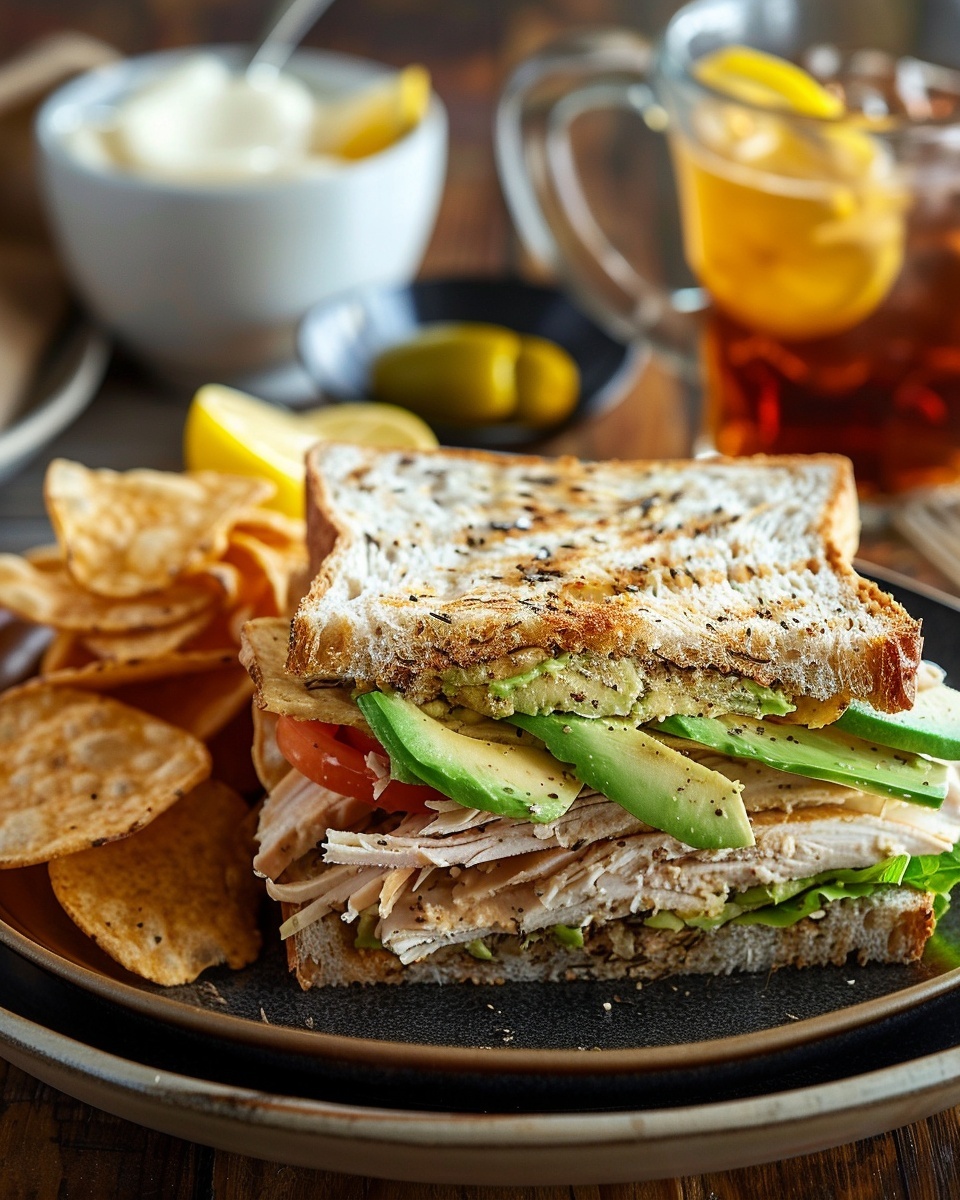
Introduction: Why I Love the Turkey Avocado Sandwich
Last Tuesday, I stood in my kitchen staring at a perfectly ripe avocado and some leftover turkey breast. Five minutes later, I was biting into what might have been the best lunch I’d made all month. That’s the magic of a turkey avocado sandwich—it’s simple, satisfying, and somehow feels both indulgent and healthy at the same time.
I’ve been making turkey avocado sandwiches for years now, and I’m constantly amazed by how popular they’ve become. Walk into any café or sandwich shop, and you’ll likely spot some version of this combo on the menu. There’s a good reason for that popularity. The combination of lean turkey and creamy avocado creates a perfect balance of protein and healthy fats that keeps you full without weighing you down.
This sandwich has become my go-to meal when I want something nutritious but don’t have much time to cook. Whether you’re making one at home or grabbing one from chains like Arby’s, Panera, Togo’s, or Subway, you’re getting a meal that delivers real nutritional value. In this guide, I’ll walk you through everything you need to know about this fantastic sandwich—from crafting the perfect homemade version to understanding what you’re getting when you order one at your favorite restaurant.
Let me share why this sandwich deserves a regular spot in your meal rotation. A typical turkey avocado sandwich contains around 400-600 calories, depending on the bread and toppings you choose. Those aren’t empty calories either. You’re getting quality protein from the turkey, heart-healthy monounsaturated fats from the avocado, and fiber from whole-grain bread. It’s the kind of meal that fuels your afternoon without leaving you drowsy at your desk.
I love how versatile this sandwich is too. Need a quick breakfast? Add an egg. Want something lighter for dinner? Skip the cheese and load up on veggies. Trying to cut carbs? Wrap it in lettuce instead of bread. The basic combination works so well that you can adapt it to fit almost any eating style or preference.
Why Choose a Turkey Avocado Sandwich?
Every time I recommend this sandwich to friends, they ask me the same question: what makes it so special compared to other sandwiches? The answer comes down to the incredible nutritional balance you get from just two main ingredients.
Turkey is one of the leanest protein sources available. A four-ounce serving gives you about 30 grams of protein with minimal fat. That protein keeps you satisfied for hours and helps maintain muscle mass. I noticed a real difference in my energy levels when I started choosing turkey over processed lunch meats for my sandwiches.
Then there’s the avocado. This fruit brings healthy fats to the table—the kind your body actually needs. Those fats help your body absorb vitamins and support brain function. Plus, avocados contain potassium, fiber, and vitamins C, E, and K. When you spread that creamy green goodness on your sandwich, you’re not just adding flavor. You’re turning a simple meal into something genuinely nutritious.
The combination creates what nutritionists call a “complete meal.” You’ve got your protein from the turkey, healthy fats from the avocado, and carbohydrates from the bread. Add some lettuce and tomato, and you’re checking off multiple food groups in one convenient package.
I appreciate how this sandwich keeps me full without feeling heavy. Unlike a burger or fried chicken sandwich that might leave you sluggish, a healthy turkey avocado sandwich provides sustained energy. I often eat one before afternoon meetings or workouts because I know it won’t slow me down.
The versatility factor really stands out too. Are you following a low-carb diet? Use large lettuce leaves instead of bread. Need a gluten-free option? Plenty of great gluten-free breads work perfectly with this combination. Vegetarian friends have told me they swap the turkey for chickpeas or tempeh and still love the result.
Here’s what makes this sandwich work for different eating styles:
- Low-carb: Use lettuce wraps or low-carb tortillas
- Gluten-free: Choose certified gluten-free bread
- High-protein: Add extra turkey or a slice of cheese
- Vegetarian: Replace turkey with grilled vegetables or plant-based protein
- Keto-friendly: Skip the bread entirely and make it a lettuce wrap
The turkey avocado sandwich calories typically range from 400 to 600, making it a reasonable choice for most meal plans. If you’re watching your calorie intake closely, you can easily adjust by choosing lighter bread or using less avocado. Even with modifications, the sandwich remains satisfying and delicious.
Making Your Own Healthy Turkey Avocado Sandwich
I make this sandwich at least twice a week at home, and I’ve learned a few tricks that take it from good to great. The best part? You can have it ready in under ten minutes with minimal cooking skills required.
Start with quality ingredients. This sandwich has so few components that each one really matters. Fresh roasted turkey breast beats pre-packaged deli meat every time. I usually roast a turkey breast on Sunday and slice it for sandwiches throughout the week. If you’re buying from the deli counter, ask for low-sodium turkey sliced medium-thick.
The avocado needs to be perfectly ripe. Press gently near the stem—it should give slightly but not feel mushy. Too firm, and it won’t spread smoothly. Too soft, and it might taste off. I buy avocados at different stages of ripeness so I always have one ready when I need it.
Here’s my go-to recipe that never disappoints:
Simple Homemade Turkey Avocado Sandwich
- 2 slices whole-grain bread
- 4 ounces sliced turkey breast
- 1/2 ripe avocado
- 2 leaves of crisp lettuce
- 2-3 slices of tomato
- Dijon mustard or mayo (optional)
- Salt and pepper to taste
Toast the bread lightly if you prefer some crunch. Mash the avocado with a fork and add a pinch of salt and pepper. Spread it on one slice of bread. Layer the turkey on top, then add lettuce and tomato. If you like mustard or mayo, spread it on the other slice of bread. Close the sandwich and enjoy.
Some ingredient selection tips I’ve learned over time: whole-grain bread adds fiber and keeps you fuller longer than white bread. Look for bread with at least three grams of fiber per slice. The grainy texture also pairs better with creamy avocado than soft white bread does.
For the turkey, freshness makes a huge difference. Check the use-by date and smell it before using. Fresh turkey should smell clean and mild. Store it properly in the coldest part of your fridge and use it within three to five days of opening.
Choosing the right avocado takes practice. Besides the squeeze test, check the color under the stem. Peel back the small stem or cap at the top. If it’s green underneath, the avocado is perfect. If it’s brown, it’s overripe. Can’t remove the stem easily? It’s not ready yet.
I like to prep ingredients ahead on busy weeks. Wash and dry lettuce, slice tomatoes, and store them in containers. When lunchtime hits, assembly takes two minutes. Some people ask if you can prep the whole sandwich ahead, but I don’t recommend it. The avocado browns and the bread gets soggy. Make it fresh for the best taste and texture.


Popular Chains and Their Turkey Avocado Sandwich
Of course, making sandwiches at home is great, but sometimes you’re out running errands or traveling and need something quick. I’ve tried the turkey avocado sandwich at pretty much every major chain over the past few years, and I’ve got opinions about each one. The quality varies more than you’d think, and knowing what to expect can save you from disappointment.
Let me walk you through the most popular options so you can find the best turkey avocado sandwich near me when hunger strikes.
Panera has become my reliable fallback when I’m traveling. Their turkey avocado sandwich panera version comes on their signature sourdough bread, and they pile on the avocado pretty generously. The sandwich includes turkey, bacon, lettuce, tomato, and a generous layer of smashed avocado. What sets it apart is the emerald greens they use—they’re fresher and crispier than what most chains offer. The calorie count sits around 510 calories, which is reasonable considering the portion size. I appreciate that they don’t skimp on the turkey either. You’re getting about four ounces of actual protein here.
Here’s the thing though—Panera’s version is fairly simple. If you want lots of toppings or customization options, you might feel a bit limited. But sometimes simple is exactly what you need. The bread quality alone makes it worth the price.
Arby’s surprised me the first time I tried their take on this sandwich. The turkey avocado sandwich arbys comes on harvest wheat bread and includes roasted turkey, pepper bacon, Swiss cheese, lettuce, tomato, and red onion, plus their signature avocado spread. They call it the Roast Turkey Ranch & Bacon Sandwich when avocado is added. It clocks in at about 550 calories, but that includes the bacon and cheese. The spread they use is more of an avocado-ranch hybrid, which gives it a tangy kick you won’t find elsewhere. Some people love this flavor twist. Others prefer pure avocado taste. I’m somewhere in the middle—it’s different but good in its own way.
Subway offers the most customizable experience, hands down. The turkey avocado sandwich subway lets you build exactly what you want. Start with their turkey breast, add avocado (they usually mash it fresh when you order), and then go wild with veggies and sauces. The calorie count depends entirely on your choices, ranging from about 350 calories for a six-inch on wheat with minimal toppings to over 600 if you add cheese and mayo. I actually appreciate this flexibility. When I’m trying to keep things lighter, Subway gives me that control. The downside? Quality can vary significantly depending on which location you visit and how fresh their ingredients are that day.
Togo’s deserves more recognition than it gets. Their turkey avocado sandwich togos is seriously underrated. They use premium turkey, fresh avocado slices (not mashed), and their bread has this perfect chewy texture. The sandwich comes with lettuce, tomatoes, cucumbers, and their special sauce. What I love about Togo’s is the bread-to-filling ratio—they don’t overwhelm you with bread like some chains do. The calorie count runs about 580 for a regular size. If you live somewhere with a Togo’s nearby, definitely give it a try. Similar in concept to a grilled chicken caesar wrap, it’s one of those sandwiches that just works.
The Cheesecake Factory version might surprise you if you’ve never had it. The turkey avocado sandwich cheesecake factory is part of their “SkinnyLicious” menu, which focuses on lighter options. They serve it on whole wheat bread with turkey, avocado, tomato, lettuce, and mayonnaise. It comes in at around 590 calories, which is actually pretty good considering Cheesecake Factory’s reputation for huge portions. The quality is consistently good—you’re getting real restaurant-quality ingredients here, not just fast-food standards. The price reflects that quality though. You’ll pay more here than at most other chains.
Newk’s has a regional presence mainly in the South and Midwest, but their turkey avocado sandwich newks has a loyal following. They call it the “Turkey Avocado Club,” and it lives up to the name. Stacked with sliced turkey, bacon, Swiss cheese, fresh avocado, lettuce, tomato, and herb mayo on wheat bread, this sandwich feels substantial. We’re talking about 620 calories of serious sandwich here. The portions are generous enough that I often save half for later. Their bread is baked fresh daily, and you can tell the difference.
Cosi used to be my office lunch spot years ago. The turkey avocado sandwich cosi comes on their signature flatbread, which completely changes the texture experience. They add turkey, avocado, lettuce, tomato, and balsamic vinaigrette. The flatbread makes it feel lighter somehow, even though the calorie count sits around 540. The balsamic gives it a sophisticated twist that you won’t find at most sandwich chains. Unfortunately, Cosi has closed many locations in recent years, but if you have one nearby, it’s worth checking out.
By the way, several chains offer what they call an uptown turkey avocado sandwich. This term usually refers to a fancier version with premium ingredients—think artisan bread, extra toppings like sprouts or specialty cheeses, and gourmet spreads. The name itself doesn’t mean much unless you’re looking at a specific menu, so always check what’s actually included.
When comparing chains, I consider three main factors: ingredient quality, value for money, and consistency. Panera and Cheesecake Factory win on quality. Subway wins on customization and value. Togo’s and Newk’s offer the best balance of everything. Arby’s provides a unique flavor profile that stands out from the pack.
Perfecting Your Sandwich with Condiments and Fillings
Now let’s talk about what really transforms a basic turkey and avocado combo into something memorable. The right condiments and additional fillings make all the difference, just like how the right seasoning elevates oven roasted chicken thighs from ordinary to exceptional.
Mustard works beautifully with turkey. I’m not talking about yellow ballpark mustard though. Go for Dijon or whole-grain mustard. The slight tanginess cuts through the richness of the avocado and adds complexity without overwhelming the other flavors. I spread a thin layer on both pieces of bread—just enough to taste it in every bite. Dijon has about 5 calories per teaspoon, so it adds flavor without adding significant calories.
Mayonnaise is controversial in the sandwich world. Some people won’t touch it, others think every sandwich needs it. I fall somewhere in the middle. A light spread of mayo adds moisture and helps bind everything together, but too much makes the sandwich heavy and masks the fresh avocado flavor. If you’re using mayo, try mixing it with a little lime juice and cilantro first. This creates a zesty spread that complements turkey perfectly. Regular mayo adds about 90 calories per tablespoon, so use it sparingly if you’re watching calories.
Funny enough, ranch dressing has become increasingly popular on turkey sandwiches. I was skeptical at first, but it actually works. The herbs in ranch pair well with turkey, and the creamy texture plays nicely with avocado. You can also try a lighter ranch made with Greek yogurt to cut calories while keeping the flavor.
Homemade avocado spread takes things up a notch. Mash your avocado with lime juice, a pinch of garlic powder, salt, and a touch of cumin. This creates a spread with more depth than plain mashed avocado. Some people add Greek yogurt to make it creamier and add protein. Others mix in a bit of salsa for heat and moisture.
Pesto is my secret weapon for turkey sandwiches. A thin layer of basil pesto adds an herby, garlicky punch that makes the whole sandwich sing. It’s especially good if you’re using tomatoes because those flavors naturally complement each other. Store-bought pesto works fine, but homemade takes it to another level entirely.
For additional fillings beyond the basics, spinach deserves serious consideration. It’s more nutritious than regular lettuce, has a mild flavor that doesn’t compete with other ingredients, and adds a nice dark green color. I prefer baby spinach because the leaves are tender and don’t overpower the sandwich. A handful adds vitamins A, C, and K plus iron and folate, all for about 5 calories.
Tomatoes are pretty standard, but choosing the right type matters. Roma tomatoes hold up better than beefsteak varieties because they’re less watery. In summer, I use heirloom tomatoes when I can find good ones—the flavor is incomparable. In winter, I sometimes skip fresh tomatoes altogether and use sun-dried tomatoes instead. They’re concentrated flavor bombs that don’t make your bread soggy.
Cheese adds another dimension entirely. Swiss cheese is the classic choice with turkey—it’s mild, melts nicely if you’re making a hot sandwich, and doesn’t overpower the avocado. Provolone offers a bit more flavor while staying in the mild category. For something different, try pepper jack if you like heat. The spicy kick contrasts beautifully with cool, creamy avocado. Each slice of cheese adds roughly 70-110 calories depending on the type.
Bacon appears on many restaurant versions for good reason. The smoky, salty crunch complements both turkey and avocado. Two strips of cooked bacon add about 80 calories but also add significant flavor. If you’re cooking bacon anyway, make extra for other meals like a hearty veggie pasta bake later in the week.
Red onion gives you that sharp bite that wakes up your taste buds. I slice it paper-thin so it doesn’t overwhelm everything else. If raw onion is too intense for you, try quick-pickling thin slices in vinegar and a little sugar for ten minutes before adding them to your sandwich.
Cucumbers add refreshing crunch without many calories. They’re especially good in summer when you want something light and cooling. English cucumbers work better than regular ones because they have fewer seeds and less water content.
Sprouts—alfalfa or broccoli sprouts—add texture and nutrition. They’re trendy for good reason. Just make sure to wash them thoroughly and buy from a reputable source since sprouts can sometimes harbor bacteria.
The layering order actually matters more than most people realize. I put the avocado directly on the bread because it acts as a moisture barrier that keeps the bread from getting soggy. Then comes the turkey, then cheese if using it, then vegetables, then the condiments on the top piece of bread. This arrangement keeps everything stable and prevents sliding.
If you’re experimenting with bold flavors like the ones in garlic butter steak bites, consider trying garlic aioli as your spread instead of plain mayo. Just remember that turkey and avocado are relatively mild, so strong condiments should be used thoughtfully rather than drowning out the main ingredients.


Frequently Asked Questions About Turkey Avocado Sandwiches
Over the years, I’ve gotten tons of questions from friends, family, and readers about making the perfect turkey avocado sandwich. Some questions pop up more than others, so I thought I’d tackle the most common ones here. These are the real questions people ask when they’re standing in their kitchen trying to decide what goes on their sandwich.
Is avocado good on a turkey sandwich?
Absolutely, and I’ll tell you exactly why. Avocado brings this incredible creamy texture that turkey alone can’t provide. Turkey, while delicious and protein-packed, can sometimes feel a bit dry. The avocado solves that problem naturally without needing heavy mayonnaise or dressings. Beyond texture, you’re getting serious nutritional benefits. Avocados contain nearly 20 vitamins and minerals, including potassium, vitamin E, and B-vitamins. The healthy monounsaturated fats in avocado actually help your body absorb fat-soluble vitamins from other ingredients in your sandwich, like vitamins A and K from lettuce and tomatoes. Plus, that combination of lean protein from turkey and healthy fats from avocado keeps your blood sugar stable, which means you won’t experience that mid-afternoon energy crash. I’ve honestly never met anyone who tried avocado on their turkey sandwich and regretted it.
What condiments go best on a turkey sandwich?
Here’s where personal preference really comes into play, but I’ve tried pretty much everything over the years. Dijon mustard ranks at the top for me because it adds tanginess without overwhelming the delicate turkey flavor. Whole-grain mustard gives you those little pops of texture and even more flavor complexity. Mayo remains a classic choice, but I suggest mixing it with something—lime juice, chipotle, or herbs—to make it more interesting. Pesto works surprisingly well, especially basil pesto, because the herbs complement turkey beautifully. Ranch dressing has gained popularity recently, and while I was skeptical at first, the herby creaminess actually pairs nicely with both turkey and avocado. Hummus serves as a great alternative if you want something healthier than mayo but still creamy. Honey mustard adds a sweet-tangy kick that some people absolutely love. Hot sauce or sriracha mayo work if you like heat. Here’s the thing though—whatever condiment you choose, use it sparingly at first. You can always add more, but you can’t take it away once your bread is soaked.
What sandwich filling goes well with avocado?
Avocado is incredibly versatile, which is part of why it’s become such a sandwich staple. Beyond turkey, bacon might be the most obvious pairing—that salty, smoky crunch against creamy avocado is pretty much perfect. Lettuce and tomato are classics for good reason; they add freshness and keep things light. Roasted red peppers bring a sweet, slightly charred flavor that contrasts beautifully with mild avocado. Grilled chicken works just as well as turkey if you want to switch things up. Cucumber slices add refreshing crunch without competing on flavor. Sprouts—whether alfalfa, broccoli, or radish—give you that trendy café feel plus nutritional benefits. Red onion provides sharp bite that wakes up your taste buds. Pickles might sound weird, but the tangy acidity actually complements avocado’s richness. Jalapeños or banana peppers work if you like some heat. For cheese options, Swiss, provolone, or pepper jack all play nicely with avocado. Egg—whether hard-boiled slices or a fried egg—takes your sandwich into breakfast territory and adds extra protein. I’ve even seen people use strawberries or apples for a sweet-savory combination that’s surprisingly good.
What is uptown turkey avocado?
The term “uptown” in sandwich lingo generally refers to a premium or upgraded version of a standard sandwich. An uptown turkey avocado typically includes higher-quality ingredients and additional toppings that elevate it beyond the basic version. Think artisan bread instead of standard wheat, premium deli turkey instead of the basic stuff, and extras like applewood-smoked bacon, specialty cheeses, or gourmet spreads. Some chains use “uptown” as part of their branding to indicate their fancier sandwich offerings. The exact ingredients vary by restaurant, but you’re generally looking at things like mixed greens instead of plain lettuce, heirloom tomatoes, red onion, maybe some sprouts or microgreens, and often a special sauce or aioli. The price reflects these upgrades—you’ll pay more for an uptown version, but you’re getting restaurant-quality ingredients. When I see “uptown” on a menu, I expect fresher produce, better bread, and more attention to detail in the preparation. It’s basically the difference between a sandwich you’d make quickly at home and one you’d order at a nicer café.
How many calories are in a typical turkey avocado sandwich?
The calorie count varies quite a bit depending on your ingredients and portion sizes, but most turkey avocado sandwich calories fall between 400 and 600. A basic homemade version with two slices of whole wheat bread, four ounces of turkey, half an avocado, and vegetables usually lands around 450 calories. Add cheese and you’re up to 520. Include bacon and you’re hitting 600 or more. Restaurant versions tend to run higher because they often use more generous portions and add extras like mayo or special sauces. Chain restaurant versions typically range from 510 calories at Panera to around 620 at Newk’s. If you’re trying to keep calories lower, skip the cheese, use only a quarter of an avocado instead of half, choose lighter bread, and load up on veggies. The beauty of making it at home is you control exactly what goes in, which means you control the calorie count.
Can I make a turkey avocado sandwich ahead of time?
I wish I could say yes, but honestly, this sandwich is best made fresh. The main culprit is the avocado, which oxidizes and turns brown when exposed to air. Even with lemon or lime juice, you’re fighting a losing battle after a few hours. The bread also tends to get soggy when assembled too far in advance, especially if you’re using juicy tomatoes. That said, you can absolutely prep the components ahead of time. Wash and dry your lettuce, slice your tomatoes and store them separately, cook your bacon if using it, and even mash your avocado with lime juice and store it in an airtight container with plastic wrap pressed directly against the surface. When lunch rolls around, assembly takes maybe two minutes. If you absolutely must make the whole thing ahead, wrap it extremely tightly in plastic wrap and eat it within two to three hours. Some people have success keeping the avocado and tomato off until right before eating, then adding them at the last minute.
What’s the best bread for a turkey avocado sandwich?
Whole grain or whole wheat bread is my go-to recommendation because it adds fiber, nutrients, and a heartier texture that stands up to the creamy avocado. The slightly nutty flavor of whole grains complements turkey beautifully. Sourdough offers amazing flavor and that perfect chewy texture, plus it’s easier to digest than some other breads. Ciabatta works well if you want something with more structure and those nice air pockets. Multigrain bread gives you interesting texture and extra nutrition. For a lighter option, a whole wheat wrap or flatbread changes the whole sandwich experience. If you’re going low-carb or keto, large lettuce leaves make surprisingly good wraps—romaine or butter lettuce work best. Gluten-free folks have lots of good options now; look for brands with good reviews because quality varies significantly. Whatever bread you choose, toasting it lightly adds texture and creates a slight barrier against moisture, which helps prevent sogginess.
Is a turkey avocado sandwich healthy?
Yes, when made thoughtfully, a healthy turkey avocado sandwich provides excellent nutrition. You’re getting lean protein from turkey, which supports muscle maintenance and keeps you full. The avocado contributes healthy monounsaturated fats that support heart health and help your body absorb nutrients. Whole grain bread adds fiber for digestive health and sustained energy. Vegetables like lettuce and tomato provide vitamins and minerals. The CDC emphasizes the benefits of cooking at home because you control ingredients and portion sizes, which is exactly what makes homemade sandwiches healthier than many restaurant options. That said, “healthy” is relative. If you pile on cheese, bacon, and heavy mayo, you’re adding saturated fat and calories that might not align with your health goals. But the basic combination of turkey, avocado, vegetables, and whole grain bread absolutely qualifies as a nutritious meal. It provides balanced macronutrients, keeps you satisfied, and delivers real vitamins and minerals rather than empty calories.
Can I freeze a turkey avocado sandwich?
I really don’t recommend freezing this particular sandwich. Avocado doesn’t freeze well at all—it turns mushy and brown when thawed, and the texture becomes unpleasant. Lettuce and tomatoes also become watery and limp after freezing and thawing. The bread might handle freezing okay, but the overall sandwich quality will suffer dramatically. If you want to meal prep, freeze the turkey separately and assemble fresh sandwiches when needed. Some people freeze just the turkey and bread together, then add fresh avocado and vegetables when they’re ready to eat. That approach works better but still isn’t ideal. Your best bet is keeping ingredients separate and assembling sandwiches fresh. Turkey freezes well for up to two months when properly wrapped, so you could roast a large turkey breast, slice it, and freeze portions for future sandwiches.
What can I substitute for turkey to make this sandwich vegetarian?
Several options work really well if you want to keep the sandwich concept but skip the turkey. Grilled portobello mushroom slices provide a meaty texture and savory flavor that satisfies like turkey does. Chickpeas—either whole or mashed into a salad with herbs and lemon—add protein and substance. Tempeh, when sliced thin and pan-fried with a little seasoning, offers great protein and a firm texture. Grilled or roasted vegetables like zucchini, eggplant, and bell peppers create a hearty filling. Hard-boiled egg slices turn it into an egg and avocado sandwich that’s equally delicious. Store-bought veggie patties work if you crumble or slice them. Hummus serves as both a protein source and a spread, especially when paired with lots of vegetables. White beans mashed with herbs and garlic create a protein-rich spread similar to what you might find in creative lunch recipes that focus on plant-based ingredients. The key is choosing something with enough substance to balance the creamy avocado and provide satisfying texture.
Making a great turkey avocado sandwich really comes down to understanding how the ingredients work together and not being afraid to customize based on what you like. Whether you’re grabbing one at your favorite chain or taking ten minutes to make one at home, you’re choosing a meal that nourishes your body while actually tasting delicious. Don’t be afraid to experiment with different condiments, breads, and fillings until you find your perfect combination. The basic formula is solid enough that it can handle all kinds of variations and still deliver something satisfying. Start with quality ingredients, layer them thoughtfully, and enjoy every bite of a sandwich that proves healthy eating doesn’t have to be boring.
Ingredients
Equipment
Method
- Toast the bread lightly if desired.
- Mash the avocado with a fork and add a pinch of salt and pepper.
- Spread the mashed avocado on one slice of bread.
- Layer the sliced turkey on top of the avocado.
- Add lettuce and tomato on top of the turkey.
- If using, spread Dijon mustard on the other slice of bread.
- Close the sandwich and enjoy.