
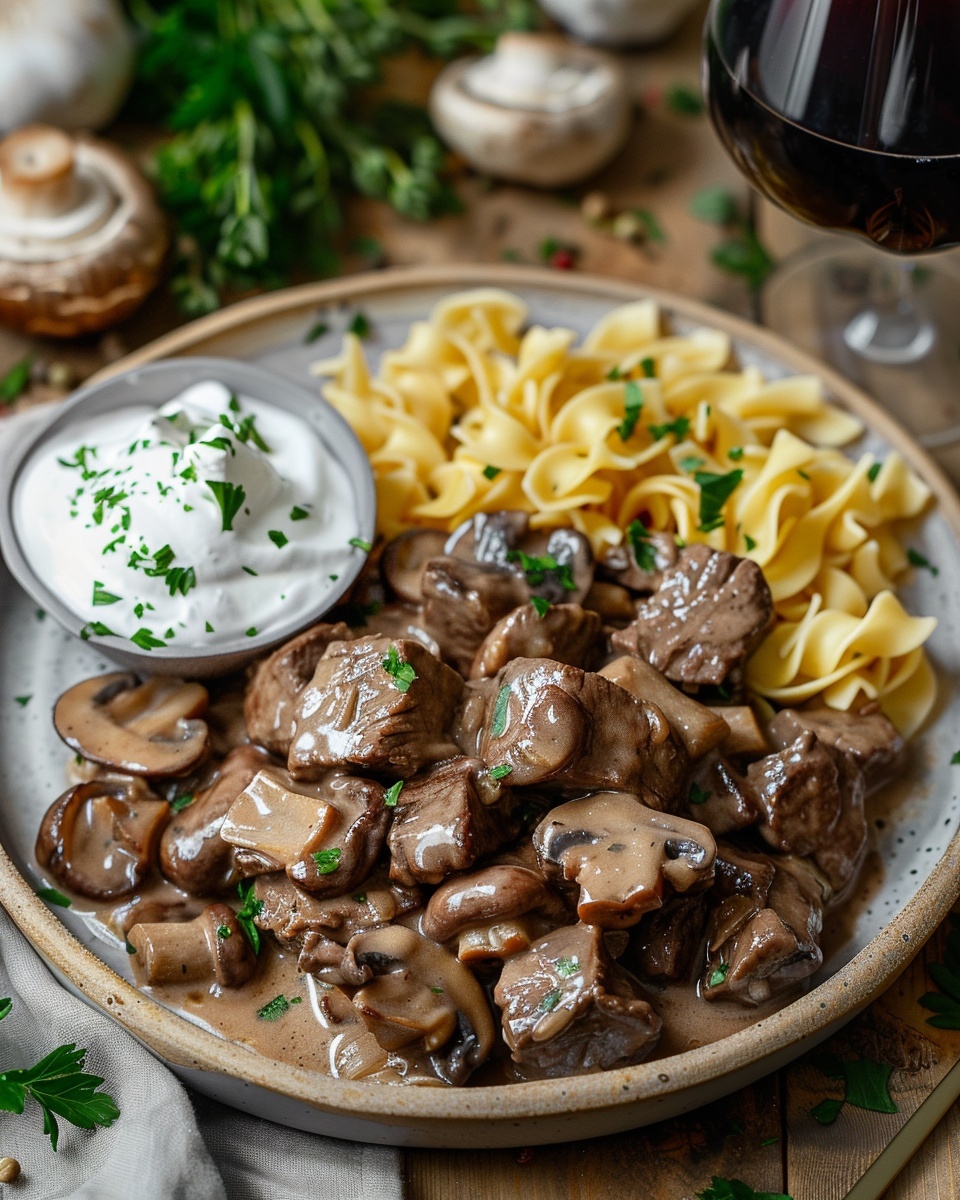
Last Tuesday, my neighbor knocked on my door just as I was browning beef for dinner. She sniffed the air and said, “That smells like my grandmother’s cooking!” I smiled because I knew exactly what she meant. There’s something magical about the aroma of tender beef sizzling with onions and mushrooms. That night, I was making Beef Stroganoff with Mushrooms, and it brought back memories for both of us.
This dish has a way of doing that. It crosses generations and brings people together around the table. I’ve been making this recipe for years, and it never fails to impress. Whether you’re cooking for your family on a busy weeknight or hosting friends for dinner, this classic meal delivers every single time.
The beauty of a traditional beef stroganoff lies in its simplicity. You don’t need fancy techniques or hard-to-find ingredients. Just good beef, fresh mushrooms, and a handful of pantry staples come together to create something truly special. The creamy sauce coats every piece of tender meat, and the earthy mushrooms add depth that makes each bite satisfying.
I’m going to walk you through everything you need to know about making this dish perfectly. We’ll explore where it came from, what makes it so beloved, and which ingredients you absolutely need in your kitchen. By the end, you’ll feel confident enough to make your own version and maybe start your own family tradition.
The Origin and History of Beef Stroganoff
The beef stroganoff origin story takes us back to 19th century Russia. The dish was named after the Stroganov family, a wealthy and influential Russian dynasty. While historians debate the exact details, most agree that a French chef working for the family created this recipe sometime in the 1850s.
The original recipe was quite different from what we know today. It featured lightly sautéed beef strips in a simple mustard and bouillon sauce. No mushrooms, no paprika, and surprisingly, no sour cream at first. Those elements came later as the dish traveled across borders and adapted to different tastes.
I find it fascinating how recipes transform as they move through cultures. When Russian immigrants brought this dish to China in the early 1900s, it gained new followers. From there, it spread to America after World War II, where it became a dinner party staple in the 1950s and 60s.
American cooks made the recipe their own. They added mushrooms for extra flavor and texture. Sour cream became a standard ingredient, creating that signature creamy sauce we all love. Some versions started using ground beef stroganoff recipes instead of strips, making it more budget-friendly and faster to prepare.
Today, you’ll find countless variations. Some people swear by their beef stroganoff crockpot method for busy days. Others stick to the stovetop for better control. The Pioneer Woman has her version, your grandmother probably had hers, and now you’ll have yours too.
What keeps this dish popular after all these years? It’s the perfect combination of comfort and sophistication. The recipe feels special enough for guests but easy enough for Tuesday night. It uses simple ingredients but tastes like you spent hours in the kitchen. That’s a winning formula that never goes out of style.
Essential Ingredients for Beef Stroganoff
Let me share the beef stroganoff ingredients that make this dish shine. I’ve learned through trial and error which elements you can’t skip and which ones make the biggest difference.
The Beef: Your Foundation
Quality matters here more than anywhere else in the recipe. I use beef tenderloin or sirloin cut into thin strips. These cuts stay tender and cook quickly. The meat should be about a quarter-inch thick and two inches long. This size ensures even cooking and perfect texture in every bite.
Some home cooks prefer the best ground beef stroganoff recipe for budget reasons. That works fine too. Just choose ground beef with at least 15% fat content. Leaner beef dries out and won’t give you that rich, satisfying flavor.
I always pat my beef dry before cooking. This simple step helps achieve a nice brown crust. Wet meat steams instead of searing, and you’ll miss out on all that delicious flavor.
The Mushrooms: Essential Flavor Builders
Do mushrooms go in beef stroganoff? Absolutely yes in my kitchen. While the very first Russian versions skipped them, modern classic beef stroganoff recipe versions almost always include mushrooms. They add earthy depth that balances the rich, creamy sauce perfectly.
What’s the best mushroom for stroganoff? I reach for cremini mushrooms (baby bellas) nine times out of ten. They have more flavor than white button mushrooms but cost less than fancy varieties. Slice them about a quarter-inch thick so they hold their shape during cooking.
For special occasions, I mix in some shiitake or oyster mushrooms. The variety creates layers of flavor that make people ask, “What’s your secret?” Now you know.
Fresh mushrooms beat canned every time. I know some recipes call for beef stroganoff with mushroom soup, and that’s fine when you’re in a pinch. But fresh mushrooms give you better texture and cleaner flavor without the sodium overload.
The Dairy: Creating That Signature Creaminess
Sour cream is non-negotiable in my book. It gives stroganoff that tangy richness that defines the dish. Use full-fat sour cream, not the light version. The fat content keeps the sauce from breaking when you add it to the hot pan.
Here’s a tip I learned the hard way: never add cold sour cream directly to a hot pan. Let it sit at room temperature for 30 minutes first. This prevents curdling and keeps your sauce silky smooth.
Some recipes add heavy cream for extra richness. I do this when I’m feeling indulgent. It makes the sauce even more velvety and luxurious.
The Supporting Cast
These ingredients might seem minor, but they’re crucial:
- Onions: Yellow onions work best. They add sweetness and depth when sautéed until golden.
- Garlic: Fresh minced garlic, not powder. Two or three cloves give the right punch.
- Beef broth: This creates the base of your sauce. Low-sodium gives you better control over seasoning.
- Dijon mustard: Just a tablespoon adds subtle tang and honors the original recipe.
- Paprika: Sweet paprika adds color and mild warmth. Some people use smoked paprika for extra depth.
- Flour or cornstarch: A small amount thickens the sauce to coat the pasta perfectly.
- Butter and oil: Butter for flavor, oil to prevent burning during the sear.
Salt and black pepper seem obvious, but I mention them because proper seasoning at each step makes the difference between good stroganoff and great stroganoff.
If you’re making beef stroganoff without mushrooms for someone with allergies, you can substitute extra onions or add bell peppers. The dish won’t be traditional, but it will still taste wonderful.
Having these ingredients ready before you start cooking makes everything smoother. I measure everything out and line up my bowls. This French technique called mise en place saves time and prevents mistakes when things start moving quickly in the pan.


Classic Beef Stroganoff Recipe
Now that you’ve got all your ingredients lined up and ready to go, let’s actually cook this thing. I promise it’s easier than you might think, and once you’ve made it a couple times, you won’t even need to look at the recipe.
Start by bringing your beef to room temperature about twenty minutes before cooking. Cold meat doesn’t sear properly, and you’ll end up with gray, sad-looking beef instead of those beautiful caramelized pieces we’re after. While the meat sits, slice your mushrooms and dice your onions. I usually end up with about two cups of mushrooms and one medium onion, finely chopped.
Heat a large skillet over medium-high heat. Add one tablespoon of butter and one tablespoon of oil. The combination is important here. Butter alone burns too easily at high heat, but oil alone doesn’t give you that rich flavor. Together, they’re perfect.
Season your beef strips generously with salt and pepper. When the butter stops foaming, add the beef in a single layer. Here’s where most people mess up: they overcrowd the pan. If you pile all the meat in at once, it steams instead of searing. Work in batches if you need to. Each piece should have its own space to breathe.
Sear the beef for about two minutes per side until nicely browned. It won’t be cooked through yet, and that’s exactly what you want. Transfer the beef to a plate and don’t worry about those browned bits stuck to the pan. That’s flavor gold we’ll use later.
The Mushroom and Onion Magic
Lower the heat to medium and add another tablespoon of butter to the same pan. Toss in your onions and let them cook for about three minutes until they start to soften. The moisture from the onions will help release those stuck-on beef bits, which is why I always use a wooden spoon to scrape them up.
Once the onions turn translucent, push them to the side and add your mushrooms. Don’t stir them right away. I know it’s tempting, but resist. Let them sit undisturbed for about three minutes. This allows them to develop that gorgeous golden-brown color on one side. Then give them a good stir and let them cook another three to four minutes until they’ve released their moisture and most of it has evaporated.
The mushrooms will shrink quite a bit, which always surprises first-time stroganoff makers. That’s completely normal. Add your minced garlic and cook for just thirty seconds until fragrant. Garlic burns quickly, so watch it carefully.
Building the Perfect Creamy Sauce
Sprinkle two tablespoons of flour over the mushroom mixture and stir well. The flour needs to cook for about a minute to get rid of that raw taste. This step thickens your sauce and gives it body, similar to how I build the sauce in my garlic butter chicken with potatoes recipe.
Slowly pour in two cups of beef broth while stirring constantly. The sauce will start to thicken immediately. Add one tablespoon of Dijon mustard and one teaspoon of paprika. Bring everything to a gentle simmer and let it cook for about five minutes. The sauce should coat the back of a spoon but still be pourable.
Here’s where timing matters. Turn the heat to low and add your beef back to the pan along with any juices that collected on the plate. Let it warm through for just a minute or two. The residual heat will finish cooking the beef without making it tough.
Remove the pan from the heat completely before adding your sour cream. This is crucial. I learned this lesson when I added cold sour cream to a bubbling pan and ended up with a separated, grainy mess. Stir in one cup of room-temperature sour cream until the sauce becomes smooth and creamy. If you want extra richness, add a quarter cup of heavy cream at this point.
Taste and adjust your seasonings. Sometimes I add a pinch more salt or a squeeze of lemon juice to brighten everything up. The sauce should be creamy, tangy, and deeply savory all at once.
Best Ground Beef Stroganoff Recipe
Not everyone wants to spend money on sirloin or tenderloin, and I totally get that. The best ground beef stroganoff recipe delivers almost the same satisfaction for a fraction of the cost. I make this version at least twice a month because it’s fast and my kids actually prefer it.
The technique changes slightly when you’re working with ground beef. Use about a pound and a half of ground beef with 15-20% fat content. Anything leaner turns dry and crumbly. Heat your pan over medium-high heat with just a drizzle of oil since the beef will release its own fat.
Break up the ground beef as it cooks, using a wooden spoon to crumble it into small pieces. You want it well-browned, which takes about six to eight minutes. Don’t drain off all the fat. Leave about a tablespoon in the pan for flavor. If there’s excessive grease, pour most of it off, but keep some.
The beauty of ground beef versions is everything cooks in one pan without the batching required for beef strips. Once your meat browns, push it to the edges and add your onions right in the center. After the onions soften, mix everything together and add your mushrooms.
From this point, follow the same sauce-building process. Sprinkle flour over the meat mixture, add your broth, mustard, and paprika. The ground beef actually absorbs the flavors better than strips in some ways, making each bite incredibly rich.
One trick I use to make ground beef stroganoff taste more like the classic version: add a splash of Worcestershire sauce. Just a tablespoon gives the beef a deeper, more complex flavor that mimics the caramelized crust you get on seared strips. It’s become my secret weapon, much like the seasonings I layer into creamy Tuscan chicken.
The ground beef version cooks in about twenty-five minutes from start to finish. That’s weeknight dinner territory, which is why it’s earned its place in my regular rotation. Serve it over egg noodles or rice, and nobody will complain that you didn’t use fancy beef cuts.
Beef Stroganoff Crockpot Method
Funny enough, I resisted making beef stroganoff crockpot style for years. I thought slow cookers were just for soups and pot roasts. Then last winter, I had one of those days where everything went sideways, and I needed dinner to basically cook itself. That’s when I discovered how well this dish adapts to slow cooking.
The crockpot method works beautifully because the low, gentle heat keeps the beef incredibly tender. You do need to adjust the technique since you’re not getting that initial sear, but the tradeoff is coming home to a house that smells absolutely incredible.
Start by cutting your beef into slightly larger pieces than you would for stovetop cooking. They’ll break down a bit during the long cooking time, so chunks about an inch thick work better than thin strips. Season them well with salt, pepper, and paprika.
Layer your ingredients strategically in the crockpot. I put sliced onions on the bottom, then the beef pieces, then the mushrooms on top. Pour in one and a half cups of beef broth mixed with two tablespoons of Dijon mustard. The liquid seems minimal, but the mushrooms and beef release moisture as they cook.
Add three minced garlic cloves and a bay leaf for extra depth. Some people brown their beef first before adding it to the crockpot, and if you have time, that does add another flavor layer. But honestly, on busy days I skip it and the dish still turns out fantastic.
Cook on low for six to seven hours or high for three to four hours. The beef should be fork-tender and the mushrooms completely softened. About thirty minutes before serving, mix three tablespoons of cornstarch with three tablespoons of water to make a slurry. Stir this into the crockpot to thicken the sauce.
Here’s the most important part: add your sour cream at the very end, after you’ve turned off the crockpot. Stir in one cup of room-temperature sour cream and let it sit for five minutes with the lid on. The residual heat warms the sour cream without curdling it. This method reminds me of how I finish my baked eggs with spinach, where temperature control makes all the difference.
The crockpot version has a slightly different texture than stovetop. The sauce is thinner and the beef more fall-apart tender. If you prefer a thicker sauce, you can transfer everything to a pot on the stove and simmer for a few minutes after adding the sour cream.
One last tip: this method works brilliantly for entertaining. Set up the crockpot in the morning, and dinner is essentially done before your guests arrive. You can focus on side dishes or just relax with a glass of wine. Sometimes I make warm cinnamon rice pudding in a second crockpot for dessert and truly impress everyone with minimal effort.


Variations and Substitutions
Here’s the thing about cooking that I love most: rules are really just suggestions. Once you understand the foundation of a recipe, you can bend it to fit your needs, your pantry, or your family’s preferences. Beef stroganoff with mushrooms is no exception.
My brother-in-law absolutely refuses to eat mushrooms. Won’t touch them, won’t even pick them out of dishes. So when he comes over for dinner, I make beef stroganoff without mushrooms, and you know what? It still tastes incredible. The key is replacing that earthy, umami depth mushrooms provide with something else that brings complexity.
For mushroom-free versions, I double up on the onions and add finely diced celery. The celery adds texture and a subtle background flavor that fills the gap nicely. Some people throw in sliced bell peppers, which work great but give the dish a slightly sweeter profile. I’ve also added extra garlic and a splash of red wine for depth, and nobody missed the mushrooms at all.
Another option is using a small amount of tomato paste, maybe a tablespoon, stirred into the sauce. It adds richness and color without making the dish taste like tomatoes. This trick actually comes from some traditional beef stroganoff recipes from different regions of Russia.
Now, about that mushroom soup. I mentioned earlier that beef stroganoff with mushroom soup isn’t my first choice, but it absolutely has its place. When you’re feeding a crowd on a budget or need dinner on the table in fifteen minutes flat, a can of condensed cream of mushroom soup works wonders. My mom used this method throughout the 1990s, and I ate it happily every single time.
If you’re going the soup route, use one can of cream of mushroom soup plus half a cup of beef broth instead of the flour-thickened sauce we built earlier. Skip the separate sour cream or just add a few tablespoons for extra tang. The soup already contains cream and thickeners, so the dish comes together incredibly fast. Brown your beef, add onions and garlic, dump in the soup and broth, simmer for ten minutes, and you’re done.
Is it the same as the classic beef stroganoff recipe with fresh mushrooms? Honestly, no. But it’s still delicious comfort food that your family will devour. Sometimes good enough is actually perfect, especially on those nights when you’re running on empty.
Beyond mushrooms, you can play with lots of other ingredients. I’ve substituted Greek yogurt for sour cream when that’s all I had in the fridge. It works surprisingly well, though you need to be even more careful about temperature to prevent separation. Mix in a teaspoon of cornstarch with the yogurt before adding it to the pan for extra insurance.
Some people make their traditional beef stroganoff with sherry or brandy, which was actually common in the original Russian versions. A quarter cup added right before the broth gives the sauce a sophisticated edge. Just let the alcohol cook off for a minute or two before proceeding.
I’ve experimented with different proteins too. Turkey stroganoff made with leftover Thanksgiving turkey is fantastic. Chicken works beautifully and cooks even faster than beef. I’ve even made a version with thick-cut bacon and called it breakfast stroganoff, served over hash browns instead of noodles. My teenagers requested it three times in one month.
The important thing when you’re experimenting is keeping the core structure intact. You need a protein, an aromatic base like onions, a flavorful sauce with some tang, and something creamy to tie it all together. As long as those elements are present, you’re making stroganoff even if you’ve changed half the ingredients.
Common Mistakes and Tips for Success
Let me save you from the mistakes I’ve made over the years. Some of them were small hiccups, but a few resulted in dinners I wouldn’t serve to anyone.
What are common mistakes making stroganoff? The biggest one is overcooking the beef. This happens constantly because people treat it like a stew where everything simmers together for ages. Stroganoff beef should be tender but still have some texture. When you overcook it, especially lean cuts like sirloin, you end up with dry, chewy bits that no amount of creamy sauce can fix.
I learned to pull the beef from the pan when it’s still slightly pink in the center. It looks underdone at that point, but remember, the meat goes back into the hot sauce later. That residual heat finishes the cooking perfectly without turning the beef into rubber. The whole initial sear should take maybe four minutes total, two per side, and that’s it.
Another huge mistake is adding cold dairy to a hot pan. I must have mentioned this three times already in this article, but that’s because I’ve watched so many people curdle their sauce right at the finish line. Room temperature sour cream mixed into a pan that’s off the heat gives you that glossy, smooth sauce every single time.
Here’s a mistake I see less often but it’s just as problematic: under-seasoning at each step. You need to season the beef before searing it. Then taste and adjust after adding the broth. Then check again after the sour cream goes in. Building flavor in layers creates depth that you simply can’t achieve by dumping salt in at the end.
Funny enough, people also mess up by using too much liquid. They think more sauce equals better stroganoff, but what you end up with is beef soup served over noodles. The sauce should coat the back of a spoon and cling to the beef and mushrooms. If it’s too thin, either simmer it longer before adding the sour cream or use a bit more flour or cornstarch to thicken it up.
Crowding the pan when searing meat is probably the most common mistake across all cooking, not just stroganoff. When you pile everything in at once, the temperature drops, moisture can’t escape, and you get gray steamed beef instead of that gorgeous brown crust. Work in batches even if it feels annoying. The extra five minutes makes a massive difference.
What’s the secret to a flavorful stroganoff? Honestly, it’s not really a secret at all. It’s building those layers I keep talking about. Get a good sear on your meat to develop caramelized flavors. Let your onions cook until they’re sweet and golden, not raw and sharp. Give your mushrooms time to release their moisture and concentrate their flavor. Scrape up all those browned bits from the bottom of the pan because that’s pure taste right there.
The mustard matters more than you might think. That single tablespoon adds tang and complexity that makes people wonder what your special ingredient is. Sometimes I add a tiny pinch of nutmeg too, maybe an eighth of a teaspoon. You can’t really identify it, but it makes the whole dish taste more rounded and complete.
Balance is everything in cooking. This dish needs richness from the cream, acidity from the sour cream and mustard, savoriness from the beef and mushrooms, and a little sweetness from properly cooked onions. When one element overpowers the others, the whole thing falls flat. I actually keep a small spoon nearby while I cook and taste constantly, adjusting as I go.
One tip that transformed my stroganoff: using a mixture of butter and beef fat for cooking. After I sear the beef, I leave maybe a teaspoon of the rendered fat in the pan along with fresh butter. That beef fat carries so much flavor that it makes every component taste more cohesive. Just don’t leave too much or the dish becomes greasy.
Temperature control separates okay stroganoff from exceptional stroganoff. High heat for searing the beef, medium for cooking the vegetables, low for building the sauce, and off completely when adding dairy. Following this progression has never let me down.
By the way, if you’re trying to make this dish healthier, be careful with substitutions that seem logical but wreck the texture. Low-fat sour cream breaks and separates. Extra-lean ground beef turns dry and crumbly. I’ve found that making smaller portions of the full-fat version satisfies better than a larger serving of a compromised recipe. That said, choosing beef cuts with beneficial omega-3 fatty acids like grass-fed options can boost the nutritional profile without sacrificing flavor.
Last common mistake worth mentioning: serving this dish on the wrong base. Stroganoff needs something with enough surface area to hold that gorgeous sauce. Egg noodles are traditional for a reason. Their wide, flat shape cradles the beef and sauce perfectly. Rice works fine too, but skip long-grain and use short-grain or medium-grain that’s a bit stickier. I’ve tried serving it over regular spaghetti, and the sauce just slid right off. Not ideal.
If you’re looking for more dinner recipes that follow these same principles of building flavors and balancing richness, you’ll find plenty of options that teach these fundamental cooking techniques in different contexts.
FAQ
Do mushrooms go in beef stroganoff?
While the very earliest Russian versions from the 1850s didn’t include mushrooms, modern beef stroganoff almost always features them. They add earthy, savory depth that balances the richness of the cream sauce beautifully. That said, mushrooms aren’t absolutely mandatory. You can make a delicious stroganoff without them by adding extra onions, celery, or bell peppers. The dish will taste different but still wonderful.
What’s the best mushroom for stroganoff?
Cremini mushrooms, also called baby bellas, are my top choice for stroganoff. They have more flavor than standard white button mushrooms but don’t cost as much as specialty varieties. For special occasions, I mix in shiitake or oyster mushrooms for extra complexity. Whatever you choose, slice them about a quarter-inch thick so they hold their texture during cooking. Fresh mushrooms always beat canned for better flavor and texture.
Can I make beef stroganoff without mushrooms?
Absolutely, and it still tastes fantastic. Replace the mushrooms with diced celery, extra onions, or sliced bell peppers to add texture and flavor depth. You might also add a tablespoon of tomato paste or an extra splash of Worcestershire sauce to replace the umami that mushrooms provide. Some people with mushroom allergies or strong preferences make this substitution regularly without any complaints from their families.
Is there a vegetarian version of stroganoff?
Yes, vegetarian stroganoff works wonderfully. Use a mix of different mushrooms as your main protein—portobello, cremini, shiitake, and oyster mushrooms together create amazing texture and flavor. You can also add white beans or chickpeas for extra substance. Replace the beef broth with vegetable broth, and the rest of the recipe stays basically the same. I’ve served this to dedicated meat-eaters who didn’t even miss the beef.
What kind of beef is best for stroganoff?
Beef tenderloin or sirloin are the premium choices because they’re naturally tender and cook quickly. Cut them into strips about a quarter-inch thick and two inches long. If you’re on a budget, top sirloin or even ribeye work great. For the most economical option, ground beef with 15-20% fat content makes an excellent stroganoff that cooks faster and costs much less. Just avoid extra-lean cuts that dry out easily.
Can I freeze beef stroganoff?
You can, but the texture changes slightly because dairy doesn’t freeze perfectly. If you plan to freeze it, undercook the beef slightly and freeze the dish before adding the sour cream. When you reheat it, thaw completely in the fridge overnight, warm it gently on the stovetop, then stir in fresh sour cream at the end. This method gives you much better results than freezing the completed dish with dairy already mixed in.
Why did my stroganoff sauce separate or curdle?
This usually happens when you add cold sour cream directly to a hot pan. Always let your sour cream come to room temperature first, and remove the pan from heat before stirring it in. If your sauce does curdle, try whisking in a tablespoon of warm water or cream, which sometimes brings it back together. Temperature control is absolutely key to a smooth, creamy sauce.
How do I make my stroganoff sauce thicker?
If your sauce is too thin, mix a tablespoon of cornstarch with a tablespoon of cold water to make a slurry, then stir it into the simmering sauce before adding the sour cream. Let it cook for a minute or two to thicken up. Alternatively, let the sauce simmer uncovered for a few extra minutes to reduce and concentrate. Just don’t try to thicken it after adding the sour cream, or you risk curdling.
What should I serve with beef stroganoff?
Traditional egg noodles are the classic choice because their wide, flat shape holds the sauce perfectly. White or brown rice works great too, as do mashed potatoes or even crusty bread for soaking up that gorgeous sauce. I like serving it with a simple green salad or steamed green beans on the side to balance the richness. Some people serve it with roasted asparagus or garlic bread.
How long does beef stroganoff last in the refrigerator?
Properly stored in an airtight container, beef stroganoff keeps for three to four days in the fridge. The flavors actually develop and deepen overnight, so leftovers often taste even better the next day. Reheat gently on the stovetop over low heat, adding a splash of broth or water if the sauce has thickened too much. Avoid microwaving on high power, which can make the beef tough and the sauce separate.
I hope this recipe becomes one of those dishes you turn to again and again, tweaking it here and there until it feels completely yours. The best part about cooking is that every time you make something, you learn a little more and get a little better. So grab your skillet, trust the process, and enjoy every single creamy, savory bite. Happy cooking!
Ingredients
Equipment
Method
- Bring the beef to room temperature for about 20 minutes.
- Slice mushrooms and chop onions while the beef sits.
- Heat a large skillet over medium-high heat and add butter and oil.
- Season beef strips with salt and pepper and add to the skillet in a single layer, searing for about 2 minutes per side.
- Transfer seared beef to a plate and lower the heat to medium.
- Add another tablespoon of butter and the chopped onions to the skillet, cooking for about 3 minutes until softened.
- Push onions to the side, add mushrooms, and cook undisturbed for 3 minutes. Then stir and cook for an additional 3-4 minutes.
- Add minced garlic and cook for 30 seconds until fragrant.
- Sprinkle flour over the mushroom mixture and cook for about 1 minute.
- Gradually pour in the beef broth while stirring constantly until thickened.
- Add Dijon mustard and paprika, bringing to a gentle simmer for about 5 minutes.
- Turn the heat to low and return the beef to the skillet, cooking for 1-2 minutes.
- Remove from heat and stir in the room temperature sour cream until smooth.
- Optional: stir in heavy cream for extra richness.
- Taste and adjust seasoning, serving over egg noodles or rice.