
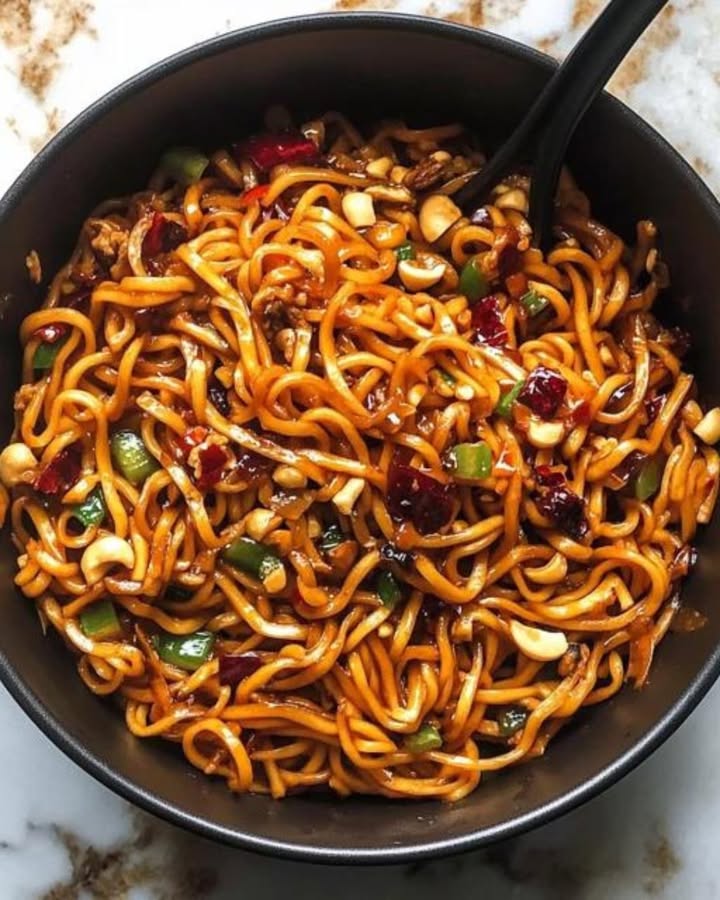
Get Ready to Savor the Flavor with Spicy Kung Pao Noodles
Imagine a bowl of noodles that’s not just a meal but an experience. That’s what you get with Spicy Kung Pao Noodles. This dish is a perfect blend of spicy, tangy, and savory flavors, making it a hit at my family table. Every time I make it, the kitchen fills with the aroma of garlic, ginger, and the sizzle of peppers, and everyone gathers around, eager for a taste.
The Story Behind Spicy Kung Pao Noodles
Kung Pao Noodles have a rich history rooted in Chinese cuisine. Traditionally, Kung Pao Chicken was a popular Sichuan dish, known for its bold flavors and heat. Over time, creative cooks started experimenting with different ingredients, and thus, Kung Pao Noodles were born. It’s a modern twist on a classic, and it’s perfect for those who love a bit of spice in their life. I first tried this dish at a local Asian fusion restaurant, and I was hooked. The combination of textures and flavors was simply irresistible.
Why You’ll Love This Spicy Kung Pao Noodles Recipe
This recipe is a crowd-pleaser for several reasons. First, the flavors are incredibly balanced—spicy, sweet, and tangy all in one bite. Second, it’s surprisingly easy to make, even for beginners. And finally, it’s versatile. You can adjust the heat level to your liking, and it works well with various types of noodles. Plus, it’s a great way to use up any leftover veggies in your fridge. Trust me, once you try it, you’ll be making it again and again.
Perfect Occasions to Prepare Spicy Kung Pao Noodles
Spicy Kung Pao Noodles are perfect for any occasion. Whether you’re hosting a casual dinner party, looking for a quick weeknight meal, or just craving something delicious, this dish fits the bill. It’s also a fantastic option for potlucks and gatherings, as it can be made ahead and served either hot or at room temperature. I love serving it at family game nights; it’s always a hit!
Ingredients for Spicy Kung Pao Noodles
- 8 oz (226g) spaghetti or rice noodles
- 1 tablespoon vegetable oil
- 1 red bell pepper, diced
- 1 green bell pepper, diced
- 1 medium onion, diced
- 2 cloves garlic, minced
- 1 tablespoon fresh ginger, minced
- 1/2 cup roasted peanuts
- 1/4 cup soy sauce
- 1 tablespoon rice vinegar
- 2 tablespoons hoisin sauce
- 1 tablespoon sesame oil
- 2 tablespoons brown sugar
- 1 tablespoon cornstarch
- 1/2 cup water
- 1/2 teaspoon red pepper flakes (optional, for extra heat)
- 2 green onions, sliced
- 1 tablespoon sesame seeds (optional)
Substitution Options
- Noodles: You can use any type of noodles you like, such as udon, soba, or even zucchini noodles for a low-carb option.
- Bell Peppers: Feel free to use any color of bell peppers, or even add some carrots or snap peas for extra crunch.
- Peanuts: If you have a nut allergy, you can substitute with sunflower seeds or omit them entirely.
- Soy Sauce: For a gluten-free version, use tamari instead of soy sauce.
Preparation Section
Step 1: Cook the Noodles
Start by cooking the noodles according to the package instructions. Once they’re done, drain them and set them aside. The key here is to not overcook the noodles, as you want them to have a nice, firm texture. Pro tip: Add a splash of oil to the boiling water to prevent the noodles from sticking together.
Step 2: Sauté the Vegetables
Heat the vegetable oil in a large skillet or wok over medium-high heat. Add the diced red and green bell peppers, onion, garlic, and ginger. Sauté until the vegetables are tender and aromatic, about 5-6 minutes. The colors will start to brighten, and the kitchen will fill with a delightful aroma. Pro tip: Stir frequently to ensure the vegetables cook evenly and don’t burn.
Step 3: Make the Sauce
In a small bowl, whisk together the soy sauce, rice vinegar, hoisin sauce, sesame oil, brown sugar, cornstarch, and water. This sauce is the heart of the dish, bringing all the flavors together. The mixture should be smooth and free of lumps. Pro tip: Taste the sauce and adjust the seasoning if needed. You can add a bit more sugar for sweetness or a touch more soy sauce for saltiness.
Step 4: Combine Everything
Pour the sauce mixture into the skillet with the sautéed vegetables. Cook, stirring frequently, until the sauce thickens, about 2-3 minutes. The sauce will start to coat the vegetables, giving them a glossy, appetizing look. Add the cooked noodles and peanuts to the skillet. Toss everything together until the noodles are well coated with the sauce. The combination of the crunchy peanuts and the silky noodles is simply divine. Pro tip: Use tongs to toss the noodles, as they help distribute the sauce more evenly.
Step 5: Garnish and Serve
Sprinkle the red pepper flakes (if using), green onions, and sesame seeds over the top. These little touches add a burst of flavor and a pop of color to the dish. Serve hot and enjoy! Pro tip: For an extra kick, you can add a drizzle of chili oil before serving.
Timing
Getting this delicious dish on the table is quick and easy. Here’s a breakdown of the times:
– Prep Time: 15 minutes
– Cook Time: 10 minutes
– Total Time: 25 minutes
– Calories: Approx. 400 per serving
Chef’s Secret
One of my favorite tricks to enhance the flavor of Spicy Kung Pao Noodles is to toast the peanuts before adding them to the dish. Simply spread the peanuts on a baking sheet and toast them in a preheated 350°F (175°C) oven for about 5-7 minutes, or until they turn golden brown. This simple step brings out their natural oils and adds a deeper, richer flavor to the dish.
Extra Info
Did you know that the original Kung Pao Chicken was named after a Qing dynasty official, Ding Baozhen, who was known as “Kung Pao”? He was a big fan of spicy, stir-fried chicken, and the dish was created in his honor. Today, Kung Pao Noodles carry on that legacy, offering a modern and versatile take on a classic.
Necessary Equipment
- Large skillet or wok
- Small mixing bowl
- Tongs
- Measuring cups and spoons
- Knife and cutting board
Storage
To store Spicy Kung Pao Noodles, let them cool to room temperature, then transfer them to an airtight container. They can be stored in the refrigerator for up to 3-4 days. When reheating, you can add a splash of water or broth to loosen the sauce and reheat in the microwave or on the stovetop. The noodles will still be delicious, but the texture may soften slightly. If you prefer, you can also freeze the noodles for up to 2 months. Just thaw them overnight in the refrigerator before reheating.
Tips and Advice
- Adjust the Heat: If you prefer milder flavors, reduce the amount of red pepper flakes or omit them entirely. Conversely, if you like it spicy, feel free to add more.
- Use Fresh Ingredients: Fresh garlic, ginger, and herbs make a big difference in the overall flavor. Don’t skimp on these!
- Customize the Veggies: Feel free to add other vegetables like broccoli, mushrooms, or zucchini. The more variety, the better!
Presentation Tips
- Garnish Creatively: Top the noodles with a sprinkle of sesame seeds, a few slices of green onions, and a handful of chopped cilantro for a pop of color and freshness.
- Use a Large Bowl: Serve the noodles in a large, shallow bowl to showcase the vibrant colors and textures.
- Add a Side Dish: A simple side of steamed bok choy or a small salad can complement the noodles beautifully.
Healthier Alternative Recipes
If you’re looking for ways to make Spicy Kung Pao Noodles even healthier, here are six variations you can try:
- Zucchini Noodles: Replace the traditional noodles with spiralized zucchini for a low-carb, gluten-free option. The zucchini adds a fresh, crisp texture that complements the spicy sauce.
- Vegetarian Version: Omit the peanuts and add a variety of vegetables like broccoli, mushrooms, and snap peas. This makes the dish more colorful and packed with nutrients.
- Low-Sodium Soy Sauce: Use low-sodium soy sauce to reduce the overall sodium content. You can also add a bit of water to the sauce to dilute it further without losing flavor.
- Lean Protein: Add grilled chicken, shrimp, or tofu for a protein boost. Marinate the protein in a bit of the sauce before grilling for added flavor.
- More Veggies, Less Noodles: Increase the ratio of vegetables to noodles. This not only reduces the calorie count but also adds more vitamins and minerals to the dish.
- Herb-Infused Oil: Instead of regular vegetable oil, use a flavored oil like garlic-infused or chili-infused oil. This adds an extra layer of flavor without increasing the calorie count.
Common Mistakes to Avoid
Mistake 1: Overcooking the Noodles
Overcooked noodles can become mushy and unappealing. To avoid this, follow the package instructions carefully and test the noodles a minute or two before the recommended cooking time. You want them to be al dente, which means they should be firm to the bite. Pro tip: Rinse the noodles with cold water after draining to stop the cooking process and keep them from sticking together.
Mistake 2: Not Preparing the Sauce Ahead
Whisking the sauce right before adding it to the pan can lead to lumps and uneven flavor distribution. Mix the sauce ingredients in a small bowl before you start cooking the vegetables. This way, the sauce is ready to go when you need it, and you can focus on sautéing the vegetables perfectly. Pro tip: Use a whisk to ensure the cornstarch is fully incorporated and there are no lumps.
Mistake 3: Adding Too Much Liquid
Adding too much water or liquid to the sauce can make it too thin and watery. Start with the recommended amount of water and adjust as needed. If the sauce is too thick, you can always add a bit more water, but it’s harder to thicken a too-thin sauce. Pro tip: If you find the sauce is too thin, you can mix a bit more cornstarch with a small amount of water and add it to the sauce to thicken it.
Mistake 4: Not Toasting the Peanuts
Untoasted peanuts can be bland and lack the depth of flavor that toasted peanuts bring. Take the extra few minutes to toast the peanuts in the oven or on the stovetop. This simple step enhances their flavor and adds a nice crunch to the dish. Pro tip: Keep an eye on the peanuts while toasting to prevent them from burning.
Mistake 5: Not Balancing the Flavors
One of the keys to a great Kung Pao Noodles dish is balancing the flavors. Taste the sauce before adding it to the pan and adjust the seasoning as needed. If it’s too salty, add a bit more water or vinegar. If it’s too sweet, add a bit more soy sauce. Pro tip: Start with less seasoning and add more as needed. It’s easier to add than to take away.
FAQ
Can I use different types of noodles?
Absolutely! You can use any type of noodles you like, such as udon, soba, or even zucchini noodles for a low-carb option. The key is to cook them according to the package instructions and not overcook them.
How can I make the dish less spicy?
If you prefer a milder flavor, reduce the amount of red pepper flakes or omit them entirely. You can also use a milder hot sauce or add a bit more sugar to balance out the heat.
Can I make this dish vegetarian?
Yes, you can make a vegetarian version by omitting the peanuts and adding a variety of vegetables like broccoli, mushrooms, and snap peas. You can also use a vegetable broth instead of water in the sauce for added flavor.
How long does it take to prepare Spicy Kung Pao Noodles?
Preparing Spicy Kung Pao Noodles is quick and easy. The prep time is about 15 minutes, the cook time is 10 minutes, and the total time is 25 minutes. It’s a great option for a quick weeknight meal.
Can I make this dish ahead of time?
Yes, you can make Spicy Kung Pao Noodles ahead of time. Store the cooled noodles in an airtight container in the refrigerator for up to 3-4 days. When reheating, add a splash of water or broth to loosen the sauce and reheat in the microwave or on the stovetop.
What can I do if the sauce is too thick?
If the sauce is too thick, you can add a bit more water or broth to thin it out. Start with a small amount and add more as needed. You can also mix a bit more cornstarch with a small amount of water and add it to the sauce to thicken it if it’s too thin.
Can I use a different type of oil?
Yes, you can use a different type of oil, such as peanut oil or olive oil. However, keep in mind that the flavor profile might change slightly. Vegetable oil is a neutral-flavored oil that works well in this recipe.
What are some good side dishes to serve with Spicy Kung Pao Noodles?
Some great side dishes to serve with Spicy Kung Pao Noodles include a simple steamed bok choy, a small salad with a light vinaigrette, or a side of edamame. These sides complement the bold flavors of the noodles and add a nice balance to the meal.
Can I add protein to the dish?
Yes, you can add protein to the dish. Grilled chicken, shrimp, or tofu are great options. Marinate the protein in a bit of the sauce before grilling for added flavor. This not only adds a protein boost but also makes the dish more filling.
Is there a way to make this dish lower in sodium?
To make the dish lower in sodium, use low-sodium soy sauce and reduce the amount of salt in the recipe. You can also add a bit more water to the sauce to dilute it without losing flavor. Additionally, using fresh herbs and spices can add flavor without adding sodium.
Conclusion
Spicy Kung Pao Noodles are a flavorful and versatile dish that’s sure to become a staple in your kitchen. With its perfect balance of spicy, tangy, and savory flavors, it’s a hit with both kids and adults. Whether you’re making it for a quick weeknight dinner or a special gathering, this dish is guaranteed to impress. So, grab your wok, gather your ingredients, and get ready to savor the flavor of Spicy Kung Pao Noodles. Happy cooking!
Spicy Kung Pao Noodles
Ingredients
Equipment
Method
- Cook the noodles according to the package instructions, drain, and set aside.
- Heat the vegetable oil in a large skillet or wok over medium-high heat. Sauté the diced red and green bell peppers, onion, garlic, and ginger until tender (about 5-6 minutes).
- In a small bowl, whisk together soy sauce, rice vinegar, hoisin sauce, sesame oil, brown sugar, cornstarch, and water until smooth.
- Add the sauce mixture to the skillet with the sautéed vegetables, cooking until the sauce thickens (about 2-3 minutes).
- Add the cooked noodles and roasted peanuts to the skillet, tossing until well coated.
- Garnish with red pepper flakes (if using), green onions, and sesame seeds before serving hot.