
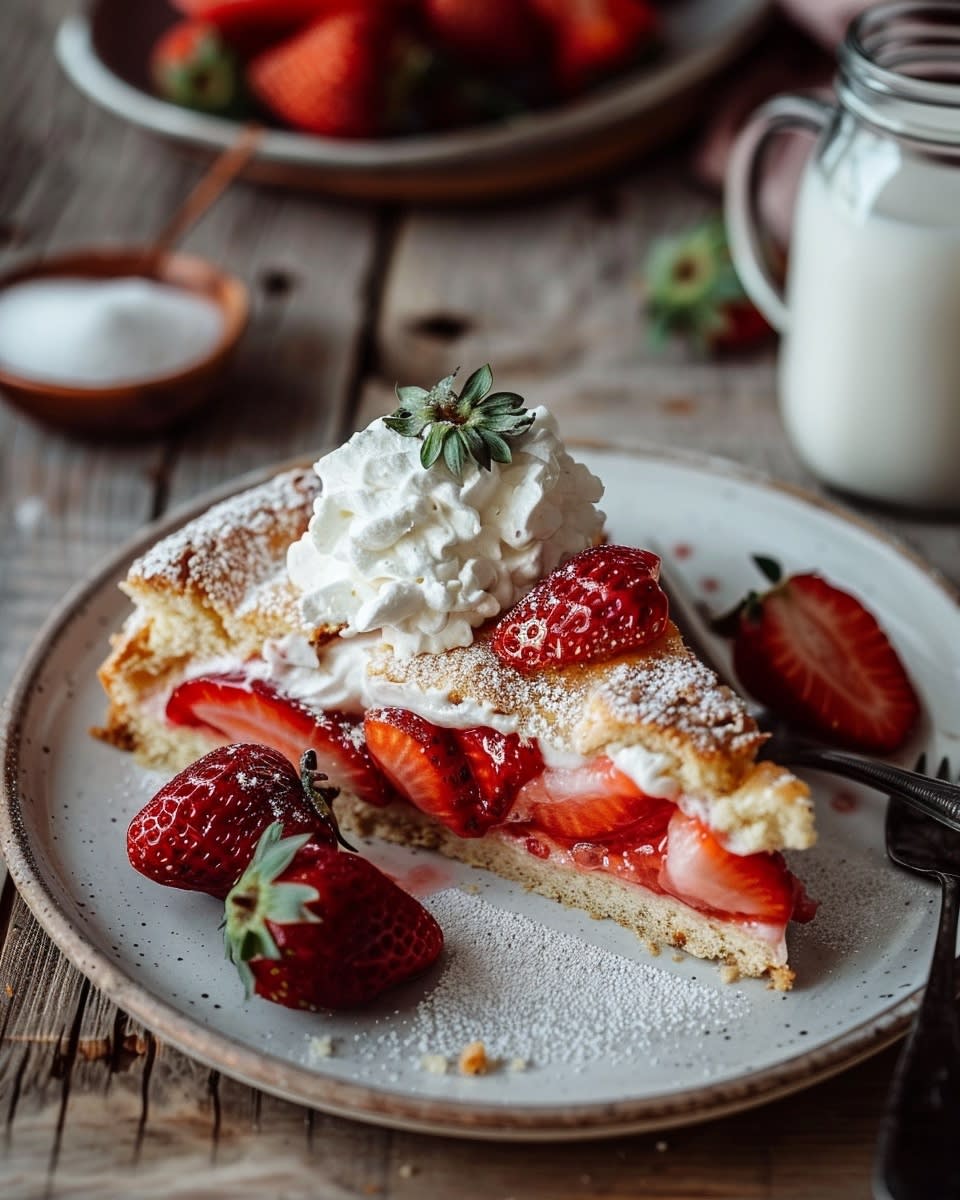
Welcome to My Strawberry Shortcake Adventure
Last summer, I sat on my grandmother’s porch with a plate of her famous strawberry shortcake balanced on my lap. The first bite transported me right back to childhood. That perfect mix of sweet berries, fluffy biscuit, and cloud-like cream reminded me why this dessert has stood the test of time.
I’m thrilled to share my passion for this classic treat with you today. Whether you’re here because you remember the strawberry shortcake cartoon from your childhood or you’re simply craving something sweet, you’ve come to the right place. This dessert holds a special spot in American hearts, and for good reason.
Strawberry shortcake is more than just a dessert. It’s a celebration of summer, a symbol of simpler times, and proof that the best things in life don’t need to be complicated. At its heart, it’s three simple elements coming together in perfect harmony: tender biscuits, fresh strawberries, and pillowy whipped cream.
Today, I’ll walk you through everything you need to know. We’ll start with the traditional approach, then explore fun twists like using a strawberry shortcake bisquick mix for those busy weeknights. I’ll even share memories of collecting strawberry shortcake dolls and how they inspired my love for this dessert.
What is a Traditional Strawberry Shortcake Recipe?
The beauty of a traditional strawberry shortcake recipe lies in its simplicity. You only need three main components. First comes the base, which is a slightly sweet, biscuit-like cake. Then you layer on macerated strawberries that have been sitting in sugar to release their natural juices. Finally, you top it all off with freshly whipped cream.
Many people confuse strawberry shortcake with regular cake. The difference is crucial. True shortcake uses a biscuit or scone-like base, not sponge cake. The texture should be tender but sturdy enough to soak up all those amazing strawberry juices without turning to mush.
The dessert’s name actually tells you something important. “Short” in baking terms refers to a high fat-to-flour ratio. This creates that crumbly, tender texture we all love. Think of it like a sweet biscuit rather than a fluffy cake.
The History Behind This Beloved Dessert
Strawberry shortcake has been making Americans smile since the mid-1800s. The first printed recipes appeared around 1847, though people were likely making similar desserts before then. The timing made sense because strawberries were becoming more widely available in home gardens.
Native Americans had been eating strawberries for centuries. When European settlers arrived, they fell in love with these sweet red berries too. By the 1850s, strawberry festivals and celebrations popped up across the country. Shortcake became the star of these gatherings.
The dessert gained even more fame during America’s centennial celebration in 1876. Vendors sold it at fairs and festivals. People couldn’t get enough. It represented American ingenuity and the bounty of the land.
Interestingly, the dessert went through some changes over the years. Some regions started using sponge cake instead of biscuits. Others added their own twists. But the traditional version with biscuits remained the gold standard for purists like me.
What Are the Key Ingredients in a Traditional Strawberry Shortcake?
Let me break down exactly what you need for an authentic strawberry shortcake recipe from scratch. The ingredient list is refreshingly short, which means quality matters even more.
For the Biscuits:
- All-purpose flour (2 cups)
- Baking powder (1 tablespoon)
- Salt (half a teaspoon)
- Sugar (3 tablespoons, plus extra for sprinkling)
- Cold butter (6 tablespoons, cut into small pieces)
- Heavy cream (three-quarters cup)
- One egg
- Vanilla extract (1 teaspoon)
For the Strawberry Filling:
- Fresh strawberries (2 pounds, hulled and sliced)
- Sugar (one-third cup)
- Lemon juice (1 tablespoon, optional but recommended)
For the Topping:
- Heavy whipping cream (1 and a half cups)
- Powdered sugar (3 tablespoons)
- Vanilla extract (1 teaspoon)
The secret to amazing strawberry shortcake biscuits is keeping everything cold. Cold butter creates steam pockets when baking, which gives you those flaky layers. I even chill my mixing bowl on hot days.
My Go-To Traditional Recipe
I’ve made this recipe at least fifty times. My family requests it every Fourth of July and Memorial Day. It never disappoints.
Start by preheating your oven to 425 degrees Fahrenheit. Line a baking sheet with parchment paper. This prevents sticking and makes cleanup easier.
Mix the dry ingredients first. Whisk together flour, baking powder, salt, and sugar in a large bowl. Cut the cold butter into small cubes. Use a pastry cutter or your fingers to work the butter into the flour. The mixture should look like coarse crumbs with some pea-sized pieces of butter remaining.
In a separate bowl, whisk the egg, cream, and vanilla together. Pour this into the flour mixture. Stir gently with a fork until just combined. Don’t overmix or your biscuits will be tough. The dough should look shaggy and slightly sticky.
Turn the dough onto a floured surface. Pat it into a circle about one inch thick. Use a round biscuit cutter to cut out circles. I usually get six to eight biscuits depending on size. Place them on your prepared baking sheet.
Brush the tops with a little extra cream and sprinkle with sugar. This creates a beautiful golden, slightly crispy top. Bake for 12 to 15 minutes until golden brown. The kitchen will smell amazing.
While the biscuits bake, prepare your strawberry shortcake filling. Slice the berries and toss them with sugar in a bowl. Let them sit at room temperature for at least 30 minutes. The sugar draws out the strawberry juice, creating a natural syrup. Some people call this macerating. I call it magic.
For the whipped cream, pour cold heavy cream into a chilled bowl. Add powdered sugar and vanilla. Beat with an electric mixer until soft peaks form. Don’t overbeat or you’ll end up with butter. The cream should be fluffy and hold its shape but still look silky.
Assembly is the fun part. Split each biscuit in half horizontally. Place the bottom half on a plate. Spoon strawberries and their juice generously over the biscuit. Add a big dollop of whipped cream. Place the top half of the biscuit on the cream. Add more strawberries and another generous amount of whipped cream on top.
Some people like to serve theirs deconstructed with everything separate. I prefer the layered approach because every bite gets all three components. That’s when the dessert really shines.


How to Make a Quick and Easy Strawberry Shortcake with Bisquick
Now, I totally get that not everyone has the time or energy for homemade biscuits from scratch. Life gets busy, and sometimes you need dessert on the table fast. That’s where strawberry shortcake bisquick comes to the rescue.
I’ll be honest with you. I used to be a total snob about boxed mixes. Then one chaotic Tuesday evening, my daughter announced she’d promised to bring dessert to a school event the next morning. We had exactly thirty minutes before bedtime. I grabbed the Bisquick box from my pantry, and you know what? Nobody could tell the difference. The kids devoured it, and my daughter’s teacher asked for the recipe.
The strawberry shortcake bisquick method cuts your prep time in half. You’re basically creating a shortcut version that still delivers on flavor and texture. Sure, purists might raise their eyebrows, but I’ve learned that getting dessert on the table matters more than perfect technique every single time.
Here’s how I do it. Preheat your oven to 425 degrees, just like the traditional method. Grab your Bisquick mix and measure out three cups. Add a quarter cup of sugar and six tablespoons of cold butter. Work that butter into the mix using the same technique I described earlier, creating those coarse crumbs.
Then add three-quarters cup of milk. Stir until everything comes together. The dough will be softer than traditional biscuit dough, which is totally fine. Drop spoonfuls onto a greased baking sheet. I like making them slightly bigger than standard biscuits because they’ll puff up beautifully. Bake for about ten to twelve minutes until golden.
While those bake, you can prepare your strawberries exactly the same way as before. The filling doesn’t change just because you’re using a convenience product. Quality strawberries still matter tremendously. I actually think the quick biscuits pair wonderfully with the fresh berries because the contrast between shortcuts and fresh ingredients creates balance.
Can I use Bisquick to make a strawberry shortcake? Absolutely, and I do it regularly without any guilt. The texture comes out slightly different, a bit more tender and less flaky than traditional biscuits. But when you’re pressed for time or don’t want to dirty multiple bowls, it’s a lifesaver.
By the way, this method also works great for impromptu gatherings. Last month, friends texted saying they’d be stopping by in an hour. I whipped up a batch of these Bisquick shortcakes, sliced some berries, and had dessert ready when they walked through the door. Everyone thought I’d been baking all afternoon.
One trick I’ve learned is adding a splash of vanilla extract to the Bisquick dough. The mix doesn’t include it naturally, and that little addition elevates everything. I also brush melted butter on top before baking, then sprinkle coarse sugar over each biscuit. These tiny touches make your shortcut version feel special. If you enjoy quick baking projects like this, you might also love making banana bread when you have overripe fruit sitting on the counter.
Exploring Variations: Japanese Strawberry Shortcake Recipe
Funny enough, my first encounter with japanese strawberry shortcake recipe wasn’t in Japan at all. My college roommate was from Tokyo, and her mom sent care packages filled with Japanese treats. One birthday, she recreated her family’s version of strawberry shortcake, and my mind was completely blown.
How does a Japanese strawberry shortcake differ from a traditional one? Everything about it feels different. Instead of biscuits, Japanese shortcake uses a light, fluffy sponge cake. The cake itself barely tastes sweet. Then between the layers, you’ll find fresh whipped cream and perfectly sliced strawberries. The entire creation looks like something from a fancy bakery window.
The texture contrast is remarkable. Traditional American shortcake has that dense, crumbly quality. The Japanese version practically melts on your tongue. It’s delicate, ethereal even. My roommate explained that in Japan, this cake appears at nearly every celebration, from birthdays to Christmas. It holds the same cultural significance there that our version does here.
Making a Japanese-style strawberry shortcake requires more patience than the traditional version. You’ll need to master sponge cake technique, which involves separating eggs and folding carefully. But once you try it, you’ll understand why it’s worth the effort.
Start with the sponge cake base. You’ll need four eggs at room temperature, separated into yolks and whites. Beat the egg whites with a third cup of sugar until stiff peaks form. In another bowl, beat the egg yolks with another third cup of sugar until pale and thick. This takes about five minutes with an electric mixer.
Gently fold the yolk mixture into the whites. Then sift in three-quarters cup of cake flour and fold it in carefully. The key word here is gentle. You want to keep all that air you’ve beaten into the eggs. Pour the batter into a greased and lined nine-inch round pan.
Bake at 350 degrees for about twenty-five to thirty minutes. The cake should spring back when touched lightly. Let it cool completely before attempting to slice it horizontally. I usually make mine the day before and refrigerate it overnight, which makes slicing much easier.
For the filling, Japanese bakers use a stabilized whipped cream that holds up better than regular whipped cream. Some add a tiny amount of gelatin. I prefer using mascarpone cheese mixed with heavy cream, which gives stability naturally. Beat one cup of heavy cream with half a cup of mascarpone and three tablespoons of powdered sugar until fluffy.
Here’s where it gets fun. Slice your cooled sponge cake into two or three horizontal layers. Brush each layer with simple syrup, which is just equal parts sugar and water heated until dissolved then cooled. This keeps the cake moist and adds a subtle sweetness. Much like creating layers in a carrot cake with frosting, precision matters when building these delicate layers.
Spread whipped cream on the bottom layer. Arrange sliced strawberries over the cream, keeping them close together. You want strawberries visible when you slice the finished cake. Add another layer of cake, more syrup, more cream, more strawberries. Repeat if you’re doing three layers.
The outside gets completely covered in whipped cream, creating a smooth white canvas. Then you decorate the top with beautiful whole or halved strawberries. Japanese bakeries arrange them in perfect patterns. I’m not quite that precise, but I do try to make it look special. Some people add a dusting of powdered sugar or place mint leaves for color.
The first time I successfully made this, I felt like I’d accomplished something remarkable. It tasted nothing like the traditional version I grew up eating, yet it was equally delicious. The sponge cake absorbed the strawberry juice and cream without getting soggy. Each bite felt light and refreshing rather than rich and filling.
One thing I’ve noticed is that the Japanese version works better in warm weather. Traditional shortcake with its sturdy biscuit base can handle sitting out at summer picnics. The Japanese style needs refrigeration and should be served fairly quickly after assembly. I think of it as more elegant, better suited for dinner parties than backyard barbecues.
If you’re interested in other delicate, impressive desserts, you might enjoy trying your hand at chocolate mousse, which requires similar attention to technique and texture. Both desserts reward patience with spectacular results.
Sometimes I make a hybrid version that borrows from both traditions. I’ll use the lighter sponge cake but keep the more rustic American approach to assembly. Or I’ll make traditional biscuits but use the Japanese stabilized whipped cream. There’s no rule saying you have to choose one style over the other. The beauty of home baking is experimenting until you find what works for your family.
My kids actually prefer the Japanese version now, which surprised me. They love the lighter texture and the way it doesn’t fill them up quite as much. My husband, on the other hand, remains loyal to the traditional biscuit-based shortcake. Good thing I enjoy making both. And honestly, when strawberries are in season, any excuse to make either version works for me.
The sponge cake technique you learn for Japanese shortcake also applies to other desserts. Once you master separating eggs and folding properly, you can tackle angel food cakes, chiffon cakes, and even soufflés. It’s one of those foundational skills that opens up a whole world of baking possibilities. Similar to how perfecting a lemon pound cake teaches you about proper creaming methods, making Japanese shortcake improves your understanding of egg foam techniques.


Perfecting Your Strawberry Shortcake Filling and Toppings
Here’s the thing that separates good shortcake from absolutely mind-blowing shortcake: the filling and toppings. You can have the most perfect biscuit in the world, but if your strawberry shortcake filling falls flat or your cream tastes like nothing, the whole dessert suffers. I learned this lesson the hard way at my first attempt at a bake sale fundraiser.
I’d rushed through preparing the strawberries, just tossing them with sugar right before assembling. They hadn’t released their juices yet, so instead of that gorgeous syrupy coating, I had crunchy sugar granules sitting on top of hard berries. The whipped cream I’d made earlier had deflated into a sad puddle. Total disaster. But you know what? Every baker has moments like these, and they teach us what really matters.
Let’s talk about creating the perfect strawberry filling first. The process might seem too simple to matter, but timing and technique make all the difference. Choose strawberries that smell sweet and fragrant. If they don’t smell like anything at the store, they won’t taste like much either. I always buy an extra pound because some inevitably get eaten before they make it into the dessert.
Wash your berries gently and pat them completely dry. Water dilutes the flavor and creates a thin, watery juice instead of that thick, syrupy goodness we’re after. Hull them by cutting out the white core at the top. Then slice them about a quarter inch thick. Some people prefer halving smaller berries, but I think slices create better coverage.
Now for the secret weapon: maceration. This fancy culinary term just means letting fruit sit in sugar so it releases its natural juices. Place your sliced strawberries in a bowl and sprinkle with sugar. For two pounds of berries, I use between a third and half cup of sugar depending on how sweet they already taste. Add a tablespoon of fresh lemon juice too.
The lemon juice does something magical. It brightens the strawberry flavor and adds a subtle tang that prevents the filling from being one-dimensionally sweet. Sometimes I’ll also add a tiny pinch of salt, which sounds weird but actually intensifies the fruit flavor. Gently toss everything together, then let it sit at room temperature for at least thirty minutes, though an hour is even better.
As the berries sit, the sugar draws out their juice through osmosis, creating a natural syrup. The berries soften slightly but still maintain their shape. You’ll end up with this beautiful red liquid pooling at the bottom of the bowl. That juice is liquid gold. It soaks into the biscuit layers, adding moisture and flavor to every single bite.
By the way, if you’re working with berries that aren’t perfectly ripe or taste a bit bland, you can doctor them up. I’ve added a splash of vanilla extract, a tablespoon of strawberry jam, or even a tiny bit of balsamic vinegar. That last one sounds bizarre, I know, but balsamic brings out strawberry flavor in the most incredible way. Just use half a teaspoon, not more.
One mistake I see people make is refrigerating the strawberries after macerating. Unless you’re making them hours ahead, keep them at room temperature. Cold strawberries taste muted compared to room temperature ones. The natural sugars and aromatics are more pronounced when they’re not chilled. If you must refrigerate them, bring them back to room temperature before serving.
Now let’s tackle whipped cream, which honestly deserves its own dedicated article. The difference between mediocre whipped cream and exceptional whipped cream comes down to quality ingredients and proper technique. Start with heavy whipping cream that has at least 36 percent milk fat. Light cream or half-and-half won’t whip properly no matter how long you beat it.
Temperature matters enormously. Everything should be cold: the cream, the bowl, even the whisk or beaters. On hot summer days, I stick my mixing bowl and whisk in the freezer for fifteen minutes before starting. This keeps the fat molecules stable, which is what allows cream to whip up light and fluffy.
Pour your cold cream into the chilled bowl. For every cup of cream, add about two tablespoons of powdered sugar. I prefer powdered over granulated because it dissolves instantly and contains a bit of cornstarch, which helps stabilize the cream. Add a teaspoon of vanilla extract per cup of cream too.
Start beating on medium speed if using an electric mixer. Watch it carefully because cream can go from perfect to butter in about thirty seconds. You want soft peaks, which means when you lift the whisk, the cream forms peaks that gently flop over at the tips. It should look billowy and smooth, not stiff or grainy.
If you accidentally overbeat and the cream starts looking curdled or separated, don’t panic. Gently fold in a few tablespoons of fresh cold cream by hand. This usually brings it back to the right consistency. I’ve saved many batches this way, though I try not to mention it when serving dessert to guests.
What can I use as a topping for my strawberry shortcake? Beyond traditional whipped cream, you’ve got options. Mascarpone whipped cream adds richness and a slight tang. Mix equal parts mascarpone cheese and heavy cream, then whip with powdered sugar and vanilla. It holds up better than regular whipped cream and tastes incredibly luxurious.
Greek yogurt whipped cream offers a lighter, tangier alternative. Drain Greek yogurt for a few hours to remove excess moisture, then fold it into whipped cream. This cuts some of the richness while adding protein and a pleasant sourness that balances the sweet berries beautifully. When working with dairy products like these, it’s worth keeping food safety guidelines in mind, especially regarding proper storage temperatures and expiration dates.
Cream cheese frosting makes another delicious topping, though it moves the dessert closer to cake territory. Beat softened cream cheese with butter, powdered sugar, and vanilla until fluffy. This works especially well on the sponge cake version. My aunt always uses cream cheese frosting on her shortcakes, and while it’s not traditional, nobody complains.
For a lighter option, try coconut whipped cream. Refrigerate cans of full-fat coconut milk overnight, then scoop out the thick cream that rises to the top. Whip it with powdered sugar and vanilla just like dairy cream. This works great for dairy-free guests and adds a subtle coconut flavor that pairs surprisingly well with strawberries.
Some people love adding lemon curd as an additional layer. Spread it between the biscuit and strawberries for a citrusy punch. Or fold it into whipped cream for lemon-flavored cream. I did this last spring and everyone went crazy for it. The combination of strawberry, lemon, and cream tasted like sunshine on a plate.
Fresh mint leaves make a wonderful garnish beyond just looking pretty. Tear them roughly and scatter over the top, or add a few leaves to the macerating strawberries. Mint and strawberry are natural partners. Just don’t overdo it because mint can overwhelm delicate strawberry flavor if you’re heavy-handed.
A drizzle of melted chocolate adds visual appeal and another flavor dimension. I sometimes melt dark chocolate with a tiny bit of cream to thin it, then drizzle it artistically over the assembled shortcakes. White chocolate works too, though I find it too sweet. Dark chocolate’s slight bitterness provides nice contrast.
Nostalgic Fun: Strawberry Shortcake Dolls, Cartoons, and More
Okay, confession time. My obsession with this dessert didn’t start in my grandmother’s kitchen. It actually began with a strawberry shortcake doll I received for my sixth birthday. She had bright red yarn hair and smelled like strawberries. I was absolutely enchanted.
Those dolls launched in 1980 as greeting card characters, then exploded into a full franchise. Each doll had a distinct fruity scent, and collecting them became this whole thing among kids my age. I had Strawberry Shortcake herself, plus Blueberry Muffin, Raspberry Tart, and Orange Blossom. My best friend had Lemon Meringue, and we’d trade them back and forth during sleepovers.
The strawberry shortcake cartoon came shortly after the dolls. Those TV specials aired throughout the 1980s, and I watched every single one multiple times. The animation style was this dreamy, soft-focus look that matched the whole aesthetic. Strawberry Shortcake lived in a berry-scented world where problems got solved through friendship and kindness. Pretty wholesome stuff, looking back on it.
What’s funny is how those cartoons actually influenced my perception of the dessert. In my kid brain, strawberry shortcake wasn’t just food—it represented this whole universe of sweetness and friendship. When I finally connected the character to the actual dessert my grandmother made, my mind was blown. I remember asking her if eating strawberry shortcake would make me smell like strawberries forever. She just laughed and gave me an extra big serving.
The franchise got rebooted in the 2000s with updated animation and new storylines. My daughter discovered it through streaming services, which created this weird full-circle moment for me. We’d watch episodes together, then head to the kitchen to make the real dessert. She didn’t care about the dolls as much as I had, but she loved the cartoon characters and their adventures.
Are there any games or activities related to Strawberry Shortcake? Oh, absolutely. Strawberry shortcake games have existed in various forms for decades. When I was young, we had board games and card games featuring the characters. Now there are countless online games, mobile apps, and even video games.
I’ve found some really cute cooking games where kids can virtually make strawberry shortcake by following recipe steps. These actually teach basic cooking concepts in a fun, low-pressure way. My daughter learned about measuring ingredients and following sequential instructions through one of these games before she ever helped me in the real kitchen.
For birthday parties, I’ve created strawberry shortcake-themed activities that combine the character with the actual dessert. One year, we did a “build your own shortcake” station where kids assembled their own desserts with various toppings. They wore little chef hats I made from paper, and we played the cartoon theme song in the background. The kids had a blast, and cleanup wasn’t even too terrible.
Another fun activity involves strawberry picking followed by making shortcake together. Local farms near me offer pick-your-own strawberries in late spring. We make a whole day of it—picking berries in the morning, then coming home to bake. Kids get so much more excited about eating something they’ve picked and prepared themselves. Plus, the strawberries taste infinitely better when they’re that fresh.
Funny enough, my daughter recently discovered vintage strawberry shortcake doll collections on resale websites. She thinks they’re “retro cool,” which makes me feel approximately one million years old. We’ve started hunting for them at thrift stores and flea markets together. She’s building her own collection, and I love that this random toy from my childhood has become something we bond over.
The newer doll lines look quite different from the originals, more modern and stylized. Some collectors prefer the vintage versions, arguing they had more charm. I don’t really care either way. What matters to me is how this silly dessert-based franchise created lasting memories across generations. How many products can claim that kind of staying power?
Last summer, we hosted a full strawberry shortcake party combining everything—the dessert, the decorations, the games, the dolls. We made both traditional and Japanese-style shortcakes so guests could compare. Kids played pin-the-strawberry-on-the-shortcake. Adults chatted about their own childhood memories of the characters. The whole event captured what I love about this dessert: it brings people together across ages and creates happiness.
If you’re looking for more ways to celebrate the sweeter things in life, you might want to explore other dessert recipes that can become family traditions and create their own special memories over time.
I never expected a dessert to influence my life this much. But between my grandmother’s kitchen, those scented dolls, the cartoons, and now sharing it all with my own kids, strawberry shortcake has threaded through my entire life. It’s witnessed birthdays, holidays, regular Tuesday nights, and everything in between. That’s the real magic of food—it becomes part of our story.
FAQ: Everything You Need to Know About Strawberry Shortcake
Can I make strawberry shortcake without an oven?
Yes, you absolutely can! Use store-bought pound cake, angel food cake, or even graham crackers as your base. Layer them with macerated strawberries and whipped cream just like you would with baked biscuits. Another option is making no-bake biscuits using crushed cookies mixed with melted butter, pressed into molds, and chilled until firm. I’ve done this at summer cottages without ovens, and it works surprisingly well. The dessert won’t taste exactly like traditional shortcake, but it captures the essential flavors and spirit.
Is there a strawberry shortcake ice cream flavor?
Definitely! Strawberry shortcake ice cream has been a popular flavor for years. Most major ice cream brands offer their version, typically featuring strawberry ice cream with cake pieces and sometimes a strawberry swirl. You can also make homemade strawberry shortcake ice cream by folding crumbled biscuits and fresh strawberry sauce into vanilla ice cream. I like making ice cream sandwiches using shortcake biscuits instead of cookies. Freeze them individually wrapped for easy grab-and-go treats. The combination of cold ice cream and tender biscuit tastes incredible on hot summer days.
Can I use other fruits besides strawberries in a shortcake?
Absolutely! Shortcake works beautifully with almost any fruit. Peaches are probably the most popular alternative, especially in the South where peach shortcake is a summer staple. Blueberries, raspberries, blackberries, or mixed berries all work wonderfully. I’ve made mango shortcake that tasted tropical and amazing. Stone fruits like plums or cherries create more sophisticated versions. In fall, I sometimes use roasted apples or pears with cinnamon. The key is macerating your fruit choice with appropriate amounts of sugar to draw out the juices, just like you would with strawberries.
How do I store leftover strawberry shortcake?
Storage gets tricky because assembled shortcake doesn’t keep well—the biscuits get soggy from the fruit juice and cream. If you have leftovers, store the components separately. Keep biscuits in an airtight container at room temperature for up to two days. Refrigerate the macerated strawberries in a covered container for up to three days. Store whipped cream in the fridge for one day maximum, though it may need re-whipping. Assembled shortcake should be eaten within a few hours. If you must refrigerate assembled portions, cover them loosely and consume within twenty-four hours, accepting that the texture won’t be as good as fresh.
Can I freeze the biscuits for later use?
Yes, and I do this all the time! Freeze unbaked strawberry shortcake biscuits for up to three months. Cut out your biscuits, place them on a baking sheet, and freeze until solid. Transfer to freezer bags with parchment paper between layers. Bake directly from frozen, adding a few extra minutes to the baking time. You can also freeze baked biscuits, though I prefer the texture of freezing them unbaked. Thaw baked biscuits at room temperature, then warm briefly in a 300-degree oven to refresh them. This makes throwing together shortcake on busy evenings much easier since the most time-consuming component is already done.
What’s the difference between shortcake and regular cake?
The main difference lies in texture and composition. True shortcake uses a biscuit or scone base with a high fat-to-flour ratio, creating a crumbly, tender texture. Regular cake uses different ratios and techniques, resulting in a lighter, more uniform crumb. Shortcake biscuits are less sweet than cake and have a slightly savory quality that balances the sweet toppings. The name “short” refers to that crumbly texture created by fat cutting into flour. Sponge cake-based versions like Japanese strawberry shortcake are technically cakes, not traditional shortcakes. This distinction matters because the textures interact completely differently with the strawberry juice and cream.
How far in advance can I prepare strawberry shortcake?
You can prepare components ahead, but final assembly should happen shortly before serving. Make biscuits up to one day ahead and store covered at room temperature. Macerate strawberries up to four hours before serving. Make whipped cream up to two hours ahead and keep refrigerated, giving it a quick whisk before using. If making Japanese-style shortcake, you can bake the sponge cake one or two days ahead and keep it wrapped tightly. Some people even freeze sponge layers for weeks. I’ve assembled Japanese shortcakes up to four hours before serving if kept refrigerated, but American biscuit versions really should be assembled within an hour of eating for best texture.
Why did my whipped cream turn to butter?
You overbeat it, which happens when the fat molecules clump together too much. Heavy cream contains butterfat suspended in liquid. Whipping incorporates air and creates stable foam. But continue beating past the stiff peak stage, and those fat molecules stick together, separating from the liquid and forming butter. Once this happens, you can’t really reverse it. The texture becomes grainy and unpleasant. To avoid this, watch carefully and stop at soft peaks for strawberry shortcake. Use a lower mixer speed and check frequently. If you’re close but not quite there, switch to whisking by hand for better control. With practice, you’ll recognize exactly when to stop.
Can I make strawberry shortcake dairy-free or vegan?
Definitely! Use plant-based butter or coconut oil in the biscuits, and substitute dairy milk with almond, oat, or soy milk. For whipped topping, coconut cream from refrigerated canned coconut milk whips up beautifully. Alternatively, several brands now make vegan whipped cream that works perfectly. The strawberry filling is naturally vegan already—just fruit and sugar. I’ve served dairy-free versions at gatherings where several guests had restrictions, and honestly, most people couldn’t tell the difference. The one challenge is achieving the same richness, so don’t skimp on fat in the biscuits. Full-fat coconut products work better than low-fat alternatives.
What makes a biscuit good for strawberry shortcake?
A good shortcake biscuit needs to be tender yet sturdy enough to hold up under juicy berries and cream. It should have a slightly crisp exterior and soft, flaky interior. Sweetness should be subtle—too sweet and it competes with the strawberries. The texture should be absorbent enough to soak up strawberry juice without completely falling apart. Size matters too; biscuits should be large enough to split horizontally and hold generous amounts of filling. I prefer biscuits that are about three inches across and one to one-and-a-half inches tall after baking. That creates the perfect ratio of biscuit to filling in each bite.
There you have it—everything I’ve learned about strawberry shortcake over years of making it, loving it, and sharing it with the people who matter most. Whether you’re drawn to the traditional version, curious about the Japanese style, or just looking for a quick Bisquick solution, this dessert has room for everyone. So grab some strawberries, fire up your oven, and create your own delicious memories. I promise you won’t regret it.
Ingredients
Equipment
Method
- Preheat your oven to 425°F (220°C) and line a baking sheet with parchment paper.
- In a large bowl, whisk together flour, baking powder, salt, and sugar.
- Cut the cold butter into the flour mixture using a pastry cutter or your fingers until it looks like coarse crumbs.
- In a separate bowl, whisk together the egg, cream, and vanilla. Pour this into the flour mixture and stir gently until just combined.
- Turn the dough onto a floured surface and pat it into a circle about one inch thick.
- Use a biscuit cutter to cut out circles and place them on the prepared baking sheet.
- Brush the tops with extra cream and sprinkle with sugar.
- Bake for 12 to 15 minutes until golden brown.
- While the biscuits bake, prepare the strawberry filling by tossing sliced strawberries with sugar in a bowl and letting them sit for at least 30 minutes.
- For the whipped cream, beat the cold heavy cream with powdered sugar and vanilla until soft peaks form.
- To assemble, split each biscuit in half, spoon strawberries and their juice over the bottom half, add whipped cream, and place the top half on top. Add more strawberries and whipped cream as desired.