
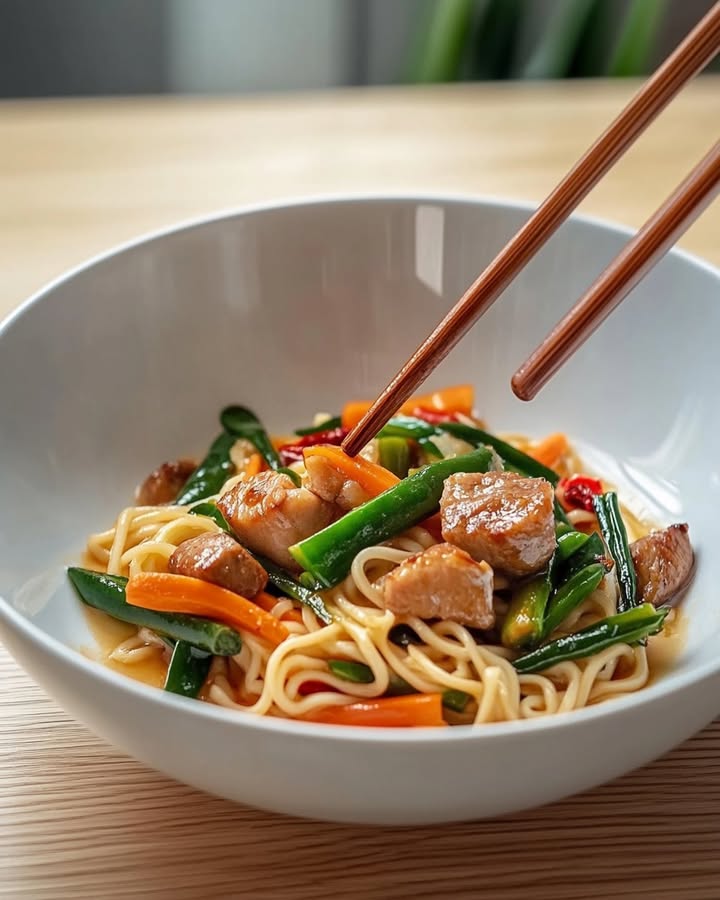
Let me tell you, there’s something magical about hearing that satisfying “sizzzzle” when beef hits a hot wok. It’s the sound of dinner being fixed in fifteen minutes, of hungry kids settling down, and of my own little victory in the kitchen. My Beef Vegetable Noodles are my weeknight superhero. They are fast, colorful, and packed with flavor. It’s the kind of dish that fills the whole house with the most amazing smell of sesame oil and garlic. Everyone comes running!
A Little Story About These Beef Vegetable Noodles
This recipe isn’t a strict copy of one specific dish from China. It’s more of a celebration of the wonderful style of Chinese stir-fry cooking. The idea of quickly cooking thin slices of beef with fresh veggies over high heat is a classic technique. It makes for a meal that’s balanced, delicious, and incredibly adaptable. I’ve made this for family dinners, for last-minute lunches with friends, and even just for me when I need a comforting bowl of something good. The version I’m sharing with you here is my home-spun favorite. It uses simple ingredients you can find anywhere. It’s my modern, easy take on a beloved cooking tradition.
Why You Will Absolutely Love This Recipe
You’ll love this because it’s a one-pan wonder! From cutting the veggies to serving the dish, you’re mostly just using one wok or big skillet. It’s also a fantastic way to pack a meal with protein and veggies. The colors from the red pepper and carrots make it look so cheerful on the plate. Plus, it’s forgiving. If you don’t have a courgette, use broccoli. If you want more heat, add a little chili. It’s your kitchen, your rules. And the flavor? It’s savory, slightly sweet from the veggies, and has that deep, nutty background from the sesame oil. It’s a complete winner.
Perfect Occasions for This Beef & Veggie Stir-Fry
This dish is perfect for so many moments! It’s my go-to for busy weeknights when time is short but we still want a real meal. It’s also great for casual weekend lunches. I’ve even made a big batch for a potluck with friends—it travels well and everyone always asks for the recipe. It’s a fantastic family dinner that pleases both adults and kids. If you’re looking for a satisfying meal prep idea, this stir-fry holds up beautifully in the fridge for a couple of days.
What You’ll Need for Your Beef Vegetable Noodles
Gathering your ingredients is the first fun step. Here’s what you’ll need to create this vibrant stir-fry:
- 200g of Chinese noodles
- 500g of beef shoulder or steak, sliced thin
- 2 carrots
- 1 red bell pepper
- 1 courgette (zucchini)
- 2 cloves of garlic
- 2 tablespoons of soy sauce
- 1 tablespoon of sesame oil
- Salt and pepper to taste
- Green onions for garnish
No Worries! Handy Substitution Options
Don’t stress if you’re missing something! Cooking is about creativity. Here are some easy swaps:
- Noodles: Any long noodle works—udon, rice noodles, or even spaghetti!
- Beef: Chicken breast, shrimp, or firm tofu are great protein alternatives.
- Vegetables: Swap in broccoli florets, snap peas, mushrooms, or baby corn.
- Soy Sauce: For a gluten-free option, use tamari or coconut aminos.
- Sesame Oil: A good olive oil or avocado oil can be used, though the flavor will differ.
Cooking Your Perfect Beef Vegetable Noodles: Step by Step
Step 1: Preparing the Noodles
First, get your noodles ready. Cook them according to the package instructions. This usually means boiling them for a few minutes until they’re tender but still have a bite. Once they’re done, drain them well in a colander. Give them a little rinse with cold water to stop them from sticking together. Then, set them aside on a plate. They’ll wait patiently while you work on the star of the show—the beef and veggies. Pro tip: Don’t overcook them now, as they’ll get another quick cook in the wok later.
Step 2: Seasoning the Beef
Take your beef slices and lay them out on your cutting board or a plate. Season them generously with a pinch of salt and pepper. Then, drizzle one tablespoon of the soy sauce over them. Use your hands or a spoon to toss everything together. The soy sauce starts the flavoring process and gives the meat a beautiful, rich color. Let it sit for a few minutes while you chop your vegetables. This little rest allows the seasoning to penetrate the meat.
Step 3: Chopping the Vegetables
Now for the colorful part! Peel your carrots and slice them into thin matchsticks (julienne). Slice your red bell pepper and courgette into similar thin strips. Try to make them all about the same size so they cook evenly. The bright orange, red, and green will make your dish look so inviting. Mince your garlic cloves finely. The smell of fresh garlic is already telling you this is going to be tasty!
Step 4: Sautéing the Garlic
Heat your large wok or skillet over medium heat. Add the tablespoon of sesame oil. Once the oil is warm and shimmering, add the minced garlic. Listen for that gentle sizzle. Stir it around for about a minute until it becomes fragrant and turns a light golden color. This step releases all the aromatic potential of the garlic and infuses the oil with flavor. It’s the foundation of your stir-fry’s taste.
Step 5: Cooking the Beef
Increase the heat to medium-high. Add your seasoned beef slices to the wok. Spread them out so they aren’t crowded. Let them cook without moving for a minute to get a good sear. Then, stir and flip them until they are browned on all sides and cooked through. You’ll see the meat change color and the smell will become deeply savory. Once they’re nicely browned, they are ready for the veggies.
Step 6: Adding and Sautéing the Vegetables
Toss all your prepared vegetables—carrots, bell pepper, and courgette—into the wok with the beef. The hot pan will welcome them with a great crackle. Keep stirring and tossing everything together for about 5 minutes. You want the veggies to soften a bit but still keep a pleasant crunch. They should become brighter in color and tender. This mix of textures is key to the dish.
Step 7: Combining with Noodles and Soy Sauce
Now, add your reserved cooked noodles to the wok. Pour in the remaining tablespoon of soy sauce over everything. This is the final flavor boost. Use tongs or two spoons to mix everything thoroughly. Make sure the noodles get coated in the savory juices and the soy sauce distributes evenly. The noodles will start to take on a lovely brown hue from the sauce.
Step 8: Final Heat and Serving
Keep tossing and cooking the entire mixture for another 2 to 3 minutes. This ensures everything is heated through and the flavors have melded together perfectly. Turn off the heat. Chef’s tip: For an extra layer of flavor, drizzle just a tiny bit more sesame oil over the top right before serving. It adds a wonderful aroma.
Timing Your Stir-Fry Success
This is a quick dish! Your total time from start to finish will be about 30 minutes. Prep time (chopping, seasoning) takes about 15 minutes. The active cooking time in the wok is another 15 minutes. There’s no resting time needed—you eat it hot and fresh right from the pan!
The Chef’s Secret for Amazing Beef Vegetable Noodles
My little secret is in the cut of the beef. Slice it as thinly as you can against the grain. This makes it tender and easy to cook quickly. If you have time, let the sliced beef marinate in the soy sauce, salt, and pepper for 15-20 minutes before cooking. It makes a noticeable difference in flavor and texture.
A Fun Bit of Extra Info
Sesame oil isn’t just for flavor; it’s a traditional finishing oil in many Asian cuisines. It has a lower smoke point, so it’s best used at the end or for low-heat sautéing like we do with the garlic. Its distinctive nutty taste is what gives this dish its authentic signature aroma.
Necessary Equipment
You don’t need fancy tools! A good, large wok or a big non-stick skillet is the main hero. You’ll also need:
- A sharp knife for slicing
- A cutting board
- A pot for boiling noodles
- A colander for draining
- Tongs or a large spoon for stirring
Storing Your Leftover Beef Noodle Stir-Fry
If you have leftovers, they store quite well! Let the stir-fry cool completely after cooking. Then, transfer it to an airtight container. Pop it in the refrigerator. It will stay fresh and tasty for up to 3 days.
To reheat, I recommend using a skillet or microwave. For the skillet, add a splash of water or a tiny bit of oil to prevent drying out. Warm it over medium heat until hot. In the microwave, cover it and reheat in short bursts, stirring in between.
Freezing isn’t the best option for this dish. The noodles and vegetables can become mushy and lose their texture after freezing and thawing. It’s best enjoyed fresh or kept in the fridge for a few days.
Tips and Advice for the Best Results
- Don’t overcrowd the wok. If your pan is too small, cook the beef in two batches to get a proper sear.
- Keep the heat high when cooking the beef and veggies. Stir-frying relies on quick, high heat.
- Prep all your ingredients before you start cooking. Stir-fry moves fast once you begin!
- Feel free to adjust the soy sauce to your taste. Start with the recipe amount, then add a little more at the end if you want it more savory.
Presentation Tips to Make It Look Fantastic
Presentation is fun! Serve your Beef Vegetable Noodles in a deep, colorful bowl. Garnish generously with chopped green onions for a fresh pop of color and flavor. For a special touch, add a sprinkle of sesame seeds or a few thin slices of fresh chili pepper on top. You can also serve it with small bowls of extra soy sauce or chili oil on the side for those who like to add more.
Healthier Alternative Recipes & Fun Variations
The basic formula of noodles, protein, and veggies is endlessly versatile. Here are six ideas to play with:
- Spicy Sichuan Style: Add a tablespoon of Sichuan chili paste or a few dried chilies when sautéing the garlic. It brings a fantastic heat and complexity.
- Teriyaki Twist: Substitute the soy sauce with a teriyaki sauce for a sweeter, glaze-like finish. It’s a kid-friendly favorite.
- Ginger & Mushroom: Add a tablespoon of minced fresh ginger with the garlic. Swap the courgette for sliced shiitake mushrooms. The ginger adds a bright, warm note.
- Low-Carb Version: Skip the noodles entirely and double up on the vegetables. Use cauliflower rice or just enjoy it as a beef and veggie stir-fry.
- Sweet & Sour Version: Add a mix of 1 tbsp rice vinegar and 1 tbsp honey to the soy sauce. It creates a classic sweet and sour profile.
- Cashew Crunch: Throw in a handful of roasted cashews at the very end of cooking. They add a wonderful crunchy texture and rich flavor.
If you love protein-rich stir-fries, you might also enjoy my recipe for a Savory Surf and Turf with Garlic Cream Sauce. Or, for a different kind of comfort food, try this hearty Best Ever Beef Barley Soup. For a creamy pasta dish, check out this luxurious Salmon and Shrimp Alfredo. And if you’re craving something exotic, these Coconut Chicken Drumsticks are a flavor adventure.
Common Mistakes to Avoid With Beef Vegetable Noodles
Mistake 1: Using the Wrong Cut of Beef or Cutting It Too Thick
This happens when you use a tough cut like stew meat or slice the beef into thick chunks. Thick pieces take longer to cook and can become chewy in a quick stir-fry. Always choose a tender cut like shoulder or steak. Slice it thinly against the grain. This makes it cook fast and stay tender. Pro tip: Partially freezing the beef for 20-30 minutes makes it much easier to slice thinly.
Mistake 2: Overcooking the Vegetables
We want a stir-fry, not a mush-fry! Adding all the veggies at once and leaving them to cook for too long makes them soft and loses their vibrant color and crunch. Add them to the hot wok and cook for just 4-5 minutes. Keep them moving. They should be tender but still have a bit of snap when you bite into them.
Mistake building energy intake: Not Controlling Sodium and Fat for Your Needs
Stir-fries are generally healthy, but you can adjust them to fit your dietary goals. Using lean beef cuts and lots of vegetables makes this dish nutrient-dense. For more detailed information on balancing your meals, the USDA offers great resources on managing your energy intake with wholesome foods.
Mistake 4: Crowding the Wok and Steaming Instead of Frying
If you put too much food in the pan at once, the temperature drops. Instead of getting a beautiful sear and fry, the ingredients just steam and become soggy. Cook in batches if your pan is small. Give each ingredient space to sizzle properly. A hot, quick cook is the soul of a good stir-fry.
Mistake 5: Skipping the Noodle Prep Step
Adding uncooked noodles directly to the wok or using overcooked, mushy noodles ruins the texture. Always cook your noodles separately first according to package directions. Drain and rinse them to stop the cooking. Then, they are ready to be added to the stir-fry for just a final warm-up and coating with sauce. This keeps them perfectly textured.
For more fantastic ideas to solve your “what’s for dinner?” puzzle, explore our full collection of dinner recipes.
Frequently Asked Questions (FAQ)
What type of Chinese noodles should I use for this recipe?
You can use several types! The most common and easy-to-find are dried wheat-based Chinese noodles, often labeled “lo mein” noodles. They come in bundles or packs and have a great chewy texture. Fresh noodles from the refrigerated section of an Asian market are also excellent and cook very quickly. If you can’t find them, don’t worry. Udon noodles, egg noodles, or even thin spaghetti will work perfectly. The key is to cook them according to their package instructions before adding them to the stir-fry. This ensures they have the right texture and don’t overcook or become soggy in the final dish.
Can I make this Beef Vegetable Noodles recipe gluten-free?
Absolutely! To make this dish gluten-free, you need to swap two main ingredients. First, use a gluten-free noodle alternative. Rice noodles, sweet potato noodles, or any certified gluten-free pasta are great choices. Second, replace the regular soy sauce with a gluten-free soy sauce like tamari, or use coconut aminos which have a similar savory flavor profile. The rest of the ingredients—the beef, vegetables, sesame oil—are naturally gluten-free. Just be sure to check all your labels if you’re using pre-packaged items to ensure there are no hidden gluten sources.
How can I prevent my beef from becoming tough in the stir-fry?
The secret to tender beef is in the cut and the prep. Always choose a cut meant for quick cooking, like flank steak, sirloin, or tenderloin. Slice it thinly against the grain—this shortens the muscle fibers and makes it much more tender. Marinating the beef for even 15 minutes in the soy sauce also helps. When cooking, use high heat and don’t overcook it. Once the beef slices have browned on all sides and lost their raw color, they are done. Continuing to cook them will dry them out and make them tough. Quick, hot cooking is the rule.
Is sesame oil necessary, or can I use another oil?
Sesame oil is essential for the authentic flavor of this dish. It has a very distinct, nutty, aromatic taste that regular oils don’t provide. However, if you don’t have it or don’t like the flavor, you can use another oil. A good neutral oil like avocado or light olive oil can be used for the cooking. But you will lose that classic Asian stir-fry aroma. If you use another oil, you might want to add a flavor boost at the end with a splash of toasted sesame seeds or a bit more soy sauce. I highly recommend trying to find sesame oil—it’s often in the Asian section of most supermarkets.
Can I prepare this dish ahead of time for meal prep?
Yes, this is a fantastic meal prep recipe! You can fully cook the dish, let it cool, and store it in airtight containers in the refrigerator for up to 3 days. The flavors actually meld nicely. When reheating, do so gently in a skillet with a tiny splash of water to refresh it, or in the microwave. You can also do partial prep: slice all your beef and vegetables the day before and store them separately in the fridge. This cuts your cooking time down to just 15 minutes the next day when you’re ready to stir-fry. It’s a busy-week lifesaver.
What are the best vegetables to substitute or add?
The vegetables in this recipe are very flexible. Great additions or substitutes include broccoli florets (add them a minute earlier as they take slightly longer), snap peas, sliced mushrooms (like shiitake or button), baby corn, or cabbage. The key is to choose vegetables that cook relatively quickly and can hold their texture in a stir-fry. Avoid very watery veggies that might make the dish soggy. Cut all your veggies into similar sizes so they cook evenly. Feel free to mix colors for a beautiful, vibrant plate.
How do I get my stir-fry to have more sauce?
If you prefer a saucier dish, you can easily increase the liquid. Add an extra tablespoon of soy sauce at the end. You can also create a simple stir-fry sauce by mixing 2 tbsp soy sauce, 1 tbsp water or broth, and 1 tsp of cornstarch. Add this mixture in the final step (Step 7) and stir well. The cornstarch will thicken the liquid slightly and create a glossy sauce that coats the noodles and ingredients beautifully. Be careful not to add too much liquid, though, as it can make the noodles soggy.
Can I use frozen vegetables instead of fresh?
You can use frozen vegetables, but it will change the texture and method slightly. Frozen vegetables are already blanched and softer. They often contain more water. To use them, thaw them completely and pat them dry as much as possible before adding to the wok. Add them directly to the hot pan after the beef is cooked, but reduce their cooking time by a minute or two since they are already partially cooked. They won’t have the same crisp freshness as raw veggies, but they are a convenient and nutritious option.
What is the best way to slice the beef thinly?
The easiest way to slice beef thinly for stir-fry is to use a very sharp knife and pay attention to the grain. Look for the lines running through the meat (the grain). Cut perpendicular to those lines, not parallel. This “against the grain” cut makes the slices tender. If the beef is too soft to handle, pop it in the freezer for 20-30 minutes. It will firm up and become much easier to slice into uniform, thin pieces. Aim for slices about 1/4-inch thick.
How can I add more protein to this noodle dish?
If you want to boost the protein, you have several easy options. You can simply increase the amount of beef you use. You can also add another protein source directly to the stir-fry. Cooked shrimp, diced chicken, or even scrambled egg ribbons are great additions. For a plant-based protein, try adding firm tofu cubes (pan-fry them first for best texture) or a handful of cooked edamame beans. Stir them in at the end with the noodles. This makes the dish even more satisfying and nutrient-packed.
A Final Word from My Kitchen to Yours
So there you have it—my beloved, speedy, colorful Beef Vegetable Noodles. This dish is more than just a recipe. It’s my little promise that a delicious, wholesome dinner doesn’t have to take hours. It’s about the sizzle, the smell, and the happy silence that falls over the table when everyone starts eating. I hope it becomes a trusted friend in your kitchen, too. Give it a try, play with the veggies, and make it your own. Happy cooking, and enjoy every bite!
Beef Vegetable Noodles
Ingredients
Equipment
Method
- Cook the noodles according to package instructions, drain and rinse with cold water, then set aside.
- Season the beef slices with salt, pepper, and one tablespoon of soy sauce; let it rest for a few minutes.
- Peel and slice carrots into thin matchsticks, slice red bell pepper and courgette into thin strips, and mince the garlic.
- Heat a large wok or skillet over medium heat, add sesame oil and minced garlic; sauté for about a minute.
- Increase heat to medium-high, add seasoned beef to the wok, searing on both sides until browned and cooked through.
- Toss in the carrots, bell pepper, and courgette, stirring continuously for about 5 minutes until veggies are tender but still crisp.
- Add the cooked noodles and remaining tablespoon of soy sauce, mixing thoroughly to coat the noodles.
- Cook for an additional 2-3 minutes until heated through, then serve hot, garnished with green onions.