
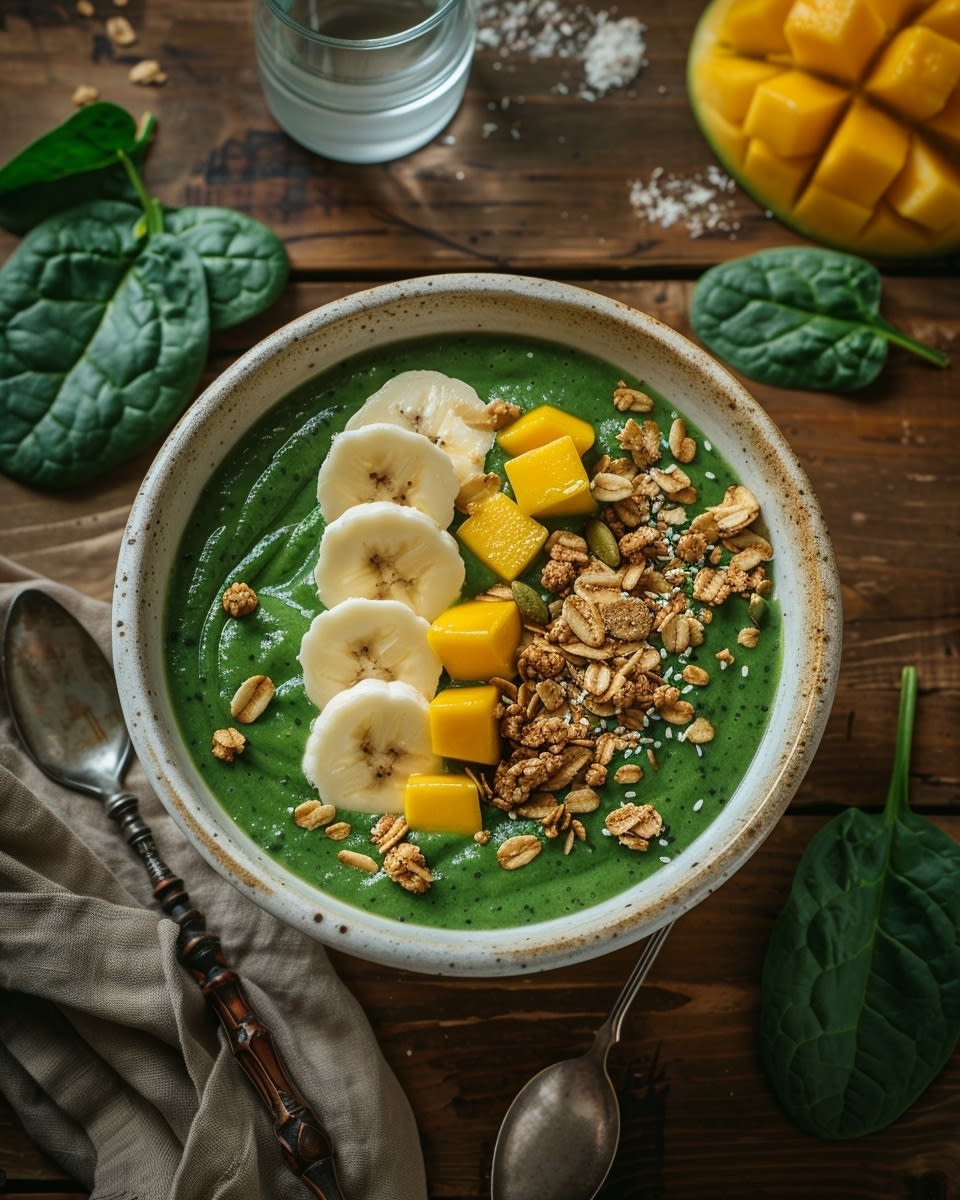
Why This Spinach and Mango Smoothie Bowl Changed My Mornings
I used to be the person who grabbed a sad granola bar on the way out the door. My mornings were rushed and my breakfast choices showed it. Then one day, a friend served me a bright green smoothie bowl topped with fresh mango chunks. I was skeptical. Green drinks had never been my thing. But that first spoonful changed everything.
The tropical sweetness of mango mixed with creamy banana completely masked the spinach. I couldn’t believe I was eating leafy greens for breakfast and actually enjoying it. That bowl gave me energy that lasted until lunch without the mid-morning crash I’d gotten from sugary cereals. I felt fuller and more focused at work.
Now I make smoothie bowls with spinach and mango at least three times a week. They’ve become my favorite way to pack nutrients into one colorful bowl. The best part is how simple they are to make. No fancy equipment needed beyond a decent blender.
What makes this combination so perfect is the balance. Spinach brings the nutrients without overpowering the taste. Mango adds natural sweetness and a tropical vibe that makes breakfast feel like a treat. Together with banana and your choice of liquid, you get a thick, creamy base that’s more satisfying than drinking a regular smoothie.
This article will walk you through everything you need to know. I’ll share the exact ingredients and their health benefits. You’ll learn why each component matters and how to customize the recipe to fit your needs. By the end, you’ll be ready to blend up your own nutritious breakfast bowl.
The Key Ingredients for Your Spinach Mango Smoothie Bowl
Let me break down what you’ll need to create this breakfast powerhouse. The ingredients list is refreshingly short, but each item plays an important role in flavor and nutrition.
Fresh Spinach: Your Green Nutrition Boost
Start with two cups of fresh spinach leaves. I prefer baby spinach because the leaves are tender and blend smoothly. Regular spinach works too, just remove any thick stems.
Spinach is one of the most nutrient-dense foods you can eat. It’s loaded with iron, which helps carry oxygen through your blood and fights fatigue. One serving gives you a good dose of vitamin K for bone health. It also contains folate, magnesium, and vitamin A.
The amazing thing about spinach in smoothie bowls is how mild it tastes when blended with fruit. You get all the nutritional benefits without the strong veggie flavor. My kids don’t even notice it’s there.
Ripe Mango: Nature’s Candy
You’ll need one cup of ripe mango chunks. Fresh mango tastes best, but frozen works perfectly and makes your bowl extra thick and cold. I keep frozen mango cubes in my freezer for quick breakfast prep.
Mango brings serious vitamin C to the table. One cup provides almost your entire daily requirement. This helps your immune system and promotes healthy skin. Mangoes also contain vitamin A for eye health and fiber for digestion.
The natural sweetness means you don’t need to add sugar or honey. Ripe mango is sweet enough on its own. Choose mangoes that give slightly when pressed and smell fragrant at the stem end.
Banana: The Creamy Base
Add one medium frozen banana for the perfect creamy texture. Freezing bananas ahead of time is key. They create that thick, ice cream-like consistency that makes smoothie bowls spoonable instead of drinkable.
Bananas provide quick energy from natural sugars and keep you full with their fiber content. They’re rich in potassium, which supports heart health and muscle function. The natural sweetness complements the mango beautifully.
I peel ripe bananas, break them into chunks, and freeze them in bags. This way they’re always ready when I need them. Brown-spotted bananas work best because they’re sweetest.
Your Choice of Liquid
You’ll need half a cup of liquid to help everything blend smoothly. The amount can vary based on how thick you like your bowl. Start with less and add more if needed.
Almond milk is my go-to choice. It’s creamy, slightly sweet, and adds extra calcium and vitamin E. Unsweetened versions keep the calorie count low.
Coconut water gives a tropical twist and adds electrolytes. It’s lighter than milk options and perfect for post-workout bowls.
Other great options include regular milk, oat milk, soy milk, or even orange juice for extra citrus flavor. Pick what fits your dietary needs and taste preferences.
Optional Add-Ins to Boost Your Bowl
The base recipe is fantastic on its own, but you can customize it with extras. These additions increase nutrition and change the texture in interesting ways.
Chia seeds are tiny nutrition bombs. Just one tablespoon adds omega-3 fatty acids, fiber, and protein. They also create a slightly thicker texture. I add them directly to the blender before blending.
Protein powder turns your smoothie bowl into a complete meal. Use one scoop of your favorite vanilla or unflavored powder. This is especially helpful if you work out in the morning or need to stay full longer.
Ground flaxseed provides similar benefits to chia seeds. It adds omega-3s and fiber without changing the taste. Start with one tablespoon.
Greek yogurt makes the bowl extra creamy and adds probiotics for gut health. Use a quarter cup for tangy richness and extra protein.
Hemp hearts sprinkle in protein and healthy fats. They have a mild nutty flavor that works well with the fruit.
A handful of ice cubes makes your bowl colder and thicker if you’re using fresh fruit instead of frozen. This is useful when you want that frosty consistency.
The beauty of smoothie bowls is the flexibility. You can stick to the basic recipe or experiment with different combinations. I change mine based on what I have available and how hungry I am. Some mornings I keep it simple. Other days I load it up with seeds and protein powder before a long hike.
What matters most is that you’re starting your day with whole foods that fuel your body. The spinach and mango smoothie bowl makes healthy eating easy and delicious. No more excuses about not having time for a good breakfast.


Making Your Perfect Spinach and Mango Smoothie Bowl
Now that you know what goes into the bowl, let’s actually make one. The process is easier than you might think, but there are a few tricks that’ll take you from “okay smoothie” to “restaurant-quality breakfast bowl.”
First things first, pull that frozen banana out about five minutes before you start. Not long enough to thaw completely, but just enough so your blender doesn’t sound like it’s dying. I learned this the hard way after nearly burning out my first blender motor.
Here’s how I do it every time. Grab your blender and add the liquid first. This is crucial. If you pile the frozen fruit on the bottom, your blender blades will just spin uselessly above everything. Pour in that half cup of almond milk or whatever liquid you’re using. Next goes the spinach. Yes, before the fruit. The liquid will pull it down toward the blades.
Then add your mango chunks and banana pieces. If you’re throwing in any extras like chia seeds or protein powder, now’s the time. Put the lid on tight because nobody wants green smoothie splattered on their ceiling at seven in the morning.
Start blending on low speed. Let it go for about ten seconds, then use your tamper if you have one to push ingredients toward the blades. No tamper? Stop the blender, remove the lid, and use a spatula to scrape down the sides. Then blend again. Do this a couple times.
Once things start moving, gradually increase to high speed. Here’s where patience matters. Blend for a full minute until everything is completely smooth. You shouldn’t see any spinach specks or fruit chunks. The texture should look thick and creamy, almost like soft-serve ice cream.
If your mixture is too thick to blend properly, add liquid one tablespoon at a time. If it’s too thin and runny, toss in a few ice cubes or more frozen fruit. Getting the consistency right takes practice. You want it thick enough that toppings sit on top instead of sinking.
Pour your smoothie into a wide bowl rather than a tall glass. This gives you room for toppings and makes it feel more like a meal than a drink. I use shallow pasta bowls because they’re perfect for this.
The Art of Topping Your Bowl
Okay, this is where things get fun. A plain smoothie bowl tastes great, but the toppings transform it into something Instagram-worthy and way more satisfying. The crunch factor is real. Without toppings, you’re basically eating baby food with a spoon.
I always start with some kind of granola. Homemade is amazing if you have time, but store-bought works perfectly. Sprinkle about a quarter cup across half the bowl. The contrast between cold creamy smoothie and crunchy granola makes every bite interesting. If you’re into meal prep, you might like my overnight oats with chia seeds and berries for another make-ahead breakfast option.
Fresh fruit slices come next. I arrange them in rows or patterns because why not make breakfast pretty? Sliced strawberries, kiwi rounds, and extra mango chunks look beautiful together. Blueberries and raspberries add pops of color. Sometimes I get a little fancy and make designs, though most mornings I just scatter everything on top.
Nuts and seeds add healthy fats that help you absorb all those vitamins. Sliced almonds are my favorite for their delicate crunch. Chopped walnuts work great too. A sprinkle of hemp hearts or pumpkin seeds bumps up the nutrition. If you love the combination of nuts with breakfast foods, the Greek yogurt parfait with honey and almonds offers similar satisfying textures.
Here’s a topping combo I make constantly: granola on one side, fresh berries down the middle, sliced almonds on the other side, and a drizzle of almond butter across everything. It sounds fancy but takes thirty seconds to arrange.
Other topping ideas worth trying include coconut flakes for tropical vibes, cacao nibs for chocolate lovers, bee pollen for extra nutrients, edible flowers if you’re feeling fancy, or even a small scoop of nut butter right in the center.
The topping possibilities are honestly endless. I change mine based on what’s in my pantry and what sounds good. Some days I keep it simple with just granola and banana slices. Other mornings I go all out with six different toppings.
Customizing for Different Diets
One reason I love this recipe is how adaptable it is. Got dietary restrictions? No problem. Need more protein? Easy fix.
For my vegan friends, the basic recipe already works if you use plant-based milk. Just skip any honey if you were thinking of adding it as a topping. Maple syrup or agave work as alternatives.
If you’re dairy-free, stick with almond milk, coconut milk, oat milk, or any other plant-based option. They all create great texture. Funny enough, I actually prefer the taste with almond milk over regular dairy milk now.
Need more protein? Add a scoop of your favorite protein powder to the blender. Vanilla blends seamlessly with the mango flavor. Unflavored works if you don’t want any extra sweetness. You could also blend in some silken tofu for protein without the powder taste. For another protein-packed breakfast, check out the spinach mushroom egg white omelette which uses similar green ingredients in a savory way.
Watching your sugar intake? Use less banana or replace half of it with frozen cauliflower. I know that sounds weird, but frozen cauliflower adds creaminess without much flavor or sugar. It’s become my secret ingredient for lower-carb versions.
For kids who are picky about green foods, use less spinach at first. Start with just one cup instead of two. As they get used to it, gradually increase the amount. You can also add a tiny bit of vanilla extract to make it taste more dessert-like.
Tips for Smoothie Bowl Success
Let me share some things I wish someone had told me when I started making these. First up, your blender matters more than you’d think. You don’t need a thousand-dollar Vitamix, but you do need something with decent power.
I started with a cheap blender that struggled with frozen fruit. It left chunks everywhere and sometimes just gave up entirely. When I upgraded to a mid-range blender with at least 500 watts of power, everything changed. Suddenly my bowls were actually smooth.
High-speed blenders work best because they can pulverize frozen ingredients quickly. Look for one with a tamper tool or at least a wide base that helps ingredients move toward the blades. If you’re shopping for a new blender, consider it an investment in your health. I use mine every single day.
By the way, timing matters too. I make smoothie bowls for breakfast most often because they give me steady energy through the morning. The natural sugars from fruit provide quick fuel while the fiber and healthy fats keep me satisfied. It’s worlds better than the energy crash I used to get from sugary cereals.
That said, smoothie bowls work great any time of day. I’ve made them for post-workout recovery, afternoon snacks, and even light dinners on hot summer evenings. They’re especially perfect after exercise because the fruit replenishes glycogen stores while the spinach provides minerals you lose through sweat.
Can you make smoothie bowls ahead of time? Sort of. The mixture doesn’t freeze well as a complete bowl because the texture changes. But you can absolutely prep ingredients in advance. I portion out spinach, mango, and banana chunks into freezer bags on Sundays. Each bag contains one smoothie bowl’s worth of ingredients. In the morning, I just dump a bag in the blender with my liquid and blend. This saves me probably five minutes of morning prep time.
If you have leftover smoothie mixture, you can freeze it in popsicle molds. My kids think they’re getting dessert when really it’s just frozen vegetables and fruit. Sometimes I pour leftovers into ice cube trays and add those cubes to regular smoothies later in the week.
Here’s the thing though – smoothie bowls taste best fresh. The texture changes if you let them sit too long. If you need to make one and eat it later, store it in an airtight container in the fridge for up to two hours max. Give it a good stir before eating because ingredients tend to separate.
Want to keep things interesting? Change up your flavor combinations regularly. Once you master the basic spinach and mango version, try adding different greens like kale or romaine. Swap mango for pineapple, peaches, or mixed berries. The formula stays the same but the taste shifts completely. Similar to how banana oat pancakes with no sugar can be customized with different toppings, your smoothie bowl becomes whatever you want it to be.
I go through phases where I’ll make the same combination for a few weeks, then suddenly want something completely different. Right now I’m on a tropical kick with mango, pineapple, and coconut. Last month I was all about berry blends with strawberries and blueberries. The variety keeps breakfast exciting instead of feeling like a chore.
One last tip that made a big difference for me – don’t stress about perfection. Some mornings my bowl looks gorgeous with perfectly arranged toppings. Other days I dump everything on top and call it good. Both versions taste equally delicious and give me the same nutrition. The goal is nourishing your body with whole foods, not creating art for social media. Though if your bowl turns out pretty, definitely take a picture before you eat it.


The Real Health Benefits of Your Spinach and Mango Smoothie Bowl
Let’s talk about what this bowl is actually doing for your body. Sure, it tastes good and looks pretty, but the health benefits are what keep me coming back to this recipe day after day.
Spinach is basically a nutritional superhero hiding in plain sight. Beyond the basics I mentioned earlier, it’s packed with antioxidants like lutein and zeaxanthin. These compounds protect your eyes from damage caused by sunlight and may reduce the risk of cataracts and macular degeneration as you age. My grandmother developed vision problems in her seventies, and I’m doing everything I can to protect my eyes now while I’m young enough for it to matter.
The iron content in spinach deserves more attention too. Women especially need this mineral since we lose iron monthly. But here’s something cool I learned – the vitamin C in mango actually helps your body absorb the iron from spinach more effectively. It’s like they were meant to be blended together. This combo fights fatigue better than either ingredient alone.
Mango brings its own impressive resume to the table. The beta-carotene that gives it that gorgeous orange color converts to vitamin A in your body. This supports your immune system, keeps your skin glowing, and helps maintain healthy mucous membranes. I noticed my skin looked clearer after a few weeks of eating these bowls regularly. Could be coincidence, but I don’t think so.
The fiber content in this bowl is no joke either. Between the spinach, mango, and banana, you’re getting both soluble and insoluble fiber. Soluble fiber helps control blood sugar levels and lowers cholesterol. Insoluble fiber keeps your digestive system running smoothly. Together they keep you feeling full for hours. This is why I don’t get hungry before lunch anymore, even on busy mornings when I’m running around.
Here’s the thing about antioxidants that most people don’t realize – they fight inflammation throughout your entire body. Chronic inflammation is linked to practically every major disease from heart disease to cancer to Alzheimer’s. The mangiferin in mango and the flavonoids in spinach work as powerful anti-inflammatory agents. You’re basically giving your body armor against long-term health problems every time you eat this bowl.
How This Bowl Supports Your Specific Health Goals
I’ve talked to dozens of people who make these bowls for different reasons. Everyone seems to find their own benefit depending on what they need.
For weight management, smoothie bowls are genuinely helpful if you do them right. The key is keeping them balanced with enough protein and healthy fats so you’re not just mainlining fruit sugar. When I add a tablespoon of almond butter and some hemp seeds to my bowl, it becomes a complete meal that satisfies me without excessive calories. The fiber keeps me full while the nutrients prevent cravings later in the day.
My coworker Sarah started making these bowls as part of her weight loss journey. She lost fifteen pounds over three months by replacing her usual breakfast of bagels and cream cheese with smoothie bowls. She didn’t even change anything else about her diet at first. Just that one swap made a difference because she was eating real food instead of refined carbs that spiked her blood sugar.
Energy levels are another big win. The natural sugars in fruit provide immediate energy, while the complex carbs and fiber release energy steadily over time. Unlike coffee which gives you a spike and then a crash, this bowl provides sustained fuel. I used to need a second cup of coffee by ten in the morning. Now I drink one cup with my smoothie bowl and I’m good until lunch.
Athletes and gym-goers love these bowls for recovery. The potassium from banana helps prevent muscle cramps. The vitamin C supports collagen production for healthy joints and connective tissue. The natural sugars replenish glycogen stores after a workout. My friend Jake, who runs marathons, swears by smoothie bowls as his post-run breakfast. He says they help him recover faster than the protein shakes he used to drink.
For immune support, especially during cold and flu season, the vitamin C content is clutch. One serving of this bowl gives you more than your daily requirement. Vitamin C doesn’t prevent colds like people used to think, but it does support your immune system’s overall function and may shorten how long you’re sick.
Blood pressure management is another area where this bowl shines. The potassium in bananas and the nitrates in spinach both help regulate blood pressure naturally. My dad’s doctor suggested he eat more leafy greens and potassium-rich foods. I taught him to make this smoothie bowl and his numbers improved at his next checkup. Obviously talk to your doctor, but food really can be medicine.
Perfect for Every Kind of Lifestyle
One reason this recipe works for so many people is how it fits different lifestyles. Busy professionals like me love that it takes five minutes to make. You’re not standing over a stove or dealing with multiple pots and pans. Blend, pour, top, eat. Done.
Parents with picky eaters have found success hiding vegetables in these bowls. Kids see the bright colors and fun toppings and don’t realize they’re eating spinach. My sister used to battle with her six-year-old every morning about eating breakfast. Now her daughter asks for “pink bowls” – which are basically this recipe with extra strawberries to mask the green color. Whatever works, right?
College students on tight budgets appreciate how affordable the ingredients are. Bananas are cheap. Frozen mango costs less than fresh. Spinach is inexpensive and lasts a while in the fridge. You can make a week’s worth of smoothie bowls for less than eating out once. My nephew lives off these at school because he can keep frozen ingredients in his dorm mini-freezer.
Seniors dealing with chewing difficulties or decreased appetite find smoothie bowls easier to eat than traditional breakfasts. The texture is smooth and pleasant. The bowl is nutrient-dense so even a smaller portion provides good nutrition. My neighbor who’s in her eighties started making these after dental surgery and now prefers them to regular breakfast foods.
Remote workers like having a breakfast that feels like an actual meal break rather than mindlessly snacking at their desk. Eating from a bowl with a spoon forces you to slow down and be present. It’s a small ritual that marks the beginning of your workday in a healthy way.
Real Stories from Real People
I love hearing from people who’ve made this part of their routine. My friend Amanda told me she used to skip breakfast entirely because she never felt hungry in the morning. But then she’d be starving by ten and raid the vending machine at work. She started forcing herself to eat a smoothie bowl around eight-thirty, even though she wasn’t hungry yet. After two weeks, her body adjusted and she started waking up actually wanting breakfast. Her energy throughout the day improved dramatically.
Then there’s Marcus, who works night shifts as a nurse. He makes his smoothie bowl when he gets home in the morning before sleeping. It’s his way of winding down with something healthy instead of crashing straight into bed. He says the magnesium in spinach actually helps him sleep better. The bowl has become part of his transition routine from work mode to rest mode.
My cousin Lisa dealt with afternoon energy crashes that made her useless at work after lunch. She started having a smaller smoothie bowl as her lunch instead of sandwiches and noticed the crashes stopped. Turns out the heavy bread and processed meat were making her sluggish. The lighter smoothie bowl with added protein powder keeps her alert through her entire shift.
Even skeptics have come around. My brother used to mock my “green sludge” until I made him try it. He admitted it actually tasted good but said it wouldn’t fill him up. I challenged him to eat one every morning for a week and report back honestly. By day three he texted me asking for the recipe. He’s now been making them for six months and says his digestion has never been better. He used to deal with bloating and irregularity, but the fiber content solved problems he’d had for years.
Making It Work Long-Term
The real test of any healthy habit is whether you’ll stick with it. Plenty of diets and food trends come and go, but this one has staying power for good reasons.
First, it doesn’t feel like deprivation. You’re not choking down something gross because it’s “good for you.” This bowl tastes legitimately delicious. That tropical mango sweetness makes you look forward to breakfast instead of dreading it.
Second, the variety keeps things interesting. You’re never locked into eating the exact same thing every single day. Change your liquid base, swap your toppings, add different supplements. The basic template stays the same but the experience shifts constantly. I’ve been making smoothie bowls for two years and I’m still not bored.
Third, it’s flexible enough to grow with your changing needs. When I started training for a half-marathon last year, I added more protein powder and nut butter. When I wanted to lose a few pounds, I reduced the portion size slightly and added extra greens. The recipe adapts instead of boxing you in.
By the way, the nutrients in smoothie bowls work synergistically, which is a fancy way of saying they’re better together than apart. The healthy fats from nuts and seeds help you absorb the fat-soluble vitamins A and K from spinach and mango. The vitamin C enhances iron absorption. Everything works together like a well-orchestrated team. According to the Office of Dietary Supplements, including sources of unsaturated fats like nuts and seeds helps maximize nutrient absorption and supports overall health.
Here’s what I wish more people understood – eating healthy doesn’t have to be complicated or miserable. This one simple bowl contains more nutrition than most people eat in an entire day. You’re getting vegetables, fruit, healthy fats, fiber, protein, vitamins, and minerals all in one meal. That’s powerful.
The benefits compound over time too. You won’t transform overnight, but consistent good choices add up. Better energy leads to more activity. Better nutrition improves sleep. Better sleep enhances focus. It’s all connected, and it starts with something as simple as what you eat for breakfast.
If you’re looking for more ways to start your day right, you might want to explore other healthy breakfast recipes that complement this smoothie bowl approach and keep your morning routine fresh and exciting.
This isn’t about being perfect or never eating anything “bad” again. It’s about adding more good stuff to your diet in a way that actually tastes good and fits your real life. Make the bowl when you can. Don’t stress when you can’t. Progress matters more than perfection.
Start with this basic recipe and see how you feel after a week or two. Pay attention to your energy levels, your mood, your digestion, your skin. Your body will tell you if it’s working. I’m betting you’ll notice positive changes that make you want to keep going.
Your Questions About Smoothie Bowls Answered
How do I choose the best mango for my smoothie bowl?
Look for mangoes that give slightly when you press them gently, similar to a ripe avocado. The skin should have a sweet, fruity smell near the stem end. Color isn’t always the best indicator since different varieties have different colors when ripe. If you can only find hard mangoes at the store, leave them on your counter for a few days until they soften. Honestly though, I keep frozen mango chunks in my freezer year-round because they’re already ripe, pre-cut, and make the bowl extra thick. Frozen is just as nutritious as fresh and way more convenient.
Can I use frozen spinach instead of fresh?
Yes, but with a small adjustment. Frozen spinach is more condensed than fresh, so you’ll need less of it. Use about half a cup of frozen spinach instead of two cups of fresh. Make sure to squeeze out excess water before adding it to your blender, or your bowl will end up too watery. I actually prefer fresh spinach for smoothie bowls because it blends smoother and doesn’t affect the texture as much. Fresh baby spinach is so mild that you barely taste it, which is perfect for this tropical combination.
What are some good substitutes for banana in this recipe?
Frozen avocado creates amazing creaminess without the banana flavor or sweetness. Use half an avocado and maybe add a touch of honey if you want it sweeter. Frozen cauliflower is another great option that sounds weird but works perfectly – it adds thickness without much flavor and keeps the carb count lower. Frozen zucchini works similarly. If you just don’t have bananas on hand, use extra mango plus a handful of ice cubes, though the texture won’t be quite as creamy. Greek yogurt can also add thickness if you’re okay with a tangier flavor.
Is this smoothie bowl suitable for people with diabetes?
It can be, but you’ll want to modify it slightly. Reduce the fruit content by using less mango and banana, and add protein powder or Greek yogurt to slow sugar absorption. Include healthy fats like almond butter or chia seeds, which help stabilize blood sugar. Consider adding frozen cauliflower or zucchini to maintain the thick texture without extra fruit. The fiber from spinach is actually beneficial for blood sugar control. Always monitor your blood sugar after eating to see how your body responds, and consult with your doctor or dietitian about portion sizes that work for your specific needs.
How can I make this smoothie bowl more filling?
Add protein and healthy fats, which are the keys to satiety. Blend in a scoop of protein powder, a quarter cup of Greek yogurt, or a tablespoon of nut butter. Top your bowl with nuts, seeds, and granola for extra substance and crunch. Hemp hearts and chia seeds add both protein and healthy fats without changing the flavor much. If you need even more staying power, increase the spinach content and add some rolled oats to the blender. I sometimes add a tablespoon of ground flaxseed too, which bulks up the fiber content and keeps me full until lunch without making me feel heavy.
Can I add other greens besides spinach?
Absolutely! Baby kale works great and has a similarly mild flavor when blended with fruit. Romaine lettuce sounds boring but actually blends really smooth and adds nutrients without any bitter taste. Swiss chard is another good option. I avoid regular curly kale in smoothie bowls because it can be a bit tough and bitter even when blended. Start with smaller amounts of any new green to make sure you like the taste. You can also mix greens – like one cup spinach and one cup baby kale. Arugula and mustard greens are too peppery for this sweet combination, so I’d skip those.
What are some low-calorie toppings for a smoothie bowl?
Fresh berries add sweetness, vitamins, and visual appeal for very few calories – about 80 calories per cup. Sliced strawberries, blueberries, and raspberries are all excellent choices. Kiwi slices are another low-calorie option at around 40 calories per fruit. Unsweetened coconut flakes add texture for about 35 calories per tablespoon. A small amount of cacao nibs gives you that chocolate hit for minimal calories. Fresh mint leaves or basil add interesting flavor with basically zero calories. If you want crunch without many calories, try air-popped popcorn or puffed rice cereal instead of granola.
How often should I include smoothie bowls in my diet?
As often as you enjoy them! I make them three to four times per week and eat other breakfasts the rest of the time for variety. Some people have them every single day and do great. There’s no upper limit as long as you’re including enough protein and healthy fats to make it balanced. The key is making sure your overall diet is varied, so you’re getting different nutrients from different sources throughout the week. Listen to your body – if you start craving something else, switch it up. Healthy eating should feel flexible and enjoyable, not like you’re forcing yourself to eat the same thing because you “should.”
Will blending spinach destroy its nutrients?
Not at all. Blending actually breaks down the cell walls of spinach, which can make some nutrients more bioavailable and easier for your body to absorb. The vitamin content stays intact since you’re not cooking it or exposing it to high heat. Some people worry that the oxidation from blending reduces nutrients, but studies show any loss is minimal and happens so slowly that it doesn’t matter if you eat your bowl within an hour of making it. The benefits of actually consuming more vegetables by blending them far outweigh any tiny nutrient losses. Don’t overthink it – blended spinach is still incredibly nutritious.
Can I make a smoothie bowl without a high-powered blender?
Yes, but you’ll need to make some adjustments. Let your frozen ingredients thaw for about ten minutes before blending so your blender doesn’t struggle. Cut everything into smaller pieces and add extra liquid to help things move. Blend in batches if your blender is small or weak. You can also use mostly fresh ingredients instead of frozen and add ice cubes at the end for thickness. The texture might not be as perfectly smooth as with a Vitamix, but it’ll still taste good and give you the same nutrition. I started with a thirty-dollar blender and made it work for months before upgrading.
Give this spinach and mango smoothie bowl a real chance – not just one try, but maybe a week or two of including it in your routine. See how your body responds, how your energy changes, and how it fits into your mornings. I think you’ll be surprised at how something so simple can make such a difference in how you feel throughout your day.
Ingredients
Equipment
Method
- Prepare your frozen banana by taking it out of the freezer about five minutes before use.
- Add the liquid to the blender first.
- Place the spinach on top of the liquid in the blender.
- Add the mango chunks and banana pieces.
- If using optional add-ins, add them now.
- Secure the lid tightly on the blender.
- Blend on low speed for about ten seconds.
- Use a tamper or spatula to push ingredients toward the blades, then blend again.
- Gradually increase to high speed and blend for a full minute until smooth.
- Adjust the thickness by adding more liquid if too thick, or ice if too thin.
- Pour the smoothie into a wide bowl.
- Top with your choice of granola, fresh fruit, nuts, seeds, or other toppings.