
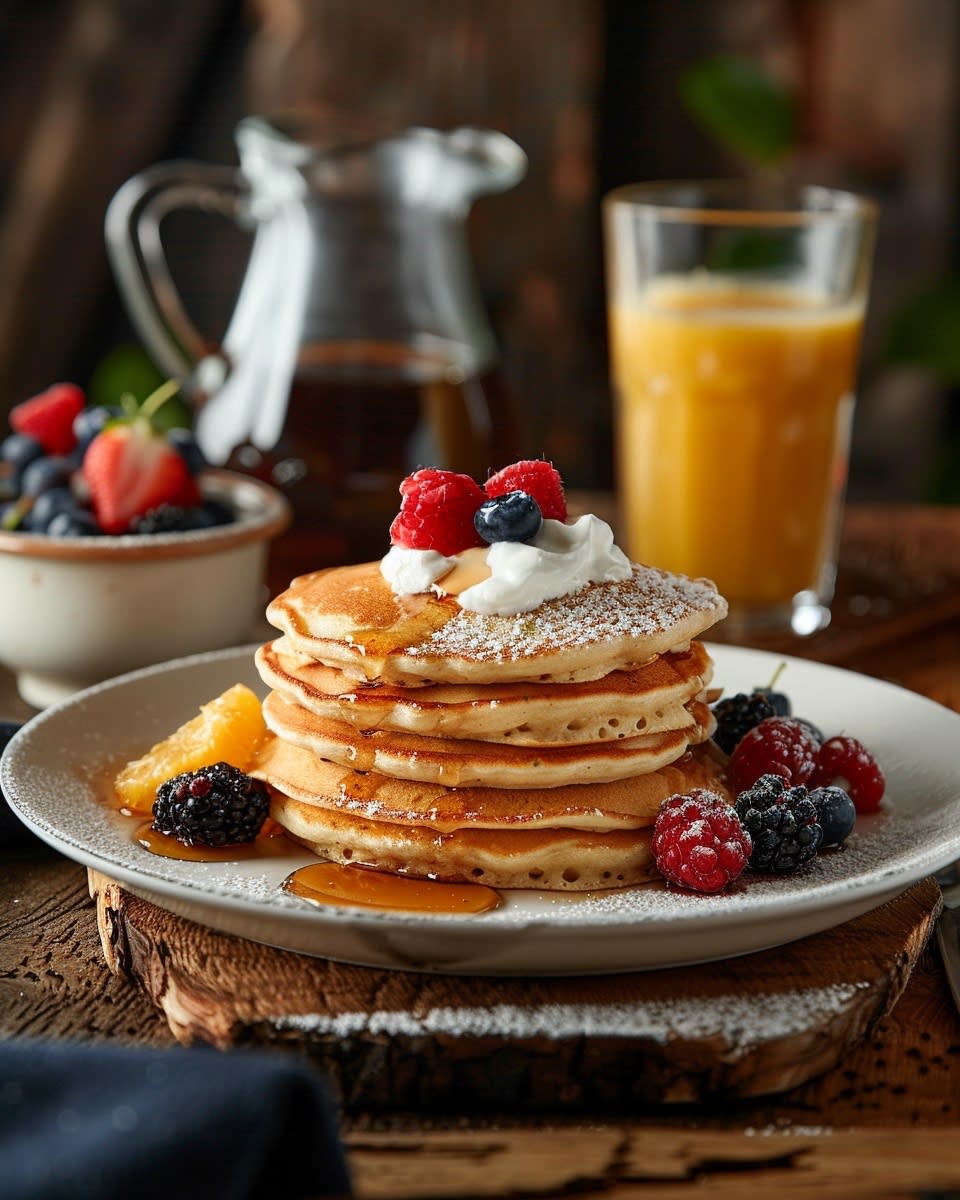
Why I’m Obsessed with Protein Pancakes with Greek Yogurt
I used to think weekend pancakes meant choosing between taste and my fitness goals. Then one rushed Tuesday morning, I tossed leftover Greek yogurt into my pancake batter. That simple swap changed everything. Those pancakes were fluffy, filling, and kept me full until lunch. No mid-morning crash. No guilt. Just pure breakfast satisfaction.
Welcome to my kitchen! Today I’m thrilled to share this recipe that turned me into a pancake convert. We’re making protein pancakes with Greek yogurt, and trust me, once you try these, you’ll never look at regular pancakes the same way.
These aren’t your typical Sunday breakfast pancakes. They’re packed with protein, easy to customize, and work just as well after a workout as they do on a lazy morning. I’ve made them countless times, tweaking and testing until I got them perfect.
The Secret Ingredient That Changes Everything
Greek yogurt is the star here, and for good reason. It brings a tangy richness that makes these pancakes taste almost indulgent. But the real magic is in what it does beyond flavor.
A single cup of Greek yogurt packs around 20 grams of protein. That’s serious fuel for your muscles and energy. It also creates the most amazing texture. The yogurt makes the batter thick and creamy, which translates to soft, tender pancakes that don’t fall apart on your spatula.
I love that Greek yogurt adds moisture without making the pancakes soggy. Regular pancakes can sometimes taste dry or need tons of syrup. These stay moist and flavorful on their own.
Getting Started with Your Basic Ingredients
Let’s talk about what you actually need. The beauty of this recipe is its simplicity. You don’t need a pantry full of specialty ingredients or expensive protein powders.
For the absolute basics, you need just three things: Greek yogurt, eggs, and flour. That’s it. These 3 ingredient greek yogurt pancakes are my go-to when I’m running late but still want something better than a granola bar.
Here’s what each ingredient does:
- Greek yogurt provides protein, moisture, and that signature tangy taste
- Eggs bind everything together and add more protein
- Flour gives structure and that classic pancake texture we all love
I typically use plain, full-fat Greek yogurt. The fat adds flavor and helps you feel satisfied longer. But low-fat works fine too if that’s what you prefer.
Making Your Pancakes Light and Fluffy
Want to know the secret to fluffy greek yogurt pancakes? It comes down to a few simple tricks I learned after making flat, dense pancakes one too many times.
First, add a leavening agent. A bit of baking powder makes a huge difference. Just half a teaspoon can transform your pancakes from flat to fluffy. The baking powder creates tiny air bubbles that puff up when they hit the hot pan.
Second, don’t overmix your batter. I know it’s tempting to stir until everything looks perfectly smooth. But lumps are your friend here. Mix just until the ingredients come together. Those small lumps will disappear during cooking, and you’ll get lighter pancakes.
Third, let your batter rest for five minutes before cooking. This gives the flour time to absorb the liquid. The result? Pancakes that rise beautifully and have the perfect texture.
Temperature matters too. Keep your pan at medium heat. Too hot and the outside burns before the inside cooks. Too cool and they won’t get that golden color we’re after.
Mix and Match Your Protein Pancake Variations
Once you master the basic recipe, the fun really begins. I’ve tested dozens of variations, and I’m excited to share the ones that actually work.
If you want to skip the flour completely, try flourless oatmeal yogurt pancakes. Blend oats into a fine powder using your blender or food processor. Replace the flour with this oat flour. You get extra fiber and a slightly nutty taste that pairs perfectly with the yogurt.
For those adding oats to the basic recipe, protein pancakes with greek yogurt and oats create a heartier texture. I like adding quarter cup of rolled oats to my standard batch. They add substance and keep me full even longer.
Need a dairy-free milk substitute or just ran out? Try greek yogurt pancakes no milk. The yogurt provides all the moisture you need. Just thin the batter with a splash of water if it seems too thick.
What about eggs? Some people avoid them due to allergies or dietary choices. Making greek yogurt pancakes no egg is possible. You’ll need to replace the binding power eggs provide. I use ground flaxseed mixed with water. One tablespoon of flax with three tablespoons of water equals one egg. Let it sit for five minutes until it gets gel-like.
For my UK readers searching for greek yogurt pancakes uk, the recipe works perfectly with ingredients you can find at any Tesco or Sainsbury’s. Use your standard plain Greek-style yogurt and self-raising flour if you want to skip the baking powder.
Keeping It Simple and Delicious
My favorite version remains the super simple one. Those 3 ingredient greek yogurt pancakes take less than ten minutes from start to finish. I make them most weekday mornings.
Here’s my quick method: Mix half a cup of Greek yogurt with one egg and about quarter cup of flour. That’s it. The batter will be thick, almost like a muffin batter. Spoon it onto a hot, greased pan. Cook until bubbles form on top, then flip.
You get about four small pancakes from this ratio. Perfect for one person or half a batch for two.
If you’re following Weight Watchers, these pancakes are a dream. Greek yogurt pancakes weight watchers friendly options use the recipe I just mentioned. Each pancake comes in at just a few points, depending on your plan. Use non-fat yogurt and cooking spray to keep points even lower.
Going Grain-Free with Your Pancakes
Sometimes you want pancakes but need to avoid both regular flour and oats. That’s where protein pancakes with greek yogurt no oats and protein pancakes with greek yogurt no flour come in handy.
For a no-flour version, I use almond flour or coconut flour. They behave differently than wheat flour, so you’ll need less. Start with two tablespoons of coconut flour or half a cup of almond flour. Coconut flour soaks up tons of liquid, so less is definitely more.
These grain-free versions taste nuttier and have a different texture. They’re more delicate and can break easier when flipping. Use a good non-stick pan and wait until they’re really set before turning them over.
I won’t lie, they take practice. My first batch of coconut flour pancakes turned into scrambled pancake bits. But once you get the hang of it, they’re amazing.


More Ways to Customize Your Protein-Packed Breakfast
Now that we’ve covered those basic swaps, let me show you even more ways to make these pancakes work for your specific needs and cravings.
Here’s the thing about protein pancakes with greek yogurt and oats that I wish someone had told me earlier: the oats need moisture to soften properly. My first attempt at adding oats was a disaster because I just dumped them into my regular batter. They stayed crunchy and weird. Total letdown.
What actually works is letting the oats soak in the yogurt for about ten minutes before adding anything else. I mix half a cup of rolled oats with three-quarters cup of Greek yogurt and just let them hang out while I make my coffee. The oats absorb the yogurt and get this amazing chewy texture. Then I add my eggs and a touch of flour, plus some baking powder for lift.
The result? Pancakes that are substantial enough to keep you satisfied until dinner if you’re doing intermittent fasting. I’m not kidding. These are serious fuel. They remind me a bit of the hearty texture you get from buckwheat porridge with almond milk, but in pancake form. Same kind of staying power.
One random Friday, my sister showed up at my place with her kids who have various food allergies. One can’t have eggs, the other avoids dairy milk. I thought pancakes were off the menu. Then I remembered I could adapt my recipe.
When You Need to Skip the Eggs
Making greek yogurt pancakes no egg was honestly easier than I expected. The Greek yogurt itself provides structure and moisture, so you’re already halfway there. The egg’s main job in pancakes is binding everything together and adding a bit of rise.
I’ve tried three different egg replacements, and here’s what actually works in order of preference. First choice: mashed banana. About a quarter cup of mashed banana replaces one egg beautifully. It adds natural sweetness, so you might want to cut back on any added sugar. The banana flavor is noticeable but not overwhelming. Kind of like how bananas work in a cottage cheese and banana bowl, they just blend into the background while doing their job.
Second option: applesauce. Same amount, quarter cup per egg. This gives you more neutral flavor than banana. The pancakes come out slightly more cake-like and tender. My niece who’s picky about banana taste preferred this version.
Third choice: that flax egg I mentioned earlier. Mix one tablespoon ground flaxseed with three tablespoons water. Wait five minutes until it gets goopy. This works but gives you a slightly grainier texture. Some people love it, some don’t notice, and some find it off-putting. I’m in the middle camp.
Whatever replacement you choose, the cooking technique stays the same. Medium heat, patience, and don’t flip too early. These egg-free versions take a bit longer to set, so give them an extra thirty seconds before attempting the flip.
Ditching the Milk Without Losing Moisture
Funny enough, greek yogurt pancakes no milk might be the easiest variation of all because the original recipe doesn’t really need milk anyway. I never understood why traditional pancake recipes call for both milk and eggs when Greek yogurt can do the work of both.
The Greek yogurt is already liquid enough to create a pourable batter when combined with eggs. If your batter seems too thick, just add water. Seriously. Plain water works perfectly fine. Start with a tablespoon at a time and stir gently until you reach the consistency you want.
For those avoiding dairy entirely, swap regular Greek yogurt for coconut yogurt or almond milk yogurt. The texture changes slightly since non-dairy yogurts are usually thinner, but they still make decent pancakes. You might need a touch more flour to compensate for the extra liquid.
I’ve also used the leftover liquid from blending spinach avocado smoothies to thin pancake batter. Sounds weird, I know. But if you’re already making a smoothie and have some extra almond milk in the blender, why not? It adds a faint green tint that my kids thought was hilarious.
Weight Watchers and Point-Friendly Options
Several of my friends follow Weight Watchers, and they’re always hunting for breakfast options that won’t blow their daily points. That’s where greek yogurt pancakes weight watchers versions shine.
The base three-ingredient recipe I mentioned earlier is already pretty point-friendly. But you can make it even better by using fat-free Greek yogurt and cooking spray instead of butter. Each small pancake comes out to about one or two points, depending on which WW plan you’re following.
Here’s a pro tip I learned from my friend Sarah who’s been doing WW for years: add a scoop of vanilla protein powder to the batter. It sounds like it would increase points, but many protein powders are zero points on WW. Plus it bumps up the protein even more and adds sweetness without sugar.
Top these with fresh berries instead of syrup, and you’ve got a zero-point topping situation. Strawberries, blueberries, raspberries, they all work. I like warming the berries in the microwave for thirty seconds so they get jammy and syrupy without actual syrup.
Sarah also taught me that you can meal prep these. Make a big batch on Sunday, separate them with parchment paper, and freeze them. Pop them in the toaster on busy mornings. They toast up just like frozen waffles but with way more protein and fewer points.
Going Completely Flourless with Oats
The flourless oatmeal yogurt pancakes deserve their own section because they’re different enough from the regular version that you need specific instructions.
Start with old-fashioned rolled oats, not instant. Instant oats are too broken down and create a gummy texture. Quick oats work in a pinch, but rolled oats are ideal. Measure out one cup of oats and blend them in a food processor or blender until they’re a fine powder. This takes about thirty seconds. You’ve just made oat flour.
Mix your oat flour with one cup of Greek yogurt, two eggs, a tablespoon of honey or maple syrup, half a teaspoon of baking powder, and a pinch of salt. The batter will be thick and grainy-looking. That’s normal. Let it rest for ten minutes. The oats need time to absorb liquid.
After resting, the batter should look smoother and slightly thicker. If it’s too thick to pour, add water a tablespoon at a time. These pancakes cook slower than flour-based ones because oats take longer to cook through. Keep your heat on medium-low and be patient.
The texture is hearty and satisfying, similar to what you’d get from healthy breakfast cookies with oats. They’re denser than regular pancakes but in a good way. They feel substantial and filling.
By the way, these freeze exceptionally well. The oats help them hold their structure better than flour pancakes. I make double batches and freeze half for later.
Mix-and-Match for Your Perfect Stack
The beauty of all these variations is that you can combine them based on what you have available and what your dietary needs are. Need egg-free and flourless? Use the oat flour method with a flax egg. Want extra protein without eggs? Add protein powder and use the banana replacement.
Last week I made a batch using oat flour, no eggs, and dairy-free yogurt for a friend who’s vegan. They turned out surprisingly well. Not identical to the original, but definitely pancake-like and tasty. She was thrilled to have a protein-packed breakfast option that fit her lifestyle.
The key is not being afraid to experiment. My notebook has at least twenty different ratios and combinations scribbled in it from months of testing. Some were terrible. A few were just okay. But several became regular rotation recipes.
Start with the basic formula that works for your dietary needs, then tweak from there. Too thick? Add liquid. Too thin? Add more oats or flour. Not sweet enough? Try a bit of vanilla extract or cinnamon instead of adding sugar. These pancakes are forgiving enough to handle adjustments.


Special Tips for Perfect Protein Pancakes Every Single Time
After making hundreds of batches, I’ve learned that success with these pancakes comes down to a few crucial details that most recipes don’t tell you about. Let me save you from the mistakes I made so your first batch turns out great.
Temperature control is everything. I used to crank my stove to high, thinking faster cooking meant better pancakes. Wrong. The outside would burn while the inside stayed raw and goopy. Now I preheat my pan on medium-low for a full three minutes before adding any batter. You want the heat steady and even, not blazing hot.
Here’s a trick my grandmother taught me for testing pan temperature: flick a few drops of water onto the surface. If they sizzle and evaporate immediately, it’s too hot. If they just sit there, too cold. You want them to dance around for a second before disappearing. That’s your sweet spot.
The spatula matters more than you’d think. I struggled with broken pancakes until I invested in a thin, flexible metal spatula. Those thick plastic ones don’t slide under the pancake properly. You need something that can get underneath in one smooth motion. Wait until you see bubbles forming across the entire surface and the edges look set before attempting to flip. With protein pancakes with greek yogurt, patience pays off.
Grease your pan right. I alternate between cooking spray and a small pat of butter. Butter tastes better but can burn if your heat is even slightly too high. Cooking spray is more foolproof for beginners. Either way, don’t overdo it. Too much grease makes the pancakes fry instead of gently cook, and you end up with crispy edges that taste more like fried dough than pancakes.
Batter consistency is personal preference, honestly. Some people like thick pancakes that hold their shape perfectly. Others want thinner ones that spread out more. I’m somewhere in the middle. My batter is thick enough that it doesn’t immediately spread when I pour it, but thin enough that I can actually pour it rather than having to scoop it.
If you’re making flourless oatmeal yogurt pancakes, add an extra minute to your resting time. The oats need that time to fully hydrate. I learned this the hard way when I got impatient and ended up with pancakes that tasted like raw oats in the middle. Not pleasant.
For my readers wondering about greek yogurt pancakes uk, everything I’ve mentioned applies exactly the same. Your Tesco or Sainsbury’s Greek-style yogurt works perfectly. If you’re using self-raising flour, skip the baking powder since it’s already in there. British readers also have access to brilliant protein powders at Holland & Barrett if you want to boost the protein even more.
One more thing about storage and safe food handling: these pancakes keep in the fridge for about four days in an airtight container. Stack them with parchment paper between each one so they don’t stick together. In the freezer, they last up to three months. I’ve never had a batch last that long because they get eaten too quickly, but theoretically, they freeze great.
Troubleshooting Common Pancake Problems
Even with perfect technique, sometimes things go sideways. Let me walk you through the most common issues and how to fix them.
Problem number one: flat, dense pancakes. This usually means not enough leavening agent or overmixed batter. If you forgot the baking powder, there’s not much to do except remember it next time. But if your batter looks deflated after sitting for a while, you probably stirred it too vigorously. Mix gently, like you’re folding in whipped cream, not beating eggs.
Problem two: pancakes that fall apart when flipping. This happened to me constantly when I first started making protein pancakes with greek yogurt no flour. The solution is making them smaller. Instead of giant pancakes, go for silver dollar size. They’re easier to flip and cook more evenly. Also, make absolutely sure they’re ready before you flip. The edges should pull away from the pan slightly.
Pancakes sticking to the pan? Your pan probably isn’t hot enough yet, or you didn’t use enough grease. Could also be that you’re using a pan with scratched nonstick coating. Time for a new pan, friend.
Too bland? Greek yogurt is tangy, but sometimes the pancakes still taste flat. Add vanilla extract, a pinch of cinnamon, or a tiny bit of salt. Salt especially makes a huge difference. It amplifies all the other flavors. Don’t skip it even if the recipe doesn’t mention it.
Making Pancakes Work for Different Lifestyles
These pancakes fit into so many different eating plans, which is partly why I’m so obsessed with them. They’re not just for gym rats and protein fanatics.
If you’re doing meal prep for the week, make a triple batch on Sunday. I lay them out on a baking sheet once they’ve cooled completely, freeze them until solid, then transfer to a freezer bag. This prevents them from sticking together in one massive pancake block. Grab however many you need each morning and microwave for thirty seconds or toast them.
For families with picky eaters, these are surprisingly kid-friendly. My nephew refuses most healthy foods, but he’ll demolish a stack of these if I let him add chocolate chips to the batter. I pick my battles. He’s getting protein and calcium even with the chocolate chips, so I call it a win.
By the way, these work brilliantly for post-workout fuel. The combination of protein from the yogurt and eggs plus carbs from the flour or oats gives you exactly what your muscles need to recover. I keep frozen ones at work and heat them up after lunch-hour gym sessions.
Budget-conscious cooks love these too. Greek yogurt occasionally goes on sale, and when it does, I stock up. It lasts weeks in the fridge. Eggs are still relatively cheap compared to most protein sources. Even the fancy ingredients like almond flour are optional. The basic version costs maybe two dollars per batch, and that feeds me for several meals.
If you’re exploring more ways to incorporate protein into your morning routine, you might want to check out other options in the high protein breakfast category. There’s a whole world of satisfying, muscle-building breakfast ideas beyond just pancakes.
Creative Serving Ideas Beyond Maple Syrup
Don’t get me wrong, I love maple syrup. But after eating these pancakes several times a week for months, I needed variety in my toppings.
Nut butter is my go-to now. I warm almond butter or peanut butter for fifteen seconds in the microwave until it’s pourable, then drizzle it over the stack. The warm nut butter soaks into the pancakes and creates this amazing richness. Plus, more protein.
Greek yogurt on top of Greek yogurt pancakes sounds redundant, but trust me. A dollop of honey-sweetened yogurt with fresh fruit creates something that tastes almost like dessert. My favorite combo is yogurt mixed with a little honey, topped with sliced strawberries and a sprinkle of granola.
Savory pancakes are underrated. Skip any sweetener in the batter, add some black pepper and herbs, then top with scrambled eggs and avocado. Sounds weird until you try it. Then it becomes your Saturday brunch obsession.
For a fall-themed version, I mix pumpkin puree into the batter and top with pecans and a tiny drizzle of maple syrup. The pumpkin adds moisture and vitamins without making the pancakes taste overwhelmingly like pumpkin pie.
Cottage cheese mixed with cinnamon makes another high-protein topping. The texture is similar to ricotta, and it pairs beautifully with the tangy yogurt pancakes. This combo probably adds another ten grams of protein to your breakfast.
Frequently Asked Questions
Can I make protein pancakes with greek yogurt no oats?
Absolutely! The basic recipe doesn’t require oats at all. Use regular flour, almond flour, or coconut flour instead. The texture will be lighter and more traditional pancake-like without oats. I actually prefer the no-oat version when I want something that feels more like classic pancakes. Just combine your Greek yogurt with eggs and your flour of choice, add baking powder, and you’re set.
Is there a way to make protein pancakes with greek yogurt no flour?
Yes, and it’s surprisingly easy. Blend rolled oats into flour using a food processor or blender. This oat flour replaces regular flour perfectly. You can also use just eggs and Greek yogurt for an ultra-low-carb version, though these turn out more like crepes. Another option is using mashed banana as both a binder and flour replacement, though this makes the pancakes sweeter and changes the texture significantly.
What makes greek yogurt pancakes so special?
The Greek yogurt adds protein, creates moisture, and gives these pancakes a slightly tangy flavor that’s absolutely delicious. Regular pancakes can leave you hungry an hour later, but the protein in these keeps you full for hours. They’re also more nutrient-dense than traditional pancakes since Greek yogurt contains calcium, probiotics, and B vitamins. Plus, the texture is incredibly tender and fluffy without being dry.
How can I make my pancakes fluffier?
The secret is in three steps. First, make sure you’re using enough baking powder, about half a teaspoon per cup of flour or oat flour. Second, don’t overmix your batter. Stir just until combined, leaving some small lumps. Third, let the batter rest for five to ten minutes before cooking. This allows the leavening agent to activate and the flour to fully hydrate, resulting in lighter, fluffier pancakes.
Are these pancakes suitable for a weight loss diet?
They definitely can be. The high protein content helps you feel full longer, which naturally reduces snacking and overeating later. Use fat-free Greek yogurt to cut calories further. Top them with fresh fruit instead of syrup to keep sugar low. Each pancake has significantly more protein and fewer empty calories than regular pancakes. Just watch your portion sizes and toppings, and these fit beautifully into most weight loss plans.
Can I add protein powder to these pancakes?
You can, but you need to adjust the liquid. Protein powder absorbs moisture, so add an extra tablespoon or two of water or milk to keep the batter from becoming too thick. Start with one scoop of protein powder and see how you like the taste and texture. Vanilla and chocolate protein powders work best. Unflavored is fine too but doesn’t add anything special flavor-wise.
How do I reheat frozen pancakes without making them rubbery?
The toaster is your best friend here. Pop frozen pancakes directly into the toaster just like you would frozen waffles. They crisp up on the outside while staying soft inside. If you don’t have a toaster, microwave them for thirty seconds wrapped in a slightly damp paper towel. The moisture prevents them from drying out. Avoid reheating in a pan unless you add a bit of butter, or they’ll stick and potentially burn.
Why are my pancakes turning out gummy?
This usually happens with coconut flour or when there’s too much moisture in the batter. Coconut flour is super absorbent, so you need way less than other flours. Start with just two tablespoons and add more only if needed. Gummy pancakes can also result from undercooking. Make sure they’re fully cooked through by keeping the heat medium-low and giving them enough time. Press gently on the center, if it springs back, they’re done.
Can kids eat these pancakes?
Definitely! Kids usually love these, especially if you add mix-ins like chocolate chips or blueberries. The protein keeps them energized through the morning without a sugar crash. Just make sure the pancakes are an appropriate temperature before serving to little ones. You can make them fun by using cookie cutters to create shapes after cooking, or let kids help measure and mix ingredients for a fun cooking activity.
Do I need to use full-fat Greek yogurt?
Not at all. Low-fat or fat-free Greek yogurt works just fine. The texture might be slightly less rich, but the pancakes will still turn out great. Full-fat yogurt does create a slightly more tender crumb and adds more flavor, but it’s really personal preference. If you’re watching calories or fat intake, go with low-fat. If you want maximum flavor and don’t mind the extra calories, choose full-fat. Both versions are delicious.
Now that you’ve got all these tips and tricks, you’re completely ready to make pancakes that’ll impress everyone at your breakfast table. Don’t stress about getting everything perfect on your first try. Even my early attempts that looked a bit rough still tasted amazing. Just have fun with it, experiment with different variations, and enjoy the process of creating a breakfast that’s both delicious and genuinely good for you.
Ingredients
Equipment
Method
- In a bowl, mix Greek yogurt and eggs together until combined.
- Add in flour and baking powder; mix until just combined, leaving some lumps.
- Let the batter rest for about 5 minutes.
- Preheat a non-stick pan over medium heat.
- Grease the pan lightly with butter or cooking spray.
- Pour batter onto the hot skillet, using about 1/4 cup per pancake.
- Cook until bubbles form on the surface, then flip and cook until golden on the other side.
- Serve immediately with your favorite toppings.