
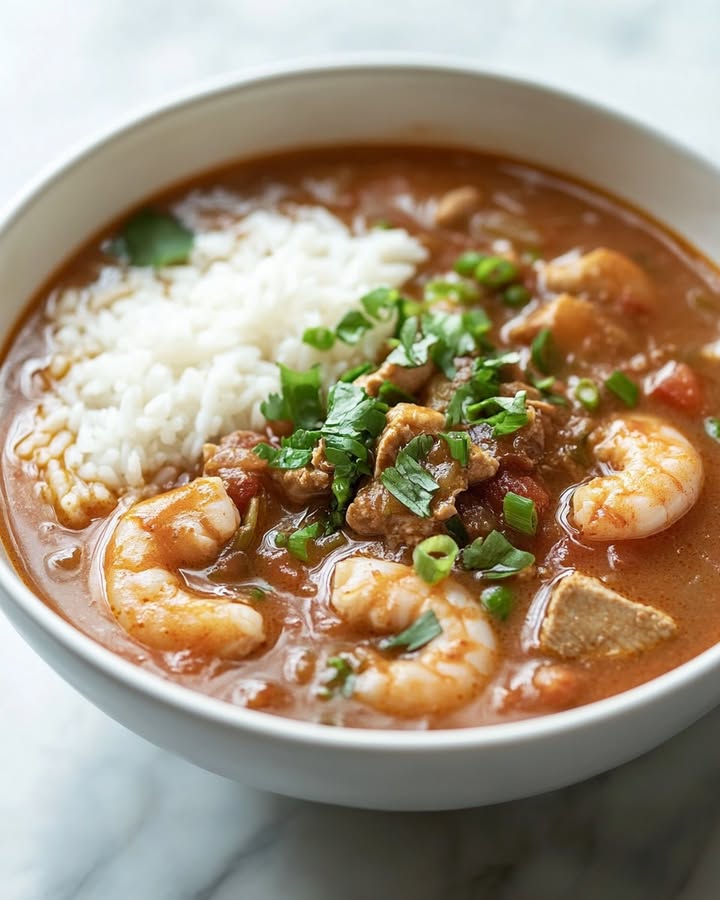
A Pot of Love: My Journey to the Perfect Gumbo
There’s something magical about a simmering pot of gumbo. The rich, dark roux, the trinity of veggies sizzling away, and that incredible smell that fills your whole house—it’s pure comfort. I remember the first time I tried to make it; let’s just say my roux was more “blonde” than “chocolate.” But after many happy (and sometimes smoky) kitchen experiments, I’ve landed on this recipe for Delicious Shrimp Gumbo. It’s become my go-to for feeding a crowd, warming up a chilly night, or just because. It’s a hug in a bowl, and I can’t wait for you to try it.
The Heartwarming Story of Gumbo
Gumbo is the soul of Louisiana cooking, a beautiful mix of cultures in one pot. It has roots in West African, French, Spanish, and Native American traditions. The name likely comes from an African word for okra, which was often used as a thickener. Today, you’ll find all sorts of versions—some with chicken and sausage, others packed with seafood like our shrimp gumbo recipe. The one thing they all share is that deep, dark roux and the “holy trinity” of celery, onion, and bell pepper. It’s a dish built for sharing and celebrating.
Why You’ll Love This Shrimp Gumbo Recipe
This isn’t just any stew. It’s a flavor explosion! You’ll love it because it’s incredibly satisfying but also surprisingly straightforward. Making the roux is a fun, mindful kitchen ritual. The result is a rich, slightly spicy, and deeply savory gumbo that gets even better the next day. It’s a one-pot wonder that makes you look like a culinary rockstar with minimal fuss. Perfect for a cozy family dinner or your next game day party.
Perfect Occasions for a Gumbo Feast
This dish is a celebration in itself. It’s ideal for:
- Game Day: Feed a hungry crowd with ease.
- Family Gatherings: A centerpiece that sparks conversation.
- Potlucks: Transport it in the pot and be the most popular person there.
- Cozy Weeknights: Make it ahead for a stress-free, delicious meal.
- Mardi Gras: Bring the flavors of New Orleans to your home!
Ingredients for Your Delicious Shrimp Gumbo
Gathering your ingredients is the first step to gumbo success. Here’s what you’ll need:
For the Roux:
- 1 cup (2 sticks / 170 g) unsalted butter
- 1 cup (125 g) all-purpose flour
For the Veggie Mixture (The “Holy Trinity”):
- 2 ribs celery, roughly chopped (about 1 cup)
- 1 large yellow onion, roughly chopped (about 1 cup)
- 1 large green bell pepper, roughly chopped, seeds removed (about 1 cup)
- 2 teaspoons garlic, minced
For the Gumbo:
- 10 cups (2.41 kg) beef broth
- 1 ring (14 ounces) andouille sausage or kielbasa, sliced into rounds
- 1 can (14.5 ounces) stewed tomatoes
- 1 can (6 ounces) tomato sauce
- 2 tablespoons hot sauce
- 1 tablespoon white sugar
- 1 teaspoon Cajun seasoning
- 1 teaspoon dried thyme leaves
- 4 teaspoons gumbo filé powder, divided
- 4 bay leaves
- 3 pounds uncooked medium shrimp, peeled and deveined
- 2 tablespoons Worcestershire sauce
- Cooked white rice, for serving
Easy Substitutions for Your Pantry
Don’t stress if you’re missing an item! Gumbo is flexible.
- Broth: Chicken or seafood broth works great instead of beef.
- Sausage: Any smoked sausage like kielbasa is fine if you can’t find andouille.
- Shrimp: Use chicken thighs or crab meat for a different twist.
- Filé Powder: If you can’t find it, use a bit more okra (if you like it) or just leave it out. The roux is the main thickener.
- Heat Level: Adjust the hot sauce to your taste. Start with less and add more later.
How to Make the Best Shrimp Gumbo: A Step-by-Step Guide
Step 1: Prepare the Roux
This is the heart of your gumbo. In your large pot, melt the butter over medium-low heat. Once it’s foamy, sprinkle in the flour and start whisking. You’ll watch it transform from a pale paste to a beautiful peanut butter color, and finally to a deep, chocolatey brown. This takes patience—about 30 to 40 minutes of constant stirring. The aroma is nutty and rich. Pro tip: Don’t walk away! A burned roux means starting over. Once it’s the color of an old penny, take it off the heat and keep whisking for a minute as it cools.
Step 2: Prepare the Veggie Mixture
While your roux is cooling, give your veggies a quick chop and toss them into the food processor. A few pulses turns the celery, onion, and bell pepper into a finely chopped mix that will melt beautifully into the stew. This “holy trinity” is the flavor base that makes Cajun and Creole cooking so special.
Step 3: Combine and Cook the Base
Carefully add the chopped veggies to your warm roux—it will sizzle wonderfully. Stir it all together and put the pot back over medium-low heat. Cook this for 8-12 minutes until the vegetables soften and smell amazing. Now, slowly pour in your beef broth while whisking constantly. This prevents lumps and creates a smooth, velvety soup base. Bring it to a gentle boil, which will take about 15-20 minutes.
Step 4: Simmer the Gumbo
Reduce the heat to low. Now, add the sliced sausage, stewed tomatoes, tomato sauce, hot sauce, sugar, Cajun seasoning, and thyme. Give it a good stir. Toss in the bay leaves. Let it all simmer uncovered for 45 minutes. Your kitchen will smell incredible as the flavors start to marry.
Step 5: Finish the Gumbo
After 45 minutes, stir in 2 teaspoons of the gumbo filé powder. Let it simmer for another 15 minutes. Fish out the bay leaves—their job is done. Now, add the raw shrimp and Worcestershire sauce. Let the gumbo cook on low for another 45-60 minutes. This long, slow cook is the chef’s secret to letting every flavor deepen and blend perfectly. Right before serving, stir in the last 2 teaspoons of filé powder for that authentic, earthy finish.
Step 6: Serve and Enjoy!
Ladle your deep, dark, and fragrant gumbo over fluffy white rice in a bowl. The contrast of the rich stew with the plain rice is just perfect. I love to serve it with a side of homemade cornbread for dipping. Enjoy the applause!
Timing Your Gumbo Masterpiece
Good gumbo isn’t rushed. Here’s a realistic timeline:
- Prep Time: 30 minutes (chopping, making roux)
- Cook Time: About 2 hours 15 minutes (simmering is key!)
- Total Time: Roughly 2 hours 45 minutes
- Resting Time: Flavors meld beautifully if made a day ahead.
Chef’s Secret for the Best Gumbo
The real magic happens after you turn off the stove. If you can, make this gumbo a day before you plan to serve it. Let it cool, store it in the fridge overnight, and gently reheat it. The flavors have a party overnight and become even richer, deeper, and more harmonious. It’s a game-changer for taste.
A Little Extra Gumbo Info
That gumbo filé powder is made from dried, ground sassafras leaves. It’s a traditional Choctaw ingredient used as a thickener and flavoring. It adds a subtle, earthy flavor that’s hard to replicate. If you’re new to it, you’re in for a treat—it’s what gives many gumbos their unique, authentic finish.
Necessary Equipment
You don’t need fancy gear, just a few key items:
- A heavy-bottomed, 6-quart pot or Dutch oven (prevents the roux from burning).
- A sturdy whisk (your best friend for roux-making).
- A food processor or a good chef’s knife for the veggie trinity.
- A ladle for serving.
Storing Your Leftover Gumbo
Cooling Down: Let the gumbo come to room temperature before storing. Don’t leave it out for more than 2 hours.
In the Fridge: Store it in an airtight container. It will keep beautifully for up to 3 days. The flavors get better each day!
Freezing for Later: This gumbo freezes wonderfully for up to 3 months. Important: Freeze it without rice. Portion it into freezer-safe containers, leave some space for expansion, and label it. Thaw in the fridge overnight before reheating gently on the stove.
Tips and Advice for Gumbo Success
- Roux Color is Key: Don’t stop at a light brown. A dark, chocolate-colored roux gives the gumbo its signature depth and eliminates any raw flour taste.
- Low and Slow: Keep the heat low after adding the broth and during the long simmer. A gentle bubble is what you want, not a rolling boil.
- Season as You Go: Taste after the long simmer, before adding the shrimp. You can add more Cajun seasoning, salt, or hot sauce then.
- Don’t Overcook the Shrimp: Adding them in the last hour of cooking is perfect—they’ll be tender and flavorful, not rubbery.
Presentation Tips to Impress Your Guests
- Serve in wide, shallow bowls to show off the gumbo and rice.
- Garnish with a sprinkle of chopped green onion or fresh parsley for a pop of color.
- Offer extra hot sauce, filé powder, and a lemon wedge on the side so everyone can customize their bowl.
- For a fun party, set up a “gumbo bar” with the rice, gumbo, and toppings let people build their own.
6 Healthier & Tasty Gumbo Variations
Love gumbo but want to mix it up? Try these delicious twists!
- Chicken and Sausage Gumbo: Swap the shrimp for 2 pounds of boneless, skinless chicken thighs. Add them with the sausage for a hearty, land-based version.
- Okra Gumbo: Add 2 cups of sliced fresh or frozen okra with the vegetables. Okra is a classic thickener and adds a great texture.
- Seafood Medley Gumbo: Use a mix of shrimp, crab claws, and oysters for a luxurious coastal feast. Add delicate seafood like oysters at the very end.
- Turkey and Lean Sausage Gumbo: Use ground turkey and turkey sausage after the holidays for a lighter take that’s still full of flavor.
- Vegetarian Gumbo: Use vegetable broth and add hearty veggies like mushrooms, eggplant, and extra bell peppers. Smoked paprika can add a “sausage-like” depth.
- Spicy Creole Gumbo: Kick up the heat! Double the Cajun seasoning, add a diced jalapeño with the trinity, and use a spicier hot sauce.
More Family-Friendly Recipes You’ll Adore
If you love the bold flavors in this gumbo, you have to explore our other recipes. For another Cajun-inspired dish that’s ready in under an hour, you must try these Garlic Cajun Steak Tips with Cheesy Pasta Alfredo. The combination of spicy steak and creamy pasta is unreal. On busy weeknights, my family craves the sweet and savory combo of this easy Honey Garlic Sausage and Sweet Potatoes sheet pan dinner. For the ultimate comfort food, nothing beats these Garlic Butter Beef Bites with Creamy Mashed Potatoes. And when you’re in the mood for something sticky, sweet, and packed with flavor, these Savory Hoisin Pork Tenderloin Bites are always a winner. You can find all these and more amazing ideas in our full collection of easy dinner recipes.
Common Mistakes to Avoid When Making Gumbo
Mistake 1: Rushing the Roux
This is the biggest gumbo pitfall. Turning up the heat to cook the roux faster almost guarantees it will burn. A burned roux tastes bitter and ruins the whole pot. The key is patience. Keep the heat at medium-low and stir constantly with a whisk. Enjoy the process as it slowly changes color. If you see black specks, it’s burned—you’ll need to start over. Pro tip: Set a timer for 30 minutes and put on some music. Consider it your kitchen meditation time.
Mistake 2: Adding Cold Broth to a Hot Roux
Pouring cold liquid into your beautiful, hot roux can cause it to seize up into lumps. This makes your gumbo texture grainy instead of smooth. Always warm your broth slightly before adding it, or at the very least, add it in a very slow, steady stream while whisking vigorously. This gradual incorporation ensures a silky, lump-free base for all your other ingredients.
Mistake 3: Overcrowding with Filé Powder
Gumbo filé powder is a fantastic thickener and flavor agent, but more is not better. Adding too much, or boiling the gumbo vigorously after adding it, can make the gumbo stringy and slimy. Always follow the recipe’s measurement. Stir it in at the end of cooking, off the heat or on very low heat. Remember, it’s a finishing touch, not a main ingredient.
Mistake 4: Skipping the Long Simmer
Gumbo is not a 30-minute meal. If you cut the simmering time short, the flavors won’t have time to develop and meld together. The sausage won’t impart its smoky goodness, and the broth won’t reduce to a rich consistency. That 45-minute to 1-hour simmer after adding the shrimp is crucial. It transforms a pot of separate ingredients into a unified, complex dish.
Mistake 5: Using Undeveined Shrimp
It’s tempting to save time with shrimp that still has the dark vein (the digestive tract). But in a delicate, long-simmered stew like gumbo, that vein can break down and add a gritty, unpleasant texture and slight bitterness. Taking the extra few minutes to peel and devein the shrimp, or buying them already prepared, ensures every bite of your delicious shrimp gumbo is pure, sweet, and enjoyable. The bell peppers and other vegetables in your gumbo are also great sources of dietary antioxidants, which are important for overall health.
Frequently Asked Questions (FAQ)
What is the difference between gumbo and jambalaya?
This is a common question! Gumbo is a soup or stew served over rice. It’s thickened with a roux (and sometimes okra or filé). Jambalaya is a rice dish where the rice cooks directly in the pot with the broth and ingredients, similar to paella. So, gumbo has rice on the side or underneath, while jambalaya has the rice cooked right in. Both are delicious staples of Louisiana cuisine.
Can I make gumbo without okra?
Absolutely! This recipe doesn’t use okra at all. It relies on a dark roux as the primary thickener, with gumbo filé powder added at the end for flavor and a bit more thickness. Many traditional gumbos use either a roux OR okra OR filé powder. Using a roux and filé is a classic, okra-free method that yields an incredibly rich and smooth stew.
Why did my roux turn out lumpy?
A lumpy roux usually happens if the flour is added all at once to very hot butter, or if you stop whisking. To fix it, make sure your butter is just melted, not boiling. Add the flour gradually while whisking. If lumps form at the start, just keep whisking constantly over the heat; they should dissolve as the roux cooks. If they persist, you can strain the roux after it reaches the right color before adding the veggies.
What can I use if I can’t find andouille sausage?
No problem! Andouille has a distinct smoky, garlicky flavor, but any good-quality smoked sausage will work wonderfully. Kielbasa is a very common and tasty substitute. Look for a sausage that is firm and smoky. The sausage adds essential fat and flavor to the gumbo, so don’t skip it, but don’t stress about finding the exact type.
Is gumbo very spicy?
It can be, but you are in control! This recipe has a gentle kick from the Cajun seasoning and hot sauce. The spice level is totally customizable. Start with less hot sauce and Cajun seasoning if you’re sensitive to heat. You can always add more at the end. Remember, the long cook time mellows spices, so it won’t taste as spicy as the raw seasoning does.
Can I use frozen shrimp?
Yes, frozen shrimp are perfect for gumbo. Just make sure they are raw, peeled, and deveined. Thaw them completely in the fridge overnight or under cold running water before adding them to the pot. Do not add frozen shrimp directly to the gumbo, as it will lower the temperature too much and throw off your cooking time.
What does filé powder taste like?
Gumbo filé powder has a unique, earthy, and slightly herbal flavor. It’s hard to compare directly to other spices. It adds a depth that is subtle but important in authentic gumbo. It also acts as a thickener, giving the gumbo a slightly velvety texture. If you’ve never used it, try it! It’s a key part of the experience.
How many people does this recipe serve?
This is a big-batch recipe, designed to serve about 12-16 people as a main course with rice. It’s ideal for a party or for having plenty of leftovers (which taste even better). If you’re cooking for a smaller family, you can absolutely halve all the ingredients. Just use a smaller pot and adjust the cooking times slightly downward.
Can I make gumbo in a slow cooker?
You can, but with a crucial first step. You must make the roux and cook the vegetable mixture (the “holy trinity”) on the stove first. This step cannot be skipped or done in a slow cooker. Once the roux is dark and the veggies are soft, transfer everything to your slow cooker. Add the broth, sausage, tomatoes, and seasonings. Cook on low for 6-8 hours. Add the shrimp and Worcestershire sauce in the last 45-60 minutes of cooking.
Why is my gumbo too thin?
If your gumbo is thinner than you’d like, don’t worry. First, let it simmer uncovered for a bit longer to reduce and concentrate. The roux will also continue to thicken as it cools. If you need to thicken it quickly, make a small slurry by mixing a tablespoon of cornstarch with two tablespoons of cold water. Stir this into the simmering gumbo and let it cook for a few minutes. Avoid adding more filé powder at this stage, as it can become stringy if overused.
Your New Favorite Comfort Food Awaits
Making a real, from-scratch gumbo is a rewarding kitchen adventure. It fills your home with the most amazing smells and ends with a meal that brings everyone to the table. This Delicious Shrimp Gumbo recipe is my tried-and-true favorite, a labor of love that’s totally worth the time. So grab your pot and your whisk, and get ready to make some memories (and a seriously fantastic dinner). Don’t forget the rice!
Delicious Shrimp Gumbo
Ingredients
Equipment
Method
- Melt the butter in a large pot over medium-low heat.
- Whisk in the flour and cook, stirring constantly, until the roux reaches a deep chocolate color, about 30-40 minutes.
- Chop the celery, onion, and bell pepper, then pulse in a food processor to finely chop.
- Add the chopped veggies to the warm roux and cook for 8-12 minutes until softened.
- Gradually pour in the beef broth while whisking to avoid lumps and bring to a gentle boil for 15-20 minutes.
- Reduce the heat to low, then stir in the sausage, stewed tomatoes, tomato sauce, hot sauce, sugar, Cajun seasoning, thyme, and bay leaves.
- Simmer uncovered for 45 minutes, stirring occasionally.
- Add 2 teaspoons of gumbo filé powder and simmer for another 15 minutes.
- Stir in the raw shrimp and Worcestershire sauce, and simmer for an additional 45-60 minutes on low.
- Stir in the remaining 2 teaspoons of filé powder just before serving.
- Serve over fluffy white rice and enjoy!