
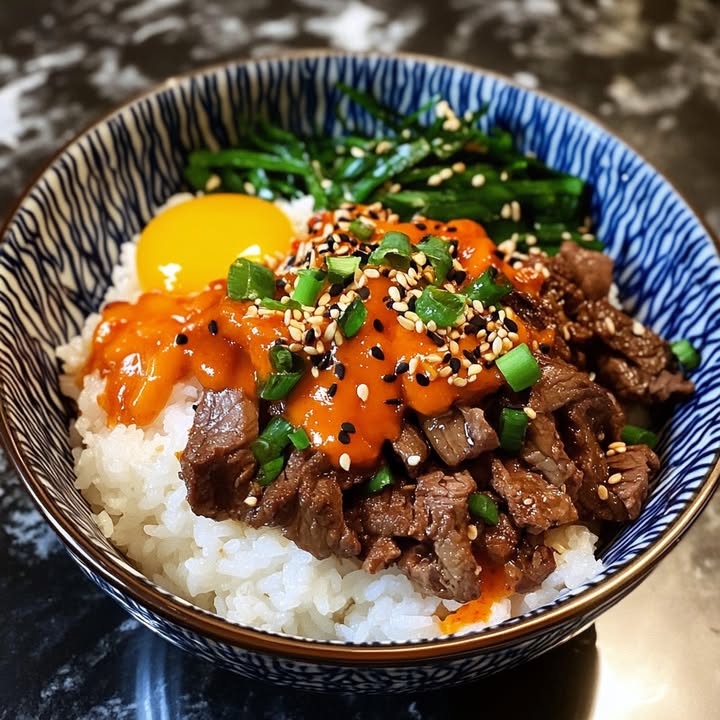
Have you ever had a meal that feels like a party in a bowl? That’s exactly what happened the first time I tried making Korean Spicy Beef Bibimbap at home. My kids, who usually squabble over who gets extra cheese on their pasta, were suddenly silent, focused entirely on mixing the vibrant veggies, savory beef, and that glorious fried egg. It was a miracle! This dish isn’t just dinner; it’s an experience. It’s fun, customizable, and brings everyone to the table with a smile. Let me show you how to make this colorful masterpiece.
The Story Behind the Bowl
Bibimbap, which means “mixed rice,” is a beloved Korean dish with humble roots. Traditionally, it was a clever way to use up leftover side dishes from the previous day’s meals. Cooks would arrange these bits and pieces over a bed of rice, often topping it with a fried egg and a spicy sauce. The modern version, especially Spicy Beef Bibimbap, is a bit more planned but just as joyful. The beauty is in the mix—every bite is a little different. It’s a perfect example of how simple ingredients can create something incredibly special when they come together.
Why You’ll Fall in Love with This Spicy Beef Bibimbap
This recipe is a total winner for so many reasons! First, the flavors are unbeatable. You get savory, sweet, spicy, and nutty all in one spoonful. Second, it’s a fantastic way to eat your veggies. The array of colors makes it as beautiful as it is healthy. Third, it’s surprisingly simple. While there are a few components, none are difficult. You can even prep the veggies and sauce ahead of time. Finally, it’s a crowd-pleaser. Serve it at a dinner party or on a busy weeknight, and watch everyone dig in happily.
When to Whip Up Your Bibimbap
This dish is incredibly versatile. It’s perfect for a lively family dinner where everyone can build their own bowl. It’s also a superstar for meal prep—just store the components separately for an easy lunch. Having friends over? Set up a bibimbap bar with all the toppings laid out. It’s a fantastic interactive meal that sparks conversation. Honestly, any night you want something delicious and a little different is the right night for Spicy Beef Bibimbap.
Gathering Your Bibimbap Ingredients
Let’s get everything together. Part of the fun is seeing all the beautiful colors on your counter!
- Beef: 1 lb ground beef
- Sauce for Beef: 2 tbsp soy sauce, 1 tbsp gochujang (Korean chili paste)
- Vegetables: 2 carrots (julienned), 1 zucchini (julienned), 2 cups spinach, 4 oz bean sprouts, 5-6 shiitake mushrooms (sliced)
- Seasonings: 3 cloves garlic (minced), 1 tbsp sesame oil, 2 tbsp vegetable oil (divided), Salt to taste
- Gochujang Sauce: 3 tbsp gochujang, 1 tbsp honey or sugar, 1 tbsp sesame oil, 1 tbsp water, 1 tsp rice vinegar
- For Serving: 4 cups cooked short-grain rice, 4 fried eggs, Toasted sesame seeds, Sliced green onions
No Problem! Easy Ingredient Swaps
Don’t stress if you’re missing something. Cooking should be fun, not stressful!
- Ground Beef: Try ground turkey, chicken, or crumbled firm tofu for a vegetarian option.
- Gochujang: If you can’t find it, mix 1 tbsp of Sriracha or another chili paste with 1/2 tsp of soy sauce and a pinch of sugar for a quick substitute.
- Vegetables: Use what you have! Bell peppers, cucumbers, or even broccoli slaw work beautifully.
- Sesame Oil: A mild olive oil or avocado oil can work in a pinch, but the sesame flavor is classic.
Let’s Make Some Magic: Step-by-Step Preparation
Step 1: Prep Your Veggies and Sauce
First, let’s get organized. Wash and slice all your vegetables into thin, uniform strips. This not only makes them cook evenly but also creates that beautiful rainbow effect in your final bowl. In a small bowl, whisk together all the ingredients for the gochujang sauce until smooth. This sauce is the flavor powerhouse! Set it aside. Pro tip: Julienning veggies is easy with a mandoline slicer, but a sharp knife works just fine. Take your time for pretty, even cuts.
Step 2: Cook the Vegetables Separately
Heat a large pan or wok over medium-high heat with a tiny bit of vegetable oil. Cook each vegetable type separately with a pinch of salt. Start with the carrots for 2-3 minutes until slightly soft, then remove. Do the same for the zucchini, then the mushrooms. For the spinach and bean sprouts, just wilt them quickly for about 1 minute. Cooking them separately keeps their colors bright and textures distinct. It’s worth the extra pan to wash!
Step 3: Cook the Spicy Beef
In the same pan, add a bit more oil and cook the ground beef until it’s nicely browned and no longer pink. Break it up with your spoon as it cooks. Once browned, drain any excess fat. Add the minced garlic and cook for one minute until fragrant. Then, stir in the 2 tablespoons of soy sauce and 1 tablespoon of gochujang. Mix it all together until the beef is evenly coated in that gorgeous, spicy glaze. Your kitchen will smell amazing!
Step 4: Fry Your Eggs and Assemble
Now for the crown jewel: the fried egg. Heat a non-stick skillet with a little oil over medium heat. Crack in your eggs and fry them until the whites are set but the yolks are still gloriously runny. A runny yolk acts as a built-in sauce when you mix your bibimbap. To assemble, divide the warm rice among four deep bowls. Neatly arrange piles of each cooked vegetable and the spicy beef around the edge of the rice. Place the fried egg right in the center. Sprinkle with sesame seeds and green onions.
Chef’s Tip
For an authentic touch, use a stone bowl (dolsot) if you have one. Heat it until very hot before adding the rice. The rice will get delightfully crispy on the bottom, adding an incredible texture contrast called “nurungji.” Don’t have a stone bowl? A hot cast-iron skillet works in a pinch!
Your Bibimbap Timeline
Let’s plan your time so everything comes together smoothly.
- Prep Time: 25 minutes (for all that veggie slicing!)
- Cooking Time: 20 minutes
- Total Time: 45 minutes
A Little Extra Secret
The secret to the best bibimbap is in the sesame oil. Right before serving, drizzle a tiny bit of toasted sesame oil over the warm rice. It adds a deep, nutty aroma that makes the whole dish sing. It’s a small step with a huge flavor payoff.
Fun Fact: More Than Just a Meal
In Korea, bibimbap is sometimes eaten on Lunar New Year’s Eve. It’s believed that mixing all the leftovers from the year into one dish helps you start the new year fresh. It’s a dish that symbolizes harmony and a clean slate—pretty cool for a bowl of mixed rice!
What You’ll Need in Your Kitchen
- Large frying pan or wok
- Several small bowls for prepped ingredients
- Sharp knife and cutting board
- Whisk for the sauce
- Non-stick skillet for the eggs
Storing Your Spicy Beef Bibimbap
The best way to store bibimbap is to keep the components separate. Place the cooled rice, beef, and each vegetable in their own airtight containers in the refrigerator. They will stay fresh for up to 3 days. This prevents the veggies from getting soggy and the rice from absorbing all the flavors prematurely.
For the sauce, store it in a small jar or container. It can last in the fridge for over a week. When you’re ready to eat, simply reheat the rice, beef, and veggies separately. Then, assemble your bowl fresh with a new fried egg. It’s almost as good as the first day!
I do not recommend freezing the assembled dish or the individual cooked vegetables, as they will lose their texture and become mushy when thawed. The beef and sauce can be frozen for up to a month, but fresh is always best for those crisp-tender veggies.
Tips for Bibimbap Success
- Use short-grain or medium-grain rice for the perfect sticky texture that holds the mix together.
- Don’t overcrowd the pan when cooking the vegetables. Giving them space lets them sauté instead of steam.
- Feel the heat! Adjust the amount of gochujang in the sauce to match your family’s spice tolerance.
- Get everyone involved. Let kids or guests choose their own veggie combinations. It makes dinner more fun.
Making It Picture-Perfect
- Arrange the vegetables in a “clock” formation around the bowl for a stunning visual effect.
- Use a small bowl or cup to pack the rice, then invert it into the serving bowl for a neat, round base.
- Garnish with extra sesame seeds, nori (seaweed) strips, or even a few edible flowers for a special occasion.
- Serve with the gochujang sauce on the side in a small pitcher, so everyone can add their desired amount.
Love This Recipe? Try These Variations!
Once you master the classic Spicy Beef Bibimbap, the world is your bowl! Here are six delicious twists to keep things exciting.
- Vegetarian Delight: Skip the beef and double up on mushrooms (like shiitake and king oyster) sautéed in a mix of soy sauce and maple syrup for a “meaty” umami flavor. Add some pan-fried tofu cubes for protein.
- Seafood Bibimbap: Swap the beef for sautéed shrimp or squid. The sweetness of the seafood pairs wonderfully with the spicy gochujang sauce. Add some shredded lettuce for extra crunch.
- Bulgogi Beef Bibimbap: Use thin slices of ribeye or sirloin marinated in classic bulgogi sauce (soy, sugar, pear, garlic) instead of ground beef. It’s a more traditional and luxurious take.
- Spicy Chicken Bibimbap: Use ground chicken or diced chicken thigh cooked with the same gochujang-soy glaze. It’s a lighter but equally flavorful option that the whole family will enjoy.
- Bibimbap Salad Bowl: For a low-carb version, replace the rice with a bed of mixed greens or cauliflower rice. All the same tasty toppings, just a different, lighter base.
- Breakfast Bibimbap: Think outside the dinner box! Use quinoa or leftover rice, top with the spicy beef, a fried egg, and some quickly sautéed morning veggies like bell peppers and onions. Drizzle with a little less spicy sauce for the perfect savory breakfast.
If you’re looking for more amazing dinner inspiration, our site is packed with recipes from around the world. For a fantastic side dish that pairs with almost anything, you have to try our incredibly crispy smashed roasted potatoes. They are insanely good! And for another cozy, beefy comfort food, this Crock Pot cheesy Mississippi beef noodles recipe is a total crowd-pleaser on busy nights. Looking to switch up your protein? This creamy French-style mustard chicken with bacon and mushrooms is pure comfort in a pan. And if you love bold flavors, you won’t believe how delicious this cheesy rigatoni with Cajun steak tips is.
Common Mistakes to Avoid for Perfect Bibimbap
Mistake 1: Using the Wrong Rice
Long-grain rice like Jasmine or Basmati can make your bibimbap dry and difficult to mix. These varieties are fluffy and separate, so they don’t hold the sauce and ingredients together well. Always opt for short-grain or medium-grain white rice. It’s stickier and clumps slightly, creating the perfect base that binds every glorious bite. Pro tip: Rinse your rice until the water runs clear before cooking. This removes excess starch and helps it cook up perfectly sticky, not gummy.
Mistake 2: Overcooking the Vegetables
Mushy, dull-colored veggies are a bibimbap bummer. This happens when you cook all the vegetables together or for too long. The goal is to keep them vibrant and slightly crisp. Cook each vegetable type separately over fairly high heat just until tender-crisp. This quick cooking, called “namul” in Korean, preserves their color, texture, and nutritional value. Your bowl will look and taste a million times better.
Mistake 3: Skipping the Sesame Oil
That bottle of sesame oil isn’t just for show! It delivers an essential, nutty fragrance that defines many Korean dishes. Using a plain oil like vegetable or canola will leave your bibimbap tasting flat and missing its soul. Use toasted sesame oil for maximum flavor. A tiny drizzle over the warm rice before topping and another splash in your gochujang sauce makes all the difference. A little goes a very long way.
Mistake 4: Not Getting a Crispy Rice Layer (If Using a Stone Bowl)
If you’re using a dolsot (stone bowl), the prized crispy rice bottom is a must-have. The mistake is not heating the bowl enough before adding the rice. A lukewarm bowl won’t create that satisfying “nurungji.” Heat your empty stone bowl over medium heat for several minutes until it’s very hot. Carefully add a little sesame oil and the rice, pressing it down. It should sizzle immediately. Let it sit for a few minutes before assembling the rest of the bowl over it.
Mistake 5: Making the Gochujang Sauce Too Thick
A sauce that’s too thick won’t drizzle or mix evenly, leaving you with clumps of spice. This usually happens by not balancing the gochujang paste with enough liquid. The honey, sesame oil, vinegar, and water in the sauce recipe are there to create a smooth, pourable consistency. Whisk it thoroughly and don’t be afraid to add another teaspoon of water if it seems too pasty. You want it to coat everything lightly and beautifully.
Speaking of healthy eating, the colorful vegetables in this dish are not just pretty—they’re packed with antioxidants. Choosing high-quality ingredients and a balanced diet with plenty of plants can be a wonderful part of supporting your overall wellness, including helping to manage inflammation.
This Spicy Beef Bibimbap is just one of many fantastic, satisfying dishes perfect for your evening meal. If you loved this recipe, be sure to explore our full collection of dinner recipes for more easy and delicious ideas to please your hungry crew.
Your Spicy Beef Bibimbap Questions, Answered
What exactly is gochujang, and where can I find it?
Gochujang is a fermented Korean chili paste that’s a staple in Korean cooking. It’s not just spicy; it has a deep, savory, slightly sweet, and umami flavor all at once. You can usually find it in the Asian foods aisle of most major supermarkets, often near other sauces like soy sauce or Sriracha. If your local grocery doesn’t carry it, try an Asian market or order it online. Once you have a tub, it keeps for ages in the fridge and you can use it in marinades, soups, and stir-fries.
Can I make this recipe gluten-free?
Absolutely! You can easily make a gluten-free Spicy Beef Bibimbap with a couple of simple swaps. First, ensure you use tamari or a certified gluten-free soy sauce instead of regular soy sauce. Second, check the label on your gochujang. While many brands are gluten-free, some may contain wheat as a filler. Look for one specifically labeled gluten-free. All the other main ingredients—rice, vegetables, eggs, and sesame oil—are naturally gluten-free, so you’re good to go!
Is it okay to use ground turkey or chicken instead of beef?
Yes, that’s a great idea! Ground turkey or chicken works perfectly in this recipe. They are leaner proteins, so they cook a bit faster. Just be sure to cook them thoroughly until no longer pink, and then follow the same steps for adding the garlic and sauce. You might want to add an extra teaspoon of sesame oil to the pan when cooking leaner meats to compensate for less fat and keep everything flavorful and moist.
How do I prevent my bibimbap from getting soggy if I want leftovers?
The key to non-soggy leftovers is separate storage. Do not mix everything together in one container before refrigerating. Instead, let each component (the rice, the cooked beef, and each type of vegetable) cool completely. Then, store them in individual airtight containers or compartments of a meal prep container. When you’re ready to eat, reheat the rice, beef, and veggies separately (a microwave works fine) and assemble your bowl fresh. Top with a new fried egg. It takes just a few extra minutes but saves the texture.
Do I have to use a stone bowl (dolsot)?
Not at all! A regular ceramic or glass bowl works beautifully for bibimbap. The stone bowl (dolsot) is traditional and creates a wonderful crispy rice crust, but it’s not required to enjoy the dish. If you want to try for a crispy bottom without the special bowl, you can use a hot cast-iron skillet. Press warm rice into the hot, oiled skillet and let it cook for a few minutes until you hear it crackle. Then slide it into your serving bowl and add toppings. It’s a fun trick!
What other vegetables can I add to my bibimbap?
Bibimbap is wonderfully flexible. Almost any vegetable you can sauté or blanch quickly will work. Some popular additions include thinly sliced bell peppers, cucumber ribbons (added raw for crunch), blanched broccoli or asparagus, and kimchi for a tangy, spicy punch. You can also use different mushrooms like enoki or cremini. The rule of thumb is to choose vegetables with different colors and textures to make your bowl exciting and balanced.
Can I prepare any parts of this recipe ahead of time?
Yes, you can be a prep superstar! This dish is excellent for make-ahead meals. You can cook the rice up to a day ahead. All the vegetables can be washed, cut, and stored in separate bags or containers in the fridge. The gochujang sauce can be mixed and stored for over a week. The beef can also be cooked ahead and reheated. When dinner time rolls around, you just need to quickly reheat components and fry your eggs. It turns a 45-minute recipe into a 10-minute assembly job.
My family doesn’t like spicy food. How can I adjust the heat?
No problem! The heat in this dish comes primarily from the gochujang. You have a few options. First, you can simply use less gochujang in both the beef marinade and the sauce. Start with half the amount and taste. Second, you can look for a “mild” version of gochujang, which some brands offer. Third, you can make a non-spicy sauce by mixing soy sauce, a little sesame oil, honey, and rice vinegar. Everyone can then add their own level of spice, or lack thereof, right at the table.
What’s the best way to mix and eat bibimbap?
The fun is in the mix! Take your spoon and chopsticks (if using) and dig right into the center of the bowl. Start by breaking the runny egg yolk and letting it coat the rice. Then, thoroughly mix everything together—the rice, beef, all the veggies, and the sauce. You want every spoonful to have a bit of everything. The goal is a harmonious blend of all the flavors and textures. Don’t be shy; get in there and mix it up well! That’s what “bibim” (mixed) is all about.
Is bibimbap considered a healthy meal?
Bibimbap can be a very balanced and nutritious meal! It includes lean protein from the beef and egg, a good portion of complex carbohydrates from the rice, and a wide variety of vitamins and fiber from all the different vegetables. The sesame oil provides healthy fats. To make it even healthier, you can use brown rice, increase the vegetable-to-rice ratio, and use lean ground beef or a ground turkey substitute. As with any dish, the sodium level depends on your soy sauce use, so you can opt for low-sodium versions if needed.
And there you have it! Your very own guide to creating a spectacular Korean Spicy Beef Bibimbap at home. This dish is more than just food; it’s a fun, interactive, and delicious way to bring color and excitement to your dinner table. Don’t be intimidated by the list of ingredients. Take it one step at a time, enjoy the process of creating your edible rainbow, and most importantly, have fun mixing it all up. I promise, the happy silence around your table will be all the thanks you need. Now, go grab that gochujang and get mixing!
Spicy Beef Bibimbap
Ingredients
Equipment
Method
- Wash and slice all vegetables into thin, uniform strips.
- Whisk together gochujang sauce ingredients until smooth and set aside.
- Heat a large pan over medium-high heat with vegetable oil and cook each vegetable type separately with salt.
- Start with carrots for 2-3 minutes, then remove; repeat with zucchini and mushrooms.
- Quickly wilt spinach and bean sprouts for about 1 minute, then remove.
- In the same pan, cook ground beef until browned and no longer pink; drain excess fat.
- Add minced garlic to the beef, cooking for one minute until fragrant.
- Stir in soy sauce and gochujang, mixing until beef is coated.
- Fry eggs in a non-stick skillet until whites are set and yolks are runny.
- Assemble by dividing rice into bowls, arranging vegetables and beef around the edge, and placing fried egg in the center.
- Sprinkle with sesame seeds and green onions.