
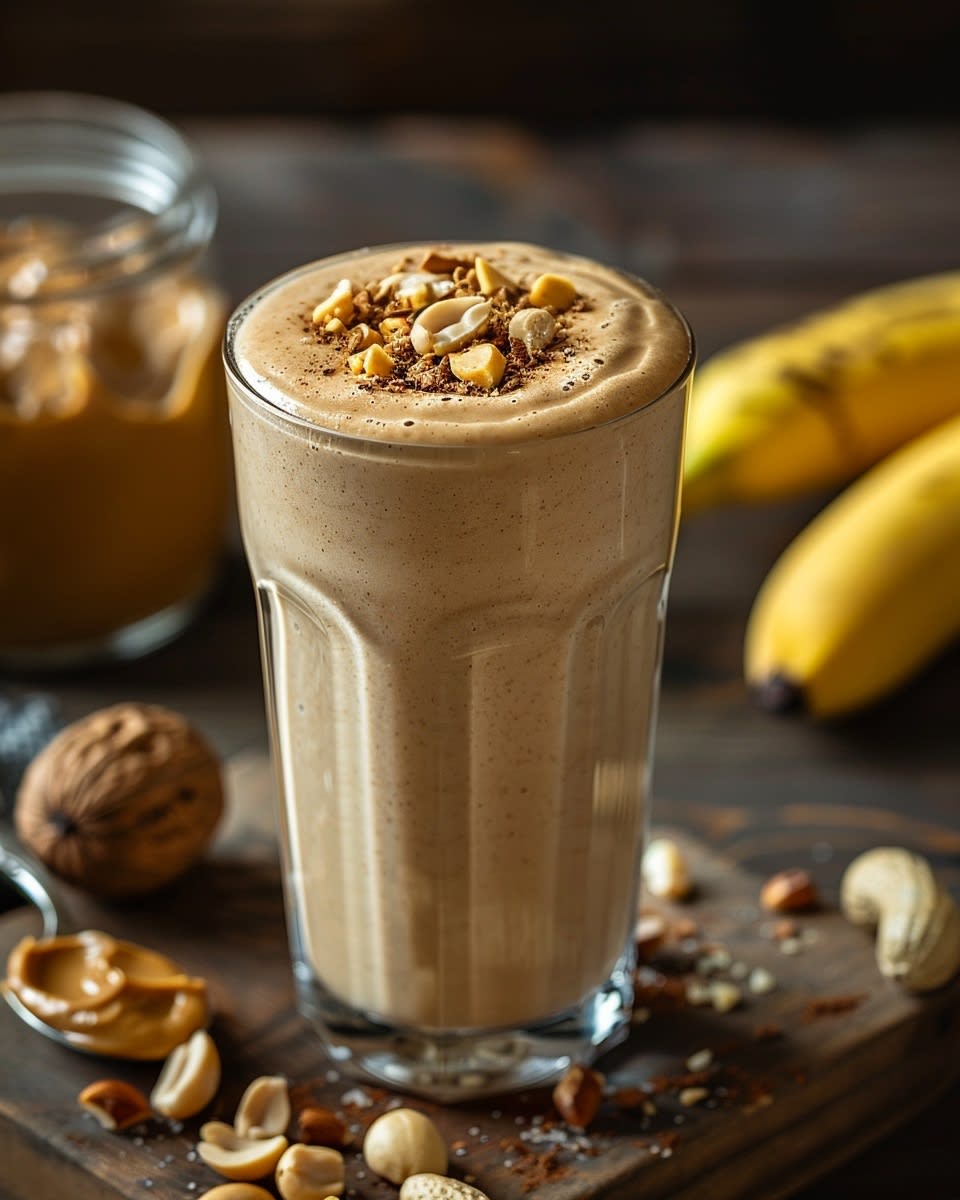
Introduction: My Love Affair with Peanut Butter Protein Smoothies
I’ll never forget the morning I discovered the magic of blending peanut butter into my post-workout smoothie. I was running late, starving, and staring at an almost-empty fridge. All I had was some peanut butter, a banana, and protein powder. I threw everything into my blender, crossed my fingers, and took that first sip. Game over. That creamy, satisfying drink kept me full for hours and tasted like dessert for breakfast.
Hi, I’m here to share my absolute favorite way to fuel my mornings and recover after workouts. A protein smoothie with peanut butter has become my secret weapon for staying energized throughout the day. It’s the perfect combo of protein, healthy fats, and delicious flavor that actually keeps you satisfied.
The best part? You can customize these smoothies in endless ways. Whether you want something dairy-free, extra thick, or packed with extra calories for muscle gain, I’ve got you covered. I’m going to walk you through everything you need to know about making the perfect peanut butter protein smoothie. We’ll cover different variations, ingredient swaps, and tips I’ve learned from years of blending these nutritious drinks.
Why Choose a Protein Smoothie with Peanut Butter?
Let me tell you why peanut butter deserves a permanent spot in your smoothie routine. This ingredient isn’t just tasty. It’s a nutritional powerhouse that transforms an ordinary drink into a complete meal.
Peanut butter brings serious protein to the table. Just two tablespoons pack about 8 grams of protein. When you combine that with protein powder and yogurt, you’re looking at 30 to 40 grams of protein in one glass. That’s enough to support muscle recovery, keep hunger at bay, and maintain steady energy levels.
The healthy fats in peanut butter are another huge benefit. These monounsaturated and polyunsaturated fats help your body absorb vitamins and keep your heart healthy. They also slow down digestion, which means your smoothie won’t leave you hungry an hour later. I learned this the hard way after drinking too many watery fruit smoothies that left me raiding the pantry by mid-morning.
A healthy protein smoothie with peanut butter creates the perfect balance of macronutrients. You get protein for muscle building, carbs for energy, and fats for satiety. This combination makes it ideal for breakfast, a post-workout meal, or even a satisfying snack when you need something substantial.
The creamy texture that peanut butter adds is unbeatable. It makes your smoothie thick and milkshake-like without needing ice cream or excessive amounts of fruit. I actually prefer the consistency of peanut butter smoothies over any other type I’ve tried.
If you’re someone who struggles with eating enough throughout the day, this drink is perfect for you. It’s quick to make, easy to digest, and you can sip it on your commute or between meetings. I’ve converted so many friends who claimed they “didn’t have time for breakfast” into smoothie believers.
This is also a great option if you’re trying to gain weight in a healthy way. A peanut butter protein shake for weight gain can easily contain 500 to 700 calories when you add ingredients like oats, whole milk, and an extra scoop of peanut butter. It’s much easier to drink your calories than to force down another meal when you’re trying to bulk up.
Ingredients You’ll Need for the Perfect Protein Smoothie
The beauty of a protein smoothie with peanut butter is its simplicity. You don’t need fancy ingredients or expensive superfoods. Here’s what I keep stocked in my kitchen for smoothie success.
The Basic Foundation
Peanut Butter: This is your star ingredient. I recommend natural peanut butter with just peanuts and maybe a pinch of salt. Skip the versions with added sugar and oils if you can. You’ll need about 2 tablespoons per smoothie, but I won’t judge if you add a little extra.
Liquid Base: You have options here. Regular milk works great, but so does almond milk, oat milk, or soy milk. For a protein smoothie with peanut butter and yogurt, I often use less liquid and add Greek yogurt for extra creaminess and protein. The yogurt gives it a tangy flavor that balances the richness of the peanut butter perfectly.
Protein Powder: Choose your favorite type. Whey protein blends smoothly and tastes great. Plant-based options like pea or brown rice protein work just as well. If you’re making a peanut butter protein shake no powder version, you can skip this and rely on the protein from peanut butter, yogurt, and milk instead.
Ice: This creates that thick, frosty texture we all love. I use about 1 cup of ice cubes. If you want an even thicker consistency, try using frozen banana slices instead of regular ice.
Popular Add-Ins and Variations
Banana: A classic choice for a protein smoothie with peanut butter and banana. It adds natural sweetness and makes the texture incredibly smooth. One medium banana is usually perfect. Pro tip: keep peeled bananas in your freezer for instant thick smoothies.
Greek Yogurt: This is my secret weapon. A peanut butter protein shake with Greek yogurt becomes super creamy and gets an extra 15 to 20 grams of protein. Plain, unsweetened Greek yogurt is best because you can control the sweetness yourself.
Sweetener: Sometimes you need a little extra sweetness. I use honey, maple syrup, or a couple of dates. Start with just a teaspoon and adjust to your taste.
Extras: Rolled oats add fiber and make your smoothie more filling. Chia seeds or flax seeds boost omega-3s. A handful of spinach sneaks in some greens without affecting the taste. Cocoa powder turns your drink into a chocolate peanut butter treat.
Quality Matters
I can’t stress this enough: use high-quality ingredients when possible. The difference between natural peanut butter and the processed kind is noticeable. Same goes for protein powder. I’ve tried cheap options that tasted like chalk and clumped into gross lumps. It’s worth spending a bit more for something that actually tastes good.
For a peanut butter protein shake no banana version, try using frozen cauliflower or zucchini instead. I know it sounds weird, but you can’t taste the vegetables at all. They just add thickness and nutrients without the banana flavor or sugar.
Fresh ingredients make better smoothies. Check the dates on your protein powder and peanut butter. Old peanut butter can taste rancid, and expired protein powder loses its effectiveness and flavor.
Keep these ingredients organized in your kitchen. I dedicate one cabinet shelf to my smoothie supplies. It makes the morning routine so much faster when everything is in one spot.


Delicious Variations of the Peanut Butter Protein Smoothie
Now that you’ve got your pantry stocked, let’s talk about the fun part. Making these smoothies your own.
I’ve spent years experimenting with different combinations, and I’ve learned that the basic formula is incredibly flexible. Some days I want something light and refreshing. Other days I need a thick, dessert-like drink that basically replaces a full meal. The great thing about these smoothies is you can adjust them based on your mood, your goals, and what’s sitting in your fridge.
Here’s the thing about smoothie recipes. They’re more like guidelines than strict rules. I rarely measure anything anymore unless I’m trying something totally new. Once you understand the basic ratios, you’ll be improvising like a pro.
The No-Banana Power Blend
Not everyone loves bananas. My brother can’t stand them, which is funny because I used to think bananas were mandatory in smoothies. This peanut butter protein shake no banana version changed his mind about the whole smoothie thing.
For this variation, I replace the banana with frozen cauliflower. I know what you’re thinking, but trust me on this one. You absolutely cannot taste it. What you get instead is an incredibly thick, creamy texture without any banana flavor. I use about a cup of frozen cauliflower florets along with 2 tablespoons of peanut butter, a scoop of vanilla protein powder, a cup of milk, and a handful of ice.
The cauliflower acts as a neutral base that takes on whatever flavors you add to it. Sometimes I’ll throw in a tablespoon of cocoa powder to make it chocolate-flavored. Other times I add a teaspoon of vanilla extract and a pinch of cinnamon for more of a cookie dough vibe.
This version has become my go-to when I’m watching my sugar intake. Bananas are healthy, don’t get me wrong, but they do add quite a bit of natural sugar. The cauliflower gives you the thickness without the extra carbs. If you’re looking for other high-protein breakfast options that keep your energy stable, you might also enjoy a high protein breakfast bowl with eggs on days when you want something warm and savory.
The Classic Banana Dream
On the flip side, if you’re a banana lover like me, this protein smoothie with peanut butter and banana is absolutely perfect. There’s something about the combination that just works on every level.
I use one frozen banana that I’ve cut into chunks before freezing. This is crucial because whole frozen bananas are basically impossible to blend unless you have a super powerful blender. Add your 2 tablespoons of peanut butter, one scoop of chocolate or vanilla protein powder, a cup of your preferred milk, and about half a cup of ice if you want it extra thick.
The natural sweetness from the banana means you rarely need to add any other sweetener. Sometimes I’ll drizzle in just a tiny bit of honey if I’m really craving something sweet, but usually the banana handles that job perfectly.
Funny enough, this was the exact combination I made that first morning I mentioned earlier. It’s remained my most-made recipe because it’s foolproof. Even on mornings when my brain isn’t fully awake yet, I can throw these ingredients together and know it’ll taste amazing.
The Greek Yogurt Upgrade
When I need something extra filling that’ll keep me satisfied until lunch, I reach for this peanut butter protein shake with Greek yogurt variation. The tanginess of Greek yogurt adds a whole new dimension to the flavor profile.
For this version, I use half a cup to three-quarters cup of plain Greek yogurt as part of my liquid base. That means I use less milk, maybe just half a cup instead of a full cup. The yogurt makes it ridiculously thick and creamy. Sometimes it’s almost too thick to drink through a straw, which honestly I love.
This combination gives you an insane amount of protein. Between the yogurt, peanut butter, and protein powder, you’re easily hitting 40 grams or more. I make this after particularly tough workout sessions when my muscles need all the recovery help they can get.
The yogurt also adds beneficial probiotics for gut health, which is a nice bonus. I’ve noticed I feel better overall when I regularly include fermented foods like yogurt in my diet. By the way, if you’re into Greek yogurt for its protein benefits, the protein waffles with yogurt topping make an excellent alternative breakfast when you want something you can actually chew.
The Powder-Free Natural Version
Some people prefer to avoid protein powder entirely. Maybe it bothers your stomach, or you just want to stick to whole foods. This peanut butter protein shake no powder still delivers plenty of protein from natural sources.
My powder-free version relies on the protein from peanut butter, Greek yogurt, and milk. I use a full half cup of Greek yogurt, 3 tablespoons of peanut butter instead of 2, and whole milk for extra protein and calories. To boost it even further, I add a quarter cup of raw oats.
The oats blend up completely smooth if you let them soak in the liquid for a minute before blending. They add fiber, complex carbs, and a bit more protein while making the smoothie incredibly filling. This version keeps me full for hours longer than versions without oats.
I’ll also sometimes add a tablespoon of hemp seeds or chia seeds for extra plant-based protein. Hemp seeds have a mild, nutty flavor that complements peanut butter really well. You’re looking at about 25 to 30 grams of protein total, which is pretty impressive without any powder at all.
This natural approach reminds me of other whole-food breakfasts that pack serious protein without relying on supplements. Similar to how a tofu scramble with chickpeas delivers plant-based protein, this smoothie proves you don’t need processed powders to meet your nutritional needs.
Tips for Making the Perfect Smoothie Every Time
Let me share some tricks I’ve picked up that’ll take your smoothies from good to incredible.
The Order Matters
Always add your liquid first. This is the single most important tip I can give you. When you put the liquid at the bottom, your blender blades can actually move freely and start creating that vortex that pulls everything down. If you dump ice or frozen fruit in first, you’ll end up with a chunky mess stuck to the blades.
My go-to order is liquid, then peanut butter, then any powders or soft ingredients like yogurt, then fruit, and finally ice or frozen ingredients on top. This layering technique means I rarely have to stop and scrape down the sides of my blender.
Start your blender on low speed for a few seconds, then gradually increase to high. This prevents that awful sound of ice chunks banging around and helps everything blend more smoothly. I usually blend for about 45 seconds to a minute total.
Frozen Everything for Thickness
If you want a thick, ice cream-like consistency, frozen fruit is your best friend. I keep a permanent stock of frozen bananas, berries, and even some vegetables in my freezer specifically for smoothies.
Here’s a pro tip: freeze your fruit when it’s perfectly ripe. Overripe bananas with brown spots are actually ideal because they’re sweeter. Peel them, break them into chunks, and store them in a freezer bag. They’ll last for months.
You can also freeze Greek yogurt in ice cube trays. These yogurt cubes add creaminess and protein while making your protein smoothie with peanut butter and protein powder extra thick. It sounds like extra work, but it takes five minutes and makes such a difference.
Natural Sweetness Adjustments
Taste your smoothie before you add sweetener. I learned this the hard way after making some overly sweet disasters. Sometimes the fruit and peanut butter provide enough sweetness on their own, especially if you’re using vanilla protein powder.
When you do need to sweeten, start small. Add just a teaspoon of honey or maple syrup, blend again, and taste. You can always add more, but you can’t take it out. I’ve also found that a pinch of salt actually enhances the sweetness and makes all the flavors pop more.
Dates are an underrated natural sweetener. Two or three pitted Medjool dates blend up completely smooth and add a caramel-like sweetness. They also provide extra fiber and potassium.
Building a Weight Gain Powerhouse
If you’re working on building muscle or just need to increase your calorie intake, this peanut butter protein shake for weight gain strategy is game-changing. The key is adding calorie-dense ingredients without making the smoothie so thick you can’t drink it.
Use whole milk or even add a splash of heavy cream. Include 3 tablespoons of peanut butter instead of 2. Throw in a quarter cup of raw oats and a handful of nuts like almonds or cashews. Add a tablespoon of coconut oil or MCT oil for healthy fats. Top it off with an extra scoop of protein powder.
This combination can easily push your smoothie to 700 or 800 calories while still being drinkable. I make versions like this after heavy lifting sessions when my body needs serious fuel. It’s way easier than trying to eat a massive meal when you’re not that hungry.
For variety in your high-protein breakfast rotation, consider alternating your smoothies with options like a chicken sausage breakfast skillet when you want something more substantial and savory.
The beauty of mastering these techniques is that they apply to any smoothie you make. Once you’ve got the basics down, you can experiment endlessly with different flavors and ingredients. I still discover new combinations that surprise me, and I’ve been making these drinks for years.


Making Your Protein Smoothie Work for Your Lifestyle
Here’s what I wish someone had told me when I first started making these smoothies: they can fit into literally any eating plan you’re following. Whether you’re vegan, dairy-free, trying to lose weight, or counting macros for bodybuilding, there’s a version that works for you.
Let me walk you through some specific scenarios I’ve encountered over the years, both from my own experience and from friends who’ve asked me about adapting these recipes.
The Meal Replacement Strategy
Sometimes you need a full meal in a glass. I travel a lot for work, and there have been countless mornings where I needed breakfast that I could drink in an airport terminal or during a meeting. The trick is balancing all three macronutrients properly.
For a complete meal replacement, aim for around 400 to 500 calories with at least 25 grams of protein, some complex carbs, and healthy fats. My go-to meal replacement includes 2 tablespoons of peanut butter, a scoop of protein powder, half a cup of oats, a banana, a handful of spinach, a tablespoon of ground flaxseed, and milk. This combination keeps me satisfied for four to five hours easily.
The fiber from the oats and flaxseed is what really makes the difference. Without enough fiber, even a high-protein smoothie will leave you hungry sooner than you’d like. I learned this after making smoothies that were just protein and fruit, which spiked my blood sugar and then crashed it an hour later.
Post-Workout Timing
The timing of your smoothie matters more than most people realize. After a workout, your muscles are basically begging for nutrients. I try to drink mine within 30 to 60 minutes after finishing at the gym.
For post-workout recovery, I keep my protein smoothie with peanut butter and protein powder on the simpler side. Too much fiber or fat can actually slow down the absorption of protein when you need it quickly. So I’ll do just peanut butter, protein powder, a banana, and milk without the oats or extra add-ins.
The carbs from the banana help replenish glycogen stores, while the protein starts repairing muscle tissue. The fats from peanut butter provide sustained energy as your body continues recovering throughout the day. It’s this strategic combination that really maximizes your workout results.
Making It Dairy-Free
Going dairy-free with these smoothies is actually super easy. I went through a phase where I was experimenting with cutting out dairy to see if it affected my digestion, and honestly, I didn’t miss it at all in my smoothies.
Swap regular milk for any plant-based option. Oat milk is my personal favorite because it’s naturally creamy and slightly sweet. Almond milk works great if you want something lighter. Soy milk has more protein than other plant milks, which is helpful if you’re skipping the protein powder.
For the yogurt component, coconut yogurt is fantastic. It’s rich and thick, though it does add a subtle coconut flavor. Cashew-based yogurts are more neutral-tasting if you want to avoid that. Some brands make almond milk yogurt that works perfectly too.
Just double-check that your protein powder is dairy-free if that’s important to you. Many whey-based powders obviously contain dairy, but there are tons of plant-based options now that taste just as good.
Budget-Friendly Smoothie Tips
Let’s be real for a second. Quality ingredients can get expensive, especially if you’re making smoothies every day. I’ve found ways to keep costs down without sacrificing nutrition.
Buy bananas when they’re on sale and freeze them immediately. Frozen fruit from the store is often cheaper than fresh and works perfectly in smoothies. The store-brand peanut butter is usually just as good as name brands, just check the ingredients to make sure it’s actually just peanuts.
Regular oats work exactly the same as fancy steel-cut or quick oats in smoothies. You’re blending them anyway, so the texture differences don’t matter. Buy your protein powder in bulk when it’s on sale. It doesn’t go bad quickly if stored properly.
Skip the expensive superfood add-ins unless they genuinely improve your life. Honestly, a basic smoothie with peanut butter, banana, oats, and milk provides incredible nutrition without any goji berries or acai powder.
Customizing for Different Dietary Goals
Different goals require different approaches. If you’re trying to lose weight, you’ll want to manage your calorie intake differently than someone bulking up.
For weight loss, I recommend using unsweetened almond milk as your base since it’s only about 30 calories per cup versus 150 for whole milk. Use just 1 tablespoon of peanut butter instead of 2. Load up on low-calorie volume with spinach, cauliflower, or zucchini. Keep your total smoothie around 250 to 350 calories while maintaining that 20 to 25 grams of protein.
The protein is crucial when you’re in a calorie deficit because it helps preserve muscle mass and keeps you feeling full. I actually find it easier to stick to my calorie goals when I start the day with a filling protein smoothie rather than something carb-heavy that leaves me hungry quickly.
By the way, understanding basic nutritional information helps you make better choices with any recipe. The USDA’s food composition databases offer detailed breakdowns of ingredients, which can be helpful when you’re calculating macros or experimenting with healthy cooking methods for other meals.
Solving Common Problems
Every smoothie maker runs into issues. Let me help you troubleshoot the most common ones I’ve dealt with.
Problem: Your smoothie is too thick to drink. Solution: Add liquid gradually. I usually add it by the quarter cup until I reach the consistency I want. Blend for an extra 15 seconds after adding more liquid.
Problem: The peanut butter isn’t blending smoothly and you’re getting chunks. Solution: Add your peanut butter right after the liquid so it gets pulled down into the blades immediately. If your peanut butter is really thick, microwave it for 10 seconds to soften it first.
Problem: Your smoothie tastes bland or boring. Solution: Add a pinch of salt. Seriously, this is magic. Also try vanilla extract, cinnamon, or a tiny bit of instant coffee powder. These flavor enhancers make a huge difference without adding calories.
Problem: It’s too sweet or not sweet enough. Solution: Protein powders vary wildly in sweetness. If yours is too sweet, add a squeeze of lemon juice to balance it. If it’s not sweet enough, frozen berries add sweetness and nutrition without refined sugar.
Prep Strategies for Busy Mornings
Morning prep is where most people struggle. You’re half asleep, rushing to get out the door, and the last thing you want is to measure ingredients and clean a blender.
Here’s my system: I prep smoothie bags on Sunday for the entire week. I portion out all my dry and frozen ingredients into individual freezer bags. Each bag gets a banana, a serving of frozen fruit or vegetables, any nuts or seeds, and oats if I’m using them. I write the amount of liquid and peanut butter needed right on the bag with a marker.
In the morning, I dump the bag contents into my blender, add the liquid, peanut butter, and protein powder, and blend. The whole process takes maybe two minutes. I can even do it before I’ve had my coffee.
For cleaning, I rinse my blender immediately after pouring out my smoothie. Most of the residue comes off with just hot water and a quick swish. Every few days, I do a deep clean by blending warm water with a drop of dish soap for 30 seconds, then rinsing.
How These Smoothies Fit Into a Balanced Diet
I need to be honest about something. As amazing as these smoothies are, they shouldn’t be your only source of nutrition. I went through a phase where I was drinking two smoothies a day and barely eating solid food, and I ended up feeling terrible.
Your body needs variety. These smoothies work best as one component of a balanced eating plan. I typically have mine for breakfast or post-workout, then eat regular meals with vegetables, whole grains, and protein from different sources for lunch and dinner.
The versatility is what makes them so valuable. Some days my smoothie is a quick breakfast before work. Other days it’s a recovery drink after the gym. Sometimes it’s an afternoon snack when I need energy. They adapt to whatever your day demands.
If you’re someone who really enjoys having variety in your morning routine, rotating between different high-protein options keeps things interesting. Exploring other high-protein breakfast recipes gives you more tools for starting your day strong, whether you’re in the mood for something to drink or something to sit down and enjoy.
Think of your protein smoothie with peanut butter as a reliable foundation you can build on. Some mornings I’ll have my smoothie and then eat a piece of whole grain toast an hour later if I’m still hungry. Other days the smoothie alone is enough. Listen to your body and adjust accordingly.
The freedom to customize and adapt these recipes is what’s kept me making them for years. They never get boring because you can always switch things up based on what you’re craving, what’s in season, or what your body needs that day.
Frequently Asked Questions
Can I make my protein smoothie the night before?
Yes, but there are some tricks to keep it tasting fresh. I’ve done this many times when I knew my morning would be absolutely chaotic. Blend everything except the ice, store it in an airtight container in the fridge, and give it a good shake before drinking. The texture won’t be quite as perfect as fresh, and you might notice some separation, but it’s still totally drinkable. Add ice right before consuming if you want it cold. The smoothie will keep for about 24 hours, though the banana may start to brown slightly.
How much protein should my smoothie have?
It depends on your overall daily protein needs and when you’re drinking it. For most people, a smoothie with 20 to 30 grams of protein is ideal for breakfast or a snack. If you’re using it as a post-workout recovery drink or a meal replacement, aim for 30 to 40 grams. I generally need about 120 grams of protein daily, so I structure my smoothies to provide about a quarter of that. Your needs will vary based on your body weight, activity level, and fitness goals.
Will peanut butter make me gain weight?
Peanut butter itself won’t make you gain weight, but eating more calories than you burn will. Two tablespoons of peanut butter contain about 190 calories, which is reasonable in the context of a balanced meal. The healthy fats and protein actually help with satiety, which can prevent overeating later. I’ve maintained my weight while having peanut butter daily because I account for it in my overall calorie intake. If weight gain is your goal, peanut butter is actually a helpful tool for adding calories in a nutritious way.
Can I use powdered peanut butter instead?
Absolutely, and I actually do this sometimes when I want to reduce calories or fat content. Powdered peanut butter has about 85% fewer calories from fat compared to regular peanut butter. The trade-off is you lose some of that creamy texture and those healthy fats that help keep you full. I find powdered peanut butter works better in protein smoothie with peanut butter and yogurt combinations where the yogurt provides some of that missing creaminess. Mix it with the liquid first before adding other ingredients to prevent clumps.
What’s the best time to drink a protein smoothie?
There’s no single “best” time because it depends on your schedule and goals. I love having mine first thing in the morning because it gives me sustained energy without feeling heavy. Post-workout within an hour of exercising is excellent for muscle recovery. As an afternoon snack around 3 or 4 PM, it prevents that pre-dinner hunger that leads to poor food choices. Some people even have protein smoothies as a healthy dessert after dinner, though I personally prefer earlier in the day when I need the energy most.
Can kids drink these protein smoothies?
Yes, with some modifications. Kids don’t need as much protein as adults, so you might skip the protein powder or use just half a scoop. The natural version without any powder is actually perfect for kids. My niece loves when I make her a peanut butter banana smoothie with milk and a little honey. Just be aware of potential peanut allergies, and never give these to children under one year old due to choking hazards and honey concerns. For older kids, these smoothies are a great way to sneak in nutrition when they’re being picky about meals.
Why does my smoothie separate after sitting?
This is totally normal and happens because the solid particles naturally settle while the liquid rises. Smoothies don’t have the stabilizers and emulsifiers that commercial drinks contain. The separation doesn’t mean anything is wrong with your smoothie. Just give it a good stir or shake before drinking and it’ll blend back together. Using ingredients like chia seeds or ground flaxseed can actually help reduce separation because they absorb liquid and create a more stable consistency.
Can I use almond butter or other nut butters?
Definitely! I rotate through different nut butters all the time. Almond butter has a slightly different nutritional profile with more vitamin E and a bit less protein than peanut butter. Cashew butter is incredibly creamy and mild. Sunflower seed butter works great if you have nut allergies. The texture and flavor will change slightly depending on what you use, but the basic recipe stays the same. Each nut butter brings its own nutritional benefits, so mixing it up is actually good for getting a variety of nutrients.
How do I make my smoothie thicker without adding more calories?
Frozen vegetables are your secret weapon here. Frozen cauliflower, zucchini, or even frozen spinach add almost no calories but create an incredibly thick texture. Ice helps too, though it can water down the flavor if you use too much. Xanthan gum is a calorie-free thickener that I sometimes use, just a tiny pinch. Sugar-free pudding mix is another trick some people use, though I prefer sticking with whole foods. Honestly, frozen cauliflower is so effective and undetectable that I rarely need anything else.
Is it okay to have a protein smoothie every day?
Having a protein smoothie daily is perfectly fine as long as it’s part of a varied diet. I’ve had one almost every single day for years without any issues. The key is making sure you’re still eating other whole foods and getting nutrients from different sources throughout the day. Don’t rely solely on smoothies for all your meals. Also, pay attention to your body. If you notice digestive issues or feel like something’s off, you might need to adjust your recipe or take a break. Everyone’s different, so what works for me might need tweaking for you.
These smoothies have genuinely changed how I approach nutrition and meal planning. They’ve made it easier to hit my protein goals, saved me time on busy mornings, and honestly just taste incredible. I hope these tips help you create your own perfect version that fits your life and your goals. Give them a try, experiment with different combinations, and don’t be afraid to get creative. Thanks for taking the time to read through all this. I’d love to hear about your own smoothie experiments, so feel free to share what works for you. Whether you’re making your first protein smoothie with peanut butter tomorrow morning or you’re a smoothie veteran looking for new ideas, here’s to fueling your body with something that’s both nutritious and delicious!
Ingredients
Equipment
Method
- Add the liquid to the blender first.
- Add the peanut butter next.
- If using, add protein powder and Greek yogurt.
- Add the banana and any other desired add-ins.
- Finally, top with ice cubes or frozen ingredients.
- Blend on low speed and gradually increase to high until smooth.
- Taste and adjust sweetness if necessary.
- Pour into a glass and enjoy!