
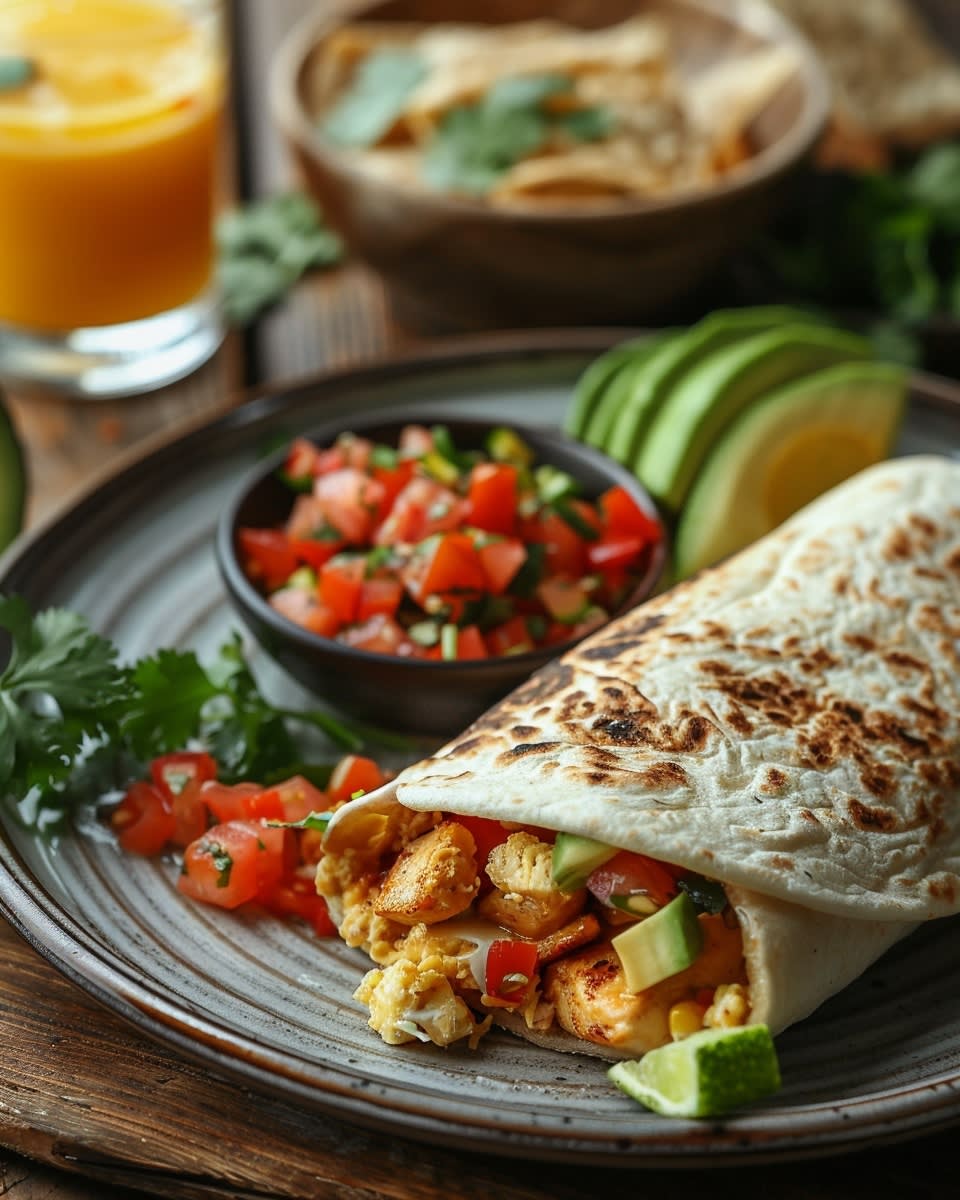
I still remember the first time I tried making a breakfast wrap at home. I was running late for work, starving, and desperately needed something better than a sad granola bar. I grabbed some eggs, leftover grilled chicken, and a tortilla from my fridge. Five minutes later, I had created something amazing. That morning changed how I thought about breakfast forever.
Hi! I’m a food enthusiast who believes breakfast should be both delicious and practical. Today, I want to share everything I know about making the perfect egg and chicken breakfast wrap. This isn’t just another boring breakfast option. It’s a complete meal wrapped in a portable package that you can eat with one hand while juggling your busy morning routine.
An egg and chicken breakfast wrap is exactly what it sounds like. You take scrambled or fried eggs, add seasoned chicken, wrap everything in a soft tortilla, and customize it with your favorite toppings. The result is a protein-packed breakfast that keeps you full for hours. No more mid-morning snack attacks or vending machine temptations.
Why do I love this breakfast so much? First, it takes less than 10 minutes to make. Second, it gives you serious energy without the sugar crash you get from pastries or cereal. Third, you can make it your own by adding cheese, veggies, hot sauce, or whatever you’re craving that day.
In this article, I’ll walk you through everything you need to know. We’ll cover the basic ingredients and their health benefits. I’ll share my best tips for choosing quality eggs, chicken, and wraps. You’ll learn how to customize your wrap to match your taste preferences and dietary needs. By the end, you’ll be ready to create your own perfect breakfast wrap with eggs and chicken.
What You Need to Know About Egg and Chicken Breakfast Wraps
Let’s break down what makes this breakfast so special. The three main ingredients work together like a dream team. Each one brings something important to the table.
Eggs are the foundation of this wrap. They’re nature’s perfect protein source. One large egg contains about 6 grams of protein and all nine essential amino acids your body needs. Eggs also give you vitamins A, D, E, and B12. The yolk contains choline, which helps your brain function better. I always use whole eggs because that’s where most of the nutrients live.
Chicken adds extra protein and a satisfying texture. A three-ounce serving of chicken breast provides around 26 grams of protein with very little fat. Chicken contains selenium, which supports your immune system. It also has B vitamins that help convert food into energy. This is why adding chicken to your eggs creates such a filling breakfast.
Wraps are the vehicle that holds everything together. A standard flour tortilla gives you carbohydrates for quick energy. Whole wheat wraps add fiber that helps digestion and keeps you feeling full longer. The wrap makes this meal portable and easy to eat anywhere.
When you combine these three ingredients, you get a balanced meal with protein, healthy fats, and carbs. This combination stabilizes your blood sugar and prevents energy crashes. I’ve noticed I stay focused and productive all morning when I eat this breakfast.
The beauty of this wrap is its versatility. You can add vegetables like spinach, tomatoes, or bell peppers for extra vitamins. Throw in some cheese for calcium and flavor. Add avocado for heart-healthy fats. Use salsa or hot sauce to wake up your taste buds. Every day can bring a different flavor combination.
What are the health benefits of an egg and chicken breakfast wrap? This question comes up a lot. The benefits are impressive. You get high-quality protein that builds and repairs muscles. The combination keeps you satisfied for 3-4 hours, which helps with weight management. You’re getting essential vitamins and minerals in one meal. The protein helps maintain steady energy levels throughout your morning. If you add vegetables, you boost your vitamin and fiber intake even more.
I’ve found that eating this wrap helps me make better food choices all day. When I start with a nutritious breakfast, I’m less likely to grab junk food later. My cravings decrease, and I feel more in control of my eating habits.
Choosing the Right Ingredients
The quality of your ingredients makes a huge difference. I learned this the hard way after buying cheap eggs that tasted like cardboard. Now I’m picky about what goes into my wraps, and the results are so much better.
Selecting the Best Eggs
Not all eggs are created equal. Here’s what I look for when shopping:
- Free-range eggs come from chickens that can roam outdoors. These eggs often have richer, more vibrant yolks.
- Organic eggs come from chickens fed organic feed without pesticides or synthetic fertilizers.
- Pasture-raised eggs are my top choice. These chickens spend most of their time outside eating a natural diet. The eggs taste noticeably better and contain more omega-3 fatty acids.
- Cage-free eggs mean chickens aren’t kept in cages, but they might still be crowded indoors.
Check the date on the carton. Fresher eggs taste better and have firmer whites. I also open the carton at the store to make sure none are cracked. When I crack a fresh egg, the yolk should stand up tall and the white should be thick, not watery.
Picking the Right Chicken
You have several options for adding chicken to your wrap. Each works differently depending on your time and preferences.
Chicken breast is lean and mild. It’s perfect if you’re watching your fat intake. I sometimes grill or bake several breasts on Sunday, then slice them up for quick breakfasts all week. This prep work saves me tons of time on busy mornings.
Chicken thighs have more flavor and stay moist even if you overcook them slightly. They contain a bit more fat, which makes them taste richer. I prefer thighs when I want a more satisfying, flavorful wrap.
Pre-cooked chicken is the ultimate time-saver. Rotisserie chicken from the grocery store works great. You can also buy pre-cooked grilled chicken strips. Just warm them up and add to your eggs. This option is perfect when you’re running super late.
Leftover chicken from last night’s dinner is my secret weapon. Grilled, roasted, or even fried chicken works. Just chop it up and reheat it with your eggs. This reduces food waste and saves money.
Season your chicken well. I use salt, pepper, garlic powder, and paprika as my basic seasoning blend. Sometimes I add cumin for a Mexican-inspired wrap or Italian seasoning for a Mediterranean twist.
Wrap Options
What type of wrap is best for an egg and chicken breakfast wrap? This depends on your dietary needs and taste preferences. Let me break down your options.
Flour tortillas are soft, flexible, and easy to fold. They’re my go-to choice most days. I buy the burrito-size ones because they hold more filling without tearing. Regular flour tortillas taste neutral and let the egg and chicken flavors shine.
Whole wheat tortillas add fiber and nutrients. They have a slightly nutty taste that I actually enjoy. These keep me full a bit longer than regular flour tortillas. They’re a smarter choice if you’re focused on nutrition.
Corn tortillas are naturally gluten-free. They’re smaller and have a distinct corn flavor. I use two of them when making a breakfast wrap because one isn’t quite big enough. They break more easily, so handle them gently.
Gluten-free wraps made from rice, almond, or coconut flour work great for people with gluten sensitivities. These can be a bit more delicate, so warm them up first to make them more pliable.
Low-carb wraps are perfect if you’re watching your carb intake. Many brands make tortillas with only 4-6 grams of net carbs. They’re often higher in fiber and protein too.
Flatbreads like naan or pita create a thicker, heartier wrap. These work well if you’re extra hungry or want something more substantial.
Always warm your wrap before assembling. I throw mine on a dry skillet for 15-20 seconds per side. This makes it softer and easier to fold without cracking. A warm wrap also tastes better and won’t cool down your hot eggs.
Buy wraps that are fresh and check the expiration date. Store them properly in a sealed bag to prevent them from drying out. I keep mine in the fridge to extend their shelf life.


Now that you’ve got your quality ingredients lined up, it’s time for the fun part—actually making this delicious breakfast.
Preparing the Filling for Your Chicken and Egg Wrap
The filling is where your breakfast wrap comes to life. I’ve made hundreds of these wraps, and I’ve learned that getting the eggs and chicken just right makes all the difference between an okay breakfast and something you’ll crave every morning.
Cooking the Eggs: My Three Go-To Methods
Let me walk you through how I prepare eggs for wraps. Each method gives you a slightly different texture and experience.
How do you make the perfect scrambled eggs for a wrap? This is honestly the method I use most often because scrambled eggs distribute evenly throughout the wrap and they’re nearly impossible to mess up. Here’s my technique: I crack two or three eggs into a bowl and whisk them with a fork until the yolks and whites are completely combined. Some people add a splash of milk or cream, but I prefer just eggs. Sometimes I add a tiny pinch of salt and pepper right at this stage.
Heat a nonstick pan over medium-low heat—and yes, medium-low is crucial. Too much heat makes rubbery eggs. I add a small pat of butter or a drizzle of olive oil. When the butter stops foaming, I pour in the eggs. Here’s where most people go wrong: they start stirring immediately. Don’t do that. Let the eggs sit for about 20 seconds until you see the edges starting to set.
Then I use a silicone spatula to gently push the eggs from the edge toward the center, tilting the pan so the uncooked egg flows to the empty space. I keep doing this slowly, creating soft curds. The whole process takes maybe two minutes. I remove them from heat when they still look slightly wet because they’ll keep cooking from residual heat. Nobody wants dry, overcooked eggs in their wrap.
The omelette method creates a neat layer that’s easier to roll up. I whisk the eggs the same way, but instead of scrambling, I pour them into the heated pan and let them cook undisturbed for about a minute. When the bottom sets but the top is still a bit runny, I add my chicken and any other fillings right on top. Then I fold the omelette in half, let it cook for another 30 seconds, and slide it directly into my wrap. This method looks really impressive if you’re making breakfast for someone else.
The sunny-side up approach is my weekend luxury option when I’m not rushing. I crack the eggs directly into the pan and let them cook until the whites are set but the yolk is still runny. When you bite into this wrap, that golden yolk oozes out and coats everything. It’s messy and absolutely wonderful. Just make sure you have napkins nearby.
Getting Your Chicken Ready
If you’re starting with raw chicken, you’ll want to cook it before dealing with the eggs. I usually dice chicken breast into small, bite-sized pieces—about half an inch works perfectly. Season them generously with salt, pepper, and whatever spices you’re feeling that day. Garlic powder and smoked paprika are my standard combination.
Heat a separate pan over medium-high heat with a bit of oil. Add the chicken pieces in a single layer. Don’t crowd the pan or they’ll steam instead of getting that nice golden color. Let them cook undisturbed for about 3-4 minutes until they develop a golden crust on one side, then flip and cook another 2-3 minutes. The internal temperature should reach 165°F if you want to be precise about it.
Funny enough, I actually prefer using leftover chicken most mornings. Last night’s grilled chicken from dinner or even that rotisserie chicken I mentioned earlier tastes amazing when you chop it up and warm it in the pan. I add a little extra seasoning since refrigeration can dull flavors. A squeeze of lime juice or a dash of hot sauce wakes everything up nicely.
One trick I learned from my cousin who runs a breakfast food truck: marinate your chicken the night before in a simple mixture of olive oil, lemon juice, garlic, and herbs. When you cook it in the morning, it’s incredibly flavorful and juicy. She uses this technique for her most popular wrap, and now I understand why customers line up for it.
Additional Fillings That Make Your Wrap Extraordinary
This is where you get to be creative. I keep several options in my fridge so I can mix things up throughout the week.
Cheese is probably my most-used addition. Sharp cheddar adds a tangy bite that cuts through the richness of eggs. Monterey Jack melts beautifully and has a mild, creamy flavor. Pepper jack brings heat if you like things spicy. Feta crumbles add a Mediterranean vibe. I sprinkle cheese directly onto the hot eggs so it melts into everything. Pro tip: don’t use pre-shredded cheese if you can avoid it—the anti-caking agents prevent it from melting smoothly. Grating your own takes 30 extra seconds and tastes way better.
Vegetables transform your wrap from simple to spectacular. Sautéed bell peppers and onions are classic for a reason—they add sweetness and a slight crunch. I cook them in the same pan before adding my eggs to save on dishes. Fresh spinach wilts right into the hot eggs without any extra effort. Diced tomatoes add juiciness, though I usually remove the seeds first so they don’t make everything soggy. Sliced avocado provides creamy richness and healthy fats that keep you satisfied longer.
By the way, mushrooms deserve a special mention. I slice them thin and cook them until they’re golden brown and have released all their moisture. They add this earthy, savory depth that makes the wrap taste more sophisticated.
Fresh herbs elevate everything. Chopped cilantro, parsley, or green onions added right at the end bring brightness and color. Sometimes I mix herbs into the eggs before cooking. Other times I sprinkle them on top as a final touch. The flavor difference is subtle but noticeable.
Salsa, hot sauce, or even a drizzle of sriracha mayo can completely change the flavor profile. I keep several different sauces on hand because my mood changes. Some mornings I want mild and comforting. Other days I need that spicy kick to wake me up. If you’re looking for more high-protein breakfast ideas with similar versatility, you might enjoy checking out this protein-packed egg bowl recipe that uses many of the same ingredients in a different format.
Assembling Your Breakfast Wrap Like a Pro
Here’s the thing—you can make the most delicious filling in the world, but if your wrap falls apart, you’ll end up eating breakfast with a fork. I’ve had plenty of wrap disasters before figuring out the right technique.
How do I fold a breakfast wrap without it falling apart? The secret is all in the assembly method and understanding your wrap’s capacity. Don’t overstuff. I know it’s tempting to pile everything high, but a bulging wrap will never fold properly. Think of it like packing a suitcase—less is actually more when it comes to keeping things together.
Start by laying your warm tortilla on a flat surface. Place your cooked ingredients in the center, but leave about two inches of space on all sides. This border is crucial. I arrange the chicken first as the bottom layer, then add the eggs on top, followed by cheese, vegetables, and any sauce.
Now for the folding technique that changed my breakfast game. First, fold the bottom edge up and over the filling—this creates the seal that prevents everything from spilling out the bottom. Pull it tight against the ingredients. Then fold in both sides toward the center, like you’re closing a letter. These side flaps should overlap the filling slightly.
Finally, roll the whole thing away from you, tucking as you go to keep everything tight and compact. The key word here is tight. A loosely rolled wrap will unravel when you pick it up. I use a little pressure as I roll without squishing the filling out the sides. It takes practice, honestly. My first ten wraps looked pretty sad, but now I can do it without even thinking.
One technique I learned from a burrito shop employee: place the wrap seam-side down for about 30 seconds after rolling. The heat and moisture help seal everything together. Sometimes I even place it back in the warm pan for 20 seconds on each side. This creates a slightly crispy exterior that holds everything together even better.
If you’re making wraps for the whole family, assembly line style works great. Cook all your eggs and chicken first, set out all your fillings, and let everyone build their own. My kids love this because they get to choose exactly what goes in their wrap. It also means nobody complains about ingredients they don’t like.
Making It Look Restaurant-Quality
Presentation matters, even if you’re just making breakfast for yourself. A beautiful wrap makes you feel like you’re treating yourself well, which is important for starting the day right.
After rolling, I like to slice the wrap diagonally with a sharp serrated knife. This shows off all the colorful layers inside and makes it easier to eat. The diagonal cut just looks more appetizing than a straight cut—I can’t explain why, but it does.
If I’m packing it for later, I wrap it tightly in aluminum foil or parchment paper. This keeps everything contained and actually makes it easier to eat on the go. You can unwrap as you eat, keeping your hands relatively clean.
For weekend brunches when I have more time, I sometimes toast the assembled wrap in a panini press or sandwich maker. This creates those beautiful grill marks and makes the outside crispy while the inside stays soft and melty. It transforms the wrap into something that feels special and indulgent.
Color variety makes your wrap more visually appealing. If I’m using mostly beige ingredients like chicken and eggs, I’ll add red bell peppers, green spinach, or orange cheddar cheese to create contrast. We eat with our eyes first, right?
Sometimes I serve my wrap alongside a protein smoothie for an extra nutritious breakfast combination. The cool, creamy smoothie complements the warm, savory wrap perfectly. Other mornings, I’ll pair it with fresh fruit or even make protein-rich waffles on the side if I’m really hungry or feeding guests.
The most important thing about assembling these wraps is developing your own rhythm. After making them a few times, you’ll figure out exactly how much filling your preferred tortilla can handle, how tight to roll it, and what combination of ingredients works best for you. Don’t stress if your first few attempts aren’t perfect—they’ll still taste delicious, and that’s what really matters.


Serving and Storage Tips for Your Egg and Chicken Breakfast Wrap
You’ve just made this gorgeous breakfast wrap, and now you’re wondering about the best way to enjoy it. Here’s the thing—this wrap is incredibly flexible about how and when you eat it, which is part of why I love it so much.
How to Serve Your Wrap for Maximum Enjoyment
Most mornings, I eat my wrap piping hot, right after I make it. There’s something wonderful about biting into warm eggs with melted cheese and tender chicken. The flavors are at their peak, and everything tastes fresh and comforting. I usually just grab it with my hands, maybe wrapping the bottom in a paper towel to catch any drips.
But here’s something I discovered by accident—these wraps are actually pretty good at room temperature too. One morning I got distracted by a work call, and by the time I got back to my breakfast, it had cooled down completely. I expected it to be disappointing, but honestly? It was still delicious. The flavors had melded together, and the texture was still satisfying. This makes it perfect for packed lunches or picnics.
As far as sides go, I like to keep things simple on busy weekdays. Fresh fruit like berries or sliced melon adds natural sweetness and balances the savory wrap. Sometimes I’ll have a small handful of roasted potatoes or sweet potato cubes on the side if I’m extra hungry. A simple side salad with mixed greens and a light vinaigrette also works beautifully.
On weekends when I have more time, I get a bit fancier. I’ll make crispy hash browns or serve the wrap with a small bowl of black beans seasoned with cumin and lime. Greek yogurt mixed with herbs makes an excellent dipping sauce that adds protein and creaminess. Salsa verde or pico de gallo on the side lets you add freshness with each bite.
Coffee or tea is my usual beverage pairing, but freshly squeezed orange juice adds vitamin C and brightness to the meal. Some people love having their wrap with hot sauce or ketchup available for dipping—whatever makes you happy is the right choice.
Storing Leftover Wraps (Yes, They Keep!)
I often make extra wraps on Sunday evening to have ready for the crazy Monday through Wednesday rush. Proper storage makes all the difference between a wrap that tastes fresh when reheated and one that’s soggy and sad.
Let your wrap cool to room temperature before storing it—this usually takes about 15 minutes. Wrapping a hot wrap immediately creates condensation that leads to sogginess. Once cooled, I wrap each one individually in aluminum foil or plastic wrap, making sure it’s sealed tightly. Then I place them in an airtight container or zip-top bag for extra protection.
Stored this way in the refrigerator, your wraps will stay good for about 3-4 days. I’ve pushed it to five days a couple times, and they were still okay, but the tortilla starts getting a bit tough and the flavors aren’t as vibrant. If you’re conscious about sodium intake in your diet, you might want to check out guidelines on a low sodium diet when choosing your chicken seasonings and cheese, as these ingredients can add up quickly in terms of salt content.
Can I prepare the wrap ahead of time and reheat it? Absolutely, and I do this constantly. The key is reheating properly so everything tastes freshly made. My favorite method is using the microwave with a damp paper towel. I unwrap the foil, place the wrap on a microwave-safe plate, drape a damp paper towel over it, and heat for 60-90 seconds depending on your microwave’s power. The damp towel creates steam that keeps the tortilla soft instead of rubbery.
If you have a bit more time, reheating in a skillet is even better. Heat a dry pan over medium heat, place your unwrapped wrap seam-side down, and cook for about 2 minutes per side. This method crisps up the outside slightly while warming the inside thoroughly. I actually prefer reheated wraps done this way because the texture is fantastic.
For oven reheating—which works great if you’re warming several wraps at once—preheat to 350°F, wrap your wraps in foil, and heat for about 15 minutes. This gentle heat warms everything evenly without drying anything out.
One important note: if you’re planning to make wraps ahead, consider leaving out ingredients that don’t reheat well. Fresh tomatoes can make things watery, and avocado turns brown and mushy. I add these fresh right before eating instead. Funny enough, I keep little containers of “fresh add-ins” in my fridge specifically for this purpose.
Packing Your Wrap for On-the-Go Meals
This breakfast wrap has literally saved me on countless road trips, early morning flights, and rushed commutes. The secret to a successful portable breakfast is all in the packing.
For the wrap itself, I use the burrito shop method: wrap it tightly in foil, keeping one end completely closed and leaving the other end slightly open. This creates a convenient holder that you can unwrap as you eat, keeping your hands cleaner. The foil also insulates the wrap, keeping it warm for about an hour if you’re eating it soon after making it.
Parchment paper is another excellent option, especially if you’re eating at room temperature. It’s less insulating than foil but easier to unwrap and more environmentally friendly. Some people use those reusable beeswax wraps, which work fine too, though they don’t keep things as warm.
If you’re packing your wrap in a lunch box or bag, think about temperature control. For keeping it warm, I use an insulated lunch bag with a small hot pack. Those reusable heat packs that you boil to recharge work perfectly. Your wrap will stay pleasantly warm for 2-3 hours this way. By the way, this is also how I bring breakfast wraps to my kids’ early morning soccer games—they love having something hot and filling between matches.
For cold storage, regular ice packs in an insulated bag work great. Just remember that bacteria can grow on eggs and chicken if they sit in the temperature danger zone (between 40°F and 140°F) for too long. If you’re not eating within two hours, definitely use ice packs to keep everything food-safe.
Pack napkins or wet wipes because eating while driving or walking can get messy. I learned this after dripping egg and salsa all over my work shirt before an important meeting. Not my finest moment. A small container of extra salsa or hot sauce packed separately means you can adjust the flavor right before eating.
One trick I picked up from my friend who’s a delivery driver: cut your wrap in half before wrapping it. This makes it way easier to eat with one hand, and you can save the second half for later if you’re not super hungry. Just make sure to wrap both halves securely.
For airplane travel, I always make my wrap the night before and pack it with an ice pack in my carry-on. By the time I’m through security and settled on the plane, it’s perfect to eat. It beats airport food by a mile and costs a fraction of the price. Plus, your seatmates will probably be jealous when they smell your delicious breakfast while they’re stuck with dry pretzels.
If you’re heading to work, consider packing your wrap alongside other breakfast items. I sometimes pack mine with a small container of berries or a yogurt cup for variety. Having different textures and flavors keeps the meal interesting, especially if you’re eating the same wrap several days in a row.
For camping trips or outdoor adventures, these wraps are perfect because they’re filling, portable, and you can make them over a campfire if needed. I’ve cooked eggs and chicken in a cast iron skillet over the fire, assembled wraps right there, and felt like I was having gourmet camping cuisine. My kids talk about those camping breakfast wraps years later.
One last thing about meal prep that’s made my life easier: I prepare all my ingredients on Sunday but don’t actually assemble the wraps until the morning I need them. I cook a big batch of seasoned chicken, store it in a container, and keep pre-grated cheese, chopped veggies, and other fillings ready to go. In the morning, I just scramble some eggs, warm up the chicken, and assemble everything fresh. This takes maybe 7 minutes but tastes way better than fully pre-made wraps. The tortilla stays softer, and everything feels fresher.
If you’re looking for more ways to start your day with satisfying, protein-rich meals that fuel your morning, you’ll find plenty of inspiration and ideas in our complete collection of high protein breakfast recipes that work perfectly for busy schedules and meal prep.
These wraps have honestly transformed how I think about breakfast. They’re proof that eating well doesn’t have to be complicated or time-consuming. Whether you’re making one fresh each morning or preparing a batch for the week, you now have all the tools to create breakfast wraps that actually work for your life. The versatility means you’ll never get bored, and the convenience means you’ll actually stick with eating a nutritious breakfast instead of skipping it or grabbing something less healthy.
Frequently Asked Questions About Egg and Chicken Breakfast Wraps
What are some popular variations of the egg and chicken breakfast wrap?
The variations are practically endless, which is part of the fun. A Southwest-style wrap uses pepper jack cheese, black beans, corn, cilantro, and salsa for a spicy kick. Greek-inspired versions include feta cheese, spinach, tomatoes, and a drizzle of tzatziki sauce. For an Italian twist, add mozzarella, sun-dried tomatoes, basil, and a touch of pesto. Buffalo chicken wraps combine hot sauce-tossed chicken with ranch dressing and blue cheese crumbles. Asian fusion wraps might include soy sauce-marinated chicken, scrambled eggs, scallions, and sriracha mayo.
Is it possible to make a vegetarian version of this wrap?
Absolutely, and it’s delicious too. Simply replace the chicken with black beans, pinto beans, or chickpeas for protein. Sautéed mushrooms provide that meaty texture and umami flavor that makes the wrap satisfying. You can also use plant-based chicken alternatives if you want something closer to the original. Adding extra vegetables like roasted bell peppers, zucchini, or sweet potatoes makes the wrap heartier. Don’t forget to include cheese or nutritional yeast for added flavor and protein.
How can I make the wrap more filling and satisfying?
Add more protein by using three eggs instead of two, or include an extra serving of chicken. Incorporate healthy fats like avocado, which keeps you full longer and adds creaminess. Beans or quinoa add both protein and fiber that extend satiety. Use a larger tortilla or a heartier wrap like naan to hold more ingredients. Adding cheese increases both calories and protein, making the meal more substantial. Sometimes I even add a smear of hummus or refried beans to the tortilla before adding other ingredients for extra staying power.
Are there any common mistakes to avoid when making a breakfast wrap?
The biggest mistake is overcooking the eggs until they’re dry and rubbery—remove them from heat while still slightly moist. Overfilling the wrap makes it impossible to fold properly and leads to messy eating. Using a cold tortilla causes it to crack when you try to fold it, so always warm it first. Adding watery ingredients like fresh tomatoes without removing seeds can make everything soggy. Not seasoning your ingredients properly results in bland wraps that need excessive sauce to taste good. Finally, rushing the rolling process usually means your wrap falls apart halfway through eating.
Can I freeze these breakfast wraps for longer storage?
Yes, and they freeze surprisingly well for up to three months. Let your wraps cool completely, then wrap each one tightly in plastic wrap followed by aluminum foil to prevent freezer burn. Label them with the date so you know when you made them. To reheat, you can microwave from frozen for about 2-3 minutes, flipping halfway through. Alternatively, thaw overnight in the refrigerator and reheat using your preferred method. The texture won’t be quite as perfect as fresh, but it’s still really good and incredibly convenient for meal prep.
What’s the best way to prevent my wrap from getting soggy?
Make sure your ingredients aren’t overly wet—drain any excess liquid from vegetables or salsa before adding. Let your cooked eggs and chicken cool for a minute before assembling so steam doesn’t build up inside the wrap. If using fresh tomatoes or salsa, add them right before eating rather than during prep. Toast your assembled wrap briefly in a pan to create a slight barrier on the tortilla. When storing, use paper towels between the wrap and container to absorb any moisture. Keeping sauces separate and adding them just before eating also helps maintain the perfect texture.
How much protein is in a typical egg and chicken breakfast wrap?
A standard wrap with two eggs and three ounces of chicken breast provides approximately 38-42 grams of protein. Two large eggs contribute about 12 grams, while three ounces of chicken breast adds roughly 26 grams. Adding cheese increases this by 5-7 grams depending on the amount and type. Using a high-protein tortilla can add another 5-10 grams. This makes the wrap an excellent choice for anyone looking to increase their protein intake, especially athletes, people trying to build muscle, or anyone wanting to stay full throughout the morning.
Can I use egg whites instead of whole eggs to reduce calories?
You certainly can, though you’ll miss out on some nutrients found in the yolk. Egg whites are pure protein with no fat, making them lower in calories. I sometimes use a combination—one whole egg plus two or three egg whites—to get some yolk richness while keeping calories moderate. Keep in mind that egg white-only wraps can be a bit drier, so consider adding a small amount of cheese or avocado for moisture and flavor. Season generously since egg whites are pretty bland on their own.
What’s the best chicken seasoning for breakfast wraps?
It really depends on your flavor preferences and what else you’re adding. For a basic, versatile option, salt, pepper, garlic powder, and paprika work perfectly. Mexican-inspired wraps taste great with cumin, chili powder, and a squeeze of lime. Italian seasoning (basil, oregano, thyme) pairs well with mozzarella and tomatoes. For something bolder, try Cajun seasoning or a jerk spice blend. I keep several different seasoning mixes on hand and rotate through them so I never get bored with the same flavor every day.
How do I make my breakfast wrap lower in carbs?
The easiest way is choosing a low-carb tortilla, which can have as few as 4-6 net carbs compared to 30+ in regular flour tortillas. You can also use a lettuce wrap instead of a tortilla, though it’s obviously much messier and harder to eat on the go. Some people use thin egg “wraps” by making a very thin omelette to hold their fillings—it’s essentially a double egg wrap but eliminates the tortilla entirely. Focus on adding more protein and healthy fats rather than carb-heavy vegetables like corn or potatoes, and you’ll have a satisfying low-carb breakfast.
Ingredients
Equipment
Method
- Crack eggs into a bowl and whisk until yolks and whites are combined.
- Heat a nonstick pan over medium-low heat with a small pat of butter or drizzle of olive oil.
- For scrambled eggs: Pour whisked eggs into the pan, let sit for 20 seconds, then gently stir from edges to center until soft curds form. Remove when slightly wet.
- For an omelette: Pour eggs into the pan, cook until the bottom sets, then add chicken and desired toppings, fold in half, and slide into the wrap.
- For sunny-side up eggs: Cook eggs directly in the pan until whites are set but yolks are still runny.
- Season cooked chicken with salt, pepper, and desired spices, then cook in a separate pan until golden and cooked through.
- Warm the tortilla in a dry skillet for 15-20 seconds on each side.
- Assemble the wrap: Lay the tortilla flat, add chicken, then eggs, followed by cheese, vegetables, and sauce.
- Fold the bottom of the tortilla over the filling, then fold in the sides, and roll tightly away from you.
- Serve hot or wrap for on-the-go meals.