
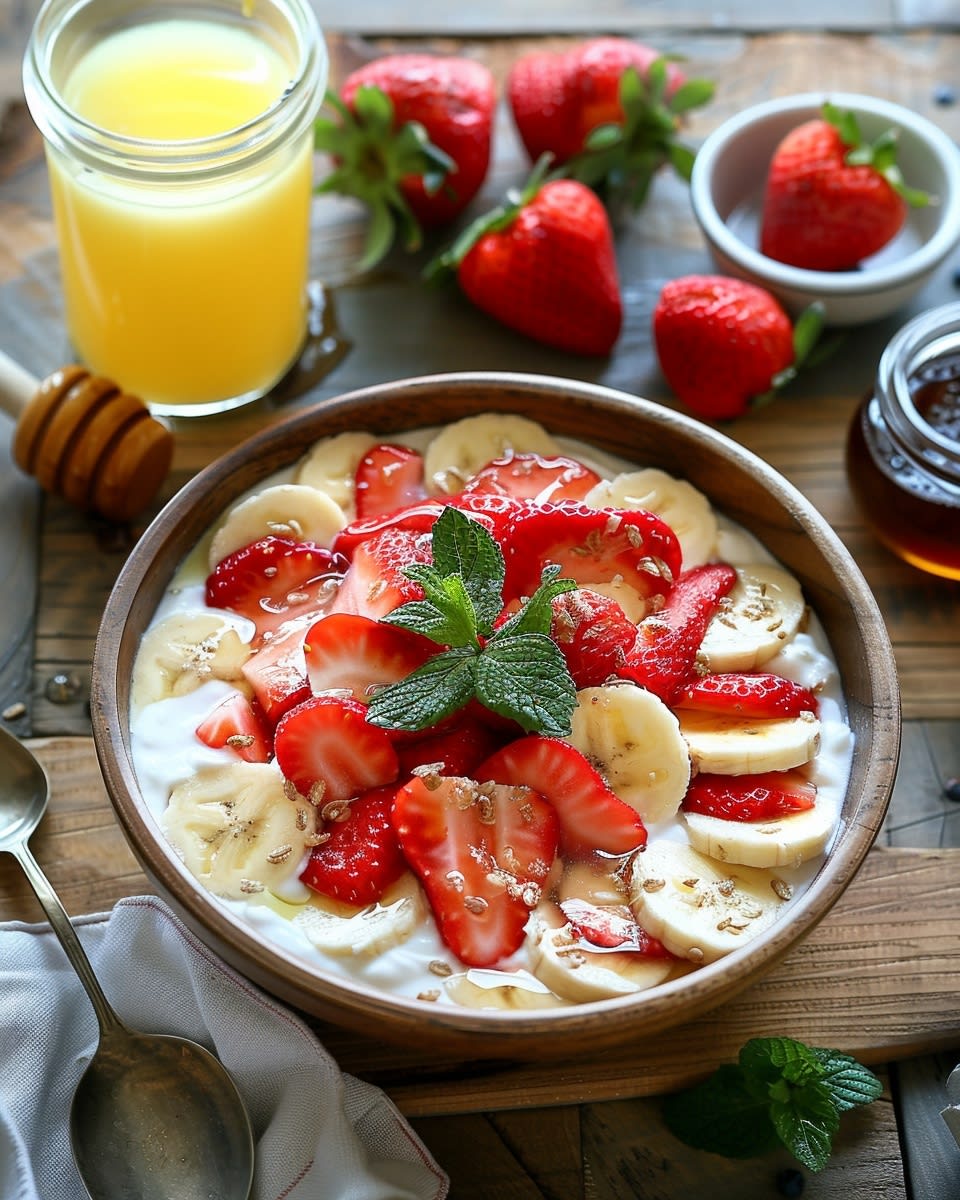
Your Morning Just Got Better: The Quick Yogurt and Fruit Bowl
I’ll never forget the morning I woke up late for an important meeting. I had exactly five minutes to get out the door, and my stomach was growling like crazy. I grabbed a container of yogurt, threw in some berries I had in the fridge, and rushed out. That simple bowl kept me full and focused until lunch. It was a total lifesaver.
That’s when I realized something important. Healthy eating doesn’t have to be complicated or time-consuming. A quick yogurt and fruit bowl is one of the easiest ways to fuel your body right. It works perfectly as a breakfast option when you’re running late or as a snack when you need an energy boost.
This simple dish takes less than three minutes to put together. You don’t need any cooking skills or fancy equipment. Just grab your favorite yogurt, add some fresh or frozen fruit, and you’re done. The best part? You get a meal that’s packed with nutrients your body actually needs.
Making this bowl part of your daily routine can change how you feel throughout the day. You’ll have more energy, better focus, and you won’t reach for unhealthy snacks an hour later. I started eating these bowls regularly about two years ago, and I noticed a real difference in my energy levels and digestion.
Why Choose a Quick Yogurt and Fruit Bowl?
Let me be honest with you. I used to skip breakfast all the time. I thought I was saving time, but I was actually making my mornings harder. I’d get hungry around 10 AM and end up eating whatever was nearby, usually something sugary or processed.
A healthy breakfast bowl changed that pattern completely. Now I start my day with something that actually supports my health goals instead of working against them.
What are the health benefits of eating yogurt and fruit?
This question comes up a lot, and the answer is pretty amazing. When you combine yogurt with fruit, you’re giving your body a powerful combination of nutrients that work together.
Yogurt is like a superfood hiding in your refrigerator. It contains probiotics, which are tiny living organisms that support your gut health. A healthy gut means better digestion, stronger immunity, and even improved mood. Studies show that people who eat yogurt regularly have fewer digestive issues and get sick less often.
The calcium in yogurt keeps your bones and teeth strong. One cup of yogurt gives you about 30% of your daily calcium needs. That’s significant, especially if you’re not a big milk drinker.
Yogurt also delivers quality protein. Protein keeps you full longer and helps your muscles recover after exercise. Greek yogurt has even more protein than regular yogurt, with about 15-20 grams per serving. That’s roughly the same as eating three eggs.
Fruit brings its own set of benefits to your bowl. Different fruits offer different vitamins, but most are loaded with vitamin C, which supports your immune system and helps your skin stay healthy. The fiber in fruit keeps your digestive system running smoothly and helps you feel satisfied.
Antioxidants are another reason to add fruit to your yogurt. These compounds fight damage in your cells and may reduce your risk of chronic diseases. Berries like blueberries and strawberries are especially high in antioxidants.
Here’s what you get from a typical yogurt and fruit bowl:
- Probiotics for gut health and immunity
- Calcium for strong bones
- Protein to keep you full
- Vitamins from fresh fruit
- Fiber for healthy digestion
- Antioxidants to protect your cells
- Natural energy without a sugar crash
The Convenience Factor You Can’t Ignore
I travel for work sometimes, and finding easy healthy snacks on the road can be tough. But I can always find yogurt and fruit at any grocery store or gas station. Even hotels usually have these items at breakfast.
This bowl fits into any lifestyle. You can make it at home, pack it for work, or put it together in a hotel room. There’s no cooking involved, no special equipment needed, and cleanup takes about 30 seconds.
Meal prep gets even easier with this dish. I often set up nutritious breakfast ideas for the whole week on Sunday evening. I portion out yogurt into containers and wash my fruit. Then each morning, I just combine them and go.
The cost is another practical benefit. Making your own yogurt bowl recipe costs a fraction of what you’d pay for breakfast at a cafe or restaurant. A large container of yogurt and some fruit can give you breakfast for an entire week for under ten dollars.
Versatility That Never Gets Boring
The number of ways you can customize this bowl is endless. I never get tired of it because I change it up constantly.
Some days I use Greek yogurt with berries and honey. Other days I go for regular yogurt with banana and cinnamon. When I want something more filling, I add granola or nuts for crunch and extra protein.
You can match your bowl to the season. In summer, I use fresh peaches and strawberries. Winter means frozen berries and apple slices work great. Fall brings pears and figs, and spring has fresh cherries and apricots.
This flexibility makes it perfect for picky eaters too. My nephew refuses to eat most breakfast foods, but he loves making his own yogurt bowls. He gets to choose his toppings, and I know he’s getting good nutrition.
Simple breakfast recipes like this one work for anyone. Whether you’re feeding kids before school, fueling yourself before a workout, or looking for a light dinner option, this bowl adapts to your needs.
The beauty of a fruit and yogurt parfait is that it never has to be the same twice. You can keep it simple with just two ingredients, or layer in multiple toppings for something more special. Both versions take just minutes to prepare.
This dish also works for different dietary needs. Need more protein? Use Greek yogurt and add some almond butter. Want less sugar? Skip the honey and use unsweetened yogurt. Looking for dairy-free options? Coconut or almond yogurt work just as well.


How to Make a Perfect Quick Yogurt and Fruit Bowl
Now that you understand why this bowl is so valuable, let me walk you through exactly how to create your own version. The process is so straightforward that you might laugh at how simple it is, but that’s exactly the point.
I remember teaching my friend Sarah how to make this when she told me she “couldn’t cook.” She looked at me like I was crazy when I said there was no cooking involved. Five minutes later, she had made her first healthy yogurt breakfast and couldn’t believe she’d been intimidating herself with complicated recipes all this time.
Here’s your basic roadmap. Start with about one cup of yogurt in your bowl or container. Add roughly half a cup to one cup of fruit, depending on how hungry you are. If you want extra texture and nutrition, sprinkle on some toppings. That’s literally it. You’ve just made a complete meal.
The beauty of this quick breakfast bowl is that exact measurements don’t really matter. You’re not baking a cake where precision counts. Some mornings I want more yogurt, other days I pile on extra fruit. Trust your instincts and adjust based on what your body needs.
How do I choose the best yogurt for my fruit bowl?
This question matters more than you might think. The yogurt you choose changes the entire texture, protein content, and flavor of your bowl.
Greek yogurt is my go-to most days. It’s incredibly thick and creamy, which makes the bowl feel more substantial. The protein content is insane compared to regular yogurt. I use it on mornings when I know I won’t be able to eat again for several hours. It keeps me satisfied way longer than other options.
The tanginess of Greek yogurt pairs beautifully with sweet fruits. I especially love it with honey and berries. If you find it too tart on its own, a small drizzle of maple syrup balances it perfectly.
Regular yogurt has a thinner consistency that some people prefer. It’s lighter and easier to eat quickly if you’re really rushing. The flavor is usually milder and slightly sweeter than Greek yogurt. I reach for regular yogurt when I want something that feels more like a snack than a full meal.
Plant-based yogurts have come a long way in recent years. Coconut yogurt adds a subtle tropical flavor that’s amazing with mango or pineapple. Almond yogurt has a mild, nutty taste that works with almost any fruit. Oat yogurt is the creamiest dairy-free option I’ve tried, and it has a naturally sweet flavor.
Here’s the thing. Check your yogurt labels carefully. Some brands load their products with added sugar, artificial flavors, and weird ingredients you don’t need. I always buy plain, unsweetened yogurt and add my own sweetness through fruit and a touch of honey. This way I control exactly what goes into my body.
Icelandic yogurt, also called skyr, is another option worth trying. It has even more protein than Greek yogurt and a uniquely smooth texture. It’s become one of my favorite discoveries this year.
Building Your Perfect Fruit Selection
The fruit you choose transforms your bowl from basic to exciting. I’ve experimented with dozens of combinations over the years, and certain fruits just work better than others.
Berries are the champions of yogurt parfait toppings. Strawberries, blueberries, raspberries, and blackberries all bring their own personality. Blueberries add little bursts of sweetness. Raspberries give you that perfect tart-sweet balance. Strawberries are classic and kid-friendly. Blackberries have an earthy richness that I absolutely love.
Bananas create a completely different experience. They make your bowl sweeter and more filling. Sliced banana mixed with a sprinkle of cinnamon reminds me of banana bread. Sometimes I mash half a banana into the yogurt itself for a smoother, creamier texture.
Stone fruits are underrated in yogurt bowls. Fresh peaches in summer are phenomenal. The juice mixes with the yogurt and creates this amazing peachy cream. Cherries, apricots, and plums all work beautifully too. Just remember to remove the pits.
Tropical fruits bring vacation vibes to your morning. Mango chunks, pineapple pieces, and kiwi slices turn your basic bowl into something that feels special. I make tropical bowls when I need a mental pick-me-up on dreary winter mornings.
Apples and pears work year-round. They’re affordable, available everywhere, and they add a nice crunch. I dice them small so they’re easy to eat with a spoon. A sprinkle of cinnamon on apple pieces makes them taste almost like pie filling.
By the way, don’t sleep on dried fruits. Raisins, dried cranberries, and chopped dates add concentrated sweetness and a chewy texture. I use them sparingly because they’re more calorie-dense than fresh fruit, but they’re perfect when you need something shelf-stable. They’re also great when you’re traveling and fresh fruit isn’t available.
What are some creative toppings for a yogurt and fruit bowl?
This is where you can really get creative and make your quick breakfast bowl feel like something from a fancy cafe.
Granola adds crunch and makes the bowl more filling. I buy low-sugar versions or make my own by toasting oats with a bit of honey and cinnamon. The texture contrast between creamy yogurt and crunchy granola is seriously satisfying. Just watch your portions because granola can be surprisingly high in calories.
Nuts and seeds boost the nutrition big time. Sliced almonds, chopped walnuts, pecans, or cashews all work great. They add healthy fats and extra protein. Chia seeds are tiny but mighty. They don’t add much flavor, but they give you omega-3 fatty acids and fiber. Hemp seeds have a mild, nutty taste and pack in more protein.
Nut butters take things to another level. A spoonful of almond butter or peanut butter swirled into yogurt creates this rich, indulgent texture. It’s similar to the combination you’d find in a banana peanut butter toast, but in bowl form. Cashew butter is smoother and less intense if you want something milder.
Natural sweeteners let you control the sugar level. Honey is my favorite because it has antimicrobial properties and adds floral notes. Maple syrup gives you that cozy, breakfast-y flavor. Agave nectar is sweeter than honey, so you need less of it.
Spices make surprisingly big differences. Cinnamon is the classic choice. Cardamom adds an exotic, warming quality. Vanilla extract brings depth without adding calories. Cocoa powder creates a chocolate version that feels like dessert.
Coconut flakes give you tropical vibes and a fun texture. I lightly toast them in a dry pan for extra flavor. Dark chocolate chips or cacao nibs work for days when you want something more indulgent. Just a small handful satisfies chocolate cravings while still keeping the bowl relatively healthy.
Fresh herbs might sound weird, but hear me out. Mint leaves with berries and yogurt is incredibly refreshing. Basil with strawberries is a combination I discovered at a restaurant and now make regularly at home. These additions make your bowl feel gourmet.
Seasonal Variations and Flavor Combinations
One reason I’ve stuck with easy yogurt bowl recipes for so long is that they change with the seasons. The bowl I make in January looks and tastes completely different from my July version.
Summer brings an explosion of fresh fruit options. This is when I go crazy with berries, peaches, and cherries. My favorite summer combination is Greek yogurt with mixed berries, a drizzle of honey, and some crushed pistachios. The berries are sweet and juicy, and everything just tastes like sunshine.
Another summer winner is what I call my “morning smoothie bowl.” I use frozen berries, add them to yogurt while they’re still partially frozen, and the cold berries chill everything down. It’s refreshing when it’s hot outside. Sometimes I eat it on my porch before work, and those few quiet minutes set my whole day right.
Can I use frozen fruits in my yogurt bowl?
Absolutely, and honestly, I use frozen fruit more often than fresh. Frozen fruit is picked at peak ripeness and frozen immediately, which actually preserves the nutrients better than fresh fruit that sits in transport and on store shelves for days.
Frozen berries are cheaper than fresh, especially when berries aren’t in season. A big bag lasts for weeks in my freezer, so I always have fruit available even when I forget to go grocery shopping.
The texture is slightly different. Frozen fruit releases more juice as it thaws, which can make your yogurt a bit thinner. I actually like this because it creates a natural fruit sauce that swirls through the yogurt. If you don’t like that, let the fruit thaw completely and drain some of the juice before adding it to your bowl.
Pro tip I learned the hard way: don’t add rock-hard frozen fruit directly to your yogurt if you want to eat it immediately. Either let it sit for a few minutes to soften, or microwave it for 20 seconds. Otherwise you’ll be trying to eat frozen chunks, which isn’t fun.
Creating Themed Bowls Throughout the Year
Fall is when I get excited about warm spices and cozy flavors. My autumn bowls often include apple chunks, a sprinkle of cinnamon and nutmeg, chopped walnuts, and a drizzle of maple syrup. Sometimes I warm the apples slightly in the microwave with the spices before adding them to the yogurt. It tastes like apple pie but takes two minutes to make.
Pumpkin puree mixed into vanilla yogurt with pecans and a dash of pumpkin pie spice is another fall favorite. It’s similar in spirit to other protein breakfast burrito bowl variations I make, where seasonal ingredients keep things interesting.
Winter calls for citrus. When everything feels gray and cold outside, I make what I call my “sunshine bowl.” Orange segments, grapefruit pieces, and pomegranate seeds over vanilla yogurt with a sprinkle of coconut flakes. The bright colors and tangy flavors fight off winter blues.
Funny enough, winter is also when I lean into my tropical combinations most. Mango, pineapple, and banana with coconut yogurt and macadamia nuts transports me mentally to somewhere warm. It’s cheaper than a vacation and fits into my morning routine.
Spring brings fresh strawberries and cherries. I make lighter bowls with these fruits, often adding fresh mint or basil. The flavors feel clean and energizing, which matches the season’s renewal vibe.
Mediterranean-inspired bowls work year-round. Greek yogurt with figs, honey, and crushed pistachios or almonds tastes sophisticated and satisfying. Adding a pinch of za’atar spice blend creates something truly unique. It’s the kind of breakfast that makes you feel like you’re having a meal at a nice hotel.
My tropical theme uses coconut yogurt as the base, then I add mango, pineapple, kiwi, passion fruit when I can find it, and top everything with toasted coconut flakes and macadamia nuts. This bowl feels like a vacation in a container.
For quick weekday variety, I rotate through what I call my “basic three” combinations. Berry blend with honey and almonds. Banana with peanut butter and cinnamon. Apple with granola and maple syrup. These require minimal thought but never disappoint.
The customization options remind me of other versatile breakfast options like the microwave mug omelette or the eggs and cottage cheese bowl, where a basic template lets you create endless variations based on what you have available and what sounds good that particular morning.


Tips for Preparing and Storing Your Yogurt and Fruit Bowl
Let me tell you about the morning I saved myself about two hours of time in a single week. I was preparing for a busy stretch at work, and I knew mornings would be chaotic. So I decided to prep all my make-ahead breakfast bowls on Sunday evening. Best decision ever. Each morning that week, I grabbed a container from the fridge and walked out the door in under a minute.
Preparing these bowls in advance isn’t just about saving time. It’s about removing decisions from your morning when your brain is still foggy. You’re not standing in front of the fridge wondering what to eat. You’re not measuring anything or washing fruit half-asleep. Everything is ready to go.
How can I prepare a yogurt and fruit bowl in advance?
The trick to successful meal prep with these bowls is understanding which components hold up well and which ones don’t. I learned this through some pretty soggy mistakes at first.
Layering is your secret weapon for advance preparation. When I’m making several bowls at once, I use glass containers with tight-fitting lids. Mason jars work great too, especially if you want something portable and Instagram-worthy.
Start with yogurt on the bottom. Put a full serving in each container, roughly one cup depending on your appetite. The yogurt acts as a barrier between the container and other ingredients.
Here’s where strategy matters. Some fruits release tons of juice as they sit. Berries especially will bleed into the yogurt over time. I actually don’t mind this because it creates a natural fruit swirl, but if you prefer everything separate, create a barrier layer.
My barrier method uses granola or nuts as a middle layer between yogurt and fruit. This keeps the fruit from directly touching the yogurt. The granola will soften slightly by the time you eat it, but it won’t get completely soggy if you eat the bowl within two or three days.
Bananas are tricky for advance prep. They turn brown when exposed to air, which doesn’t affect the taste but looks unappetizing. If I want banana in my prepped bowls, I slice it fresh in the morning or toss the slices in a tiny bit of lemon juice before adding them. The acid slows down the browning process significantly.
Apples and pears have the same browning issue. The lemon juice trick works for them too. Alternatively, I prep everything except these fruits and just dice them fresh when I’m ready to eat.
For healthy meal prep breakfast containers, I often create a “toppings compartment” system. I put yogurt in the main container and keep toppings like nuts, seeds, or granola in a small separate container or bag. When I’m ready to eat, I dump the toppings on top. This keeps everything at peak texture.
By the way, frozen fruit works beautifully for meal prep. I put frozen berries directly onto the yogurt when I’m assembling containers. They thaw overnight in the fridge, and by morning everything is perfect. The berries stay firmer than fresh ones would after a few days of storage.
Sweeteners and spices should go in at assembly time if possible. Honey gets absorbed into yogurt as it sits, which is fine, but it’s nice to have that fresh drizzle on top when you eat. Cinnamon can clump if it sits too long. I keep these items at work or add them right before I leave the house.
My typical Sunday prep session takes about twenty minutes and sets me up for the entire work week. I wash and prep all my fruit, portion out yogurt into five containers, and set up my toppings in small bags. Monday through Friday mornings become so much easier.
How long can I store a yogurt and fruit bowl in the fridge?
This question is important for both food safety and quality. Nobody wants to eat something that’s gone bad, but you also don’t want to waste food by throwing out perfectly good meals.
A properly stored yogurt and fruit bowl stays fresh for three to four days in the refrigerator. That’s my tested window for best quality. After four days, the texture starts to get watery, and fresh fruit begins to lose its appeal.
The main factor is the fruit you use. Hardy fruits like apples, firm berries, or citrus last the full four days no problem. Delicate berries like raspberries or very ripe strawberries start breaking down faster. Banana really only holds up for about two days max, even with the lemon juice trick.
Your container matters too. Airtight containers are essential. If air gets in, the yogurt can develop an off taste and the fruit will dry out or get slimy faster. Glass containers with rubber-sealed lids work best in my experience. Plastic containers are fine as long as they seal tightly.
Temperature consistency is crucial. Keep your bowls at the back of the fridge where temperature stays most stable, not in the door. Every time you open the fridge door, items stored there experience temperature fluctuations that shorten shelf life.
I always mark my containers with the date I made them. Seems basic, but after a busy week, I don’t always remember which container is oldest. A piece of masking tape and a marker solve this problem.
If you notice any strange smells, discoloration beyond normal fruit browning, or mold, toss it immediately. With proper storage, this shouldn’t happen within the three to four day window, but better safe than sorry.
Funny enough, these meal prep bowl ideas actually taught me better overall food safety habits. Being mindful about storage and dates with these bowls made me more careful with all my food prep.
Perfecting Your Portions and Finding Balance
Let’s talk about something that took me a while to figure out. More isn’t always better, even with healthy food. I went through a phase where I was making these massive bowls thinking I was being super healthy. Then I realized I was actually overeating and feeling uncomfortably full.
Portion control with yogurt bowls is actually pretty straightforward once you understand your body’s needs. The USDA provides excellent guidance on food-based nutrition that can help you understand appropriate serving sizes for different food groups.
A standard serving is about one cup of yogurt, half a cup to one cup of fruit, and a small handful of toppings if you’re using them. This creates a bowl that’s around 250 to 400 calories depending on your ingredients, which is perfect for breakfast or a substantial snack.
Your activity level should influence your portion sizes. On days when I’m hitting the gym or have a physically demanding schedule, I make bigger bowls with extra protein from Greek yogurt or nut butter. On rest days or when I’m mostly sitting at a desk, I keep things lighter.
Toppings are where calories can sneak up on you. Nuts, seeds, granola, and nut butters are nutritious but calorie-dense. I measure these items rather than eyeballing them. Two tablespoons of almonds or one tablespoon of peanut butter is plenty to add flavor and nutrition without going overboard.
Here’s the thing though. Don’t obsess over perfection. Some days you’ll want more food, other days less. Listen to your hunger cues. These quick healthy snacks are meant to support your health, not become another source of stress.
I keep different sized containers on hand for different needs. Smaller jars for light snacks, medium containers for standard breakfasts, and larger bowls for post-workout meals. Having options makes it easier to eat appropriate amounts for different situations.
Making Your Bowls Work for Your Lifestyle
The portability factor deserves its own discussion. These bowls travel better than almost any other breakfast option I’ve tried. I’ve taken them to work, on road trips, to early morning appointments, even on airplanes.
For commuting, insulated lunch bags with ice packs keep everything cold. My bowl stays perfectly fresh during my 45-minute commute even in summer. If your workplace has a fridge, you can bring several containers on Monday and have breakfast ready all week.
The grab-and-go nature of these bowls removes so many excuses. No more skipping breakfast because you’re running late. No more expensive and less healthy drive-through stops. No more vending machine snacks because you didn’t plan ahead.
I started keeping backup supplies at my office. A spare spoon, some extra granola in my desk drawer, a container of shelf-stable yogurt cups in the staff fridge. This way, even if I forget to bring something from home, I can still throw together a decent bowl.
Cost efficiency improves dramatically when you prep in advance and buy ingredients strategically. I buy large containers of yogurt rather than individual cups, which costs less per serving. Buying fruit in season or on sale and freezing extra portions saves money too.
These practices apply to lots of other morning options you might explore, like various easy breakfast ideas that can be prepped ahead and customized to your taste and schedule.
Balance is the ultimate goal here. Yes, these bowls are healthy. But I also don’t eat them for every single meal. Sometimes I want eggs. Sometimes I want toast. Sometimes I want pancakes on a lazy Sunday. The simple yogurt recipes I’ve shared are tools in your kitchen toolkit, not rigid rules you must follow.
What matters is that you have reliable, nutritious options available when you need them. These bowls give you that reliability without requiring cooking skills or significant time investment.
If you start making these bowls regularly, you’ll develop your own systems and preferences. Maybe you’ll discover that you love certain fruit combinations I haven’t mentioned. Maybe you’ll create a topping mix that becomes your signature. That personalization is part of what makes this approach sustainable long-term.
The confidence you build from consistently feeding yourself well creates positive momentum in other areas of your life. When you start your day with a choice that supports your health, that mindset carries forward. At least that’s what happened for me, and I’ve heard similar stories from friends who’ve adopted this habit.
Give yourself some grace as you figure out what works for you. Not every bowl will be Instagram-perfect, and that’s completely fine. The goal is nourishment and convenience, not perfection. Some of my best-tasting bowls have been the random combinations I threw together from whatever was in my fridge.
Start small if this feels overwhelming. Make one bowl for tomorrow morning. See how it goes. If it works well, make two next time. Build the habit gradually rather than trying to overhaul your entire routine overnight. Small, consistent changes create lasting results.
These bowls have genuinely changed my relationship with breakfast and morning nutrition. They’ve saved me money, improved my energy levels, and removed a source of morning stress. I hope they can do something similar for you, whatever your specific goals and circumstances might be.
FAQ Section
Is a yogurt and fruit bowl a good option for a quick breakfast?
Absolutely yes. A yogurt and fruit bowl is one of the best quick breakfast options available. It provides protein, calcium, probiotics, vitamins, and fiber in a single dish that takes under three minutes to prepare. The combination keeps you satisfied for hours without the energy crash that comes from sugary cereals or pastries. It’s also incredibly versatile, so you can adjust it to match your taste preferences and nutritional needs. Whether you’re rushing to work or enjoying a leisurely morning, this bowl adapts perfectly to your schedule.
What are some low-calorie options for a yogurt and fruit bowl?
For a lower-calorie version, start with non-fat Greek yogurt as your base, which has high protein but fewer calories than full-fat versions. Choose berries as your fruit since they’re naturally lower in sugar than tropical fruits or bananas. Skip calorie-dense toppings like granola and nut butter, or use them very sparingly. Instead of honey or maple syrup, let the natural fruit sweetness be enough, or add a tiny amount of stevia if you need extra sweetness. A bowl made this way typically contains 150 to 200 calories while still being filling and nutritious. You can also increase the fruit-to-yogurt ratio to add volume without many calories.
Can I make a yogurt and fruit bowl without dairy?
Yes, dairy-free yogurt bowls are just as delicious and easy to make. Coconut yogurt, almond yogurt, oat yogurt, cashew yogurt, and soy yogurt are all widely available now. Each has a slightly different flavor profile and texture, so experiment to find your favorite. Coconut yogurt is the creamiest and has a subtle tropical taste. Oat yogurt is naturally sweet and works with almost any fruit. Check the labels for protein content, as some plant-based yogurts have less protein than dairy versions. You can compensate by adding hemp seeds, chia seeds, or a spoonful of almond butter to boost protein levels.
How do you make a yogurt bowl more filling?
To make your bowl more substantial, increase the protein content by using Greek yogurt or adding protein-rich toppings. A tablespoon of nut butter, a handful of nuts, or a scoop of protein powder mixed into the yogurt all help. Adding healthy fats through ingredients like chia seeds, flax seeds, almonds, or walnuts increases satiety. Include fiber-rich additions like fresh berries, apple slices with the skin on, or a measured portion of granola. The combination of protein, healthy fats, and fiber keeps you full much longer than yogurt and fruit alone. I also find that eating slowly and mindfully makes any portion feel more satisfying.
What’s the best time of day to eat a yogurt and fruit bowl?
While these bowls work at any time, they’re particularly effective as breakfast or as a post-workout snack. For breakfast, they provide sustained energy without weighing you down. After exercise, the protein supports muscle recovery while the fruit replenishes glycogen stores. They also work well as an afternoon snack when you need something to hold you over until dinner. I sometimes eat them as a light dinner on hot summer evenings when I don’t want anything heavy. The beauty is their flexibility. There’s no wrong time to eat something nutritious that makes you feel good.
Can kids eat yogurt and fruit bowls?
Kids typically love these bowls, especially when they get to choose their own toppings. The natural sweetness from fruit appeals to children, and the creamy texture of yogurt is familiar and comforting. For younger kids, cut fruit into small, manageable pieces to prevent choking hazards. Let them help assemble their bowls, which increases the likelihood they’ll actually eat it. You can make it fun by creating faces or patterns with the fruit. These bowls provide calcium for growing bones, protein for development, and probiotics for digestive health. They’re infinitely better than sugary cereals or toaster pastries that many kids eat for breakfast.
Should I eat yogurt and fruit bowls every day?
Eating these bowls daily is perfectly fine if you enjoy them and they fit your nutritional needs. The variety comes from changing up your fruit, yogurt type, and toppings, so you’re not really eating the exact same thing every day. That said, dietary variety is generally beneficial, so mixing in other healthy breakfast options is also smart. I eat these bowls four or five days a week and have different breakfasts on other days. Listen to your body. If you’re enjoying them and feeling good, keep going. If you start getting bored or craving different foods, that’s your body asking for variety.
What’s the difference between a yogurt bowl and a parfait?
The terms are often used interchangeably, but technically a parfait refers to a layered presentation. Parfaits are usually assembled in clear glasses or jars so you can see the distinct layers of yogurt, fruit, and toppings. A yogurt bowl is more casual and can be mixed together rather than carefully layered. Parfaits tend to be more of a presentation style, often served at brunches or special occasions. Bowls are everyday practical meals. Functionally, they’re the same thing with the same nutritional benefits. It’s mostly about how you present it and whether appearance matters for that particular meal.
How can I make my yogurt bowl taste sweeter without adding sugar?
Natural sweetness comes from choosing sweeter fruits like bananas, mangoes, or ripe berries. Letting bananas get spottier before using them increases their natural sugar content significantly. Dried fruits like raisins or dates add concentrated sweetness in small amounts. Vanilla extract gives the impression of sweetness without actually adding sugar. Cinnamon is amazing for this too because it tricks your taste buds into perceiving more sweetness. Starting with vanilla-flavored yogurt instead of plain also helps. If you really need extra sweetness, a tiny drizzle of honey or maple syrup goes a long way, and these natural options are better than refined sugar.
Are yogurt bowls good for weight loss?
Yogurt and fruit bowls can definitely support weight loss when prepared thoughtfully. They’re naturally portion-controlled, high in protein which helps you feel full, and provide nutrients your body needs while keeping calories reasonable. The key is watching your toppings and not going overboard with high-calorie additions. Using Greek yogurt increases protein and satisfaction. Choosing berries over higher-sugar fruits keeps calories lower. These bowls help prevent the mid-morning hunger that leads to unhealthy snacking. They’re also psychologically satisfying because they feel like a complete, enjoyable meal rather than diet food. Remember that weight loss ultimately comes down to overall calorie balance and lifestyle, but these bowls are definitely a helpful tool in that process.
Ingredients
Equipment
Method
- Start with about one cup of yogurt in a bowl or container.
- Add roughly half a cup to one cup of fruit, depending on your hunger.
- Sprinkle on some toppings of your choice.
- Enjoy your quick yogurt and fruit bowl!