
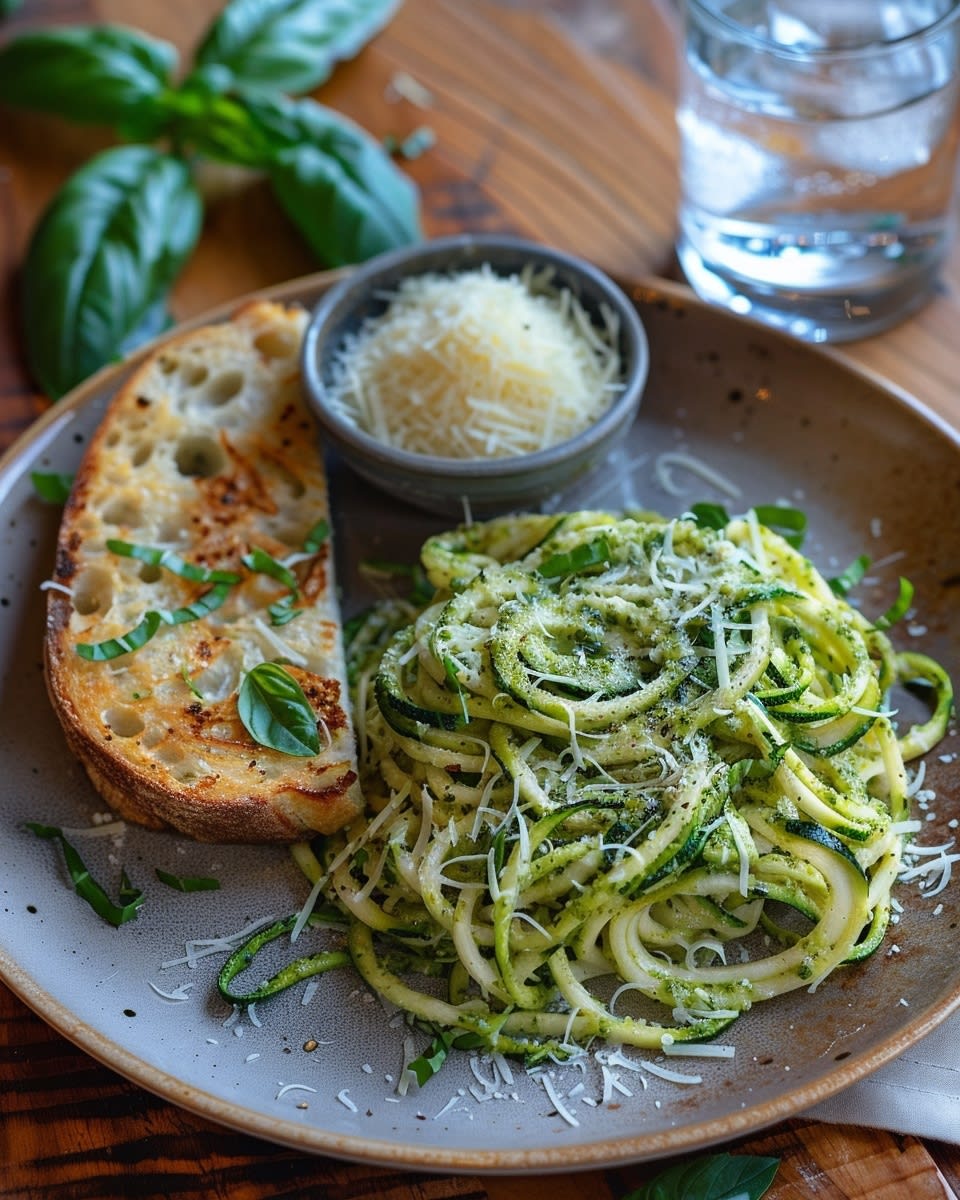
Discovering the Magic of Zucchini Noodles with Pesto
I still remember the first time I swapped out regular pasta for zucchini noodles with pesto. I was skeptical. Could veggie noodles really satisfy my pasta cravings? But after one bite of those fresh, vibrant green strands coated in rich basil pesto, I was hooked. The dish was light but filling, flavorful but not heavy, and I didn’t feel that usual carb coma afterward. Zucchini noodles with pesto quickly became my go-to meal when I wanted something healthy without sacrificing taste. The best part? This dish takes less than 20 minutes to make. Whether you top it with grilled chicken, sautéed shrimp, or keep it vegetarian, it works beautifully every time. This recipe changed how I think about healthy eating. I used to believe eating well meant bland salads and boring meals. This dish proved me wrong. You get all the comfort of a pasta dinner with a fraction of the calories and tons more nutrients. Throughout this article, I’ll walk you through everything you need to know about making perfect zucchini noodles with pesto. You’ll learn different ways to prepare them, various protein options like zucchini noodles with pesto and chicken or zucchini noodles with pesto and shrimp, and my best tips for avoiding common mistakes. I’ll also share a delicious zucchini noodles with avocado pesto variation that adds extra creaminess.What are Zucchini Noodles?
Zucchini noodles, affectionately called “zoodles,” are simply long, thin strips of zucchini cut to look like spaghetti. They’re not actually noodles at all. They’re just vegetables shaped like pasta. But that simple shape transformation makes them feel like a real pasta dish. I love using zoodles because they soak up sauces beautifully. The mild flavor of zucchini doesn’t compete with bold sauces like pesto. Instead, it acts as the perfect vehicle for whatever flavors you add. This makes them incredibly versatile in the kitchen. People often ask me, are zucchini noodles good with pesto? The answer is a resounding yes. The fresh, herby taste of pesto pairs perfectly with the light, slightly sweet flavor of zucchini. They complement each other in a way that feels natural and satisfying.Health Benefits That Actually Matter
Let’s talk about why zucchini noodles spaghetti alternatives make sense for your health. One cup of zucchini noodles contains only about 20 calories. Compare that to regular pasta, which packs around 200 calories per cup. That’s a huge difference if you’re watching your calorie intake. The zucchini noodles with pesto calories typically range from 150 to 250 per serving, depending on how much pesto you use. That’s still significantly lower than a traditional pasta dish. Even better, you’re getting actual nutrients instead of just empty carbs. Here’s what makes zucchini such a smart choice:- Low in carbohydrates: Perfect if you’re following a low-carb or keto diet
- High in water content: Keeps you hydrated and feeling full
- Rich in vitamin C: Supports your immune system
- Good source of potassium: Helps regulate blood pressure
- Contains antioxidants: Protects your cells from damage
- Provides fiber: Aids digestion and keeps you satisfied longer
How to Make Zucchini Noodles at Home
Learning how to make zucchini noodles is easier than you might think. You don’t need fancy equipment or special skills. I started with a basic handheld spiralizer that cost less than $15. It worked perfectly fine. The spiralizer method is the most popular approach. This tool creates long, curly strands that look just like spaghetti. You simply push the zucchini through the blade while turning the handle. The process takes about two minutes per zucchini. If you don’t have a spiralizer, don’t worry. I’ve made zoodles using several other tools:- Julienne peeler: Creates thin, flat ribbons that work great with pesto
- Regular vegetable peeler: Makes wider, fettuccine-style noodles
- Mandoline slicer: Gives you uniform thickness and length
- Sharp knife: You can hand-cut them if you have patience and good knife skills
- Choose medium-sized zucchini that feel firm and have smooth skin
- Wash them thoroughly but don’t peel them (the skin adds color and nutrients)
- Cut off both ends to create flat surfaces
- Spiralize or cut them using your chosen method
- Pat the noodles dry with paper towels to remove excess moisture


Preparing Zucchini Noodles with Pesto
Now that you know the basics of creating those spiralized strands, let’s dive into actually making a complete dish that’ll become your new obsession. The first time I made zucchini noodles with pesto, I overthought everything. I worried about measurements, cooking times, and whether I needed expensive ingredients. Turns out, this is one of the most forgiving recipes you’ll ever make. Even when I messed up a step or two, the dish still turned out delicious.My Go-To Zucchini Pesto Recipe
Here’s the zucchini pesto recipe I make at least twice a week. The measurements are flexible, so feel free to adjust based on your taste preferences. I’ve tweaked this countless times, and honestly, it’s hard to ruin it. For two servings, you’ll need: For the zoodles: Three medium zucchini (about a pound total), one tablespoon olive oil, two cloves minced garlic, salt and pepper to taste. For the pesto: Two cups fresh basil leaves (packed), half cup grated Parmesan cheese, one-third cup pine nuts (or walnuts if you’re on a budget), three cloves garlic, half cup extra virgin olive oil, juice from half a lemon, salt and pepper. The pesto-making process is where the magic happens. I toss the basil, cheese, nuts, and garlic into my food processor. Then I pulse it while slowly drizzling in the olive oil through the top. The mixture transforms from choppy pieces into this gorgeous, smooth sauce. The whole thing takes maybe five minutes. When I finish with that squeeze of lemon juice, the brightness just wakes everything up. By the way, you can make pesto ahead of time and store it in the fridge for up to a week. I actually prefer doing this because the flavors meld together beautifully. Just pour a thin layer of olive oil on top before sealing the container to prevent browning. Once your pesto is ready, the actual cooking goes fast. I heat olive oil in a large skillet over medium heat. When it’s shimmering, I add the minced garlic and let it cook for about 30 seconds until fragrant. Then in go the zoodles. This is where timing matters. I cook them for exactly three to four minutes, tossing frequently with tongs. The zoodles should be tender but still have a slight bite to them, kind of like al dente pasta. I remove the pan from heat, add several spoonfuls of pesto, and toss everything together. The residual heat warms the pesto without cooking it, which preserves that fresh basil flavor.Adding Protein to Make It a Complete Meal
Here’s the thing: plain zucchini noodles with pesto makes a great light lunch, but I usually need something more substantial. That’s where protein comes in. I rotate between chicken, shrimp, and occasionally grilled salmon, depending on what’s in my fridge. For zucchini noodles with pesto and chicken, I season chicken breasts with salt, pepper, and Italian herbs. Then I grill them or pan-sear them in a separate skillet while my zoodles cook. Once the chicken is done, I let it rest for five minutes before slicing it into strips. Those juicy slices go right on top of the pesto-coated zoodles. The combination reminds me of the Chicken Buddha Bowl with Veggies I make when I want something equally nutritious but with different flavors. Sometimes I marinate the chicken first in lemon juice, garlic, and olive oil for 30 minutes. That extra step adds incredible flavor. I learned this trick from my aunt who’s an amazing cook. She told me the acid in the lemon tenderizes the meat while adding brightness that complements the pesto perfectly. Zucchini noodles with pesto and shrimp is actually my favorite variation. Shrimp cooks so quickly that you can have dinner on the table in 15 minutes flat. I season the shrimp with paprika, garlic powder, salt, and a pinch of red pepper flakes. Then I sauté them in butter for about two minutes per side until they turn pink and slightly golden. The buttery shrimp mixed with herbaceous pesto creates this restaurant-quality dish that impresses everyone. If you enjoy zucchini noodles with shrimp, you might also love my Grilled Salmon with Quinoa for another seafood option that’s just as satisfying. Funny enough, my kids who claim they hate vegetables devour this meal when I add shrimp. They don’t even realize they’re eating a massive serving of zucchini. That’s a parenting win in my book.The Creamy Alternative: Zucchini Noodles with Avocado Pesto
When I discovered zucchini noodles with avocado pesto, it changed my weeknight dinner routine completely. This version is even easier than traditional pesto because you don’t need a food processor. I just mash everything together in a bowl. For avocado pesto, I combine one ripe avocado, one cup basil leaves, quarter cup Parmesan, two tablespoons lemon juice, two garlic cloves, three tablespoons olive oil, and salt to taste. I mash it all with a fork until mostly smooth. Some chunks are fine. They add texture. The avocado makes the sauce incredibly creamy without any cream or heavy ingredients. It clings to the zoodles better than regular pesto. Plus, you get all those healthy fats that keep you full for hours. I make this version when I’m craving comfort food but don’t want to feel weighed down. It’s similar to how I feel after eating a lighter meal like my Kale and Chickpea Salad, but with more of that pasta satisfaction. One warning though: avocado pesto doesn’t store well. The avocado browns quickly, so make only what you’ll eat that day. I learned this after wasting a batch that turned an unappetizing gray color overnight.How to Cook Spiralized Zucchini Noodles Without Getting Mush
Learning how to cook spiralized zucchini noodles properly took me several failed attempts. My first tries resulted in watery, limp noodles swimming in liquid. Not appetizing. So let me save you from making those same mistakes. The key question everyone asks is: How do you cook zoodles so they’re not soggy? I’ve discovered three foolproof methods. Method one: Quick sauté. This is my everyday approach. I heat my pan to medium-high, add oil, toss in the zoodles, and cook for no more than three to four minutes. That’s it. The high heat evaporates excess moisture quickly. I set a timer because even 30 extra seconds can turn them mushy. Method two: Salt and drain. When I have extra time, I sprinkle salt over the raw zoodles and let them sit in a colander for 10 minutes. The salt pulls out moisture. Then I rinse them briefly, squeeze gently with paper towels, and cook as usual. This method gives you the firmest texture. Method three: Raw zoodles. Sometimes I don’t cook them at all. I just toss raw zoodles with warm pesto. The heat from the sauce softens them slightly while keeping that satisfying crunch. This works especially well in summer when I want something refreshing. It’s as easy as throwing together a Quick Breakfast Wrap, but for dinner. Another trick I use: never cover the pan while cooking. Steam is your enemy here. Keep that lid off so moisture can escape. I also avoid overcrowding the pan. If you’re making a large batch, cook the zoodles in two batches instead of cramming them all in at once. The texture should be tender-crisp, kind of like a perfectly cooked green bean. You want some structure left. Remember, the zoodles will continue softening slightly after you remove them from heat, especially once you add sauce. Temperature control matters more than I initially realized. Too low, and the zoodles steam in their own juices. Too high, and they brown before cooking through. Medium to medium-high heat hits that sweet spot where moisture evaporates while the zucchini cooks properly. One last thing: serve immediately. Zoodles don’t reheat well. They release more water as they sit, turning leftovers into soup. If I know I’ll have extras, I keep the cooked zoodles and pesto separate, then combine them right before eating. That preserves the texture much better.


Common Mistakes and Tips for Perfect Zucchini Noodles
I’ve made every possible mistake with zucchini noodles. I’ve created puddles of water on plates, served overcooked mush, and once even forgot to wash the zucchini properly before spiralizing. My family still jokes about the gritty pesto incident. But those failures taught me exactly what works and what doesn’t.What Are Some Common Zucchini Pasta Mistakes?
The biggest mistake I see people make is choosing the wrong zucchini. I used to grab whatever looked green at the store. Big mistake. Huge zucchini might seem like a better value, but they’re watery and filled with large seeds. The flesh is spongy and releases tons of moisture when you cook it. My mother-in-law once brought me a massive garden zucchini that was probably two pounds. I tried to be polite and use it, but the resulting noodles were a disaster. Pick medium-sized zucchini that are about six to eight inches long and two inches in diameter. They should feel firm when you squeeze them gently. The skin should be smooth and unblemished. These younger zucchini have smaller seeds, denser flesh, and less water content. They hold their shape beautifully when cooked. Another common error is spiralizing incorrectly. When I started, I’d push too hard on the spiralizer and end up with broken, short pieces instead of long noodles. The trick is applying steady, gentle pressure while turning smoothly. Think of it like sharpening a pencil in those old-fashioned sharpeners. Consistent motion gives you consistent results. People also tend to skip the prep work. I cannot stress this enough: pat your zoodles dry. I know I mentioned this earlier, but it bears repeating because it’s that important. Even if you think they look dry, give them a good press with paper towels or a clean kitchen towel. Every bit of moisture you remove now means a better texture later. Here’s something nobody warned me about: not all spiralizers create equal noodles. I’ve owned three different models. My first cheap one made uneven, wonky strands. My current one creates uniform noodles every single time. If you’re serious about making zoodles regularly, invest in a quality spiralizer or a countertop model that attaches securely. The handheld ones work fine, but they require more effort and sometimes slip. Temperature mistakes happen constantly. I used to cook zoodles on low heat thinking it was gentler. Wrong. Low heat steams them, making them release even more water. Medium to medium-high heat is essential. The pan should be hot before the zoodles go in. I actually test it by flicking a tiny drop of water onto the surface. If it sizzles and evaporates immediately, the temperature is right. Overcrowding the pan is probably the second most common error after not drying the zoodles. When you pile too many noodles in at once, they steam instead of sauté. I learned this from a cooking class I took years ago. The instructor said vegetables need space to breathe. Same principle applies here. If I’m cooking for more than two people, I work in batches. It takes an extra five minutes, but the texture difference is worth it. Timing mistakes ruin more batches than anything else. Three to four minutes is the magic window for zucchini noodles spaghetti. Set a timer. Don’t guess. I’ve gotten distracted by my phone, kids, or the dog and left zoodles cooking for six or seven minutes. They turn into green mush. There’s no rescuing them at that point. One mistake I made repeatedly was adding sauce while the zoodles were still on high heat. The pesto would separate, and the basil would brown slightly, losing that fresh flavor. Now I always remove the pan from heat first, let it sit for 30 seconds, then add the pesto. This keeps everything fresh and vibrant. By the way, maintaining proper kitchen hygiene matters more than most people realize, especially when working with fresh produce like zucchini. Washing your vegetables thoroughly and keeping your cutting surfaces clean prevents foodborne illness and ensures your zoodles taste their best.Choosing and Storing Your Zucchini
I keep my zucchini in the crisper drawer of my refrigerator, unwashed, in a slightly open plastic bag. They stay fresh for about five days this way. Don’t wash them until you’re ready to use them because moisture promotes faster spoilage. I learned this after finding several slimy zucchini in my fridge when I pre-washed them. When you’re ready to cook, wash them under cold running water and scrub gently with a vegetable brush. The skin is edible and contains nutrients, so don’t peel it unless it looks damaged. I actually love the green flecks the skin adds to the finished dish. It makes everything look more colorful and appealing. Some people ask if you can freeze zucchini noodles. Technically yes, but I don’t recommend it. The texture becomes completely different after freezing. The ice crystals break down the cell structure, and when you thaw them, they’re limp and watery. If you have extra zucchini, spiralize them and keep them raw in the fridge for up to two days. They hold up much better that way.Adjusting the Recipe to Your Preferences
Here’s the thing about zucchini noodles with pesto: it’s incredibly customizable. Some people like their zoodles with more bite, almost raw in the center. Others prefer them completely tender. I fall somewhere in the middle. My husband likes his softer, so when I cook for him, I add an extra minute to the cooking time. The beauty of this dish is you can taste and adjust as you go. Start checking your zoodles at the two-minute mark. Pull one out, let it cool for a second, and taste it. Too crunchy? Keep cooking. Just right? Remove from heat immediately. Pesto amount is entirely personal too. I use about two to three tablespoons of pesto per serving of zoodles. Some people like more sauce, some prefer just a light coating. My sister drowns hers in pesto while I go lighter. Neither approach is wrong. Make it how you enjoy it. If you find regular pesto too strong, try cutting it with a bit of Greek yogurt or cream cheese. This mellows the garlic and creates a creamier sauce that’s less intense. I do this when I’m making it for my kids who are still developing their taste for bold flavors.Comparing Zoodles to Other Noodle Options
People constantly ask me: What kind of noodles go best with pesto? Traditional pasta like linguine, spaghetti, or trofie are classic choices. Pesto originated in Genoa, Italy, where it’s traditionally served with trenette or trofiette pasta. Those twisted shapes catch the sauce perfectly. But honestly? Zucchini noodles with pesto hold their own against traditional pasta. They might not have that starchy, chewy texture, but they offer something pasta can’t: a fresh, vegetable-forward bite that keeps the dish light. Plus, they absorb pesto differently. Instead of coating the surface like with pasta, the pesto penetrates slightly into the zucchini, flavoring each strand throughout. I’ve also tried other veggie noodles with pesto. Carrot noodles work but have a sweeter taste that competes with the basil. Sweet potato noodles are delicious but need longer cooking time. Cucumber noodles are too watery and bland. Butternut squash noodles taste amazing with pesto but require roasting first, which adds time. Zucchini hits that perfect balance of neutral flavor, quick cooking, and satisfying texture. If you’re transitioning from regular pasta to zoodles, try mixing half pasta and half zucchini noodles at first. This gives you the satisfaction of pasta while cutting calories and adding vegetables. I did this for my dad who was skeptical about giving up regular spaghetti. After a few mixed bowls, he was ready to go all-in on zoodles.Advanced Tips for Next-Level Zoodles
Once you’ve mastered the basics, try these techniques I’ve picked up over the years. Toast your pine nuts before making pesto. Just a few minutes in a dry skillet brings out incredible nutty flavor and adds depth to your sauce. Game changer. Add a splash of pasta water to your zoodles. Wait, they’re not pasta, so where do you get pasta water? I keep a small pot of salted, boiling water on the stove and dip my cooked zoodles in it for just 10 seconds before tossing with pesto. That tiny bit of starchy, salty water helps the pesto cling better and seasons the zoodles perfectly. Try different herbs in your pesto. I’ve made versions with half basil and half arugula for a peppery kick. Spinach creates a milder, kid-friendly pesto. Fresh mint adds an unexpected brightness that’s incredible with shrimp. Don’t be afraid to experiment. Roast your garlic before adding it to pesto for a sweeter, mellower flavor. I wrap whole cloves in foil with a drizzle of olive oil and roast them at 400 degrees for about 30 minutes. The garlic becomes soft, spreadable, and almost caramelized. This makes the pesto less sharp and more complex. Consider your toppings. I love adding toasted breadcrumbs on top for crunch. Sun-dried tomatoes add concentrated sweetness. Cherry tomatoes cut in half bring freshness and acidity. A sprinkle of red pepper flakes adds heat. Fresh mozzarella balls make it more substantial. Each addition changes the dish completely. If you’re meal prepping, keep components separate until serving time. Store spiralized raw zoodles in one container, prepared pesto in another, and cooked protein in a third. Assemble right before eating. This prevents the dreaded soggy noodle situation and keeps everything fresh. When I’m feeling fancy, I add a squeeze of fresh lemon juice right before serving. It brightens everything and makes the flavors pop. Just a small amount transforms the dish from good to restaurant-quality. Sometimes I also grate extra Parmesan on top because, let’s be honest, you can never have too much cheese. This dish fits perfectly into a rotation of nutritious meals, and if you’re looking for more inspiration, check out these healthy lunch ideas that complement this style of eating. The same principles apply: fresh ingredients, minimal processing, and maximum flavor without heaviness. One final thought that’s helped me tremendously: don’t aim for perfection. My best zucchini noodles recipe attempts happened when I relaxed and trusted the process. Cooking should be enjoyable, not stressful. If your zoodles turn out slightly softer than intended, they’re still delicious. If you use too much pesto, it’s still tasty. Give yourself permission to learn through doing.Your Turn to Create Something Delicious
Making zucchini noodles with pesto doesn’t require perfection, just a willingness to try something new and adjust as you go. Start with the basic recipe, taste along the way, and make it your own. The best part about this dish is how forgiving it is once you understand the fundamentals. Each time you make it, you’ll get better at judging timing and texture until it becomes second nature.Frequently Asked Questions
Are zucchini noodles good with pesto?
Absolutely, yes. The mild flavor of zucchini pairs beautifully with the bold, herby taste of pesto. Unlike pasta that just gets coated with sauce, zoodles absorb some of the pesto’s flavor, creating a more integrated taste experience. The light, fresh quality of zucchini complements rather than competes with basil, garlic, and Parmesan. I actually prefer them to regular pasta for pesto now because they don’t make me feel heavy afterward. The combination is naturally suited to each other in a way that feels balanced and satisfying.How do you cook zoodles so they’re not soggy?
The key is removing excess moisture before cooking and using high heat for a short time. Pat your spiralized zucchini dry with paper towels, then cook them over medium-high heat for only three to four minutes. Never cover the pan, as trapped steam creates sogginess. Avoid overcrowding the pan, which causes steaming rather than sautéing. If you have time, salt the raw zoodles and let them drain for 10 minutes before cooking to remove even more water.What kind of noodles go best with pesto?
Traditional choices include linguine, spaghetti, trofie, and trenette, which are what Italians typically use with pesto. The shapes and textures catch the sauce well. However, zucchini noodles work wonderfully too, offering a lighter alternative with more nutrients and fewer calories. Other options include whole wheat pasta, chickpea pasta, or even other vegetable noodles. Honestly, pesto is versatile enough to work with almost any noodle type, so choose based on your dietary preferences and what you’re craving.What are some common zucchini pasta mistakes?
The biggest mistakes include using oversized zucchini that are watery and seedy, not drying the noodles before cooking, overcooking them past the tender-crisp stage, and using heat that’s too low. Other errors include overcrowding the pan, adding sauce while the pan is still on high heat, and trying to save leftovers that inevitably turn watery. Many people also skip seasoning their zoodles with salt and pepper, leaving them bland. Finally, choosing poor-quality or old zucchini results in inferior texture no matter how perfectly you cook them.Can you eat zucchini noodles raw?
Yes, and sometimes I prefer them that way, especially in summer. Raw zoodles have a crisp, refreshing texture similar to a cucumber. When tossed with warm pesto, they soften slightly from the heat of the sauce while maintaining a satisfying crunch. They’re perfectly safe to eat raw as long as you wash the zucchini thoroughly. Raw zoodles work best with room temperature or warm sauces rather than cold dressings. The texture is different from cooked versions, so try both ways to see which you prefer.How do you keep pesto from turning brown?
Pesto browns due to oxidation when exposed to air. To prevent this, add a squeeze of lemon juice, which acts as a natural preservative and brightens the flavor. When storing, press plastic wrap directly onto the surface of the pesto to eliminate air contact, or pour a thin layer of olive oil on top before sealing the container. Store in an airtight container in the refrigerator. Despite these measures, homemade pesto will eventually darken slightly, but it’s still perfectly safe to eat. The browning is purely cosmetic and doesn’t affect taste.Can you make zucchini noodles ahead of time?
You can spiralize zucchini up to two days ahead and store the raw noodles in an airtight container in the refrigerator. Pat them dry before storing and place paper towels in the container to absorb any moisture they release. However, don’t cook them ahead of time, as they become waterlogged and mushy when reheated. The best approach for meal prep is keeping spiralized raw zoodles, prepared pesto, and cooked protein in separate containers, then combining them right before eating. This keeps everything fresh and maintains the proper texture.What’s the best spiralizer for making zucchini noodles?
I’ve tried several types, and countertop spiralizers with a suction base work best for consistent, uniform noodles. They’re stable, easy to use, and handle zucchini of various sizes. Handheld spiralizers are more affordable and work fine for occasional use, though they require more effort and sometimes slip. The julienne peeler is the most budget-friendly option at around five dollars, creating flat ribbon-style noodles rather than spirals. For serious zoodle lovers, investing in a quality countertop model around thirty dollars makes the process much easier and more enjoyable.How many zucchini do you need per person?
Plan on about one to one-and-a-half medium zucchini per person for a main course serving. This yields roughly two cups of spiralized noodles, which looks like a generous portion similar to a pasta serving. If you’re adding substantial protein like chicken or shrimp, one zucchini per person is usually sufficient. For side dishes or when mixing with other vegetables, half a zucchini per person works well. I always spiralize an extra zucchini just in case, since they cook down slightly and it’s better to have too much than too little.Can you freeze pesto for later use?
Pesto freezes beautifully and maintains its flavor for up to three months. I freeze it in ice cube trays, then transfer the frozen cubes to a freezer bag for easy portioning. Each cube is about one tablespoon, perfect for individual servings. You can also freeze pesto in small jars or containers, leaving a bit of space at the top for expansion. Some people recommend leaving out the cheese and adding it after thawing, as Parmesan can develop a slightly grainy texture when frozen, though I usually freeze it complete and haven’t noticed a significant difference. Thaw in the refrigerator overnight before using.Discover the magic of Zucchini Noodles with Pesto a light yet satisfying dish ready in under 20 minutes Perfect for healthy eating enthusiasts
Ingredients
Equipment
Method
- Wash zucchini thoroughly and cut off both ends.
- Spiralize or cut the zucchini into noodle shapes.
- Pat the noodles dry with paper towels to remove excess moisture.
- In a large skillet, heat olive oil over medium heat until shimmering.
- Add minced garlic and sauté for about 30 seconds until fragrant.
- Add the zucchini noodles and cook for 3 to 4 minutes, tossing frequently.
- Remove from heat and add several spoonfuls of pesto, tossing to combine.
Nutrition
Calories: 175kcalCarbohydrates: 8gProtein: 6gFat: 15gSaturated Fat: 2gPolyunsaturated Fat: 1gMonounsaturated Fat: 11gCholesterol: 5mgSodium: 180mgPotassium: 600mgFiber: 3gSugar: 3gVitamin A: 900IUVitamin C: 30mgCalcium: 150mgIron: 1mg
Notes
Feel free to adjust the amount of pesto used based on your taste preference. Consider adding grilled chicken or sautéed shrimp to make it a more filling meal. For a creamy version, try zucchini noodles with avocado pesto instead. Remember to pat the zoodles dry to avoid excess moisture and mushy noodles. Leftovers do not reheat well; store pesto and zoodles separately if meal prepping.
Tried this recipe?Let us know how it was!