
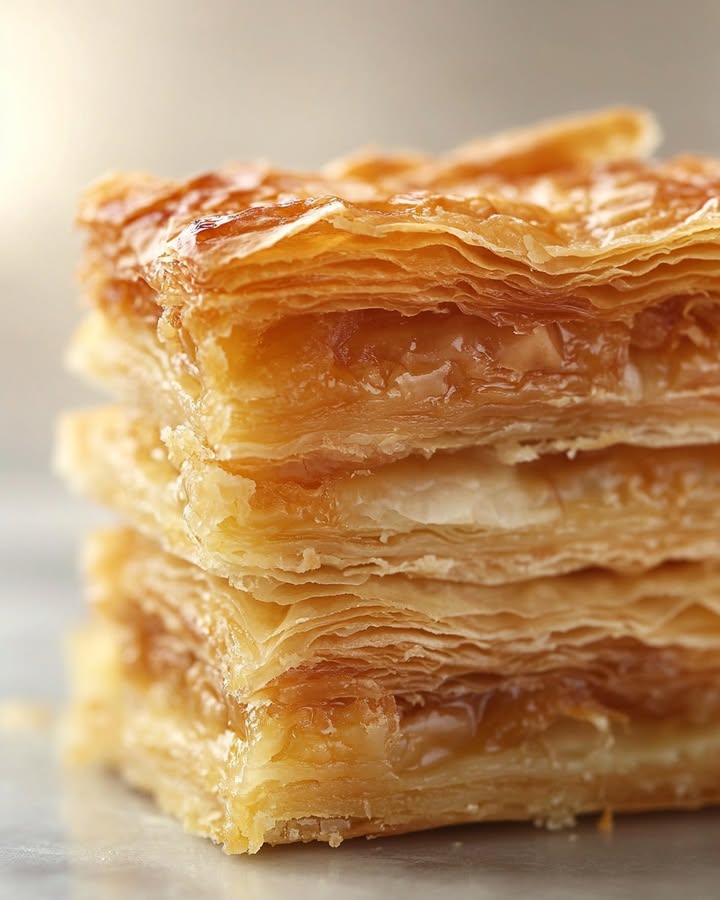
My Love Affair with Greek Baklava
There is a certain magic to the sound of the first bite. A gentle, buttery crunch gives way to a soft, honeyed, nutty interior. That magic is Homemade Baklava. I remember trying to make this Greek dessert for the first time years ago. I was terrified of the delicate phyllo dough! But once I got the hang of it, the rhythm of brushing, layering, and sprinkling became a joyful dance. Now, it’s my secret weapon for bringing smiles to every gathering. This recipe is the one I’ve perfected over countless family dinners and parties. It delivers that perfect, flaky, sweet bite every single time.
A Crunchy Slice of History: The Story of Baklava
Baklava’s story is as rich as its flavor. While it’s a star of Greek Cuisine, its roots twist through the ancient trade routes of the Middle East and the Ottoman Empire. Think of it as a delicious history lesson on a plate! Every region adds its own twist—some use pistachios, others add a hint of rose water. My version sticks to the classic Greek-style Walnut Baklava, gloriously spiced with cinnamon and soaked in a fragrant lemon-honey syrup. It’s a tradition meant to be shared, passed down through generations, one sticky, wonderful piece at a time.
Why You’ll Fall for This Flaky Greek Dessert
Honestly, what’s not to love? First, it is downright irresistible. The combination of textures—from crisp top to soaked, tender middle—is pure bliss. Second, while it looks impressive (and trust me, people will be impressed), the process is wonderfully meditative. Third, it’s a make-ahead dream. Bake it one day, let it soak overnight, and you’re a dessert hero the next day with zero last-minute stress. It’s the perfect Homemade Dessert for anyone who wants to create something extraordinary with love.
Perfect Moments for Your Baklava Delight
This isn’t just a dessert; it’s an experience. I love baking these for the holidays. Serving them with strong coffee turns any brunch into a festive occasion. It’s also my go-to potluck contribution—it travels beautifully and always disappears first. Need a thoughtful, handmade gift? A small box of this Baklava, tied with a ribbon, says “I care about you” in the sweetest way possible. Any moment becomes a celebration with a plate of this Sweet Treat on the table.
Gathering Your Baklava Ingredients
Let’s gather your simple, high-quality ingredients. The beauty is in their simplicity!
For the Baklava Pastry & Filling:
- 16 oz phyllo dough, thawed as per package instructions
- 1 ½ cups salted butter, melted
- 1 lb finely chopped walnuts (about 4 cups)
- 1 tsp cinnamon
For the Syrup:
- 1 cup granulated sugar
- ½ cup water
- ½ cup honey
- 2 tbsp lemon juice
Handy Swaps for Your Pantry
Don’t stress if you’re missing something. Baklava is forgiving!
- Phyllo Dough: This is essential for the flaky layers, but most grocery stores carry it in the freezer aisle.
- Butter: I love salted butter for its rich flavor. Unsalted works too—just add a tiny pinch of salt to your nut mix.
- Walnuts: The classic choice! You can use pistachios, pecans, or a mix for a different twist.
- Honey: Use a good quality, mild honey like clover or orange blossom. A strong buckwheat honey might overpower the other flavors.
Crafting Your Irresistible Greek Baklava
Ready to create some magic? Follow these steps for a flawless result.
Step 1: Prep Your Team (Dough & Pan)
Always thaw your phyllo dough slowly in the fridge overnight. An hour before you start, bring it to room temperature. This prevents cracking. Grab your 9×13-inch pan and give it a good buttering—sides and bottom. Clear a big workspace and lay a damp tea towel over your phyllo stack. This is your lifeline! That towel keeps the delicate sheets from turning into a brittle mess.
Step 2: Create Your Flavor Base (The Filling & Syrup)
Pulse your walnuts in a food processor until they’re finely chopped but not powdery. Stir in the cinnamon. That warm, toasty aroma is your first sign of success. Now, make the syrup. Combine sugar, water, honey, and lemon juice in a saucepan. Heat until the sugar dissolves, then let it boil untouched for 4 minutes. Take it off the heat and let it cool completely. This is key! Pouring cool syrup over hot baklava creates the perfect texture.
Step 3: The Art of Assembly
Preheat your oven to 325°F (163°C). Now for the fun part! Lay 10 sheets of phyllo in the pan, brushing melted butter between each one. Don’t worry about being perfect. Sprinkle ¾ cup of your walnut mix evenly over the layers. Add 5 more buttered sheets, then more walnuts. Repeat this pattern three more times. You’ll finish with a grand finale of 10 more buttered sheets. Use a sharp knife to cut diamond shapes all the way through. Pro tip: Cutting before baking lets the syrup seep into every delicious crevice later.
Step 4: Bake & The Golden Soak
Slide your pan into the oven. Bake for 1 hour and 15 minutes, until the top is a beautiful, deep golden brown and you can smell the toasted nuts. As soon as it comes out of the oven—while it’s still sizzling—slowly drizzle the cooled syrup all over. You’ll hear the most satisfying crackle as it soaks in. This is the moment that makes it all worthwhile!
Step 5: The Final Test of Patience
This is the hardest step! You must let the baklava sit, uncovered, for at least 4-6 hours, or better yet, overnight. Walk away. Let the syrup fully absorb and the layers soften into that iconic, sticky-sweet perfection. Chef’s tip: Covering it during this time can make the top layer soggy. Let it breathe!
Your Baklava Timeline
Good things take time, but it’s mostly hands-off!
- Prep Time: 1 hour (it’s a relaxing hour, I promise)
- Cook Time: 1 hour 15 minutes
- Resting Time: 4-6 hours (crucial!)
- Total Time: About 6.5 hours
- Servings: A generous 36 delightful pieces
Chef’s Secret: The Syrup Swap
My best trick is all in the syrup temperature. Always pour cool syrup over hot baklava, or hot syrup over completely cooled baklava. Doing it this way ensures the pastry stays wonderfully crisp and absorbs the syrup perfectly. Mixing hot with hot makes it soggy.
A Sweet Fact About Filo
Phyllo dough’s name comes from the Greek word for “leaf.” Isn’t that perfect? Each tissue-thin sheet is like a delicate, buttery leaf that piles up into a magnificent, flaky tree of dessert goodness. It takes a skilled hand to stretch dough that thin!
Gear You’ll Need
You don’t need fancy tools.
- A 9×13-inch baking pan
- A good pastry brush (for all that butter!)
- A sharp knife for cutting
- A saucepan for the syrup
- A food processor or a good knife for chopping walnuts
- Damp kitchen towels (your phyllo dough’s best friend)
Keeping Your Baklava Fresh
Once your baklava has fully soaked and cooled, you can store it right in the pan. I like to cover it loosely with foil or a clean tea towel.
It will stay perfect at room temperature for about 1-2 days. After that, you can refrigerate it for up to a week. Some people say refrigeration changes the texture, but I find it’s still delicious!
For longer storage, baklava freezes beautifully. Cut it, place the pieces on a parchment-lined tray to freeze solid, then transfer to an airtight container or bag. Thaw at room temperature when the craving hits.
Tips & Tricks for Baklava Bliss
- Butter is key: Don’t skimp on brushing between the sheets. This is what creates those separate, shatteringly crisp layers.
- Chop, don’t grind: You want finely chopped nuts, not nut butter. A bit of texture in the filling is wonderful.
- Listen to the sizzle: That crackling sound when you pour the syrup is music. It means it’s working its way down through all the lovely layers.
Making Your Dessert a Showstopper
Presentation is part of the joy! Dust the cooled baklava very lightly with ground cinnamon or finely chopped pistachios for a pop of color. Serve the pieces in pretty paper liners on a platter. I love pairing it with a small scoop of vanilla ice cream or a dollop of thick Greek yogurt to cut the sweetness. A few fresh mint leaves add a lovely, fresh touch.
Healthier Twists on a Classic Dessert
If you’re looking to lighten things up a bit, here are some ideas. Remember, it’s about balance and enjoyment. Part of what makes baklava so special is its part in the wholesome Mediterranean diet, which celebrates nuts, honey, and mindful enjoyment of food.
- Nut-Free Baklava: Use a mix of toasted seeds like sunflower, pumpkin, and sesame seeds instead of walnuts.
- Lower-Sugar Syrup: Reduce the sugar by a quarter and add a touch more lemon juice and a pinch of orange zest for brightness.
- Whole Wheat Phyllo: If you can find it, whole wheat phyllo adds a nuttier flavor and more fiber.
- Date-Sweetened: Make a syrup from puréed dates, water, and a touch of honey for natural sweetness.
- Pistachio & Rose: Use all pistachios and add a teaspoon of rose water to the syrup for a fragrant, elegant twist.
- Dark Chocolate Drizzle: After the syrup soaks in, add fine threads of melted dark chocolate over the top for a bittersweet contrast.
Internal Inspiration for Your Kitchen
If you love making treats from scratch, you’ll enjoy exploring other classics in our collection of dessert recipes. For a quicker but just-as-satisfying bake, try my simple Welsh Cakes—they’re like a cross between a cookie and a scone. Level up all your baking by making your own Homemade Vanilla Extract; it makes a world of difference. For another show-stopping fruity dessert, this Strawberry Chocolate Cake is always a hit. And if cheesecake is your weakness, you can’t beat a Decadent Red Velvet Oreo Cheesecake.
Don’t Make These Baklava Mistakes!
Even experienced bakers can slip up. Here’s how to avoid common pitfalls.
Mistake 1: Using Cold, Brittle Phyllo Dough
Rushing the thawing process is the #1 cause of phyllo frustration. If the dough is still frozen or fridge-cold, it will crack and tear as soon as you unroll it. You’ll end up with a patchwork mess instead of smooth layers. Always plan ahead. Thaw it in the fridge overnight. Then, let the sealed package sit on the counter for a full hour before you start working. Pro tip: If a sheet does tear, don’t panic. Just patch it with another piece and brush with butter. It will bake up just fine.
Mistake 2: Skipping the Damp Towel
Phyllo dough dries out faster than you can say “baklava.” Leaving the stack uncovered while you work is a recipe for a brittle, crumbly disaster. As soon as you open the package, unroll the sheets and cover them immediately with plastic wrap and a lightly damp—not wet—kitchen towel. Keep this cover on, only pulling out one sheet at a time. This simple step is your best friend in the kitchen.
Mistake 3: Pouring Hot Syrup on Hot Baklava
The temperature of the syrup versus the baklava is a science experiment you want to get right. If both are hot, the syrup will just sit on top and make the top layers soggy and greasy. It won’t penetrate properly. The golden rule is opposites: cool syrup on hot baklava, or hot syrup on cooled baklava. My method—cooling the syrup while the baklava bakes—is the easiest. You’ll hear the crackle and watch the syrup disappear into the pastry where it belongs.
Mistake 4: Not Cutting Deep Enough Before Baking
Gently scoring the top isn’t enough. You need to use a sharp, thin knife to cut all the way through to the bottom of the pan before baking. This serves two purposes. First, it creates portion guides. More importantly, it allows the hot syrup to travel down into the very bottom layers later. This ensures every single piece, from top to bottom, is perfectly soaked and sweet.
Mistake 5: Rushing the Soaking Process
I know it’s tempting to dig in after an hour. Resist! Cutting and serving baklava before it has fully rested means you’ll have a top layer that’s crisp but a middle that’s dry and not properly syrupy. The layers need hours to slowly absorb the liquid and soften into that iconic texture. Let it sit uncovered for at least 4-6 hours. Overnight is even better. Your patience will be deliciously rewarded.
Frequently Asked Baklava Questions
Can I use frozen phyllo dough directly from the freezer?
Absolutely not. This is the most common reason for pastry disaster. Phyllo dough is paper-thin and must be thawed slowly and completely. Transfer it from the freezer to the refrigerator at least 8 hours or overnight before you plan to bake. Then, let the sealed package sit at room temperature for about an hour. This gentle process prevents the sheets from sticking together and becoming a crumbly, unusable mess.
My baklava came out soggy. What did I do wrong?
Soggy baklava usually points to one of three issues. First, you might have used too much butter or poured it on too heavily. A light but even brush is all you need. Second, you may have poured hot syrup over hot baklava. Remember the temperature rule: one must be hot, the other cool. Third, not letting it rest uncovered after baking traps steam and softens the crisp layers. Always let it cool and soak completely without a lid.
Can I make baklava with pistachios instead of walnuts?
Yes, you can! Pistachio baklava is a delicious and classic variation. Simply replace the walnuts with an equal amount of unsalted, shelled pistachios. You can chop them to a similar size or leave them a bit coarser for more texture. Some recipes even add a drop of rose water or orange blossom water to the syrup when using pistachios for a beautiful Middle Eastern flair.
How long does homemade baklava stay fresh?
Properly stored, your homemade baklava will be at its absolute best for about 2 days at room temperature. Keep it lightly covered in the pan. After that, you can refrigerate it for up to a week. Some people find refrigeration changes the texture slightly, making it a bit denser, but it’s still very tasty. For longer storage, freeze it. It can last in the freezer for 2-3 months.
Why is my phyllo dough tearing no matter what I do?
Don’t despair! Some tearing is normal, especially with the very thin, bottom sheets in the package. First, double-check your thawing process. Second, make sure your kitchen isn’t too dry. A lightly humid environment helps. Third, use a gentler touch when unfolding and lifting the sheets. Finally, remember that a few small tears are not a crisis. Just patch them with another small piece of phyllo and brush generously with butter. Once baked, no one will ever know.
Can I reduce the sugar in the syrup?
You can adjust it slightly, but be careful. The sugar syrup is not just for sweetness; it creates the signature glossy finish and helps preserve the texture. Reducing the sugar by more than a quarter can result in a thin syrup that doesn’t thicken properly or coat the layers well. If you want a less sweet version, try using a more robust honey or adding more lemon juice for a tangy balance instead.
What’s the best way to cut baklava into clean pieces?
A sharp, thin-bladed knife is essential. Score your pattern lightly first if you’re nervous, then press straight down firmly to cut through to the bottom of the pan. For diamonds, make parallel cuts about 1.5 inches apart across the pan, then make diagonal cuts to form the diamonds. Wiping the knife blade with a damp cloth between cuts can help prevent it from sticking and dragging the layers.
Can I use unsalted butter?
You can, but I personally prefer salted butter for baklava. The tiny bit of salt enhances the flavors of the nuts and honey and balances the overall sweetness beautifully. If you only have unsalted butter, just add a small pinch (about ¼ teaspoon) of fine salt to your melted butter before brushing. It makes a difference!
My syrup crystallized. Can I fix it?
Sugar crystallization usually happens if you stir the syrup once it starts boiling. The rule is to stir only until the sugar dissolves, then stop. If it happens, you can often fix it. Add a tablespoon or two of water and reheat the syrup gently, stirring until the crystals dissolve again. Adding a tiny squeeze of lemon juice during the initial cooking helps prevent crystallization.
Is baklava served warm or cold?
Baklava is traditionally served at room temperature. This allows all the flavors to meld perfectly and the texture to be just right—crispy yet tender. Serving it straight from the fridge can make it too hard. If you’ve refrigerated it, let it come to room temperature for an hour or two before serving. It’s never served warm, as it needs that long resting time for the syrup to fully settle.
The Sweet Reward of Patience
Baking this Delicious Greek Baklava is a labor of love, but every minute is worth it. When you see that golden pan, hear the first crackly bite, and watch the happy faces of your friends and family, you’ll know why. It’s more than a dessert; it’s a shareable moment of pure, sticky, nutty joy. So take your time, enjoy the process, and get ready to make some unforgettable sweet memories. Happy baking!
Delicious Greek Baklava
Ingredients
Equipment
Method
- Thaw phyllo dough in the fridge overnight and bring to room temperature before use.
- Butter a 9x13-inch baking pan.
- Cover phyllo stack with a damp tea towel to prevent drying.
- Pulse walnuts in a food processor until finely chopped; stir in cinnamon.
- In a saucepan, combine sugar, water, honey, and lemon juice; heat until sugar dissolves, then boil for 4 minutes and let cool.
- Preheat oven to 325°F (163°C) and layer 10 sheets of phyllo in the pan, brushing melted butter between each sheet.
- Sprinkle ¾ cup walnut mixture over layers and add 5 more buttered sheets followed by more walnuts.
- Repeat layering until done, finishing with 10 more buttered sheets on top.
- Cut diamond shapes through all layers with a sharp knife.
- Bake for 1 hour 15 minutes until golden brown.
- Drizzle cooled syrup over hot baklava immediately after removing from the oven.
- Allow baklava to sit uncovered for at least 4-6 hours, preferably overnight.