
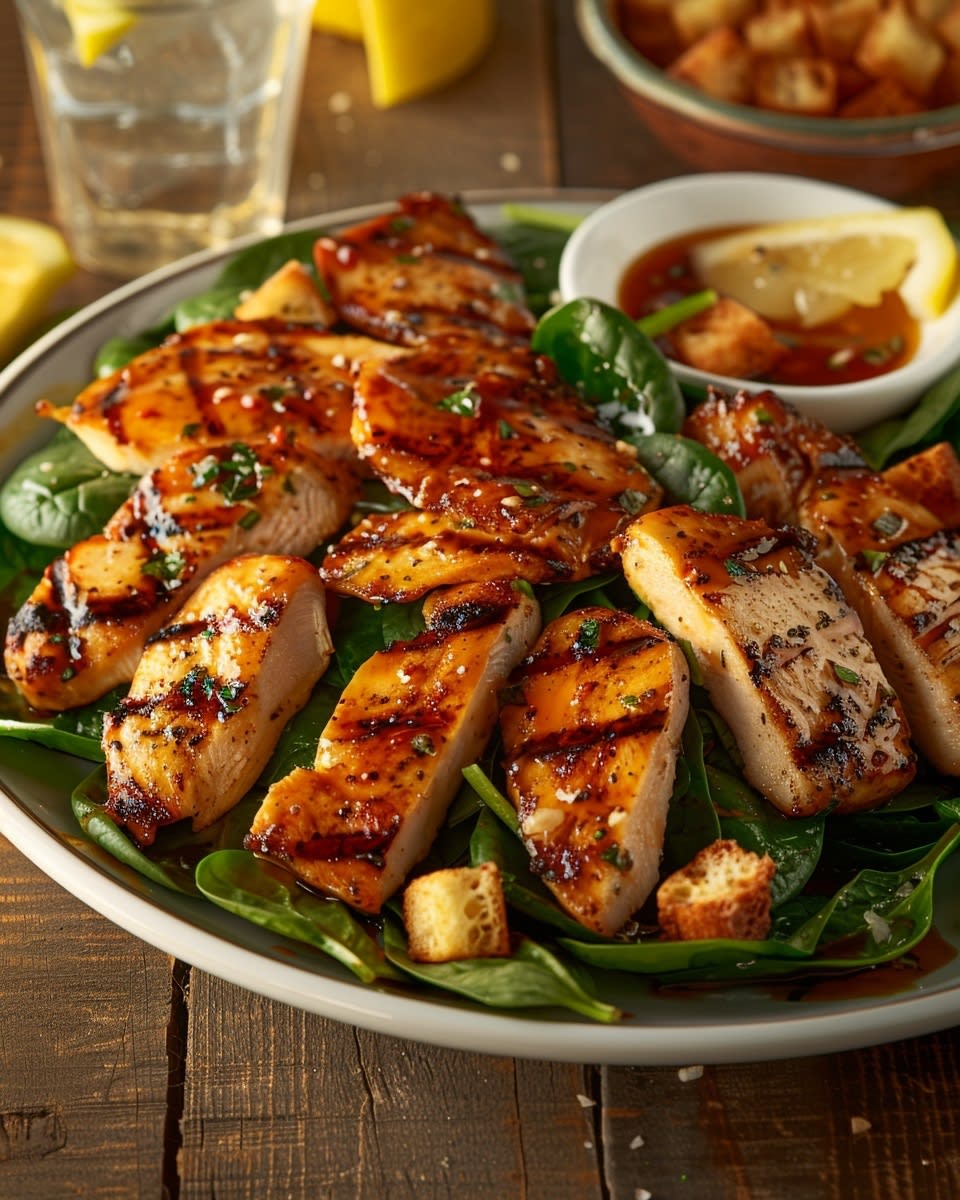
Spinach Salad with Grilled Chicken: A Perfect Balance of Flavor and Nutrition
Last Tuesday, I stood in front of my fridge at noon feeling that familiar lunch dilemma. I wanted something filling but not heavy. Something healthy but not boring. My eyes landed on a bag of fresh spinach and some leftover grilled chicken. Twenty minutes later, I was eating what might have been the best lunch I’d made all month. That moment reminded me why spinach salad with grilled chicken never gets old.
This meal hits every mark. It tastes amazing. It’s packed with nutrients your body actually needs. And you can make it in countless ways without getting bored. Whether you’re counting calories, following keto, or just trying to eat better, this salad works.
This article will show you everything you need to know about making the perfect spinach and chicken salad. We’ll cover different recipes, from warm chicken spinach salad to versions with strawberries and cranberries. You’ll learn the exact nutritional breakdown and get tips that make preparing this meal easier. By the end, you’ll understand why this simple combination has become a favorite for people watching their health and their waistlines.
The beauty of this dish lies in its flexibility. Need a quick weeknight dinner? Done. Want meal prep options for the week? Perfect. Looking for something to impress guests? This salad can do that too. It fits into keto meal plans, works for heart-healthy diets, and satisfies even picky eaters.
Why Spinach and Grilled Chicken Make a Perfect Pair
Some food combinations just work. Peanut butter and jelly. Tomatoes and basil. And yes, spinach and grilled chicken. But this pairing goes beyond simple taste. These two ingredients create a nutritional powerhouse that your body will thank you for.
The mild, slightly sweet flavor of spinach complements the savory taste of grilled chicken beautifully. Fresh spinach leaves provide a tender base that doesn’t overpower the protein. When you add warm grilled chicken on top, the heat slightly wilts the spinach, creating different textures in every bite. It’s this contrast that makes the salad interesting.
Is it good to eat spinach and chicken together? Absolutely. This combination delivers complete nutrition in one meal. Chicken provides lean protein that helps build and repair muscles. Spinach brings iron, vitamins, and fiber to the table. Together, they create a meal that keeps you full for hours without feeling weighed down.
The protein in grilled chicken helps your body absorb the iron from spinach more effectively. This matters because plant-based iron doesn’t absorb as easily as iron from meat. When you eat them together, you get more benefit from both foods. It’s like they were meant to team up.
Chicken also contains vitamin B12, which spinach lacks. Spinach offers vitamin C and folate, which chicken doesn’t provide. See the pattern? These ingredients fill in each other’s nutritional gaps. You get a more complete meal without adding extra dishes or complicated prep work.
The texture combination works just as well as the nutrition. Tender grilled chicken strips against crisp spinach leaves create variety in every forkful. Add some crunchy toppings like nuts or seeds, and you have a salad that actually feels satisfying. No sad desk lunches here.
Nutritional Benefits of Spinach Salad with Grilled Chicken
Let’s talk numbers. A basic grilled chicken spinach salad with simple dressing contains around 300-400 calories. That’s a full meal that won’t blow your daily calorie budget. The exact count depends on portion sizes and what extras you add.
Here’s what a typical serving brings to your plate:
- Protein: About 35-40 grams from the chicken alone
- Iron: Roughly 3-4 mg, covering a good chunk of your daily needs
- Vitamin A: Over 100% of your recommended daily intake from the spinach
- Vitamin K: Nearly 200% of what you need each day
- Folate: Around 15-20% of your daily requirement
- Fiber: About 2-3 grams from the spinach and any added vegetables
The grilled chicken spinach salad calories stay relatively low because both main ingredients are naturally lean. Spinach contains almost no calories but loads of nutrients. Three cups of fresh spinach have only about 20 calories. That’s incredible when you consider how much nutrition you’re getting.
Grilled chicken breast adds about 165 calories per 4-ounce serving. It’s mostly protein with very little fat if you remove the skin. This makes it perfect for anyone trying to lose weight or maintain a healthy body composition.
Compare this to other popular options. A strawberry chicken salad calories count often runs higher because of sugary dressings and candied nuts. Those versions can hit 600-700 calories easily. The warm chicken spinach salad typically stays under 400 calories even with a flavorful dressing.
The vitamin content deserves special attention. Vitamin K supports bone health and helps your blood clot properly. Vitamin A keeps your eyes healthy and supports your immune system. These aren’t just nice extras. They’re essential nutrients many people don’t get enough of.
The iron content matters too. Many women especially struggle to get enough iron in their diets. One serving of this salad provides a significant boost. The protein from chicken helps your body use that iron effectively.
For those following a chicken spinach salad keto plan, this meal fits perfectly. It’s high in protein and low in carbs. A basic version contains only 5-8 grams of carbohydrates, mostly from the spinach. Add some full-fat dressing and cheese, and you have a keto-friendly meal that tastes too good to be diet food.
Heart patients often ask about healthy meal options. This salad checks all the boxes. It’s low in saturated fat, high in heart-healthy nutrients like potassium and magnesium, and contains no trans fats if you prepare it right. The spinach provides nitrates that may help lower blood pressure naturally.
The calorie efficiency of this meal is remarkable. You get maximum nutrition with minimal calories. That’s the sweet spot for anyone trying to eat better without feeling deprived. You can eat until you’re satisfied and still stay within your daily targets.
Adding different ingredients changes the nutrition profile slightly. A spinach chicken salad with cranberries adds some natural sugar and antioxidants. A spinach chicken feta salad increases the calcium and adds healthy fats. Even a spinach chicken salad with strawberries keeps the calorie count reasonable while adding vitamin C and natural sweetness.
The beauty of tracking these numbers is seeing how flexible this meal can be. You can adjust portions and toppings based on your specific needs. Need more calories for an active day? Add avocado or extra dressing. Trying to cut back? Stick with lemon juice and herbs for flavor.


Variations and Recipes to Try
Now that you know the nutritional benefits, let’s get into the fun part – actually making these salads.
I’ve tried probably twenty different versions of this salad over the years. Some were just okay. Others became weekly staples. The best part? You can completely change the flavor profile just by swapping a few ingredients. It’s like having multiple recipes in one.
Here’s the thing about spinach salads – they’re ridiculously forgiving. Forgot to buy one ingredient? Substitute something else. Want to use what’s already in your fridge? Go for it. The basic foundation stays the same while everything else can change.
Let me walk you through my favorite variations. Each one has its own personality and works for different occasions.
The Classic Mediterranean Version
This spinach chicken feta salad reminds me of a vacation I took to Greece three years ago. Every lunch felt like a celebration, and this salad captures that same vibe.
Start with about four cups of fresh spinach. Add six ounces of grilled chicken breast cut into strips. Toss in half a cup of crumbled feta cheese – don’t be shy with it. Add a handful of kalamata olives, some cherry tomatoes cut in half, and thin slices of red onion. The dressing is simple: olive oil, lemon juice, dried oregano, and a touch of garlic. Sometimes I throw in some cucumber for extra crunch.
The feta adds this tangy, salty punch that makes everything taste more interesting. It also bumps up the calcium content, which is great for bone health. The olives bring healthy fats that help you stay full longer. This version pairs beautifully with similar Mediterranean-inspired dishes like our baked cod with green beans if you’re planning a full dinner menu.
The Sweet and Savory Cranberry Combo
My spinach chicken salad with cranberries saved Thanksgiving dinner last year when I needed something lighter between all those heavy dishes. People kept asking for the recipe.
Layer your spinach base with grilled chicken as usual. Add about a quarter cup of dried cranberries – the kind without added sugar if you can find them. Toss in some toasted pecans or walnuts for crunch. I like adding thin apple slices too. They bring a fresh sweetness that complements the cranberries perfectly. For dressing, try a balsamic vinaigrette with a hint of honey.
The cranberries give you antioxidants and that chewy texture that breaks up the greens nicely. This version feels more festive, like something you’d serve at a dinner party. But honestly, I eat it for regular Tuesday lunches too because it just tastes that good.
The Summer Strawberry Special
When strawberry season hits, this spinach chicken salad with strawberries becomes my obsession. Fresh strawberries make all the difference – the kind you get from farmers markets that actually smell like strawberries.
Build your salad with spinach and chicken, then slice up about a cup of fresh strawberries. Add some goat cheese crumbles and candied pecans if you want to get fancy. Sliced almonds work great too and keep the calories lower. The dressing should be light – I use a simple vinaigrette made with white balsamic vinegar and a touch of poppy seeds.
By the way, this version looks absolutely gorgeous on a plate. The red strawberries against dark green spinach with white goat cheese creates this colorful presentation that makes you want to take pictures before eating. Not that I’m one of those people who photographs every meal, but this one deserves it.
Funny enough, kids who normally pick at salads will actually eat this one. The strawberries make it feel like a treat rather than something they’re being forced to eat. My neighbor’s daughter, who claimed to hate salads, asked for seconds when I made this at a barbecue.
The Warm Comfort Version
Cold salads are great, but sometimes you want something warmer and more comforting. A warm chicken spinach salad hits differently on chilly evenings.
The trick here is timing. Cook your chicken fresh and keep it hot. While it’s resting, quickly sauté some mushrooms and red peppers in a pan. Put your spinach in a large bowl and immediately top it with the hot chicken and vegetables. The heat wilts the spinach just enough to soften it without making it soggy. Add some warm bacon pieces if you’re feeling indulgent. Pour a warm bacon vinaigrette over everything while it’s still hot.
This version feels more like a real meal than a salad. It’s substantial enough for dinner on those nights when you want comfort food but still want to eat healthy. The warmth brings out different flavors in the spinach that you don’t get from cold salads.
The Raspberry Vinaigrette Version
I discovered chicken spinach salad with raspberry vinaigrette at a restaurant and immediately went home to recreate it. The tangy-sweet dressing completely transforms the basic ingredients.
Use your standard spinach and chicken base. Add some red bell pepper strips, thinly sliced red cabbage for color and crunch, and maybe some mandarin orange segments. The star here is really the raspberry vinaigrette – you can buy good quality bottled versions or make your own by blending fresh raspberries with vinegar, olive oil, and a little honey.
This salad reminds me of something you’d order at a nice lunch spot downtown. It’s sophisticated without being pretentious. The raspberry flavor adds this brightness that makes every bite interesting. If you enjoy meals with vibrant, fresh flavors like this, you might also appreciate our roasted veggie quinoa bowl for another colorful, healthy option.
The Tex-Mex Twist
Okay, this one’s a bit different but trust me on it. Replace your regular vinaigrette with a creamy cilantro-lime dressing. Add black beans, corn, diced tomatoes, and some avocado. Top with grilled chicken that’s been seasoned with cumin and chili powder. Suddenly you’ve got a Southwestern-style salad that tastes nothing like the Mediterranean version.
This variation works amazingly well when you’re craving Mexican food but want to keep things lighter. The black beans add fiber and make it more filling. Speaking of Mexican-inspired dishes, if you like this flavor profile, check out our black bean and corn salad which makes a fantastic side dish.
Making It Keto-Friendly
The chicken spinach salad keto version is probably the easiest diet-specific adaptation you’ll ever make. Spinach and chicken are already perfect for keto – high protein, low carbs, and plenty of healthy fats when you dress it right.
The main thing you need to watch is the dressing. Store-bought dressings sneak in sugar like nobody’s business. I learned this the hard way after buying what I thought was a healthy vinaigrette and discovering it had more sugar than a cookie. Always read those labels.
For keto-friendly dressing, stick with the basics: good quality olive oil, fresh lemon juice, apple cider vinegar, and herbs. Mix about three parts oil to one part acid (lemon juice or vinegar). Add minced garlic, salt, pepper, and whatever herbs you’re feeling – basil, oregano, thyme all work great. Shake it up in a jar and you’re done. Zero carbs, tons of flavor, and it takes maybe two minutes to make.
If you want something creamier, blend some olive oil with a raw egg yolk and lemon juice to make a quick mayo-style dressing. Add fresh herbs and you’ve got yourself a creamy, keto-approved topping. Ranch lovers can make a keto ranch with sour cream, mayo, and ranch seasoning – just verify the seasoning mix doesn’t have added sugar.
For toppings, go heavy on the good stuff. Full-fat feta or goat cheese adds creaminess and bumps up the fat content. Avocado slices are perfect – they bring healthy fats and that creamy texture that makes salads more satisfying. Nuts like pecans, walnuts, or almonds add crunch and fat. Bacon pieces work too if you want that smoky flavor.
Avoid the obvious carb traps: croutons, candied nuts, dried cranberries with added sugar, and sweet dressings. Fresh berries can work in small amounts since they’re lower in sugar than other fruits, but keep portions modest if you’re strictly tracking carbs.
Here’s something important about keto versions – portion control still matters even though you’re eating low-carb. It’s easy to go overboard with cheese and nuts thinking they’re “free foods” on keto. They’re not. Those calories add up fast. A handful of nuts is great. Half the bag is not.
Quality matters more on keto too. Choose organic spinach when possible since you’re eating it raw. Go for pasture-raised chicken if your budget allows. The better your ingredients, the more nutrients you’re getting per calorie. This becomes especially important when you’re restricting certain food groups.
One trick I’ve learned for keto meal prep: make a big batch of grilled chicken at the start of the week. Keep it plain so you can season it differently for various meals. Having that protein ready to go makes throwing together a keto salad ridiculously easy. Same approach works great for other protein-based meals like our turkey lettuce wraps which are another excellent keto option.
The beautiful thing about making this salad keto-friendly is that it doesn’t feel like diet food. You’re eating rich, satisfying ingredients that keep you full for hours. No one looking at your plate would think “oh, they’re on a restrictive diet.” It just looks like a delicious, well-made salad.


Dressing and Toppings to Enhance Your Salad
Here’s where most people get it wrong with salads – they spend all this time getting the base ingredients perfect, then ruin everything with a terrible dressing. I’ve watched friends pile beautiful spinach and perfectly grilled chicken into a bowl, only to drown it in some gloppy bottled dressing that tastes like chemicals and sugar. It’s honestly heartbreaking.
The dressing makes or breaks your salad. Period. You can have the freshest spinach and the most perfectly seasoned chicken, but if your dressing tastes like disappointment, the whole meal falls flat. On the flip side, a really good dressing can turn basic ingredients into something you’d happily pay fifteen dollars for at a restaurant.
Think of dressing as the conductor of an orchestra. It brings all the other flavors together and makes them work as a team. Too much and you overwhelm everything else. Too little and the salad tastes boring and dry. The right amount creates this harmony where you can taste everything – the peppery spinach, the savory chicken, the sweet tomatoes, whatever else you’ve added.
I learned this lesson the hard way at a potluck about five years ago. I brought what I thought was an amazing spinach chicken salad, but I’d used this store-bought Italian dressing I grabbed at the last minute. People were polite, but I noticed most of them took tiny portions. Meanwhile, someone else brought a simple green salad with homemade vinaigrette and people went back for seconds. That stung a bit, but it taught me something important.
The Raspberry Vinaigrette Game-Changer
Let me tell you about chicken spinach salad with raspberry vinaigrette – specifically, the homemade kind. This dressing transformed how I think about salads entirely. It’s got this perfect balance of sweet, tart, and savory that makes your taste buds wake up and pay attention.
Making your own raspberry vinaigrette is easier than you think. You need fresh or frozen raspberries, some good vinegar (I prefer red wine vinegar or white balsamic), olive oil, a small amount of honey or maple syrup, Dijon mustard, and salt and pepper. That’s it. No weird ingredients you can’t pronounce. No preservatives or artificial colors.
Here’s how I make mine: Throw about half a cup of raspberries in a blender with two tablespoons of vinegar. Blend until smooth. Add a teaspoon of Dijon mustard and maybe a tablespoon of honey – adjust based on how sweet your berries are. With the blender running, slowly drizzle in about a third of a cup of olive oil until everything emulsifies. Season with salt and pepper. Done. The whole process takes maybe five minutes.
The beauty of homemade vinaigrette is control. Store-bought versions load up on sugar to make them shelf-stable and appealing to the masses. My homemade raspberry vinaigrette has maybe a tablespoon of honey for the entire batch. Compare that to commercial versions that sometimes pack in ten or more grams of sugar per serving. That adds up fast when you’re watching your intake.
Plus, fresh raspberry vinaigrette just tastes brighter. You can actually taste the fruit instead of just generic sweetness. It coats the spinach leaves without turning them soggy. It complements the grilled chicken instead of competing with it. Every bite tastes intentional rather than like an afterthought.
By the way, this dressing keeps in the fridge for about a week. Make a batch on Sunday and you’ve got easy salads ready to go all week. Just give it a good shake before using since the oil and vinegar will separate naturally – that’s actually a good sign that there aren’t weird emulsifiers in there keeping everything mixed artificially.
Other Dressing Options Worth Trying
Raspberry vinaigrette is fantastic, but variety keeps things interesting. Here are my other go-to dressings for spinach and chicken salads:
- Classic Lemon Vinaigrette: Three parts olive oil, one part fresh lemon juice, minced garlic, salt, and pepper. Sometimes I add fresh herbs like basil or thyme. This one’s super versatile and works with basically any salad combination.
- Balsamic Reduction: Take regular balsamic vinegar and simmer it on the stove until it reduces by half and gets syrupy. Drizzle just a little over your salad – this stuff is potent and sweet, so you don’t need much. No oil necessary, which keeps calories even lower.
- Honey Mustard Vinaigrette: Mix Dijon mustard with honey, apple cider vinegar, and olive oil. Add a tiny pinch of garlic powder. This one gives you that classic honey mustard flavor without the mayo-heavy versions you find in bottles.
- Greek-Style Lemon-Herb: Combine olive oil, lemon juice, dried oregano, minced garlic, and a tiny bit of red wine vinegar. This works especially well with the spinach chicken feta salad variation.
- Simple Olive Oil and Vinegar: Sometimes the basics are perfect. Good quality extra virgin olive oil, red wine vinegar, salt, and pepper. That’s it. Let the quality of your ingredients shine through without dressing them up too much.
The ratio for most vinaigrettes follows the same basic formula: three parts oil to one part acid (vinegar or citrus juice). From there, you can customize with different flavors. Once you understand this basic principle, you can experiment endlessly.
Why Homemade Beats Store-Bought Every Time
I used to think homemade dressing was one of those pretentious foodie things that didn’t really matter. Then I actually started making my own and realized what I’d been missing. The difference isn’t subtle – it’s dramatic.
Store-bought dressings need to sit on shelves for months without going bad. To make that happen, manufacturers add preservatives, stabilizers, and usually a ton of sugar. They also dilute everything with fillers to keep costs down. You’re paying for water and additives, not actual ingredients.
Check the ingredient list on a typical bottled vinaigrette sometime. It’s shocking how long these lists can get for what should be a simple mixture. Xanthan gum, potassium sorbate, calcium disodium EDTA – sounds more like a chemistry experiment than food. Some of these ingredients aren’t harmful necessarily, but do you really need them? Spoiler: you don’t.
Homemade dressing uses real ingredients that you can see and taste. Fresh lemon juice instead of “lemon flavoring.” Actual olive oil instead of soybean oil with a splash of olive oil for marketing purposes. Real raspberries instead of artificial raspberry flavor. The taste difference is night and day.
Cost-wise, homemade can actually save you money long-term. A bottle of decent dressing runs five to eight dollars and contains maybe twelve servings. Making your own costs roughly the same but gives you way more volume and much better quality. Plus you probably already have most ingredients in your pantry.
The freshness factor matters too. My homemade vinaigrette tastes vibrant because I made it this week. That bottle you bought two months ago and forgot in the fridge door? Not so much. Fresh ingredients taste better, and when your salad tastes better, you actually want to eat it. This matters when you’re trying to build healthy eating habits.
Toppings That Take Things Up a Notch
Dressing handles the liquid component, but the right toppings add texture and extra flavor dimensions. Think about what you’re trying to achieve with each addition. Crunch? Creaminess? Extra protein? A pop of sweetness?
For crunch, nuts and seeds are your friends. Toasted almonds, pecans, walnuts, or pepitas all work beautifully. The toasting step matters – it takes five minutes in a dry pan and completely transforms the flavor. Raw nuts taste okay. Toasted nuts taste amazing. Just watch them carefully because they go from perfect to burned in seconds.
Cheese adds creaminess and saltiness. Feta crumbles work great and bring that Mediterranean vibe. Goat cheese gives you tanginess and smooth texture. Shaved parmesan adds that umami depth. Blue cheese is polarizing, but if you like it, it’s incredible with spinach and chicken. Just remember cheese packs calories, so use it intentionally rather than dumping it on mindlessly.
Fresh vegetables add bulk without many calories. Cherry tomatoes bring juicy sweetness. Cucumbers give you that refreshing crunch. Bell peppers add color and a slight sweetness. Red onion provides bite and sharpness – slice it super thin and soak it in cold water for ten minutes to mellow the intensity.
Fruits create interesting sweet-savory combinations. We already talked about strawberries and cranberries, but don’t sleep on apple slices, pear slices, or orange segments. They all bring natural sweetness that plays well with savory chicken and peppery spinach.
Avocado deserves its own mention. It adds healthy fats that help you absorb the fat-soluble vitamins in spinach. Plus it makes the salad more filling and adds this creamy richness without any dairy. If you’re making a warm chicken spinach salad, add the avocado at the very end so it doesn’t get mushy from the heat.
Funny enough, texture variety makes salads more satisfying on a psychological level. Your brain registers more satisfaction when you’re experiencing different textures in the same meal. This is actually backed by research – meals with varied textures feel more complete and satisfying than monotonous ones. So adding crunchy nuts, creamy cheese, and juicy tomatoes isn’t just about taste – it’s about making your brain feel like it ate a real meal.
One trick I learned from a chef friend: add something unexpected. A handful of fresh herbs like basil or cilantro. A sprinkle of pomegranate seeds. Some pickled red onions. These little surprises make your salad memorable instead of just another bowl of greens and protein.
Keeping It Light but Satisfying
The goal with toppings and dressing is enhancement, not burial. You want to taste the spinach and chicken, not just the stuff you dumped on top. I see people at salad bars creating these massive piles of toppings where the actual salad becomes an afterthought. That defeats the purpose.
A good rule of thumb: your dressing should lightly coat the leaves, not pool at the bottom of the bowl. Two to three tablespoons of dressing is usually plenty for a large salad. Toss everything together well so every leaf gets a little bit of dressing rather than some leaves getting drenched while others stay dry.
For toppings, think in terms of tablespoons and small handfuls rather than cups. A tablespoon of cheese goes further than you think when it’s distributed throughout the salad. Same with nuts – a small handful adds plenty of crunch without going overboard on calories.
If you’re tracking grilled chicken spinach salad calories carefully, measure your add-ons at first. It’s eye-opening to see what a tablespoon of nuts or cheese actually looks like versus what we eyeball. Once you’ve measured a few times, you’ll get better at estimating portions visually.
Here’s something interesting about cooking methods and nutrient retention – while we’re focused on raw spinach for these salads, it’s worth knowing that different preparation methods affect nutrient availability. Steaming vegetables like spinach can actually make some nutrients more bioavailable, though for salads, the raw form provides plenty of nutrition along with that fresh, crisp texture we want. It’s just good to understand how various cooking methods impact what you’re eating.
Looking for more inspiration on building satisfying, nutritious meals that won’t leave you feeling deprived? Our collection of healthy lunch ideas offers plenty of options that follow the same principles – real ingredients, balanced nutrition, and actual flavor that makes healthy eating sustainable rather than a temporary diet.
The bottom line with dressings and toppings: they should make your spinach salad with grilled chicken taste better and more interesting, not turn it into a calorie bomb that defeats your health goals. Choose quality ingredients, make what you can from scratch, and use restraint. Your taste buds and your body will thank you.
FAQs About Spinach and Chicken Salads
Which salad is best for heart patients?
A spinach salad with grilled chicken is excellent for heart health. Spinach provides potassium and magnesium which help regulate blood pressure, while the lean protein from chicken supports heart function without adding saturated fat. Use olive oil-based dressings rather than creamy ones, and load up on vegetables like tomatoes and bell peppers which contain heart-protective antioxidants. Skip bacon and excessive cheese to keep saturated fat low. Add walnuts for omega-3 fatty acids that specifically benefit cardiovascular health.
What meat goes well with spinach salad?
Grilled chicken is the classic choice, but several other proteins work beautifully. Turkey breast offers similar lean protein with slightly different flavor. Grilled shrimp adds a seafood twist and cooks quickly. Salmon brings omega-3 fatty acids and pairs wonderfully with lemon-based dressings. For red meat lovers, thinly sliced grilled steak works well in smaller portions. Even hard-boiled eggs can serve as your protein if you want a vegetarian option that still keeps you full.
What are the 4 ingredients in chicken salad?
Traditional chicken salad typically contains chicken, mayonnaise, celery, and onions as its base four ingredients. However, you can completely reimagine this by using spinach as your base instead of mayo, adding cranberries or strawberries for sweetness, including feta or goat cheese for creaminess, and using a vinaigrette instead of mayonnaise. This creates a lighter, more nutrient-dense version while still delivering satisfying flavor. The beauty of chicken salad is its flexibility – those four ingredients are just a starting point.
Is it good to eat spinach and chicken together?
Absolutely, and there are scientific reasons why this combination works so well. The protein in chicken helps your body absorb the iron from spinach more effectively, since plant-based iron needs help from animal proteins for optimal absorption. Chicken provides B vitamins that spinach lacks, while spinach offers vitamin C, folate, and fiber that chicken doesn’t have. They literally fill in each other’s nutritional gaps, creating a more complete meal. Plus, the mild flavors complement rather than compete with each other.
How many calories are in a spinach salad with grilled chicken?
A basic spinach salad with grilled chicken typically contains 300-400 calories, though this varies based on portions and what you add. The spinach itself contributes only about 20 calories for three cups. Four ounces of grilled chicken breast adds roughly 165 calories. The rest comes from dressing and toppings. Using two tablespoons of olive oil-based vinaigrette adds about 80-100 calories. Cheese, nuts, and other additions will increase the total, but you can easily keep it under 500 calories for a very filling meal.
Can I meal prep spinach salad with chicken?
You can, but you need to store components separately to prevent sogginess. Cook your chicken at the beginning of the week and refrigerate it in an airtight container. Keep washed, dried spinach in a separate container lined with paper towels to absorb excess moisture. Store dressing in small jars or containers. Keep toppings like nuts and cheese separate too. When you’re ready to eat, assemble everything fresh. This takes maybe two minutes but keeps your salad crisp and appetizing rather than wilted and sad.
What’s the best way to grill chicken for salad?
Start with boneless, skinless chicken breasts of even thickness – pound them to uniform thickness if needed. Season simply with salt, pepper, and maybe garlic powder. Preheat your grill or grill pan to medium-high heat and oil it lightly. Cook the chicken for about 6-7 minutes per side until it reaches 165°F internally. Let it rest for five minutes before slicing – this keeps the juices inside rather than running out onto your cutting board. Slice against the grain for the most tender pieces.
Is spinach salad with chicken good for weight loss?
Yes, it’s an excellent choice for weight loss because it’s high in protein and nutrients but relatively low in calories. The protein keeps you full for hours, reducing the temptation to snack between meals. The fiber in spinach aids digestion and adds bulk without many calories. The key is watching your dressing portions and not going overboard with high-calorie toppings like candied nuts or excessive cheese. A well-portioned spinach chicken salad delivers satisfaction without the calorie overload that derails weight loss efforts.
How do I keep spinach salad from getting soggy?
The main trick is keeping dressing separate until right before eating. Even the best dressing will wilt spinach if it sits too long. Make sure your spinach is completely dry before storing it – use a salad spinner or pat it dry with paper towels. Store it in a container with paper towels to absorb any residual moisture. If you’re making a warm version with hot chicken, serve it immediately rather than letting it sit. For packed lunches, keep dressing in a separate small container and add it right before eating.
Can diabetics eat spinach salad with grilled chicken?
This is actually an ideal meal for diabetics because it’s low in carbohydrates and high in protein and fiber. The protein from chicken helps stabilize blood sugar levels, while the fiber in spinach slows digestion and prevents blood sugar spikes. Just watch the dressing – avoid sweet varieties with added sugar. Stick with oil and vinegar-based dressings or make your own to control exactly what goes in. Adding healthy fats like avocado or nuts helps further stabilize blood sugar response. This meal won’t cause the dramatic blood sugar swings that carb-heavy meals create.
Making the perfect spinach salad with grilled chicken isn’t about following rigid rules – it’s about understanding what works and adjusting based on what you enjoy and what your body needs. Start with the basic combination of fresh spinach and well-seasoned grilled chicken, then make it your own with dressings and toppings that excite your taste buds. The more you enjoy your healthy meals, the easier it becomes to stick with them long-term, and that’s when real change happens.
Ingredients
Equipment
Method
- Start with a base of fresh spinach in a large bowl.
- If using, grill chicken until fully cooked and slice it into strips.
- Add the grilled chicken on top of the spinach.
- Toss in your choice of toppings: feta cheese, cranberries, strawberries, and nuts.
- Drizzle with olive oil and vinegar or your preferred dressing.
- Season with salt and pepper to taste.
- Gently mix the salad to combine all ingredients and coat them with dressing.
- Serve immediately, or store components separately for meal prep.