
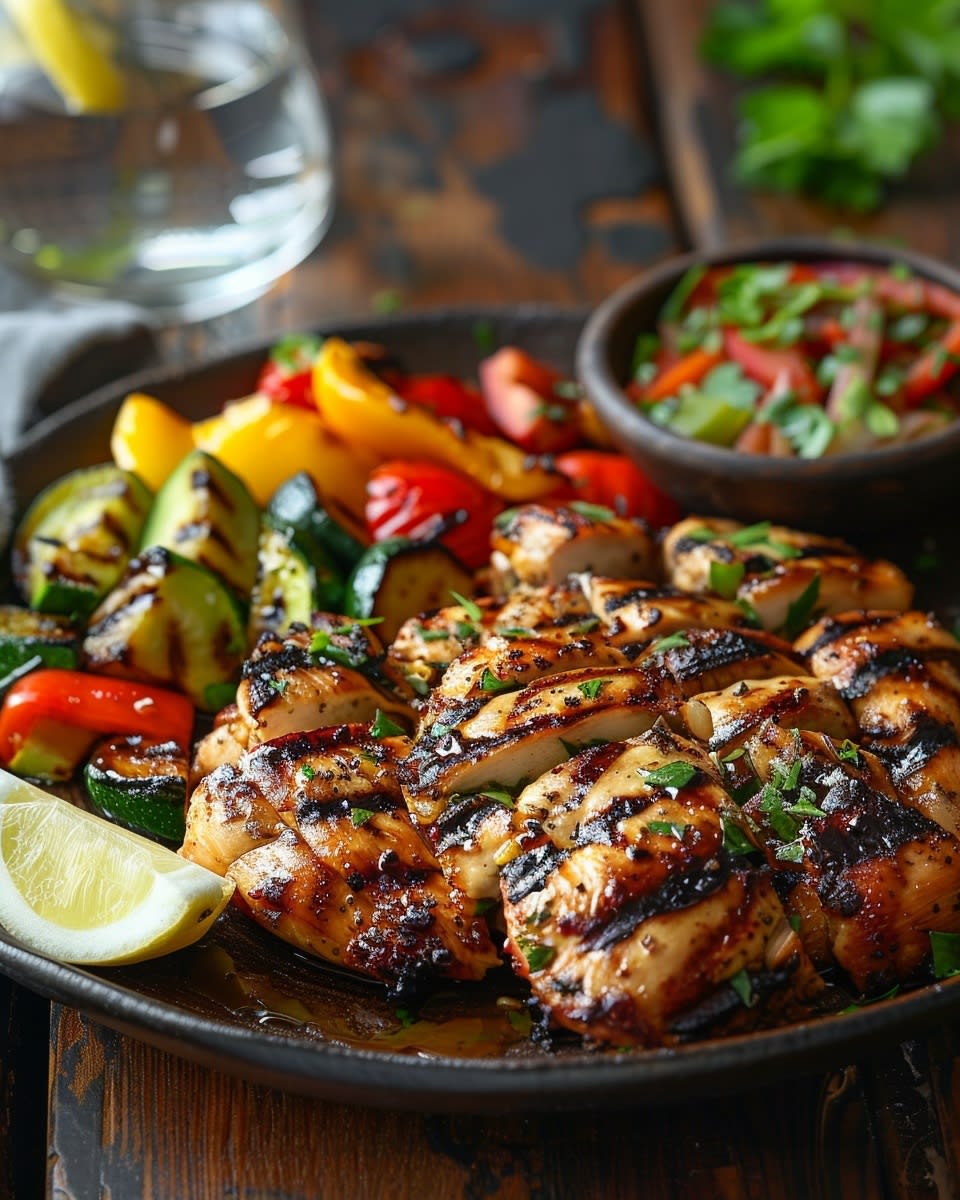
Welcome to My Kitchen: The Grilled Chicken Veggie Plate
Last Tuesday, I opened my fridge after a long day and stared at the half-empty shelves. I had some chicken breasts, a few bell peppers, and some broccoli that needed to be used soon. That’s when it hit me – why not throw everything on the grill and create something simple yet amazing? What started as a “clean out the fridge” moment turned into one of my favorite go-to meals. I’m talking about the Grilled Chicken Veggie Plate, and trust me, once you try it, you’ll understand why it’s become a weekly staple in my home.
I’ve been sharing recipes on this blog for years now, and this one holds a special place in my heart. It’s the meal I turn to when I want something that tastes incredible but doesn’t require hours in the kitchen. The Grilled Chicken Veggie Plate brings together everything I love about cooking: fresh ingredients, bold flavors, and meals that actually make you feel good after eating them.
This dish isn’t just about filling your stomach. It’s about nourishing your body with real food that supports your health goals. Whether you’re trying to lose weight, manage your blood sugar, or just eat better, this meal checks all the boxes. The best part? You don’t have to sacrifice flavor to eat healthy. Every bite is juicy, smoky, and satisfying.
Why Grilled Chicken Is Your Best Friend
Let me talk about chicken for a minute. I used to think chicken was boring until I learned how to grill it properly. Now it’s my favorite protein to work with, and here’s why: grilled chicken is incredibly versatile, affordable, and easy to prepare even on busy weeknights.
Chicken breast is a lean protein source that your body needs for building muscle, staying full longer, and keeping your energy levels steady throughout the day. A typical 4-ounce serving gives you about 35 grams of protein with minimal fat. That’s a pretty impressive nutrition profile if you ask me.
What I love most about grilled chicken is how it takes on whatever flavors you give it. Feel like having something spicy? Add cayenne and paprika. Want Mediterranean vibes? Go with lemon, garlic, and oregano. Craving Asian flavors? Ginger and soy sauce are your friends. The chicken itself acts as a blank canvas for your creativity.
Is Grilled Chicken Good for Cholesterol?
This question comes up all the time, and I’m glad it does. Many people worry about their heart health, and they should. The good news is that grilled chicken can be a heart-healthy option when you prepare it the right way.
Skinless chicken breast contains very little saturated fat compared to red meat. When you grill it instead of frying it, you avoid adding extra fats and oils that can affect your cholesterol levels. My doctor actually recommended I eat more grilled chicken when my cholesterol numbers were creeping up last year.
The key is in the preparation. Skip the heavy marinades loaded with sugar and oil. Instead, use herbs, spices, citrus juice, and just a small amount of healthy oil like olive oil. This way, you get all the benefits without the drawbacks. I usually brush my chicken with just enough oil to prevent sticking, then let the seasonings do the work.
Perfect for Weight Loss Goals
I’ve had so many friends ask me: Is grilled chicken and veggies good for weight loss? The answer is a solid yes, and I’ve seen the results myself. When I decided to drop some extra pounds two years ago, this exact meal became my dinner four nights a week.
Here’s why this combo works so well for weight loss:
- High protein content keeps you feeling full for hours after eating
- Vegetables add volume and fiber without many calories
- The grilling method doesn’t require much added fat
- It’s naturally low in carbs if that fits your eating style
- You can eat a satisfying portion without guilt
I lost 15 pounds in three months while eating meals like this regularly. I never felt deprived or hungry between meals. The protein from the chicken and the fiber from the veggies kept my appetite in check naturally.
But let’s be real here – weight loss isn’t just about one meal. It’s about consistency and making choices that work for your lifestyle. The Grilled Chicken Veggie Plate works because it’s not some restrictive diet food that makes you miserable. It’s actual delicious food that happens to support your goals.
Managing Diabetes with Smart Food Choices
My uncle was diagnosed with type 2 diabetes three years ago. He struggled at first to figure out what he could eat without spiking his blood sugar. When I made this meal for him one Sunday, he couldn’t believe how good it tasted and how stable his glucose levels stayed afterward.
Can I eat grilled chicken with diabetes? Absolutely. Grilled chicken is one of the best protein choices for people managing diabetes. It has zero carbohydrates, which means it won’t raise your blood sugar levels. The protein also helps slow down the absorption of any carbs you eat with your meal.
Pairing chicken with non-starchy vegetables creates a meal that’s perfect for blood sugar control. Vegetables like broccoli, zucchini, bell peppers, and asparagus are low in carbs and high in nutrients. They add color, crunch, and vitamins without causing glucose spikes.
My uncle now makes this meal at least twice a week. His A1C levels have improved, and he feels more energized. He jokes that eating healthy doesn’t have to mean eating cardboard, and he’s absolutely right.
The Nutritional Power of This Combination
When you put grilled chicken and vegetables together on one plate, you’re creating a nutritional powerhouse. Let me break down what you’re getting:
The chicken provides complete protein with all nine essential amino acids your body can’t make on its own. These amino acids support everything from immune function to hormone production. You’re also getting important minerals like selenium and phosphorus.
The vegetables bring their own set of superpowers to the table. Depending on which ones you choose, you’ll get vitamins A, C, and K, plus folate, potassium, and antioxidants. These nutrients support eye health, immune function, bone strength, and help fight inflammation in your body.
Together, this meal gives you sustained energy without the crash you get from heavy, carb-loaded dishes. I used to eat pasta for dinner and feel sluggish an hour later. Now I eat my Grilled Chicken Veggie Plate and feel energized enough to go for an evening walk or tackle some projects around the house.


Building Your Perfect Veggie Lineup
Now that you understand why this meal works so well for your health, let’s get into the fun part – choosing which vegetables to throw on that grill. I’ll be honest, this is where I get a little excited because the options are pretty much endless.
What veggies go well with grilled chicken? My top picks have always been bell peppers, zucchini, asparagus, and broccoli. These four are like the all-stars of the grilling world. They hold up beautifully to high heat, they develop these amazing char marks that add smoky flavor, and they’re available pretty much year-round at most grocery stores.
Bell peppers are probably my favorite veggie to grill. I usually grab a mix of red, yellow, and orange ones because they’re sweeter than green peppers and they make the plate look like a rainbow. When they hit the grill, their sugars caramelize and they get these blistered edges that are just incredible. Plus, they’re packed with vitamin C – way more than oranges, actually. I slice them into thick strips so they don’t fall through the grill grates.
Zucchini is another winner. It’s mild, so it takes on whatever seasonings you use, and it cooks fast. I cut mine lengthwise into planks about half an inch thick. Too thin and they turn mushy, too thick and they stay raw in the middle. Finding that sweet spot took me a few tries, not gonna lie.
Asparagus deserves its own paragraph because it’s just that good. The thin spears get crispy on the outside while staying tender inside. I snap off the woody ends – you’ll feel where they naturally want to break – and toss them with a tiny bit of olive oil and garlic powder. Six to eight minutes on medium-high heat and you’ve got perfection. Sometimes I squeeze lemon over them right before serving, and that brightness just wakes up the whole dish.
Here’s the thing about broccoli on the grill – people often skip it because they think it’s tricky, but it’s actually pretty forgiving. I cut the florets into good-sized pieces and parboil them for just two minutes before grilling. This step ensures they get tender all the way through without burning on the outside. My kids, who normally pick around broccoli, actually ask for seconds when I make it this way.
Mixing Things Up Beyond the Basics
Once you’ve mastered those four, the veggie world opens right up. I’ve grilled eggplant, mushrooms, cherry tomatoes on skewers, red onions, and even romaine lettuce hearts. Yeah, grilled lettuce sounds weird, but trust me on this one – it’s fantastic with a balsamic drizzle.
You can also add raw leafy greens alongside your grilled items. I’ll sometimes put a bed of fresh spinach or arugula on the plate first, then place the hot grilled chicken and veggies on top. The heat wilts the greens just slightly, and if you’ve got a light vinaigrette, it all comes together beautifully. If you’re into that style of eating, you might want to check out this Spinach Salad with Grilled Chicken for another take on combining fresh greens with protein.
Kale works great too, especially the lacinato variety that’s a bit more tender than the curly kind. I massage it with a pinch of salt and a drizzle of oil before using it as a base. That massage thing sounds fancy, but you’re literally just squeezing and rubbing the leaves for a minute until they soften up and turn darker green.
Funny enough, I discovered that mixing textures makes the meal way more interesting. Crunchy raw vegetables alongside the tender grilled ones give you different sensations with each bite. I’ll add cucumber slices, shredded cabbage, or halved cherry tomatoes around the edges of my plate. It’s like having a salad and a hot meal at the same time without any extra effort.
Color and Nutrition Working Together
My mom always told me to “eat the rainbow,” and I used to roll my eyes at that advice. Now I get it. Different colored vegetables contain different phytonutrients and antioxidants. When you mix red peppers, orange carrots, yellow squash, green broccoli, and purple cabbage, you’re not just making a pretty plate – you’re giving your body a wide spectrum of health benefits.
Each color group brings something different to the table. Orange and yellow veggies are high in carotenoids for eye health. Red vegetables contain lycopene, which supports heart health. Green veggies are loaded with folate and iron. Purple and blue foods have anthocyanins that fight inflammation.
I try to get at least three different colors on my plate with every meal. It’s become like a little game I play with myself. Yesterday I had red peppers, green zucchini, and purple onion alongside my chicken. The day before, I did orange carrots, white cauliflower, and green asparagus. Keeping it varied means I never get bored, and my body gets a wide range of nutrients.
By the way, if you’re looking for more colorful veggie combinations, I really love how this Black Bean and Corn Salad brings together bright ingredients in a refreshing way.
Why This Combo Supports Your Health Goals
Let’s circle back to something important – whether you’re dealing with specific health concerns or just trying to feel better overall, this meal really delivers. The combination of grilled chicken with a variety of vegetables creates what nutritionists call a “balanced plate.” You’ve got your protein, your fiber, your vitamins, and your minerals all in one place.
For anyone managing diabetes, this meal is honestly a lifesaver. The high protein content from the chicken helps stabilize blood sugar levels by slowing down how quickly your body processes any carbohydrates you eat. The vegetables I mentioned – especially the non-starchy ones like peppers, zucchini, broccoli, and asparagus – contain minimal carbs while providing tons of fiber.
That fiber is crucial because it further slows digestion and prevents those blood sugar spikes that people with diabetes worry about. My uncle, who I mentioned earlier, actually tracks his glucose levels with a monitor, and he showed me how steady his numbers stay after eating meals like this compared to when he eats pasta or bread-heavy dishes. The difference is pretty dramatic.
When it comes to weight loss, the magic is in how satisfying this meal is despite being relatively low in calories. A plate with 6 ounces of grilled chicken and two cups of mixed grilled vegetables might only have around 350-400 calories, but it’ll keep you full for hours. Compare that to a burger and fries that packs 1200 calories and leaves you hungry again ninety minutes later.
The fiber from the vegetables adds bulk to your meal, which literally fills up your stomach and triggers those “I’m satisfied” signals to your brain. The protein takes longer to digest than carbs or fats, so your energy stays consistent instead of crashing. I stopped snacking constantly once I started eating meals with this protein-to-veggie ratio.
Here’s something I’ve noticed in my own experience – when I eat a proper Grilled Chicken Veggie Plate for dinner, I don’t wake up starving the next morning. I have a normal breakfast at a normal time instead of feeling like I need to eat everything in sight the moment my feet hit the floor. That tells me my blood sugar stayed stable overnight.
Making It Work for Your Taste Preferences
Not everyone likes the same vegetables, and that’s totally fine. My husband hates zucchini but loves eggplant. My daughter won’t touch mushrooms but eats her weight in snap peas. The beauty of this meal is that you can customize it to what you actually enjoy eating.
If you’re new to vegetables or trying to expand what you eat, start with the milder ones. Zucchini and yellow squash don’t have strong flavors. Bell peppers are slightly sweet. From there, you can branch out into more distinctive tastes like asparagus or Brussels sprouts.
Sometimes I’ll mix grilled veggies with roasted varieties like in this quinoa bowl to add even more variety throughout the week. Different cooking methods bring out different flavors in the same vegetables, which keeps things interesting.
Seasoning makes a huge difference too. Plain grilled vegetables are fine, but seasoned ones are fantastic. I keep it simple most nights – just salt, pepper, garlic powder, and maybe some Italian herbs. But sometimes I’ll get creative with smoked paprika, cumin, or even a sprinkle of parmesan cheese right off the grill.
The point is to make vegetables something you look forward to eating, not something you choke down because you know they’re good for you. Life’s too short for food you don’t enjoy. Find the veggies you like, cook them in ways that taste good to you, and build from there. You might even discover that you love vegetables you thought you hated – it happened to me with Brussels sprouts, so anything’s possible.
For days when you want something even heartier, pairing your grilled chicken with a warming soup loaded with vegetables can make for an incredibly satisfying meal, especially as the weather gets cooler.


Getting Your Grill Ready and Your Chicken Prepped
Alright, let’s actually get cooking. I know we’ve talked a lot about why this meal is so good for you, but now it’s time to make it happen in your own kitchen. Or backyard. Wherever your grill lives.
First things first – your grill needs to be clean and properly heated. I learned this the hard way when I threw chicken onto a dirty grill and ended up with stuck-on meat and a flavor I definitely didn’t ask for. Now I take five minutes before cooking to brush down the grates with a wire brush while the grill preheats. If you’re using a gas grill, set it to medium-high heat and let it warm up for about ten minutes. Charcoal folks, you want your coals white and ashy before you start cooking.
Here’s something that changed everything for me: oil the grates right before you put food on them. I fold up a paper towel, dip it in vegetable oil, grab it with tongs, and rub it across the hot grates. This creates a non-stick surface that makes flipping so much easier. My chicken used to tear apart when I tried to flip it, and this one trick solved that problem completely.
Now for the chicken itself. I always use boneless, skinless chicken breasts because they cook evenly and quickly. If your breasts are really thick – like over an inch and a half – I pound them to an even thickness with a meat mallet. You don’t need to get aggressive with it; just a few whacks to flatten the thicker part so everything cooks at the same rate. Nobody wants a dried-out edge and a raw middle.
Marinating Magic: Simple Flavors That Deliver
The marinade is where you get to play around and make this meal your own. My go-to marinade is super basic: olive oil, lemon juice, minced garlic, dried oregano, salt, and pepper. I put the chicken in a zip-top bag, pour in the marinade, squeeze out the air, seal it up, and let it sit in the fridge for at least thirty minutes. If I’ve got time, I’ll do it in the morning before work and let it marinate all day.
But honestly, you don’t need to stick with what I do. Some nights I’ll do a balsamic and rosemary situation. Other times I’m feeling spicy, so I’ll mix up some lime juice, cumin, chili powder, and a pinch of cayenne. Last week I did a ginger-soy combination that my whole family loved. The possibilities really are endless.
One mistake I see people make is using marinades with tons of sugar or honey. Those burn on the grill and turn black and bitter. If you want a touch of sweetness, add it at the very end of cooking or use it as a glaze in the last two minutes. That way you get the flavor without the char.
How long should you marinate? Thirty minutes to two hours is the sweet spot for chicken. Longer than overnight and the acid from lemon or vinegar can start to make the texture mushy. I’ve done that before and it’s not great – the chicken gets this weird, soft texture that’s just off-putting.
Grilling the Chicken to Juicy Perfection
When you’re ready to cook, take the chicken out of the fridge and let it sit at room temperature for about fifteen minutes. Cold chicken straight from the fridge onto a hot grill doesn’t cook as evenly. I know food safety people get nervous about leaving meat out, but fifteen minutes is totally safe and makes a real difference.
Pat the chicken dry with paper towels before it goes on the grill. Extra marinade dripping off can cause flare-ups, and wet chicken doesn’t get those beautiful grill marks we’re going for. Place each breast on the grill and here’s the hard part – don’t touch it. I used to be a constant flipper, moving and checking and poking. That just makes the chicken stick and prevents those gorgeous sear marks from forming.
Let it cook undisturbed for about six to seven minutes on the first side. You’ll know it’s ready to flip when it releases easily from the grates. If it’s sticking, give it another minute or two. Flip it once – just once – and cook for another six to seven minutes on the other side.
The best way to know when chicken is done is with an instant-read thermometer. Stick it into the thickest part, and you’re looking for 165°F. I resisted buying a meat thermometer for years because I thought I could just tell by looking. Then I bought one and realized I’d been overcooking my chicken by like ten degrees for my entire adult life. Game changer. Juicy chicken every single time now.
Once it’s done, and this is crucial, let it rest for five minutes before cutting into it. I put it on a clean plate and loosely tent it with foil. This lets the juices redistribute throughout the meat instead of running all over your cutting board the second you slice it. Resting makes the difference between dry chicken and juicy chicken, I promise you.
Prepping and Grilling Your Vegetables
While your chicken is marinating, you can get your veggies ready. I wash everything first, obviously, then cut them into pieces that are big enough they won’t fall through the grill grates but small enough to cook through quickly.
For bell peppers, I cut off the tops and bottoms, remove the seeds and ribs, then slice them into strips about an inch wide. Zucchini gets cut lengthwise into planks about a half-inch thick. Asparagus I just trim the ends off and leave whole. Broccoli gets cut into florets, and like I mentioned before, I parboil those for two minutes before grilling.
I toss all my cut veggies in a big bowl with olive oil, salt, and pepper. You don’t need much oil – maybe two tablespoons for a couple pounds of vegetables. Just enough to coat them lightly. Sometimes I’ll add garlic powder, onion powder, or whatever herb I used on the chicken to tie the flavors together.
Vegetables can go on the grill while the chicken is cooking, or you can wait until the chicken comes off and use that resting time to grill the veggies. I usually do them at the same time because I’m impatient and hungry. Firmer vegetables like peppers and asparagus can go directly on the grates. For smaller items like cherry tomatoes or small broccoli pieces, I use a grill basket so nothing falls into the flames.
Different vegetables cook at different speeds, which took me a while to figure out. Asparagus might be done in six minutes, while thick pepper strips need ten. I just keep an eye on everything and pull each item off when it’s tender and has those nice char marks. A little blackening on the edges is perfect – that’s where the smoky flavor comes from. The technique of grilling over direct heat caramelizes the natural sugars in vegetables and creates those complex flavors you just can’t get any other way.
Here’s a tip I wish someone had told me years ago: don’t constantly flip your vegetables either. Let them sit and get color on one side, then flip them once. All that moving around just steams them instead of grilling them, and you lose that awesome char.
Putting It All Together on the Plate
Now comes the fun part – plating your beautiful creation. I’m not a fancy plater or anything, but I do think presentation matters. We eat with our eyes first, right?
I usually start by arranging my grilled vegetables on one side of the plate. I’ll do the peppers in one section, zucchini in another, and asparagus leaning against them like little soldiers. Then I slice the chicken on a diagonal – it looks nicer than straight cuts, trust me – and fan it out on the other side of the plate.
Sometimes I’ll add a handful of fresh greens underneath everything or on the side. Arugula works great because it’s peppery and holds up to the warm food without completely wilting. Spinach is good too. This adds even more nutrients and makes the plate look more abundant without adding barely any calories.
A squeeze of fresh lemon over everything right before eating brightens up all the flavors. I’ll also sometimes add a sprinkle of fresh herbs – parsley, cilantro, or basil depending on what flavor profile I went with. Fresh herbs are totally optional, but they add a pop of color and freshness that takes the dish up a notch.
If you want some healthy fat in there, a small drizzle of good olive oil or a few slices of avocado are excellent choices. I’ve also crumbled a little feta cheese on top before, which adds a salty, tangy element that’s really nice. Just a tablespoon or two – enough for flavor without going overboard.
Making This Meal Work for Busy Weeknights
I get it, not everyone wants to fire up the grill on a Tuesday night after work. The good news is you can prep almost everything ahead of time to make this meal come together fast when you need it to.
On Sunday afternoons, I’ll often marinate three or four chicken breasts and keep them in the fridge. I’ll also chop up all my vegetables and store them in containers. Then when dinner time rolls around on a weeknight, everything’s ready to go. From grill to plate in about twenty minutes.
You can also use a grill pan on your stovetop if outdoor grilling isn’t an option. I’ve done this plenty of times during winter when the last thing I want to do is stand outside in the cold. A cast-iron grill pan over medium-high heat works surprisingly well. You won’t get quite the same smoky flavor, but you’ll still get those grill marks and the caramelization.
Another shortcut is buying pre-cut vegetables from the grocery store. Yeah, they cost a little more, but if that’s the difference between making this healthy meal or ordering pizza, it’s worth it. I’ve grabbed those veggie trays from the produce section many times when I’m running behind.
Funny enough, this meal also scales really well. Making it for one person? Easy. Feeding six people? Just as easy, you’re just grilling more pieces. I’ve made this for dinner parties and it always impresses people, even though it’s one of the simplest things I cook.
Storing Leftovers and Meal Prep Tips
This meal keeps really well in the fridge, which makes it perfect for meal prep. I’ll often make extra on Sunday and eat it throughout the week for lunch.
Store the chicken and vegetables in separate airtight containers. They’ll stay fresh for three to four days. When you’re ready to eat, you can reheat everything together in the microwave for a minute or two, or eat it cold. Honestly, cold grilled chicken and veggies is delicious in its own way – kind of like a composed salad situation.
I’ll sometimes slice up the leftover chicken and toss it into other meals throughout the week. It’s great in wraps, on top of salads, mixed into grain bowls, or even chopped up in a quick stir-fry. The grilled vegetables work the same way – super versatile for throwing into other dishes.
If you’re really into meal prep, you can even freeze cooked chicken for up to three months. I portion it out into individual servings before freezing so I can grab just what I need. The vegetables don’t freeze quite as well because they get a bit soggy when thawed, but the chicken freezes beautifully.
One more thing I’ve started doing is grilling double batches when I do fire up the grill. If I’m already outside cooking, I might as well fill the grill up completely, right? Then I’ve got lunch sorted for the next few days without any extra effort.
Looking for more nutritious meal ideas you can prep ahead? I’ve found that building a collection of healthy lunch ideas really helps keep me on track with my eating goals throughout the week, especially when work gets hectic.
My Final Thoughts on This Go-To Meal
The Grilled Chicken Veggie Plate has genuinely become one of those meals I rely on week after week, and I hope after reading this, you’ll give it a try in your own kitchen. It’s proof that eating well doesn’t have to be complicated, expensive, or time-consuming. Sometimes the simplest combinations – good protein, fresh vegetables, and a hot grill – create the most satisfying results.
Frequently Asked Questions
What veggies go well with grilled chicken?
Bell peppers, zucchini, asparagus, and broccoli are my top choices because they hold up beautifully on the grill and develop amazing char and smoky flavor. But honestly, you can grill almost any vegetable – try eggplant, mushrooms, onions, cherry tomatoes, or even romaine lettuce hearts. The key is cutting them into pieces big enough that they won’t fall through the grates and coating them lightly with oil before grilling. Mix and match based on what’s in season or what you have in your fridge.
Can I eat grilled chicken with diabetes?
Absolutely, grilled chicken is actually one of the best protein choices for managing diabetes. It contains zero carbohydrates, so it won’t spike your blood sugar levels at all. The protein helps slow down the absorption of any carbs you eat with your meal, keeping your glucose levels more stable. Paired with non-starchy vegetables like the ones in this recipe, you’ve got a meal that’s perfect for blood sugar control. My uncle manages his type 2 diabetes with meals like this several times a week and has seen real improvements in his numbers.
Is grilled chicken good for cholesterol?
Yes, grilled chicken can be a heart-healthy option when you prepare it right. Skinless chicken breast is very low in saturated fat compared to red meat, and grilling it instead of frying means you’re not adding extra oils or fats that can affect cholesterol levels. The key is to skip heavy, oil-based marinades and stick with herbs, spices, and citrus-based flavors. My doctor actually recommended I eat more grilled chicken when my cholesterol numbers needed improvement, and it worked as part of an overall healthier eating pattern.
Is grilled chicken and veggies good for weight loss?
This combination is excellent for weight loss, and I’ve seen the results myself. The high protein content keeps you feeling full for hours, while the vegetables add volume and fiber without many calories. You can eat a satisfying, filling portion without consuming tons of calories – typically around 350-400 calories for a generous plate. When I was working on losing weight, I ate meals like this four times a week and dropped fifteen pounds in three months without feeling deprived or hungry between meals.
How long should I marinate chicken before grilling?
Thirty minutes to two hours is the ideal marinating time for chicken breasts. This gives the flavors time to penetrate the meat without breaking down the texture. If you marinate longer than overnight, the acids in the marinade can actually make the chicken mushy, which isn’t pleasant. I usually marinate mine in the morning before work and cook it for dinner, which ends up being about eight hours and works perfectly. If you’re really short on time, even fifteen minutes of marinating is better than nothing.
What temperature should grilled chicken reach?
Your chicken needs to reach an internal temperature of 165°F to be safe to eat. The best way to check this is with an instant-read meat thermometer stuck into the thickest part of the breast. I resisted using a thermometer for years and constantly overcooked my chicken as a result. Since I started actually checking the temperature, my chicken comes out juicy and perfect every single time. It’s a small investment that makes a huge difference in your cooking.
Can I use a grill pan instead of an outdoor grill?
Definitely! A cast-iron grill pan on your stovetop works great, especially during bad weather or winter months. Heat it over medium-high heat until it’s really hot, then cook your chicken and vegetables the same way you would on an outdoor grill. You won’t get quite the same smoky flavor, but you’ll still get nice grill marks and caramelization. I use my grill pan probably half the time because it’s just more convenient, and the results are still delicious.
How do I prevent chicken from sticking to the grill?
Make sure your grill grates are clean and properly heated first. Then oil the grates right before cooking by rubbing them with an oil-soaked paper towel held with tongs. Pat your chicken dry before placing it on the grill, and here’s the important part – don’t try to move it too soon. Let it cook undisturbed for six to seven minutes, and it will release naturally when it’s ready. If it’s sticking, it needs more time. Trying to force it early just tears the meat.
What’s the best way to reheat leftover grilled chicken and veggies?
I usually reheat leftovers in the microwave for one to two minutes, which is quick and easy for lunch at work. You can also reheat them in a skillet over medium heat with a tiny splash of water to keep things from drying out. Honestly though, this meal is also delicious eaten cold straight from the fridge, especially if you slice the chicken and toss everything with some fresh greens and a light dressing. It becomes like a composed salad that way.
Can I prep this meal ahead for the week?
Yes, this is actually perfect for meal prep! Marinate your chicken and chop your vegetables on Sunday, then grill everything at once. Store the cooked chicken and vegetables in separate airtight containers in the fridge for up to four days. You can reheat portions throughout the week for quick, healthy lunches or dinners. I often grill double batches when I have the grill going anyway, so I’m set for several days without any extra effort. The cooked chicken can even be frozen for up to three months if you want to prep further ahead.
Ingredients
Equipment
Method
- Clean and preheat your grill to medium-high heat.
- Prepare the marinade by mixing olive oil, lemon juice, minced garlic, oregano, salt, and pepper in a zip-top bag.
- Add chicken breasts to the marinade, seal the bag, and refrigerate for at least 30 minutes.
- While chicken is marinating, prepare the vegetables by cutting them into appropriate sizes.
- Toss the vegetables with olive oil, salt, and pepper.
- Oil the grill grates for non-stick cooking.
- Remove the chicken from the marinade and pat dry.
- Grill the chicken for 6-7 minutes on one side until it releases easily from the grill.
- Flip the chicken and grill for an additional 6-7 minutes, until the internal temperature reaches 165°F.
- Remove the chicken and let it rest for 5 minutes.
- Grill the vegetables at the same time, checking for tenderness and grill marks, grilling asparagus and zucchini for around 6-10 minutes, and the peppers and broccoli for about 8-10 minutes.
- Slice the grilled chicken and arrange it on the plate alongside the grilled vegetables.
- Optionally, drizzle with olive oil and fresh lemon juice before serving.