
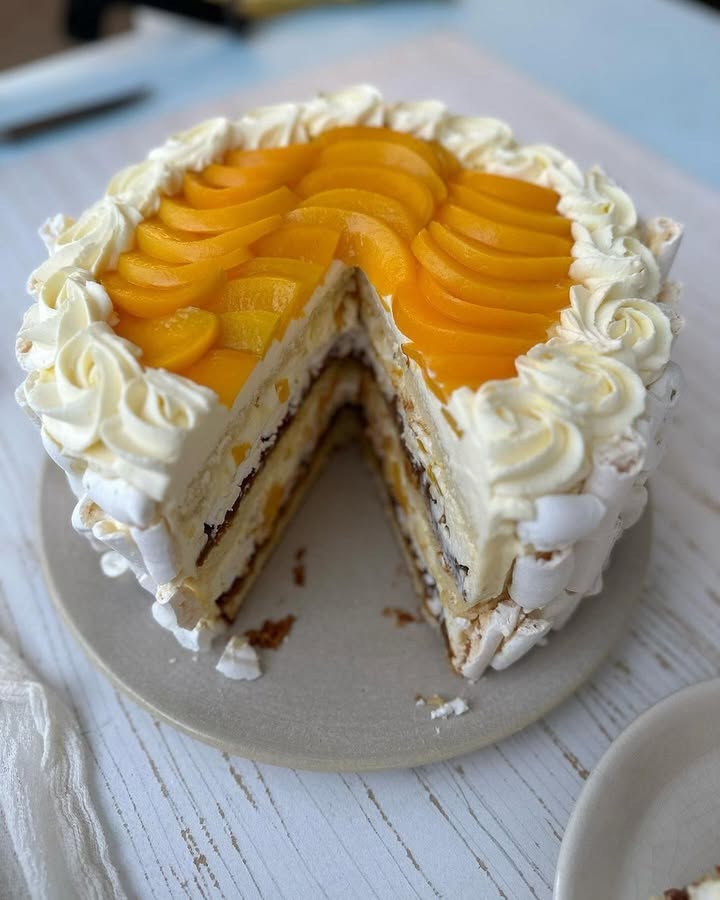
The Ultimate Dulce De Leche Chajá Cake: A Sweet Slice of Uruguay
Have you ever eaten a cake that feels like a party in your mouth? That’s exactly what happened when I first tried Chajá cake at a friend’s gathering. Layers of airy sponge cake, clouds of whipped cream, crunchy meringue, juicy peaches, and that glorious river of dulce de leche… it was a revelation! I immediately begged for the recipe and have been perfecting my own version ever since. It’s not just a dessert; it’s a celebration on a plate, and today, I’m sharing all my secrets so you can bring this Uruguayan masterpiece to your table.
The Story Behind Chajá Cake
The Chajá cake was invented in 1927 by a pastry chef named Orlando Marín Castillo in the city of Paysandú, Uruguay. He named it after the “Chajá” bird, which is native to the region, perhaps because the cake is as light and delightful as a bird’s song! Traditionally, it features sponge cake (genoise), peaches, meringue, and whipped cream. The modern twist, which I adore, is the generous addition of dulce de leche, creating a richer, more indulgent experience. It’s a dessert that speaks of family gatherings, sunny afternoons, and the simple joy of sharing something utterly delicious.
Why You’ll Fall in Love With This Dulce De Leche Chajá
This recipe is a true showstopper, but it’s surprisingly approachable. The magic lies in the contrast of textures—the soft sponge, the creamy dulce de leche and chantilly, the juicy fruit, and the crisp meringue all play together beautifully. While it has several components, each step is straightforward. Plus, making it feels like a fun baking project! The final look is stunning, guaranteed to earn you cheers from anyone who tastes it. It’s my go-to cake for when I want to impress my loved ones without spending days in the kitchen.
Perfect Occasions for Your Chajá Cake
This cake is versatile for any sweet occasion! It’s perfect for birthdays, anniversaries, or any family celebration where you want a dessert that feels special. I love serving it during summer gatherings because the peaches and light cream are so refreshing. It’s also a wonderful finish to a weekend barbecue or a holiday meal. Honestly, any day you want to treat yourself and your people to a slice of heavenly joy is the right day for a Dulce De Leche Chajá cake.
Gathering Your Ingredients for Dulce De Leche Chajá Cake
Here’s everything you’ll need to create this masterpiece. I recommend using high-quality dulce de leche for the best flavor.
- For the Genoise Sponge Cake: 180g 0000 flour, 2 teaspoons vanilla essence, 180g sugar, 6 eggs, 25g butter.
- For the Dry Meringues: 150g egg whites (about 4), 150g common sugar, 150g powdered sugar, a pinch of cream of tartar.
- For the Assembly & Filling: 1 can of peaches in syrup, 500g cream (for whipping), 250g dulce de leche, 50cc Port wine, 50g powdered sugar.
Smart Substitution Options
Don’t worry if you’re missing an ingredient! Here are some easy swaps:
- Peaches in Syrup: You can use fresh, ripe peaches peeled and sliced, or even mangoes for a tropical twist.
- Port Wine: Any sweet dessert wine, like a Marsala, or simply use the peach syrup alone.
- Cream of Tartar: A small splash of lemon juice works to stabilize the meringue.
- 0000 Flour: All-purpose flour works perfectly here.
Creating Your Dulce De Leche Chajá Cake: Step-by-Step
Step 1: Baking the Perfect Genoise Sponge
First, we make the cake base. In a steel bowl, whisk together the eggs, sugar, and vanilla essence. Place it over a pot of simmering water (double boiler), stirring constantly until the mixture feels warm to the touch (about 45°C) and the sugar dissolves. This step is crucial for a stable, voluminous cake. Then, take it off the heat and whip it with an electric mixer until it’s tripled in volume, pale, and foamy—this takes a few minutes but creates that beautiful airy texture. Gently fold in the sifted flour in parts, alternating with the melted, cooled butter, using a spatula and wide, surrounding movements to keep the air in. Pour this lovely batter into a greased 22cm mold and bake at 180°C for about 40 minutes until golden and springy. Let it cool completely. Pro tip: A toothpick inserted in the center should come out clean to know it’s done.
Step 2: Crafting the Dry Meringue Discs
Now for the crunchy element! Start by whipping the egg whites with a pinch of cream of tartar until frothy. Gradually add the common sugar while beating, until you have stiff, glossy peaks. Then, gently fold in the sifted powdered sugar with a spatula—this gives the meringue its dry texture. Using a piping bag, pipe two 20cm discs onto a baking sheet lined with non-stick paper. With the remaining meringue, pipe some batons or sticks. Bake these in a very low oven (100°C) for a long time, until they are completely dry and crisp. They should be light and not colored. Pro tip: Make these the day before to ensure they are super dry and ready to assemble.
Step 3: The Grand Assembly of Your Chajá Cake
This is the fun part where everything comes together! First, whip the cream with the 50g of powdered sugar until firm. Strain the peaches, saving the syrup, and mix that syrup with the Port wine. Carefully slice your cooled genoise horizontally into three even layers. Place the first layer on your serving plate. Soak it lightly with the peach-Port syrup. Spread a generous layer of dulce de leche over it. Then, place one of your dry meringue discs on top. Cover that meringue disc with a layer of your whipped cream and scatter some cubed peaches. Repeat with the second genoise layer: soak, dulce de leche, meringue disc, cream, and peaches. Top with the final genoise layer. Now, cover the entire cake—top and sides—with the remaining whipped cream. Chill the cake in the fridge to firm up. Chef’s tip: Use a cake ring or the springform pan base to help hold the layers steady as you build.
Step 4: The Final, Beautiful Decoration
Once your cake is chilled and firm, it’s time for the finishing touches! Gently break your reserved meringue batons into pieces. Adorn the top and sides of the cake with these crunchy pieces and some extra slices of peach. The contrast of the white cream, golden peaches, and crunchy meringue makes it look absolutely professional and irresistible. This is your moment to be artistic! I sometimes add a little extra drizzle of dulce de leche on top for an extra wow factor.
Timing Your Chajá Cake Project
Planning is key for this layered dessert. Here’s a rough timeline:
- Prep Time (Genoise & Meringue): 45 minutes
- Cooking Time: 40 minutes for genoise + 1-2 hours for meringues
- Cooling/Resting Time: 1 hour for genoise, meringues dry overnight
- Assembly & Decoration Time: 30 minutes
- Chilling Time (Final Cake): At least 4 hours, preferably overnight
- Total Time (Spread out): Best made over two days
My Chef’s Secret for the Ultimate Chajá
The secret to a Chajá cake that sings is in the texture balance. Don’t oversoak the genoise layers with the syrup! Just a light brush or pour is enough. If the cake gets too wet, it can become soggy and compromise the beautiful contrast with the crunchy meringue. Think of it as a gentle moisturizer, not a bath.
A Little Extra Info: The Magic of Dulce de Leche
Dulce de leche is more than just caramelized milk; it’s a cultural icon in many Latin American countries. Its rich, sweet, slightly toffee-like flavor is the heart of so many desserts. Using a good-quality one makes a world of difference in this cake. For those interested in the origins and quality of their ingredients, checking resources like the USDA for information on dairy products can be a helpful step in understanding food responsibility and quality.
Equipment You’ll Need
You don’t need fancy tools, but a few basics will make life easier:
- Electric mixer (hand or stand)
- 22cm round cake mold (springform is ideal)
- Piping bag (or a plastic bag with a corner cut)
- Double boiler (or a pot and a heat-proof bowl)
- Spatulas (both a whisk spatula and a flat one)
- Baking sheets
How to Store Your Masterpiece
This cake must be stored in the refrigerator due to the cream and fruit. Cover it well with a cake dome or plastic wrap to prevent the meringue from absorbing moisture from the fridge air. Ideally, consume it within 2-3 days. The meringue will slowly soften, but it will still be delicious.
Unfortunately, this cake is not suitable for freezing. The whipped cream and meringue components do not freeze and thaw well, losing their essential textures.
If you need to store components separately, the dry meringues can be kept in an airtight container at room temperature for several days. The genoise sponge can also be frozen, wrapped tightly, for up to a month.
Tips and Advice for a Flawless Cake
- Ensure all components are completely cool before assembly.
- When whipping the cream, make sure it, your bowl, and beaters are very cold.
- Cut the genoise layers using a serrated knife gently, sawing back and forth.
- If your dulce de leche is too thick to spread, warm it slightly in a microwave for a few seconds.
Presentation Tips to Wow Your Guests
- Serve on a simple, elegant cake stand to let the decoration shine.
- Add fresh mint leaves around the plate for a pop of color.
- Individual slices can be plated with a extra small dollop of dulce de leche on the side.
- For a birthday, write a message with more dulce de leche on the top!
Healthier & Creative Chajá Cake Variations
You can adapt this glorious cake to different tastes and dietary needs! Here are six ideas:
- Berry Chajá: Replace peaches with a mix of fresh strawberries, blueberries, and raspberries. The tart berries balance the sweetness beautifully.
- Chocolate Dulce Chajá: Add a tablespoon of cocoa powder to the genoise. Use a chocolate dulce de leche or layer in some chocolate shavings with the cream.
- Nutty Crunch: Substitute the meringue with layers of crushed, toasted pecans or hazelnuts for a different crunch and flavor.
- Coffee-Infused: Soak the genoise layers with a mix of the peach syrup and a shot of cold espresso for a grown-up twist.
- Yogurt Cream Chajá: For a lighter cream, mix half whipped cream with half well-strained Greek yogurt.
- Individual Mini Chajás: Make the components in smaller sizes and assemble in individual glasses or jars for a cute, portion-controlled dessert.
If you love exploring classic desserts from around the world, you’ll find joy in other treats like a comforting Brazilian Fubá cake with Goiabada, a decadent Kinder chocolate cake, or an elegant Bavarian cream cake. And for a wholesome balance, a Brown Rice Bowl with Vegetables is perfect for the day before your baking adventure!
Common Mistakes to Avoid When Making Chajá Cake
Mistake 1: A Soggy, Sad Sponge Cake
This happens when the genoise is underbaked or soaked with too much syrup. An underbaked cake is wet in the center and collapses. Too much syrup makes the layers mushy and loses the texture contrast. To avoid it, always test the genoise with a skewer—it should come out clean. When applying the syrup, think of it as a light glaze. I use a pastry brush or just a few spoonfuls poured over, letting it absorb gently.
Mistake 2: Soft, Not-So-Crunchy Meringues
If your meringues aren’t dry and crisp, they’ll turn mushy in the cake. This mistake occurs from under-drying them or baking at too high a temperature. They need a very low oven (around 100°C) and patience—sometimes several hours. They should be completely dry, light, and easy to snap. Baking them the day before ensures they are ready and also makes your assembly day much smoother.
Mistake 3: Overwhipping or Underwhipping the Cream
The chantilly cream is the glue and the cloud of this cake. Overwhipping makes it grainy and butter-like, which won’t spread nicely. Underwhipping makes it too runny, so it won’t hold the layers and will seep out. Whip the cold cream with powdered sugar until it forms firm peaks that hold their shape when you lift the whisk, but stop immediately once you reach that point. If it starts looking curdled, you’ve gone too far.
Mistake 4: Assembling with Warm Components
Putting together the cake with a warm genoise or warm cream is a disaster. Warmth melts the cream and softens the meringue instantly, leading to a collapsed, messy cake. Every single component—genoise, meringue, cream—must be completely cooled, even chilled, before you start building. Patience here is the key to a stable, beautiful result.
Your Dulce De Leche Chajá Cake Questions Answered
Can I make the meringues without a piping bag?
Absolutely! If you don’t have a piping bag, you can use a simple plastic bag. Just spoon the meringue into a large Ziplock bag, seal it, and then cut off one corner to create a small opening. You can pipe your discs and sticks through that. Alternatively, for the discs, you can gently spread the meringue into two 20cm circles using a spoon, aiming for an even thickness. The sticks can be formed by dropping spoonfuls in lines. The shape might be less uniform, but the taste and function will be just as good.
What if I can’t find 0000 flour?
No problem at all! The 0000 flour is a very fine cake flour, but standard all-purpose flour works perfectly in this genoise recipe. The key is to sift it well before folding it into the egg mixture. Sifting removes lumps and aerates the flour, helping you incorporate it smoothly without deflating the beautiful foam you created. So grab your regular flour and sift it—you’ll get a lovely, light sponge.
My dulce de leche is very thick and hard to spread. What can I do?
This is common, especially with some store-bought dulce de leche. The easy fix is to warm it gently. You can microwave it in a bowl for 10-15 seconds, or place the closed can (if in a can) in a bowl of warm water for a few minutes. Stir it well after warming, and it will become much more spreadable. Be careful not to overheat it, though, as it can become too runny. You want it softened, not liquid.
Can I use fresh peaches instead of canned?
Yes, fresh peaches are a wonderful option! Use about 2-3 ripe, juicy peaches. Peel them, slice them, and you’ll need to make a simple syrup to replace the canned syrup for soaking the cake. Combine ½ cup of water with ½ cup of sugar in a saucepan, bring to a boil until the sugar dissolves, and let it cool. Mix this with your Port (or omit the Port) to use for soaking the genoise layers. The fresh peaches will give a brighter, less sweet flavor, which some people prefer.
Why do I need to heat the eggs and sugar for the genoise?
Heating the eggs and sugar slightly (to about 45°C) dissolves the sugar completely and warms the eggs, which allows them to whip up to a much greater volume and stability. This step is what gives the genoise its signature light, airy, and yet strong structure that can hold layers of filling without collapsing. If you skip this and whip cold eggs, you won’t get the same height or texture.
How long can I store the assembled cake?
The fully assembled cake should be kept in the refrigerator and is best eaten within 2 to 3 days. After that, the meringue will continue to soften from the moisture in the cream and fruit, and the cream itself may start to lose its perfect texture. It will still be safe and tasty, but the ideal contrast of crisp meringue and firm cream will diminish. For the best experience, serve it within 48 hours.
Can I make this cake alcohol-free?
Of course! Simply omit the Port wine entirely. Use just the syrup from the canned peaches to soak the cake layers. The Port adds a subtle depth and fruitiness, but the cake will still be delicious without it. You could also add a tiny bit of peach juice or a drop of vanilla extract to the syrup for extra flavor if you like.
Is there a way to make the cream less sweet?
The cream is sweetened with powdered sugar. You can easily reduce the amount or omit it entirely if you prefer. The dulce de leche and peaches provide plenty of sweetness, so the cream can act more as a neutral, rich layer. If you omit the sugar, just ensure you whip the cream until it’s very firm so it still holds its structure in the cake.
My genoise sank in the center after baking. Why?
A sunken genoise usually means it was underbaked, the oven temperature was too low, or the batter was deflated during mixing. Ensure your oven is properly preheated. Be careful when folding in the flour and butter—use gentle, sweeping motions and don’t overmix. Finally, bake until a tester comes out completely clean, as a moist center will collapse as it cools.
Can I prepare parts of this cake ahead of time?
Yes, and I highly recommend it! This is a great two-day project. Day 1: Bake the genoise and let it cool completely. Make and dry the meringues (they can stay out overnight). Day 2: Whip the cream, prepare the peaches and syrup, and assemble the cake. This breaks up the work and ensures everything is perfectly cooled and ready. You can even bake the genoise a day earlier and store it wrapped at room temperature.
For more delightful dessert ideas that will thrill your family, don’t forget to browse our entire collection of sweet treats in the dessert category. There’s always something new to try!
The Joy of Sharing a Homemade Chajá
Making a Dulce De Leche Chajá cake is a labor of love, but every second is worth it when you see the smiles on your friends’ and family’s faces. It’s a cake that tells a story—of tradition, of care, and of the pure joy of creating something beautiful and delicious. So gather your ingredients, take your time, and enjoy the process. Then, sit down with a slice, maybe a cup of coffee, and savor your own little masterpiece. You’ve created something truly special. Enjoy!
Dulce De Leche Chajá
Ingredients
Equipment
Method
- In a steel bowl, whisk together the eggs, sugar, and vanilla essence over simmering water until warm.
- Whip the mixture with an electric mixer until it triples in volume and is pale.
- Gently fold in sifted flour and melted butter alternately.
- Pour the batter into a greased 22cm mold and bake at 180°C for about 40 minutes.
- Whip egg whites with cream of tartar until frothy and add common sugar gradually to form stiff peaks.
- Fold in sifted powdered sugar and pipe meringue onto a baking sheet to make discs and batons.
- Bake meringues in a low oven (100°C) until completely dry.
- Whip cream with powdered sugar until firm.
- Slice the cooled genoise into three layers and soak with a peach-Port syrup.
- Assemble by alternating layers: genoise, dulce de leche, meringue disc, whipped cream, and peaches.
- Cover the entire cake with whipped cream and chill.
- Decorate with broken meringue batons and extra peach slices.