
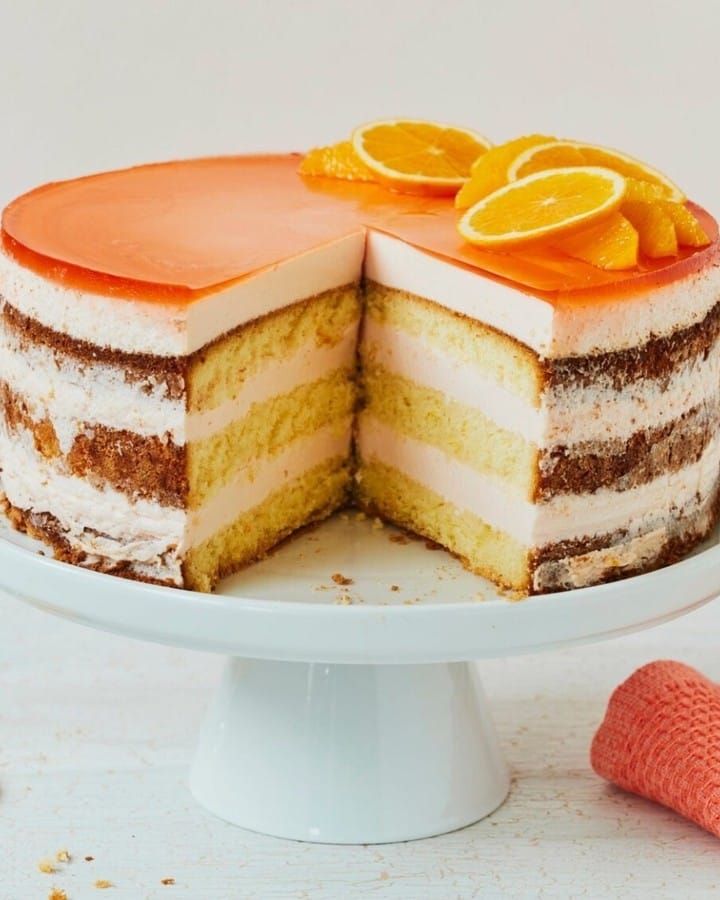
An Aperol Spritz… but Make it Cake! A Taste of Italian Sunshine in Your Kitchen
Have you ever sipped on a vibrant, bittersweet Aperol Spritz on a warm evening and thought, “I wish I could eat this?” Well, my friend, I had that exact same daydream last summer. After a bit of happy kitchen experimenting (and a few delightful “taste tests”), I created this stunning Aperol Spritz Cake. It’s the perfect way to bring that iconic Italian aperitivo flavor to your dessert table. Imagine a light orange sponge soaked with Prosecco, layered with a cloud of citrusy curd cream, and finished with a shimmering Aperol glaze. It’s a showstopper that tastes as joyful as it looks!
The Story Behind This Bittersweet Beauty
This cake is my edible tribute to the iconic Aperol Spritz cocktail, born in the Veneto region of Italy. The drink itself is a simple, brilliant mix of Prosecco, Aperol, and a splash of soda. Its bright orange color and refreshing, bittersweet taste scream summer. I wanted to capture that same spirit in a dessert you can share at a gathering. It’s a modern twist on a classic, blending the familiar comfort of a creamy cake with the sophisticated, adult flavor of a beloved aperitif. Every bite is a little celebration.
Why You’ll Fall in Love With This Aperol Spritz Delight
This isn’t just another orange cake. It’s a sophisticated, grown-up treat that’s surprisingly simple to make. The flavors are complex but balanced – the bitter orange liqueur cuts through the sweetness beautifully, and the fluffy, Prosecco-kissed sponge is incredibly moist. It’s a dessert that feels fancy and special without requiring professional pastry skills. Plus, that gorgeous sunset-orange color is a guaranteed mood-lifter!
When to Serve Your Sunny Aperol Spritz Cake
This cake is destined for moments that call for a touch of magic. It’s the star of summer garden parties, a brilliant finish to a Italian-themed dinner, or the perfect centerpiece for a bridal or baby shower brunch (for the adults, of course!). I love bringing it to potlucks because it always starts conversations and disappears quickly. Any occasion that deserves a burst of cheerful, elegant flavor is right for this Aperol Spritz Delight.
Gathering Your Ingredients for Aperol Spritz Cake
Here’s what you’ll need to create this taste of Italy. Using fresh, good-quality ingredients makes all the difference, especially for the orange zest!
For the Sponge Cake:
- 1 organic orange (for zest)
- 3 medium eggs (size M)
- 130g granulated sugar
- 1 pinch of salt
- 150g all-purpose flour (Type 405)
- 1 tsp baking powder
- 50 ml neutral cooking oil (like rapeseed or canola)
- 100 ml sparkling wine or Prosecco
For the Dreamy Filling:
- 500g low-fat quark (or well-drained Greek yogurt)
- 80g granulated sugar
- 100 ml bitter orange liqueur (like Aperol)
- 50 ml sparkling wine or Prosecco
- 6 sheets of gelatin (or 3 tsp powdered gelatin)
- 250g heavy whipping cream
For the Glaze & Garnish:
- 2 sheets of gelatin (or 1 tsp powdered gelatin)
- 100 ml bitter orange liqueur (like Aperol)
- 1-2 organic oranges, sliced or segmented, for garnish
No-Problem Substitutions
Don’t stress if you’re missing an ingredient! Cooking should be fun, not frustrating. Here are some easy swaps:
- Quark: Full-fat Greek yogurt, strained overnight in a cheesecloth, is the best substitute. It gives a similar tangy creaminess.
- Aperol: Any other bitter orange aperitif like Campari or Select will work, but the color and sweetness level will change slightly.
- Sparkling Wine: Any dry prosecco or sparkling wine is perfect. For a non-alcoholic version, use a good-quality non-alcoholic sparkling wine or even lemon-lime soda.
- Gelatin Sheets: Use powdered gelatin. For this recipe, 1 sheet typically equals about 1/2 tsp powdered gelatin. Always bloom it in cold water as directed on the package.
Creating Your Aperol Spritz Delight: Step-by-Step
Follow these steps, and you’ll have a masterpiece. Remember, the key is to have fun and enjoy the process!
Step 1: Bake the Sunny Sponge
First, heat your oven to 180°C (350°F) for top/bottom heat, or 160°C (320°F) for a fan oven. Line a 20cm (8-inch) springform pan with parchment paper. Now, grab your organic orange. Wash it with hot water to remove any wax, then dry it thoroughly. Using the fine side of your grater, zest the entire orange. That bright, fragrant zest is pure flavor gold! In a large bowl, beat the eggs, sugar, and that pinch of salt on high speed for about 3 minutes. You want a pale, thick, and fluffy mixture that leaves a ribbon trail when you lift the beaters. In another bowl, whisk together the flour, baking powder, and your precious orange zest. Gently fold this dry mix into the egg foam using a spatula. Be gentle to keep the air in. Finally, fold in the oil and then the sparkling wine. The batter will be light and bubbly. Pour it into your prepared pan and smooth the top.
Step 2: Cool the Foundation
Place the pan in the lower third of your preheated oven. Bake for about 35 minutes, or until a skewer inserted into the center comes out clean. The cake will be a beautiful golden color and smell heavenly. Here’s a pro tip: as soon as it comes out of the oven, run a knife around the edge of the pan to loosen it. Then, remove the springform ring and carefully turn the cake out onto a wire rack lined with parchment paper. Let it cool completely. This prevents the bottom from getting soggy and makes handling much easier later.
Step 3: Whip Up the Luscious Filling
While the cake cools, make the filling. In a large bowl, whisk together the quark, sugar, 100ml of Aperol, and 50ml of sparkling wine until smooth and silky. Now, prepare your gelatin. Soak the 6 sheets in a bowl of very cold water for about 5-7 minutes until they are soft and wobbly. Scoop out about 3 tablespoons of the quark mixture and place it in a small saucepan. Warm it gently over low heat—do not boil it. Squeeze the excess water from the softened gelatin sheets and stir them into the warm quark until they completely dissolve. Pour this gelatin mixture back into the large bowl of quark cream and whisk it in thoroughly. In a separate bowl, whip the heavy cream until it forms stiff peaks. Gently fold the whipped cream into the quark mixture until no white streaks remain. The filling should be light, airy, and dreamy. Pop the bowl in the fridge for about 5 minutes to let it thicken slightly while you prepare the cake layers.
Step 4: Assemble & Glaze for Glory
Once your sponge is stone-cold, carefully slice it horizontally into two even layers using a serrated knife. Place the bottom layer on your serving plate and secure a cake ring or the cleaned springform ring around it. Pour all of the prepared quark filling on top and smooth it out. Gently place the second cake layer on top, pressing down lightly. Chill the whole assembly in the refrigerator for at least 2 hours, or until the filling is firmly set. For the final shimmer, prepare the glaze. Soak the 2 remaining gelatin sheets in cold water. Heat the 100ml of Aperol in a small pot just until it’s warm—steamy but not simmering. Squeeze out the gelatin and stir it into the warm Aperol until dissolved. Let this mixture cool to room temperature; it should be syrupy but not set. Pour it evenly over the top of the chilled cake, letting it drip beautifully down the sides. Arrange your fresh orange slices or segments on top for a gorgeous, fresh finish.
Chef’s Tip: For super-clean slices, dip your knife in hot water and wipe it dry between each cut. This gives you perfect, professional-looking pieces every time.
Your Baking Timeline
Planning is key for a stress-free baking experience!
- Prep Time: 45 minutes
- Baking Time: 35 minutes
- Chilling Time: At least 3 hours (critical for setting)
- Total Time: About 4.5 hours
A Little Secret for Success
My secret weapon for this cake? Patience. Rushing the chilling steps is the number one reason the filling might not set perfectly. Let the cake cool completely before slicing, and give it those full, undisturbed hours in the fridge. It makes all the difference between a good cake and a flawless, sliceable masterpiece.
Fun Fact: It’s All About Balance
The genius of the Aperol Spritz drink—and this cake—lies in the balance of bitter and sweet. Aperol gets its unique flavor from a secret blend of herbs and roots, including bitter orange and gentian. This bitterness is what makes the cake so refreshing and not overly sweet, transforming it from a simple dessert into a complex, conversation-starting treat.
Tools You’ll Need
- 20 cm (8-inch) springform pan
- Hand or stand mixer
- Fine grater (for zesting)
- Mixing bowls (various sizes)
- Whisk and spatula
- Small saucepan
- Serrated knife (for splitting the cake)
- Cake serving plate or stand
Storing Your Cake Masterpiece
Because of the creamy filling and fresh glaze, this cake needs to stay refrigerated. Cover it loosely with a cake dome or some overturned bowls to protect the topping. It will keep beautifully for up to 3 days. The flavors actually deepen and meld together wonderfully on the second day.
I do not recommend freezing this cake. The filling contains gelatin and dairy, which can separate and become grainy when frozen and thawed. The texture of the sponge can also suffer. It’s truly best enjoyed fresh within a few days of making it.
If you need to make components ahead, you can bake the sponge a day in advance. Wrap it tightly in plastic wrap once cool and store it at room temperature. Prepare the filling and glaze separately on the day you plan to assemble and serve.
Tips For a Flawless Aperol Spritz Cake
- Zest Smart: Only grate the bright orange outer layer of the peel. Avoid the white pith underneath, as it is very bitter.
- Room Temp Eggs: Using eggs at room temperature helps them whip up to a greater volume, giving you a lighter, fluffier sponge.
- Fold, Don’t Stir: When combining the dry ingredients and the whipped eggs, use a folding motion with a spatula. This preserves the precious air bubbles you just created.
- Test for Doneness: Ovens vary. Start checking your cake at the 30-minute mark with a toothpick or skewer.
Presentation that Wows
- Garnish with fresh orange twists, edible flowers, or a light dusting of powdered sugar just before serving.
- Serve each slice on a bright, contrasting plate to make the orange color pop.
- For a dinner party, pair each slice with a small glass of extra Prosecco for the full “Spritz” experience.
Want to Mix It Up? Try These Variations!
If you love this format, you might also adore these other fantastic dessert cakes from around the world. For a taste of Brazil, try the comforting Fubá Cake with Goiabada, a cornmeal treat with sweet guava pieces. Chocolate fans will go crazy for the rich Nest and Kinder Chocolate Cake covered in creamy brigadeiro. For a classic European feel, the elegant Bavarian Cream Cake is a timeless choice. And if you’re into stunning layered desserts, the Chajá Cake with Dulce de Leche, a Uruguayan masterpiece with meringue and peaches, is simply unforgettable.
You can also adapt this Aperol Spritz cake:
- Berry Blast: Add a layer of fresh raspberries or sliced strawberries between the cake and the cream filling.
- Creamy Swap: Use a mascarpone-based filling instead of quark for an even richer, more Italian flavor.
- Citrus Twist: Substitute half the Aperol in the filling with fresh blood orange juice for a deeper color and flavor.
- Mini Treats: Bake the sponge in a sheet pan and use a round cutter to make individual mini cakes layered in glasses.
- Non-Alcoholic: Replace all Aperol and Prosecco with orange juice and sparkling lemonade for a family-friendly version.
- Chocolate Drizzle: Add a final decoration of dark chocolate stripes over the Aperol glaze for a bittersweet contrast.
Common Mistakes to Avoid With Your Aperol Spritz Delight
Mistake 1: Using a Warm Cake Base
It’s so tempting to assemble the cake quickly, but putting the creamy filling on a warm sponge is a recipe for disaster. The heat will melt the gelatin in the filling, causing it to become runny and possibly separate. It can also make the cake layers soggy. Always, always let your cake cool completely on a wire rack before you even think about slicing or filling it. Patience here is non-negotiable for perfect layers.
Mistake 2: Not Blooming the Gelatin Properly
Gelatin needs to be “bloomed” in cold water to soften and activate before it can dissolve smoothly. If you add powdered gelatin directly to a hot liquid, or don’t soak sheets long enough, it will clump into unappealing, rubbery blobs. Always follow the package directions. For sheets, soak in cold water for 5-7 minutes until very soft and floppy. For powder, sprinkle it over cold water and let it sit until it becomes a solid, spongy mass.
Mistake 3: Overwhipping or Underwhipping the Cream
The texture of your filling depends heavily on the whipped cream. Underwhipped cream (soft peaks) will make the filling too loose and unstable. Overwhipped cream (looking grainy or turning to butter) will make it lumpy and difficult to fold in smoothly. Stop when you have firm, glossy peaks that hold their shape when you lift the beaters. A pro tip: whip the cream just before you’re ready to fold it in, and do so with a gentle hand to keep it airy.
Mistake 4: Rushing the Chilling Process
This cake needs dedicated chill time to set properly. If you try to glaze it before the filling is firm, the glaze will pool or sink in. If you try to slice it too soon, it will be a messy, delicious puddle. Plan for at least 2 hours of chilling after assembly before you add the glaze, and another good hour after glazing before serving. Overnight chilling is actually ideal for the cleanest slices and most developed flavor.
Mistake 5: Zesting the White Pith
The flavorful, aromatic oils are only in the bright orange part of the citrus skin. The white pith underneath is intensely bitter. When zesting your orange, use a light touch and only grate the very outer layer. If you see white specks in your zest, you’ve gone too deep. This simple step ensures your cake has a pure, sweet orange fragrance without any unwanted bitterness.
Frequently Asked Questions
Can I make this cake without alcohol?
Absolutely! You can create a delicious non-alcoholic version. Replace the Aperol in both the filling and glaze with a mixture of 2 parts orange juice and 1 part grapefruit juice or blood orange juice to mimic the bittersweet flavor. Substitute the Prosecco in the cake and filling with non-alcoholic sparkling wine, ginger ale, or even lemon-lime soda. The flavor profile will be slightly different but still wonderfully citrusy and refreshing for all your guests.
What can I use instead of quark?
Quark can be tricky to find in some areas. The best substitute is full-fat Greek yogurt that you have strained to thicken it further. Place the yogurt in a fine-mesh strainer lined with cheesecloth over a bowl. Let it drain in the refrigerator for several hours or overnight until it reaches a thick, spreadable consistency similar to cream cheese. This will give you the tangy flavor and sturdy texture needed for the filling.
How far in advance can I make this cake?
You can bake the sponge cake up to one day in advance. Let it cool completely, wrap it tightly in plastic wrap, and store it at room temperature. I highly recommend preparing the filling, assembling, and glazing the cake on the day you plan to serve it for the best texture and appearance. However, a fully assembled cake will keep beautifully in the fridge for up to 3 days.
Why did my filling not set firmly?
A runny filling usually points to one of three issues: not enough gelatin, improper gelatin handling, or the filling being combined while the cake or gelatin mixture was too warm. Make sure you are using the correct amount of gelatin and that it fully dissolved in the warm quark mixture before combining. Also, ensure both the dissolved gelatin mixture and the cake base are at room temperature or cooler before you mix and assemble.
Can I use a different size pan?
Yes, but adjustments are needed. For a larger pan (like a 9-inch), the cake layers will be thinner, so baking time will be slightly less—start checking at 25 minutes. You might also want to increase the filling by 1.5 times to have generous layers. For a smaller pan, the cake will be taller and may need a longer baking time; watch carefully to avoid over-browning on top. Always do the toothpick test for doneness.
Is there a way to make this cake less bitter?
The bitter note from the Aperol is part of its charm, but you can tone it down. Simply reduce the amount of Aperol in the filling and glaze by half, and replace the missing liquid with more Prosecco or a little orange juice. You could also use a sweeter orange liqueur like Grand Marnier or Cointreau, though this will create a different, sweeter flavor profile more like a classic orange cake.
My cake sunk in the middle, what happened?
A sunken cake is often caused by underbaking or opening the oven door too early during the crucial rising period. The heat shock can cause the structure to collapse. Make sure your oven is fully preheated and use an oven thermometer if possible to ensure accuracy. Avoid opening the oven door for at least the first 25 minutes of baking. Also, ensure your baking powder is fresh.
Can I use frozen oranges for zesting?
Actually, freezing an orange for about 30 minutes before zesting can make the job easier! The cold hardens the peel slightly, making it simpler to grate just the colorful zest without digging into the bitter white pith. This is a great little trick for getting the most flavor without the bitterness.
How do I get a super smooth glaze on top?
The key is temperature and timing. Let the Aperol-gelatin glaze cool until it is just slightly thickened, like a thin syrup. It should be cool to the touch but still completely liquid. Pour it slowly onto the center of the chilled cake and gently tilt the cake stand or plate to help it flow evenly to the edges. Pouring it while it’s too warm will make it soak in, and too cold will set in clumps.
What should I serve with this cake?
This cake is stunning on its own, but a little extra flair never hurts. A dollop of lightly sweetened whipped cream on the side is classic. For a true Italian finish, serve each slice with a small glass of chilled Prosecco. A few fresh berries or a sprig of mint also add a lovely color contrast and freshness. Remember, balancing treats like this with nutritious foods is part of a joyful approach to healthy eating.
I hope this recipe brings as much joy to your table as it has to mine. For more sweet inspiration, be sure to explore our full collection of dessert recipes.
Ready to Bring a Taste of La Dolce Vita Home?
This Aperol Spritz Cake is more than just a dessert; it’s a celebration in a slice. It captures the easy-going, joyful spirit of an Italian piazza and turns it into a shareable treat. It might look fancy, but as you’ve seen, it’s made with simple steps and a lot of heart. So, gather your ingredients, put on some cheerful music, and get ready to impress your family and friends with this brilliant, bittersweet delight. I promise, the first bite will transport you straight to a sun-dappled terrace. Happy baking!
Aperol Spritz Delight
Ingredients
Equipment
Method
- Preheat your oven to 180°C (350°F) and line a 20cm (8-inch) springform pan with parchment paper.
- Zest the organic orange using a fine grater.
- In a large bowl, beat the eggs, sugar, and salt on high speed for about 3 minutes.
- In another bowl, whisk together the flour, baking powder, and orange zest.
- Gently fold the dry mix into the egg mixture, then fold in the oil and sparkling wine.
- Pour the batter into the prepared pan and smooth the top.
- Bake for about 35 minutes or until a skewer inserted into the center comes out clean.
- Run a knife around the edge of the pan and let the cake cool completely on a wire rack.
- For the filling, whisk together quark, sugar, 100ml Aperol, and 50ml sparkling wine until smooth.
- Soak 6 sheets of gelatin in cold water for 5-7 minutes, then dissolve in a small saucepan with a bit of the quark mixture over low heat.
- Return the gelatin mixture to the quark mixture and whisk until combined.
- Whip the heavy cream to stiff peaks and fold it into the quark mixture.
- Slice the cooled sponge horizontally into two layers and place the bottom layer on a serving plate.
- Secure a cake ring around the bottom layer, pour the quark filling on top, and place the second layer on top.
- Chill in the refrigerator for at least 2 hours until set.
- For the glaze, soak 2 sheets of gelatin, heat 100ml Aperol, and dissolve the gelatin in it.
- Allow the glaze to cool before pouring it over the chilled cake, letting it drip down the sides.
- Garnish with fresh orange slices or segments.