
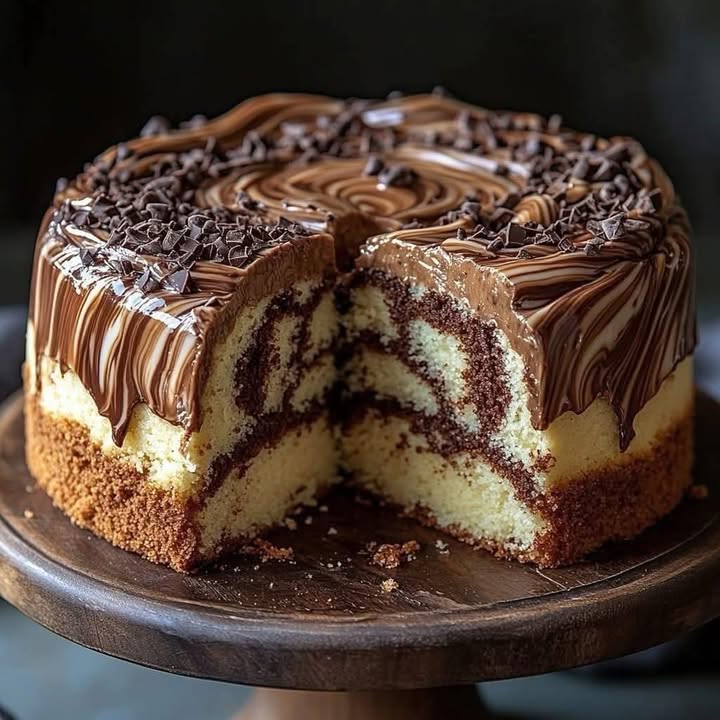
Super Spongy Marble Cake with Chocolate: A Work of Art You Can Eat!
Is there anything more magical than cutting into a perfectly swirled marble cake? That first slice reveals a stunning storm of dark and light batter, a promise of buttery vanilla and rich chocolate in every bite. I call this my “happy cake” because the moment it comes out of the oven, my entire family seems to magically appear in the kitchen, forks at the ready. It’s a showstopper that looks like you spent all day in the kitchen, but the secret is how wonderfully simple it is to make. Let’s bake some joy together!
The Story of a Happy, Swirled Classic
Marble cake feels like a delicious piece of shared history. While its exact origin is fuzzy, many believe it started in 19th-century Germany. The genius idea was simple: take a classic butter cake base and swirl in a different flavor—usually chocolate—to create a beautiful, multi-colored treat without having to make two separate cakes. My own love affair with it began in my grandmother’s kitchen. She didn’t have fancy gadgets, just a big bowl and a wooden spoon, but her marble cake was legendary at family gatherings. This recipe is inspired by her, tweaked over years of baking for my kids’ birthdays and neighborhood potlucks until it reached what I call “cloud-like spongy” perfection.
Why You’ll Fall in Love With This Decadent Marble Cake
This isn’t just any cake. First, the texture is incredibly soft and spongy, thanks to our careful mixing method. Second, the flavor combo is a timeless winner. The creamy vanilla batter and the deep, fudgy chocolate swirls are a match made in heaven. Best of all, it’s a forgiving recipe. Whether you’re a new baker or a seasoned pro, the beautiful marble effect is easy to achieve and always earns gasps of delight. It’s a cake that feels fancy but is made with simple pantry staples.
Perfect Occasions for This Show-Stopping Cake
This versatile cake fits any event! It’s my go-to for Sunday family dinners, adding a sweet touch to the weekend. It’s a star at birthday parties—kids love the fun swirls. Take it to a potluck or book club and watch it disappear first. It’s also perfect for holiday dessert tables, especially when covered in that luscious chocolate ganache. Honestly, a rainy Tuesday is also a superb occasion for a slice with coffee.
Ingredients for Your Marble Masterpiece
- 3 large eggs, at room temperature
- 2 cups granulated sugar
- 3 sticks (or tiles) of margarine (or unsalted butter), softened
- 1 cup of milk
- 3 cups of all-purpose wheat flour
- 1 tablespoon of baking powder
- 4 tiles (approx. 1/2 cup) of chocolate powder (like Nesquik or cocoa powder)
Handy Substitution Options
No worries if you’re missing an ingredient! You can use unsalted butter instead of margarine for a richer flavor. For the chocolate powder, unsweetened cocoa powder works wonderfully; just sift it to avoid lumps. If you’re out of milk, buttermilk will add a lovely tang and tenderness, or even plain yogurt thinned with a little water. For a fun twist, try using a chocolate hazelnut spread melted slightly for the swirl!
Crafting Your Decadent Marble Cake
Let’s get our hands busy and our kitchen smelling amazing. Remember, the key to a spongy cake is not to overmix once we add the flour. Let’s do this step-by-step.
Step 1: Creating the Fluffy Base
First, grab your largest mixing bowl. Crack in the three eggs, add the two cups of sugar, and plop in the softened margarine. Now, beat it all together with an electric mixer on medium-high speed. You’re looking for a dramatic change! The mixture should become pale, creamy, and wonderfully fluffy. This takes about 3-4 minutes. This step is crucial because it incorporates air, which is the secret to our spongy texture. Pro tip: If the ingredients are all at room temperature, they’ll emulsify much better, giving you a smoother, higher-rising batter.
Step 2: Bringing It All Together
Now, we’ll add our dry and wet ingredients. Turn your mixer down to low speed. Add about one cup of the flour, followed by a third of the milk. Mix just until it’s combined. Repeat this process—flour, milk, flour, milk, flour—until everything is in the bowl. The batter will be thick and luxurious. Finally, sprinkle the tablespoon of baking powder over the batter. Gently fold it in with a spatula for just a few turns until you no longer see any white powder.
Step 3: The Chocolatey Divide
This is where the magic starts. Scoop out roughly half of your beautiful vanilla batter into a separate medium bowl. To this separated portion, add your four tiles of chocolate powder. Now, fold it gently. You’ll see the batter transform into a rich, dark brown. If it seems a bit thick, you can add a tiny splash of milk (just a teaspoon) to loosen it. Now you have two bowls of batter: one light and sunny, one dark and decadent.
Step 4: Crafting the Swirl
Take your greased and floured Bundt pan or loaf pan. We’re going to create our marble effect. Using two separate spoons, start by dropping a large scoop of vanilla batter into the center of the pan. Right next to it, drop a scoop of chocolate batter. Keep alternating, dropping blobs of each batter randomly all over the pan. Don’t worry about being neat! The haphazard placement is what creates the best swirl.
Step 5: The Artistic Swirl Technique
Here’s the fun part! Take a simple dinner fork. Insert it deep into the batter and gently draw slow, sweeping spirals and figure-eight patterns through the batters. You only need to do this 4-5 times. The goal is to marble them, not mix them into a single muddy color. When you pull the fork up, you’ll already see stunning veins of chocolate and vanilla. Chef’s Tip: For a more dramatic look, you can also use a knife and make a single zig-zag motion from one end of the pan to the other.
Step 6: Baking to Golden Perfection
Carefully place your marbled masterpiece into a preheated oven at 350°F (180°C). Do not open the oven door for the first 30 minutes! The cake needs steady heat to rise properly. Bake for 40-50 minutes total. It’s done when the top is a deep golden brown, the sides just start to pull away from the pan, and a toothpick inserted into the center comes out clean or with a few moist crumbs.
Step 7: The Grand Finale: Chocolate Coverage
Let the cake cool in the pan for 15 minutes, then turn it out onto a wire rack to cool completely. This patience is important! If you frost a warm cake, it will melt into a puddle. For the “wow touch,” melt some chocolate chips with a little cream for a simple ganache, or just use store-bought chocolate frosting. Pour it generously over the top, letting it drip down the craggy, swirled sides. It’s the crown on our work of art.
Your Marble Cake Timeline
- Prep Time: 20 minutes
- Cook Time: 45 minutes
- Cooling Time: 1 hour
- Total Time: 2 hours 5 minutes
- Servings: 12 happy people
Chef’s Secret: The Temperature Trick
My number one secret for an unbelievably spongy cake? Room temperature ingredients. Cold eggs and margarine won’t blend and trap air as well. I take my eggs, milk, and margarine out of the fridge about an hour before I start baking. If you forget, place cold eggs in a bowl of warm water for 10 minutes, and cube the margarine to soften it faster. This simple step makes all the difference in texture.
A Sweet Slice of History
Did you know the “marble” name likely came from the cake’s resemblance to polished marble stone? Bakers in the 1800s were the original food artists! The technique became a popular way to make a simple cake feel luxurious and special for guests, much like we do today. It’s a tradition of sharing beauty and sweetness that we’re keeping alive with every swirl.
Equipment You’ll Need
- Large mixing bowl
- Electric hand mixer or stand mixer
- Medium bowl (for dividing batter)
- Measuring cups and spoons
- Rubber spatula
- Bundt pan or 9×13 inch baking pan
- Wire cooling rack
- Dinner fork or knife (for swirling)
Storing Your Delicious Creation
To keep your marble cake spongy, store it properly. Once completely cool, place it in an airtight cake carrier or under a cake dome at room temperature. It will stay fresh and soft for up to 3 days this way. The airtight seal prevents it from drying out.
If you want to keep it longer, freezing is a great option. Wrap the unfrosted cake (or individual slices) tightly in plastic wrap, then again in aluminum foil. It can be frozen for up to 2 months. Thaw it overnight in the refrigerator or for a few hours on the counter.
For a frosted cake, it’s best to store it in the refrigerator if your kitchen is warm, especially if the frosting contains dairy. Let it sit at room temperature for 30 minutes before serving to soften up perfectly.
Tips and Advice for Cake Success
- Always preheat your oven. Putting cake batter into a cold oven can ruin the rise.
- Don’t over-swirl! A few gentle motions are enough. Over-mixing will blend the batters into one flavor.
- To check for doneness, use a toothpick or a dry spaghetti noodle. Look for moist crumbs, not wet batter.
- If the top is browning too fast, loosely tent it with a piece of aluminum foil for the last 15 minutes of baking.
Presentation Ideas to Impress
- Dust with powdered sugar for a simple, elegant snow-covered look.
- Serve with a dollop of freshly whipped cream and a few berries on the side.
- Drizzle with both chocolate and caramel sauce for a decadent dessert plate.
- For a party, cut into squares and serve on a tiered cake stand.
Healthier & Fun Recipe Variations
Love this cake but want to mix it up? Here are six delightful twists to try!
- Whole Wheat Marble Cake: Substitute half the all-purpose flour with whole wheat flour for added fiber. The flavor is nuttier and pairs beautifully with the chocolate.
- Orange Zest Marble Cake: Add the zest of one large orange to the vanilla batter. The citrus brightens the whole cake and cuts through the richness wonderfully.
- Mocha Marble Cake: Dissolve 1 tablespoon of instant espresso powder into the milk before adding it. This gives the chocolate swirls a deep, coffee-kissed flavor perfect for adults.
- Marble Cupcakes: Divide the batter into lined muffin tins, add a small scoop of each flavor per cup, and swirl. They bake in about 18-20 minutes and are perfect for lunchboxes.
- Gluten-Free Marble Cake: Use a 1-to-1 gluten-free all-purpose flour blend. Be sure your baking powder is gluten-free too. The texture will be slightly denser but still delicious.
- Marble Cake with Cream Cheese Swirl: Take a page from a classic dessert and add a third element! Swirl in a mixture of softened cream cheese, sugar, and an egg yolk for a surprise inside. For another stunning cream cheese-based dessert, you must try this Classic Cream Cheese Cake from our collection.
Common Mistakes to Avoid
Mistake 1: Using Cold Ingredients
This is the most common culprit for a dense, flat cake. Cold butter or margarine won’t cream properly with the sugar, and cold eggs can cause the batter to curdle. This ruins the airy structure we’re building. Always plan ahead to let your dairy and eggs sit on the counter. If you’re in a pinch, gently warm the eggs in a bowl of warm water and cut the butter into small pieces to speed up softening.
Mistake 2: Overmixing After Adding Flour
Once you add the flour, gluten development begins. Mixing too much makes the gluten strands tough, leading to a chewy, rubbery cake instead of a tender, spongy one. When adding the flour and milk, mix on low speed only until the ingredients are just combined. It’s okay if you see a few small streaks of flour—they’ll incorporate when you divide the batter.
Mistake 3: Opening the Oven Door Too Early
We’ve all been tempted to peek! But opening the oven door in the first 25-30 minutes of baking lets out crucial heat. This can cause the rising cake to collapse in the center. Trust the process. Use your oven light to check on it. Only open the door when you need to test for doneness near the end of the baking time.
Mistake 4: Pouring Ganache on a Warm Cake
That beautiful chocolate coating will turn into a runny, absorbed mess if the cake is still warm. The heat melts the fat in the frosting, so it soaks in instead of forming a lovely shell. Let the cake cool completely on a wire rack. This can take a full hour. Patience is key for a perfect presentation.
Frequently Asked Questions
Can I use butter instead of margarine?
Absolutely! Unsalted butter is a fantastic substitute and will give your cake a richer, more decadent flavor. The process is exactly the same. Just make sure it’s properly softened to room temperature so it creams beautifully with the sugar. Using butter may make the crumb slightly more tender compared to margarine.
Why did my chocolate and vanilla batter mix into one color?
This usually happens from over-swirling. When you drag your fork or knife through the batter, you only need to make a few gentle passes. Think of it as “marbleizing,” not “mixing.” The goal is to create streaks and pockets, not to homogenize the two. Less is definitely more in this step for that stunning visual contrast.
My cake is dense, not spongy. What went wrong?
A dense cake often points to a few issues. The most likely are: using cold ingredients, overmixing the batter after adding the flour, or using expired baking powder. Baking powder loses its lifting power over time. To test yours, mix a teaspoon with a little hot water. If it doesn’t fizz vigorously, it’s time for a new can. Proper home food preparation includes using fresh, quality ingredients for the best results.
Can I make this marble cake ahead of time?
Yes, you can! This cake actually tastes better the next day as the flavors meld. Bake it, let it cool completely, and wrap it tightly in plastic wrap. Store it at room temperature. You can frost it the day you plan to serve it. This makes it a perfect stress-free dessert for parties and gatherings.
What type of chocolate powder is best?
You have options! “Chocolate powder” like Nesquik is sweetened and gives a milder, milk-chocolate flavor. Unsweetened cocoa powder (like Hershey’s) provides a deeper, more intense chocolate taste. For a super rich swirl, I prefer using dutch-processed cocoa powder. Whichever you use, sift it first to avoid clumps in your batter.
How do I prevent the cake from sticking to the pan?
Proper pan preparation is non-negotiable. After greasing the entire inner surface with butter or non-stick spray, add a tablespoon of flour. Tilt and tap the pan until the flour coats every greased spot, then tap out the excess. This creates a perfect non-stick barrier. Letting the cake cool in the pan for 15 minutes also helps it release cleanly.
Can I add nuts or chocolate chips?
Of course! Fold a half-cup of finely chopped walnuts or pecans into the chocolate batter for a crunchy contrast. Mini chocolate chips are also a wonderful addition. Just toss them in a teaspoon of flour first—this helps prevent them from sinking to the bottom of the cake during baking.
What can I use instead of ganache for the topping?
If you’re not in a chocolate-overload mood, there are many alternatives. A simple dusting of powdered sugar is elegant. A vanilla or cream cheese glaze is delightful. For a fruity twist, a raspberry sauce drizzle pairs wonderfully. Or, for a truly show-stopping finish, try a layer of our luscious Homemade Salted Caramel Frosting.
Is this cake suitable for freezing?
It freezes beautifully. Cool the cake completely and wrap it tightly in two layers: first plastic wrap, then aluminum foil. Freeze for up to 2 months. Thaw it overnight in the refrigerator, then bring it to room temperature before frosting and serving. You can even freeze individual slices for a quick sweet treat.
My oven runs hot/cold. How do I adjust?
Oven temperatures can be tricky. I highly recommend using an inexpensive oven thermometer to check the actual temperature inside. If your oven runs hot, reduce the temperature by 25°F. If it runs cold, increase it by 25°F. The visual cues (golden color, pulling from sides) and the toothpick test are your best guides for doneness, not just the timer.
And there you have it! From the first creamy mix to the final chocolate drizzle, making this cake is a joyful experience. I hope it brings as much happiness to your kitchen as it has to mine. For more sweet inspirations like this, be sure to explore all our other fantastic dessert recipes.
So, preheat that oven and get ready for the compliments. This super spongy marble cake is more than a dessert; it’s a delicious piece of edible art, a tradition, and a whole lot of love baked into one gorgeous pan. Happy baking, my friend! Don’t forget to share a slice (or just keep it all for yourself—I won’t tell!).
Decadent Marble Cake
Ingredients
Equipment
Method
- In a large mixing bowl, beat together eggs, sugar, and softened margarine until pale and fluffy.
- Gradually add flour and milk alternately, mixing on low speed until combined.
- Fold in the baking powder gently until just incorporated.
- Divide half the batter into a medium bowl and mix in the chocolate powder until well combined.
- Grease and flour a Bundt or loaf pan, then alternate scoops of vanilla and chocolate batter into the pan.
- Use a dinner fork to create swirls through the batters without mixing them entirely.
- Bake in a preheated oven at 350°F (180°C) for 40-50 minutes until golden brown and a toothpick comes out clean.
- Cool the cake in the pan for 15 minutes, then turn it out onto a wire rack to cool completely before frosting.