
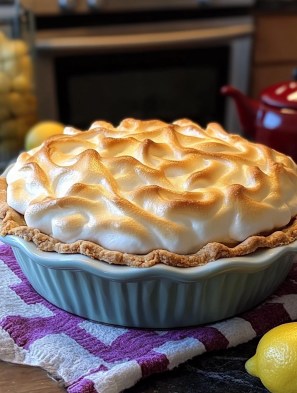
The Ultimate Classic: My Family’s Favorite Lemon Meringue Delight
There’s something magical about cutting into a perfect lemon meringue pie. A crisp crust gives way to a vibrant, tart filling, all topped with a cloud of sweet, toasted meringue. It’s like sunshine on a plate! I’ve made this dessert for countless family gatherings, and let me tell you, stealing the last slice has caused some friendly wrestling matches over the years.
A Slice of History: From Royal Treat to Family Favorite
This pie feels timeless, doesn’t it? While lemon curd and meringue have been paired for centuries, the pie as we know it became a staple in America in the 19th century. The genius addition of cornstarch stabilized the filling, turning a runny curd into the sliceable dream we love today. My version is a nod to those classic diner pies, but with a personal touch I perfected after one (okay, several) meringue-shrinking disasters!
Why You’ll Fall in Love With This Lemon Meringue Delight
This recipe is a winner for so many reasons. It has the perfect tangy and sweet balance that makes your taste buds dance. The process is fun and rewarding—watching those egg whites transform into glossy peaks is pure kitchen joy. Plus, it’s incredibly versatile. Serve it at a fancy dinner or a casual potluck; it’s always the star. Its bright flavor is a wonderful palate cleanser after a rich meal, much like a solid pumpkin pie delight defines the fall season.
Perfect Occasions for Your Lemon Meringue Masterpiece
This pie is your secret weapon for almost any event! It’s perfect for:
- Spring and Summer Gatherings: The citrus flavor is refreshing on a warm day.
- Potlucks and Picnics: It travels well (once cooled!) and always gets compliments.
- Holiday Dinners: It offers a bright counterpoint to heavy, savory dishes.
- Just Because: Honestly, a Tuesday is reason enough for this kind of happiness.
Gathering Your Ingredients for Lemon Meringue Perfection
Here’s what you’ll need to create this masterpiece. Having everything measured and ready (this is called mise en place) makes the process smooth and fun!
- 1 standard-sized baked pie crust (9-inch)
- 1 ½ cups water
- 1 cup white granulated sugar
- 4 large eggs (yolks and whites separated, at room temperature)
- ⅓ cup cornstarch
- ¼ teaspoon salt
- ¼ cup unsalted butter, cubed
- ½ cup fresh lemon juice (from about 3 lemons)
- 1 tablespoon finely grated lemon zest
- 6 tablespoons granulated sugar (for the meringue)
Easy Ingredient Swaps (Because Life Happens!)
No lemons? Out of cornstarch? Don’t panic! Here are some easy swaps:
- Lemon Juice: Fresh is best, but bottled lemon juice works in a pinch. Adjust to taste as it can be sharper.
- Cornstarch: You can use an equal amount of all-purpose flour, but the filling will be cloudier and slightly less shiny.
- Pie Crust: A homemade shortcrust is divine, but a good-quality store-bought crust is a fantastic time-saver. Nobody will know!
- Butter: Salted butter is fine; just omit the added salt in the filling.
Crafting Your Lemon Meringue Delight: A Step-by-Step Journey
Let’s get cooking! Follow these steps for a foolproof, gorgeous pie.
Step 1: Creating the Luscious Lemon Filling
In a medium saucepan, whisk together the water, 1 cup sugar, cornstarch, and salt. Place it over medium heat. Now, here’s the key: whisk constantly. The mixture will start off milky-white and thin. As it heats, it will slowly thicken and turn translucent, finally bursting with big, glossy bubbles. This visual cue is important! Pro tip: Don’t walk away during this stage. Constant stirring prevents lumps and ensures a smooth, velvety texture. Once it’s thick and bubbly, reduce the heat to low.
Step 2: Tempering the Egg Yolks for a Rich Custard
In a separate bowl, lightly beat your four egg yolks. Now, you need to gently introduce them to the hot mixture to avoid scrambled eggs in your pie! Take a small ladleful of the hot cornstarch mixture and slowly drizzle it into the yolks while whisking vigorously. Do this a few more times to warm the yolks. Then, pour the entire yolk mixture back into the saucepan. Return to low heat and whisk constantly for another 2-3 minutes until thick. You’ll see it transform into a gorgeous, rich yellow pudding.
Step 3: Infusing the Bright, Zesty Lemon Flavor
Remove the saucepan from the heat. It’s time for the star of the show: the lemon! Stir in the cubed butter, fresh lemon juice, and lemon zest. The butter will melt into the hot filling, creating a silky sheen. The scent that will hit you is absolutely incredible—tart, sweet, and utterly inviting. Keep stirring until everything is perfectly smooth and combined. Pour this vibrant filling into your waiting baked pie crust and set it aside while you make the meringue.
Step 4: Whipping Up the Fluffy Meringue Cloud
It’s meringue time! Ensure your bowl and beaters are impeccably clean and grease-free. Any fat will prevent the egg whites from reaching their full volume. Start beating the room-temperature egg whites on medium speed until they become foamy and form soft peaks. Now, with the mixer running, gradually add the 6 tablespoons of sugar, one spoonful at a time. This slow addition helps the sugar dissolve completely, giving you a stable, glossy meringue. Beat until you have stiff, shiny peaks that hold their shape when you lift the beaters. Chef’s tip: Rub a bit of meringue between your fingers. If it feels gritty, keep beating until the sugar dissolves.
Step 5: Assembling and Baking to Golden Perfection
Preheat your oven to 350°F (175°C). Now, carefully dollop the meringue onto the warm lemon filling. Using a spatula, spread it all the way to the edges of the crust, sealing it completely. This “seal” is crucial—it locks in the heat and prevents the meringue from shrinking and weeping later. Create beautiful swoops and peaks with your spatula; these will toast beautifully. Bake for 10-12 minutes, or just until the meringue tips are a lovely, golden brown.
Step 6: The Patience Game: Cooling and Serving
This is the hardest part, I promise! You must let the pie cool completely at room temperature for at least 3-4 hours, or even overnight in the fridge. This allows the filling to set properly so you get clean, beautiful slices. If you cut it while warm, it will be a delicious but soupy mess. The wait is worth it for that perfect, photogenic slice.
Your Pie Timeline: From Start to Scrumptious Finish
| Prep Time: | 30 minutes |
| Cook Time: | 12 minutes (meringue) + crust baking time |
| Cooling Time: | 4 hours (minimum) |
| Total Time: | About 5 hours (mostly hands-off cooling) |
The Secret to a No-Weep Meringue
The ultimate pie baker’s secret? Make sure your filling is hot when you pile on the meringue. A hot filling starts cooking the bottom of the meringue layer immediately, creating a stable bond. This, combined with sealing the meringue to the crust, practically guarantees a perfect, weep-free topping every single time.
A Zesty Bit of Trivia
Did you know the acid in lemon juice is a natural tenderizer? It’s why it works so well in marinades. In our pie, it reacts with the cornstarch and egg yolks to create that uniquely bright yet creamy texture. Proper ingredient preparation, like zesting your lemons before juicing them and bringing eggs to room temperature, truly makes a difference in the final quality of your baked goods.
Kitchen Tools You’ll Need
You don’t need fancy gear for this recipe aside from a stand mixer or hand mixer for the meringue! A simple whisk, a medium saucepan, a microplane for zesting, and a lemon juicer are your best friends. A glass or metal bowl for the egg whites is better than plastic, which can harbor hidden grease.
Storing Your Lemon Meringue Delight
This pie is best enjoyed the day it’s made, but you can store it for short periods. Cover it loosely with plastic wrap or place it under a cake dome. Keep it in the refrigerator.
The meringue does not like moisture. If your fridge is humid, the meringue may start to deflate or get sticky after a day. For best texture, serve within 24 hours.
I do not recommend freezing the assembled pie. The meringue becomes chewy and weeps upon thawing. You can, however, freeze the baked pie shell and the lemon filling separately with great success.
My Best Tips for Pie Perfection
- Room Temp Eggs: They whip up higher and faster for the meringue.
- Fresh Lemon Zest: Always zest your lemons before you juice them. It’s much easier!
- Cornstarch Clump Prevention: Whisk the cornstarch with the sugar and a bit of the cold water first to make a slurry before adding the rest of the water.
- Pre-Bake That Crust: Always fully bake and cool your pie crust before adding any wet filling. This prevents a soggy bottom.
Making It Picture Perfect: Presentation Ideas
- Serve with a twist of lemon on the side or a few fresh raspberries for a pop of color.
- For a professional finish, use the back of a spoon to create dramatic peaks and swirls in the meringue before baking.
- Dust a tiny bit of powdered sugar over the toasted meringue just before serving for a snowy effect.
Lemon Meringue Delight Variations to Try
Once you’ve mastered the classic, have fun with these twists!
- Lime Meringue Pie: Swap lemons for limes. It’s a tangier, more tropical vibe!
- Berry Swirl: Add a layer of fresh raspberry or strawberry puree between the crust and lemon filling.
- Ginger Snap Crust: Use crushed ginger snap cookies instead of a standard pie crust for a spicy kick.
- Toasted Coconut Topping: Sprinkle sweetened shredded coconut over the meringue before baking.
- Mini Pies: Use a muffin tin with tart shells to make adorable individual portions.
- Yogurt-Lemon Filling: Substitute half the butter with Greek yogurt for a slightly tangier, lighter filling.
If you love this kind of fruity dessert, you might also enjoy the sweet-tart combo in our raspberry pistachio delight. And for all the chocolate lovers out there, don’t miss our rich chocolate chip delight cookies or our decadent Duplo chocolate cake.
Common Mistakes to Avoid for Pie Success
Mistake 1: A Soggy or Shrunken Pie Crust
This happens when the crust isn’t properly pre-baked (or “blind baked”) before adding the wet filling. The moisture from the lemon custard seeps into the raw dough, making it soggy. To avoid this, always bake your empty pie shell with weights (like dried beans or pie weights) until it’s fully cooked and golden. Let it cool completely before filling. A crispy crust is the essential foundation!
Mistake 2: Lumpy or Thin Lemon Filling
Lumps usually form if you stop whisking while the cornstarch mixture is heating. Cornstarch thickens quickly and can form gelatinous blobs if not stirred constantly. A thin filling often means it wasn’t cooked long enough. Cook until you see those big, slow bubbles pop on the surface. This is the visual sign that the cornstarch has fully activated and your filling will set perfectly.
Mistake 3: Grainy or Weeping Meringue
A gritty meringue means the sugar didn’t dissolve. Always add the sugar slowly to the already foamy whites. Weeping (beads of syrup on the meringue) often stems from undercooking or humidity. First, make sure your meringue touches the crust all around to seal it. Second, don’t under-bake it—those 10-12 minutes are key to stabilizing the meringue and preventing a syrupy layer from forming underneath.
Mistake 4: Cutting the Pie While Warm
I know, the temptation is real! But cutting into a warm pie is the #1 reason for a pie slice disaster. The filling needs hours to cool and set properly. If you cut it too soon, the filling will run everywhere and the meringue will slide right off. Patience is a virtue that rewards you with beautiful, clean wedges. Pop it in the fridge to speed things up a bit.
Mastering this pie is a wonderful baking achievement. You can find many more sweet finales in our full collection of favorite dessert recipes.
Your Lemon Meringue Pie Questions, Answered!
Can I use bottled lemon juice instead of fresh?
You can, but fresh is highly recommended for the best flavor. Bottled lemon juice often has a sharper, more processed taste and lacks the bright, complex oils found in fresh lemon zest. If you must use bottled, try adding an extra half teaspoon of lemon zest to boost the citrus flavor. The difference in a pie where lemon is the star is noticeable, so fresh lemons are worth the tiny bit of extra effort for that truly spectacular, sunny taste.
Why did my meringue shrink away from the edges?
This is almost always because the meringue wasn’t sealed to the crust. When you spread the meringue on top, make sure you spread it all the way out so it touches the crust around the entire pie. As it bakes and sets, it contracts slightly. If it’s only sitting on the filling, it pulls inward. Think of it as anchoring the fluffy cloud to the pie’s edges. Also, spreading it on hot filling helps “glue” it in place from the start.
How do I prevent the meringue from beading or weeping?
Beading (tiny droplets of syrup on top) is often caused by overcooking or a very humid environment. Weeping (a puddle under the meringue) is usually from undercooking. The sweet spot is a brief bake at a high temperature just to brown the peaks. Also, using room temperature eggs and fully dissolving the sugar during whipping creates a more stable meringue that’s less likely to break down and release liquid after baking.
Can I make the pie a day ahead?
Yes, but with a caveat. You can prepare the crust and filling a day ahead. Store the cooked filling covered with plastic wrap directly on its surface in the fridge, and keep the crust at room temp. Assemble and bake the meringue the day you plan to serve it. A fully assembled pie stored overnight will still taste great, but the meringue will likely lose some of its light texture and may become sticky or soft.
My filling is runny after cooling. What went wrong?
A runny filling typically means it wasn’t cooked long enough on the stove. The cornstarch needs to reach a full boil to activate its full thickening power. Those big, fat bubbles are your sign that it’s ready. Also, be sure you’re accurately measuring your cornstarch. Don’t cut the cooking time short, even if the mixture looks thick. A full minute or two of boiling after adding the egg yolks is crucial for a set slice.
Can I freeze lemon meringue pie?
I don’t recommend freezing the fully assembled pie. The meringue does not freeze well at all; it becomes tough, chewy, and weeps dramatically when thawed. However, you can successfully freeze the baked pie shell and the lemon filling separately. Thaw the filling overnight in the fridge and reheat it gently on the stove with a splash of water, whisking until smooth, before pouring into the crust and adding fresh meringue.
What’s the best way to separate eggs?
The easiest method is to use the eggshell itself. Crack the egg cleanly over a small bowl, then pass the yolk back and forth between the two shell halves, letting the white drip into the bowl below. Just make sure no yolk gets in with the whites, as any fat will prevent them from whipping properly. For extra safety, separate each egg over a small bowl before adding the white to your main mixing bowl. That way, one broken yolk doesn’t ruin the whole batch.
Why is my meringue not getting stiff peaks?
First, check for any trace of egg yolk or fat in your whites—even a little can ruin them. Second, ensure your bowl and beaters are perfectly clean and dry. Grease is the enemy of volume. Third, make sure you’re using room temperature eggs, as they whip up higher and faster. Finally, add the sugar slowly, only after soft peaks have formed. Adding it too early can weigh down the whites and prevent them from reaching their full, glorious height.
Do I have to use cornstarch? Can I use flour?
Cornstarch gives the filling a clearer, glossier finish and a cleaner lemon flavor. Flour will also thicken the pie, but it will result in a more opaque, cloudy filling with a slightly “floury” aftertaste. If you must substitute, use twice the amount of flour (so ⅔ cup) for the same thickening power as ⅓ cup cornstarch. Just know the texture and look will be different from the classic pie you’re probably imagining.
How do I get more lemon flavor into my pie?
Two ways: zest and juice. First, always use fresh lemon zest (the yellow part only, avoid the bitter white pith). The zest contains the fragrant essential oils. Second, don’t be afraid to taste your filling off the heat (once it’s cool enough) and add an extra tablespoon of fresh juice if you want more punch. You can also add a tiny drop of pure lemon extract, but fresh is always best for that authentic, vibrant taste.
The Final Slice
So, would I eat this Lemon Meringue Delight? A thousand times, YAY! Baking this pie fills my kitchen with the most amazing citrus scent and my family with happy anticipation. It’s a labor of love that pays off with every perfect, tangy-sweet, fluffy bite. I hope this recipe brings as much joy to your table as it does to mine. Now go on, whisk, whip, and bake your way to pie heaven!
Lemon Meringue Delight
Ingredients
Equipment
Method
- In a medium saucepan, whisk together the water, 1 cup sugar, cornstarch, and salt over medium heat, whisking constantly until thick and bubbly.
- In a separate bowl, lightly beat the egg yolks, then temper them with the hot mixture by gradually adding it while whisking.
- Return the yolk mixture to the saucepan and cook over low heat while whisking for another 2-3 minutes until thickened.
- Stir in the cubed butter, fresh lemon juice, and lemon zest until smooth.
- For the meringue, ensure a clean bowl and beaters, then beat the egg whites until foamy. Gradually add 6 tablespoons sugar while mixing until stiff peaks form.
- Preheat the oven to 350°F (175°C). Spread the meringue over the lemon filling, sealing the edges.
- Bake for 10-12 minutes until the meringue is golden brown.
- Let the pie cool completely at room temperature for at least 3-4 hours before slicing.