
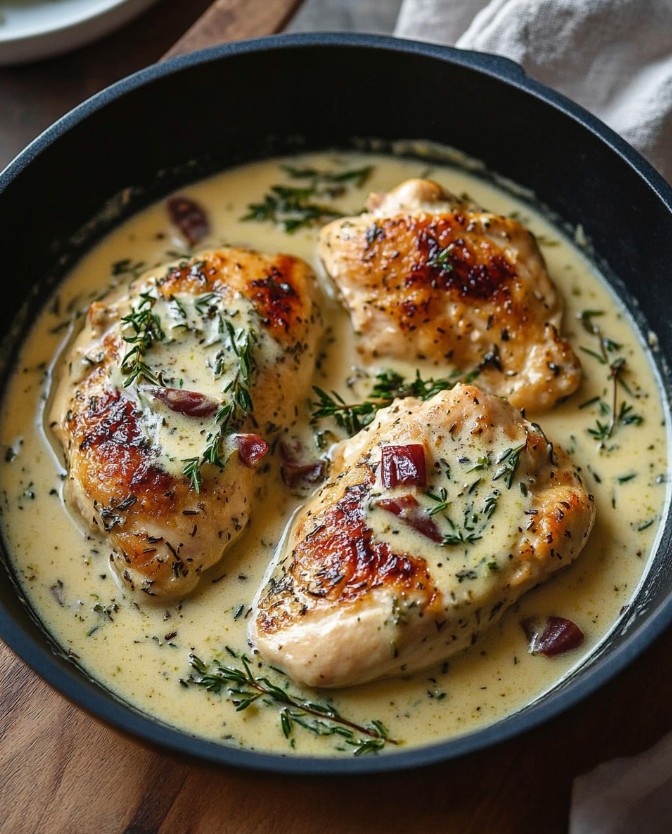
Why Creamy Tarragon Chicken Is a Must-Try Recipe
Picture this: it’s a cozy Sunday evening, and the smell of herbs and creamy sauce is wafting through your kitchen. That’s exactly what happened when I first made Creamy Tarragon Chicken. It’s one of those dishes that feels fancy enough for a dinner party but simple enough for a weeknight. The combination of tender chicken, aromatic tarragon, and a velvety cream sauce is pure comfort food magic. And guess what? You don’t need to be a professional chef to nail it!
The Story Behind Creamy Tarragon Chicken
Tarragon, with its subtle licorice-like flavor, has been a staple in French cuisine for centuries. This herb was once believed to cure everything from fatigue to digestive issues—though I can’t vouch for those claims, I can confirm it cures hunger! The dish itself is a modern twist on classic French chicken recipes, where cream and herbs elevate humble ingredients into something extraordinary. I discovered this recipe while trying to impress my in-laws. Let’s just say, they’re still talking about it years later.
Why You’ll Love This Recipe
This Creamy Tarragon Chicken recipe is all about balance. The rich cream sauce is lightened by fresh tarragon, while the crispy skin of the chicken adds texture. Plus, it’s ready in under an hour, making it perfect for busy cooks who crave gourmet flavors without spending hours in the kitchen. Whether you’re a seasoned home cook or a beginner, this dish will make you feel like a culinary rockstar.
Perfect Occasions to Prepare This Recipe
Serve this dish at a family dinner, a romantic date night, or even a potluck. It pairs beautifully with mashed potatoes, crusty bread, or a side of roasted veggies. I’ve also brought it to holiday gatherings—it’s always a crowd-pleaser. Trust me, your guests will think you slaved over it all day (but we’ll keep the secret between us).
Ingredients
- 1 whole chicken, cut into 6 pieces
- 2 teaspoons salt
- 1 teaspoon freshly ground black pepper
- 2 tablespoons unsalted butter
- 1 medium onion or 2 shallots, peeled and sliced
- 2 garlic cloves, peeled and minced
- 1 cup chicken broth
- ½ cup chicken broth (to replace white wine)
- 2 tablespoons fresh tarragon, chopped (plus extra for garnish)
- ½ cup heavy cream
- Salt and pepper to taste
Substitution Options
- Chicken: Use boneless, skinless chicken thighs if you’re short on time.
- Tarragon: Substitute with dill or parsley if tarragon isn’t available.
- Heavy Cream: Swap with half-and-half or coconut milk for a lighter option.
- White Wine Replacement: If you prefer not to use alcohol substitutes, stick with additional chicken broth.
Step 1: Preparing the Chicken
Rinse the chicken pieces under cold water and pat them dry with paper towels. Season generously with salt and pepper on both sides. Letting the chicken sit at room temperature for an hour helps it cook evenly. Pro tip: Don’t skip drying the chicken—it’s key to getting that golden, crispy skin. Preheat your oven to 375°F (190°C) so it’s ready when you are.
Step 2: Searing the Chicken
Melt the butter in a large oven-safe skillet over medium heat. Once it starts sizzling, place the chicken pieces skin-side down. Resist the urge to move them around—the goal is a deep golden crust. After 10 minutes, flip the chicken and sear the other side. Transfer the chicken to a plate and cover it loosely with foil. Keep the skillet handy; those flavorful drippings are gold.
Step 3: Cooking the Aromatics
Add the sliced onions (or shallots) and minced garlic to the same skillet. Stir occasionally until the onions turn soft and slightly caramelized—about 10 minutes. Return the chicken to the pan, sprinkle with chopped tarragon, and pour in the chicken broth. Bring it to a boil before popping the skillet into the oven for 30 minutes. The aroma alone will have everyone hovering near the kitchen.
Step 4: Finishing the Sauce
Once the chicken is cooked through, remove the skillet from the oven and transfer the chicken to a plate. Place the skillet back on the stove over medium heat. Stir in the heavy cream and let the sauce simmer until it thickens, about 7-8 minutes. Return the chicken to the skillet, spooning the sauce over the top. Garnish with extra tarragon before serving.
Chef’s Tip
To intensify the flavor, deglaze the pan with a splash of white wine after searing the chicken. Even if you’re using chicken broth as a substitute, this step adds depth to the sauce.
Timing
- Prep Time: 20 minutes
- Cook Time: 40 minutes
- Total Time: 1 hour
Extra Info
Did you know tarragon is known as the “king of herbs” in French cooking? Its delicate flavor shines best when paired with creamy sauces and proteins like chicken. Fun fact: Napoleon was reportedly a fan of tarragon-infused dishes!
Necessary Equipment
- Oven-safe skillet or sauté pan
- Tongs for flipping chicken
- Wooden spoon for stirring
- Measuring cups and spoons
Storage
Leftovers can be stored in an airtight container in the refrigerator for up to 3 days. Reheat gently on the stovetop to preserve the sauce’s texture. Avoid microwaving, as it can make the sauce separate. For longer storage, freeze individual portions in freezer-safe bags for up to 2 months. Thaw overnight in the fridge before reheating.
If freezing, consider separating the sauce from the chicken to prevent sogginess. When ready to eat, recombine and warm slowly.
Pro tip: Add a splash of cream or broth when reheating to refresh the sauce’s consistency.
Tips and Advice
- Use fresh tarragon whenever possible—it makes a world of difference.
- Don’t overcrowd the skillet when searing the chicken; work in batches if needed.
- Taste the sauce before serving and adjust seasoning as needed.
Presentation Tips
- Garnish with extra tarragon leaves for a pop of color.
- Serve on a platter surrounded by lemon wedges for brightness.
- Pair with colorful sides like roasted carrots or green beans.
Healthier Alternative Recipes
Looking to lighten up this dish? Try these variations:
- Baked Version: Skip the searing step and bake the chicken directly in the sauce for a lower-fat option.
- Dairy-Free: Replace heavy cream with cashew cream or almond milk.
- Gluten-Free: Serve with quinoa or cauliflower rice instead of traditional starches.
- Herb Swap: Experiment with rosemary or thyme for a different flavor profile.
- Vegan Option: Use plant-based chicken alternatives and coconut cream.
- Low-Sodium: Use low-sodium chicken broth and reduce added salt.
Mistake 1: Overcooking the Chicken
Overcooked chicken becomes dry and loses its juiciness. To avoid this, check the internal temperature with a meat thermometer—it should read 165°F (74°C). Remove the chicken from the heat just before it reaches this temp, as it will continue cooking from residual heat.
Mistake 2: Skipping the Resting Step
Letting the chicken rest after searing locks in juices. Skipping this step results in less flavorful meat. Always allow at least 5 minutes of resting time before slicing or serving.
Mistake 3: Using Dried Herbs Instead of Fresh
Fresh tarragon has a brighter, more vibrant flavor compared to dried. If you must use dried, reduce the amount by half since dried herbs are more concentrated.
Mistake 4: Not Deglazing the Pan
Those browned bits at the bottom of the pan are packed with flavor. Deglazing with broth or wine lifts them off, enriching the sauce. Don’t waste them!
Mistake 5: Rushing the Sauce
A good sauce takes time to thicken. Be patient and let it simmer gently. Stirring constantly prevents burning and ensures even thickening.
FAQ
Can I use boneless chicken?
Absolutely! Boneless, skinless chicken thighs or breasts work well. Adjust the cooking time accordingly, as they’ll cook faster than bone-in pieces.
What can I substitute for tarragon?
If tarragon isn’t available, try dill, parsley, or chervil. Each brings a unique twist but complements the creamy sauce nicely.
Can I make this ahead of time?
Yes! Prepare the dish up to the point of adding the cream, then refrigerate. Reheat and finish the sauce just before serving for optimal freshness.
Is this dish gluten-free?
By default, yes! Just ensure your chicken broth is gluten-free, and you’re good to go.
How do I store leftovers?
Store in an airtight container in the fridge for up to 3 days. Reheat gently on the stovetop to maintain the sauce’s texture.
Can I freeze this dish?
Yes, but freeze the sauce and chicken separately to prevent sogginess. Thaw overnight in the fridge and reheat gently.
What sides pair well with this dish?
Mashed potatoes, roasted vegetables, or crusty bread are excellent choices. They soak up the delicious sauce beautifully.
Why does my sauce taste bland?
Seasoning is key. Taste the sauce before serving and adjust with salt, pepper, or a squeeze of lemon juice for brightness.
Can I use a slow cooker?
While not ideal for achieving crispy skin, you can adapt this recipe for a slow cooker. Brown the chicken first, then combine all ingredients and cook on low for 6-8 hours.
What wine pairs well with this dish?
A crisp Chardonnay or Sauvignon Blanc complements the creamy sauce and tarragon perfectly. Cheers!
This Creamy Tarragon Chicken recipe is proof that great food doesn’t have to be complicated. With its rich flavors, comforting textures, and versatility, it’s sure to become a staple in your kitchen. So grab your skillet, invite some friends over, and enjoy the deliciousness. Happy cooking!
Creamy Tarragon Chicken
Ingredients
Equipment
Method
- Rinse chicken pieces under cold water, pat dry, and season with salt and pepper.
- Preheat your oven to 375°F (190°C).
- Melt butter in a large oven-safe skillet over medium heat.
- Place chicken pieces skin-side down in the skillet and sear for 10 minutes.
- Flip the chicken and sear the other side, then transfer to a plate and cover with foil.
- Add onions (or shallots) and garlic to the skillet, stirring until softened (about 10 minutes).
- Return chicken to skillet, sprinkle with tarragon, and pour in chicken broth.
- Bring to a boil, then transfer skillet to the oven for 30 minutes.
- Remove chicken from the oven and set aside on a plate.
- Stir heavy cream into the skillet and simmer until sauce thickens (about 7-8 minutes).
- Return chicken to the skillet, spoon sauce over the top, and garnish with extra tarragon before serving.