
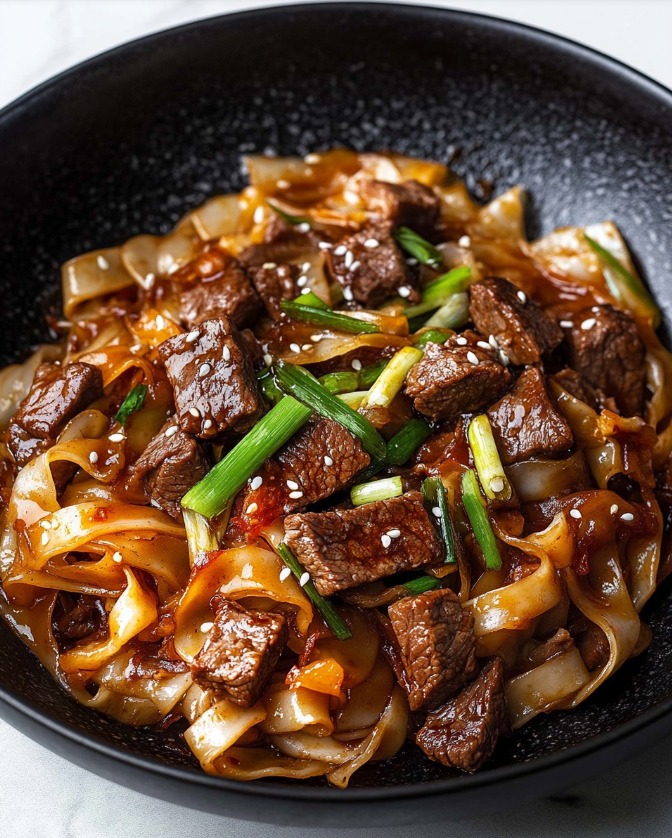
Discover the Magic of Beef Chow Fun
There’s something magical about the sizzle of a wok and the aroma of garlic hitting hot oil. One bite of Beef Chow Fun, and I was transported straight to the bustling streets of Hong Kong. This classic Cantonese dish is a symphony of flavors and textures—soft yet chewy rice noodles, tender strips of beef, and crisp veggies all coated in a savory sauce. It’s become my go-to recipe for family dinners because it’s quick, satisfying, and always gets rave reviews.
A Taste of Cantonese Tradition
Beef Chow Fun has deep roots in Cantonese cuisine, where wide rice noodles, also known as “ho fun,” are a staple. Traditionally served in dim sum houses or street food stalls, this dish highlights simplicity and balance. The key lies in the technique—cooking each component separately before combining them ensures every element shines. I remember my first attempt at making it; I burned the noodles and overcooked the beef. But with practice (and a few tweaks), I nailed it. Now, it feels like a little piece of China right in my kitchen.
Why You’ll Love This Recipe
This Beef Chow Fun recipe is a winner for so many reasons. First, it’s packed with bold flavors that satisfy every craving. The marinade tenderizes the beef perfectly, while the sauce adds just the right amount of umami. Second, it’s surprisingly easy to make—even if you’re new to Asian cooking. And finally, it’s versatile! You can tweak the ingredients based on what you have at home. Plus, it’s ready in under 30 minutes, which makes it perfect for busy weeknights.
Perfect Occasions to Prepare This Dish
Whether you’re hosting a casual dinner party or whipping up a comforting meal for your family, Beef Chow Fun fits the bill. It’s great for celebrations like Lunar New Year or any occasion when you want to impress without spending hours in the kitchen. I love serving it during potlucks because everyone goes back for seconds. It’s also a fantastic way to introduce friends to Cantonese cuisine if they haven’t tried it before.
Ingredients
- For the beef:
- 1 lb (340 g) thinly sliced flank steak
- 1 tsp baking soda
- 1 tsp cornstarch
- 1 tsp light soy sauce
- 1 tsp oyster sauce
- ½ tsp sugar
- 1 tbsp Shaoxing wine (or dry sherry)
- 2 tsp vegetable oil
- ¼ tsp ground black pepper
- For the noodles:
- 1 lb (340 g) dried wide rice noodles (or fresh)
- 1 medium yellow onion, sliced
- 2 green onions, whites and greens separated, chopped
- 1–2 cups fresh bean sprouts
- Vegetable oil for cooking
- For the sauce:
- 1 tbsp light soy sauce
- 1 tbsp oyster sauce
- 1 tbsp dark soy sauce (optional)
- A pinch of sugar
Substitution Options
If you can’t find wide rice noodles, thinner ones work too, though the texture will differ slightly. Substitute flank steak with sirloin or even chicken breast for a lighter option. For vegetarians, swap the beef with tofu or mushrooms. If Shaoxing wine isn’t available, dry sherry is a fine alternative. Dark soy sauce is optional but adds depth and color. Lastly, feel free to use frozen bean sprouts if fresh ones aren’t handy.
Preparation Section
Step 1: Marinate the Beef
In a bowl, mix the sliced beef with baking soda, cornstarch, soy sauce, oyster sauce, sugar, Shaoxing wine, oil, and pepper. Stir well until the beef is evenly coated. Let it sit for 20 minutes. This step is crucial—it’s what makes the beef melt-in-your-mouth tender. Pro tip: Slice the beef against the grain for maximum tenderness. While the beef marinates, prep your other ingredients.
Step 2: Soften the Noodles
If using dried noodles, soak them in hot water for 10–15 minutes until they’re pliable but still firm. Fresh noodles only need 2 minutes. Drain and rinse under cold water to prevent sticking. Watching the noodles soften reminds me of how forgiving this recipe is—you don’t need perfection here, just patience. Keep the noodles aside while you move on to the next steps.
Step 3: Make the Sauce
In a small bowl, whisk together light soy sauce, oyster sauce, dark soy sauce (if using), and a pinch of sugar. This sauce is the heart of the dish, so taste it and adjust if needed. I always add an extra dash of oyster sauce because I love its rich flavor. Set the sauce aside—you’ll pour it into the wok later.
Step 4: Sear the Beef
Heat a wok or large skillet over medium-high heat. Add a splash of oil and sear the marinated beef for 1–2 minutes until browned but not fully cooked. Remove the beef and set it aside. The sizzle and aroma at this stage are intoxicating. Don’t overcrowd the pan; cook in batches if needed to avoid steaming the beef instead of searing it.
Step 5: Cook the Vegetables
In the same wok, add more oil and stir-fry the onions and white parts of the green onions for a few seconds. Deglaze the pan with a tablespoon of Shaoxing wine. The onions should soften slightly but retain their crunch. This step builds the foundation of flavor, layering sweetness and fragrance into the dish.
Step 6: Combine the Noodles
Add the softened noodles to the wok. Pour the sauce gradually, tossing everything together until the noodles are well-coated and separated. Mix in the green parts of the green onions and bean sprouts. The vibrant colors of the vegetables against the glossy noodles are stunning. Cook for another minute to heat through.
Step 7: Finish with the Beef
Return the beef to the wok and toss everything together. If you want a darker hue, drizzle a bit more dark soy sauce. Give it one final mix and turn off the heat. Your kitchen will smell incredible by now, and your stomach will be growling!
Chef’s Tip
Here’s a secret: Always preheat your wok before adding oil. A hot wok ensures your ingredients don’t stick and develop that signature smoky “wok hei” flavor. Trust me, it makes all the difference.
Timing
Prep time: 20 minutes
Cook time: 10 minutes
Total time: 30 minutes
Extra Info
Did you know that wide rice noodles are often called “hor fun” in Malaysia and Singapore? They’re used in various dishes across Southeast Asia, each region adding its own twist. In Cantonese cuisine, they’re prized for their ability to absorb sauces while maintaining their chewy texture.
Necessary Equipment
You’ll need a good wok or large skillet for this recipe. A spatula or wooden spoon works well for stirring, and a sharp knife is essential for slicing the beef. Don’t forget a colander for draining the noodles!
Storage
Leftover Beef Chow Fun keeps well in the fridge for up to 2 days. Store it in an airtight container to maintain freshness. Reheat gently in a skillet with a splash of water to revive the noodles’ texture. Avoid microwaving, as it can make the dish soggy.
If freezing, portion the dish into individual servings. Freeze for up to 1 month. Thaw overnight in the fridge before reheating. Note that the texture of the noodles may change slightly after freezing.
Proper storage ensures you can enjoy this dish anytime. Just imagine having a ready-to-go meal waiting for you after a long day!
Tips and Advice
To elevate your Beef Chow Fun, toast the noodles briefly in the wok before adding the sauce. This adds a subtle nuttiness. Use high-quality oyster sauce—it truly enhances the dish. Finally, don’t skip the baking soda in the marinade; it’s the secret to tender beef.
Presentation Tips
- Garnish with extra bean sprouts and chopped green onions for freshness.
- Serve in a large bowl or platter to showcase the colorful ingredients.
- Add a sprinkle of sesame seeds for a decorative touch.
Healthier Alternative Recipes
Looking to lighten up your Beef Chow Fun? Try these variations:
- Vegetarian Version: Replace beef with tofu or tempeh.
- Low-Sodium Option: Use reduced-sodium soy sauce and oyster sauce.
- Gluten-Free Twist: Swap regular soy sauce with tamari.
- Spicy Kick: Add chili flakes or sriracha to the sauce.
- Protein-Packed: Include shrimp or chicken alongside the beef.
- Veggie-Loaded: Bulk up the dish with bell peppers, carrots, or bok choy.
Common Mistakes to Avoid
Mistake 1: Overcooking the Noodles
Overcooked noodles turn mushy and lose their delightful chewiness. To avoid this, soak dried noodles just until soft and al dente. Fresh noodles require minimal heating. Pro tip: Rinse the noodles after soaking to remove excess starch.
Mistake 2: Skipping the Marinade
The marinade isn’t optional—it’s what makes the beef tender and flavorful. Without it, the dish falls flat. Take the time to let the beef marinate fully for the best results.
Mistake 3: Crowding the Wok
A crowded wok lowers the temperature and causes steaming instead of searing. Cook in batches if necessary. High heat is key to achieving that authentic wok flavor.
Mistake 4: Using Too Much Sauce
While sauce is important, too much can overwhelm the dish. Start with a small amount and adjust to taste. Remember, you can always add more later.
Mistake 5: Neglecting the Wok Heat
A lukewarm wok won’t give you the smoky flavor that defines stir-fries. Preheat your wok until it’s smoking hot before adding oil. This ensures proper caramelization and prevents sticking.
FAQ
What is Beef Chow Fun?
Beef Chow Fun is a popular Cantonese stir-fry featuring wide rice noodles, tender beef, and vegetables tossed in a savory sauce. It’s beloved for its rich flavors and satisfying texture.
Can I use chicken instead of beef?
Absolutely! Chicken works beautifully in this recipe. Just slice it thinly and follow the same marinating process for equally delicious results.
Where can I buy wide rice noodles?
Wide rice noodles are available at most Asian grocery stores. Look for packages labeled “rice sticks” or “ho fun.” Some larger supermarkets may carry them in the international aisle.
Is baking soda safe to use in marinades?
Yes, baking soda is commonly used in Chinese marinades to tenderize meat. It’s safe in small amounts and enhances the texture of the beef significantly.
Can I make this dish ahead of time?
While Beef Chow Fun tastes best fresh, you can prep ingredients ahead of time. Marinate the beef and chop the veggies in advance to save time.
How do I reheat leftovers?
Reheat gently in a skillet with a splash of water to prevent drying out. Avoid microwaving, as it can make the noodles soggy.
What can I substitute for Shaoxing wine?
Dry sherry is an excellent substitute for Shaoxing wine. Alternatively, you can omit it, though the flavor profile may differ slightly.
Can I freeze this dish?
Yes, you can freeze Beef Chow Fun for up to 1 month. Portion it into individual servings for easy reheating.
Why does my dish lack flavor?
If your dish feels bland, check your seasonings. Ensure you’re using enough soy sauce, oyster sauce, and sugar. Taste and adjust as you go.
What sides pair well with Beef Chow Fun?
Serve with steamed dumplings, spring rolls, or a simple cucumber salad. These sides complement the richness of the dish perfectly.
Final Thoughts
Beef Chow Fun is more than just a dish—it’s a celebration of flavors, textures, and culture. With its tender beef, chewy noodles, and fragrant sauce, it’s no wonder this recipe has captured hearts worldwide. Whether you’re a seasoned cook or a beginner, this dish is sure to become a favorite. So grab your wok, gather your ingredients, and get ready to create something truly special. Happy cooking!
Beef Chow Fun
Ingredients
Equipment
Method
- In a bowl, mix the sliced beef with baking soda, cornstarch, soy sauce, oyster sauce, sugar, Shaoxing wine, oil, and pepper. Stir well and let it sit for 20 minutes.
- If using dried noodles, soak them in hot water for 10–15 minutes until pliable. Fresh noodles only need 2 minutes. Drain and rinse under cold water.
- In a small bowl, whisk together light soy sauce, oyster sauce, dark soy sauce (if using), and a pinch of sugar for the sauce. Set aside.
- Heat a wok or large skillet over medium-high heat, add oil, and sear the marinated beef for 1–2 minutes until browned. Remove and set aside.
- In the same wok, add more oil and stir-fry the onions and white parts of the green onions for a few seconds. Deglaze the pan with a tablespoon of Shaoxing wine.
- Add the softened noodles to the wok. Pour the sauce gradually, tossing to coat the noodles. Mix in the green parts of the green onions and bean sprouts, cooking for another minute.
- Return the beef to the wok and toss everything together. Adjust with more dark soy sauce if desired, then turn off the heat.
Nutrition
Notes
Toast the noodles in the wok briefly before adding the sauce for a nuttier taste.
Store leftovers in an airtight container in the fridge for up to 2 days; reheat gently in a skillet with a splash of water.
For a healthier alternative, try using tofu instead of beef or explore other variations like adding more vegetables.