
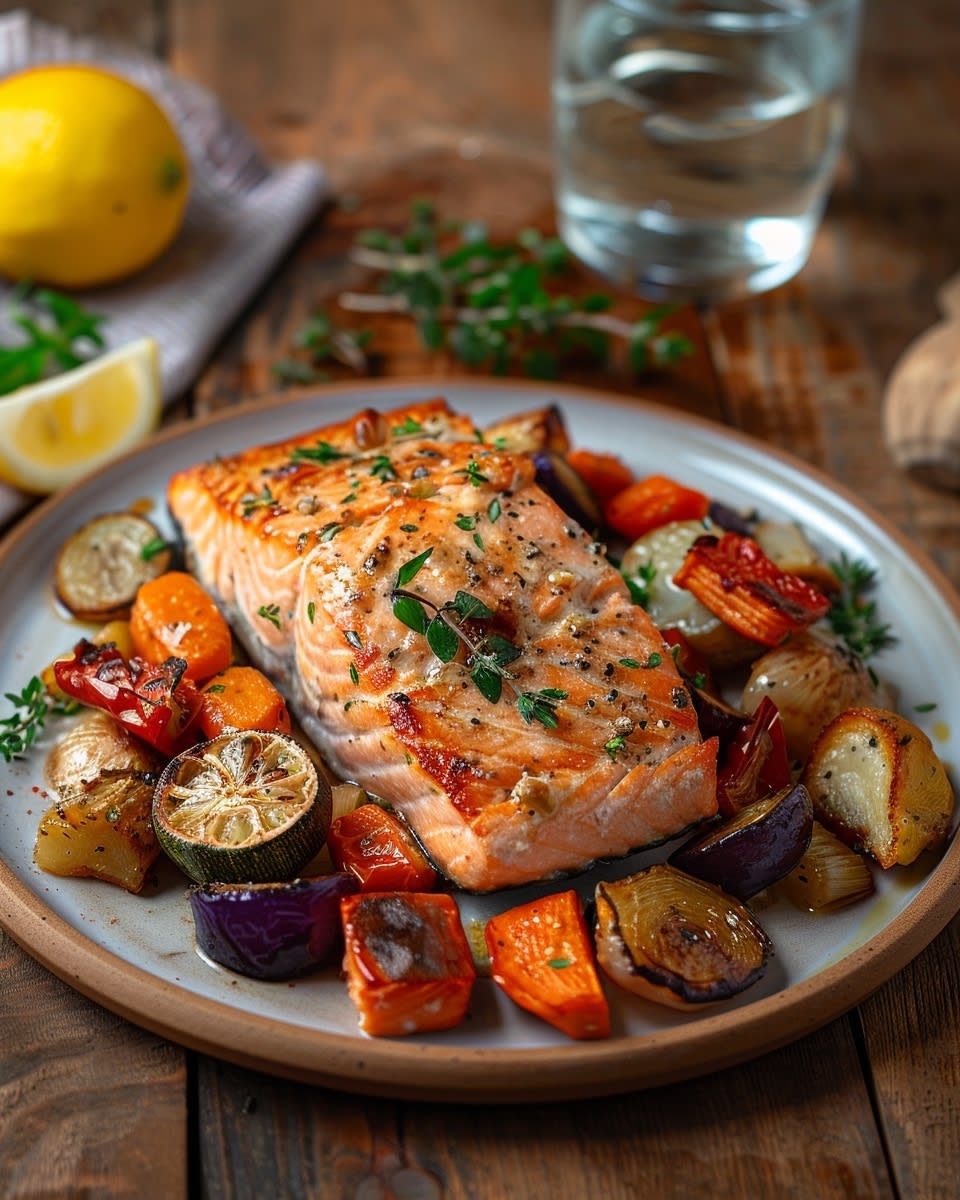
Baked Salmon with Veggies: A Simple, Healthy Meal Everyone Will Love
Last Tuesday night, I opened my fridge to find a beautiful piece of salmon and a bunch of colorful vegetables staring back at me. I had exactly 30 minutes before my kids needed help with homework, and I knew I needed something quick but nutritious. That’s when I remembered why baked salmon with veggies has become my go-to weeknight dinner. I threw everything on a baking sheet, slid it into the oven, and had a restaurant-quality meal ready in less time than it takes to order takeout.
Welcome to my kitchen, where we’re going to explore this delightful and nutritious dish together. Baked Salmon with Veggies is not just a treat for your taste buds. It’s also a great way to enjoy a healthy, balanced diet without spending hours in the kitchen. Whether you’re a seasoned chef or someone who just learned how to turn on the oven, this recipe is easy to follow and sure to impress your family and friends.
The best part? You don’t need fancy ingredients or complicated techniques. Just fresh salmon, your favorite vegetables, and a few simple seasonings. I’ve made this dish countless times, and it never gets old. Each time, I switch up the vegetables or herbs based on what I have on hand, and it always turns out amazing.
Why Choose Baked Salmon with Veggies?
Let me share why baked salmon with vegetables and herbs has earned a permanent spot in my weekly meal rotation. First off, this dish is incredibly versatile. You can adapt it to different flavors and preferences, making it perfect for any occasion. Having guests over for dinner? This looks elegant and sophisticated. Need a quick weeknight meal? It’s ready in under 40 minutes.
I love how forgiving this recipe is. Forgot to buy asparagus? Use broccoli instead. No fresh herbs? Dried ones work just fine. The salmon doesn’t mind what vegetables you pair it with, and the vegetables are happy to share the pan with whatever seasonings you choose.
Beyond the convenience, this meal is packed with nutrients and omega-3 fatty acids. These are essential for a healthy heart and brain. My doctor once told me that eating salmon twice a week could significantly improve my cholesterol levels. After making this a regular part of my diet, my numbers actually improved at my next checkup.
The cooking method itself is another reason I keep coming back to this recipe. Baking salmon is gentler than pan-frying or grilling. It helps the fish stay moist and tender. When you add vegetables to the same pan, they absorb the flavors from the salmon and herbs. Everything comes together in one beautiful, harmonious dish.
If you’re looking for variety, you can easily turn this into a Mediterranean salmon tray bake by adding olives, cherry tomatoes, and feta cheese. Or make it heartier with baked salmon with potatoes and vegetables for a complete one-pan meal. The possibilities really are endless.
Another huge benefit is the minimal cleanup. I’m all about keeping things simple in the kitchen. One pan means one thing to wash. If you use baked salmon with vegetables in foil, cleanup becomes even easier. Just wrap everything up, toss it out, and you’re done.
Nutritional Benefits of Baked Salmon with Veggies
Now let’s talk about the nutritional powerhouse you’re getting with every bite. This dish isn’t just delicious. It’s genuinely good for you in so many ways.
Salmon is a protein superstar. A single serving gives you about 25-30 grams of high-quality protein. This helps build and repair muscles, keeps you feeling full longer, and supports your immune system. I noticed that when I eat salmon for dinner, I’m not rummaging through the pantry for snacks an hour later.
The omega-3 fatty acids in salmon deserve their own spotlight. These healthy fats reduce inflammation throughout your body. They support brain health and may even improve your mood. My husband jokes that I’m always happier after salmon night. There might be some truth to that.
Here’s a breakdown of what salmon brings to your plate:
- High-quality protein for muscle health and satiety
- Omega-3 fatty acids for heart and brain function
- Vitamin D for bone health and immune support
- B vitamins for energy production
- Selenium for thyroid function
- Potassium for blood pressure regulation
Now let’s look at the vegetables. The beauty of this dish is that you can mix and match based on what’s in season or what you prefer. Each vegetable brings its own nutritional benefits to the table.
Bell peppers add vitamin C and antioxidants. Broccoli provides fiber and vitamin K. Zucchini offers potassium and vitamin A. Cherry tomatoes bring lycopene and more vitamin C. Asparagus delivers folate and vitamin E. The list goes on and on.
When I make baked salmon recipes with a rainbow of vegetables, I know my family is getting a wide range of nutrients. The different colors actually indicate different beneficial compounds. Red vegetables have different antioxidants than green ones. Orange vegetables offer different vitamins than purple ones.
The fiber content in vegetables is another major benefit. Most Americans don’t get enough fiber in their diets. By loading up your baking sheet with veggies alongside that salmon, you’re tackling this problem head-on. Fiber helps with digestion, keeps blood sugar stable, and supports heart health.
Compared to pan fried salmon with roasted vegetables or grilled salmon with vegetables, the baked version often uses less added fat. You can control exactly how much oil or butter goes into the dish. This makes it easier to keep the calorie count reasonable while still enjoying amazing flavors.
What really makes this meal special from a nutrition standpoint is the combination. Pairing protein with fiber-rich vegetables creates a balanced plate that follows dietary guidelines. You’re getting lean protein, healthy fats, and plenty of vitamins and minerals all in one dish.
I’ve also found that this meal fits into almost any eating plan. Following a low-carb diet? Perfect. Need something Mediterranean-style? Add a few tweaks and you’re there. Want a paleo-friendly dinner? This checks all the boxes. Even my pickiest eater approves, which says a lot.
The salmon tray bake approach means the nutrients stay intact too. Baking at moderate temperatures preserves more vitamins than high-heat cooking methods. The vegetables stay crisp-tender rather than mushy, which means they retain more of their nutritional value.
One thing my nutritionist friend always mentions is the importance of eating the rainbow. This dish makes that so easy. I simply choose vegetables in different colors, arrange them around the salmon, and dinner is served. My kids actually eat their vegetables this way because everything tastes so good together.


How to Prepare Baked Salmon with Veggies
Now that you know why this dish is such a nutritional powerhouse, let’s roll up our sleeves and get cooking. I promise this is easier than you might think. The first time I made this, I was nervous about overcooking the salmon or burning the vegetables. But here’s the thing – once you understand a few basic principles, you’ll be making this dish with your eyes closed.
The secret to a perfect baked salmon with vegetables and herbs starts way before you turn on your oven. It begins at the grocery store or fish counter. I’ve learned this the hard way after a few disappointing dinners where the salmon just didn’t taste quite right. Quality ingredients make all the difference, and I’m going to share everything I’ve picked up over the years.
Selecting the Perfect Salmon
Walking up to the fish counter used to intimidate me. There are so many options, and the person behind the counter always seems to be watching to see if you know what you’re doing. But I’ve got your back here. Let me share what I look for every single time.
First things first – your nose knows. Fresh salmon should smell like the ocean, clean and slightly sweet. If it smells fishy or ammonia-like, walk away. I don’t care how good the price is. My neighbor once bought salmon that was on sale, and she regretted it the moment she opened the package at home. Don’t be like my neighbor.
Look at the color next. Quality salmon has a vibrant, rich color whether it’s pink, red, or orange. The flesh should look moist but not slimy. I always check for something called the “spring test” when possible. If you gently press the flesh with your finger, it should bounce back. If your fingerprint stays there, that fish has been sitting around too long.
Here’s where people always ask me about wild-caught versus farm-raised. Honestly? Both work beautifully for baked salmon recipes. Wild-caught tends to have a deeper flavor and firmer texture. It’s also typically more expensive and not always available depending on the season. I love Alaskan wild salmon when I can get it, especially sockeye or king salmon.
Farm-raised salmon, particularly Atlantic salmon, is available year-round and usually costs less. The flavor is milder, which some people actually prefer. My kids honestly can’t tell the difference once it’s seasoned and baked. The important thing is choosing salmon that’s been raised or caught responsibly. Look for labels like MSC certified or ASC certified.
Funny enough, I’ve started asking my fishmonger which salmon they’d take home for their own dinner. They always steer me toward the freshest option, and I’ve never been disappointed. Building that relationship has been one of my best kitchen secrets.
Frozen salmon is absolutely fine too. In fact, most salmon has been frozen at some point anyway, even if it’s labeled “fresh” at the counter. If you’re buying frozen, make sure the package is solid with no ice crystals inside, which could indicate it’s been thawed and refrozen. I keep frozen salmon fillets in my freezer for those nights when I haven’t planned ahead.
For portion sizes, I typically buy six-ounce fillets for adults and four-ounce portions for kids. Salmon shrinks slightly during cooking, so don’t worry if it looks like a lot at first. One of my favorite time-saving tricks is buying a large piece and having the fishmonger portion it for me right there. Saves me from doing it at home, and their knife skills are way better than mine.
Choosing the Right Vegetables and Herbs
This is where the fun really begins. The vegetables you choose can completely transform your salmon tray bake into something new every time you make it. I’ve learned that certain vegetables work better than others when baking, and timing is everything.
My go-to vegetables are the ones that roast well and don’t release too much water. Asparagus is probably my number one choice. Those tender spears turn slightly crispy at the tips while staying tender in the middle. I just snap off the woody ends and toss them with olive oil. So simple, yet so good. Bell peppers are another winner. I use red, yellow, and orange peppers because they’re sweeter than green ones, plus they add gorgeous color to the pan.
Cherry tomatoes are brilliant for this dish. They burst in the oven and create this amazing sauce that coats everything. My daughter calls them “flavor bombs,” and she’s not wrong. Zucchini works great too, especially if you cut it into half-moons so it doesn’t get mushy. I learned that trick from a cooking show years ago.
Broccoli florets are fantastic, though I usually give them a head start in the oven before adding the salmon since they take longer to cook. Brussels sprouts halved work wonderfully too. They get these crispy, caramelized edges that everyone fights over. Even my Brussels-hating husband will eat them this way.
By the way, green beans are underrated in this dish. They keep their snap and add a nice contrast to the flaky salmon. Cauliflower florets work similarly to broccoli. Red onion wedges caramelize beautifully and add a sweet depth of flavor that I absolutely love.
Now for herbs, which might seem like a small detail but really make the difference between good and amazing. Fresh herbs are my preference, but dried herbs work when that’s what you have. Dill is the classic choice with salmon for good reason. It’s light, fresh, and pairs perfectly with the fish’s natural flavors. I usually buy a bunch, use what I need, and freeze the rest in ice cube trays with olive oil for next time.
Rosemary brings a more robust, earthy flavor that works especially well if you’re including potatoes. Just remember that a little goes a long way with rosemary. I made the mistake of using too much once, and it overpowered everything else. Thyme is more delicate and works beautifully with almost any vegetable combination. It’s like the Switzerland of herbs – neutral and gets along with everyone.
Parsley is perfect for adding at the end as a fresh garnish. Basil works if you’re going for more of a Mediterranean salmon tray bake vibe, especially with tomatoes. Oregano and lemon zest together create this Greek-inspired flavor that reminds me of summer vacations. Sometimes I’ll mix things up completely and use cilantro with lime for an unexpected twist, similar to how I might season a quick beef stir fry with Asian flavors.
The key with herbs is adding some before baking and reserving some fresh herbs to sprinkle on top when everything comes out of the oven. That layering of flavor makes a huge difference. The baked herbs create depth, while the fresh herbs add brightness. It’s like getting two different herb experiences in one bite.
Preparing Baked Salmon with Potatoes and Vegetables
When I want to make this meal even heartier, I add potatoes to create a complete dinner that needs nothing else alongside it. Baked salmon with potatoes and vegetables is my husband’s favorite version because he’s a meat-and-potatoes kind of guy who needs something substantial to feel satisfied.
The trick with potatoes is choosing the right type and cutting them properly. Baby potatoes work beautifully because they’re already small. I just halve or quarter them depending on size. Yukon Gold potatoes are my top pick because they get creamy inside with crispy edges. Red potatoes hold their shape well and have a slightly waxy texture that I love. Russet potatoes work too, though they tend to fall apart more easily.
Here’s what I do. I start by preheating my oven to 400°F. Meanwhile, I wash the potatoes and cut them into uniform pieces, roughly one-inch chunks. This is important because if some pieces are bigger than others, they’ll cook unevenly. I learned this lesson after serving potatoes that were simultaneously burnt and raw. Not my finest moment in the kitchen.
Toss those potato pieces with olive oil, salt, pepper, and maybe some garlic powder or fresh minced garlic. Spread them on your baking sheet in a single layer. This is crucial – don’t crowd them or they’ll steam instead of roast. Give them about 15 to 20 minutes in the oven by themselves before adding anything else. They need that head start since they take longer to cook than the salmon or most vegetables.
While the potatoes are getting their solo time in the oven, prepare your salmon and other vegetables. Pat the salmon dry with paper towels, which helps it get a nice exterior when baking. Season it generously with salt, pepper, and whatever herbs you’re using. I like rubbing a little Dijon mustard on top sometimes, which creates this amazing crust. A drizzle of olive oil or a pat of butter helps keep everything moist.
For the other vegetables, I keep it simple. Cut them into similar-sized pieces so they cook evenly. Toss them with olive oil, salt, and pepper. When those potatoes have had their head start and are starting to turn golden, take the pan out and add your salmon right in the center. Arrange the other vegetables around it, tucking them in wherever there’s space.
If you want to make cleanup even easier, you can try baked salmon with vegetables in foil. Just create a foil packet around everything, though I personally prefer leaving it open so the vegetables can caramelize. The foil method does trap moisture really well, which keeps the salmon incredibly tender. It’s also great for portion control if you’re making individual servings.
Return everything to the oven for another 12 to 15 minutes, depending on the thickness of your salmon. I always check for doneness around the 12-minute mark. The salmon should flake easily with a fork and reach an internal temperature of 145°F if you’re using a thermometer. The potatoes should be tender when pierced with a knife, and the vegetables should be caramelized at the edges.
Sometimes I’ll add lemon slices directly on top of the salmon or scattered around the pan. They roast along with everything else and add this concentrated citrus flavor that brightens the whole dish. It’s as beautiful as it is delicious, kind of like how a simple pasta with olive oil and garlic can be elevated with just a few quality ingredients.
One variation I’ve started doing lately is adding a splash of white wine or chicken broth to the pan before baking. It creates this lovely sauce at the bottom that you can spoon over everything when serving. My mother-in-law taught me that trick, and it’s changed my salmon tray bake game completely.
The beauty of this one-pan meal is that it’s impressive enough for company but easy enough for a regular Tuesday night. I’ve served this to guests who thought I’d spent hours in the kitchen. Little did they know I threw it together while helping with homework and answering work emails. That’s the magic of a well-prepared sheet pan dinner – it looks and tastes like you tried much harder than you actually did. Just like making a simple egg salad sandwich can be elevated with the right techniques, this dish proves that simple preparation can yield restaurant-worthy results. And if you’re looking for other easy protein options that come together quickly, a chicken wrap with lettuce uses the same principle of combining protein with vegetables for a balanced meal.


Variations and Cooking Techniques for Baked Salmon with Veggies
Here’s where things get really exciting. Once you’ve mastered the basic baked salmon with veggies recipe, a whole world of possibilities opens up. I’ve spent years experimenting with different techniques, and each one brings something unique to the table. Some methods are better for certain occasions, while others just fit your mood or what equipment you have available.
The beauty of salmon is how adaptable it is to different cooking methods. Unlike some fish that really only work one way, salmon can handle high heat, low heat, quick cooking, slow cooking, and everything in between. That versatility means you’ll never get bored with this protein. Trust me, I cook salmon at least twice a week, and my family hasn’t complained once about it being repetitive.
Baked Salmon with Vegetables in Foil
Let me tell you about the genius method that changed my weeknight cooking forever. Baked salmon with vegetables in foil is like giving your dinner a steam bath while it bakes. Everything stays incredibly moist, the flavors concentrate and mingle together, and cleanup is literally just tossing the foil in the trash. When my sister-in-law showed me this technique, I honestly wondered where it had been all my life.
The key to foil packets is creating a proper seal while leaving enough room for steam to circulate. I start with a large piece of heavy-duty aluminum foil, about 12 to 14 inches long. Regular foil works too, but I double it up to prevent tearing. Place your salmon fillet right in the center, then arrange your vegetables around and on top of it.
Here’s where the magic happens. Add a splash of white wine, a squeeze of lemon juice, or even just a tablespoon of water. This liquid creates steam inside the packet, which gently cooks everything while keeping it unbelievably tender. I like adding thin lemon slices directly on the salmon, along with fresh herbs like dill or thyme. A pat of butter on top doesn’t hurt either, though olive oil works if you prefer.
Season everything generously because the foil traps the flavors but also dilutes them slightly with the steam. Don’t be shy with your salt, pepper, and garlic. I learned this after making a few bland packets early on. Now I season more heavily than I would for open-pan baking, and the results are perfect every time.
To seal the packet, bring the long sides of the foil together and fold them over a few times, then roll up the ends tightly. You want it sealed but not vacuum-tight. Leave some air space inside for the steam to work its magic. Place your packets on a baking sheet just in case any liquid escapes, then bake at 400°F for about 15 to 18 minutes depending on the thickness of your salmon.
The best part? When you open the packet, this aromatic steam billows out that makes everyone in the house come running to the kitchen. My kids call it “surprise dinner” because they can’t see what’s inside until we open it at the table. It’s become a little ritual in our house. You can also make individual packets for each person, which is perfect for customizing vegetables or seasoning to different preferences. My youngest won’t eat bell peppers, so her packet gets extra zucchini instead.
This method works especially well for meal prep too. I’ll make several packets on Sunday, store them in the fridge, and just pop them in the oven on busy nights. The prep is already done, so dinner is literally 20 minutes away from ready. For anyone focused on sustainable eating practices, this technique minimizes food waste since the contained environment means every bit of flavor and nutrient stays right where it should be.
Pan-Fried Salmon with Roasted Vegetables
Now, if you’re someone who loves a crispy, golden crust on your salmon, then pan fried salmon with roasted vegetables is your ticket to happiness. This technique takes a little more attention than baking, but the texture payoff is absolutely worth it. The contrast between that crispy skin and the tender, flaky interior is what fancy restaurants charge big money for, and you can nail it at home.
Start by getting your vegetables into the oven first since they’ll take longer. Toss them with oil and seasonings, spread them on a baking sheet, and roast at 425°F. While they’re getting happy in there, you can focus on the salmon. This is where technique really matters, so let me walk you through it step by step.
Pat your salmon completely dry with paper towels. This is crucial. Any moisture on the surface will create steam instead of a crust, and you’ll miss out on that crispy skin everyone fights over at my dinner table. Season the salmon generously on both sides. I mean really generous. Some of the seasoning will stay in the pan, so you need more than you think.
Heat a heavy skillet over medium-high heat. Cast iron is my favorite for this, but any heavy pan works. Add enough oil to coat the bottom, let it heat until it shimmers but doesn’t smoke. Carefully place the salmon skin-side down if it has skin, or presentation-side down if it’s skinless. Here’s the hard part – don’t touch it. Seriously, walk away if you have to. Let it cook undisturbed for about 4 to 5 minutes.
You’ll be tempted to peek or move it. Don’t. The salmon will tell you when it’s ready to flip by releasing easily from the pan. If it sticks, it needs more time. When you do flip it, you should see a beautiful golden-brown crust. Cook the other side for another 3 to 4 minutes depending on thickness. The salmon should be just slightly translucent in the very center when you remove it from heat since it’ll continue cooking from residual heat.
By the way, I like finishing the salmon with a squeeze of fresh lemon and a sprinkle of flaky sea salt right before serving. It’s such a simple touch, but it elevates the whole dish. When the vegetables come out of the oven, everything goes on the plate together, and you’ve got yourself a restaurant-quality meal. This method works particularly well when you want to impress someone. I made this for my in-laws on their anniversary, and they still talk about it.
Grilled Salmon with Vegetables
When summer rolls around and I can finally use my grill again, grilled salmon with vegetables becomes my go-to method. There’s something about that smoky, charred flavor that you just can’t replicate with an oven. Plus, keeping the heat outside means my kitchen stays cool, which is a huge bonus when it’s 90 degrees out.
Grilling salmon intimidated me for years because I kept having it stick to the grates or fall apart when I tried to flip it. Then my neighbor, who’s a grill master, shared some tips that completely changed my grilling game. First, make sure your grill grates are absolutely clean and well-oiled. I use a paper towel dipped in vegetable oil held with tongs to oil the grates right before adding the fish.
Preheat your grill to medium-high, around 375 to 400°F. While it’s heating, prepare your salmon and vegetables. For the vegetables, I cut them into larger pieces than I would for roasting since smaller pieces can fall through the grates. Bell pepper quarters, thick zucchini rounds, whole mushrooms, and asparagus spears all work beautifully. Toss everything with oil and seasoning.
If you have a grill basket, use it for the vegetables. If not, you can place them directly on the grates perpendicular to the bars so they don’t fall through. I learned that lesson the hard way after losing half my vegetables to the flames below. Funny enough, my dog was very happy about my mistake that day, but I was not.
For the salmon itself, I almost always grill it skin-side down and never flip it. Place it on the grill, close the lid, and let it cook through from the bottom up. This takes about 8 to 10 minutes depending on thickness. The skin acts as a protective barrier between the flesh and the hot grates, and it gets wonderfully crispy. When it’s done, you can slide a spatula between the skin and the flesh, leaving the skin stuck to the grill, and serve just the perfect salmon fillet.
Another technique I love is using cedar planks, which you can find at most grocery stores. Soak the plank in water for at least an hour, place your seasoned salmon directly on it, and put the whole plank on the grill. The wood infuses the fish with this subtle smoky flavor that’s absolutely incredible. It also prevents sticking completely and makes for a stunning presentation when you bring the plank directly to the table.
For a Mediterranean salmon tray bake vibe on the grill, I’ll add cherry tomatoes, olives, and red onion to the vegetable mix, then finish everything with crumbled feta cheese and fresh basil right before serving. The salty feta and sweet tomatoes play so well with the smoky grilled salmon. It’s one of those combinations that tastes like vacation, even when you’re just eating in your backyard on a Wednesday night.
Grilled vegetables develop this caramelized sweetness that’s different from roasting. The direct heat creates those beautiful char marks and a slightly smoky flavor that pairs perfectly with salmon. I particularly love grilled zucchini and eggplant with salmon. They soak up any marinade or seasoning and develop this almost meaty texture that even my vegetable-skeptical husband enjoys.
One trick for keeping your baked salmon recipes exciting is rotating through these different techniques based on the season or your schedule. During winter, I stick with oven methods. Summer weekends call for grilling. Busy weeknights get the foil packet treatment. Each method has its place, and they all deliver delicious results. The salmon doesn’t care how it’s cooked as long as you don’t overcook it, and the vegetables are happy to go along for the ride no matter which technique you choose.
If you’re looking for more quick meal ideas that combine protein with vegetables in simple ways, exploring other easy lunch recipes can give you inspiration for different flavor combinations and preparation methods that work across various meals throughout your day.
The most important thing I’ve learned through all my salmon cooking adventures is that confidence comes with practice. Your first attempt might not be perfect, and that’s completely fine. My first grilled salmon stuck so badly I had to throw the whole thing out and order pizza. Now I can grill salmon with my eyes closed. Well, not literally, but you get the idea. Give yourself grace, experiment with different methods, and figure out what works best for your lifestyle and taste preferences.
Whether you’re team foil packet, team crispy skin, or team grill marks, there’s a salmon technique out there that’ll become your signature dish. The vegetables are along for the journey, soaking up flavors and adding nutrition and color to your plate. Together, they create meals that nourish your body and make you feel like you really accomplished something in the kitchen, even on days when everything else feels chaotic.
So next time you’re standing in front of that salmon at the grocery store, grab it with confidence. You’ve got multiple techniques in your back pocket now, and you know exactly how to turn that simple piece of fish and some vegetables into something your whole family will love. That’s the real magic of cooking – taking everyday ingredients and transforming them into meals that bring people together around the table, no matter which method you choose to get there.
Frequently Asked Questions About Baked Salmon with Veggies
What are the best vegetables to use with baked salmon?
The best vegetables are those that roast well without releasing too much water. Asparagus, bell peppers, cherry tomatoes, zucchini, broccoli, and green beans are all excellent choices. I typically avoid vegetables like spinach or leafy greens that wilt too much. Root vegetables like carrots and potatoes work great but need extra cooking time. The key is cutting everything into similar-sized pieces so they cook evenly alongside the salmon. For variety, mix colors and textures to keep things interesting on your plate.
Can I use frozen salmon for this recipe?
Absolutely, frozen salmon works perfectly for baked salmon with veggies. Just make sure to thaw it properly in the refrigerator overnight rather than at room temperature to maintain quality and food safety. Once thawed, pat it completely dry with paper towels before seasoning. Frozen salmon is often flash-frozen right after being caught, which can actually preserve freshness better than “fresh” fish that’s been sitting at the counter for days. I keep frozen fillets in my freezer for those nights when I haven’t planned ahead, and honestly, my family can’t tell the difference.
How do I keep the salmon from drying out?
The secret to moist salmon is not overcooking it. Remove it from the oven when it’s just barely opaque in the center, around 145°F internal temperature. The residual heat will finish cooking it to perfection. I also brush the salmon with olive oil or butter before baking, which adds moisture and flavor. Using the foil packet method is another foolproof way to keep salmon moist since the steam created inside the packet prevents drying. Finally, letting the salmon rest for a couple minutes after cooking allows the juices to redistribute throughout the fillet.
What are some good side dishes to serve with baked salmon and veggies?
Since the salmon and vegetables already create a complete meal, I usually keep sides simple. A light green salad with vinaigrette adds freshness without weighing things down. Quinoa or rice pilaf works if you want something to soak up any pan juices. Crusty bread is always welcome at my table for mopping up those flavorful bits. Sometimes I’ll make a quick tzatziki sauce or garlic aioli for dipping. Honestly though, if you’ve loaded your pan with plenty of vegetables, you might not need anything else at all.
Is baked salmon with veggies a good option for a weeknight dinner?
This is possibly the best weeknight dinner option out there. From start to finish, you’re looking at about 30 to 40 minutes, with very little active cooking time. Most of that time is hands-off while everything bakes in the oven, which means you can help with homework, return emails, or just relax. The one-pan approach means minimal cleanup, which is crucial on busy nights. I make this at least twice a week during hectic periods because it delivers a healthy, satisfying meal without the stress.
How long does baked salmon with vegetables last in the refrigerator?
Properly stored in an airtight container, leftover salmon and vegetables will keep for up to three days in the refrigerator. I actually love the leftovers cold on top of a salad the next day for lunch. To reheat, I use a low oven temperature around 275°F to gently warm everything without drying out the salmon. The microwave works in a pinch, but use 50% power and short intervals to avoid overcooking. Some people freeze cooked salmon, but I find the texture changes too much for my liking, so I prefer making only what we’ll eat within a few days.
Can I meal prep baked salmon with vegetables ahead of time?
You can definitely prep components ahead to make dinnertime easier. I wash and chop all the vegetables, store them in containers, and season the salmon the morning of cooking. The foil packet method is particularly great for advance prep since you can assemble complete packets, refrigerate them, and just pop them in the oven when ready. I don’t recommend assembling everything on the baking sheet too far in advance because the vegetables can release moisture and make things soggy. Prepping ingredients separately gives you flexibility while keeping everything fresh and delicious.
What’s the best way to tell when salmon is done cooking?
The most reliable method is using an instant-read thermometer inserted into the thickest part of the fillet, looking for 145°F. Visually, properly cooked salmon will be opaque throughout with just a slightly translucent center. It should flake easily when gently pressed with a fork but still look moist. The flesh will have changed from that translucent raw appearance to an opaque color. With practice, you’ll develop an eye for it, but there’s no shame in using a thermometer. I still use mine every time because I’d rather check than serve undercooked or dried-out fish.
Can I use different types of salmon for this recipe?
Any salmon variety works beautifully for this dish. King salmon and sockeye have richer, more robust flavors and deeper color. Coho salmon is milder and lighter. Atlantic salmon, which is typically farm-raised, is the most common and has a moderate flavor that most people love. Pink salmon is more budget-friendly and works fine, though it has a softer texture. I rotate between varieties depending on availability and price, and they all turn out delicious with the right vegetables and seasonings.
What temperature should I bake salmon and vegetables at?
I find that 400°F is the sweet spot for baked salmon with veggies. This temperature is hot enough to caramelize the vegetables and create some browning without overcooking the salmon. Some recipes call for 425°F or even 450°F, which works if you’re in a hurry, but watch carefully to prevent burning. Lower temperatures like 350°F are gentler and produce very tender salmon, but the vegetables won’t develop as much caramelization. Your oven temperature can vary slightly from the dial setting, so getting an oven thermometer helped me nail consistent results every single time.
Ingredients
Equipment
Method
- Preheat the oven to 400°F (200°C).
- Wash and cut the vegetables into uniform pieces.
- Toss the vegetables with olive oil, salt, and pepper.
- Spread the vegetables on a baking sheet in a single layer.
- If using potatoes, give them a head start in the oven for 15-20 minutes.
- Meanwhile, pat the salmon dry and season generously with salt, pepper, and herbs.
- Place the salmon in the center of the baking sheet after the vegetables have pre-roasted.
- Arrange additional vegetables around the salmon.
- Add lemon slices or any other desired seasonings.
- Bake for 12-15 minutes until the salmon flakes easily with a fork and reaches an internal temperature of 145°F.
- Let rest for a couple of minutes before serving.