
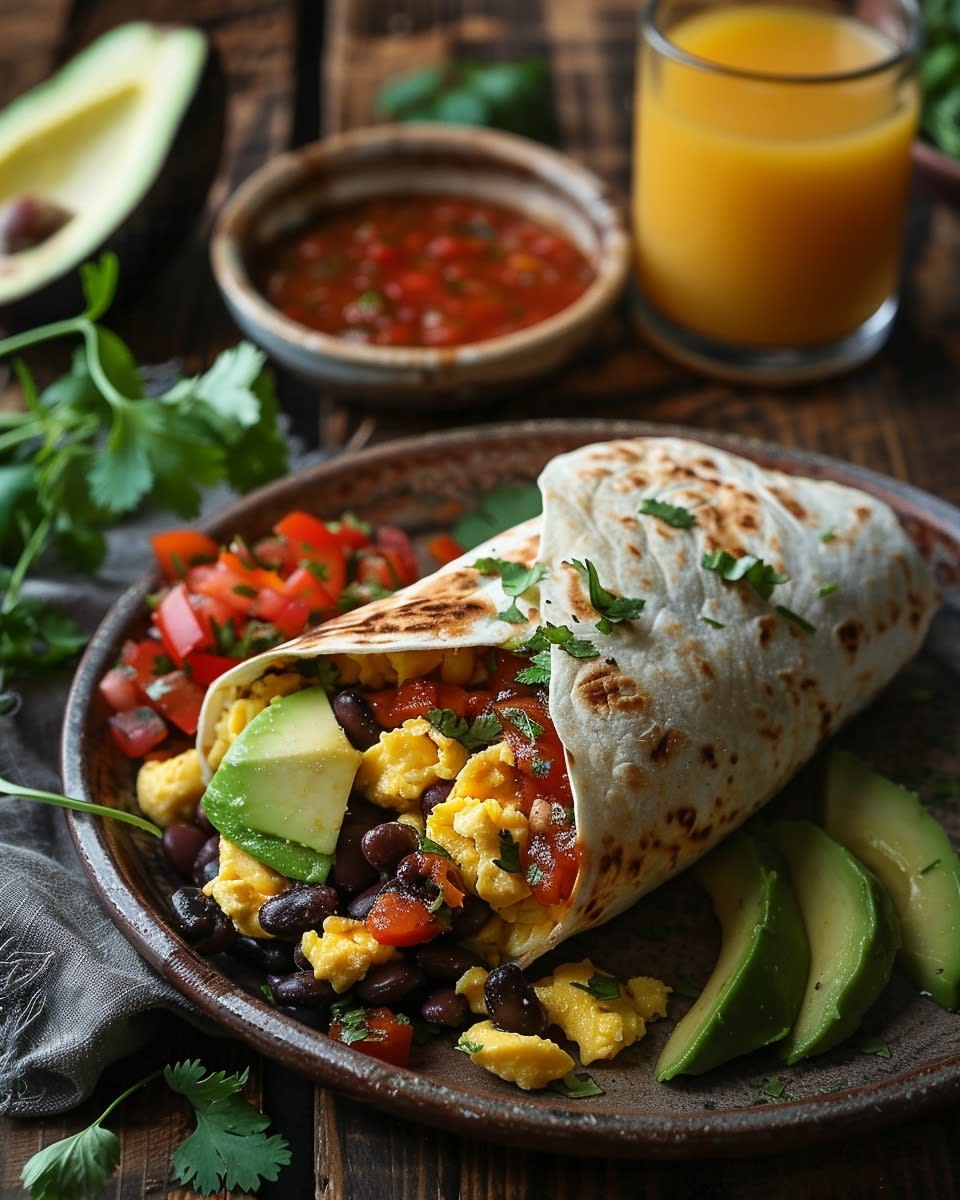
My Love Affair with Breakfast Burritos
I’ll never forget the first time I woke up late for work and thought breakfast was out of the question. My stomach was growling, my coffee was barely keeping me awake, and I knew I needed real food fast. That’s when I threw together my first breakfast burrito with eggs and black beans. Five minutes later, I was out the door with a warm, filling meal wrapped in foil. That morning changed everything for me. Now it’s my go-to breakfast at least three times a week.
The best part? I can make it while half asleep. No fancy cooking skills needed. Just simple ingredients that come together in minutes. And unlike that sad granola bar you might grab on busy mornings, this burrito actually keeps you full until lunch.
Why This Breakfast Burrito with Eggs and Black Beans Works
Let me tell you why this recipe has become my breakfast hero. First off, the protein power is unreal. Eggs give you about 6 grams of protein each, and black beans add another 7 grams per half cup. That means one burrito can pack 20 to 25 grams of protein depending on how you build it.
Your body uses that protein to build muscle, keep your immune system strong, and maintain steady energy levels. I used to crash around 10 AM when I ate sugary cereals or pastries. That doesn’t happen anymore with these burritos.
Black beans bring something else to the table: fiber. A half cup contains about 7 grams of fiber, which is roughly a quarter of what you need all day. Fiber keeps your digestive system happy and helps you feel satisfied for hours. It also helps control blood sugar levels, so you won’t get those annoying energy spikes and crashes.
The nutrients don’t stop there. Eggs contain vitamin D, vitamin B12, and choline, which supports brain health. Black beans offer iron, magnesium, and folate. You’re basically eating a multivitamin wrapped in a tortilla.
The Flexibility Factor
Here’s what I really love about this recipe. You can make it yours. My husband likes his spicy with jalapeños and hot sauce. My daughter prefers hers mild with extra cheese. I change mine up depending on what vegetables are in the fridge.
Some mornings I add sautéed bell peppers and onions. Other days I keep it simple with just eggs, beans, and salsa. Both versions taste amazing. You can prep ingredients on Sunday and assemble burritos all week long. Or you can make several at once and freeze them for grab-and-go breakfasts.
This flexibility makes the breakfast burrito with eggs and black beans perfect for different dietary needs too. Want more vegetables? Load them up. Need extra protein? Add another egg or some Greek yogurt on top. Watching your sodium? Use fresh ingredients instead of canned beans and control the salt yourself.
What You’ll Need for Your Breakfast Burrito
Let’s talk ingredients. The beautiful thing about this recipe is how simple the shopping list is. You probably have most of these items already.
The Essential Ingredients
Here are the must-have items for your egg and black bean burrito:
- Eggs: I use 2 to 3 eggs per burrito depending on how hungry I am. Large eggs work best.
- Black beans: Canned beans are totally fine. Just drain and rinse them first. You can also use dried beans if you prefer cooking from scratch.
- Flour tortillas: Go for the burrito-size ones, around 10 inches. They’re easier to wrap and hold more filling.
- Cheese: Cheddar is my favorite, but Mexican blend, Monterey Jack, or pepper jack all work great. Use about a quarter cup per burrito.
- Salsa: This adds moisture and flavor without extra work. Pick your preferred heat level.
Optional Add-Ins That Make It Special
These extras take your burrito from good to outstanding:
- Avocado or guacamole: Adds healthy fats and creamy texture. I slice half an avocado for my burrito.
- Bell peppers: Any color works. Dice them small and sauté for 3 to 4 minutes.
- Onions: Yellow or white onions add great flavor. Cook them until they’re soft and slightly golden.
- Spinach or kale: Sneak in some greens. They wilt down quickly in the hot eggs.
- Cilantro: Fresh herbs brighten everything up. Add them right before wrapping.
- Sour cream or Greek yogurt: A dollop adds tang and creaminess. Greek yogurt gives you extra protein.
- Hot sauce: Because some of us like it spicy. I keep three different bottles in my fridge.
Kitchen Tools You’ll Use
No special equipment needed here. Just grab these basics:
- A medium non-stick skillet or pan
- A spatula for scrambling eggs
- A bowl for whisking eggs
- Measuring cups and spoons
- A microwave or second pan for warming tortillas
Shopping and Storage Tips
I buy my ingredients once a week and keep them ready to go. Here’s how I store everything for maximum freshness.
Eggs stay good in the fridge for 3 to 5 weeks past the purchase date. I keep mine in the original carton on a middle shelf, not in the door where temperature fluctuates.
Black beans in cans last for years in the pantry. Once opened, transfer leftovers to a glass container and refrigerate. They’ll keep for 3 to 4 days. You can also freeze cooked black beans in portion-sized bags.
Tortillas should stay in the fridge after opening. They can get moldy at room temperature. I’ve also frozen tortillas with great success. Just separate them with parchment paper so they don’t stick together.
Cheese lasts longer when you buy blocks and shred them yourself. Pre-shredded cheese has anti-caking agents that affect melting. But honestly, I still buy pre-shredded sometimes because convenience matters on busy mornings.
Fresh vegetables like bell peppers and onions stay crisp for a week in the crisper drawer. I prep them when I have time, usually Sunday afternoon. Diced vegetables stored in containers save me precious minutes on weekday mornings.
Why This Recipe Fits Your Life
I know mornings are crazy. Kids need lunches packed. You need to shower and get ready. The dog needs walking. A complicated breakfast just isn’t realistic most days.
That’s exactly why this breakfast burrito with eggs and black beans works so well. You can make it in under 10 minutes once you get the hang of it. The ingredients are affordable and available at any grocery store. And unlike drive-through breakfast options, you know exactly what’s going into your food.
Plus, this burrito travels well. Wrap it in foil and take it with you. Eat it in the car, at your desk, or wherever your morning takes you. No fork needed, no mess, and no excuses to skip the most important meal of the day.


Now Let’s Actually Make This Breakfast Burrito with Eggs and Black Beans
Alright, enough talk about ingredients and why this recipe rocks. Let’s get into the kitchen and make this thing. I’m going to walk you through exactly how I do it, step by step, with all the little tricks I’ve learned from making hundreds of these burritos.
The whole process takes about 8 to 10 minutes once you’ve done it a few times. Your first attempt might take a bit longer, and that’s totally normal. I remember my first burrito looked more like a sad, falling-apart mess than anything Instagram-worthy. But it still tasted amazing, and that’s what matters.
Getting Your Eggs Just Right
First things first, crack your eggs into a bowl. I use three eggs because I’m usually pretty hungry in the morning, but two works fine if you want a lighter meal. Here’s what most people don’t realize: whisking your eggs properly makes a huge difference in texture. I beat mine for about 30 seconds with a fork until you can’t see any separate white or yolk parts. Everything should look uniform and slightly frothy.
Add a pinch of salt and some black pepper. Some mornings I throw in a tiny bit of garlic powder too, maybe a quarter teaspoon. It’s subtle but nice.
Heat your non-stick skillet over medium heat. This is important—not high, just medium. I learned this the hard way after making rubbery eggs for weeks. Add about a teaspoon of butter or a quick spray of cooking oil. When the butter starts to foam slightly, you’re ready to pour in those eggs.
Here’s my technique for perfect scrambled eggs: Let them sit undisturbed for about 20 seconds. You’ll see the edges start to set. Then use your spatula to gently push the cooked eggs from the edge toward the center, tilting the pan so the uncooked egg flows to the empty spaces. Keep doing this, working slowly. The whole process takes maybe 2 to 3 minutes.
Take the eggs off the heat when they still look slightly wet. They’ll keep cooking from residual heat. Overcooked eggs get dry and crumbly, which nobody wants. If you’re into super creamy eggs like the ones you might find in fancy brunch spots, check out this cottage cheese breakfast bowl for another protein-packed option that uses a similar gentle cooking approach.
Warming Up Those Black Beans
While your eggs are cooling for just a minute, let’s handle the black beans. If you’re using canned beans like I usually do, you want to drain them in a colander and give them a quick rinse under cold water. This removes excess sodium and that slightly metallic taste canned beans sometimes have.
Measure out about half a cup of beans per burrito. Toss them in the same skillet you used for eggs—no need to dirty another pan. The residual butter or oil adds nice flavor to the beans.
Turn the heat to medium-low and let those beans warm through for about 2 minutes. Here’s where you can get creative. I sprinkle in about a quarter teaspoon of cumin and maybe an eighth teaspoon of chili powder. Sometimes I add a tiny pinch of smoked paprika because I love that subtle smoky flavor. Stir everything together so the spices coat the beans evenly.
If your beans look a bit dry, add a tablespoon of water or salsa. They should be moist but not soupy. You want them to stay in the burrito, not leak out the bottom when you take a bite.
By the way, if you meal prep on weekends, you can season a whole can of beans at once and keep them in the fridge. They’ll last four days and save you time on busy mornings. The same strategy works great for other high-protein breakfasts like this egg white scramble with turkey that I make when I’m watching my fat intake.
The Tortilla Trick Nobody Tells You
Okay, this step seems simple but it’s actually where most people mess up their burritos. Cold tortillas crack when you try to roll them. They split right down the middle and all your beautiful filling falls out. Warming them properly is absolutely essential.
I have two methods depending on how much time I have. The quick way uses the microwave. Place your tortilla on a microwave-safe plate and cover it with a damp paper towel. Microwave for 20 to 30 seconds. The steam from the paper towel keeps the tortilla soft and pliable.
The better way, which only takes a minute longer, uses your stovetop. Heat a dry skillet over medium heat. No oil or butter needed. Place the tortilla in the pan for about 15 to 20 seconds per side. You’ll see it puff up slightly in spots. That’s perfect. It should feel warm and flexible, almost like fabric.
I usually warm my tortilla while the beans are heating. Multitasking makes the whole process faster. Just keep the warmed tortilla wrapped in a clean kitchen towel or covered with a plate to keep it warm and soft until you’re ready to assemble.
Assembling Your Breakfast Burrito Like a Pro
Now comes the fun part—putting it all together. Lay your warm tortilla flat on a clean cutting board or plate. This is your blank canvas.
Here’s the assembly order I use, and it matters more than you’d think. I learned this from watching the folks at my favorite burrito shop who make hundreds of these daily.
Start with a strip of cheese down the center of the tortilla, about two inches wide and leaving three to four inches empty at the top and bottom edges. I use about a quarter cup of shredded cheddar. The cheese acts as a barrier that helps keep moisture from the other ingredients from soaking into the tortilla.
Next, spoon your scrambled eggs right on top of the cheese. Don’t pile them too high or you won’t be able to roll the burrito properly. Spread them out in that same two-inch strip.
Add your seasoned black beans on top of the eggs. Again, keep everything in that center strip. Resist the urge to fill the entire tortilla. Less is actually more when it comes to burrito assembly.
Now add your extras. I usually put two tablespoons of salsa, a few slices of avocado, and maybe some diced tomatoes if I have them. Some days I add a handful of fresh spinach because it wilts from the heat of the eggs and beans. If you’re someone who loves starting the day with greens, you might also enjoy this high protein oatmeal with peanut butter topped with fruit for another nutrient-dense breakfast option.
A dollop of sour cream or Greek yogurt goes on last if you’re using it. I prefer Greek yogurt because it adds extra protein without much extra fat or calories.
The Rolling Technique That Changes Everything
Rolling a burrito properly is honestly an art form. I watched probably ten YouTube videos before I got decent at it. But once you learn, it becomes second nature.
Start by folding the bottom edge of the tortilla up over the filling. Pull it snug but not so tight that the tortilla tears. This first fold is crucial because it creates the seal that keeps everything inside.
Next, fold in both sides toward the center. They should overlap slightly in the middle. Think of it like closing a letter in an envelope.
Now here’s the key move: Use both hands to hold those side flaps in place while you roll the burrito away from you. Keep the roll tight as you go. Your thumbs should be tucking the tortilla under the filling as you roll forward.
The finished burrito should be a neat cylinder with one seam on the bottom. Place it seam-side down on your plate or in the foil if you’re taking it to go. The weight of the burrito and the warmth of the ingredients will help seal that seam closed.
Funny enough, my first successful burrito roll felt like a bigger accomplishment than I expected. I actually took a picture of it. My husband laughed at me, but I didn’t care. I’d finally mastered the technique.
What If Things Don’t Go Perfectly?
Listen, sometimes your burrito will split or leak despite your best efforts. It happens to everyone. If your tortilla tears while rolling, just grab a second tortilla and wrap it around the outside. Problem solved. Some restaurants actually do this on purpose to make extra-sturdy burritos.
If you overfilled your burrito and ingredients are falling out, don’t panic. Scoop everything into a bowl and eat it as a breakfast bowl instead. Add some extra cheese on top and maybe some hot sauce. It’ll taste just as good, I promise.
The beans sometimes make the tortilla a bit soggy if you let the assembled burrito sit too long. That’s why I either eat mine right away or wrap it tightly in foil if I’m taking it with me. The foil holds everything together and contains any potential leaks.
For variety throughout the week, I rotate between this burrito and other protein-rich breakfasts like protein pancakes with Greek yogurt, which my kids absolutely love on weekend mornings when we have a bit more time to cook together.
Making Multiple Burritos at Once
Here’s something I do every Sunday that saves me a ton of time during the week. I make four to six burritos all at once using a meal prep approach. The process is basically the same, just scaled up.
I scramble a dozen eggs in my largest skillet. I season and warm two full cans of black beans in a saucepan. Then I set up an assembly line on my counter with all the ingredients laid out in bowls. Tortillas go in a stack wrapped in a warm towel.
I can assemble six burritos in about 15 minutes this way. Each one gets wrapped individually in foil and labeled with the date using a permanent marker. They go into the fridge if I’m eating them within three days, or into the freezer for longer storage.
To reheat a refrigerated burrito, I microwave it for about 90 seconds, flipping it halfway through. For frozen ones, I microwave for 2 to 3 minutes or until the center is hot. You can also reheat them in the oven at 350 degrees for about 20 minutes if you want the outside to get slightly crispy.
The beauty of this breakfast burrito with eggs and black beans is how well it adapts to whatever schedule you’re working with, whether you’re making one fresh each morning or batch cooking for the entire week ahead.


Taking Your Breakfast Burrito with Eggs and Black Beans to the Next Level
Here’s the thing about this recipe—once you’ve mastered the basic version, a whole world of possibilities opens up. I’ve spent years experimenting with different combinations, and I’ve discovered that this humble breakfast burrito is basically a blank canvas for whatever you’re craving that morning.
Last Tuesday, I threw in some leftover rotisserie chicken with chipotle seasoning. The week before, I used sweet potato cubes that I’d roasted on Sunday. Both versions were completely different from the original, but equally delicious. That’s the magic of this meal.
Fajita-Style Breakfast Burrito That’ll Wake Up Your Taste Buds
One of my absolute favorite variations involves turning this into a fajita-style breakfast burrito. The smoky, slightly charred flavor of sautéed peppers and onions transforms the whole experience.
Here’s what I do: Slice one bell pepper into thin strips. I usually go with red or yellow because they’re sweeter than green ones. Slice half a medium onion the same way. Heat a tablespoon of oil in your skillet over medium-high heat—higher than you’d use for eggs.
Toss in the onions first and cook them for about three minutes until they start getting soft and golden at the edges. Then add your peppers. The key here is to let them sit undisturbed for a minute or two so they get those beautiful brown spots. That slight char adds incredible flavor. Stir them occasionally, cooking for another four to five minutes total.
Season with salt, pepper, a pinch of cumin, and maybe some Mexican oregano if you have it. Some mornings I add thinly sliced mushrooms too, which soak up all those flavors beautifully. The vegetables should be tender but still have a bit of bite to them.
When you assemble your burrito, layer these vegetables right on top of the eggs. The combination reminds me of weekend breakfast at this little diner near my old apartment that made the most amazing Southwestern food. Sometimes the simplest additions make the biggest impact.
Adding Meat for Extra Protein and Flavor
My husband is definitely a meat-and-eggs kind of guy, so I often make a heartier version with bacon or sausage. Chopped bacon adds a salty, crispy element that contrasts perfectly with the creamy eggs and soft beans.
I cook three or four strips of bacon until they’re crispy, then drain them on paper towels and chop them into small pieces. You can do this ahead of time—cooked bacon keeps in the fridge for up to five days. Just reheat it in the microwave for ten seconds before adding it to your burrito.
Crumbled breakfast sausage works great too. Brown about a quarter pound of sausage in your skillet, breaking it into small crumbles as it cooks. Drain off most of the fat before adding it to your burrito. The seasoning in breakfast sausage means you might not need to add as much salt or spices to your eggs.
Chorizo is another fantastic option if you like bold, spicy flavors. Mexican chorizo is already seasoned with paprika, chili powder, and garlic. A little goes a long way—maybe two ounces per burrito. The bright red oil it releases tints everything slightly orange and adds amazing depth of flavor.
For a leaner protein, diced ham or turkey bacon work just fine. I’ve even used leftover steak sliced thin, which felt ridiculously fancy for a Tuesday morning breakfast but tasted absolutely incredible.
Lighter Versions Without Sacrificing Satisfaction
I’ll be honest—there are weeks when I’m trying to eat a bit lighter, maybe after a vacation where I indulged more than usual. The great news is this breakfast burrito adapts beautifully to healthier modifications without losing its appeal.
Switching to egg whites is the most obvious change. Three egg whites have about the same volume as two whole eggs but contain only around 50 calories compared to 140 for whole eggs. You lose some of the richness, but adding an extra tablespoon of salsa or a bit of low-fat cheese compensates nicely.
Whole wheat tortillas add fiber and have a slightly nutty taste I’ve grown to prefer over regular flour tortillas. They can be a bit drier, so I’m extra careful about warming them properly. Some brands are better than others—I’ve tried probably eight different kinds before finding one my whole family likes.
Low-fat cheese melts just as well as full-fat versions, and honestly, I can barely tell the difference when it’s mixed with all the other ingredients. Reduced-fat cheddar or part-skim mozzarella both work fine. You could also just use less cheese—two tablespoons instead of a quarter cup still gives you that cheesy satisfaction.
Greek yogurt instead of sour cream is another easy swap that actually increases the protein content. The tanginess is nearly identical, and you get probiotics as a bonus. Making smart food choices about ingredient quality and nutrition doesn’t mean your breakfast has to taste boring or feel like a sacrifice.
One trick I discovered by accident: adding extra vegetables bulks up the burrito without adding many calories. Diced zucchini, shredded carrots, or chopped tomatoes all work great. The vegetables add moisture and texture while keeping you full longer.
Spicy Variations for Heat Lovers
My daughter thinks I’m crazy, but I genuinely crave spicy food first thing in the morning. There’s something about that little endorphin rush from capsaicin that gets my day started right.
The easiest way to add heat is obviously hot sauce. I keep a rotation of at least three bottles in my fridge—a classic Cholula for mild mornings, a green jalapeño sauce for medium heat, and a habanero sauce for when I’m feeling brave. A few dashes mixed right into the scrambled eggs distributes the heat evenly throughout.
Fresh jalapeños are fantastic if you have them. I slice them into thin rounds, seeds and all, and sauté them with the eggs. One medium jalapeño gives a nice kick without overwhelming everything else. If you want less heat, remove the seeds and white membranes before slicing.
Pickled jalapeños from a jar work too and add a tangy vinegar note along with the spice. I use about a tablespoon of them, chopped small. The pickling juice itself makes an interesting addition to the beans—just a teaspoon mixed in while they’re warming.
Crushed red pepper flakes give you control over the heat level. Start with a quarter teaspoon sprinkled into your eggs and adjust from there. They’re not as flavorful as fresh peppers, but they’re always in my pantry and never go bad.
For a smokier heat, chipotle peppers in adobo sauce are incredible. These are smoked jalapeños packed in a spicy tomato sauce. I mince half a pepper and mix it with my beans. The smoky flavor is addictive. Fair warning though—these are pretty spicy, so start small.
Unexpected Ingredients That Actually Work
Over the years, I’ve tried some unusual additions that turned out way better than expected. Corn kernels, either fresh or frozen, add little bursts of sweetness that balance the savory elements perfectly. I just toss a handful into the pan with the beans to warm them through.
Black olives might sound weird, but they add a briny saltiness that’s really good with eggs. Slice about five olives and scatter them in. My friend from California introduced me to this variation, and now I crave it sometimes.
A tiny bit of cream cheese—maybe a tablespoon—mixed into your scrambled eggs makes them incredibly creamy and rich. This trick comes from a bagel shop that used to make breakfast sandwiches with cream cheese in the eggs. Sounds strange, tastes amazing.
Funny enough, my most controversial addition has been a small handful of crushed tortilla chips inside the burrito. The crunch adds texture that contrasts with all the soft ingredients. My husband rolled his eyes when I suggested it, but now he adds them to his burritos too.
Seasonal Variations Throughout the Year
I like changing up my burrito based on what’s in season. In summer, fresh tomatoes and basil make it feel light and garden-fresh. The basil might seem Italian rather than Mexican, but who cares? It tastes good.
Fall means I’m adding roasted butternut squash or sweet potato. I cube them small, toss with a little oil and cumin, and roast at 425 degrees for about twenty minutes on Sundays. Then I have them ready all week to throw into burritos.
Winter calls for heartier ingredients like sautéed kale or Swiss chard. These sturdy greens hold up well to the heat of the eggs and add nutrients when fresh produce options feel limited.
Spring is perfect for asparagus cut into half-inch pieces and quickly sautéed, or fresh spinach that wilts right into the hot eggs. Somehow the burrito feels appropriate year-round but still special when you incorporate what’s fresh.
Alternative Beans and Their Unique Benefits
Black beans are my default, but switching up the bean situation keeps things interesting. Pinto beans have a creamier texture and slightly earthier flavor. They’re traditional in many Mexican dishes and work beautifully here.
Refried beans spread easily across the tortilla and act almost like a sauce. They’re thicker than whole beans, so your burrito holds together even better. I usually use about a third of a cup of refried beans per burrito since they’re denser. The canned vegetarian refried beans are great if you’re avoiding lard.
Kidney beans aren’t traditional, but they’re slightly sweeter and have a firmer texture. My son actually prefers them over black beans. White beans like cannellini or great northern beans create a milder flavor profile that lets other ingredients shine more.
By the way, if you’re interested in exploring more ways to start your day with substantial, protein-rich meals that keep you energized, the collection of high protein breakfast recipes offers tons of creative options beyond just burritos.
Creating Theme Variations
Sometimes I get inspired by other cuisines and create fusion versions. A Mediterranean breakfast burrito uses feta cheese instead of cheddar, adds chopped cucumber and tomato, and gets topped with tzatziki sauce. It shouldn’t work, but somehow it totally does.
An Asian-inspired version includes scrambled eggs with soy sauce, sautéed bok choy or cabbage, a drizzle of sriracha mayo, and sesame seeds. I skip the beans for this one and add some cooked rice instead.
A pizza burrito sounds ridiculous but makes my kids request breakfast more eagerly. I use mozzarella cheese, add some marinara sauce mixed with the eggs, and throw in diced pepperoni. It’s basically breakfast pizza wrapped in a tortilla, and they think it’s the coolest thing ever.
Final Thoughts on Making This Recipe Your Own
The beautiful part about this breakfast burrito with eggs and black beans is that there’s really no wrong way to make it. Every variation I’ve tried has taught me something new about flavors and textures. Some combinations surprised me by working better than expected. Others weren’t my favorite, but that’s part of the fun of cooking. Don’t be afraid to experiment with whatever sounds good to you or whatever you happen to have in your fridge. The worst that can happen is you learn something for next time. The best that can happen is you discover your new favorite breakfast.
Common Questions About Breakfast Burritos with Eggs and Black Beans
Can I make this burrito ahead of time?
Absolutely, and I do this constantly. You can prep all the ingredients separately the night before and just assemble in the morning, which takes maybe three minutes. Or you can fully assemble the burritos, wrap them tightly in foil, and refrigerate for up to three days. For longer storage, freeze them for up to three months. Just make sure everything is completely cooled before wrapping to prevent sogginess. Reheat refrigerated burritos for 90 seconds in the microwave, and frozen ones for about three minutes, flipping halfway through.
Is this burrito suitable for vegetarians?
Yes, the basic recipe with eggs, black beans, cheese, and vegetables is totally vegetarian. Just double-check your cheese label—some cheeses use animal rennet in production, though most common breakfast cheeses like cheddar are fine. If you’re adding refried beans, look for vegetarian versions since traditional refried beans sometimes contain lard. All the vegetables, salsa, and other add-ins are naturally vegetarian. It’s actually one of my favorite vegetarian meals because it’s so satisfying and protein-rich without any meat.
What other types of beans can I use?
Pinto beans are probably the most popular alternative and have a creamier texture than black beans. Refried beans work wonderfully and make the burrito easier to eat since they’re less likely to fall out. Kidney beans, navy beans, or even chickpeas can work if that’s what you have on hand. I’ve tried most bean varieties at this point, and honestly, they all taste good. Just season them similarly to how you’d season black beans—cumin, chili powder, and a little salt go a long way with any bean type.
How long does this burrito last in the fridge?
When wrapped tightly in foil or stored in an airtight container, these burritos last three to four days in the refrigerator. I always write the date on the foil with a marker so I know when I made them. The eggs and cheese are typically the limiting factors for freshness. If you’ve added fresh vegetables like tomatoes or lettuce, they might get a bit soggy by day four, but the burrito is still safe to eat. In my experience, day two is when they taste best—the flavors have melded together overnight.
Can I freeze breakfast burritos?
Yes, and this is honestly a game-changer for busy mornings. Wrap each burrito tightly in plastic wrap first, then in foil, and label with the date. They’ll keep for up to three months in the freezer. I usually make a dozen at once and freeze them in batches. To reheat, you can microwave from frozen for about three minutes, or let them thaw overnight in the fridge and then reheat for 90 seconds. Some people prefer reheating frozen burritos in the oven at 350 degrees for about 30 minutes for a crispier exterior.
What’s the best way to prevent a soggy burrito?
The cheese layer acts as a moisture barrier, so always put cheese down first before adding wetter ingredients like salsa or beans. Don’t overfill your burrito—leaving some breathing room helps. If you’re meal prepping, let everything cool completely before wrapping so condensation doesn’t build up inside the foil. Avoid adding really wet ingredients like fresh tomatoes or extra salsa if you’re planning to store the burrito for more than a day. For burritos you’re eating immediately, this isn’t really an issue since everything stays relatively separate inside.
Can I use egg whites only?
Definitely, and I do this sometimes when I’m watching my fat or calorie intake. Three egg whites equal roughly two whole eggs in terms of volume. They cook the same way, though they set a bit faster, so watch them carefully. Egg whites alone can taste a little bland compared to whole eggs, so I recommend adding extra seasonings—maybe some garlic powder, extra salsa, or more vegetables to compensate for the richness you lose from the yolks. The protein content stays high while the calories and fat drop significantly.
How do I keep the tortilla from tearing when I roll it?
Warming the tortilla properly is absolutely crucial—cold tortillas tear almost every time. Microwave it with a damp paper towel for 20 to 30 seconds, or warm it in a dry skillet for 15 seconds per side. Don’t overfill the burrito—this is the most common mistake. Keep your filling in a strip down the center, leaving plenty of empty space around the edges. Make sure you’re using burrito-size tortillas, around 10 inches, rather than smaller taco-size ones. If a tortilla does tear, just wrap a second one around the outside.
What can I substitute for cheese to make it dairy-free?
There are quite a few good dairy-free cheese alternatives now that melt reasonably well. Brands using cashew or almond bases tend to taste better than the older soy-based versions. You could also just skip cheese entirely and add extra avocado for creaminess. Nutritional yeast sprinkled into the eggs gives a slightly cheesy, savory flavor without any dairy. A dollop of hummus adds creaminess and protein. I’ve made dairy-free versions for a friend with allergies, and they were still really satisfying and delicious.
How can I add more vegetables without the burrito falling apart?
Chop your vegetables small so they integrate better with the other ingredients rather than creating big chunks that make rolling difficult. Sauté vegetables before adding them—raw vegetables release moisture as they sit, which makes everything soggy. Sturdy vegetables like peppers, onions, and mushrooms work better than delicate ones like lettuce or fresh tomatoes for make-ahead burritos. If you’re eating immediately, you can add more delicate fresh vegetables without worry. Leafy greens like spinach or kale should be wilted first so they take up less space and blend in better.
Ingredients
Equipment
Method
- Crack 2 to 3 eggs into a bowl and whisk until uniform and frothy.
- Add a pinch of salt and pepper to the eggs; optionally, add garlic powder.
- Heat a non-stick skillet over medium heat and add butter or cooking oil.
- Pour the eggs into the skillet; allow to sit for 20 seconds, then stir gently.
- Scramble the eggs slowly until they are slightly wet and then remove from heat.
- In the same skillet, add the rinsed black beans and heat over medium-low for 2 minutes.
- Add spices like cumin and chili powder if desired.
- Warm the tortilla in a microwave covered with a damp paper towel or in a dry skillet until pliable.
- Lay the warm tortilla flat, starting assembly with a strip of cheese down the center.
- Top the cheese with scrambled eggs, then add the black beans.
- Add any optional ingredients like salsa and avocado on top.
- Fold the bottom of the tortilla up over the filling, fold the sides, and roll tightly.
- Serve immediately or wrap in foil for on-the-go breakfast.