
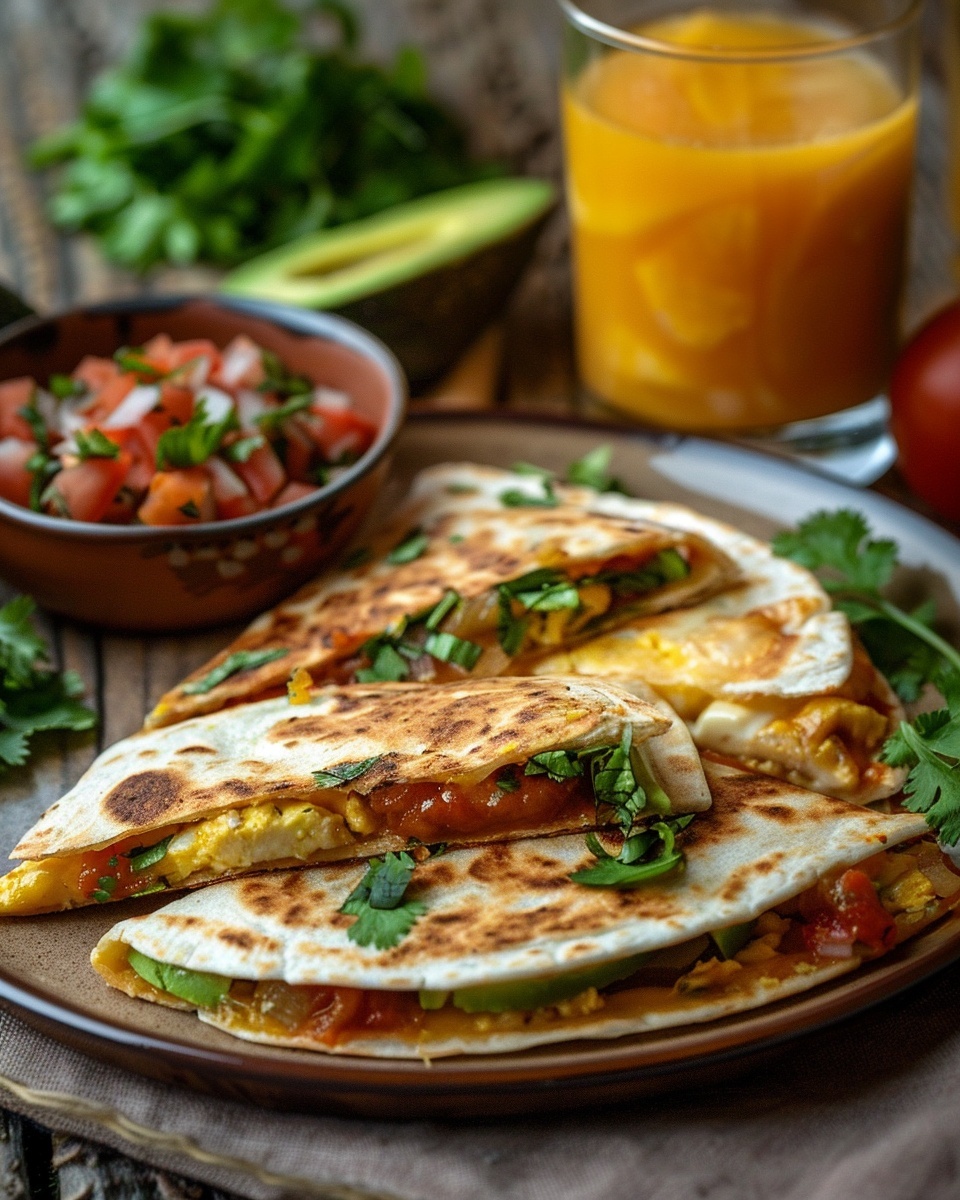
I used to think breakfast had to be either quick or good. Never both. Then one rushed Tuesday morning, I grabbed leftover tortillas and cheese from my fridge. I cracked a few eggs into a bowl and made my first breakfast quesadilla. That simple decision changed my mornings forever. The crispy tortilla held warm, fluffy eggs and melted cheese that stretched with every bite. I finished it in my car and felt satisfied until lunch. No drive-thru. No soggy cereal. Just real food that actually tasted amazing.
A breakfast quesadilla with eggs and cheese solves the morning meal problem most of us face. You want something filling that won’t leave you hungry an hour later. You need it fast because mornings are crazy. And honestly, you deserve food that makes you happy to be awake. This dish checks every box.
The beauty of this recipe is its flexibility. You can make it as simple or fancy as your morning allows. Some days I stick with just eggs and cheese. Other mornings I add peppers, onions, or leftover bacon. The cooking method stays the same. The result always satisfies.
I’ll walk you through everything you need to know. We’ll cover the ingredients that make the best breakfast quesadillas. You’ll learn my favorite cooking tips that guarantee crispy tortillas and perfectly cooked eggs. I’ll share the mistakes I made so you can skip them. By the end, you’ll have a new breakfast skill that impresses everyone, including yourself.
Ingredients You’ll Need for Your Breakfast Quesadilla
Great food starts with great ingredients. You don’t need anything fancy or expensive. But quality matters more than you might think. Let me break down what goes into an amazing breakfast quesadilla with eggs and cheese.
The Foundation: Tortillas
Your tortilla choice makes or breaks this dish. I prefer flour tortillas because they get crispy on the outside while staying soft inside. The size matters too. I use 8-inch or 10-inch tortillas. Anything smaller feels skimpy. Anything larger gets unwieldy on the stovetop.
Look for tortillas in the refrigerated section, not the shelf-stable aisle. Fresh tortillas from the bakery section or a local Mexican market taste infinitely better. They’re more pliable and have actual flavor. I keep mine in the fridge and they last about two weeks. Some grocery stores make tortillas in-house. Those are gold if you can find them.
Corn tortillas work too if you prefer them. They bring an earthy, authentic taste. Just know they’re more delicate and can crack when you fold them. I save corn tortillas for smaller quesadillas or when I’m feeling nostalgic for street food.
The Star: Fresh Eggs
Eggs are the protein powerhouse here. I use two or three eggs per quesadilla, depending on how hungry I am. Fresh eggs make a noticeable difference. The yolks stand tall and bright yellow when you crack them. The whites don’t run all over the bowl.
I buy eggs from local farms when possible. The taste is richer and the texture is creamier. Regular supermarket eggs work fine too. Just check the expiration date and give the carton a quick look for cracks.
Room temperature eggs scramble more evenly than cold ones. I take mine out of the fridge while I prep everything else. This small step gives you fluffier, more tender eggs.
The Magic: Cheese Selection
Cheese brings everything together. It adds creaminess, saltiness, and that satisfying stretch when you pull apart your quesadilla. The type of cheese you choose changes the whole flavor profile.
What are the best types of cheese for a breakfast quesadilla?
Here’s my ranking based on years of morning experiments:
- Cheddar: Sharp cheddar gives you bold flavor. Mild cheddar keeps things mellow. Both melt beautifully and pair well with eggs.
- Monterey Jack: This is my personal favorite. It melts like a dream and has a subtle, creamy taste that doesn’t overpower the eggs.
- Pepper Jack: When I want a kick in the morning, pepper jack delivers. The spicy bits wake up your taste buds.
- Mexican blend: Most grocery stores sell pre-shredded Mexican cheese blends. They usually combine cheddar, Monterey Jack, and other cheeses. Super convenient and always tasty.
- Mozzarella: Low-moisture mozzarella creates amazing cheese pulls. The flavor is mild, so I usually mix it with something sharper.
- Queso Oaxaca: If you find this at a Mexican market, grab it. It’s like mozzarella’s more flavorful cousin. It melts perfectly and adds authentic taste.
I always shred cheese myself when I have time. Pre-shredded cheese has anti-caking agents that prevent smooth melting. A block of cheese and a box grater take two minutes. The difference in meltiness is worth it.
Optional Add-ins That Elevate Your Quesadilla
Once you master the basic egg and cheese version, you’ll want to experiment. Here are my go-to additions:
- Bell peppers: Diced red or green peppers add crunch and sweetness. I sauté them first until slightly soft.
- Onions: Yellow onions bring savory depth. Green onions add a fresh, mild bite.
- Cooked bacon: Crispy bacon pieces make this feel like a special breakfast. I cook extra bacon on Sundays and keep it ready.
- Breakfast sausage: Crumbled and cooked sausage adds hearty, seasoned flavor.
- Spinach: A handful of fresh spinach wilts right into the eggs. Adds nutrition without changing the taste much.
- Tomatoes: Diced tomatoes bring brightness. Just drain them first or your quesadilla gets soggy.
- Jalapeños: Fresh or pickled, these add heat and tang.
- Black beans: Mashed or whole black beans make this more filling and add fiber.
Shopping Tips for Quality Ingredients
I’ve learned where to find the best ingredients without breaking the bank. Mexican or Latin American markets almost always have superior tortillas and cheeses. Their turnover is high, so everything’s fresher. The prices are usually lower too.
For cheese, the deli counter often sells blocks at better prices than the pre-packaged section. Ask for a sample if you’re trying something new. Most cheese counter workers are happy to let you taste.
Farmers markets are my favorite source for eggs. I pay a bit more, but the quality shows in every bite. If that’s not an option, look for terms like “pasture-raised” or “free-range” at the grocery store. The eggs from happier chickens genuinely taste better.
Store brands work fine for most ingredients. I’ve done blind taste tests with tortillas and couldn’t tell the difference between name brands and store brands. Save your money for the cheese and eggs.
Buy your vegetables wherever they look freshest. I check the produce at different stores and learn their delivery schedules. My local store gets shipments on Tuesdays and Fridays. I shop accordingly.
Keep your pantry stocked with basics like cooking oil or butter, salt, and pepper. These seem obvious but make the difference between a bland quesadilla and one that sings with flavor. I use butter for richness or a neutral oil when I want the other flavors to shine.


Preparing the Filling
Now that you’ve got your ingredients ready, it’s time to talk about the heart of any good breakfast quesadilla—the filling. This is where most people either nail it or end up with rubbery eggs that taste like cardboard. I’ve made both versions more times than I’d like to admit.
The secret to amazing scrambled eggs in a quesadilla is treating them differently than you would for a regular breakfast plate. You want them slightly undercooked when they hit the tortilla because they’ll finish cooking when you heat the quesadilla. Took me about a dozen tries to figure that one out.
Mixing Your Eggs the Right Way
I crack my eggs into a bowl and whisk them until the yolks and whites completely blend together. No streaks of white should remain. Some mornings I add a splash of milk or cream—about a tablespoon per two eggs. This makes them extra fluffy and rich. Other days I skip it entirely. Both ways work.
Here’s where seasoning comes in. I add a pinch of salt and a few grinds of black pepper right into the raw eggs. This distributes the seasoning evenly throughout. I learned this trick from my grandmother who insisted that seasoning eggs before cooking them made all the difference. She was right, as usual.
Beyond salt and pepper, there’s a whole world of seasonings that can transform your eggs. Garlic powder adds a savory depth without the hassle of mincing fresh garlic at 6 AM. Paprika brings a subtle smokiness and a pretty color. Cumin gives an earthy, slightly Mexican flavor that pairs perfectly with cheese. Sometimes I throw in a tiny pinch of cayenne pepper when I need my breakfast to wake me up properly.
A quarter teaspoon of dried herbs goes a long way too. Oregano reminds me of pizza breakfast, which is always a win. Basil makes the whole thing feel Italian and fancy. Chives or dried parsley add freshness without requiring you to chop anything.
How do you make sure the eggs in a quesadilla are cooked perfectly?
This question kept me up at night during my early quesadilla experiments. The answer is simpler than you’d think—low heat and patience. I heat a non-stick skillet over medium-low heat and add a small pat of butter. Once it melts and starts to foam slightly, I pour in my whisked eggs.
Then I wait. Seriously, just wait about thirty seconds before you touch anything. This lets the bottom layer start to set. Then I gently push the eggs from the edges toward the center using a spatula. The uncooked egg flows to the edges and starts cooking. I repeat this pushing motion every twenty seconds or so.
The key is pulling the pan off the heat when the eggs still look slightly wet and glossy. They should be about ninety percent cooked. This feels wrong at first because we’re trained to cook eggs until they’re fully set. But trust me on this. Those eggs will finish cooking inside your quesadilla, and they’ll stay creamy instead of turning into little rubber pellets.
The whole process takes maybe three minutes. If your eggs are cooking faster than that, your heat is too high. Slow and gentle wins this race every single time.
Adding Vegetables and Meats to Your Filling
Once you’ve mastered basic eggs, adding other ingredients becomes your creative playground. I prep my add-ins before I start cooking the eggs. Everything needs to be ready to go because timing matters.
For vegetables, I dice them small—about quarter-inch pieces. Bell peppers and onions are my staples. I sauté them in the same pan I’ll use for eggs, cooking them until they soften and develop some color. This takes about five minutes over medium heat. Then I transfer them to a plate and cook my eggs in the same pan. The vegetable flavors left behind season the eggs naturally. If I’m adding spinach, I toss it right into the eggs during the last minute of cooking. It wilts down to almost nothing but adds nutrients and a pop of green.
Tomatoes are trickier because they release moisture. I learned this the hard way after creating several soggy disasters. Now I dice tomatoes, put them in a small strainer, and let them drain while I prep everything else. Sometimes I even give them a gentle squeeze to remove excess liquid. This simple step prevents watery quesadillas.
Meat add-ins work best when they’re already cooked and just need reheating. Crispy bacon crumbles, cooked breakfast sausage, or leftover ham from dinner all work beautifully. I warm them in the pan first, then set them aside and cook the eggs. Sometimes I’ll mix the meat right into the eggs during cooking. Other times I keep them separate and layer them in the quesadilla. Both methods taste great—it just depends on whether I want distinct bites of meat or an integrated filling.
By the way, leftover rotisserie chicken makes an unexpectedly good breakfast quesadilla ingredient. Shred it, warm it up, and you’ve got protein without any morning cooking effort. The same goes for that Mediterranean ground beef you might have from dinner—it creates an interesting fusion breakfast that my family requests regularly.
Assembling the Quesadilla
Alright, your filling is ready and smells amazing. Now comes the assembly, which is easier than you think but has a few tricks that separate okay quesadillas from incredible ones.
The Layering Strategy That Actually Works
I place one tortilla flat on my work surface. Then I sprinkle cheese directly onto the tortilla—about a quarter cup to start. This cheese layer acts like glue. It melts and holds everything together, preventing your filling from sliding out when you take a bite.
Next comes the egg mixture. I spread it evenly across half the tortilla, leaving about a half-inch border around the edges. This border is crucial. It gives you a sealed edge when you fold the quesadilla, keeping all the good stuff inside. I learned about borders after watching several breakfasts slide onto my plate in a depressing pile.
If I’m using additional ingredients like sautéed peppers or bacon, I layer them on top of the eggs. Then I add another sprinkle of cheese—maybe another quarter cup. This second cheese layer melts down into the eggs and vegetables, creating pockets of gooey deliciousness throughout.
Some people make quesadillas by placing filling between two separate tortillas. That works fine, but I prefer the folded method. It’s easier to flip, uses fewer tortillas, and creates a better ratio of crispy outside to soft inside.
How do you fold a quesadilla without it falling apart?
This question plagued my early attempts. I’d fold the tortilla, try to move it to the pan, and everything would spill out like a breakfast crime scene. The solution is folding it directly in the pan where you’ll cook it.
Here’s my method that works every single time. I heat a clean skillet over medium heat—not the one I cooked the eggs in, unless I’ve wiped it out first. I place the filled tortilla flat in the cold or warming pan. Then I carefully fold it in half, pressing down gently with my spatula. The warmth of the pan starts melting the bottom layer of cheese immediately, which helps seal the edges.
If you’re worried about it opening up, you can use a toothpick to hold it closed during cooking. I did this for weeks when I was building confidence. Just remember to remove the toothpick before serving. I may or may not have bitten into one myself. It wasn’t fun.
The gentle press with the spatula serves multiple purposes. It seals the edges, flattens the quesadilla for even cooking, and helps the cheese make contact with both the top and bottom tortilla surfaces. I keep pressing lightly every minute or so while it cooks.
Cooking Your Assembled Quesadilla to Crispy Perfection
Medium heat is your friend here. High heat burns the outside before the cheese melts. Low heat makes things soggy instead of crispy. Medium heat—that sweet spot where you can hold your hand above the pan and feel warmth but not intense heat—gives you golden, crispy tortillas and thoroughly melted cheese.
I cook the first side for about three to four minutes. You’ll see the edges starting to turn golden brown. The cheese will begin oozing slightly at the seam, which is exactly what you want. Then comes the flip, which I used to dread but now find oddly satisfying.
I slide my spatula under the quesadilla, making sure I’ve got the whole thing supported. Then I quickly but carefully flip it over. If some cheese escapes and hits the pan, don’t panic. It’ll crisp up into delicious cheese crackers that you can eat while you finish cooking. Cook the second side for another three to four minutes until it matches the first side in color and crispiness.
Sometimes I add a tiny bit of butter to the pan before cooking. It helps with browning and adds richness. Other times I use cooking spray or just rely on the natural fats from the cheese. If you’re trying to keep things lighter, a good non-stick pan needs nothing at all.
Toppings That Take It Over the Top
A quesadilla straight from the pan is delicious on its own. But the right toppings transform it from good to “where has this been all my life?” I keep a few options ready in my fridge for different moods.
Salsa is the obvious choice. Fresh pico de gallo adds brightness and a little crunch. Jarred salsa works perfectly fine for busy mornings. I go for medium heat usually, but keep mild on hand for my kids. The acidity cuts through the richness of the eggs and cheese beautifully.
Sour cream or Greek yogurt adds cool creaminess. I dollop it right on top or put it on the side for dipping. Greek yogurt gives you extra protein with a similar tangy flavor to sour cream. My waistline appreciates the swap even if my taste buds notice a slight difference.
Guacamole or sliced avocado makes this feel like a fancy brunch item. The buttery avocado pairs perfectly with eggs and cheese. I’m convinced that avocado makes everything better, which is why I also love having it with my morning bagel on weekends.
Hot sauce brings heat and flavor complexity. Everyone has their favorite brand. I keep three different types in my fridge because I’m apparently a hot sauce hoarder. A few dashes wakes up your taste buds and adds almost no calories.
Cilantro, if you’re not one of those people who thinks it tastes like soap, adds fresh flavor. Just chop some and sprinkle it over the top. Green onions work similarly and taste milder. Sometimes I’ll add a squeeze of lime juice over everything, which brightens all the flavors like magic.
The beauty here is customization. My teenager covers hers in hot sauce until I can’t watch. My youngest wants only ketchup, which I pretend not to judge. My husband prefers his with a spicy Cajun-style cream sauce he discovered, which sounds weird but actually tastes incredible. Make yours however makes you happy.


Cooking Techniques for the Perfect Breakfast Quesadilla
Here’s the thing—you can cook a breakfast quesadilla with eggs and cheese several different ways, and each method has its own personality. I’ve tried them all during various phases of my breakfast evolution. Some mornings I want the hands-on experience of watching my quesadilla turn golden in a skillet. Other days I need to make four at once because everyone suddenly decided they’re hungry at the exact same time.
The Classic Skillet Method
This is where I started, and honestly, it’s still my go-to on regular weekday mornings. A simple non-stick skillet over medium heat gives you the most control. You can watch the tortilla transform from pale and soft to golden and crispy right before your eyes. There’s something satisfying about that visual feedback.
I heat my skillet for about two minutes before adding the quesadilla. You’ll know it’s ready when a drop of water sizzles and evaporates quickly. Too hot and that water will bounce around violently. Not hot enough and it just sits there looking sad. Once the temperature is right, I place my assembled quesadilla in the dry pan. No oil, no butter—just the pan and the quesadilla.
The first side takes about three to four minutes. I press down gently with my spatula every minute or so. This ensures even contact between the tortilla and the pan, which means even browning. You’ll start seeing little brown spots appear on the edges where the tortilla touches the pan. That’s your signal that things are happening.
The flip is the moment of truth. I slide my spatula completely under the quesadilla, making sure I’ve got solid support across the whole thing. Then I lift and turn in one confident motion. Hesitation leads to folded tortillas and cheese landslides. Trust me on this. After about a dozen quesadillas, the flip becomes second nature.
The second side needs another three to four minutes. Sometimes I peek at the bottom by lifting one edge with my spatula. I’m looking for a golden-brown color with slightly darker spots. Too pale means it needs more time. Too dark means I got distracted by my phone and now I’m eating a slightly burned breakfast. Both scenarios have happened more than once.
The advantages of skillet cooking are pretty clear. You get maximum crispiness on the outside. The cheese melts perfectly because the heat is direct and consistent. You can make adjustments in real-time if something isn’t working. Plus, there’s minimal cleanup—just one pan.
The downside? You can only make one at a time unless you’re some kind of multi-pan wizard with three burners going simultaneously. I tried that once during a family breakfast and nearly had a breakdown. Not recommended unless you enjoy controlled chaos.
Can you bake a breakfast quesadilla instead of frying it?
Absolutely, and this method changed my life when I started making breakfast for crowds. Baking lets you cook multiple quesadillas at once without standing over a stove flipping things like a short-order cook.
I preheat my oven to 400 degrees Fahrenheit. While it’s heating, I assemble my quesadillas on a large baking sheet. I can fit four quesadillas comfortably on a standard sheet pan. The trick here is giving them a light brush of melted butter or a spray of cooking oil on both sides. This helps them crisp up in the dry oven heat. Without that little bit of fat, they come out kind of leathery and sad.
I bake them for about ten minutes, then carefully flip each one using a large spatula. Another eight to ten minutes on the second side and they’re done. The timing varies depending on your oven and how thick you stuffed your quesadillas. I usually check around the eight-minute mark on the second side.
Baked quesadillas don’t get quite as crispy as skillet versions, but they’re pretty darn close if you use enough butter. The cheese melts beautifully, and the whole thing holds together well. The texture is slightly different—a bit more uniformly crispy rather than having those darker spots you get from a skillet. Some people actually prefer the more even browning.
The massive advantage is efficiency. Making breakfast for my family used to stress me out until I discovered oven quesadillas. Everyone eats at roughly the same time instead of watching me flip quesadillas one by one while theirs gets cold. Much more civilized.
Another bonus is that your hands are free. I can prep fruit, pour drinks, or just stand there drinking my coffee in peace while the oven does the work. That mental break matters more than you’d think at seven in the morning.
The Air Fryer Approach
I resisted getting an air fryer for years because I thought it was just another kitchen gadget taking up space. Then my sister gave me one for my birthday and I reluctantly tried making quesadillas in it. Now I’m that annoying person who suggests air frying everything.
For quesadillas, I preheat the air fryer to 350 degrees. I lightly spray both sides of my assembled quesadilla with cooking spray, then place it in the basket. The cooking time is quick—about five minutes on the first side, flip, then another four minutes. The circulating hot air creates incredibly crispy tortillas with less fat than traditional frying.
The texture you get from an air fryer is something special. The outside gets super crispy and almost shatters when you bite into it, while the inside stays soft with perfectly melted cheese. It’s like the best parts of fried and baked combined. By the way, this is also how I discovered that reheating leftover quesadillas in the air fryer brings them back to life better than any microwave ever could.
The limitation is size. Most air fryers can only handle one quesadilla at a time, sometimes two if they’re small and you have a larger model. So you’re back to cooking in batches, though each batch is faster than skillet cooking.
The Griddle Option for Feeding a Crowd
If you have an electric griddle or a large flat griddle that fits over two burners, this is the way to go for feeding multiple people efficiently. I set my electric griddle to 350 degrees and can cook four quesadillas at once.
The technique is identical to skillet cooking, just multiplied. I place all my quesadillas on the heated surface, press them down, and flip them all around the same time. The advantage over oven baking is that you get that direct heat for crispiness, but with the capacity to feed several people simultaneously.
My griddle has become essential for weekend breakfast when both kids have friends sleeping over. Nothing impresses hungry teenagers quite like producing six hot quesadillas in under ten minutes. Suddenly I’m the cool parent, at least until the food runs out.
Tips for Achieving That Perfect Golden-Brown Crust
Regardless of your cooking method, certain principles apply universally. Temperature control matters more than anything else. Too hot and you get burned tortillas with cold centers. Too cool and everything turns pale and sad. Medium heat on the stovetop or 350-400 degrees in an oven or air fryer hits the sweet spot.
A tiny amount of fat helps with browning. Even on non-stick surfaces, a light spray of cooking oil or a brush of melted butter enhances the color and flavor. I use butter when I want richness or cooking spray when I’m watching calories. Both work beautifully.
Pressing down with your spatula isn’t just about flattening the quesadilla. It maximizes contact between the tortilla surface and the heat source, which creates more of those delicious golden-brown spots. I press gently but firmly, holding for just a few seconds, then release. I repeat this every minute or so while cooking.
Don’t flip too early. I know it’s tempting to check progress constantly, but every time you flip, you interrupt the browning process. Let each side cook undisturbed for at least three minutes before flipping. Patience rewards you with better color and texture.
Moisture is the enemy of crispiness. If you’re adding ingredients like tomatoes or salsa directly into your quesadilla, make sure you drain them well first. Excess liquid creates steam, which makes tortillas soggy instead of crispy. I learned this after several disappointing, limp quesadillas that I ate anyway because I hate wasting food.
Fresh tortillas crisp up better than old ones. Those tortillas that have been sitting in your fridge for three weeks and feel a bit stiff? They’ll never get as crispy as fresh ones. I try to buy tortillas weekly, or I freeze extras when they’re fresh and thaw them the night before I need them. The texture stays much better this way.
Comparing the Methods Side by Side
Let me break down when I use each method because they all have their place in my breakfast rotation.
I use the skillet method when I’m cooking for myself or just one other person, and I want maximum crispiness with minimal equipment. It’s perfect for weekday mornings when I need something fast and delicious. Cleanup is minimal, and I have complete control over the cooking process.
The oven method comes out when I’m feeding my whole family or hosting weekend brunch. The ability to cook multiple quesadillas simultaneously saves my sanity. The texture is slightly different but still delicious, and the hands-off nature means I can focus on other parts of the meal or just have a conversation instead of being chained to the stove.
Air frying is my choice when I want the crispiest possible result and I’m only feeding one or two people. The texture really is superior, and it uses less oil than other methods. I also reach for the air fryer when I’m reheating leftover quesadillas because it brings them back to life like magic.
The griddle is reserved for those times when I have a houseful of hungry people who all want hot food at the same time. Holiday mornings, birthday breakfasts, or when half the neighborhood kids end up at my house unexpectedly. It combines the control of skillet cooking with the capacity of oven baking.
Funny enough, I’ve started experimenting with a panini press too. It cooks both sides simultaneously and creates beautiful grill marks. The compression helps seal the edges and creates an almost waffle-like texture on the tortilla. It’s not traditional, but neither is putting eggs in a quesadilla in the first place, so I figure anything goes.
The Health Angle Nobody Talks About
Different cooking methods affect the nutritional profile of your breakfast. Skillet cooking with minimal oil keeps calories lower than pan-frying in lots of butter. Air frying uses even less fat while still delivering crispy results. Oven baking falls somewhere in the middle, depending on how much butter you brush on.
This matters more than we sometimes admit. Breakfast sets the tone for your everyday nutrition, and making choices that support your health goals while still tasting amazing is the whole point. I don’t want to eat cardboard for breakfast just because it’s healthy, and I also don’t want to feel sluggish by noon because I ate something too heavy.
Using whole wheat tortillas adds fiber without changing the cooking method at all. Adding vegetables increases nutrients and volume without many extra calories. Choosing lean proteins like egg whites instead of whole eggs or turkey sausage instead of pork changes the nutrition profile significantly. The cooking method you choose can support these healthier ingredient choices rather than working against them.
I’ve found that making breakfast at home, regardless of the cooking method, gives me control over portions and ingredients that I’d never have with restaurant or drive-through options. Even my richest, most indulgent homemade quesadilla is probably healthier than most fast-food breakfast items. That knowledge makes every bite taste better.
Finding your favorite cooking method might take a few tries. I encourage you to experiment with all of them. Your perfect technique might be different from mine based on your equipment, your schedule, and your texture preferences. The beauty of breakfast quesadillas is that they’re forgiving and delicious no matter how you cook them. If you’re looking for more ways to elevate your morning routine beyond quesadillas, check out other inspiring ideas in our breakfast recipes collection that make starting your day something to actually look forward to.
Making your own breakfast quesadilla with eggs and cheese at home transforms your morning from rushed and stressful to satisfying and manageable. You deserve breakfast that tastes incredible and makes you feel good. With these techniques in your back pocket, you’ve got options for any situation—quick weekday mornings, lazy weekends, or feeding unexpected crowds. Start simple, experiment boldly, and enjoy every crispy, cheesy bite.
Frequently Asked Questions
What are the best types of cheese for a breakfast quesadilla?
Monterey Jack is my personal favorite because it melts smoothly and has a mild, creamy flavor that doesn’t overpower the eggs. Sharp cheddar adds bold taste and melts beautifully. Pepper Jack brings welcome heat when you need a morning wake-up call. Mexican cheese blends offer convenience and balanced flavor since they combine several complementary cheeses. Queso Oaxaca creates amazing cheese pulls and adds authentic taste if you can find it at Mexican markets. The best choice really depends on your personal preference and how bold you want your flavors.
How do you make sure the eggs in a quesadilla are cooked perfectly?
Cook your scrambled eggs over medium-low heat until they’re about ninety percent done, still looking slightly wet and glossy. This seems counterintuitive, but those eggs will finish cooking inside the quesadilla from residual heat. Pull them off the heat earlier than you think you should. Whisking the eggs thoroughly before cooking and adding a splash of milk or cream makes them fluffier and more tender. Season them before cooking rather than after for better flavor distribution. If you overcook the eggs before assembling, they’ll turn rubbery and dry once the quesadilla heats through.
How do you fold a quesadilla without it falling apart?
Place your filled tortilla directly in the pan where you’ll cook it rather than trying to fold it elsewhere and transfer it. Fill only half the tortilla, leaving a half-inch border around the edges. Fold it in half while it’s already in the warming pan, then press down gently with your spatula. The heat immediately starts melting the cheese, which acts like glue to seal everything together. If you’re nervous, use a toothpick to hold it closed during cooking, but remember to remove it before eating. The key is not overstuffing and working directly in the cooking vessel.
Can you bake a breakfast quesadilla instead of frying it?
Yes, and baking is perfect when you’re making multiple quesadillas at once. Preheat your oven to 400 degrees Fahrenheit and arrange assembled quesadillas on a baking sheet. Brush both sides lightly with melted butter or spray with cooking oil to promote browning and crispiness. Bake for about ten minutes, flip carefully, then bake another eight to ten minutes until golden brown. The texture is slightly less crispy than skillet-cooked quesadillas but still delicious. The massive advantage is that you can cook four to six at once, making this ideal for feeding families or groups.
Can you make breakfast quesadillas ahead of time?
You can prep components ahead, but I don’t recommend assembling them more than a few hours in advance because the eggs release moisture that makes tortillas soggy. Instead, cook your eggs and any vegetables or meats the night before and store them in separate containers in the fridge. In the morning, assemble and cook fresh quesadillas in just a few minutes. Alternatively, cook complete quesadillas, let them cool, wrap individually, and freeze for up to two months. Reheat frozen quesadillas in the oven, air fryer, or even a toaster oven straight from the freezer. The microwave makes them soggy, so avoid that method if possible.
How do you reheat leftover quesadillas?
The air fryer is hands-down the best reheating method because it restores crispiness beautifully at 350 degrees for about four minutes. A skillet over medium heat works great too—just a couple minutes per side until heated through and crispy again. The oven at 350 degrees for about ten minutes also works well, especially if you’re reheating multiple quesadillas. Never use the microwave if you care about texture because it turns crispy tortillas into sad, soggy disappointments. I learned this the hard way during a rushed morning and regretted every chewy bite. Always choose a dry heat method for reheating to maintain that satisfying crunch.
What’s the best way to cut a quesadilla?
Let your cooked quesadilla rest for about two minutes before cutting so the cheese sets slightly and doesn’t all ooze out. Use a sharp knife or a pizza cutter for clean cuts without squishing everything. I cut mine into three or four triangular wedges, which are easy to pick up and eat. Some people prefer cutting them into strips for dipping in salsa or sour cream. For kids, smaller pieces are easier to manage and less messy. Whatever shape you choose, make sure your cutting tool is sharp because a dull knife will drag and pull your quesadilla apart rather than slicing cleanly through it.
How do you prevent quesadillas from getting soggy?
The main culprits are wet ingredients and undercooked tortillas. Always drain watery ingredients like tomatoes, salsa, or cooked vegetables before adding them to your quesadilla. Cook your quesadilla long enough to achieve proper browning and crispiness on both sides—pale tortillas turn soggy quickly. Don’t overload your quesadilla with too much filling because excess moisture has nowhere to escape. If adding salsa or sour cream, serve them on the side for dipping rather than stuffing them inside. Store leftovers in a paper towel-lined container rather than sealed plastic, which traps steam and creates sogginess.
What size tortilla works best for breakfast quesadillas?
Eight-inch or ten-inch flour tortillas are the sweet spot for individual breakfast quesadillas. Anything smaller feels skimpy and doesn’t hold enough filling to satisfy you until lunch. Larger tortillas become unwieldy in a standard skillet and are harder to flip without making a mess. I use eight-inch tortillas when I’m making them in an air fryer or for kids with smaller appetites. Ten-inch tortillas work better for adults with hearty appetites or when I’m adding lots of vegetables and meat. Fresh tortillas from the bakery section or Mexican markets are more pliable and flavorful than shelf-stable versions regardless of size.
Can you make breakfast quesadillas vegetarian or vegan?
Vegetarian versions are easy—just skip the meat and load up on sautéed vegetables like peppers, onions, mushrooms, spinach, and tomatoes. Add black beans or pinto beans for protein and fiber. For vegan quesadillas, replace eggs with scrambled tofu seasoned with turmeric for color, plus garlic powder and nutritional yeast for flavor. Use vegan cheese, which has improved dramatically in recent years and actually melts pretty well now. Some brands work better than others, so you might need to experiment. Add avocado for creaminess and healthy fats. The cooking methods remain exactly the same regardless of whether you’re using traditional or plant-based ingredients.
Ingredients
Equipment
Method
- Crack the eggs into a bowl and whisk until fully blended.
- Season the eggs with salt, pepper, and any desired spices.
- Heat a non-stick skillet over medium-low heat and add a small pat of butter.
- Pour in the whisked eggs and gently cook until they are slightly undercooked, about 3 minutes.
- Remove the eggs from heat when they still look wet and glossy.
- Sauté any vegetables in the pan until softened.
- Place one tortilla on a flat surface and sprinkle cheese on half of it.
- Spread the cooked eggs evenly on the cheese, then add any additional ingredients and another sprinkle of cheese on top.
- Fold the tortilla in half, pressing down gently to seal the edges.
- Heat a clean skillet over medium heat and cook the quesadilla for 3-4 minutes per side until golden and crispy.
- Remove from pan, let it rest for 2 minutes, then cut into wedges.
- Serve with toppings like salsa, sour cream, or avocado.