
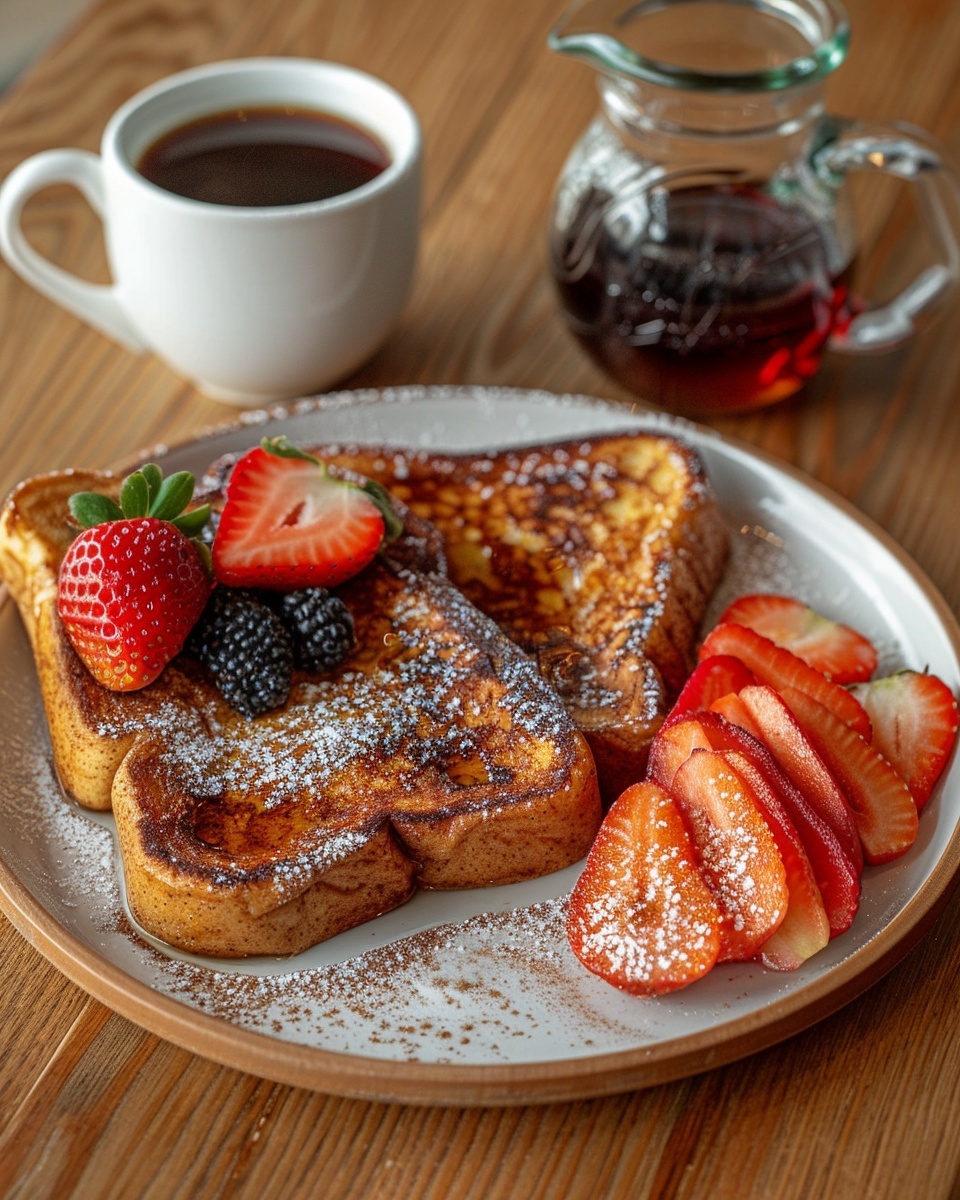
Why I’m Obsessed with Cinnamon French Toast with Strawberries
My weekend mornings used to be rushed and chaotic until I discovered the simple pleasure of making French toast. There’s something magical about standing at the stove on a Sunday morning, watching golden slices sizzle in butter while the scent of cinnamon fills the kitchen. My kids now wake up asking if it’s “French toast day,” and honestly, that never gets old.
Cinnamon French toast with strawberries has become my go-to breakfast when I want to make something special without spending hours in the kitchen. It’s comfort food at its finest, combining crispy edges with a soft center, sweet strawberries, and that warm spice we all crave. The best part? You probably have most of the ingredients in your kitchen right now.
I’m going to walk you through everything you need to know to make this dish perfectly every single time. We’ll cover ingredient selection, the secrets to creating the ideal batter, and the cooking techniques that separate soggy French toast from restaurant-quality results. I’ll also share the mistakes I made when I was learning so you can skip right to the good stuff.
Essential Ingredients for Cinnamon French Toast with Strawberries
Great French toast starts with great ingredients. You don’t need anything fancy or expensive, but quality matters more than you might think. Here’s what you’ll need to gather before you start cooking:
- Bread: 6 to 8 slices of thick-cut bread (I’ll explain which types work best in a moment)
- Eggs: 4 large eggs for rich, custardy results
- Milk: 2/3 cup of whole milk or half-and-half for extra richness
- Cinnamon: 1 to 2 teaspoons of ground cinnamon
- Vanilla extract: 1 teaspoon for depth of flavor
- Fresh strawberries: 2 cups, hulled and sliced
- Butter: For cooking the French toast
- Sugar: A tablespoon for the batter, plus extra for sweetening strawberries if desired
- Salt: Just a pinch to balance the sweetness
The ingredient list is short, which means each component plays an important role. Using fresh, high-quality ingredients makes a noticeable difference in the final dish. Fresh eggs with bright orange yolks create a richer custard. Real vanilla extract tastes dramatically better than imitation. And strawberries at peak ripeness bring natural sweetness that complements the cinnamon beautifully.
Do cinnamon and strawberries go together? Absolutely. The warm, slightly spicy notes of cinnamon enhance the natural sweetness of strawberries without overpowering them. This combination shows up in desserts and breakfast dishes across different cultures because it simply works.
Choosing the Right Bread for French Toast
Here’s where many people go wrong from the start. The bread you choose can make or break your French toast. I learned this the hard way when I tried using regular sandwich bread and ended up with a soggy mess.
The ideal bread for French toast should be thick, sturdy, and slightly dry. Here are your best options:
- Brioche: My personal favorite because of its buttery flavor and ability to soak up custard without falling apart
- Challah: Similar to brioche with a tender crumb and rich taste
- French bread: Classic choice with a sturdy texture that holds up well
- Texas toast: Thick-sliced white bread that’s specifically designed for this purpose
- Sourdough: Adds a tangy contrast to the sweet toppings
Whatever bread you choose, make sure it’s at least 3/4 inch thick. Thin slices turn mushy and don’t develop that crispy exterior we’re after. Day-old bread actually works better than fresh because it’s slightly dried out. This allows it to absorb the egg mixture without becoming waterlogged.
If you only have fresh bread, you can dry it out slightly by leaving the slices on the counter for a few hours or placing them in a 200°F oven for 10 minutes. This extra step takes a few minutes but prevents soggy French toast, which is the most common mistake in making French toast.
Creating the Perfect French Toast Batter
The batter is where the magic happens. This is your chance to infuse flavor into every bite. I’ve tweaked my recipe over the years, and I’ve landed on proportions that create custardy centers with just the right amount of sweetness.
Start by cracking 4 large eggs into a shallow dish or pie plate. A wide, flat container makes dipping easier than a deep bowl. Whisk the eggs until the yolks and whites are fully combined with no streaks remaining.
Add 2/3 cup of whole milk to the eggs. Some people use cream or half-and-half for an even richer result. I stick with whole milk because it creates great flavor without being too heavy. If you only have low-fat milk, it will still work but won’t taste quite as indulgent.
Now comes the flavor. Add 1 to 2 teaspoons of ground cinnamon depending on how much you love that warm spice. I usually go with 2 teaspoons because cinnamon is the star of this dish. Add 1 teaspoon of vanilla extract and 1 tablespoon of sugar. The sugar helps with caramelization and adds a subtle sweetness to the custard.
Finally, add a small pinch of salt. This might seem odd in a sweet dish, but salt enhances all the other flavors and prevents the French toast from tasting flat.
Whisk everything together vigorously for about 30 seconds. You want the mixture completely smooth with the cinnamon evenly distributed. I can’t tell you how many times I’ve skipped this step and ended up with cinnamon clumps on my French toast.
The Art of Dipping Bread into Batter
This step seems simple, but timing and technique matter. Dip each slice of bread into the batter and let it soak for about 20 to 30 seconds per side. You want the bread saturated but not disintegrating.
Thicker bread like brioche or challah can handle a longer soak, around 30 to 40 seconds per side. Thinner bread needs less time, maybe 15 to 20 seconds per side. If you soak too long, the bread becomes too wet and won’t cook properly. Too short and you get dry spots that taste like plain toast.
I use a gentle pressing motion with a fork to help the custard penetrate the bread. Don’t press so hard that you tear the bread, just enough to encourage absorption. Make sure both sides get equal time in the batter.
When you lift the bread out, let excess batter drip off for a second or two. Too much dripping custard creates a mess in your pan and can lead to uneven cooking. The bread should look thoroughly coated but not dripping wet.
This is the moment right before cooking when you can see whether your bread choice was right. The slice should hold together in your hand without sagging or breaking. If it’s falling apart, your bread was either too thin or too fresh, or you soaked it too long.
What pairs well with cinnamon French toast? Beyond strawberries, you have endless options. Maple syrup is classic. Whipped cream adds richness. Powdered sugar gives a bakery-style finish. Sliced bananas, blueberries, or peaches all work beautifully. I sometimes add a dollop of Greek yogurt for protein and tang.
Now that your bread is perfectly coated with cinnamon-spiced custard, you’re ready for the cooking phase. But that batter-soaked slice in your hand represents the foundation of great French toast. Get this part right, and you’re already halfway to breakfast perfection.


Cooking the Perfect Cinnamon French Toast
Now comes the moment of truth—transforming that custard-soaked bread into golden, crispy perfection. I’ve cooked French toast on just about every surface imaginable, and I’m going to save you from the trial-and-error process I went through.
A cast iron skillet or heavy-bottomed nonstick pan works best for cooking French toast. I prefer cast iron because it holds heat evenly and creates the most consistent browning. Nonstick makes cleanup easier, which matters when you’re making breakfast for hungry kids who won’t wait. Either way, you want a cooking surface that can maintain steady, medium heat without hot spots that burn some parts while leaving others pale.
Heat your pan over medium heat for about two minutes before adding butter. This is crucial. A properly preheated pan creates that immediate sizzle when the butter-coated bread hits the surface. If you add the bread to a cold pan, it just sits there absorbing more butter without developing that crispy exterior we’re after.
Add about a tablespoon of butter to the pan for every two slices of French toast. Let it melt completely and coat the bottom of the pan, but don’t let it brown. Once the butter is foaming and fragrant, carefully place your batter-soaked bread in the pan. You should hear a satisfying sizzle immediately.
Here’s where patience becomes your best friend. Cook the first side for 3 to 4 minutes without moving it. I know it’s tempting to peek underneath, but resist the urge. Moving the bread too soon prevents proper caramelization. When you finally do lift the edge to check, you should see a deep golden brown color with slightly darker edges. Similar to how you’d get the perfect crust on hamburger steaks with onion gravy, patience during cooking makes all the difference.
Flip the bread using a wide spatula. The second side typically cooks a bit faster, around 2 to 3 minutes. I learned this the hard way after burning more second sides than I care to admit. The pan is already hot, and the first side has released some steam that dried out the bread slightly, so the flip side browns quicker.
One trick I discovered by accident: if your French toast is browning too fast on the outside but still feels soggy in the middle, reduce your heat to medium-low and give it an extra minute per side. The slower cooking allows the custard inside to set properly without burning the exterior. You want the center cooked through but still soft and creamy, not dry.
By the way, if you’re cooking for a crowd, keeping finished French toast warm without it getting soggy is a real challenge. I preheat my oven to 200°F and place finished slices on a wire rack set over a baking sheet. The rack is key here—it allows air to circulate around the French toast, preventing the bottoms from steaming and losing their crispness. Don’t stack the slices or they’ll steam each other. This method keeps everything warm for up to 30 minutes while you finish cooking the rest.
For really large batches, a griddle beats a skillet hands down. You can cook six to eight slices at once on an electric griddle set to 350°F. Theeven heat distribution means every slice comes out identical, which matters when you’re feeding a group and don’t want anyone fighting over the “good” pieces.
Adding the Strawberries
Fresh strawberries elevate this dish from good to unforgettable. The bright, juicy sweetness cuts through the richness of the eggy bread and butter in a way that just works. I’ve served this French toast with and without strawberries, and trust me, the strawberries make it memorable.
The simplest approach is slicing fresh strawberries and piling them on top right before serving. Hull your strawberries and slice them about a quarter-inch thick. If they’re perfectly ripe and sweet, that’s honestly all you need to do. I sometimes toss them with a tiny sprinkle of sugar—maybe a teaspoon for two cups of berries—and let them sit for 10 minutes. This draws out their natural juices and creates a light syrup that soaks into the French toast beautifully.
But here’s the thing: when I really want to impress, I make a quick strawberry compote. It takes maybe 10 minutes and transforms ordinary strawberries into something special. Combine two cups of hulled and quartered strawberries in a small saucepan with three tablespoons of sugar and a tablespoon of lemon juice. The lemon brightens the strawberry flavor and keeps it from tasting flat.
Cook this mixture over medium heat, stirring occasionally, until the strawberries break down and release their juices. This takes about 8 to 10 minutes. Some berries will fall apart completely while others hold their shape—that’s exactly what you want. The texture should be somewhere between chunky jam and syrup. If it seems too thick, add a tablespoon or two of water. Too thin? Let it simmer another few minutes.
Here’s a little trick I picked up: add a quarter teaspoon of cinnamon to your strawberry compote. This might seem redundant since the French toast already has cinnamon, but it creates this beautiful flavor bridge that ties everything together. The warm spice in the strawberries echoes the cinnamon in the bread, making each bite taste more cohesive. Much like pairing complementary flavors in pineapple chicken and rice, the combination becomes greater than the sum of its parts.
Do cinnamon and strawberries go together? They absolutely do, and there’s actually science behind why. Cinnamon contains compounds that enhance sweet flavors, making strawberries taste even sweeter than they are. The slight spiciness of cinnamon also provides contrast to the fruity sweetness, preventing the dish from becoming one-dimensional. This pairing shows up across cuisines—in Mexican agua de fresa con canela, in French tarts, in American pies—because our taste buds genuinely love how these flavors interact.
Funny enough, I once served this to my neighbor who insisted she didn’t like cinnamon. She devoured two servings before asking what spices I’d used. When I told her, she was genuinely shocked. The cinnamon wasn’t overwhelming or obvious; it just made everything taste better without announcing itself.
You can also serve the strawberries on the side rather than on top. Some people prefer building their own bite-by-bite ratio of bread to fruit. When I’m serving this to guests, I put the strawberries in a nice bowl with a spoon so everyone can add as much or as little as they want. This also works better if you’re using additional toppings like whipped cream or maple syrup—too many elements piled on top can get messy.
Speaking of toppings, the strawberries pair wonderfully with a dollop of Greek yogurt or mascarpone. The tanginess balances the sweetness, and the creamy texture adds another dimension. If you’ve made the strawberry compote, a spoonful of that plus a spoonful of yogurt creates this incredible sweet-tart-creamy combination that makes the dish feel almost gourmet. It reminds me of the satisfying richness you get from the ultimate creamy potato soup, where different textures work together perfectly.
For a lighter option that still feels special, macerate your strawberries with a splash of balsamic vinegar. I know that sounds weird for breakfast, but hear me out. Use just a teaspoon of good balsamic with your sliced strawberries and a little sugar. Let it sit for 15 minutes. The vinegar intensifies the strawberry flavor and adds complexity without tasting sour or vinegary. It’s subtle but makes people ask, “What did you do to these strawberries? They’re incredible.”
If you’re planning ahead, you can prepare your strawberries the night before. The compote keeps in the refrigerator for up to five days and actually tastes better the next day after the flavors meld. Just reheat it gently before serving. Fresh sliced strawberries hold up fine overnight too, though they’ll be slightly softer than just-cut berries.
One last option for when strawberries aren’t in season or you want to change things up: frozen strawberries work surprisingly well in the compote. Use the same amount but don’t thaw them first. They’ll release more liquid as they cook, so you might need to simmer them a bit longer to thicken the sauce. The flavor won’t be quite as bright as fresh peak-season berries, but it’s still delicious and definitely beats sad, flavorless off-season fresh strawberries. Just like making a blueberry banana oatmeal bowl with frozen fruit when fresh isn’t available, sometimes frozen is the smarter choice.
The strawberries aren’t just a topping—they’re an essential part of what makes this dish special. Their bright acidity cuts through the rich, buttery French toast. The natural sweetness means you need less maple syrup. And honestly, the pop of red against golden-brown toast just looks beautiful on the plate. When breakfast looks this good, people slow down and actually enjoy it instead of rushing through their morning.


Serving Suggestions and Pairings with Cinnamon French Toast
Here’s where you get to have some fun and make this breakfast truly your own. I’ve served cinnamon French toast with strawberries dozens of ways over the years, and I’ve learned that the right accompaniments can take it from simple to spectacular.
A generous drizzle of real maple syrup is classic for good reason. Not the artificial pancake syrup, but actual maple syrup with that deep, complex sweetness. I warm mine slightly in the microwave for about 15 seconds so it’s pourable and soaks into the French toast rather than just sitting on top. The combination of maple, cinnamon, and strawberries creates this amazing sweet profile that feels indulgent without being cloying.
Whipped cream is another favorite in my house. Not the stuff from a can—though honestly, I’ve used that in a pinch and nobody complained—but real whipped cream that you make in two minutes with heavy cream and a touch of vanilla. Just pour cold heavy cream into a bowl, add a tablespoon of sugar and half a teaspoon of vanilla, and whip it with a hand mixer until soft peaks form. The cool, airy cream against warm French toast is absolutely perfect. Sometimes I add a quarter teaspoon of cinnamon to the whipped cream to tie everything together even more.
A simple dusting of powdered sugar makes the dish look bakery-worthy. I keep a small fine-mesh strainer just for this purpose. Put a couple tablespoons of powdered sugar in the strainer and tap it gently over your plated French toast. The light coating catches the light beautifully and adds just a hint of extra sweetness. Pro tip: dust the powdered sugar right before serving, not while the French toast is still piping hot, or it’ll melt and disappear.
Here’s something I discovered by accident when I was trying to use up leftover lemon curd: a small dollop of lemon curd underneath the strawberries is incredible. The tartness cuts through all the sweetness and makes each bite more interesting. You don’t need much—maybe a tablespoon per serving—but it adds this sophisticated element that makes people think you spent way more time than you actually did.
Now, while the sweet toppings are wonderful, I’ve found that balancing cinnamon French toast with some savory elements creates a more satisfying meal. Sweet-only breakfasts leave me hungry an hour later, but adding protein and salt makes it stick with you.
Crispy bacon is the obvious choice, and I won’t argue with tradition. The salty, smoky flavor provides perfect contrast to the sweet French toast. I cook my bacon in the oven at 400°F for about 15 to 18 minutes. It comes out evenly crispy without the splatter mess of stovetop cooking, and I can make a whole pound at once while I’m focusing on the French toast.
Scrambled eggs might seem redundant since French toast is already made with eggs, but they work surprisingly well together. I make mine soft and creamy with a little cream cheese stirred in at the end. The savory, protein-rich eggs give you something to alternate with the sweet French toast, and honestly, that back-and-forth between sweet and savory is what makes breakfast feel complete.
Sausage links or patties are another solid option. I prefer chicken or turkey sausage because they’re a bit lighter than pork sausage, but that’s totally personal preference. The herbs and seasonings in breakfast sausage—sage, fennel, sometimes a little red pepper—provide a nice counterpoint to the cinnamon.
By the way, if you’re looking for something a bit different, try serving this with a side of avocado slices sprinkled with salt and red pepper flakes. I know it sounds weird with sweet French toast, but the creamy, savory avocado creates this interesting California-style brunch vibe. My sister-in-law does this at her place and everyone goes back for more.
What pairs well with cinnamon French toast? Beyond what I’ve already mentioned, Greek yogurt adds protein and tanginess. A fruit salad with mixed berries keeps things light and fresh. Hash browns or breakfast potatoes add heartiness. Even a simple orange juice or fresh-squeezed grapefruit juice on the side provides acidity that balances the richness. Coffee is essential in my house—a medium roast with some cream complements the cinnamon beautifully without competing with it.
One more pairing idea that works especially well for brunch gatherings: a mimosa or bellini. The champagne bubbles and fruit juice cut through the richness of the French toast in a way that feels celebratory. I’m not saying you need alcohol at breakfast, but when you’re hosting and want to make it feel special, this definitely does the trick.
Common Mistakes and How to Avoid Them
After years of making French toast and teaching friends how to do it, I’ve seen the same mistakes pop up over and over. Let me save you from the disasters I’ve experienced firsthand.
What is the most common mistake in making French toast? Without question, it’s using bread that’s too fresh and thin. This creates soggy, falling-apart French toast that never develops that crispy exterior we’re after. Fresh sandwich bread is the worst offender. It’s too soft and absorbs too much custard, turning into a mushy mess. Always use thick-cut, day-old bread or intentionally dry out fresh bread before using it.
The second biggest mistake is soaking the bread for too long. I get it—you want the custard to penetrate throughout the slice. But there’s a point where you cross from saturated to waterlogged. Thick brioche can handle 30 to 40 seconds per side, but regular bread needs maybe 20 seconds total. If you can lift the bread and it’s dripping custard everywhere or starting to fall apart in your hands, you’ve gone too far.
Cooking at the wrong temperature ruins more French toast than anything else. Too high, and the outside burns before the inside cooks through. Too low, and you get pale, tough French toast that never caramelizes. Medium heat is your sweet spot. If butter starts smoking immediately when you add it to the pan, your heat is too high. If the bread doesn’t sizzle when it hits the pan, it’s too low.
Here’s one I did constantly when I was learning: not whisking the batter thoroughly. Those streaks of egg white and clumps of cinnamon? They create uneven flavor and weird texture. Take an extra 20 seconds to whisk everything until it’s completely smooth and uniform. The cinnamon should be fully incorporated into the liquid, not floating in chunks.
Skipping the salt is a subtle mistake that makes your French toast taste flat. Just a small pinch in the custard enhances all the other flavors. Without it, even if everything else is perfect, the dish tastes one-dimensional. It’s the same principle as adding salt to cookie dough or chocolate cake—it doesn’t make things taste salty, it makes them taste more like themselves.
Using the wrong pan can sabotage your efforts before you even start. A thin, cheap pan creates hot spots that burn some areas while leaving others undercooked. A pan that’s too small means you’re crowding the slices, which prevents proper browning and makes flipping difficult. Give yourself space to work with a good-quality pan that holds heat evenly.
Not letting the pan preheat properly is another timing issue I see constantly. People rush and add the butter and bread to a cold pan. The result is French toast that absorbs too much butter, cooks unevenly, and takes forever because you’re waiting for the pan to heat up while the bread just sits there. Two minutes of preheating makes all the difference.
Flipping too early or too often prevents that beautiful golden crust from forming. When I watch people make French toast for the first time, they’re constantly lifting edges to peek underneath. That breaks the contact between bread and pan, interrupting the browning process. Place your bread in the pan and leave it alone for at least three minutes. Trust the process.
Using low-quality vanilla extract might seem like a minor detail, but imitation vanilla has this chemical aftertaste that becomes more noticeable when it’s one of only a few ingredients. Real vanilla extract costs more, but a single bottle lasts months and makes everything taste better. It’s worth the investment.
Funny enough, one mistake I made for years without realizing it was serving French toast on a cold plate. The toast cools down so fast that by the time you add all your toppings and sit down to eat, it’s barely warm. Now I heat my plates in a 200°F oven for a few minutes before serving. This simple step keeps everything warm longer, and warm French toast is dramatically better than room-temperature French toast.
Here’s a mistake that’s less about technique and more about planning: making French toast for a crowd and serving it all at once at the end. The first slices are sitting there getting soggy while you finish cooking the last ones. Instead, keep finished slices warm in a 200°F oven on a wire rack. Everyone gets hot, crispy French toast at the same time, and you’re not frantically cooking while your guests are eating.
Not adjusting for bread thickness is something I learned when I switched from regular bread to brioche. Thick bread needs longer cooking time and possibly lower heat to ensure the center cooks through. If your French toast is golden on the outside but cold or eggy in the middle, you either need to reduce your heat slightly or cook it longer. Making mindful food choices includes properly cooking eggs all the way through, which is especially important when serving children or anyone with a compromised immune system.
Finally, going overboard with toppings can actually make the dish worse, not better. I’ve seen people pile on strawberries, whipped cream, maple syrup, powdered sugar, chocolate chips, and who knows what else until you can barely see the French toast underneath. At that point, you’re just eating a sugar bomb and can’t appreciate the individual flavors. Choose two or three complementary toppings and let the French toast itself shine through.
One last thing worth mentioning: not tasting your batter before you start dipping bread. I always dip a spoon in and taste the custard mixture. This lets me adjust the cinnamon, sugar, or vanilla before it’s too late. If it doesn’t taste good on its own, it won’t taste good on your bread. This simple check prevents disappointment and wasted ingredients.
Whether you’re making cinnamon French toast for a weekend treat or exploring other comforting dishes in our breakfast collection, these small technique adjustments really do make the difference between okay and outstanding.
The beauty of French toast is that even when you make mistakes, it’s usually still edible and even enjoyable. But when you get everything right—the bread, the soak time, the temperature, the timing—you create something that makes people stop talking and just enjoy their breakfast. That’s when you know you’ve nailed it.
FAQ Section
What is gypsy toast vs. French toast?
Gypsy toast is essentially the British version of French toast, also sometimes called eggy bread. The main difference is that gypsy toast is typically served as a savory dish with salt and pepper rather than sweet toppings, though sweet versions exist too. It’s usually made with regular sandwich bread rather than thick brioche or challah. The cooking technique is nearly identical—bread dipped in beaten egg and fried in butter—but the cultural context and typical seasonings differ. Some regions also use less milk in gypsy toast, making it more egg-forward in flavor.
Can I make French toast ahead of time?
Yes, though it’s definitely best fresh. You can cook French toast completely, let it cool, and refrigerate it for up to two days. Reheat slices in a 350°F oven for about 10 minutes or in a toaster oven until warmed through and crispy again. You can also freeze cooked French toast for up to two months in freezer bags with parchment paper between slices. The texture won’t be quite as perfect as fresh, but it’s still good and makes weekday breakfasts much easier. Some people prep the custard mixture the night before and store it covered in the fridge, then just dip and cook in the morning.
How do I know when French toast is fully cooked inside?
The center should feel firm but springy when you gently press the middle of the slice with your finger. If it feels wet or squishy, it needs more time. The edges should be golden brown and slightly crispy. You can also do a test slice—cut into it and check that there are no wet, eggy pockets in the center. The inside should look uniformly cooked with a custard-like texture rather than liquid egg. If you’re concerned about undercooked eggs, use a food thermometer—the center should reach at least 160°F.
Can I use egg substitutes for French toast?
Yes, though the results will be different. A common vegan alternative is mixing a quarter cup of unsweetened applesauce with a half cup of plant milk and a tablespoon of cornstarch per four servings. You can also use a flax egg mixture (one tablespoon ground flaxseed mixed with three tablespoons water, multiplied by the number of eggs needed). Neither creates quite the same rich, custardy texture as real eggs, but they work reasonably well. Just Egg and similar commercial egg replacements actually work pretty well for French toast. The texture and flavor won’t be identical to traditional French toast, but it’s a decent alternative.
Why does my French toast taste eggy?
This usually means you’re using too many eggs relative to milk, or you’re not adding enough vanilla and cinnamon to mask the egg flavor. The ratio should be roughly 2/3 cup milk to 4 eggs for 6 to 8 slices of bread. Adding a full teaspoon of vanilla and at least 1 to 2 teaspoons of cinnamon helps balance the egg taste. Also, make sure you’re whisking the batter thoroughly so the flavors blend. Finally, overcooking can intensify the eggy flavor, so watch your heat and timing. If the problem persists, try reducing the eggs by one and increasing the milk slightly.
What’s the best way to reheat leftover French toast?
Never use the microwave—it makes French toast soggy and rubbery. The best method is reheating in a 350°F oven for 8 to 10 minutes, which re-crisps the exterior while warming the interior. A toaster oven works great for individual slices. You can also reheat it in a skillet over medium heat with a tiny bit of butter, which essentially re-fries it and brings back that crispy texture. An air fryer at 350°F for about 4 to 5 minutes also works wonderfully and might be the fastest option. Whatever method you choose, the goal is to reintroduce some crispness to the exterior.
Can I use frozen bread for French toast?
Absolutely, and frozen bread actually works surprisingly well because freezing dries it out slightly, which helps it absorb custard without getting soggy. You can use it straight from the freezer or let it thaw first—both work. If using it frozen, you might need to let it soak in the custard an extra 10 to 15 seconds to fully saturate. The texture comes out very similar to day-old bread. Just make sure it’s thick-cut bread, not thin sandwich slices, which turn mushy even when frozen.
How can I make French toast healthier?
Use whole wheat or whole grain bread instead of white bread for more fiber and nutrients. Substitute some or all of the whole milk with unsweetened almond milk or oat milk to reduce calories. Reduce the sugar in the custard or eliminate it entirely, relying on the natural sweetness of strawberries and a small drizzle of maple syrup. Use cooking spray instead of butter, or use just a tiny amount of butter for flavor. Top with plain Greek yogurt instead of whipped cream for protein. You can also add ground flaxseed or chia seeds to the custard for omega-3 fatty acids without significantly changing the taste.
Why is my French toast soggy in the middle?
This happens when the bread soaks up too much custard, when you cook it at too high a heat (burning the outside before the inside cooks), or when you use bread that’s too fresh or too thin. The solution is using thicker, day-old bread, reducing your soaking time to about 20 to 30 seconds per side, and cooking at medium heat for longer rather than high heat for less time. Also, make sure you’re letting excess custard drip off before placing the bread in the pan. If the problem continues, try drying out your bread in a 200°F oven for 10 minutes before dipping it in custard.
What other fruits work well with cinnamon French toast?
Sliced bananas are classic and pair beautifully with the cinnamon. Blueberries add a nice tart-sweet contrast and look gorgeous. Peaches, especially grilled or sautéed peaches, create a summery variation that’s absolutely delicious. Raspberries bring tartness and elegance. Sliced apples cooked with butter, sugar, and cinnamon make it taste like apple pie for breakfast. Even tropical fruits like mango or pineapple work surprisingly well, though they take the dish in a completely different flavor direction. Honestly, most fruits work—the cinnamon is versatile enough to complement just about anything.
The next time you’re standing in your kitchen on a weekend morning, wondering what to make that feels special without being complicated, remember that perfect cinnamon French toast with strawberries is just a few simple steps away. It’s one of those recipes that rewards you with far more enjoyment than effort, and honestly, that’s the best kind of cooking there is.
Ingredients
Equipment
Method
- Whisk together 4 large eggs in a shallow dish until fully combined.
- Add 2/3 cup of whole milk, 1 to 2 teaspoons of ground cinnamon, 1 teaspoon of vanilla extract, 1 tablespoon of sugar, and a pinch of salt; whisk until smooth.
- Preheat a cast iron skillet or heavy-bottomed nonstick pan over medium heat.
- Dip each slice of bread into the batter for 20 to 30 seconds per side, ensuring not to soak too long.
- Let excess batter drip off before placing the bread in the preheated pan.
- Add about a tablespoon of butter for every two slices, then place the soaked bread in the pan.
- Cook the first side for 3 to 4 minutes without moving until golden brown.
- Flip the bread and cook the second side for about 2 to 3 minutes until golden.
- Keep finished slices warm in a low oven (200°F) if cooking in batches.
- Slice fresh strawberries and serve them on top or make a quick strawberry compote.